• On her debut album, “Born in the Wild,” Tems pays tribute to herself and to her previous state of being. “Wild” suggests a Wild Wild West, perhaps an interpretation of Nigeria, rarely a place for dreamers. But Tems made it out. This album is her musings and good time draped in warm guitar strings, energetic summer vibes, hopeless romantic lyrics, and some busy music.

    Tems opens the album with the titular folk ballad Born In the Wild. Coming from a place where showing emotions is usually and unfortunately taken for weakness, she peels back on the trauma endured.

    Crazy and wild things may happen, but Tems sees them through to the end. On Special Baby (Interlude), her mum encourages her to continue to find succour in the strength of her name, Temilade (the crown is mine). I hear a mother’s prayer manifestation and moral support. You hear a reiteration of the Temilade Interlude from her 2020 EP, “For Broken Ears.” 

    The actualisation of one’s dreams and the juicy fast life of celebrity birthed one of Biggie Smalls’ most iconic lines, “It was all a dream.” A sentiment Tems shares about fulfilment on Burning. It soon flips into a brood about human inescapable suffering that’s susceptible to all regardless of fame and wealth. She choruses “Guess we are all burning,” interpretable to “Me sef I be human being o” in simpler language. Tems’ at her best here. I guess uncomplicated, ambivalent subject matters can be blissful and sufferable feelings are convertible to ethereal.

    The music gets busy on the next three tracks. The bounce is as alive as her confidence on Wickedest. But the Magic System’s 1er Gaou sample fails to magnify the song. Perhaps that’s owed to the jumble recapture of the Makossa spirit and its tale of betrayal and ironies of success for a bouncy, braggart bop.

    Her complete reimagining of Seyi Sodimu’s Love Me Jeje follows before Get It Right (featuring Asake) cues in. They’re party-ready. An adventurous Tems invites Asake into the familiar territory of Fuji-Amapiano-pop.

    On Ready, Tems continues her search for higher frequency like a fiend relentlessly finds their high. “No fear in my mind, it’s a new story” and “All grass does is grow, don’t you think so?” are her declarations that she won’t hide anymore. In one word, her new story is “fearless”. She’s a bad girl in need of a badass partner — the persona she embodies in Gangsta, which interpolates Diana King’s L-L-Lies. But in Unfortunate, one can learn from Tems that to be gangsta isn’t throwing fits up and down; it’s detaching from situations where other parties can’t be trusted. She congratulates herself for avoiding an unfortunate issue; that’s gangsta enough.

    But this gangsta soon surrenders at the helm of love matters. Boy O Boy puts Tems through a scorned love for a despised lover. Forever burns with the same attitude but funkier. It makes juice out of the ex’s desperation. On Free Fall, Tems finds love again. But one can tell it’s just a forlorn hope robbing her heart. J. Cole’s verse, cute though not striking, doubles down that love experiences calm as much storm.

    It gets clinical on the next interlude, Voices in My Head, as Tec — Show Dem Camp member and one of Tems’ managers — offers knowledge about experience, truth, love and motivation as tools to move through life.

    The celebration continues on Turn Me Up and T-Unit, which puts Tems in her rap bag and gives a specific nod to 50 Cent’s Candy Shop. Me & U plays next and throws Tems in an upbeat soliloquy about finding faith, the god of self and connecting to the higher being. But looking back at when we first heard this as the lead single in October 2023, it’s more comfortable as an album track than the perfect album taster. 

    The vibe extends to You In My Face, which speaks to her inner child, a song to go to when everything’s falling apart. The album wraps up in optimism with the closing track. Even when the ship batters, the anchor can still hold. That’s the message Hold On holds onto. It’s giving modern-day negro spiritual with hip-hop and calypso twists.

    As tone-setting conversations about Tems’ musical style continue, more critics agree that she’s excused herself from Afrobeats for a larger U.S. audience. But this is an effect of sticking every Nigerian contemporary singer to Afropop, a genre, as opposed to Afrobeats, an umbrella for popular music and culture out of Nigeria.

    Released a week apart from Ayra Starr’s applauded sophomore release, “Born In the Wild” may be another cautious win for Afrobeats. It’s vintage R&B and neo-soul adorned in an African night of merriment. It’s enjoyable, and so is its mix. Its production, done majorly by Tems and GuiltyBeatz, is endurable. The lyricism is one-dimensional. 

    Without the snappy production, it sounds more like a genius’s ramblings, hard to listen to. This is nothing more writers in the room can’t solve. Due to its non-conformity to the Nigerian mainstream sound, the music is understandably unfamiliar — a dilemma homegrown listeners may struggle with. It sounds like a Siamese twin EPs, yoked by Tems’ high-pitched soprano. It can do without some tracks.

    Is “Born in the Wild” a flawless album?

    A flawless album is loosely defined as a body of work of a captivating and geographic cocktail of shape-shifting songs. By this definition, the answer to Tems’ preoccupation about her debut is in the affirmative: No, it’s not a flawless album. But perfection is subject to different ears. 

    If this is Tems’ music aftermath coming on top of personal woes, it’s an acceptable offering. She made it through the wild, and this is her post-trauma self-celebration.

    Tems Is the Leading Vibe, and We Ranked 8 of Her Best Features

  • The rise of female Nigerian music stars in the last few years isn’t only applaudable, it’s also sparked a conversation about a possible female takeover: Lady Donli put out one of the best albums of 2023. In 2024, Tiwa Savage released a first-of-its-kind, well-acclaimed soundtrack album and Ayra’s latest album, “The Year I Turned 21”, received even wider critical acclaim. 

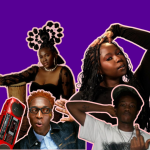
    The girlies are up and creating their lanes. They bring newness to the game, and diversity in genre, vocal dexterity, delivery and lyrical content. We know seven on the come-up that should be on your radar.

    Yimeeka

    The combination of a music producer and recording artist in one person is an advantage that usually distinguishes a super-creative individual from an average one. Her musical ingenuity and production skills set her apart among the new wave of Nigerian female pop stars. Her debut EP, “Alter Ego” (2022), expresses relationships, and her latest self-titled EP, “Yimeeka,” explores personal moments. 

    Syntiat

    Syntiat is an impressive vocalist, producer and songwriter who graduated among the best of The Sarz Academy’s class of 2023. Get on her if you’re looking for music to play during heartbreak, as candles burn and you sip wine in a bathtub.

    Mahriisah

    Mahriisah’s pop style interplays with African rhythms, R&B, Highlife and reggae. Her music is perfect for glamming up to go flex outside or in a speedy car ride with your girlies.

    Amaeya

    Since Amaeya moved from Delta state to Lagos to push her music dreams in 2020, she has done backup work for A-listers like Tems, Ric Hassani, Tiwa Savage, Asake and Lojay. But she’s fully focused on her thing now. Amaeya’s stories of love, relationships and identity are bold pictures of the spoken and unspoken emotions of a careful romantic turned into music. Since her debut on “The Voice Nigeria” in 2021, she’s stayed true to her soul-drenched Afropop and r&b sound. Singles like On My Own, Delusion and Too Much will get any new listener started.

    Aema

    From Aema’s solo releases to her notable collaborative work with fellow singer, Kold AF, it’s easy to tell that her alternative soul music won’t be underground for long. When she’s not conquering her ego on No Place to Hide, Aema’s protecting her mental well-being, addressing relationship issues and women’s places in society on “ALT SOUL, Vol. 1” and “No Pity.”

    Clayrocksu

    In recent times, Nigerian Afrorock music has been referenced to the likes of Neo, Modim, The Isomers and Clayrocksu, among the very few women making music in that scene. Clayrocksu’s style blends rock, metal and alternative with Afropop, with relatable tales of Nigerian dreams and hustle, love and romance, optimism and higher calling. Her new EP “Hate It Here” is a mirror of all these and fun experimentation. One of the tracks, Nu Religion, mixes atilogwu with rock. What’s more daring than that?

    Reespect

    Reespect is a rapper who brings all her emotions to her songs. It doesn’t matter what kind of production she hops on; she’s going to spazz and bring out the soul in her bars. Her latest performance on Showoff Rap show (one of Africa’s biggest hip-hop platforms) is proof she’ll rap circles around the competition and still spit vulnerable lines if she feels like doing so. Put respect on her name.

    Nigerian Women Throw the Most Lit Parties, and the Proof Is Here

  • Nobody should get carried away by Don Jazzy’s chronically-online, playful social media influencer personality. That’s all recent development.

    This isn’t an attempt at inducing nostalgia. But when Don Baba J returned to Nigeria from London two decades ago, it was the beginning of a journey to becoming one of Nigerian contemporary pop’s greatest contributors, and he changed the soundscape forever. 

    Don Jazzy seems to have taken a break from actively producing music, but not before making multiple impacts on Nigerian pop music. These eight songs Jazzy produced across music eras prove this.

    Tongolo – D’Banj

    At a time Don Jazzy and his previous business associate and artist D’Banj were still testing Naija music waters, the latter’s debut album came out with Tongolo as its lead and biggest single. Not only did this song introduce D’Banj’s arrival to Nigerian listeners, it birthed his “Koko Master” persona. 

    Ijoya – Weird MC

    Two years after stepping into the motherland, Don Jazzy produced Weird MC’s Ijoya alongside JJC. This song was Weird MC’s reintroduction to the Nigerian audience in 2006. Till date, Ijoya remains the biggest single from a Nigerian female rapper.

    Why Me — D’Banj

    Why Me transformed D’Banj from potential entertainer into a national hitmaker. Don Jazzy’s production did that.

    Jebele — Kween

    Kween had lovers in chokehold with this 2007 jam. Its music video won the Soundcity Music Video Award for Best Female Video and Best Highlife Music Video at the Nigerian Music Video Awards in 2008.

    “Mushin 2 Mo’ Hits”

    In 2009, Wande Coal released his debut “Mushin 2 Mo’ Hits”, creating a template for how a Nigerian pop album is made. This album has popular hits like Move Your Body, Bumper2Bumper, You Bad, Taboo, Private Trips, Ten Ten, etc. Wande Coal did his thing on this album, but we have Don Jazzy to praise for its stellar production work.

    Wind Am Well – Ikechukwu

    This song is one of the singles that secured Ikechukwu’s spot in the mainstream. Guess who produced it? It’s Don Jazzy again.

    Oliver Twist – D’Banj

    Before Don Jazzy and D’Banj parted ways in 2012, they made their last collaboration titled Oliver Twist count. This song climbed charts and did wonders for Afrobeats appeal, even pushing its potential into global space.

    Godwin – Korede Bello

    It took Godwin three days post-release to become an anthem among Nigerians in 2015. Due to Korede’s resonating lyrics and Jazzy’s production, Godwin is a party jam to some listeners and a testimony song to others. 

    Also Read About the 14 Times Don Jazzy Proved He’s the Master of Hooks & Choruses

  • On the first weekend of April 2024, Dwin, The Stoic and Rhaffy had a big win. Their 2022-released song, Streets, grabbed the attention of Nigerian music legend, 2Baba, and gained a heavy rotation. As of April 8, Streets had climbed to 13 on the Viral Songs Nigeria chart on Spotify.

    With Rhaffy’s reliable music production and sound engineering and the St. Claire team’s effective operations, Dwin, The Stoic, has established himself as an adept songwriter-singer and stage performer over the last decade. But just in case you’re unfamiliar with these guys and their music, we bring you a deep look into their music, work chemistry and viral single, Streets.

    www.stclairerecords.com

    St. Claire Records, an indie record label based in Lagos, Nigeria, wants to make undeniable art — the soundtracks of human lives. Home to Rhaffy, Dwin, The Stoic and Ignis Brothers, the music company has dwelt on that philosophy since it launched officially in March 2023.

    Before Dwin founded the record label and became a “dada” boy, he debuted with The Lonely featuring 3rty (also produced by the two of them) exactly ten years ago. SoundCloud aficionados will remember this. Then between 2014 and 2017, he disappeared into the 9-5 world.

    Dwin, The Stoic

    But his 2018 series of releases like Stay the Night, Are You the One, Take Flight and Happy Song finally led to “Heavy Heart” — his first studio album. This 13-track project introduced Dwin’s emotional brand of music to Nigeria’s predominantly club music-heavy soundscape. Music for longing, love, loss, heartbreak and sonder, his sound warmly takes in listeners like a home does. His relatable lyricism and soft vocals are seeds he’s planted on the ploughed genres of soft rock, Afropop, alt-pop, chamber pop, folk, house, EDM and so much more. 

    His music style doesn’t fall among the popular ones, but still he stands out with it. Ask Adekunle Gold, Jessica Bongos and Ibejii who have credited him as a songwriter on their projects.

    Rhaffy

    Adding Rhaffy, a music producer and singer-songwriter, into the mix has enriched Dwin’s sound. When he isn’t cooking for Dwin and other artists like Oxlade, Saucekid, Konga, DanDizzy and Otega, Rhaffy is banging out beats for rappers to “SHOW OFF” on AktivatedTV’s rap show on YouTube.

    Since Rhaffy and Dwin bonded in a recording studio somewhere on Victoria Island in 2018, their duo has produced fan favourites like Ifunanyam, Gkw, Allez and the Streets that got a placement in DisneyPlus’ new docu-series, “Madu”.

    [ad][/ad]

    Last week, 2Baba shared Dwin’s Streets performance video on his InstaStory. “That video is a specially documented moment and lived experience of the audience at Dwin’s Acoustic Christmas show in December 2023,” Timilehin Osinowo, PR and Comms Lead of St. Claire Records, stated.

    Creating content is constant for them, as is finding new ways to push it out, whether old or fresh. It’s all part of the team’s intent to be undeniably excellent as artists and, in the present consumer term, content creators. Even more impressive is that Streets was made in 2019 and only released two years later. And it’s still in motion.

    The now-viral track has all the charms of an Afropop love jam. But honestly, it’s still vulnerable at the core. It sings of a love that’ll never come to you unless you break the silence and state your intention: “Baby, see, won’t you please come cover me? / See, these streets don tire me / We get things to do.” 

    Dwin and Rhaffy’s drive to become undisputed musicians also means doing meaningful collaborations. Hopefully, we’ll soon hear Mr Innocent admonish guilty parties to go home and snuggle into their lovers’ loving arms instead of gleefully slamming different genitals in different area codes.

    Rhaffy and Dwin, The Stoic

    Their transcendental music chemistry has poured into WeTalkSound’s “Lofn 2” and “Lofn 3” albums in 2019 and 2020; and “The Cost of Our Lives” by Ignis Brothers (an indie group made up of Dwin and Ruth Zakari), an album released under St. Claire Records. It came out during the quiet COVID-19 period, a medley of legacy, ambition, uncertain relationships, loneliness and anxiety. For some listeners, “The Cost of Our Lives” gave them the thirst for more music by the collaborative singer and producer.

    In 2023, Rhaffy and Dwin did their first joint project, “Love Lane”, a five-track EP, housing Streets and others like Without Your Love and Allez — their highest streamed songs.

    For their next act, according to Timilehin Osinowo, Rhaffy is preparing to put out his debut solo single on April 25, 2024. It’s called Serenade. There’s also an intimate show in the works — you heard it first. But catch him at Zikoko’s Strings Attached event on May 11, 2024.

    Dwin and Rhaffy aren’t the most popular duo, but their joint quest as flagship artists of an indie St. Claire Records is leading them to the forefront of Nigeria’s bubbling music renaissance. Respect their grind.

    Our Combo is Like Messi, Suarez and Neymar in 2015 — Rhaffy and Dwin, The Stoic


  • The biggest women-only festival in Lagos is BACK.
    Get your tickets here for a day of fun, networking and partayyyyy.

    [ad]

  • “Bana” is a song by one of these artists

    The biggest women-only festival in Lagos is BACK.
    Get your tickets here for a day of fun, networking and partayyyyy

    [ad]

  • When Nigerian artists, especially rappers, get older, an uncommunicated hiatus or retirement lurks around — impacts of personal decisions and the fickle nature of an industry that lives in the moment.

    But should whatever new music they make remain in the vault indefinitely because they’re no longer the rave of the moment? Will anyone give them any time of the day if they release new music?

    Let’s look at these issues, using Nigerian Hip-Hop artists as case studies, in this piece.

    In-between the general banter and check-in between Vector tha Viper, Sinzu and Ikechukwu in a recent 11-minute long screen-recorded IG live video, the three rap veterans discussed their status as older artists and renewed focus to make more music. The core of their conversation bench-presses on this year’s Nigerian unofficial watchword: “No gree for anybody”, which can be colloquially interpreted as “to stand on business.”

    Evidently, these three rappers are standing on business: Sinzu is posting new music snippets, Ikechukwu released a new album, “O.G.Unkle.Killz” on March 15, and Vector, who hasn’t stopped releasing music in the last six years, is ready to go harder.

    During the IG live, Sinzu mentioned that Gen Zs act like they don’t know him, which is almost true. Sinzu (FKA Sauce Kid) hasn’t been in the spotlight in almost a decade, not since his 2017 run-in with the law in the U.S. His last EP went by without a noise in 2021. On the other hand, another colleague put out a project without much care for Gen Z’s acceptance. Breeze, a song on Ikechukwu‘s new album has been labelled a fresh breath of air since its release.

    But I think that instead of being hyper-focused on Gen-Z, OGs should direct their energy to their dedicated fans. They’re familiar with the brand and will listen to the music as long as it’s great. While life, family and other things may take priority, if a released music resonates, new fans will pick it on the way. In November 2023, Reminisce released “Alaye Toh Se Gogo”, seven years after his last album. Fans’ demand inspired the project and the reception he’s since received has surpassed his expectation. Four years after “ILLY CHAPO X”, rapper Illbliss put out a new album, “Sideh Kai” in February 2024. Modenine is still active and catering to the fans who enjoy his art.

    The “small” matters of finance and profitability can’t be ruled out, though. Nigeria is a poor country and has no industry structure and funds for OGs to stand on. Here, people make money when they are on top. Diminished star power and fanbase and intangible streaming revenues aren’t enough fallback options either.  In markets like the U.S., artists can do 500-1000-capacity halls because investment in infrastructure supports them — Older international acts like Sisqo can still go on tour simply because there’s a structure to cater for him. The opposite is the reality that plagues the elderly class of contemporary Nigerian music.

    There’s no need for OGs to force or recreate what they were widely known for anymore. Identity crisis, fear of ageism and criticism should go out the window. No one will be on top forever. But the grace is always there. The veterans may not be popping like they used to but their core fans — their community — will always listen.

    The realisation and acceptance of everything above comes with an openness to tell new stories in tune to their current reality. This has played out in the case of Reminisce who’s embraced fatherhood since “Baba Hafusa” till “Alaye Toh Se Gogo,” which talks about getting older, navigating relevance and putting on the next generation of artists.

    Illbliss’ “Sideh Kai” is a testament to giving back to his fans and importantly, being a family man and a dad. Vector and M.I have also been on self-discovery yet triumphant journeys— it’s clear in the content of their new music. This openness pushes their art to more impact and opens them to more interpretations. This is the only way they’ll possibly make music that gets finer with their age.

    The beauty of making music at an old(er) age is rooted in the purpose and passion of the artist. So, instead of worrying about investing in streaming farms to push albums like Ikechukwu jestingly said on the IG live, he should double down on the newly found purpose that’s fuelling his passion.

    As we go deeper into the year, more veteran artists should quit watching on the sidelines and get back into the game. Not to prove a point or dump stashes of stale music on us, but to find love in what they do again. People are still cheering.

    We Wondered Where These Nigerian Artists Are, So We Went Digging

  • We came into 2024 demanding for new sounds, a breakaway from Amapiano for good. And last week, a rising singer named taves went viral with his pop-alt singles Folake and Bodija, which people called a breath of fresh air in the Nigerian music space.

    The clamour for more unconventional music set us into action to bring you some of the other new artists that aren’t on your radar.

    Wapo

    Wapo’s music sounds like a big, shiny disco ball in a large ballroom. One can clearly hear his experimentation with African rhythms, ‘80s pop and R&B on songs like No White Tees, Bleed and Walk on Water. Wapo’s music is similar to Runtown’s recent album, “Signs”. His latest, “Afraid of the Dark”, is heavy on synth and fearful emotions like he’s running through the dark woods. His music is an interesting and comfortable deviation from the formulaic logdrums the Afrobeats industry is plagued with.

    Odenose

    Are you looking for a genre mixologist? Odenose (formally OD) is the answer. From jazz to hip-hop to spoken word, neo-soul and afrobeats, the Abuja-based musician is capable of blending genres into a refreshing African music cocktail. Let her recent album “MissChief” lead you into endless flavours of Afro-fusion and live instruments.

    Seanmichael Ike

    It’s time to discard the family situation that turned the lights on Seanmichael Ike and shift the focus on his artistry. He’s a singer-songwriter making the chill Afropop of a shy and hopeless romantic with enough rizz to steal people’s babes. While we wait for his 2024 releases, his songs, Shy Shy and Stargirl, are good places to start.

    Bagetti

    Entering into 2024, Jonzing introduced its latest signee, Bagetti, with Hard Girl, and it’s now a viral TikTok jam. On March 12, she followed up with Dawn, the last single before her debut EP drops on March 15. Bagetti explores familiar territories like dancehall and Afropop, but her confident and non-conforming delivery make the difference.

    Tega Ethan

    Tega Ethan is an Ibadan-based singer-songwriter and guitarist making records about love, longing, hope and other fleeting emotions. If you’re looking for some delicious poetry and soundtracks that say a lot without saying too much, Tega’s music is where it’s at.

    Modim

    Modim has found a way to synthesise Afrobeats, African folklore and alternative rock into one electrifying performance. Complex guitar riffs, evocative vocals, thoughtful lyrics interspersed with local stories, and catchy hooks make his music wholesome. Songs like Eko Meji, Eni Aráyé and Emini Nii will light up any stage if given a moment.

    Ayo Maff

    Street-pop music constantly breaks the stereotype that its artists have to be rogues and good-for-nothings. Ayo Maff’s take on it goes far beyond the penchant for street upbringing and hustle life; he poignantly sings about his background, dreams, fears, deceased loved ones and the lives of ordinary men. Ayo Maff isn’t political, but he sounds very much like the “voice of the people”.

  • We made a list of Nigerian songs that recognise, celebrate and honour the spirit of motherhood.

    “Iya Ni Wura” — Dele Ojo

    Dele Ojo and his Star Brothers Band released this Mother’s Day celebration staple 74 years ago. Iya Ni Wura (meaning “mother is gold”) talks about the strenuous nine months of pregnancy mothers endure, describing them as jewels of inestimable value.

    “Sweet Mother” — Prince Nico Mbarga

    The lyrics, “Sweet mother, I no go forget you” quickly rings a bell in the minds of most Nigerians. In this evergreen song, Prince Nico vows to always remember his mum’s sacrifices for him.

    “Mummy” — Jesse King

    Jesse King, AKA Buga, made one of his biggest hits with Mummy in 2006. The contemporary highlife song prays that mothers enjoy long life without discomfort. Any hater can take it up with God.

    “Unconditional Love” — 2Baba

    2Baba appreciates his mum in Unconditional Love in 2017, attributing his calm and collected demeanour to her. 2Baba expresses unconditional love at home, and he has his mum to thank for it.

    “So Beautiful” — Asa 

    Off Asa’s debut titular album, she dedicates a five-minute track to her mother. Asa sings of her beauty, strength and love. If we all agree mothers are goddesses, this is one of their worship songs.

    “Mama” — Flavour feat. Chidinma

    Over warm, serenading piano riffs, Flavour and Chidinma praise their mothers in English, Igbo and Yoruba. They remember her sleepless nights during sick days and pray for blessings for her. The 2016 song appreciates motherhood and promises mothers that they can have anything in life. 

    “Mummy Mi” — Wizkid

    Mummy Mi is the fourth track on Wizkid’s 2014 album, “Ayo”. Even if you don’t have life’s finest things to give your mum like Wiz promised his on this song, you can sing along and count it as speaking them into existence.

    “Ochie Dike (Mama)” — Phyno feat. Onyeka Onwenu

    In 2016, Phyno honoured his mother with this emotive song in undiluted Igbo. He partnered with the legendary Onyeka Onwenu to deliver one of his best songs ever.

    “Mama” — Adekunle Gold

    “This is not a regular song, oh mama”; in Yorùbá, AG Baby hails mothers as superheroes and intermediaries between heaven and earth. The refreshing sounds of Gangan drums, guitar and other highlife elements will keep any mum dancing. 

    “Iya Mi (My Mother)” — Lanre Teriba 

    On this song, Nigerian Gospel artist, Lanre Teriba, feels he’s running out of time and asks for God’s blessings to come quickly. His mum is getting older, and he needs to spoil her with life’s best things. If you’re looking for a song with a twist of gospel to honour your mum, this is it.


    These Are 6 Other Special Ways to Celebrate Your Mother

  • Music groups may be be popular thing in Nigeria right now, but some guys dropped hits like Yori Yori, Olori Oko and many more. Which of them do you remember?

    Take the quiz: