• One sweaty Friday afternoon in Lagos, 22-year-old Adunni punched in a number she had never dialled and stewed in rage, waiting for a voice to come alive on the other end. She had a lot to let off her chest, but her call went unanswered three times. The person at the other end of the phone finally picked up on her fourth try, but Adunni’s rage had grown so much that she had one question: “What are you doing?”

    The genesis

    The thing is, Adunni has never really cared about governance and its issues or lost sleep over the theatrics of Nigeria’s politicians and their audacious corruption. She hasn’t lived long enough to expend energy on this anyway—she just graduated from university and is starting out her life working as a virtual assistant and a social media manager.

    So, dialling the number registered to Ganiyu Ayuba (a lawmaker representing Alimosho constituency in the House of Representatives) was out of character for her, and so was the intentional process of finding it. Adunni’s question may have consisted only of four words, but it was packed full of rage and questions that led her to seek out Ayuba’s phone number in the first place.  About four days after she made the call, Adunni shared with me the events that led to her breaking point. 

    Senator Akpoti-Uduaghan and a podcast

    On  Friday, February 28, Natasha Akpoti-Uduaghan, a Nigerian lawmaker representing Kogi Central at the Senate, alleged the Senate President, Godswill Akpabio, had sexually harassed her. On March 5, she came forward to the Senate with a petition. What followed the Senator’s complaint was bullying and punishments, the kind that reminded Adunni of what she had gone through years ago in junior secondary school.

     A boy had sexually harassed Adunni, and as Akpoti-Uduaghan has recently done, she also reported the harassment to an authority (teacher), who, like the Senators, decided to punish her instead. 

    “The teacher literally punished me from 12 pm to 6 pm,” Adunni recalled. “ She only released me when it was time for her to go home. Do you understand?” she asked me.

    Like Adunni and Akpoti-Uduaghan, many women who experience sexual harassment and other forms of Gender-Based abuse rarely ever see their abusers brought to justice. As of 2023, the Federal Ministry of Women Affairs said it recorded 27,698 cases (1,145 of them were fatal) of Sexual and Gender-Based Violence between 2020 and 2023. Out of that number, only 393 perpetrators were convicted– a meagre 1.4 per cent.

    Because Nigeria is still deeply patriarchal, women are often blamed and shamed when they report sexual abuse. In fact, in many cases where teenagers get pregnant by abuse, they are made to marry their abuser to avert the shame. 

    Though it may have happened years ago, Adunni never forgot the teacher who punished her. But she somehow learnt to function through life without getting justice. Seeing Akpoti-Uduaghan go through a similar experience triggered whatever calm she had managed to achieve. Then she listened to an episode of the ‘I Said What I Said’ podcast and felt like bursting.

    That episode of the fan-favourite Podcast featured the hosts, Jola Ayeye and Feyikemi ‘FK’ Abudu, in addition to a guest, Adesuwa Giwa-Osagie, a vocal National Assembly correspondent who had extensively followed the drama unfolding at the parliament from the beginning.

    Adunni found it impossible to remain calm after she listened to the three women’s discussions on the podcast.

    “FK said we only think these people (politicians) are above us because we don’t challenge them when, in reality, they actually fear us because we voted them into their position,” Adunni recalled. She also remembered being teleported to a similar episode of the podcast during the #EndSars protests of 2020, encouraging listeners to demand accountability from their representatives.  “They spoke about the US and the UK, where you can call mayors and speak to them without fear,” she said, explaining that she didn’t think much of it at the time because she was hardly interested in politics and governance issues as she was now.

    And so Adunni made up her mind. She would call the lawmaker representing her constituency at the National Assembly to ask what he was doing to speak up against the injustice meted out to Senator Natasha Akpoti-Uduaghan.

    “How may I help you?”

    On Friday, March 13, Adunni searched the internet and found Ganiyu Ayuba’s number on the National Assembly’s official website. At first, she wanted to ask him about his stand on Senator Akpoti-Uduaghan’s situation, but this changed after her call went unanswered the first and second time. By the time it got to the fourth, Adunni was almost losing it. Then, the other end of the phone finally came alive, followed by the listless voice:  “Hello, and how may I help you?” 

    Adunni said her name and asked the voice, “What are you doing?” The voice wanted to know what she meant, so Adunni asked about the actions her representative was taking on the Akpoti-Uduaghan case.

    Although it wasn’t part of her initial questions, in the time that she stewed in anger, waiting for her call to be answered, Adunni remembered that parts of the Alimosho constituency had horrid smells — not pungent enough to turn your stomach but strong enough it sags your mouth full of saliva so thick, your throat sends it away when you attempt to swallow.

    So she also asked the lawmaker what they were doing about the smell, and to her questions, the voice, indifferent, said, “We are sorry about that. We will look into it,” addressing no question in particular. Adunni replied that she would call back again and expects to hear a more positive response to her enquiry.

    “This is a wrong number.”

    The next day, Adunni called the number, and, like the first time, it rang endlessly without an answer. This time, she was ignored until she gave up and moved on with her day.

    A while later, she saw she had missed a call from the number, so she called back. A male voice answered — the voice from the previous day belonged to a female (whom she assumes is her lawmaker’s assistant).

    She asked, “Am I on to the assistant of the lawmaker representing Alimosho in the House of Reps?”

    This was more of a conversation starter than a question, so she was taken aback by the response she got: “This is not the House of Reps; this is a wrong number.” 

    Adunni knew it couldn’t have been a wrong number. She had copied it from the National Assembly’s website, and she told the person this much, but he insisted so she let it go. 

    Adunni returned to the website to confirm, and yes, she wasn’t crazy; it was the exact number she had dialled the previous day. 

    When she called the number again, it rang without an answer.

    Get More Zikoko Goodness in Your Mail

    Subscribe to our newsletters and never miss any of the action

    “They don’t feel accountable to us.”

    The last exchange made Adunni angrier than she was the first time she called. More than anything, she was upset that there was no sense of accountability from her representative and his staff. “You must clearly think I’m a joke,” she remembered muttering to herself in anger.

    Unfortunately, this experience is not peculiar to Adunni. Many Nigerians have complained about their inability to reach public officials.

    In 2024, young Nigerians on X (formerly known as Twitter) complained they could not reach former Minister of Youth Development Jamila Bio Ibrahim because she locked her account on the platform and made herself inaccessible elsewhere.

    It’s the same story with emergency response numbers: Nigerians complain their calls are either ignored or cut off when they try to use them.

    “We give these people (government officials) too much leverage,” Adunni said,  explaining the lack of accountability across different levels of government.

    “We’ve seen them as gods, and that is probably why we are scared of them.,” she told me.

    Several Nigerians have also made this connection. Once, as he gave a speech at a public event, controversial politician and former governor of Rivers State, Rotimi Amaechi, said Nigerian politicians get away with corruption because the citizenry allows it. 

    “Even if you come to a Nigerian’s house and kill his mother, his father will continue his life,” Amaechi said.

    How can Nigerians make politicians more accountable?

    Adunni thinks the solution to this problem is to communicate with elected government officials at all levels as often as possible.

    “One thing I wish more Nigerians would do is to call these people (politicians),” she said.

    “One of three things will happen: they will either take their number away from (official) websites, disable the numbers, or pick up,” she continued, emphasising it should be a coordinated effort.

    “They’ve called us fools for so long we’ve actually adapted to the name fools,” she said.

    Are there other ways to make elected officials more accountable?

    You can do either of the following:

    • Take Adunni’s advice and contact your representative at the local, state, or national level. You can find all of their contacts here.
    • Consistently demand answers to the worrisome decisions they take.
    • Highlight and talk about any questionable thing on social media using hashtags.
    • Diligently follow the news to find out what they’re up to.

    [ad]

  • Photo credit: Premium Times

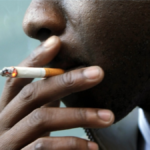
    Lawmakers in Nigeria’s House of Representatives might be standing on business this year because they appear to be showing that already– reports have it that they’re looking to curb public smoking of tobacco in the country by introducing stricter punishments and jail terms.

    Three lawmakers, Usman Zannah, Aliyu Garu, and Mansur Soro, who are currently sponsoring a piece of legislation titled ‘A Bill for an Act to Amen the National Tobacco in Public Places and for Related Matters,’ are spearheading this move.

    What does this mean?

    Nigeria currently has a law named The National Tobacco Smoking (Control) Act 2015, which already prohibits public tobacco smoking in the country but lawmakers want it to be amended to contain stronger penalties for people who default against it.

    The current law, for instance, provides that any individual guilty of smoking in public would be sentenced to six months in prison; under the proposed amendment, such an individual would either be made to pay a fine of not less than ₦10,000 (and not above ₦50,000), or one-year imprisonment (instead of six months), or be made to suffer both consequences.

    While the National Tobacco Smoking (Control) Act 2015 currently penalises public entities who allow smoking with a fine of not less than ₦200,000, the amended version will increase the punishment by either making them pay a fine not exceeding  ₦1 million, a prison term not more than two years, or both.

    The new amendment also seeks to increase the punishment for people who advertise or sell tobacco, among others.

    Why is this important?

    You might be rolling your eyes at this amendment, but the lawmakers are actually on to something here. How? Tobacco use is currently responsible for  28,000 deaths annually in Nigeria and eight million deaths (per year) globally, and here’s the kicker– it’s also responsible for the death of an estimated 1.3 million people who do not smoke but are victims of second-hand smoking.

    If you still haven’t made the connection, the stricter punishments against public smoking of tobacco are especially important because any form of exposure to tobacco can lead to death. The  World Health Organisation notes that second-hand smoking can lead to “serious cardiovascular and respiratory diseases, including coronary heart disease and lung cancer.”

    It’s such a menace that the WHO wants a ban on tobacco smoking in Nigeria as a whole rather than the existing ban on only its public use. Also, in 2019, the Center for the Study of the Economies of Africa (CSEA) revealed that Nigeria spent ₦526.4 billion in treating diseases caused by tobacco smoking.

    Commonly contained in things like cigarettes, Shisha,  and other products, tobacco has remained a major health concern across the globe. Its smoke contains thousands of cancer-causing chemicals such as Acetaldehyde, Arsenic, Benzene, and Cadmium.

    Authorities around the world have tried to curb its use with things like popular “smokers are liable to die young” (which is a legislative requirement for cigarette companies)  imprinted on cigarette boxes and other anti-smoking rules. In 2003, WHO member states (to which Nigeria belongs) adopted the Framework Convention on Tobacco Control (WHO FCTC) to curb this menace. Legislatures like the National Tobacco Smoking (Control) Act 2015 are part of the country’s attempt at abiding by the framework. But like almost every law in Nigeria, implementation has remained a problem. Maybe it’ll be different this time around?


    News is boring, but we make it fun. Subscribe to The Big Daily to be the first to know the biggest news of the day.

  • Photo credit: Premium Times

    Nigerian politicians are probably the only people in the world who apply for a job and then blatantly refuse to show up for an interview after their potential employer asks them to. For the longest time, this behaviour has bothered Nigerians but there’s a possibility it’ll stop soon.

    Reports have it that lawmakers in the House of Representatives are preparing to empower the Independent National Electoral Commission (INEC) to conduct compulsory debates for candidates vying for the posts of President and Governor. This move was made possible by a private member bill sponsored by House of Reps member, Ikeagwuonu Ugochinyere. 

    What are the specifics of the bill? 

    The bill is proposing to change the Electoral Act to add a new section (24) saying that:

    1. INEC must ensure that a Presidential and Gubernatorial Debate is conducted for people seeking to be elected into the offices of President and Governor on a date it picks.
    2. Anybody looking to be the President of Nigeria must participate in the Presidential Debates, during which they are required to present a detailed analysis of their manifesto and plans for Nigeria as its potential President.
    3. Anybody looking to be the Governor of a Nigerian State must participate in the Gubernatorial Debates, during which they must present a detailed analysis of their manifesto and plans for the State as its potential governor.

    Timeline of Nigerian Presidents who refused to appear in debates

    Refusal of candidates to participate in debates has been a thing in Nigeria for so long that it has become almost normalised. It’s kind of bizarre too because all the Presidents of Nigeria since its return to democratic rule in 1999 have been candidates who refused to show up to election debates.

    1999—Obasanjo won his election into office even though he refused to debate Olu Falae, his major rival.

    2003—Obasanjo still won his reelection bid after he turned down a debate against his major opponent, Muhammadu Buhari.

    2007—Umar Musa Yar’Adua refused to debate against Muhammadu Buhari and won the election by a landslide.

    2011—Goodluck Jonathan won the Presidential election after failing to show up to the debate

    2015— Buhari who had attended debates for his past Presidential campaigns, did not attend the 2015 debate and went on to win the election.

    2019—Buhari refused to attend the Presidential debate but, after a bit of pressure, participated in a political town hall program known as The Conversation. However, that hardly counts as a debate as the audience was mostly made up of his and Atiku’s (his main opponent at the time) supporters.

    Governorship candidates also do the same thing and go on to win their election bids. In the just concluded Edo State governorship elections, for instance, APC candidate, Monday Okpebholo did not attend the debate, yet he went on to win the elections. If this bill becomes law, however, no candidate will refuse to appear in debates again because it will become a requirement rather than an option. Once this becomes a necessity.

    Why does this bill matter?

    You can draw a straight line from Nigeria’s poor leadership problem to the refusal of candidates to participate in debates. Political economist and Professor, Pat Utomi thinks so too. 

    Speaking to journalists before the 2023 general election, Utomi gave an example of South Korea’s situation.

    “The fortunes of South Korea were turned around because the electoral commission was so despondent about the quality of their politics that they decided that the thing that should matter the most for elections are debates between candidates,” he said, explaining it was incorporated into conventions in the country’s politics.

    “Once debates came to define (the) elections, moneybags and all kinds of criminals and charlatans ran away and their electoral process became one of a sustained, enormously developed country,” Utomi continued.

    Will this bill be successfully passed?

    I’ll hold your hands when I say that the chances of this bill going on to become law aren’t a 100 per cent, partly because it still has to pass through five more stages, and mostly because the bill has been around before and was not successful.

    In July 2014, a similar bill seeking to make Presidential Debates compulsory did not get past the fourth stage (reference to a committee) because the committees rejected it. They took the decision because they felt election debates “should remain outside the purview of the law.”

    What can you do to help the bill become law?

    1. Track the bill’s progress as it moves through different stages by monitoring official channels for media updates.
    2. Talk to other people about it. You know that saying about “power in numbers.” 
    3. Participate in Public Hearings: The National Assembly usually organises public hearings for bills under consideration, and Citizens are allowed to attend to express their opinions.
    4. Reach out to your representatives: you can contact the lawmaker representing your constituency via email or phone to let them know you support the bill. Here is the list of all Senators and House of Rep members with contact details attached.
    5. Launch or sign digital campaigns through platforms like this.
    6. Advocate for the bill on social media platforms by using hashtags.
  • Some of the laws on this list have never ever been enacted, either because Nigerians don’t know them or because they just sound like page fillers in the Criminal Code Act of the Nigerian Constitution. 

    By the end of this piece, all you’ll wonder is “Who even thought of these laws?” 

    Witchcraft and juju 

    According to Section 210 of the Criminal Code Act of the 1990 Nigerian Constitution, if the accused confesses to being a witch or is confirmed to own or to have used charms on someone else, they get jail time. We all know village people are real, so if you have proof of their existence in your life, you can actually have them imprisoned. But if your accusation turns out false, you might be the one to spend ten years in jail. 

    One of the rare witchcraft cases to make it to court happened in Bauchi state in 2011. The case was settled amicably between the two witches, and it’s unclear if they served the two-year jail term.  

    Promising and failing to marry

    In the case of Egbe v. Adefarasin (1987) NWLR (Pt. 133) 594, the Nigerian Supreme Court held that breach of promise to marry is actionable. The court insists there must be proof of this promise, like letters, a ring or pictures. In the absence of this, witnesses can testify. 

    One Ms Mabamije received ₦20 million in 2016, among other things, because her fiance broke his promise to marry her. The law applies to both men and women, so if your longtime partner misbehaves or has broken their promise to marry you, you know what to do. 

    Motivating or challenging others to fight

    According to Section 84 of the Criminal Code Act in Nigeria, anyone who challenges another to fight a duel, or attempts to provoke another to fight a duel, is guilty of a felony and could be imprisoned for three years. The next time someone challenges you to throw hands, get them arrested immediately.

    Aiding or committing suicide

    Section 327 of the Criminal Code Act in Nigeria states that any person who attempts to kill himself is guilty of a misdemeanour and is liable to one year imprisonment. Anyone who aids suicide gets life imprisonment.

    But this law has been under review since October 2023, because it’s baffling that the government really thought one year of imprisonment was the best way to help suicidal people who actually need therapy and counselling. 

    Using fake gold or silver coins

    The consequence of dealing in fake gold or silver coins is two years in prison according to Section 148-151 of the Criminal Code. Imagine what the lawmakers of the ’90s must’ve been through for something like this to make the Criminal Code. 

    If like Peter in the bible, you don’t have silver or gold, you’re safe for now. 

    Disrupting religious service

    We have questions here. Does it count if the disruption is from the offering queue, or because members are busy staring at a fine Christian brother or sister? It probably does. 

    This also means if Muslims have to use the main roads for Jumaat prayers, it is illegal to disrupt them because you want to drive to your destination. Find this in Section 206 of the Criminal Code. 

    [ad]

    Insulting religions

    Considering how much this happens on social media, we have mixed feelings about this one.

    Section 204 of the Criminal Code says the punishment is two years in prison. However, Sharia law considers it blasphemy, which has been used to justify the killing of people alleged to be blasphemers

    Selling bad meat

    If Mr Shola who sells meat at Iba is reading this, your days are numbered, sir. 

    The next time you get bad meat, no need to shalaye or return it. Take it to the police station. You and the meat seller will discuss this in court. Outside food safety laws, Sections 243 & 244 of the Criminal Code specifically state a two-year sentence for people who sell diseased meat. 

    Street begging

    Lagos state banned street begging in 2023 and said defaulters would spend two to three months in jail if caught. A few people have faced the music in court for this, but many still roam the street in ignorance. 

    Cheating in business

    Section 421 of the Criminal Code spells out two years in prison for a trader who sells overpriced or stolen products to customers. 

    If this law were implemented, many Instagram vendors would be behind bars for their overpriced products, but that’s an article for another day. 

    READ NEXT: Five Nigerian Laws That Shouldn’t Exist

  • There is a new social media platform that might be giving Elon Musk a run for his money and having him choke on whatever irks his throat. Ever since Twitter had Mr. Musk as its new landlord, things haven’t quite been the same. And on Wednesday, July 5, Meta launched a messaging app called “Threads” that looks like the start of a new era for many social media users. 

    What exactly is Threads, and how is it different? 

    Threads is a text-based social messaging app launched in over 100 countries that allows you to follow the same accounts you do on Instagram. You can post pictures or texts and like, comment, repost, and quote them. While it’s yet to have a trend table or options for sending private messages, unlike the Bird app, Threads is free, and you can put the worries of exceeding a daily limit behind you. 

    For many people, especially Nigerians who have a larger following on Instagram than Twitter, this new app is an opportunity to create a new social media personality. After all, it’s never too late to achieve your dreams of becoming an influencer. And it also looks like Nigerian lawmakers have the same idea as many of them have become “Tailors”, as many Nigerians call themselves on Threads. Hours after its launch, they’ve begun sewing content for many Nigerians.

    Download the Citizen Election Report: Navigating Nigeria’s Political Journey

    Who are the lawmakers there now?

    President Bola Ahmed Tinubu

    Since the days of his campaign, no love has been lost between Tinubu and the Bird app, so Threads might finally give him a chance to breathe.

    Babajide Sanwo-Olu

    If there’s one thing the Lagos state governor does well, it’s preaching the gospel of his good news and putting his legs in strategic corners, and a new app isn’t going to stop him. 

    Abba Kabir Yusuf

    Kano state governor, Abba Kabir Yusuf, also didn’t carry last here. He’s already spreading his message of good tidings. 

    So far, eight other governors have joined the Threads app; they include Prince Dapo Abiodun, Ogun state governor; Umo Eno, Akwa Ibom state governor; Bala Mohammed, Bauch state governor; Peter Mbah, Enugu state governor; Biodun Oyebanji, Ekiti state governor; Uba Sani, Kaduna state governor; Yahaya Bello, Kogi state governor; and Seyi Makinde, Oyo state governor. 

    Other key lawmakers and political figures on the app are Vice-President Kashim Shettima, Atiku Abubakar, Senator Orji Uzor Kalu, former Vice-President Prof. Yemi Osinbajo, and the Police Public Relations Officer, Lagos State Command, SP Benjamin Hundeyin. 

    Also joining the Threads are some key government agencies, such as the Federal Inland Revenue Service (FIRS), to remind you that you can’t escape tax in this administration, and the National Drug Law Enforcement Agency (NDLEA), with their message of catching drug abusers and traffickers.

    As expected, you’ll also find many media houses like the National Television Authority (NTA), Silverbird TV, Arise News, Channels Television, and the TVC on the new tailoring app.

    Also, Read: New Phase, Who This? The Nigerian Television Authority (NTA) Resurgence

    And, of course, ZikokoCitizen is on Threads to ensure you’re always up to date with everything and anything Nigerian in politics, policies, and governance.