• For years, Gabriella*(30) spent all her income providing for her family of eight. Things changed when she hit a rough patch in 2024, lost her life savings and had to move back home. 

    In this story, she shares how her family turned on her because of her reduced financial capability, which has taught her a valuable lesson.

    This is Gabriella’s story, as told to Boluwatife

    My family situation has always been somewhat unusual. 

    As a child, I grew up with my grandparents because my parents had separated. I only started living with my dad and his family when my mum passed away in 2007. Then, he lost his job in the civil service a few years later, which signalled the beginning of a financial struggle that lasted for years. 

    Things nosedived quickly, and even feeding became difficult. My dad’s job loss was due to some fraud allegations, so he spent all his time fighting to be reinstated into the civil service. When he wasn’t doing that, he took on menial jobs while my step-mum tried to foot the bills. 

    I would’ve been a secondary school dropout if not for relatives from my mum’s family who periodically stepped in to pay my fees. Their goodwill pushed me to the university in 2012, but I knew that was where it ended — I needed to find a way to fend for myself if I hoped to get a university education.

    I found a job marketing for a laundromat, but my ₦10k/month salary barely kept me afloat. During school holidays, I travelled to help my aunt with her boutique so she’d give me foodstuff and clothes when it was time to return to school.

    Somehow, I managed to pay myself through uni and NYSC. Then, in 2018, I returned home and took up a ₦22k/month receptionist job. That’s when my responsibilities started.

    My dad still hadn’t gotten a stable job, and the number of mouths to feed at home had increased. I have four siblings, and one of my sisters got pregnant and had a baby, so everyone had to support her. By “everyone”, I mean me. The whole house lived on my ₦22k salary. Tips usually brought the total figure to around ₦60k, almost all of which went into providing for the home.

    The only bill I didn’t pay was rent, and it was because we lived in our own house. Every other thing was on me. I even gave my step-mum my ATM card to withdraw money at will. My workplace didn’t allow staff to use phones at work, and I didn’t want to be unreachable if they needed to buy baby food.

    It’s not like I was excited to give all my money away. I felt drained, constantly telling myself I couldn’t afford anything because my family needed the money. I didn’t like being unable to move out or afford a master’s degree, but I had to consider my nephew. If I didn’t take care of the family, he’d starve. 

    However, I knew I had to move out if I hoped to reduce my responsibilities at home. So, I started deliberately keeping money aside for a new apartment. My tips grew my income over the years to an average of ₦100k/month, and I stopped depositing the full amount into my account. My stepmum still had the ATM card, so I ensured the account always had at least ₦50k.

    By 2022, I’d saved enough money to move out. Fortunately, my dad also got reinstated into the civil service that year, and things started looking up. I left the hotel and did a two-month stint as an executive assistant at an NGO for ₦30k/month before moving to a travel agency for ₦80k/month.

    My responsibilities at home reduced — I also collected my ATM card back — but my siblings still often called for money, and I always answered. By January 2024, I decided I was tired of working for people. Up until then, I’d always worked in toxic environments. I thought starting a business and being my own boss would be better.


    Join 1,000+ Nigerians, finance experts and industry leaders at The Naira Life Conference by Zikoko for a day of real, raw conversations about money and financial freedom. Click here to buy a ticket and secure your spot at the money event of the year, where you’ll get the practical tools to 10x your income, network with the biggest players in your industry, and level up in your career and business.


    I had ₦800k in savings, and I decided it was enough to move to Uyo and start an interior decoration business selling raffia mats and designs. The idea of moving states came from two reasons.

    First, I wanted to rebuild my life from somewhere new. Secondly, Uyo was better for my business. I could source raffia materials there at a cheaper price and maximise profits. I just needed to relocate, buy a few samples and post them on social media to get clients. It felt like a solid plan. 

    My sister stayed in Uyo, so she helped me get an apartment. I paid ₦250k for the rent and total package, and another ₦60k to move my things from our state to Uyo. The rest of the money was supposed to get basic furniture and start my business. But things didn’t exactly go as planned.

    First of all, the apartment was completely terrible. I didn’t see the house before paying; I only got pictures. It was also after the issues started that my sister said she hadn’t visited the house either. She just saw the pictures and told me to pay.

    It rained the first night I spent in the house, and the whole place leaked all night. The rain destroyed all my properties. When I tried to get a refund, it turned out that the previous tenant had inflated the rent by ₦100k and run away with the money. I tried every means to locate him, but he’s still at large. Even the ₦150k actual rent, I didn’t get back because the landlord claimed he didn’t do refunds and that he’d fix the roof. He never did.

    I spent about three months in that house, during which time I had to arrange my mattress in one corner because of the terrible leaks and wake up several times during the night to pack water to stop the room from flooding. 

    There was also no electricity in the whole area, and I had to spend ₦500 almost daily to charge my phone and power bank. The lack of sleep and stress soon began to tell on me, and I was constantly sick and spending all my money on medication. 

    I couldn’t even push the business because I was always tired and frustrated. My phone was also constantly low because of the power situation, and customers couldn’t reach me. 

    Ultimately, I lost motivation, packed my things and moved back to my dad’s house in September 2024. 

    I came back with zero naira to my name. Since then, I’ve been trying to get into remote work. I’ve taken a few courses and gotten a few remote customer service gigs, but income hasn’t been consistent. My finances aren’t how they used to be, and my family’s new behaviour is a constant reminder. 

    My dad’s finances are stable now, and while I’m glad no one has to depend on me anymore, I can’t help but notice my family treats me differently now that they don’t “need” me. The respect is gone.

    Besides my dad, everyone looks at me like someone who prefers to depend on them rather than go outside to work and make money. They don’t grasp the possibility of making money from home.

    Last month, I travelled to my sister’s school to check on her because she was ill. One night, she left her phone charging on the floor, and I accidentally came across some messages between her and my other sister in Uyo. 

    I couldn’t believe what I read. My sisters were discussing me and saying things like, “If she had a job she was doing, would she leave the house to come and look after you in school?” They said my mates were travelling out and having something stable in their lives, while I was comfortable sitting in my father’s house. 

    They also said I hadn’t done anything for them, forgetting that at some point, I literally carried the burden of the whole family. Despite my financial situation, I still sent them money sometimes, but I guess it stopped being enough. 

    I’m really pained by how my family turned on me so quickly, but it’s also fuelling my determination to get something stable again. I’m working hard to improve my skills and land well-paying remote jobs so I can afford to move out again — permanently, this time.

    I spent my 20s looking after family, and in just a few months of financial hardship, they turned their backs on me. I’m working towards improving my finances, and when that happens, I don’t intend to be responsible for anyone ever again. 

    I’ll never take on anyone’s bills anymore because ultimately, they’ll throw my help to my face if anything goes wrong and make it look like I never did anything. They’ve taught me a lesson, and it’s good I know where I stand now. My breadwinner days are over.


    *Name has been changed for the sake of anonymity.


    NEXT READ: My Family Resents Me for Becoming the Breadwinner After My Parents Retired

    Get More Zikoko Goodness in Your Mail

    Subscribe to our newsletters and never miss any of the action

    [ad]

  • Aliya* (22) has been earning money since she was 17, and it was primarily driven by necessity. 

    In this story, she shares how money brought her independence from her abusive family, allowed her to self-sponsor her education and pursue a better life.

    TW: Physical and financial abuse.

    Aliya’s story, as told to Boluwatife

    Being the last of six children meant my parents had me really late — both were in their 60s when I was born. I think their age led them to believe they couldn’t be hands-on with training and disciplining me, so they outsourced the work to my older brothers. My brothers took the job so seriously that it turned into abuse. 

    Actually, it was mostly just one brother. My other brothers had their moments, but my second-eldest brother, Jamiu*, was the main terror. 

    We have a 10-year age gap, and his word was law. Jamiu was the first to attend uni in our house, and my parents trusted his judgement because he was the most educated. Whenever Jamiu returned home from school, dread followed him and settled into everyone’s hearts.

    Jamiu would beat me for the silliest reasons. I could’ve washed the plates, but someone else used one and dropped it in the sink. That one plate would earn me a severe beating. One time, I was hit over the head with a stool. 

    Everything was blown out of proportion, and all my parents did was occasionally apologise on his behalf. Even these moments ended with them advising me not to annoy him next time. They never told him to stop.

    My parents, on the other hand, approached discipline differently. They provided all I needed, from school fees to food. They cared for me and were generally protective of me as the last-born. 

    Get More Zikoko Goodness in Your Mail

    Subscribe to our newsletters and never miss any of the action

    However, whenever I offended them or did something they didn’t like, they responded by withholding money. This came in the form of not giving me money for food.

    It was something like, “No food for you until you’re truly sorry for what you’ve done.” My siblings would’ve eaten an hour or two before my parents gave me money to buy my own food.

    That happened a lot because I often behaved badly and occasionally stepped on people’s toes. I knew I couldn’t put up with the beatings or the withholding of money as punishment, so I started thinking of how to make my own money. 

    I thought I wouldn’t have to depend on anyone again if I became independent, and my brothers wouldn’t mistreat me anymore. 

    In secondary school, I began using my writing skills to earn lunch money. I wrote stories in 2A notebooks, and my classmates borrowed them to read. Sometimes, they gave me their snack money to read the books. 

    Actual monetisation happened after I finished secondary school in 2019. Someone in a WhatsApp group shared that they were looking for a writer to work on a fiction novel. They had the outline already, but they needed someone to write the actual story. I said I could do it, and I got the job. I was 17 at the time. 

    The project was a 50,000-word book, and I completed it in four days because I was so excited at the prospect of making money. I was paid ₦25k, at ₦0.5 per word. After that, I actively pursued more ghostwriting gigs. Some of the ones I got didn’t pay as well, but I had some money coming in, and it was great.

    Making money also proved my financial independence theory right. My parents still handled my basic needs, but having extra to get the things I wanted, like a used iPhone 7+ and a MacBook in 2021, meant my brothers respected me more and stopped hitting me. 

    Also, I started contributing financially to the home. I regularly bought fuel for the generator, randomly bought random food items for the house and often took my brother’s children out for pizza and ice cream. 

    My parents began to see me as an adult, so whenever my siblings tried to report me for something, they’d go, “Oh, you know she’s working. Just leave her.” Everyone ultimately learned to leave me alone. It was great.

    I started making big girl money from writing in 2022. I had my ghostwriting gigs, but I also found writing platforms that paid me to publish fiction on the site. By this time, my income was comfortably around ₦300k/month. 

    Sometimes, I made more, especially when I received bonuses from writing platforms for completing a book. 

    I’m glad my experience with my family pushed me to look for money. I’m currently at a university in Kigali, and I sponsored myself here with the money I made from writing.

    This is how it happened: I’d already tried uni twice in Nigeria between 2019 and 2021, and it didn’t work out. The first time, I wrote JUPEB and didn’t get direct entry. The second time, I was admitted, but I didn’t understand the course, and I kept failing. That was largely due to my undiagnosed ADHD. The point was, my parents had sponsored me twice, and I’d let them down.

    After those two experiences, I no longer wanted to study in Nigeria. But studying abroad wasn’t really an option because my parents couldn’t afford it. Then, in December 2023, a friend sent me information about the uni in Kigali. The tuition was $3k/year, but grants could reduce the amount to $1k payable over three instalments. So, I applied and got admission in 2024. 

    My first tuition instalment was $300, and I also needed to pay $180 for insurance, which brought the total fee after conversion to ₦850k. My flight cost ₦450k, and accommodation was another R₣175k (₦188k in naira) for the first month. I also had about ₦21k to pay for a student visa. I gathered the money in about two months and paid all these fees myself without seeking any input from my family.

    I didn’t even tell my family about my relocation until two weeks before my flight. It was only my mum that I gave a month’s notice. Initially, I kept it to myself because I wanted to figure out how to pay my fees first. Then later, it was because I didn’t want anyone to question my decision. My brothers would’ve interrogated me about how much I’d spent, and I didn’t have that energy. 

    Currently, I support my living expenses with the money I earn from writing and using freelance platforms. I make $200/month on average, which is almost R₣300k. My income primarily covers my rent and foodstuffs. If I need extra money, I occasionally take on small, menial jobs. My parents also support me financially when I absolutely need it.

    My program here runs for three years, after which I hope to pursue a master’s degree in the UK or another European country.

    Overall, I live a good life, and I don’t regret any of the decisions that brought me here. In a way, I’m grateful to my family for helping me see things better. I’m living the life I’ve always wanted, and it’s only going to get better.


    *Names have been changed for the sake of anonymity.


    NEXT READ: My Family Resents Me for Becoming the Breadwinner After My Parents Retired

    [ad]

  • Over the weekend, social media buzzed with hot takes following the Wigwe family drama. During the late businessman’s one-year memorial, his sibling granted an interview accusing his friends of conspiring with his daughter to betray their family in an ongoing property tussle. Nigerians quickly condemned the woman’s remarks, and many shared their own experiences of family members trying to assert control over inheritance after a parent’s passing.

    The online discourse led me to *Derin (51), who has found herself in a similar battle. In this story, she shares how she and her siblings have had to fight off an aunt determined to claim what isn’t hers.

    As told to Adeyinka

    My father, *Mr Adepoju, died in 2015, leaving behind a legacy of hard work, resilience, and, unfortunately, a family dispute that refuses to end.

    He was the firstborn of three siblings and spent most of his career working with the government. By his mid 50s, he was earning well and had secured a comfortable life for himself, his wife, and his children. At the time, my grandmother, his mother, owned a piece of land in an underdeveloped area in the outskirts of Lagos. She had started building on it but couldn’t complete the project because she fell on hard times. Seeing her struggles, my father tried to convince his two younger sisters to contribute so they could complete the house before she passed away. But they refused.

    They saw no reason to invest in a property located in an area that, at the time, had little to no prospects. The late ‘90s in Nigeria were uncertain, and land development was slow. “What’s the point?” they would say, dismissing my father’s insistence. “Even our mum herself isn’t pushing for it.”

    But my father couldn’t sit back and watch his mother’s dream rot away. He took over the project and completed the house on his own, using his hard-earned money. He did everything — roofing, plumbing, electrical work, and furnishing — without a kobo from his sisters. Sadly, my grandmother passed away before she could see the finished house.

    With no one to live in it, my father rented it out and managed the property, collecting the rent ever since. None of his sisters objected. In fact, they showed no interest in the house for decades. To them, it was just one of my father’s many responsibilities.

    [ad]

    That is, until he died.

    After my father’s passing in 2015, my siblings and I took possession of all his property documents, including those for the house he built for his mother. At first, we didn’t think anything of it. To us, it was simple: our father completed the house, managed it, and had been the sole recipient of its rent for years. Naturally, it was his.


    “I know people say they don’t fear death, but I do, and writing a will makes me think of death.”

    In this article, young Nigerian men share how they feel about writing wills.


    But suddenly, his sisters — who had never once shown interest in the house — demanded the documents. They argued that no matter who built it, the land originally belonged to their mother, and since she never officially willed it to anyone, it should return to her direct children, meaning them. They didn’t care that my father was the only one who spent money on it. “You are grandchildren,” they said. “This is not your fight.”

    It was a painful betrayal. These were women who had ignored my father’s pleas for help. Now, they felt entitled to reap from what they never sowed.

    The dispute went on for months. Extended family members took sides, and the arguments became increasingly bitter. My siblings and I wanted to fight back. My father had invested too much into that house for us to just hand it over.

    But then we considered the toll it was taking on the family: the hostility, the constant accusations, and the pressure from relatives who said, “Just let it go. It’s not worth the bad blood.” Even our mum had resigned all hope and encouraged us to hand the documents over.

    So, after much deliberation, we reached a compromise. We handed over the house documents to our father’s sisters, but only on the condition that they would still share the rent with us. They agreed, or at least, they pretended to.

    Now, we receive a portion of the rent, but we all know that arrangement is fragile. My father’s sisters are already in their early 70s. When they pass, what will happen next?

    Here’s the problem: my father’s sisters have children of their own. And unlike my siblings and me, their children played no role in maintaining or managing that house. Will they honour the agreement their mothers made with us? Or will they claim full ownership, cutting us out entirely?

    And then there’s the biggest question of all — what happens to the house itself? My grandmother never wrote a will, and my father, trusting that the house was essentially his, never wrote one either. Now, his sisters are in possession of the documents, and we have no legal claim.

    Will the house be passed down fairly? Or will it be lost in another cycle of family disputes, swallowed by new generations who have no regard for the sacrifices my father made? We don’t know.

    For now, we just watch and wait.

    If you don’t want your family fighting over property when you’re gone, here’s a useful article on what you should know about writing a will in Nigeria.


    READ THIS NEXT: My Mum Has Everything, But She’s Still The Greediest Person I’ve Ever Known

  • It’s common to expect people from privileged backgrounds to have it much easier, but that isn’t the case for Jamal*. 

    The 26-year-old talks about struggling to fend for himself despite having a rich dad and shares why he doesn’t mind being cut off financially.

    As told to Boluwatife

    It’s funny how I have exactly ₦35,380 in my savings account right now and will probably need a quick loan to survive before the month ends, but my father doesn’t use the same car three days in a row.

    I come from a rich home, and I’m sure anyone who knows my father from a distance assumes that his family is extremely lucky. It wouldn’t be a strange assumption, considering my father has several successful businesses and houses. 

    In secondary school, my friends loved visiting me so they could gawk at our huge family house. I loved showing off our house then, too. I liked it when my friends constantly teased me about being a rich “ajebutter”. I also didn’t mind the popularity I got from having my dad’s name. 

    I hardly saw my dad and didn’t have much of a relationship with him, but I knew how well-known he was, and I liked being associated with him. Hearing neighbours refer to me as “Omo Alhaji” made me feel proud, like I was connected to this larger-than-life fellow. 

    I think my admiration for my dad as a child blinded me a bit because it wasn’t until I finished secondary school in 2013 that I realised my family situation wasn’t so great. My dad has multiple wives and just as many children, and while I knew that, it was hardly a concern for me until I realised how things worked at home. 

    My mum was the third wife, and we shared the house with my dad’s last wife and her children. The other wives and children lived in different houses, and we only saw each other during festive seasons. This was the standard arrangement for the polygamous families in my area — the wives didn’t all live in the same place, and the husband was responsible for providing for them and the children. 

    That wasn’t how it worked for us. My dad only provided for us children when he was on good terms with his wives. After finishing secondary school, I told my mum I wanted to attend a private university because one of my stepbrothers also went there.

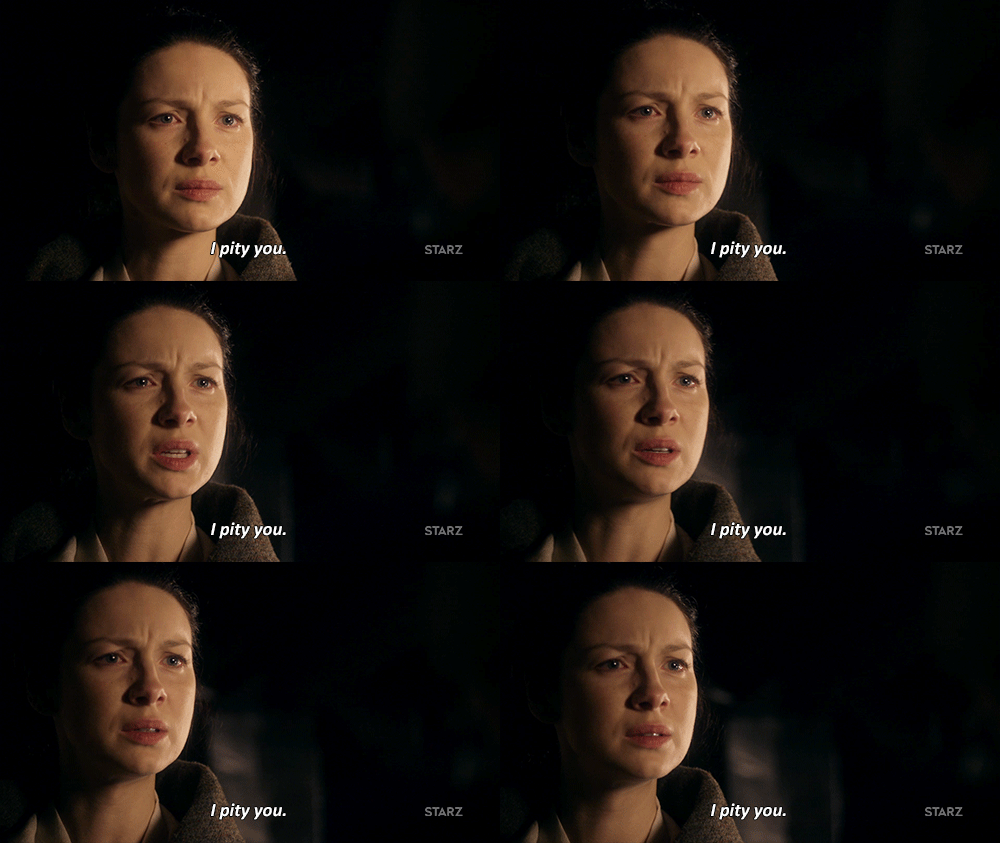
    I initially didn’t believe my mum when she said we couldn’t afford it, so I sulked for days until she got angry and said something like, “I pity you. You think your father will pay?”

    In my head, my mum was just saying that because she didn’t want me to attend the university. So, I called my stepbrother and asked if he could get his mum to convince mine to allow me to go. That was how I found out that my dad wasn’t even paying for his schooling; it was his mum.

    [ad]

    Apparently, when my dad lost interest in a particular wife or felt disobeyed, he withdrew financial support. 

    Some things finally began to make sense. I’d started JSS 1 in a private secondary school, but after getting punished a few times for delayed school fee payments, my mum withdrew me and enrolled me in a public school instead. 

    I’d often wondered why I attended a public school different from the school my stepsiblings from the last wife attended, but I didn’t ask my mum. I now know that she had resorted to paying my fees herself a couple of times and moved me to a cheaper school when she could no longer afford it on her fabric-trading income.

    By the time I got into uni in 2015, it was clear that my dad had withdrawn whatever financial support he had given my mum. He married another wife and moved my mum to a one-bedroom apartment. I guess he felt we didn’t need more room since I’m my mum’s only child. 

    My mum put me through university, and I supported myself by offering tutorials and selling branded t-shirts. My dad only chipped in when my mum forced me to call him to ask for money. Even then, he rarely sent more than ₦20k at a time, and I hardly called more than three times a year.

    I finished university in 2021 and told myself I’d never ask my dad for money again. I had to beg him to fulfil his responsibilities while in school, and I vowed never to be in a situation where I’d have to beg him to survive again. Three years later, I’m still standing by that vow.

    It hasn’t been easy, though. After NYSC, I had to navigate unemployment for almost a year and survived by squatting with friends and whatever money my mum could send. I have a job now, but at ₦110k/month, it’s barely enough to do anything significant except handle the feeding and utility bills at home. 

    I’m usually broke before the end of the month and often have to rely on quick loans for transportation to work. I still live with my mum and don’t even know when I’ll be able to afford my own place, but I’m fine with slowly figuring things out.

    I still call my dad occasionally, especially for his birthdays, but I don’t force any relationship or tell him how I’m doing. He also doesn’t care because he would’ve asked if he did. 

    I know some of my step-siblings still fall over themselves to please him. They still visit him and do everything he says to get his favour and hopefully get included in his will. My mum also wants me to get closer to him, so I can benefit too. Me, I don’t care. 

    I don’t even want to be included in his will because I know how polygamous families can get fetish when it’s time to share properties. I don’t want to rely on whatever may or may not come from my father. His money is his money. It might never be mine, and I’m fine with that. I’d rather make my own fortunes.


    *Name has been changed for the sake of anonymity.


    NEXT READ:  I Regret Telling My Friends How Much I Earn

    Get more stories like this and the inside gist on all the fun things that happen at Zikoko straight to your inbox when you subscribe to the Zikoko Daily newsletter. Do it now!

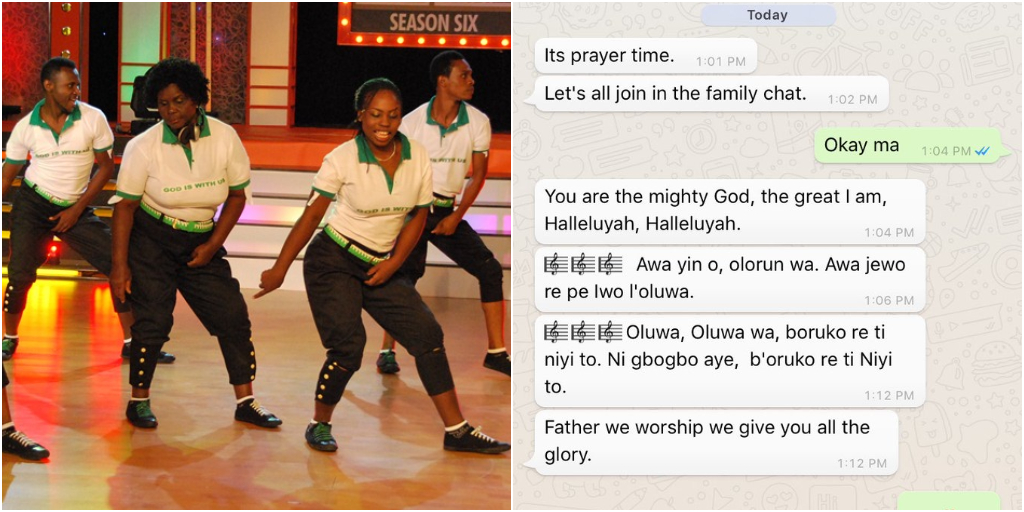
  • Every Nigerian family WhatsApp group has that one unforgettable event. Whether it’s Big Mummy London sending a chain of annoying broadcast messages or a sibling adding the entire extended family without warning, there’s always some premium gbas gbos. 

    We asked a few Nigerians to share the drama that’s gone down in their family group chats, and let’s just say the tea is piping hot.

    Seun*

    My brothers and I had a heated football conversation in the family group chat. I saw this lengthy, senseless take and replied, “Guy, read what you wrote, does it make sense?” I dropped my phone to attend to something and returned to find my dad going off in the group. That’s when I realised he’d sent the message. I apologised, explaining it wasn’t directed at him, and he said it was fine. That night, my mum called and gave me a proper lecture about respecting your parents.

    Balikis*

    While preparing for my cousin’s wedding, we created a family WhatsApp group for easy communication. The group was mostly inactive since the wedding was months away, but we’d get occasional updates about hotel reservations, the asoebi colour, and other plans.

    One day, my bride-to-be cousin posted the asoebi rates and other expenses. A younger cousin felt the price was too high and tried to express her thoughts. My cousin flared up, insisting the younger cousin had no right to address her without using “Sister” or “Aunty.” 

    The exchange got heated, with some cousins arguing that since the bride was only a few years older, it was fine to call her by name. Most of us were in our mid to late twenties, and I agreed with them, though I didn’t voice it to my cousin. She eventually left the group and only sent updates through me after that.

    Ben*

    During COVID, my mum kept sending videos and broadcasts full of false information in the family group chat, and I was getting tired. I’d casually asked her to at least read or verify things before spreading panic, but she didn’t take it seriously. Then, one day, she sent a video claiming people should take salt baths to prevent COVID.

    I was pissed because she was acting like someone with no education. I sent a voice note trying to respectfully correct her, but she didn’t appreciate my tone. After listening, she replied, “Why not go to the market, buy a cane, and come beat me? Then you’ll know you’ve corrected me.”

    I knew I’d messed up. I spent the next few days apologising, explaining I wasn’t trying to be rude. She still sends annoying videos, but I’ve muted the group chat.

    Tayo*

    My stepbrother tried to play peacemaker by adding all 12 step-siblings to a WhatsApp group. I knew it was a bad idea because we’d never been close, and each wife had always kept her children apart.

    He created the group without discussing it with anyone beforehand, and we all found ourselves in a group called “Adedeji* Children.” Worse, he didn’t explain why the group was created or try to make introductions. After a week of silence, people started leaving. The third eldest left first, then two others, until we were down to four. I’m not sure if he even noticed what had happened. He eventually came back some weeks later asking why I left. His message is still in my unread folder.

    Ade*

    My eldest brother offered to sponsor our youngest sibling’s university education. He doesn’t have a high-paying job, but he’s unmarried and could afford it. We’d been trying to secure her admission, but nothing clicked.

    One day, the second-born, who recently got promoted and now earns a lot more, came to the WhatsApp group and announced she’d enrolled our sibling in a private uni. It shocked us because she hadn’t discussed it with anyone. When we tried to reason with her, she refused to back down. My eldest brother commented that she can’t boss us around because she has more money now. Then he left the group. It took a lot of begging to get him back.

    Dorathy*

    One morning, my deeply spiritual sister sent a voice note to our family group, saying she’d been having visions and nightmares. She said someone in the group was working to bring us down. For context, the group includes our parents and all six siblings.

    Our parents demanded to know who she was talking about, but she refused to name names, insisting we fast and pray so God could reveal the person. The group went quiet for days because no one knew how to handle the situation. Thankfully, she returned weeks later to say the evil-doer had been defeated. We all still wonder, “So, who is the witch in this family?” But no one has dared to ask.

    Read this next: How to Know Your Parents’ Favourite Child

  • There are different ways to trick your parents into giving you money, and for Chidi*, it turns out catfishing is one of them. 

    The 23-year-old talks about discovering his dad’s womanising side and why pretending to be a woman was the perfect punishment for his dad’s actions.

    As told to Boluwatife

    You should know two things about my dad: He’s an unrepentant womaniser and as stingy as they come.

    I only learned about the womanising a few years ago, but that stingy part? I’ve always known that about my dad. Or, more accurately, I knew that my dad was often reluctant to spend money, but I thought it was because he didn’t have much of it. It wasn’t exactly a far-fetched idea, considering he’s a building engineer with a wife and six children to feed. 

    Plus, he was hardly around due to working on one construction site or the other. I assumed that he constantly had to hustle to provide for us.

    I grew to understand that getting money from my dad didn’t just happen; it involved serious planning. Several times, I’ve seen my mum sit across from my dad at the dining table to discuss after we (the children) had cleared the plates. 

    Those discussions were often about money — how much she needed to sort out a bill and why exactly the bill was necessary. It was like a budget presentation and approval meeting. My dad wouldn’t drop anything if she didn’t “defend” her needs well enough.

    I remember almost missing the deadline to pay my WAEC registration fee in 2015 because I accidentally gave him two different dates as the payment deadline. He assumed I was lying about the money and refused to pay until my teacher came to see him. 

    University wasn’t any better. My dad never picked up my calls, just in case the call was for money. He only responded to my texts to inform me when he’d sent the usual ₦5k he sent once or twice a month. I didn’t think much about his attitude because it wasn’t strange — the whole family knew he hated spending money. But, I made an interesting discovery in my final year.

    My university was in the same state as my family house, but I hardly ever went home because the distance between home and school was too great to visit regularly on my meagre allowance. But one day in 2022, I left school to attend a party at a nightclub not too far from home and surprisingly found my dad at the same nightclub.

    Thankfully, he didn’t see me, but I had a good view of him from where I sat across the club. This man was dancing with a hot babe and holding her like his life depended on it. 

    I couldn’t tell my mum what I’d seen because I worried it would cause problems at home. But I had to tell someone, so I called my younger sister instead, and that’s when I realised I was even the least informed in my family.

    Apparently, my dad had a thing for pursuing everything in skirts. My sister was still in secondary school, so she lived at home and had front-seat access to the multiple times my mum accused my dad of spending all his money on different women. Those times he wasn’t home that I thought were due to hustling? Oga was actually enjoying his life with women.

    From what my sister shared, I realised the womanising had always been there, but my mum never made noise about it. I think she thought he’d grow out of it but had no choice but to vocally complain when he continued after almost all the children had grown up and left the house.

    I was quite disappointed to learn that about my dad. This man struggled to provide for his own family, but he spent money freely on girlfriends. I know how often my mum had to borrow to support her provisions business when we were younger. I was angry, but there was nothing I could do. I couldn’t confront him and risk losing financial support for school.

    But then, some months later, I found an opportunity to hit back at my dad.

    I can’t remember what I was doing on Facebook that day, but I unexpectedly found my dad’s second Facebook profile. I say second because he already had one that we all knew about. This new profile only had his middle name and a shortened version of his surname, but I was sure it was him from the profile picture.

    My female friend, Ada*, was in my hostel room that day, and I showed her the profile while complaining about how my dad had probably created a secret Facebook account to lie to women that he was single.

    Ada jokingly suggested opening a fake account to trick him, and what started as a joke quickly became real. I opened a new account pretending to be a girl and uploaded Ada’s pictures to make my claim realistic. I sent my dad a friend request, and by the time I woke up the next day, he had accepted it.

    Over the next week, I was in a “talking stage” with my dad — of course, he thought it was a fine babe. Whenever he asked for pictures or video calls, Ada took over. By the second week, I started billing him. Surprise surprise, he sent money. The first amount my dad sent was ₦50k. He’d never given me ₦50k as his actual child before. I shared the money equally with Ada. 

    The scam lasted three weeks, and my dad sent a total of ₦250k to his “mystery woman”. It was that high because I made him send ₦100k for the supposed flight ticket to bring his babe to our city so they’d finally meet. 

    Ada and I had claimed the “babe” was a university student in another part of the country, which was why we could stretch the meeting to three weeks. The “babe” was supposed to travel down to our state for semester break and meet with my dad. Of course, we blocked him immediately after that and shared the money.

    After we blocked him, I called my sister and tried to get a sense of what things were like at home, but she said everything was fine. My dad didn’t act like anything strange had happened and just continued normally.

    Of course, he had to continue normally. How do you tell your wife, “My online girlfriend scammed me”? It was the perfect punishment, and I don’t feel bad at all. I’d do it again if I had the chance.

    That was over a year ago, but I still smile secretly anytime I see my dad. I’m tempted to one day tell him I was his “online girlfriend”, but I’ll keep that secret a little longer.


    *Names have been changed for the sake of anonymity.


    NEXT READ: I Took an ₦80m Loan to Pursue My Biggest Dream Yet

    [ad]

  • 1. So you’ve just finished NYSC and your adulting has fully begun

    Yes o!

    2. And all your mates are running up and down trying to get a job

    Applying up and down!

    3. But you’re not really bothered because your uncle at NNPC told you to bring your CV after NYSC

    I’m not even bothered.

    4. And even your aunty at CBN has told you to put your mind at rest

    I’ve got zero worries!

    5. When you see your mates busy applying to banks up and down, you’re like

    2 or 3 jobs are already waiting for me sha!

    6. How you get yourself ready to see your uncles and aunts that have promised you the world

    Let me slay for them!

    7. How you give them plenty missed calls when they don’t want to pick up

    What’s happening here?

    8. You, when you go to their office and their secretary says they’re not around

    So whose car did I see outside?

    9. When you now try applying for other jobs but they’re all closed

    I have finished myself!

    10. You, when you see your mates going to work and you’re still jobless

    Take me with you now!

    11. When you see your aunties and uncles at family weddings, you’re like

    You people don’t kuku have shame.

    12. The next time a family member says you should bring your CV, you’re like

    I don’t want!
  • 1. When they’re arguing and you try to chook mouth, your mum is like:

    My amebo has earned me instant ela!

    2. When you now shut up and they say you don’t care about them.

    Which one do you people want me to do sef?

    3. When one of them comes to talk about the other one to you.

    But is it my business?

    4. When your dad says he’s still angry but he’s still eating your mum’s food anyhow.

    This man is not even hard at all!

    5. When your oversabi aunties and uncles now want to chook mouth.

    Face your marriage please!

    6. When they now start blaming you for allowing the fight go on for this long.

    Sha do and be going to your house.

    7. You, when you’re talking to one of your parents and they’re just proving stubborn.

    Your strong head cannot get you anywhere sha!

    8. When they now turn you into messenger when they want to talk to each other.

    Because I’m the proverbial grass that is suffering here o!

    9. You, when you see your dad sleeping on the couch.

    “The man that proves stubborn to his wife will have no bed to sleep in the night” – Wole Soyinka, 1900

    10. When you now see both of them laughing and talking together suddenly.

    Is that how you people used to do?

    11. The next time they start fighting and mention your name, you’re like:

    I am not chooking hand in your wahala again!