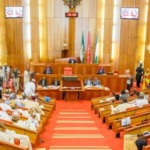
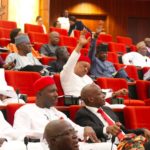
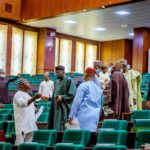
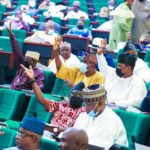
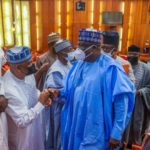
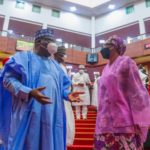
• Uche’s* (27) outgoing vibe landed him a coveted NYSC posting at the National Assembly. In this story, he talks about the free-flowing cash, enjoying Abuja’s nightlife, and how being so close to power in Nigeria was not all he thought it would be.

    Life before…

    I grew up in a very humble background. And when you’re in that kind of situation, your reality forces you to create alternate universes where you dream big as an escape.

    I wasn’t athletic at all, so while other kids played street football, I disappeared into books. I loved international thrillers from writers like James Hadley Chase and Tom Clancy. My dad would also bring home newspapers, and I devoured those too. So from quite a young age, I was already building an interest in government and geopolitics.

    Government was my best subject in secondary school, so I went on to study International Relations at university. I dreamt of becoming a foreign service career officer, maybe even an ambassador one day.

    Maybe it wasn’t meant to be, or maybe the chance will still come later. But my time at the National Assembly (NASS) showed me the worst sides of Nigerian politics.

    Preparing for NYSC

    Ending up at NASS was honestly by chance. I wasn’t trying to get posted there, but looking back now, I see how my choices and attitude made it happen. There was a lot of luck involved too.

    At university, I got along really well with my lecturers. With their advice and encouragement, I already had my path mapped out. After my bachelor’s, I was going to get a master’s, maybe even a doctorate, and then join the department as a lecturer at my university.

    One of my professors told me that the most likely route to the foreign service roles I wanted was through academia. So I didn’t see NYSC as an opportunity, just an obstacle I had to clear before continuing my academic journey.

    That’s why I wasn’t too bothered about where I’d serve. Luckily, I got posted to the seat of power: Abuja.

    Get More Zikoko Goodness in Your Mail

    Subscribe to our newsletters and never miss any of the action

    Being friendly in camp was helpful

    This is where things get serious. First of all, remember, this is Nigeria. For a place like the National Assembly, a lot of placements are already reserved for the connected.

    So if, like me, you know absolutely no one, the best way to give yourself a chance is to get into a leadership position at camp. At the time, I didn’t realise I was helping my chances. I was just being myself.

    Everybody likes a humble, approachable guy. And that’s naturally who I am. I’m outgoing and I love meeting people. So I had no issues walking up to people to introduce myself and get to know them.

    You’ll find that most people want friends but don’t want to be the first to initiate. They put up aloof fronts but are pleasantly surprised when someone stretches out a hand for a shake and starts a conversation.

    Because I was forward in making friends, I got quite a number of them. So when the platoon leadership elections came up, I indicated interest, and with  votes from all my new friends and acquaintances, I won. It was a landslide, to be honest.

    Platoon leadership was a stepping stone

    I became platoon president, but there are other positions too, like vice president or treasurer. Try to get one of these roles if you can.

    As platoon leader, your job is to organise your platoon for morning drills, kitchen duty, cleaning, and so on. That means you interact with camp officials a lot. You also coordinate your platoon’s participation in camp events like sports, pageants, and marching. I made sure my platoon did well in everything. We made the podium in all activities.

    I had to do a lot of legwork. Not just because I was platoon leader, but because this was Abuja. Let’s just say a lot of the corpers there were privileged.

    Some basically came, registered, and left only to return on the last day of camp. Others stayed during the day but went home at night. Black tinted SUVs were constantly coming and going.

    These were the type of people who would quickly contribute funds for whatever needed doing, but I had to do the heavy lifting myself. At the end of the day, being active helped me build a good rapport with the camp officials, and that’s exactly what you need to do.

    The meeting

    Near the end of the three weeks in camp, the officials called us platoon leaders for a meeting. That’s when they asked if we had places we’d like to be posted to.

    Considering my career goals, I immediately said the Ministry of Foreign Affairs. But it turned out postings there are in high demand, and far more connected people had already made requests. The  Ministry of Foreign Affairs was off the table, so I was told to pick between the Nigerian Defence Academy (NDA) and the National Assembly (NASS). I chose NASS.

    Reporting for duty

    Those of us posted to NASS took our documentation and went there. At the gate, once you show your papers, they give you a visitor’s tag and let you in. We were ushered into an office, and from there different offices would come and pick from among us. Sometimes representatives requested specific ethnicities or genders.

    Of course, this didn’t happen in a single day. Nigeria isn’t the kind of place where things move that fast. Over several days, we’d go, sit in a room, enjoy the AC, scroll on our phones, and wait. Each day, a few people got picked.

    One day, while I was chatting with other corpers, a lady came in, pointed at me and another guy, and said, “You and you, follow me.” We followed.

    As we walked, she asked if we knew anybody. We said no. Then she asked the other guy his ethnicity. He was Yoruba. She told him to go to the Speaker’s office. She asked me the same. When she heard I was Igbo, she looked disappointed. She thought for a bit, then told me to go to the office of the Clerk of the House of Representatives and tell them she sent me.

    So I went. I met the clerk’s assistant, told him she sent me, and he just pointed me to a desk. That was it.

    The clerk’s office

    The clerk’s office handles general administration and welfare for the House of Representatives.

    On the admin side, all bills pass through the clerk’s office before they ever get to the floor. It’s also where all the keys are kept. If anyone wants to access a room, they come to us.

    On the welfare side, once items like office furniture or cars are approved, the budget goes to the clerk. The office receives bids from contractors, buys the items, and distributes them to members.

    Most days, I’d come in, greet everyone, then start with the register of keys. People sign keys out, so I’d check who hadn’t returned theirs. Then I’d go from office to office to collect them. That took time, but afterwards you basically just sit, relax, go for lunch, gist, and watch TV.

    Some days, though, politics demanded certain bills be passed quickly. We’d stay till as late as 11 p.m., fine-tuning the bill. We worked with the legislative aide of whichever representative owned the bill to make sure it was ready for the floor. I knew my stuff, so my boss valued my input.


    ALSO READ: I Got a PPA That Paid Me ₦250,000 During NYSC. Here’s How I Did It


    The lifestyle

    We were paid a salary in addition to the NYSC allowance. And honestly, money flowed freely at NASS. Any politician who came to the clerk’s office would gift us before leaving. “Corper wee, have this,” “Well done, corper. Take this one.” ₦10,000 here and there, it adds up. I usually left with around ₦50,000 most days.

    For a poor boy like me, I hadn’t seen that kind of money before. I was just spending. I wish someone had told me to save.

    Almost every day after work, we’d head to Silverbird Galleria to watch a couple of films. From there, we’d go to Trukadero. Opposite Trukadero was Cubana, so we’d cross over. Then off to Moscow Underground. We were basically touring Abuja. I have to admit, the nightlife in Abuja is great. It was really fun.

    Getting retained after service… Or not

    First tip: know your stuff. I did.

    I was really good at my job. The Nigerian bureaucracy is full of inefficiency, so I quickly got to work drafting new process documents to make things smoother. My work started getting noticed, and my boss even wanted me to stay after service. Unfortunately, I didn’t fit very well into the culture there, and that ended up working against me.

    But here are some tips that might help you have better luck.

    How to get retained

    Be morally flexible. At NASS, money flows freely. Too freely. Like I said, I would accept gifts from visiting politicians. But every bill has to pass through the clerk’s office, and people are always looking to grease the wheels with cash. I wasn’t ready to collect those kinds of monies, and in that environment, that makes you “untrustworthy.” They’re very cautious of potential whistleblowers.

    Never discuss politics. It sounds ironic, but at the National Assembly, avoid all talk about Nigerian politics. Especially any critique of how politicians aren’t doing well. And absolutely do not talk about religion.

    Be humble. Or at least act humble. Basically, be a mumu. Unfortunately for me, I wasn’t.

    One day, I came to the office and saw someone at my desk. I politely asked him to get up so I could work. To be honest, I think I fell for a trap. It exploded into a big issue.

    Apparently, I’d broken some unwritten rule where you can’t tell someone to get up if they’re “higher” than you in some hierarchy I didn’t even know existed. That’s how I got banished from the clerk’s office to some inactive committee. That’s when I knew it was over.

    So yes, be “humble.” Remember you’re dealing with people whose survival depends on staying close to power. If they sense any form of threat from you, they’ll do their best to get rid of you.

    Maybe if I had kept my head down, I’d have been retained. Maybe if I had been more of a politician.

    In summary…

    Assuming you studied an appropriate course (political science, government, international relations, etc) and you find yourself posted to Abuja.

    • At camp, be a social butterfly. You’ll need people’s support for the elections.
    • Contest for a platoon leadership position. That support comes in handy here.
    • If you win the elections, be a very active leader. Be respectful and try to build a rapport with the camp officials.
    • When you get the opportunity, ask for your desired placement.
    • At NASS, be good at your job, work hard and be humble.
    • Fingers crossed Nigerian politics doesn’t do its thing.

    *Names have been changed to protect the privacy of subjects


    Before you go, help us understand how you and other young people feel about the 2027 general elections by taking this 10-minute survey.


    Ever had a moment where Nigeria’s systems made life harder—or unexpectedly easier? We want to hear about your personal experiences that reflect how politics or public systems affect daily life in Nigeria. Share your story with us here—we’d love to hear from you!


    Click here to see what other people are saying about this article on Instagram

    [ad]

  • Remember how we all woke up one morning and heard we had a new national anthem to learn? It looks like affliction might actually arise a second time because your faces are cooking up something sour.

    The National Assembly (yes, the same people that approved the State Of Emergency declaration in Rivers) is working towards passing a bill that will potentially restrict bloggers and `other social media users’ in extension.

    What’s going on?

    We’ve called the people at the National Assembly agbayas before and that’s because they were fan-boying President Tinubu, instead of keeping him in check. We don’t know the name to call them again because their latest move has left us confused. On March 18, the Nigerian Senate passed for a second reading a bill that will compel bloggers and social media platforms to have physical offices.

    This piece of legislature titled “A Bill for an Act to Amend the Nigeria Data Protection Act, 2023, to Mandate the Establishment of Physical Offices within the Territorial Boundaries of the Federal Republic of Nigeria by Social Media Platforms and for Related Matters,” was first read at the Senate on November 21, 2024 and was sponsored by Ned Nwoko, the senator representing Delta North Senatorial District.

    Get More Zikoko Goodness in Your Mail

    Subscribe to our newsletters and never miss any of the action

    What exactly is the bill about?

    The bill is looking to amend the already existing Data Protection Act of 2023 to include the following clauses:

    • All bloggers operating within Nigeria must have a verifiable physical office in any of the country’s capital cities before they can be allowed to operate.
    • All bloggers operating within Nigeria “must keep proper records of their employees and belong to a recognised national association of bloggers, which shall have its headquarters in Abuja.”
    • Social media companies (like Meta and xAI) whose social media platforms (Instagram, X, Facebook, TikTok, YouTube, etc) are used in Nigeria must establish identifiable physical offices within Nigeria.

    Why is this bill a bad idea?

    AI generated image depicting a sad Nigerian

    Not to play Captain Obvious here, but this bill is a recipe for disaster for many reasons. For starters, it will clamp down on Nigerians’ freedom of expression, which is already shaky.

    If allowed to pass, this bill will also be another way for the government to shut down opposition or regular Nigerian citizens saying things they do not like. They are already doing this with Section 24 of the Cybercrime Act. This Section of the Cybercrime Act was used to target journalists like Daniel Ojukwu, who was tracked down and illegally detained by the Nigerian Police for his investigative report exposing corrupt practices in the government. The same section has been used to detain people like Olamide Thomas and Olumide Ogunsanwo, also known as Sea King, who “insulted” government officials and agencies.

    Journalists and regular social media users are going to be in hot soup if this new bill is allowed to pass, and there is no dainty way to say it. The Socio-Economic Rights and Accountability Project (SERAP) agrees, too, which is why they recently wrote to the National Assembly (NASS) on April 12, telling them to stop working on this bill.

    SERAP pointed out in their letter to NASS that in addition to infringing on Nigerians’ rights to access information and digital technology, the bill’s success could “severely hamper business operations in the country, as many are reliant on foreign tools, services and technologies for their operations, as well as other sectors that rely on online information.”

    Why we should call out the National Assembly

    Photo image of women protesting. Photo: African Feminism

    The Senate President and Senator Ned Nwoko (who sponsored the bill) swears that this bill is not targetted at the freedom of boggers and social media users but we should all take that with a shit ton of salt.

    As the bill passed its second reading, Senate President Godswill Akpabio said, “I don’t want the world to misunderstand us that the Senate wants to gag social media, it is about tax. For the purpose of tax.” The thing is, this logic makes no sense at all because as Punch Newspapers pointed out in an editorial, these social media companies already employ tons of Nigerians remotely and are “ already contributing robustly to Nigeria’s tax revenue.).

    So, even though the National Assembly might be packaging this bill as something that will be economically beneficial to Nigeria, we should all call it out because the maths is clearly not mathing. What this bill smells like is an opportunity for the ruling class to deprive Nigerians of their rights to freedom of speech and access to information.We should also act fast in calling out this suspicious bill because the current National Assembly has a reputation for supporting unnecessary things. They did it with the surprising change of the National Anthem in 2024, and more recently with the ratification of the State Of Emergency declaration in Rivers state.

    What can you do to stop this bill?

    You can do either or all of the following:

    • Talk about it on social media everyday until it is scrapped. You can do this by using hashtags and tagging international organisations like the UN and Amnesty International, and Human Rights Watch.
    • Call out lawmakers in both chambers of the National Assembly and always tag them when you do
    • Call the lawmakers representing you at both the House of Representatives and the Senate to tell them you don’t want this bill to become law. You can find all of their contact information here.Create and share online petitions advocating for the bill to be scrapped. Petitions are easy to create, and you can make one on platforms like this.
    [ad]
  • Reworked photo of Tinubu addressing the National Assembly. Credit: Aderemi Adesida BCM

    You know that confident, unbothered way you move when you know there’s nothing standing in your way? That’s exactly how Bola Tinubu has been operating. For the average person, that might be admirable, but for the president of a democratic country, it’s unsettling — and we have the National Assembly to blame for it.

    What’s happening?

    On Tuesday, March 18, President Bola Ahmed Tinubu made a national broadcast declaring a six-month-long state of emergency in the South-South state of Rivers. As part of this sweeping action, he also suspended the state’s governor, Sim Fubara, his deputy, Ngozi Odu, and the entire Rivers’ House of Assembly. Finishing off with a flourish, he appointed Vice Admiral Ibot-ette Ibas (rtd) as the state’s military administrator. 

    According to Tinubu, the move was necessary due to political unrest in the state. He cited Section 305 of the 1999 Constitution, which allows a president to declare a state of emergency in cases of national danger, disaster, or threats to public order and safety.

    But here’s the thing— the Nigerian constitution does empower a sitting president to make such declarations, but it also clearly outlines the conditions under which the powers can be exercised. These include war, major security threats, breakdown of public order and safety, natural disasters, the inability of the government to function properly, or a direct request from a governor — none of which apply to the situation in Rivers. And even if they did, Section 305 doesn’t give the president the authority to suspend elected officials like the governor or his deputy.

    Unsurprisingly, the backlash against this was swift. Political stakeholders, legal experts and organisations condemned the president’s glaring disregard of the Constitution. The Nigerian Bar Association (NBA) called it an “unconstitutional usurpation of power and a fundamental breach of Nigeria’s federal structure.” Femi Falana, a Senior Advocate of Nigeria (SAN), reminded Tinubu that “the office of an elected governor can only become vacant upon death, ill health, resignation, or impeachment. Even where the office of the Governor becomes vacant for any reason whatsoever, the Deputy Governor shall be sworn in as the Governor.”

    Tinubu looks on as the newly appointed Rivers’ military administrator takes oath. Credit: National Record

    If the president heard any of these criticisms, he sure didn’t act like it. Barely 24 hours after his declaration, on Wednesday, March 19, he swore in Vice Admiral Ibot-ette Ibas as Rivers’ state military administrator.

    The Nigerian constitution also requires that the president publish such a proclamation in the official government gazette and obtain the National Assembly’s approval via a two-thirds majority.  But on Thursday, March 20, instead of doing their job and rejecting this blatant overreach, both chambers of the National Assembly approved it

    Why are we dragging Nigeria’s parliament?

    Photo images of Nigeria’s Senate President and House of Reps Speaker Photo: Channels Television

    In most democracies, the legislature exists to keep the executive arm of government in check. But Nigeria’s National Assembly seems to have left that group chat and deleted the app. If you think this is the first time they’ve rolled over for Tinubu, then you’re in for a ride.

    The assembly has gotten so cosy with the president, that they have been deservedly tagged  a ‘rubber stamp’ assembly — yes-men who agree to anything the President says, no matter how ridiculous. And they’re not even subtle about it.

    Take November 2024, for example. After months of delay, Tinubu finally presented the 2025 budget —  ₦49 trillion, a whopping 36.8% increase from the previous year. But it wasn’t just its size that had Nigerians bothered; it was also the plan for financing it. According to Tinubu’s minister of finance, Wale Edun, ₦35 trillion would be gotten through revenue, while the remaining ₦13 trillion (4% of the country’s GDP) would come from borrowing. Financial experts and anyone with half a brain raised eyebrows and voices over the negative impact this would have on the country’s sorry public borrowing tab, already at  ₦134.3 trillion at the time.

    So, what did the National Assembly do? Grill him? Ask hard questions? Nope. On December 18 2024, when Tinubu entered the Senate chamber, Senate President Godswill Akpabio immediately broke into a pro-Tinubu song, ‘On your mandate we shall stand,’ even before the man got the chance to begin his presentation. By the next day, December 19, the budget had passed the first and second readings at the Senate and was on its way to the committee stage.

    And it doesn’t stop there.

    Tinubu and Akpabio pose for a photo. Credit: Vanguard

    In October 2024, Tinubu proposed changing Nigeria’s national anthem. Within a week, his besties in the National Assembly passed it, sparking outrage across the country. Political analyst Afolabi Adekaiyaoja told Financial Times, “The lack of public engagement also doesn’t show a legislature able to provide necessary checks on the executive — which doesn’t encourage citizens [that there is] effective accountability.”

    [ad]

    In March 2024, the National Assembly gave Usain Bolt a run for his money when they approved a whopping ₦1.2 trillion FCT budget just three legislative days after Tinubu submitted it. 

    In November 2024, they outdid themselves again, approving Tinubu’s $2.2 billion loan request barely 48 hours after he made it.

    In October 2023, Tinubu nominated 10 Resident Electoral Commissioners (RECs), four of whom  were his loyalists (including two card carrying members of the APC). Despite public outcry, the National Assembly confirmed them without hesitation..

    Why does this National Assembly hardly oppose the President?

    Tinubu speaks with the leaders of the National Assembly. Credit: Daily Trust

    If you think Tinubu simply lucked out with this assembly, think again. The president was very intentional about setting up a National Assembly that would cause him little to no stress.

    He played a central role in installing the leadership of both chambers — openly backing and working for the successful emergence of Godswill Akpabio as Senate President and Abbas Tajudeen as Speaker of the House.

    Tinubu was so public with his support that others openly talked about it as well. In May 2023, while National Assembly members prepared to select the leaders of both chambers, Tinubu’s current Chief Of Staff, Femi Gbajabiamila and Godswill Akpabio (before becoming  Senate President) held a meeting with members of the House of Representatives where they warned them against opposing Tinubu’s anointed candidates. Akpabio was quoted as saying “…In your daily dealings, my late mother told me that I should be aware of the 3Gs: The first G is God; the second G is Gun, and the third G is Government.

    “The first G is God Almighty. The second G is what? Gun, and the third one is Government. May you conduct yourself mindful of the admonition of my late mother by respecting the 3Gs, particularly the government,” he said.

    Tinubu likes to be thorough, so he didn’t stop at securing leadership spots for Akpabio and Tajudeen; he reportedly did the same hard work for Barau Jibrin and Ben Kalu, who emerged as deputy senate president and deputy speaker.

    The minority leaders — Kingsley Chinda (an ally of Nyesom Wike) and Abba Moro (announced by Akpabio) — weren’t left out. Neither were the chief whips of both chambers.

    But capturing the leadership of the Senate and House of Representatives wasn’t enough. Tinubu, through his loyal allies — Gbajabiamila, Akpabio, and Wike — ensured that the entire National Assembly would fall in line throughout his presidency. First, they formed a multi-party coalition within the Assembly. Then, they instilled the fear of God in lawmakers. Finally, Tinubu sealed the deal by dazzling them with a ₦70 billion “gift.”

    In July 2023, Tinubu submitted a bill to the National Assembly seeking to increase the 2022 supplementary budget originally signed by the previous Assembly. ₦185 billion was slated for the Ministry of Works and Housing for flood recovery, ₦19.2 billion to the Ministry of Agriculture to assist farmers affected by the flooding, ₦35 billion to the National Judicial Council, and ₦10 billion to Federal Capital Territory (FCT) projects. But most notably, ₦70 billion was earmarked for the National Assembly to “support the working conditions of new members.”

    Despite widespread criticism of both the ₦35 billion judiciary allocation and the ₦70 billion Assembly “support,” lawmakers from both majority and minority parties rushed to approve and amend the budget without hesitation.

    And just like that, Tinubu secured the most devoted fan club a president could hope for. From rubber-stamping his controversial proposals to singing his praises on the floor, this National Assembly has gone all in. The recent approval of his outrageous emergency rule? That might just be the tip of the iceberg.

    Why this is dangerous

    The Nigerian government is fashioned to run under the doctrine of the separation of powers.  The entire idea behind this doctrine is to ensure that the three arms of government (the judiciary, legislature, and executive) are independent of each other and that the powers of each arm do not conflict with the others.

    In order to ensure that the separation of powers is maintained, Nigeria also practices the principle of checks and balances. This is essentially a method designed to keep each branch of government in line. How does this principle work? By arming each branch of government with enough constitutional power to defend itself in the event that any arm tries to cross the lines drawn between them.

    Tinubu’s bromance with the National Assembly blurs these lines and renders them useless so that instead of watching his steps and his actions to be careful of overstepping his bounds, Tinubu confidently does whatever he likes, knowing his buddies would always have his back, even if he  single-handedly suspends a democratically elected governor, something only the legislative arm of government (specifically the State House of Assembly) can do. Today, the President suspended the governor of Rivers State; tomorrow, it could be in multiple states. Who will keep him in check then?

    [newsletter]

    How can you help to fix this mess?

    Nigerians might just have to step in if the National Assembly cannot call the President to order. Here are some of the ways you can help prevent Nigeria from descending into even bigger messes in the future:

    • Call your representatives in the National Assembly and tell them how you want them to vote on issues. You can find the lawmaker representing your constituency here.
    • Recall your lawmaker if you are convinced they are not performing. Here are the steps for recalling Senators and House of Rep members. If you have questions about this process, you can find your answers here.
    • Name and shame lawmakers who support illegality.
    • Speak up on social media using hashtags.
    • Start digital campaigns demanding that the National Assembly shut down laws unfavourable to Nigerians or decisions that disregard the constitution. Petitions are easy to create, and you can create one on platforms like this.
    [ad]
    
    
  • The 9th National Assembly will be dissolved in less than two months, but it looks like they’re focusing on finishing some side quests. 

    On April 13, 2023, a harmonised version of the Peace Corps Bill passed the third reading and was forwarded to President Buhari for assent within 30 days. This Bill would change the name “Peace Corps of Nigeria” to the Nigerian Peace Corps. And it’ll transform the agency from its volunteering template into one funded by the federal government. 

    The road to this has been challenging. The Bill was first proposed by the National Assembly in 2017, but it was rejected by the president based on lack of funds and concerns over it replicating existing security agencies. Amidst these concerns, there were reports of the members of the National Assembly taking bribes to pass the Bill.  

    Regardless, the Bill was reintroduced in 2019, and this time, the National Assembly claimed that it had addressed the previously raised issues. 

    We need to know, however, who the Peace Corps of Nigeria are and its functions. 

    History of the Peace Corps of Nigeria

    PCN was founded on July 10, 1998, by Dr Dickson A.O., who was 25 years old, to engage unemployed youths, productively: by giving them purpose and engaging them in paramilitary activities.

    Some of the functions of the Peace Corps are:

    • Job creation through the provision of alternate employment
    • Social and economic development through volunteering programmes and partnerships with Non-Governmental Organisations (NGOs) and governments.
    • Organising immunisation, census and sanitation programmes.
    • Check criminal activities and insecurity with volunteers who form vigilante groups or neighbourhood watch.

    Hopefully, the approval of this Bill will ease the Peace Corps in performing their duties, and it won’t be another proxy for corrupt politicians. 

  • The National Assembly elections (Senate and House of Representatives) were conducted on February 25, 2023. But only 98 out of 109 senate seats and 325 out of 360 seats for the House of Representatives have been declared by the Independent National Electoral Commission (INEC). This is because elections were postponed in certain places, and some results were declared inconclusive. 

    Some of these places include: Enugu East, Kebbi North, Plateau Central, Sokoto North, South and East, Yobe South and Zamfara Central. The Commission announced that supplementary elections will be held in these regions after the governorship elections conducted on March 18, 2023, but a date hasn’t been announced yet.  

    However, on March 7, 2023, INEC released the names of the senators-elect for the tenth senate and here are some key things to note in the current senators-elect list:

    Don’t hold your breath for gender inclusion

    The 2023 elections had many turns, including almost giving us Nigeria’s first female elected governor, Aisha Binani. While we seem to have moved forward, the reality is different, as the incoming tenth National Assembly will only have three women in the Senate compared to the seven we have presently.

    These women are Banigo Ipalibo Harry of the Peoples Democratic Party (PDP), Adebule Idiat Oluranti of the All Progressives Congress (APC) and Ireti Kingibe of the Labour Party. 

    The APC controls the Senate

    The Senate has 109 seats, and in the elections, the APC won 57. The PDP won 29 seats, and the Labour Party 6. 

    The New Nigeria Peoples Party (NNPP) and the Social Democratic Party (SDP) won two seats each, while the Young Progressives Party (YPP) and All Progressive Grand Alliance (APGA) had one seat each.  

    30 current lawmakers return to the Senate

    In the National Assembly elections, 55 incumbent senators contested to retain their seats but only 30 won their re-election bids. Some prominent names are Orji Kalu, current Chief Whip of the Senate, Seriake Dickson, Danjuma Goje and Adamu Aliero. 

    Fewer ex-governors grace the Senate

    It has become “normal” to see former Nigerian governors end their careers in the Senate. A fine example is the current National Assembly which consists of 17 ex-governors. 

    However, things will be different in the tenth National Assembly as there’ll be only 11 governors in the Senate. These governors are Godswill Akpabio, former governor of Akwa Ibom state; Seriake Dickson, former governor of Bayelsa state, Ibrahim Dankwambo, former governor of Gombe state; Aliero Adamu, former governor of Kebbi state; Gbenga Daniel, former governor of Ogun state, Ibrahim Shekarau, former governor of Kano state, Orji Uzor Kalu, former governor of Abia state, Adams Oshiomole, former governor of Edo state, Danjuma Goje, former governor of Gombe state, Abdul’aziz Yari, former governor of Zamfara state and Ibrahim Gaidam, former governor of Yobe state. 

    The tenth National Assembly is expected to be inaugurated on June 13, 2023, and hopefully, the legislative arm effectively serves and protects the interest of Nigerians for the next four years.

  • For many elected senators of the tenth National Assembly, it’s crunch time. Winning the national elections held on February 25, 2023, was just one hurdle. Now it’s time to fight for the Senate presidency and other principal offices like the Majority Leader and Chief Whip. 

    It’s customary for the Senate President to come from the party with majority control of both chambers. And the All Progressives Congress (APC) has 57 seats in the House of Senate for the tenth assembly. However, there’s already a lot of talk about how this seat will be zoned. 

    The former minister of Mines and Steel Development, Hon. Abubakar Bwari, believes that the new Senate President should come from North-Central so the economic and insecurity problems plaguing the region will be adequately addressed.

    And some members of the APC believe the seat is likely to go to the South-East to ensure an inclusive government. 

    However, before we proceed, how exactly is the Senate President elected?

    Steps involved in choosing a Senate President

    The eligibility is determined

    The Senate comprises 109 senators, but not everyone can contest for the Senate president seat. A standing order exists that gives preference to senators based on the following:

    • Returning senators
    • Senators who were former members of the House of Representatives
    • First-time senators

    Nomination

    Senators nominate their colleagues to be president of the Senate.

    Acceptance

    It’s not enough that you’re nominated; you must also accept the nomination in front of the Senate. Once this is done, the Clerk declares the elected Senator as President of the Senate. However, this is if there’s one nominee only.

    Election

    In cases with more than one nominee, an election will be conducted by either electronic or secret ballot, where each senator will be given a ballot paper to cast their vote.

    The winner is declared

    After votes are cast, the Clerk of the National Assembly announces the senator’s name with the highest number of votes as the winner and new Senate President.

    For the tenth assembly, it’s still unclear what region the senate president’s seat will be zoned to. Still, we can make some predictions by looking at the makeup of the National Assembly’s leadership to past Nigerian presidents

    1999-2003

    In 1999, Nigeria had its first democratic president, Olusegun Obasanjo, from the South West, and the vice president, Atiku Abubakar, from the North East. The Senate President,  Evan Enwerem, came from the South East; however, in 1999, he was impeached over allegedly falsifying his name. 

    Evan Enwerem

    Evan was replaced by Chuba Okadigbo from the South-South, who was impeached in 2000 on corruption charges and replaced by Anyim Pius Anyim from the South East.  

    The Speaker of the House of Representatives was Salisu Buhari from the North West. But he resigned from office on allegations of certificate forgery and was replaced by Ghali Umar Na’Abba, also from the North West.

    2003-2007

    In 2003, the president and vice won their re-election bid, but the Senate President and Speaker of the House of Representatives were changed. 

    Adolphus Wabara from the South East became the Senate President from 2003 to 2005 till he resigned for being involved in a bribery scandal. He was replaced by Ken Nnamani, also from the South East.

    Ken Nnamani

    Although the House of Representatives had a new speaker, Aminu Masari, the zoning remained in the North West. 

    2007-2011

    2007 was another election year that produced a president from the North West, Umaru Musa Yar’Adua. And his vice, Goodluck Jonathan, was from the South-South. Goodluck eventually became president in 2010 following the demise of Yar’Adua.

    This year, the Senate President, David Mark, was from the North Central, and Nigeria got its first female Speaker of the House of Representatives, Patricia Etteh, from the South West. 

    Senate president tenth assembly south
    Patricia Etteh

    Unfortunately, Patricia was involved in a corruption scandal that caused her to resign. She was replaced by Dimeji Bankole from the South West.

    2011-2015

    Goodluck Jonathan contested and won the presidential election with Namadi Sambo, from the North West as his vice president.

    David Mark retained his position as Senate President, but the Speaker of the House of Representatives was replaced by Aminu Tambuwal from the North West.

    2015-2019

    After defeating Goodluck Jonathan in the presidential election, Muhammadu Buhari from the North West became the president, alongside Prof. Yemi Osinbajo from the South West as his vice. 

    This year, the Senate President was Bukola Saraki from the North Central, and Yakubu Dogara, from the North East, became the Speaker of the House of Representatives. 

    2019-2023

    President Buhari won his re-election bid in 2019, but Ahmed Lawan, also from the North East, became the Senate President and Femi Gbajabiamila from the South West became the Speaker of the House of Representatives. 

    If this pattern is to be followed, the next Senate President is likely to be from the South, and potential candidates are:

    Godswill Akpabio

    This former governor of Akwa Ibom state is no stranger to the Senate as he was the former minority leader. He has already expressed interest in the seat, and it’d be interesting to see how things play out in the coming weeks.

    Adams Oshiomhole

    Despite his political history, Adams Oshiomole will be a first-timer in the Senate. However, his supporters believe that the time spent in the Senate shouldn’t determine the candidate for the senate seat and that he has the experience needed to work well with Nigeria’s president-elect, Tinubu.

    David Umahi

    He’s the current outgoing governor of Ebonyi state who defected to APC to contest for the presidential ticket in the primaries.

    Senate president tenth assembly south

    He stepped down for Tinubu, but now his sights are set on the seat of the Senate President. 

    Orji Kalu

    This former governor of Abia state joined the Senate in 2019 and is currently its Chief Whip. He was re-elected in the national elections held on February 25, 2023, and believes that for inclusion, the seat of the Senate president will be zoned to be South East, which makes him a favourite. 

    The tenth National Assembly will be inaugurated on June 11, 2023, so we still have much to look forward to as the story unfolds even more. 

    Nevertheless, on March 18, 2023, the gubernatorial elections will be held across the country in less than two days. We’ll be bringing you live election coverage and fact-checks to avoid misinformation. 

    To get live updates, join us on how WhatsApp by clicking the image below:

  • The Independent National Electoral Commission (INEC) has now made available a partial list of legislators-elect based on the February 25 National Assembly (NASS) election. 

    The NASS comprises two legislative houses. The upper house is the Senate, with 109 seats: three for each of the 36 states of the federation and one for the Federal Capital Territory (FCT). 

    The lower house is the House of Representatives (HOR). There are 360 available seats in the HOR, varied unevenly across constituencies. Lagos and Kano have the most seats, with 24, while the FCT has the least; two seats. 

    By May 29, when a new administration takes office, they too will reconvene to constitute Nigeria’s tenth national assembly. Here are a few things to look out for:

    Fewer ex-governors than usual

    [The Nigerian Senate / Arise]

    The Nigerian senate is perceived as a retirement home for term-limited governors. Since 1999, many past governors have found the senate a lucrative cash cow to fund their baby boy lifestyles. However, that trend is about to change.

    Several outgoing governors lost their bids to transfer to the senate, including Ben Ayade of Cross Rivers, Simon Lalong of Plateau, Okezie Ikpeazu of Abia and Samuel Ortom of Benue. Only two out of nine outgoing governors successfully transferred to the senate.

    Upsets in the national assembly

    There were a few shocks from the national assembly elections. The All Progressives Congress (APC) chair, Abdullahi Adamu, who vacated his seat (Nasarawa West) upon assuming the position of party chair, lost his senate district to Aliyu Wadada of the Social Democratic Party (SDP).

    [APC chair, Abdullahi Adamu / Vanguard]

    The senate spokesperson, Ajibola Basiru, a former attorney general of Osun representing Osun Central at the senate, lost to the People’s Democratic Party’s (PDP) Fadeyi Olubiyi.

    In the HOR, the deputy chief whip, APC’s Nkeiruka Onyejeocha from Abia, lost her re-election bid as she bowed out to Amobi Ogah of the Labour Party (LP).

    Fewer women seats

    While INEC is yet to release a full list of legislators who won seats in the national assembly, we can infer, based on the ones seen so far, that women’s representation in Nigerian politics still has a long way to go. Only three women made it to Nigeria’s senate.


    It’s disheartening as 378 women contested for office at the national assembly. We can only hope results from the March 11 elections boost better returns for women running for elective offices at the state level.

    Oshiomole and other familiar faces make their senatorial debut

    Former labour union chair, Edo governor and APC chair, Adams Oshiomole, has completed the quadruple as he clinched a seat at the senate. Oshiomole defeated the PDP incumbent, Francis Alimekhena, by some distance to earn a seat in the red chamber. 

    Oshiomole is not the only new entrant. Ned Nwoko of Delta North district, who has had his fair share of controversy, defeated the APC incumbent, Peter Nwaoboshi, who finished third. Jimoh Ibrahim, another controversial businessman representing the Ondo South district, is another new entrant to the senate running under the APC’s banner.

    Labour Party makes significant inroads into the national assembly

    [Labour Party Supporters / Bloomberg]

    Off the back of the Obidient movement, the LP can count itself as one of the big winners at the just concluded general elections. While the top position didn’t materialise, yet, the party can boast 40 out of 469 seats in the national assembly. These include six in the senate and 34 in the HOR. This is an impressive feat, given that the LP won zero seats in the 2019 elections. The tenth assembly is taking on a different structure now. Let’s see how it performs over the next four years.

  • It’s no longer news that Nigeria is entering the New Year 2023 with a host of problems. From tackling insurgency and other forms of insecurity to voting for the next president in the upcoming elections, a lot of decisions need to be made.  

    For now, let’s focus on the Finance Bill of 2022. This is a legislation document created in order to support the implementation of the national budget. 

    What is the purpose of the Finance Bill?

    The Finance Bill was created to help increase revenue for the country. This is done in order to shoulder the costs of expenses in the National budget. In simple terms, the bill was made to make more money for Nigeria as expenses accumulate in the budget.

    What’s wrong with the Finance Bill? 

    The bill, which was recently passed by the National Assembly (NASS) on December 28, 2022, has caused a lot of anger amongst Nigerians. This is because of two reasons – the time the bill was passed and the content of the bill.

    The bill was approved for the president’s assent by both the Senate and the House of Representatives in the National Assembly (NASS) three weeks before the public hearing of the bill by stakeholders in January 2023. This simply means that none of the parties involved were able to see the contents of the bill before it was passed.

    A statement was made by the Director of the Centre for the Promotion of Private Enterprise (CPPE), Muda Yusuf, which expressed his displeasure with the hasty passage. So far, there has been no response from NASS on the statement.

    However, the major bone of contention is the content of the bill. The amendments seem to be heavily focused on billing Nigerians (especially business owners and investors in the private sector) in the form of taxes. Let’s take a look at some of them:

    A 0.5% import tax levy on all goods from outside Africa

    At first, an import tax levy sounds great to help boost revenue for local producers. However, this isn’t the case at all. Manufacturers are complaining about the high import duty costs for raw materials needed. 

    These import duty costs could be as high as 35%. The tax so far has affected their income and even made some producers close down their businesses.

    Every service provided in Nigeria will be charged with an excise duty tax

    Excise duty tax is now to be charged on every service in Nigeria. Currently, it is only taxed on certain manufactured goods such as alcohol and narcotics. The rate is to be announced by the President himself.

    This simply means that tariffs on data subscriptions and calls, medical bills, electricity bills, and even TV subscriptions are about to get even more expensive than usual for the average Nigerian.

    An income tax raise for all gas companies from 30% to 50%

    Ballers in the oil and gas business may be on their way to becoming mechanics. The Finance Bill has declared a raise in Company Income Tax (CIT) from 30% to 50%. This is for all companies that deal with natural gas.

    Considering that the Nigeria Liquified Natural Gas Company (NLNG) had to declare a force majeure (a law that absolves companies from the obligation of supplying their clients during emergencies) during the flood crisis in 2022, it seems unfair to call an income tax raise just at the beginning of the year. 

    Digital assets including cryptocurrency are now to be taxed

    Owners of all digital assets may now have to pay a price for their ownership. The Federal Government is now taxing 10% of all digital assets. These include Non-Fungible Tokens (NFTs) and cryptocurrencies.

    Chargeable assets such as land are to be taxed based on capital loss

    A capital loss is the amount derived when a chargeable asset has decreased from its original value. Examples of these chargeable assets could be cars, jewelry, land, etc.

    With this explained, capital losses from chargeable assets are now to be taxed from the gain one makes when the item is sold. For instance, if one sells a piece of land and it has decreased in value, then the owner is going to pay tax on the capital loss to the government if it is eventually sold.

    Can anything be done to change this?

    For now, the bill has not yet been passed into law, as the nation still awaits President Muhammadu Buhari’s assent. We can only hope that he gives a listening ear to all stakeholders and grants a public hearing on the bill. 

  • On March 2, 2022, the National Assembly voted on 68 bills to amend the 1999 Nigerian Constitution for the fifth time. The bills covered restructuring, electoral reform, welfare, and the advancement of women’s rights. For the process to be complete, the bills passed by the Senate and House of Representatives also have to be passed by at least 24 of Nigeria’s 36 State Houses of Assembly.

    But state lawmakers have aired the National Assembly

    Nine months later, more than half of the Houses of Assembly are yet to give their response. This delay puts the 9th National Assembly in a tight situation as they have only six months left to put these bills on the president’s table before their tenure expires in June 2023.

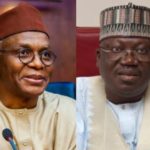
    The Speaker of the House of Representatives, Femi Gbajabiamila, expressed his frustration with the delay. This was during a lecture organised by the National Institute for Legislative and Democratic Studies (NILDS) on December 12, 2022. The Senate President, Ahmad Lawan, and Kaduna State governor, Nasir El-Rufai, were also present at the event. 

    Lawan pleaded with El-Rufai to lobby his fellow governors to take action on the bills. However, El-Rufai tackled him with some demands for the National Assembly that were pressing on his mind. 

    Give Federal Government control of VAT collection

    Value Added Tax (VAT) is a tax paid when goods are purchased and services rendered. Currently, the Federal Government, through the Federal Inland Revenue Service (FIRS), collects VAT nationwide and then remits certain percentages to state and local governments. The Federal Government enjoys this arrangement but state governments have started rebelling.

    The Rivers State government dragged the Federal Government to court in 2021 and won the battle to collect VAT. However, the FIRS isn’t letting go easily and threatened to fine anyone who stands in the way of its bag.

    El-Rufai wants the National Assembly to end the tug-of-war by removing VAT from the constitution’s concurrent list. This list gives state governments some control over VAT collection. Instead, the National Assembly should move VAT to the exclusive list. This is so that only the Federal Government can collect VAT. This would render the court judgement invalid. 

    El-Rufa believes that the Federal Government being in control of VAT collection is the only way Nigeria can make enough money to spread around and sustain every state.

    Pass state and community police bills before leaving office

    The National Assembly and state governors have been in a tug of war concerning the issue of state policing for the longest time. The governors have maintained that unless state policing is passed by the Senate, they’re not going to blink an eye toward any of the bills.

    But why are governors so adamant about state policing being passed and why are lawmakers so against it?

    The governors see the state police system as an answer to the insecurity issues in the country. However, lawmakers are scared that the governors may not be able to pay the police officers’ salaries on time. They may also use police officers for ulterior, sinister motives. Governors like Nyesom Wike, Dave Umahi and many others have been guilty of showing lawmakers pepper with the police.

    Decentralisation of offshore mining and exploration

    If the National Assembly decides to listen to El-Rufai, the federal government will stop having control over 100% of solid minerals in the country. El-Rufai could really just be thinking of how to cash out if a mineral resource like oil is ever found in his state.

    The local government should be peculiar to each culture

    This speaks to the recent clamour for local government autonomy, as the state governments control the local governments. These local governments have now turned to playthings in the hands of their creators. As the closest tier to the people, they can hardly seem to do anything without their oga’s intervention.

    El-Rufai is begging that each local government should be unique to its own culture. This is so that they can serve the people better without doing things like this:

    After his speech, El-Rufai then replied Lawan’s request. He said he can never retire to the National Assembly because he simply doesn’t have the patience to lobby for issues.

    We can only wish Lawan and his colleagues good luck as they race against time to complete the constitutional amendment process.

  • On October 7th, 2022, Muhammadu Buhari presented his final annual budget as the president of Nigeria. 

    What We Learnt from Buhari's Presentation of the 2023 Budget

    He proposed a bill of ₦20.51 trillion to the National Assembly in a long speech that surprisingly didn’t put us to sleep. Here are the things we learnt from his presentation of the 2023 budget.

    Buhari is proud of his achievements

    Buhari has only seven months left until the end of his eight-year reign as Nigeria’s president, so it’s expected that he’d be in a reflective mood. 

    He travelled down memory lane to talk about his supposed achievements in the areas of infrastructure and good governance.

    He also talked about his government’s “impressive” investment in improving Nigeria’s power generation to 4,000 megawatts. Let’s not forget that this figure is serving a country of over 200 million people. 

    The president also forgot to mention the seven times the national grid collapsed this year and stressed Nigerians.

    Buhari wants your taxes

    What We Learnt from Buhari's Presentation of the 2023 Budget

    Bring before me all your taxes so I can afford a medical trip to London

    Nigeria wants to be a baller, but it’s currently on a mechanic’s income, and Buhari doesn’t like that so much. The president described revenue shortfall as the “greatest threat to Nigeria’s fiscal viability”. 

    And his most prominent solution for addressing that is checking inside the pockets of Nigerians to collect taxes, but sapa has already beaten the government to it.

    Everyone is worried about crude oil theft

    What We Learnt from Buhari's Presentation of the 2023 Budget

    One of the main causes of Nigeria’s revenue shortfall is decreased earnings from crude oil which is the nation’s main source of income. This decrease is due to the activities of oil thieves who are lining their personal pockets with resources that belong to everyone. 

    What We Learnt from Buhari's Presentation of the 2023 Budget

    The Senate President, Ahmad Lawan, described the thieves as “the worst enemy of Nigeria” in his opening speech. We don’t know if that’s because he really cares about Nigerians or because the situation potentially puts his own jumbo allowances in jeopardy. 

    Buhari and the Speaker of the House of Representatives, Femi Gbajabiamila, also raised concerns about the theft. We just didn’t hear them propose concrete solutions to stop the stealing.

    Buhari isn’t worried about Nigeria’s gbese

    What We Learnt from Buhari's Presentation of the 2023 Budget

    Even though Nigeria isn’t making as much as it needs, and is using much of its meagre revenue to service heavy debt, Buhari still isn’t worried. 

    With Nigeria’s total public debt at ₦42.9 trillion, Buhari considers Nigeria’s position as within acceptable limits compared to other countries. So, he thinks this is an “I better pass my neighbour” situation even if both neighbours are stranded in a sinking boat in the middle of the Atlantic Ocean. 

    In Buhari’s proposal, Nigeria will even borrow an additional ₦8.8 trillion to finance the 2023 budget.

    ASUU strikes are forever?

    Nigerian students have been sitting at home for eight months due to the strike action by university lecturers over the government’s failure to respect agreements made several years ago. 

    Students watching Buhari’s 2023 budget presentation wouldn’t have been too pleased to hear the president say his government won’t sign any agreements it can’t implement due to scarce resources.

    The president proposed that the government and the people jointly share the cost of education and build a more sustainable system. He didn’t elaborate on how this can happen, but you can imagine it won’t be his problem for much longer.

    Buhari has set a standard

    Before Buhari became president, Nigeria’s budget presentation and passage used to be chaotic, especially with timelines. But this is the third consecutive year that a national budget will be signed before the beginning of the year it’s proposed for. The timely passage of the budget helps better with implementation and fosters a healthy process. It’s not much, but it’s not nothing. Sai Baba, maybe?

    Buhari loves his National Assembly bromance

    What We Learnt from Buhari's Presentation of the 2023 Budget

    In his final budget presentation, Buhari didn’t miss the opportunity to note that he’s enjoyed the massive support of the current National Assembly for his second term in office. 

    Critics have called them a rubber stamp assembly for being yes-men to Buhari, but the president, who loved getting their many yeses, gave them a shoutout before he dropped the mic.