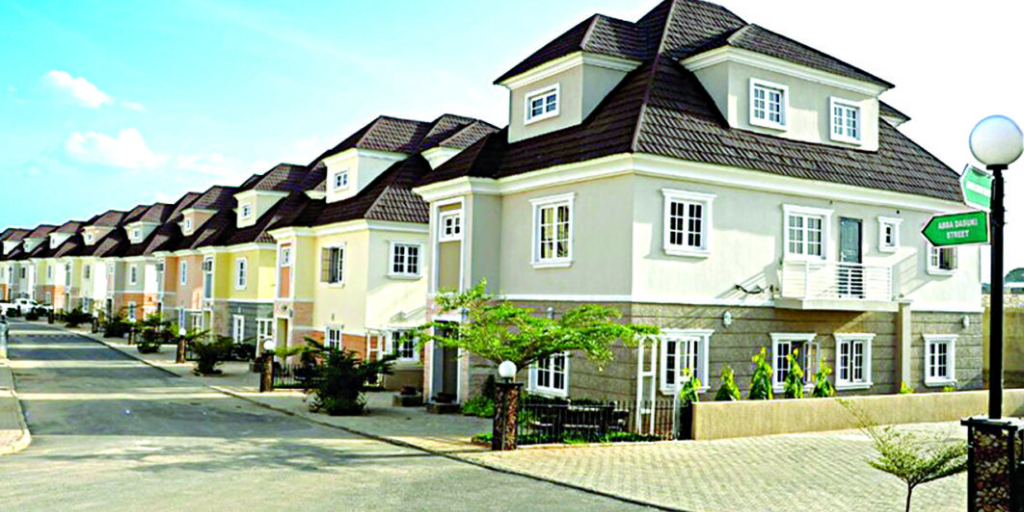
• For many Nigerians, the idea of owning their own house often feels like an impossible dream. Every year, many people renew their rent, moving from one apartment to another, trapped in a cycle of payments that never end.

    Yet across the country, a quiet initiative is taking place, one that’s giving ordinary Nigerians the chance to own houses of their own through something called a mortgage. And at the center of that revolution is the Ministry of Finance Incorporated Real Estate Investment Fund (MREIF), a government-backed initiative that’s simplifying homeownership, lowering mortgage costs, and helping thousands of Nigerians transition from tenants to proud homeowners.

    A mortgage is simply a type of loan that helps you buy a home. Instead of paying the full cost of the house upfront, which for most people would be impossible, a mortgage allows you to pay gradually over a long period, usually between 10 and 20 years.

    A bank or mortgage institution pays the seller of the house on your behalf, and you then repay the bank every month with a small amount of interest added. The home serves as security for the loan, meaning the bank keeps a claim on it until you’ve completed your payments. Once the mortgage is fully paid, the house is completely yours.

    In simpler terms, a mortgage allows you to use the house you want to buy as collateral so you can move in today and pay over time rather than spending decades saving up before you can own a house.

    While the concept sounds straightforward, mortgages in Nigeria have traditionally been expensive and inaccessible.

    Most banks charge very high interest rates, sometimes over 20 percent per annum, which makes repayment unaffordable for the average income earner. In addition, many mortgage processes require large upfront deposits, strict documentation, and long waiting periods.

    As a result, millions of Nigerians have chosen to keep renting instead of navigating a system that seemed designed for only the wealthy or well-connected.

    That’s where the Ministry of Finance Incorporated Real Estate Investment Fund comes in. Launched by the Federal Government of Nigeria under the leadership of President Bola Tinubu, with strategic oversight from the Honourable Minister of Finance and Coordinating Minister of the Economy, Mr. Wale Edun, MREIF was created to tackle one of the country’s biggest challenges: housing affordability.

    The fund, managed by ARM Investment Managers, provides long-term, low-cost financing to banks and mortgage institutions, enabling them to give Nigerians mortgages at single-digit interest rates. This means homebuyers can access financing at just 9.75% per annum rather than 20% or more in the traditional market.

    At this rate, mortgage repayments become significantly lower and easier to manage.

    A lower interest rate doesn’t just save borrowers money; it makes homeownership achievable for people who previously thought it was out of reach. MREIF also requires only 10% down payment, compared to the 20% or higher demanded by most financial institutions. Even better, that down payment can be funded from your Pension if you have one.

    The repayment period stretches up to 20 years, allowing homeowners to spread out their payments comfortably. Because the program is backed by the Federal Government through the Ministry of Finance Incorporated, Nigerians can trust that the initiative is credible, transparent, and sustainable. It’s not just another housing scheme; it’s a structured financial solution built to last.

    Applying for an MREIF mortgage is straightforward. You can visit the MREIF website at www.mreif.com.ng and sign up. After creating an account, you can choose a property from approved housing developments listed under the scheme or bring your own property that meets the eligibility requirements.

    Applications can be submitted online or through any of MREIF’s partner banks and mortgage institutions, including Access Bank, Stanbic IBTC Bank, FCMB, Globus Bank, Providus Bank, Union Bank, AG Mortgage Bank, Infinity Trust Mortgage, Homebase Mortgage Bank, Abbey Mortgage Bank, Living Trust Mortgage Bank, Nigerian Police Mortgage Bank, Imperial Homes Mortgage Bank.

    Once your income and documentation are verified, the mortgage is approved, and disbursement is made directly to the developer, allowing you to move in and begin repayment.

    Since the launch of the fund, more than 1,000 Nigerians have successfully bought houses through the MREIF initiative. These are teachers, entrepreneurs, civil servants, and young professionals who, for years, believed homeownership was out of reach. For them, this isn’t just a financial milestone; it’s a generational one.

    Owning a house creates stability, builds equity, and provides a foundation for long-term wealth. One of the key goals of MREIF is to bridge Nigeria’s housing deficit, estimated at more than 28 million units, by funding developers and making mortgages accessible for everyday Nigerians.

    For Nigerians living abroad, MREIF is also providing a safe and structured way to invest in houses back home. Many Nigerians in the diaspora have struggled with unreliable real estate agents and fraudulent building arrangements. MREIF eliminates these risks by offering vetted developers, secure financing channels, and verifiable homeownership processes. Now, Nigerians abroad can buy houses confidently, knowing their investment is legitimate, protected, and government-backed.

    Beyond helping individuals, MREIF is playing a major role in strengthening Nigeria’s economy. By creating demand for affordable housing, the initiative stimulates the construction sector, generates jobs, and expands access to mortgage financing. Every new house built creates opportunities for builders, engineers, artisans, and suppliers, driving inclusive economic growth.

    It’s not just about owning a house; it’s about building a country where more people can live securely, plan their futures, and create intergenerational wealth.

    Of course, challenges still exist. Inflation, high construction costs, and limited access to land titles continue to make housing a complex issue. But the foundation has been laid. With continued government support, active participation from banks and developers, and the growing interest of everyday Nigerians, MREIF represents a powerful shift toward real housing reform. The initiative proves that when policy, finance, and purpose come together, tangible progress is possible.

    Owning a house is more than just a financial transaction. It’s about dignity, stability, and belonging. It’s about having a space to call your own, a roof that no landlord can take away, and a legacy you can pass on. Thanks to initiatives like MREIF, that dream is no longer out of reach.

    Whether you’re a young professional in Otukpo, a business owner in Nnewi, or a Nigerian abroad looking to invest back home, the doors to homeownership are finally open.

    Visit www.mreif.com.ng today to start your journey toward owning your home.
  • mortgage banks in nigeria

    There’s a chance you know that there are mortgage banks in Nigeria, but you don’t think much about them. Let’s start with the basics: owning a home is generally a high-cost endeavour, but Nigerians historically prefer building their homes or buying outright. The kicker here is that both require deep pockets, and only a few who have this financial power can take on these projects. 

    Enter mortgage banks. 

    Mortgage banks exist to fill this financial gap, allowing low—to mid-income earners to own real estate that is ordinarily out of their financial reach. They could be particularly useful in Nigeria, where a housing deficit of 28 million units requires up to ₦21 trillion to fill. 

    In addition, mortgage banks in Nigeria serve as an alternative to home loans from commercial banks, where interest rates could be as high as 25% and payback periods much shorter. That said, mortgage loans are somewhat unattractive to end users because of the same interest rates, but other factors, including strict lending criteria, significant down payment requirements, and access to credit, affect the adoption of mortgage banks in Nigeria. 

    That said, there are about 32 primary mortgage banks in Nigeria, proving one thing: borrowers have multiple mortgage opportunities. The first critical step to considering a mortgage loan is to understand the scope of banks that give mortgage loans to borrowers. 

    So, what are the functions of mortgage banks?

    Functions of mortgage banks in Nigeria

    Mortgage origination

    Mortgage banks in Nigeria give loans to people or businesses buying property. Part of this process is handling the paperwork, assessing credit, and ensuring compliance with regulations.

    Simply put, their job is to connect borrowers with the credit they need to own a home, but they must verify critical details like income and credit history along the way.

    Loan Underwriting

    Mortgage banks want to ensure you’re safe from financial ruin. So, they look into your credit score, job stability, income, and the value of the property to see if you can handle the loan. 

    Talented underwriters ensure that only financially stable applicants get approved, reducing the risk of defaults.

    Loan Servicing 

    Loan servicing is how mortgage banks manage your mortgage from start to finish. They collect payments, handle escrow for taxes and insurance, and address any questions you have. For banks that give mortgage loans in Nigeria, good loan servicing keeps everything running smoothly and ensures borrowers get the support they need.

    Risk Management 

    It’s the mortgage bank’s job to protect itself from financial losses. They assess credit risk by checking borrowers’ ability to repay, manage interest rate risk by guarding against rate changes, and monitor market risks like shifts in property values or economic conditions. All these efforts ensure safe lending and investment.

    Home Purchase Loans 

    Home purchase loans are a core service and functions mortgage banks in Nigeria serve to help people buy homes. These loans come with different terms and rates, giving borrowers options that fit their needs. 

    Home Improvement Loans

    Home improvement loans from mortgage banks help homeowners fund renovations or upgrade their properties. These loans provide the cash needed to boost home value or enhance living conditions, from kitchen makeovers to roof repairs. Banks often release the funds in stages as the work progresses and may ask for proof of the planned improvements.

    Equity Release Programs

    Equity release programs from mortgage banks in Nigeria let homeowners access the value of their property without selling or moving. Whether through home equity loans or lines of credit, homeowners can unlock funds for debt consolidation or retirement planning while still living in and owning their homes.

    Top 5 Mortgage Banks in Nigeria

    Now that you have an idea of some of mortgage banks’ core functions with respect to risk assessment and home financing, let’s take a step further and look at a list of mortgage banks in Nigeria that effectively do this. 

    As we started earlier, there are about 32 primary mortgage banks in Nigeria, but a few rank higher for several factors, including their size, loan requirements, processes and operations, etc. 

    1. Infinity Trust Mortgage Bank

    Equity contribution (Think of this as a downpayment. The amount of money you, as a borrower, need to pay upfront when getting the loan): 20% of property value.

    Repayment period: Up to 20 years.

    Since starting operations in 2002, Infinity Trust Mortgage Bank has become a market leader in the Nigerian mortgage industry and a publicly traded company. Under its mortgage loan scheme, the bank loans borrowers up to ₦100,000,000 to finance their homes and has provided this service to more than 10,000 Nigerian families. 

    In addition, the bank has a separate National Housing Funds Scheme designed for low—and mid-income earners (such as civil servants) who cannot afford the commercial housing loan product. For this category, they offer benefits including a 0 – 10% equity contribution, loans of up to ₦10 – ₦15 million, and a repayment period of up to 30 years.

    Find out more about their products here

    2. Abbey Mortgage Bank

    Equity contribution: 30% of property value. 

    Repayment period: Up to 10 years.

    Founded in 1991 as Abbey Building Society PLC, the bank’s primary job was to connect potential homeowners with affordable housing solutions. Three decades later, Abbey Mortgage Bank is one of the largest and most profitable mortgage banks in Nigeria. It is also one of seven national Primary Mortgage Banks licensed by the Central Bank of Nigeria and the Federal Mortgage Bank of Nigeria (FMBN).

    The bank’s mortgage product is available to Nigerian residents. Find out more about their services here.

    3. FirstTrust Mortgage Bank

    Equity Contribution: 20% for salary earners and 30% for the self-employed. 

    Repayment period: Up to 15 years. 

    One thing you need to know about FirstTrust mortgage bank is that its capital base and assets are over ₦36 billion, putting it in a prime position to be one of the strongest mortgage lenders in Nigeria. 

    Find more about the bank here.

    4. Platinum Mortgage Bank

    Equity Contribution: 20% – 30% for properties in liaison with the bank. 

    40-50% for properties not in liaison with the bank. 

    Repayment period: Up to 25 years (depending on the product).

    Since 1992, Platinum Mortgage Bank has been providing loans to hopeful homeowners in Nigeria. The bank’s suites of products is built for individual needs—one is designed for borrowers who are looking to buy properties from the open real estate market, and another is for people who want properties marketed by the bank. 

    You should check out more about their products and services here

    5. Federal Mortgage Bank of Nigeria

    This is the only government-backed on this list of banks that give mortgage loans in Nigeria. Since 1956, the bank has had the same the same objective as other mortgage banks in Nigeria: Making mortgages more accessible. Perhaps it is one of few banks with robust and specific mortgage servicing options. They include:

    1. National Housing Fund.
    2. Estate Development Loan.
    3. Home Renovation Loan.
    4. Rent-to-Own Scheme.
    5. Construction Loan
    6. Diaspora NHF Mortgage Loan. 

    Each product has specific benefits and requirements, so you should check them out before making a decision. This is an excellent place to start.

    [ad] [ad]