• Ofure*, 40, remembers exactly how long it took to trigger a financial crisis: 10 minutes.

    It was December 2024. As a single mother of three, she was staring down the barrel of a bleak festive season. Her petty trading business was capital-starved, and the cost of living in Nigeria was soaring. When a loan app notification popped up on her phone offering instant funds, it felt like a lifeline.

    “I needed ₦400,000 to restock for the December surge,” she says, her voice quiet. “I was convinced I’d make enough profit to repay it comfortably. The money hit my account before I could even second-guess it.”

    Ofure hadn’t gone to a commercial bank because they require paperwork, collateral, and the luxury of time, none of which she had. The app requested only her Biometric Verification Number (BVN), National Identity Number (NIN), and access to her contacts.

    When the festive sales failed to materialise, the business collapsed. Ofure managed to meet only the first month’s repayment before hitting a financial wall. Over the remainder of the six-month window, aggressive compound interest and default penalties caused the original ₦400,000 principal to grow into an ₦800,000 burden.

    In a desperate attempt to stay afloat, she began borrowing from new loan apps to service the old debt. But without any income to break the cycle, this game of borrowing from Peter to pay Paul only dug the hole deeper. 

    Her inability to keep up with the compounding interest caused her total debt exposure to balloon to ₦1.5 million over the course of a year. Today, despite struggling to make payments, nearly half of that sum remains unpaid.

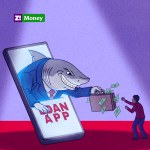
    Ofure is one of millions of Nigerians caught in the gravitational pull of digital lending. It is a sector that promises financial inclusion but often delivers a modern form of indentured servitude, enforced by algorithms, public shaming, and relentless psychological warfare.

    The Algorithm of Harassment

    The mechanics of Nigeria’s digital lending boom are built on speed, with apps designed to trap borrowers. In a country where inflation hovers near 20 per cent and traditional credit is non-existent for low-income workers, fintech apps have filled the vacuum. But the ease of entry often obscures the brutality of the exit.

    Many online lenders exploit financially vulnerable Nigerians through misleading loan terms, hidden charges, and aggressive recovery tactics, turning what seems like a quick fix into an almost inescapable debt trap.

    “It was one of the worst decisions of my life,” Ofure admits. “Now, it feels like I’m working solely to repay the loan. The interest keeps piling up every time I miss a payment window.”

    When borrowers default, the “fintech” gloss wears off, revealing a crude engine of intimidation. Ofure’s phone rings relentlessly. When she misses a payment, the threats begin. But the true weaponisation of digital lending lies in the data users unknowingly surrender.

    Jalaal*, 26, an unemployed university graduate who turned to loan apps to survive, describes the moment his privacy was shattered.

    “I woke up to see they had sent a broadcast message to every single person on my WhatsApp,” Jalaal says. “Friends, old classmates, neighbours, even distant family. The message painted me as a chronic debtor and a fraud. For someone who tries to carry himself with dignity, the shame was unbearable.”

    This strategy of digitised public shaming is not an accident; it is an industrialised process.

    Nneka* knows this better than anyone. She worked inside the machine, first as a telemarketer and later in the “Collections and Recovery” department of a major digital lender.

    “We were given 50 to 70 contacts of delinquents every day,” Nneka explains. The pressure inside the call centres is as intense as it is on the borrowers. Agents have daily recovery targets ranging from ₦150,000 to ₦240,000.

    “If you don’t meet your target, they sack you fast. No grace,” she says.

    While company policy often officially forbids threats, the targets make them inevitable. “Most times, Nigerian borrowers become stubborn and tell you to do your worst,” Nneka notes. “That results in the insults. When I threaten to post a borrower’s picture to their friends, sometimes they start begging. It’s a pressure cooker.”

    The Regulatory Awakening

    For years, this sector operated in a regulatory vacuum. Lenders were often shell companies with servers hosted abroad and untraceable directors. They offered predatory interest rates, sometimes effective annual rates of over 100 per cent, masked as small monthly fees.

    That was supposed to change in July 2025.

    The Federal Competition and Consumer Protection Commission (FCCPC) unveiled the Digital, Electronic, Online or Non-Traditional Consumer Lending Regulation (DEON) 2025. It was billed as a mandatory framework replacing the patchwork interim rules of 2022.

    “The borrower was often treated like a slave to the lender,” admits Odanje Ijagwu, Director of Corporate Affairs at the FCCPC. “We had situations where an app would pop up, entice you, and the next moment, you are defamed and harassed. The DEON regulation is a blueprint to stop that.”

    The new rules, on paper, appear stringent. They require:

    • Mandatory Registration: Every digital lender must register, revealing the humans behind the corporate veil.

    • Suitability Assessments: Lenders are legally required to verify that a borrower can afford to repay, thereby ending the practice of lending to desperate individuals without proper consideration.

    • Data Sanctity: A strict ban on accessing contacts, photos, or using shaming tactics.

    “In the past, operators never bothered to check if consumers could pay back,” Ijagwu notes. “Now, not doing so is an offence. We can hold individual operators and corporate organisations responsible. The penalties are severe, with up to ₦100 million or a suspension of operations.”

    The Gap Between Law and Reality

    However, three months into this new regulatory regime, the gap between the law and the people remains wide.

    Raheemah Olawuyi, a Data Protection and Privacy Expert, argues that the violation is by design: “The apps are built to strip-mine a user’s phone, seizing access to private data purely to gain leverage over the borrower. A bank doesn’t ask for your entire contact list,” Olawuyi says. “The fact that these apps do is already a violation of the principle of ‘Data Minimisation’ under the Nigeria Data Protection Act. They collect information for ‘guarantors’ but use it for intimidation.”

    While the DEON regulations and the Nigeria Data Protection Commission (NDPC) provide a pathway for recourse, access to justice is unequally distributed.

    “The NDPC has made complaint channels available and translated the Act into Igbo, Hausa, and Yoruba,” Olawuyi acknowledges. “But does the average woman on the street, the primary target of these loans, know that? When a loan agent calls to threaten, does she know that it is a reportable offence, or does she just feel shame?”

    Feyisara Owojuyigbe Bantale, a consumer protection lawyer, agrees that awareness is the missing link.

    “Most consumers try to keep things quiet,” Bantale says. “They are reluctant to seek help because they feel they are in the wrong for owing money. This silence allows for exploitation. Although the law requires lenders to assess repayment capacity, many lenders bypass this requirement. And truthfully, borrowers sometimes provide wrong information just to get the cash.”

    Feeding the Addiction

    The country’s high cost of living does not solely drive the crisis. The frictionless nature of digital loans has also weaponised addiction.

    Ayodeji*, 28, a young professional earning ₦500,000 a month, which is still considered a good salary, didn’t borrow to survive inflation. He borrowed to fuel a gambling habit.

    “In 2024, I borrowed up to ₦1 million from 20 different loan apps to fuel my addiction,” Ayodeji says. “I borrowed as much as I wanted, and didn’t pay all of them back.”

    For Ayodeji, the shaming tactics lost their power through sheer volume. “They always called and texted, threatening to post my obituary. I just repaid the ones I felt like paying and deleted the apps. Their threats didn’t scare me at all.”

    If a borrower can cycle through 20 different apps, leveraging one to pay another or to fund a betting spree, it proves that the systems central to a healthy financial market are evidently failing to flag high-risk behaviour in real-time.

    A Long Road to Recovery

    The DEON 2025 regulations have undoubtedly raised the barrier to entry for digital lenders. The days of faceless Asian-operated shell companies are numbered, as the FCCPC now demands to know exactly who is pulling the strings.

    But for Ofure, these high-level policy shifts feel abstract. She is still receiving threatening calls today, months after the regulations took effect.

    “I’m not even aware of any new digital lending rules,” she says wearily. “The pressure and harassment haven’t changed. When I make a late payment, I still get pressured.”

    To keep the agents at bay, Ofure added her teenage son’s number as her secondary contact—a decision she regrets deeply. “They called and sent vile messages to him. I loathed myself for dragging him into this. It was devastating.”

    The tragedy of the digital lending trap is that it works until it doesn’t. It provides liquidity at the speed of light, but extracts value at the speed of compound interest.

    “No one envisages such things happening,” Ofure says, “Before you collect that kind of money, you have hope that you’ll pay back. You have hope.”

    For now, that hope is the only currency she has left.

    “I’m not worrying myself anymore,” she concludes, a note of resignation in her voice. “Whenever I get money, I’ll pay. If I don’t have it, there’s nothing I can do. As long as I’m still alive, there’s hope.”

    KNOW YOUR RIGHTS: The DEON 2025 Borrower’s Guide

    The Digital, Electronic, Online or Non-Traditional Consumer Lending Regulations (DEON) 2025 have rewritten the rules of engagement. If you are taking a digital loan, these are your non-negotiable rights:

    1. The Right to Privacy: This strictly prohibits lenders from accessing your contact list, photo gallery, or social media accounts. They cannot contact your friends, family, or employer to shame you into repayment. If an agent messages your contacts, they are breaking the law.

    2. The Right to Full Disclosure: No more hidden fees. Before you click “Accept,” the lender must display a Key Facts Statement that shows the full cost of the loan, including the interest rate, total repayment amount, late fees, and the tenor, in plain English.

    3. The Right to a Suitability Assessment: Lenders can no longer throw money at you if you cannot afford it. They are legally required to assess your ability to repay the loan before granting it. If they give you a loan without checking your income or creditworthiness, they are liable for reckless lending.

    4. The Right to Fair Recovery: Harassment is illegal. Lenders must conduct debt collection ethically and within reasonable hours (8 AM – 8 PM). Threats of arrest, physical harm, or the creation of “wanted” posters are criminal offences under the new framework.

    5. The Right to Redress: If a lender violates these rules, you have the right to report them directly to the FCCPC. The regulator now has the power to suspend the lender’s license and impose fines of up to ₦100 million.

    To report a violation: Visit the FCCPC consumer portal or contact their dedicated digital lending task force.


    *Names have been changed to protect the identity of the subjects.


    Next Read: “Everyone Thinks I Owe Them Something”: The Economics of Nigerian Entitlement


    Follow Zikoko Money on Instagram for relatable stories and actionable insights to help you make the most out of your money.

    [ad]

  • The Nigerian box office has seen a remarkable surge in 2025. With ticket sales projected to reach ₦15 billion by year-end, the industry is on track for a record-breaking year. By November, cinemas had already grossed over ₦10 billion, a 58% increase from the same period in 2024.

    While some hits from 2024, like Everybody Loves Jenifa and Alakada: Bad and Boujee, continued to attract audiences, this year’s standout story comes from fresh releases. These films demonstrated that Nollywood is maturing into an industry capable of producing commercially successful, culturally resonant films that draw large and diverse audiences across Nigeria.

    Here are the top 10 highest-grossing Nollywood movies at the Nigerian box office this year, the films that set the tone for a record-breaking year in Nigerian cinema.

    10. Something About the Briggs

    Gross: ₦91.3 million

    Running time: 2h 5m

    Director: Bukola Ogunsola 

    Genre: Family Drama, Relationship Drama

    Studio: Revelation Pictures

    Something About The Briggs has emerged as one of 2025’s standout Nollywood hits, showcasing the strength of character-driven storytelling in contemporary Nigerian cinema. The film delves into the complexities of a wealthy, fractured family as they navigate secrets, privilege, and personal ambition, blending emotional depth with sharp social commentary.

    The film made a solid impact at the box office, opening to ₦22.5 million in its first weekend and steadily building momentum to gross over ₦91 million.

    9. My Mother Is a Witch

    Gross: ₦100.6 million

    Running time: 1h 40m

    Director: Niyi Akinmolayan 

    Genre: Drama, Family Drama

    Studio: Anthill Studios and FrameFlixHQ

    Released in May 2025, My Mother Is a Witch centres on a fractured mother‑daughter relationship, exploring pain, memory, and the challenge of reconciliation. The film steadily performed  at the box office, hitting the ₦100 million mark — an impressive feat in 2025’s crowded market. Acclaimed for its emotional depth and strong performances led by Efe Irele and Mercy Aigbe, the movie affirmed that character‑driven drama still draws audiences hungry for grounded Nigerian stories.

    8. Red Circle

    Gross: ₦117.73 million

    Running time: 1h 59m

    Director: Akay Mason

    Genre: Thriller, Action

    Studio: Rixel Studios 

    Produced by Nora Awolowo, Red Circle is an action‑thriller that centres on a law‑enforcement lead trying to bring down a dangerous criminal network under intense time pressure. It mixes suspense, violent confrontations, and a fast‑moving plot, targeting fans of crime and action cinema. The film built word‑of‑mouth over its run and grossed roughly the ₦120 million mark at the Nigerian box office, ranking among the stronger homegrown performers of the 2025 cinema year.

    7. Abanisete: The Ancestor

    Gross: ₦152.8 million

    Running time: 2h 5m

    Director: Tope Adebayo and Adebayo Tijani, along with Ibrahim Yekini.

    Genre: Historical Drama, Epic

    Studio: FilmOne Studios and Hawks Studios

    Abanisete: The Ancestor tells the story of a revered patriarch whose legacy shapes the fate of his descendants, blending mythology with human drama. The film’s intricate storytelling and high production values drew audiences eager for culturally rooted narratives. It opened to strong numbers and steadily climbed the box office, ultimately grossing over ₦152 million, proving that historical epics remain a compelling draw for Nigerian audiences.

     With its authentic depiction of tradition and a talented ensemble cast, the film reinforced Nollywood’s capacity for large-scale, culturally resonant storytelling.


    Related: 10 of the Best Nollywood Movies of 2025, So Far


    6. Owambe Thieves

    Gross: ₦205.6 million

    Running time: 1h 40m

    Director: Adeoluwa Owu 

    Genre: Drama, Crime

    Studio: FilmOne Studios, Light House Pictures and collaborators

    This 2025 crime drama took off over Easter weekend with a ₦53.6 million opening, telling a gritty story about survival, desperation, and moral collapse when a struggling couple resorts to robbery. The film sustained momentum beyond its debut, eventually racking up over ₦200 million. As a mid‑year release, Owambe Thieves showed that compelling, locally rooted narratives can still capture box office success even outside peak seasons.

    5. Labake Olododo

    Gross: ₦264.28 million

    Running time: 2h 21m

    Director: Biodun Stephen

    Genre: Drama, Epic

    Studio: FilmOne Studios, Fespris Productions, co‑produced with input from Abazee Productions and other backers.

    Iyabo Ojo’s Labake Olododo has firmly anchored itself as one of 2025’s biggest Nollywood hits, underlining the commercial and cultural power of Yoruba-language cinema. Following strong anticipation, the film opened nationwide on March 28, drawing audiences eager for a story rooted in Yoruba heritage. 

    It follows Labake, a fearless heroine challenging injustice in her community while navigating societal pressures, blending high-stakes drama with emotional depth and cultural nuance. The film made an immediate mark at the box office, debuting with ₦50 million in its first weekend, quickly surpassing ₦200 million, and ultimately grossing over ₦264.2 million. 

    4. Iyalode

    Gross: ₦306.36 million

    Running time: 2h 6m

    Director: Adebayo Tijani

    Genre: Historical Drama, Epic

    Studio: FilmOne Studios and Toyin Abraham Productions

    Released in early June to coincide with the Eid El Kabir holiday, Toyin Abraham’s Iyalode tells the story of a strong-willed woman navigating power, tradition, and personal ambition, combining compelling drama with cultural resonance. Abraham’s performance, paired with high production quality, made the film a must-see for audiences across Nigeria.

    Iyalode made an immediate impact at the box office, opening to ₦81.54 million in its first weekend and surpassing ₦137 million by the end of its opening week. It maintained momentum for three consecutive weekends, fending off competition from international blockbusters like Ballerina and Mission: Impossible 8, and ultimately grossed over ₦305 million. 

    The film’s success not only reinforced Toyin Abraham’s status as a reliable box-office draw but also secured Iyalode a place among the top Nollywood earners of all time, demonstrating the commercial strength of homegrown storytelling.

    3. Reel Love

    Gross: ₦356.82 million

    Running time: 1h 38m

    Director: Kayode Kasum

    Genre: Romance, Drama

    Studio: FilmOne Studios, Film Trybe and Next Thought Entertainment Company

    Reel Love marked a major milestone for Timini Egbuson, who made his debut as a producer on this 2025 romantic drama. Released on Valentine’s Day, the film explores the highs and lows of performative relationships and the pursuit of social media fame. It opened to ₦40.5 million on its first day and closed its debut weekend with ₦99.3 million, quickly building momentum. Within three weeks, the film crossed ₦200 million and eventually grossed ₦356 million, holding the top spot at the Nigerian box office for five consecutive weeks. 


    More: Best Nollywood Movies to Watch On Netflix (December 2025)


    2. Ori: Rebirth

    Gross: ₦419.57 million

    Running time: 2h 15m

    Director: Muyiwa Ademola

    Genre: Yoruba-language Drama, Epic

    Studio: Ademola Productions & T&A Pictures

    Muyiwa Ademola’s Ori: Rebirth has emerged as one of 2025’s biggest Nollywood successes, showcasing the commercial and cultural strength of Yoruba-language cinema. The film follows a resilient hero navigating family, legacy, and societal expectations, blending epic storytelling with emotional depth and cultural authenticity. It made an immediate mark at the box office, grossing over ₦114 million in its first week, surpassing ₦300 million within a month, and ultimately grossing approximately ₦419.5 million.

    1. Gingerrr

    Gross: ₦509.3 million

    Running time: 2h 10m

    Director: Yemi Morafa

    Genre: Action, Comedy, Heist

    Studio: COTS Production

    The Nigerian action-comedy Gingerrr has become a box-office juggernaut, blending suspense, humour, and high-stakes heist thrills. The story follows four friends whose daring plan to escape their pasts unravels as secrets and hidden agendas surface. Executively produced by Ope Ajayi, Bukunmi Adeaga-Ilori, Bisola Aiyeola, Wumi Toriola, Bolaji Ogunmola, and Creative Catalyst, the film premiered and was released nationwide in September. Gingerr opened to ₦82 million and soared to ₦378 million in five weeks, ultimately grossing over ₦509 million, making it 2025’s highest-grossing Nollywood film and the fifth highest of all time.


    Read Next: The 10 Highest-Grossing Nollywood Movies of All Time


    Get More Zikoko Goodness in Your Mail

    Subscribe to our newsletters and never miss any of the action

    [ad]

  • Extra income used to mean late nights or weekends working a second job. Now, with tools like ChatGPT, earning income can be surprisingly beginner-friendly. 

    Since its launch in 2022, ChatGPT has assisted millions with various tasks. But some people are taking it a step further: turning AI into a real money-making machine.

    If you’re looking for ways to make extra cash without overloading your schedule, there are simple, creative ways to start earning today. Here are 15 options to explore: 

    1. Tutoring

    If you’ve mastered a subject: Math, English, Sciences or Arts, tutoring can be a solid way to make extra cash. Tutors usually set their own rates, depending on experience and subject.

    ChatGPT can help you create practice questions, quizzes, and study guides tailored to a student’s grade level. However, you need to remember to double-check everything — AI often generates incorrect information. 

    2. Virtual Assistance

    Virtual assistants help busy people, freelancers, and small business owners stay on top of their work. You can manage emails, calendars, social media, or customer messages, and ChatGPT makes this much easier by drafting emails, writing captions, or even suggesting schedules. 

    It’s a flexible role that can be performed remotely, and the rate can vary between ₦125,000 and ₦300,000 per month, depending on the client. The AI support enables you to offer more services without requiring any specialised technical skills.

    3. Landing Page & Sales Copy Creation

    Small businesses and entrepreneurs need compelling landing pages that convert. ChatGPT can help you write headlines, product benefits, call-to-action messages, and overall page copy tailored to the brand’s voice. You don’t need a marketing degree; you just need to understand your audience and the problem your product solves. Landing page copywriting is a high-value service: one page can earn $100–$ 500 or more on freelance platforms, making it a lucrative side hustle.

    4. Language & Translation Services

    If you’re multilingual, ChatGPT can speed up translation tasks. It can produce a first-pass translation, and you refine it to make sure the wording, tone, and meaning are accurate. Your fluency is still key. ChatGPT isn’t perfect, but it can save a significant amount of time when combined with your knowledge.

    5. Travel Planning

    Love planning trips? As a travel agent, you can help people design itineraries, find deals, and create travel guides. ChatGPT can assist by suggesting destinations, day-by-day plans, packing lists, and even personalised travel tips. Travel agents earn commissions or service fees, and side hustlers can make hundreds of thousands per month, depending on how much time they put in.

    6. Resume & Cover Letter Writing

    Job seekers are willing to invest in resumes and cover letters to make a strong impression. ChatGPT can analyse job descriptions, highlight skills, and draft polished documents that catch the eye of recruiters or applicant tracking systems. You can offer these services efficiently, but make sure your personal touch shows — fully AI-written resumes may feel generic and not provide clients with the edge they need.

    7. Editing & Proofreading Services

    Writers, bloggers, and businesses need clean, clear, and professional text. ChatGPT can help you catch grammatical errors, tighten sentence flow, and suggest more effective word choices. 

    You can even offer different levels of editing, including light proofreading, style enhancement, or a complete content overhaul. By combining AI with your attention to detail, you can scale faster and deliver higher-quality work in less time. 

    8. Social Media Management

    Businesses and professionals need engaging social media, and that’s where you come in. ChatGPT can help you generate post ideas, write captions, find hashtags, and even organise a content calendar. This means you can manage multiple accounts efficiently and help brands grow without endlessly staring at a screen.

    9. Video & Podcast Scriptwriting

    Content creators and brands need scripts for YouTube videos, TikToks, or podcasts. ChatGPT can generate engaging outlines, dialogue, and talking points based on your topic, audience, and preferred style. You provide the finishing touch: adding humour, examples, or personality to make it authentic. Scriptwriting can be billed per script or per episode, ranging from $30 to $200 per project, depending on your experience, client, and the complexity of the script.

    10. Product Description Writing for E-Commerce

    E-commerce sellers consistently require compelling product descriptions to convert browsers into buyers. ChatGPT can draft catchy titles, bullet points, and persuasive descriptions for a wide range of products, from fashion items to gadgets. Your role is to tweak for accuracy, tone, and brand voice. Sellers pay well for high-quality content because good descriptions have a direct impact on sales.


    Related: 5 Nigerians Break Down the Side Hustles That Pay More Than Their Salaries


    11. Digital Products

    Selling digital products is a low-effort, high-reward way to earn money. ChatGPT can help you create printables, such as planners, guides, budget trackers, or worksheets. You can sell these on platforms like Etsy, Paystack Storefront or Flutterwave store, reach buyers instantly, and make a steady side income without managing physical stock or complicated design software.

    12. Online Courses & Workshops

    Turn your knowledge into a course. ChatGPT can help you draft lesson plans, educational content, and workbooks. You can sell these on platforms like Selar, Mainstack or Gumroad. 

    Set your prices, offer bundles, or even subscription plans. The platform handles payments and delivery, so your primary focus is on teaching and letting AI handle the heavy lifting.

    13. YouTube Channel

    Starting a YouTube channel is a fun and profitable side hustle. ChatGPT can help brainstorm video ideas, create compelling titles, and even draft descriptions that attract viewers. To start earning, you’ll need 1,000 subscribers and 4,000 hours of watch time (or 10 million Shorts views). Once you meet the requirements, you can monetise with ads, memberships, and more.

    14. Personalised Meal Plans & Nutrition Guides

    If you have a background or interest in nutrition, fitness, or healthy eating, you can use ChatGPT to generate tailored meal plans for clients. Simply input your dietary preferences, restrictions, and goals, and ChatGPT will create weekly meal guides and shopping lists. You provide the personal touch, checking for health accuracy, making substitutions, and adding tips. This can be monetised per plan or via monthly subscriptions for recurring income.

    15. Research & Report Assistance for Entrepreneurs and Graduate Students

    Struggling to dig through mountains of information for a project, thesis, or business idea? ChatGPT can save hours of research by summarising articles, comparing data points, and generating structured reports. Entrepreneurs can quickly understand market trends or competitors, while students can get an organised starting point for essays or dissertations. The key is always to fact-check — ChatGPT is fast, but it can get details wrong. Charge per report, per hour, or per project, depending on complexity. 

    Tips for Maximising Efficiency and Earnings With ChatGPT

    ChatGPT can save hours, but the key is knowing how to use it effectively.

    1. Batch similar tasks together, such as generating multiple product descriptions or video scripts simultaneously. 
    2. Use detailed prompts to get more accurate and creative results. Don’t just settle for the first output; refine, tweak, and personalise it.
    3. Repurpose content whenever possible: a blog post can be transformed into a newsletter, a social media thread, or even a video script. 
    4. The faster you work, the more clients or projects you can take on, which directly means more money. Efficiency isn’t just about speed; it’s about turning ChatGPT into a high-earning sidekick.

    Ethics, Safety, and Legal Things to Keep in Mind

    AI is powerful, but it comes with responsibility. Always fact-check information before delivering it to clients or publishing it. Avoid presenting fully AI-generated content as your own without adding value, as you may encounter copyright or plagiarism issues.

    If you’re dealing with sensitive data: client info, student work, or personal health details — handle it carefully. Transparency is key: let clients know how you’re using AI to assist your work. Doing so builds trust and protects both you and your side hustle from legal or ethical complications.

    Tools & Apps That Make ChatGPT Money-Making Easier

    You don’t need coding skills to automate and scale your ChatGPT side hustles. No-code tools can make a huge difference:

    • Zapier / Make (Integromat): Automate workflows like sending AI-generated content to Google Docs, emails, or social media.
    • Canva: Turn ChatGPT-written copy into visual content for social media or digital products.
    • Notion / Trello: Organise content calendars, client tasks, and ideas efficiently.
    • Buffer / Hootsuite: Schedule AI-generated social posts across multiple platforms.

    Combine ChatGPT with these tools, and you can handle more clients, deliver faster, and earn more without burning out.

    Common Mistakes People Make When Using ChatGPT for Money

    Even the best AI is useless if used incorrectly. Common pitfalls include:

    • Relying 100% on AI: You still need a human touch, especially for proofreading, creativity, and client-specific customisation.
    • Poor prompt crafting: Vague prompts = vague results. Be specific about tone, style, and format.
    • Ignoring copyright and plagiarism rules: Using AI-generated content without adding your own input can be a risky practice.
    • Overpromising: Don’t guarantee results you can’t control, like viral social posts or guaranteed sales.
    • Skipping fact-checking: ChatGPT can hallucinate; double-check numbers, dates, and information before delivering.

    Avoid these mistakes, and your side hustle will run more smoothly, efficiently, and profitably.

    The Bottom Line

    ChatGPT is a tool that can help you make money, even if you’re not tech-savvy. 

    The trick is to combine human creativity, ethical practices, and smart workflows. Start small, refine your process, and scale gradually. With a bit of planning and a lot of curiosity, ChatGPT can transform a simple side hustle into a reliable revenue stream or even a full-time opportunity.


    Read Next: 6 Online Platforms That Pay Nigerians to Train AI


    Get More Zikoko Goodness in Your Mail

    Subscribe to our newsletters and never miss any of the action

    [ad]

  • 2025 was a year of bold moves and smart money decisions for some young Nigerians. They took calculated risks that paid off in ways that could change their financial futures. 

    From crypto trades that multiplied in days, stocks that quietly doubled over months, to property investments that promise multimillion-naira returns, these four Nigerians show there’s no single path to investing.

    “I turned $1,200 into almost $10,000 by taking profits early from a crypto trade” — Korede, 25

    I’m a full-time crypto trader, so I’ve spent a significant part of my year rotating money into different coins, taking profits when possible, and protecting my capital when the market turns.  When I talk about my smartest investment of 2025, one trade stands out.

    On September 17, a relatively unknown token called “A S T E R” began gaining attention after CZ, the co-founder of Binance and one of the most influential voices in the crypto industry, mentioned it on Twitter. His endorsements tend to move markets, so I took it seriously.

    I caught the token early, at around $0.17 per unit, and allocated about 10% of my portfolio — roughly $1200 —  to it. At the time, it didn’t feel like a big, calculated bet. I was just trading how I typically do: get in early, monitor sentiment, and react fast.

    But it became my most profitable trade of the year.

    My trading income fluctuates between ₦700k and ₦1m monthly, sometimes more when the market is bullish. Still, nothing this year matched what that token “A S T E R” did. Once it started pumping, I sold in stages. Any time I saw a 200–300% pump, I took partial profits and left the rest to compound. 

    By the time I exited fully after 48 hours, selling portions at $0.40 and eventually the rest at around $0.80, my $1,200 had grown to almost $10,000 — an 8x return.

    The token eventually crossed a 10x surge, but I had already taken all my profits. I needed the win more than I needed the perfect top, so I wasn’t going to be greedy. The combination of discipline and the luck of catching the token early made it my smartest investment of 2025.


    Related: These 10 Nigerian Stocks Quietly Turned Investors Into Millionaires in Just 6 Months


    “I don’t chase quick riches; I show up, invest, and compound over time” — Emmanuel, 25

    I work in media and earn between ₦200k and ₦500k a month. My financial priority this year has been simple: to build a long-term buffer and grow my wealth. Investing is the tool that helps me do that, so it’s central to everything I do.

    Stocks are my smartest investments in 2025. I bought into Coreweave, an AI startup, which nearly doubled in value. But if I  look at all my holdings, Viasat has been my biggest winner since I started investing last year, up more than 300%. I saw a recommendation from an analyst, did some digging, and noticed strong prospects, especially its contracts with the US government. When a congressperson disclosed a purchase earlier this year, I doubled down.

    I don’t invest to become wealthy overnight — so the power of investing shows over the long term. My strategy is simple: diversify, be consistent, and balance risk. Stocks are my higher-risk plays, while fixed deposits, Real Estate Investment Trusts (REITs), mutual funds, Treasury bills (T-bills), and equity funds provide steady foundations. This balance lets me take bigger bets on opportunities like Coreweave without jeopardising my base.

    I invest a set portion of my income each month, currently a little over ₦30,000, and let my income growth determine the increases. Even if I earn more than usual in a month, I stick to the plan. This year, I’ve invested approximately $80 in US stocks using wealth-tech apps like Bamboo to buy fractional shares. That means I don’t need to pay the full share price. I can invest as little as $2, with roughly $1 going to fees. My $80 has already returned $115, and combined with other alternative assets, my portfolio has surpassed $300, including returns. 

    It’s proof that small, consistent steps build financial discipline over time, and those habits compound far more than any single “big win.”

    For example, Coreweave nearly doubled this year. I bought it at $5 per fraction, and it’s now worth $8.77 per fraction. Viasat remains my most profitable overall investment: I bought it at $3.71, and it’s now worth $15.37. Across all my assets, I’ve more than doubled my capital, reinforcing the value of patience, consistency, and thinking long-term.

    Investing won’t make me rich instantly, but I know that by starting early, sticking to my plan, and combining it with other wealth-building moves like starting a business, owning equity, or supporting friends’ ventures, I’m setting myself up to win the long game.

    “Knowledge plus positioning equals opportunity. That’s my smartest investment this year,”  — Mariam, 22

    I’m a student working in Web3, with a primary focus on community, content, and ecosystem growth. My income sits between ₦200k– ₦500k, and at the start of 2025, my main goal was simple: to increase my income and build a proper financial cushion without spreading myself too thin.

    My smartest investment this year was putting both time and money into learning Web3 properly and getting in early on a few solid projects. At first, it wasn’t about the money at all; it was about understanding the space.

    Web3 rewards people who are early and consistent. I realised that knowledge plus positioning equals opportunity, so I treated learning, content creation, and early participation like an investment.

    I started small with beginner-friendly projects, dedicating a few hours a week to learning, creating content, and consistently showing up. The returns weren’t just financial; they came in the form of growth, connections, job opportunities, and project incentives.

    It’s my most brilliant move because it changed my earning power. It also taught me that at this stage of my life, the best investment isn’t always money; it’s skills, knowledge, and showing up early in the right spaces.

    “I bought land today for my future self. Patience now, multimillion returns later” — Shittu, 26

    I bought a plot of land in Ibadan this year for ₦3.5 million, and it’s probably my smartest long-term investment yet. I didn’t just stumble into it. I’d been saving for over three years, cutting back on unnecessary expenses, and being deliberate about setting aside money for something that would grow in value over time.

    It isn’t about instant gratification. Land is a patient investment. I know the ₦3.5 million I spent isn’t going anywhere tomorrow, and I’m okay with that. In ten years, that same piece of land could easily be worth five times what I paid, maybe more, and potentially pay me in multimillions. It’s the kind of asset that doesn’t just sit there; it appreciates, and it protects you against inflation in a way that a savings account can’t.

    The best part is that this was money I could afford to put away — money I know I could do without in my day-to-day life, which gave me the confidence to commit without stress. Every time I think about it, I view it as an investment in my future financial freedom. It’s about patience, strategy, and understanding that some of the smartest investments aren’t flashy or quick; they’re the ones that grow quietly, steadily, and reliably over time.


    Read Next: How I Built a £100K Stock Market Portfolio 2 Years After Moving to the UK


    Get More Zikoko Goodness in Your Mail

    Subscribe to our newsletters and never miss any of the action

    [ad]

  • Pearl Ubani’s brand (24), Myria Gee, was already profitable when she entered the tenth season of The Next Titan, Africa’s premier entrepreneurial reality TV show. But the ₦40 million prize promised more than just a windfall. It offered the chance to accelerate her vision for Nigeria’s beauty manufacturing sector.

    “I approached the competition strategically,” Pearl says. “I wasn’t there to rely on luck or charm. I ensured I was never on a losing team, tackled every task with full commitment, and presented a business plan so detailed it became impossible to ignore. That consistency carried me to the finale.”

    From Beauty Content Creation to Manufacturing

    Myria Gee’s journey began on YouTube in 2016, where Pearl shared beauty tutorials and product reviews. By 2020, she had launched Myria Gee as a full-fledged beauty brand, retailing a range of products. Two years later, she transitioned into manufacturing, with lip glosses as its flagship product. 

    With a postgraduate diploma in cosmetics formulation earned in 2023 and NAFDAC certification secured in 2024, she has steadily and methodically grown Myria Gee into a credible, professional beauty brand.

    Pearl says, “Today, the brand has generated ₦23 million in revenue from direct sales, with 22% of that as profit, managed by a small, tight-knit team of seven overseeing production, sales, and distribution.”

    Cosmetics production is capital-intensive: you need specialised formulation equipment, high-grade raw materials, rigorous stability and safety testing, and regulatory approvals before you can scale. So she started small, selling beauty and lifestyle products to fund the dream. “Moving into manufacturing required capital, technical know-how, and patience,” Pearl says. 

    The Reality TV Gauntlet

    The tenth season of The Next Titan received over 20,000 applications. Pearl auditioned in Abuja in April 2025, and 65 of 3,000 hopefuls across Nigeria were invited to a three-day boot camp in Lagos four months later. Only 20 contestants — ten men and ten women — ultimately entered the Titan house and competed for the prize money over the course of ten weeks. The season premiered with its first episode on September 7, 2025.

    Each week inside the house brought a new challenge: corporate social responsibility (CSR) initiatives, market activations, and sponsor-driven tasks. Teams competed fiercely as they faced one truth: losing could mean eviction.

    “One of the most intense challenges was a CSR project in Ajegule, Lagos,” Pearl recalls. “In 48 hours, my team had to secure a venue, gather sponsors, feed attendees, and teach local residents a skill. It was exhausting, chaotic, but it taught me that execution is possible even when the stakes are high.”

    Her approach combined meticulous preparation with strategic teamwork. “I made a conscious decision to control what I could: lead tasks, ensure my team excelled, and be indispensable. It wasn’t about being the loudest; it was about being effective.”

    The Winning Edge

    By week 10, 15 housemates had been evicted, and only five contestants remained for the grand finale. Pearl Ubani’s meticulous business plan and execution-focused approach gave her a clear edge. On the day, each finalist presented live pitch decks and detailed strategies for scaling their businesses, with the bulk of the ₦50 million prize pool going to the winner.  

    Runner-up prizes were split among three finalists: ₦10 million for the first runner-up (increased on stage from the initially announced ₦5 million), ₦3 million for the second runner-up, and ₦2 million for the third runner-up.

    After weeks of intense, public challenges, Myria Gee’s future and a ₦40 million non-dilutive capital injection hinged on a single question about her five-year plan. Pearl was ready. She had begun drafting her business plan right after her audition in April. By the time she stood on the stage in November, she had spent seven months refining and perfecting a 40-page blueprint for scaling her already profitable cosmetics business.

    “The judges saw that Myria Gee wasn’t just an idea — it was a functioning, profitable enterprise with a clear growth trajectory,” she recalls. 

    Their decision was unanimous. On Tuesday, November 4th, 2025, Pearl Ubani was declared the winner of the entrepreneurial reality show.

    What followed was more than a financial boost. The ₦40 million prize was a public validation of years of careful planning, relentless execution, and calculated risk-taking. 

    “It showed me that all the late nights, the learning curves, and the strategic decisions were paying off,” Pearl reflects.

    Scaling the Business

    The prize money is earmarked for strategic growth: expanding production, hiring more staff, rebranding packaging, investing in R&D for new products, and launching a B2B model for emerging brands.

    “We’re working on blushes, mascara and matte liquid lipsticks, and we want to help other brands bring their products to market. Winning this funding accelerates every goal we’ve been pursuing,” she says.

    Myria Gee aims to become a central player in Nigeria’s beauty manufacturing ecosystem — a homegrown alternative to locally produced, high-quality cosmetics.

    Lessons for Entrepreneurs

    Pearl emphasises readiness, strategic planning, and financial discipline.

    “Track everything, revenue, expenses, all of it. When judges or investors can see the numbers, it immediately signals credibility,” she advises.

    She also stresses the importance of community. “Find other business owners who can relate to your journey. You don’t always need solutions; sometimes you just need someone who understands your challenges.”

    Her final piece of advice: “Just start. Learn as you go, embrace roadblocks as opportunities for learning, and focus on execution. Nothing replaces action. The only way to get better is to keep doing.”

    Bottom Line

    Pearl Ubani’s journey, from beauty content creator to reality TV winner and thriving entrepreneur, is a masterclass in strategic preparation, resilience, and leveraging opportunity. For Myria Gee, winning The Next Titan isn’t the finish line — it’s a launchpad for her business success in the Nigerian beauty manufacturing space.


    Read Next: Topher Bassey Didn’t Chase the Nollywood Dream After Big Brother Naija. He’s Building a Business Empire Instead


    Get More Zikoko Goodness in Your Mail

    Subscribe to our newsletters and never miss any of the action

    [ad]

  • Dotun*, 28, thought leaving his anxiety-inducing job would be the start of something better. He had ambition and a plan: escape the exhaustion and take back control of his life in three months. A year later, he’s still unemployed. Hundreds of applications sent, dozens of interviews failed, rejection after rejection, and the excitement has curdled into a slow, gnawing anxiety. 

    As told to Aisha Bello

    I joined my first proper job straight out of university — an administrative associate at an IT consulting company in Lagos. I had interned with them in my third year and continued working remotely part-time on basic administrative tasks for the rest of my university. 

    So, when I finished my Business Administration degree in 2021, staying on felt like a no-brainer. The transition was seamless: familiarity with the team, the work, and even the office made it feel like a safe landing.

    At first, it was exciting. I was young, eager, and ambitious. I started with a ₦50,000 student intern stipend, which increased to ₦100,000 upon my graduation and subsequent appointment as a graduate administrative associate. Two years of long hours, weekend emails, and constant firefighting later, I was promoted to operations officer, and my salary increased to ₦150,000. By January 2024, I had become operations coordinator, earning ₦200,000. On paper, it was progress, but in reality, it felt like a treadmill I couldn’t step off.

    The work was relentless and anxiety-inducing. There was always something urgent, something that needed fixing, someone who needed coordinating. Every day blurred into the next. Even when I wasn’t in the office, my mind was at work — checking emails from my uncle’s house, where I lived to save on rent and food, pouring every ounce of energy into keeping things running perfectly. By the time I decided to quit, I had saved just over a million naira, enough to give me the courage to walk away from a job that had been slowly burning me out.

    I thought I was ready. With three years of IT consulting experience under my belt, I was confident I could step into a business operations or support role at a tech startup, potentially even landing an international opportunity. I envisioned a more stimulating role, better pay, work-life balance, and the satisfaction of contributing to work that truly mattered, without burning myself out.


    Related: 15 Remote Job Platforms Nigerians Are Using to Earn in Dollars


    So, in October 2024, I resigned. I told myself I was making a strategic career move, confident I would land a new role within three months.

    The first weeks were liberating. I woke up without an alarm, took my time with breakfast, and started sending out at least ten applications every weekday.

    I spent every waking moment on job boards, LinkedIn, and company career pages, chasing every opening I could find. But as weeks stretched into months, the excitement began to fade. I settled into a strange rhythm of hope and monotony: submitting applications, refreshing inboxes, and waiting in silence. Sometimes, I would glance at my uncle’s living room clock and wonder why I still felt so heavy, so hollow.

    By April 2025, six months in, the nudges had started. Family members would ask, politely or not, ‘When will you get a new job?’ Subtle reminders that staying indoors wasn’t normal for a man my age. 

    It felt like everyone could see my struggle, but no one could step into it. I began questioning my choices, my self-worth, and the value I brought to the workforce. Why was I still here, in someone else’s house, waiting for a call that never came?

    In June, after eight months of this invisible battle, I moved back to my hometown. My parents’ house offered a different kind of support. I could exist without constant questioning or the embarrassment of explaining why my ambitions hadn’t yet materialised. There was comfort in routine: helping my mother with her business, spending time with my siblings, cooking meals, and just being in a space that felt forgiving.

     But the money I had saved was dwindling fast. Every expense, from transport to co-working spaces, electricity, internet, and food beyond home-cooked meals, reminded me that my runway was finite.

    Even with the relief of being home, my job hunt didn’t get any easier. I flunked interviews, missed follow-ups, and rejection became a rhythm I couldn’t escape. Each ‘no’ chipped away at my self-esteem. My identity had been tied to having a job; my worth had been built around it. With every failure, that sense of self crumbled further, and I began to feel invisible in a market I had once assumed would welcome me with open arms.

    By August, I entertained the idea of returning to my old job in Lagos. Surely, they would take me back, right? But they didn’t. That’s when it hit me: the work I had done, the effort, the hours — everything was replaceable. Someone else had stepped into my role while I was chasing bigger dreams, and no one batted an eye. The realisation was brutal, but oddly clarifying. I was a cog in a machine, and the machine didn’t need me specifically.


    Related: How to Land a Global Remote Job While Living in Nigeria


    By September, after nearly a year, I had stopped pouring my heart into applications. I still sent them out, more out of routine than hope, but I had finally surrendered to the market’s unpredictability. Around that time, I signed up for a product management certification at a local tech school. It was my way of reclaiming a small piece of control, to sharpen my skills while the world decided what to do with me. I threw myself into it, attending every class, completing every exercise, trying to stitch back some sense of purpose that had slipped through my fingers for months.

    It’s been a year now, and the questions still linger. Is the market broken? Am I not good enough? Or has my narrow focus on a specific role kept me stuck? I don’t have the answers. My savings are nearly gone, and my options are shrinking, but there’s a strange comfort in being home. Helping my parents, spending time with my siblings, sharing meals my mother cooks, and moving with the rhythm of a family that existed long before my career ambitions. It’s humbling, grounding, and in its own quiet way, healing.

    I’ve learned things the spreadsheets never taught me: resilience doesn’t always guarantee success, and perseverance doesn’t always yield results. Sometimes, it just teaches you to survive under constraints, to cling to small victories in what feels like a vacuum. In this slow, silent struggle, I’ve rediscovered fragments of myself I had long buried under CVs, performance metrics, and late-night emails.

    I don’t know when I’ll find the right job, or what it will look like. I still review applications, still hold out hope quietly. But now, I also allow myself to live, even without a title, even without the validation of a salary. I contribute in small ways to my family, my learning, and my own understanding of what work and value mean.

    I’m completing the product management course this December, and if I still can’t secure a job after that, I’ll start exploring other types of work, even part-time, just to keep money coming in as my runway nears zero. 

    That’s where I am now: still navigating, still applying, but slowly learning that survival isn’t just about employment. It’s about keeping yourself sane while the world figures out what to do with you.


    Read Next: I Got a High-Paying Government Job at 21. Here’s How I Did It


    Is love sweeter when there’s money? Help us understand how love and finances really mix in Nigeria. Take the survey here


    Get More Zikoko Goodness in Your Mail

    Subscribe to our newsletters and never miss any of the action

    [ad]

  • October 2025 was a strong month for the Nigerian stock market. On average, the value of all listed companies increased by 8%, with investors buying and selling over 12 billion shares across the market during the month. In other words, the market was abuzz, and more people put their money to work, with prices rising across the board.

    Using official NGX data, we examined how listed Nigerian stocks performed in October and ranked them based on which stocks provided the most significant returns to investors. Here’s a list of the top 10 Nigerian stocks that made the most money for investors in October.

    10. Vitafoam Nigeria Plc

    Vitafoam rounded out October’s top 10 performers with a solid 17.8% gain. The stock started the month at ₦79.80 and finished at ₦94 per share, with over 32 million shares traded — proof that investors were actively buying the stock.

    After a quiet start, the price picked up pace in the third week, climbing 7.4%, and continued to rise in the fourth, adding another 8%.

    The surge comes on the back of strong earnings: the company posted a ₦7.3 billion profit before tax for the three months ending September 2025, almost double what it made a year ago. Full-year pre-tax profit jumped to ₦21.2 billion, thanks to booming sales. No wonder Vitafoam shares have already soared over 300% in 2025; October was just another step in that upward trend.

    9. PZ Cussons Nigeria Plc

    PZ Cussons rewarded investors with a 20.3% gain in October. The stock started the month at ₦34.50 and closed at ₦41.50, with over 110 million shares traded, more than double the activity seen in September, indicating significant investor interest.

    It hovered over 20% in the first week, cooled off slightly in the middle of the month, then finished strong.

    The jump follows a remarkable turnaround in earnings, with PZ Cussons swinging from a ₦5.22 billion loss to a ₦21.5 billion profit year-on-year, with revenue up 48% to ₦59 billion, boosted by higher sales, gains from asset sales, and lower interest costs.

    8. Wema Bank Plc

    Wema Bank bounced back in October, climbing 20.3%. The stock started at ₦17.70 and ended the month at ₦20.45, with over 372 million shares traded — a significant turnaround after a rough September, during which it dropped by more than 12%.

    Most of the month saw steady gains, but the fourth week gave the most considerable boost, pushing the price past ₦20.

    The rally reflects Wema’s strong performance on the books: in nine months, pretax profit jumped 142% to ₦146.4 billion, while interest income rose 73% to ₦397 billion, thanks to increased lending and improved returns.

    7. SFS REIT

    SFS REIT delivered a 20.8% gain in October. The trust started the month at ₦346.55 and closed at ₦418.75, with over 491,000 units traded.

    October marked its third straight month of growth after a flat July, making it one of the most consistent performers on the market.

    The strong run mirrors its solid earnings: net income for the quarter ended September rose to ₦252.8 million from ₦208.5 million, thanks to steady rental income and fixed-income returns.

    So far this year, SFS REIT has been a winner for investors, up 133% in 2025, and October just kept the momentum going.

    6. MTN Nigeria

    MTN Nigeria rewarded investors with a 23% gain in October. The stock climbed from ₦425 at the start of the month to ₦520, trading steadily higher each week, with over 59 million shares changing hands. The biggest jumps came in the second week (+10.8%) and the fourth week (+8.6%).

    The surge reflects MTN’s impressive turnaround: the telecom giant posted a ₦1.12 trillion pre-tax profit for the nine months ending September 2025, bouncing back from a ₦713.6 billion loss the year before. Revenue reached ₦3.73 trillion, with data services alone contributing over half (₦1.97 trillion) to the total.

    5. Dangote Cement Plc

    Dangote Cement came in fifth, giving investors a 25.7% gain in October. The stock climbed from ₦525 to ₦660, with about 60 million shares traded. The price rose steadily each week, peaking at around ₦665, before dipping slightly in the final week.

    The rally mirrors strong performance on the books: pretax profit for the nine months ending September jumped 156% to ₦1.04 trillion, driven by booming Nigerian operations. Revenue also increased by 23% to ₦3.15 trillion, with local sales reaching ₦2.18 trillion and volumes reaching 13.2 million tonnes.

    4. Aradel Holdings Plc

    Aradel Holdings took fourth place, giving investors a 27.2% return in October — the only oil and gas company in the top ten. The stock rose from ₦615 to ₦782, with over 79 million shares traded. Most of the gains came in the fourth week, which saw a 25% jump.

    The surge follows solid company results: for the nine months ending September, pre-tax profit climbed 57% to ₦300.7 billion, while revenue jumped 43% to ₦538.8 billion due to higher crude and gas production.

    3. Sovereign Trust Insurance Plc

    Sovereign Trust Insurance rewarded investors with a 30% gain in October — the only insurer in the top ten. The stock jumped from ₦3.00 to ₦3.90, with 387 million shares traded. It posted weekly gains for most of the month, with the second week alone adding over 16%.

    The boost comes after solid results: revenue for the quarter ending September rose 20% to ₦40.1 billion, while pre-tax profit hit ₦301.6 million.

    2. Eunisell Interlinked Plc

    Eunisell Interlinked took second place, surging 49.4% in October. The stock jumped from ₦39.50 to ₦59.00, with about 14 million shares traded. It gained every week, breaking ₦57 in the second-to-last week and holding steady above ₦59 by the end of the month.

    The rally mirrors its strong results: for the financial year ending September, revenue rose to ₦445 million from ₦360.5 million, while pretax profit hit ₦115.3 million.

    It’s been a stellar year for Eunisell, already up 206% in 2025, and October just added more fuel to the fire.

    1. Aso Savings and Loans Plc

    Aso Savings and Loans topped October’s list, doubling investors’ money with a 106% gain. The stock jumped from ₦0.50 to ₦1.03, with 137 million shares traded. Most of the action came in the last two weeks, when the price broke above ₦1.00 and held firm to close the month at ₦1.03.

    The rally reflects solid results: in its second quarter ending June 2025, Aso Savings reported ₦479 million in interest income and a ₦20.9 million pre-tax profit.

    It’s been a phenomenal year; the stock has already climbed 106% in 2025, and October just crowned it the market leader.

    Bottom line

    October 2025 showed that some stocks were serious money-makers. Whether it was established giants like MTN and Dangote Cement or fast-risers like Eunisell and Aso Savings, investors who picked the right stocks were generously rewarded. It also shows that keeping an eye on earnings, sector trends, and consistent performers can pay off, even in a market that can feel unpredictable.


    Disclaimer: This article is for informational purposes only and does not constitute financial advice. Past performance of any stock or investment does not guarantee future results. Always do your own research or consult a professional before making investment decisions.


    Read Next: 10 Nigerian Stocks the Market is Watching for 2026


    Is love sweeter when there’s money? Help us understand how love and finances really mix in Nigeria. Take the survey here.


    Get More Zikoko Goodness in Your Mail

    Subscribe to our newsletters and never miss any of the action

    [ad]

  • December in Nigeria has its own economy, one driven by Detty December plans, last-minute flights, and the collective urge to enjoy the holiday season after surviving the year. For some, that means stretching savings to make room for memories. For others, it’s about investing heavily in peace, rest, or reconnection.

    We asked four Nigerians how much they’re budgeting for December and what’s taking the most significant cut of their money.

    “We’ve been working all year, so this December, our ₦400k is strictly for enjoyment” — Zainab, 23

    Every December, my friends and I make an effort to spend time together, even if it’s just for a day. The five of us, all women, met at the university. We graduated two years ago, and life threw us in different directions. One moved to the US this year for grad school, and the rest of us have been caught up in the grind — work, bills, and Lagos stress.

    Last December, we spent a sunny afternoon at Tarkwa Bay. It turned out to be the last time we were all together. None of us realised how quickly adulthood would swallow our time. So, this December, we’re determined to make it count again.

    We’ve agreed to skip the beach this time and go to a music festival and maybe a house party — just vibes, no stress. Between the four of us still here, we’ve budgeted ₦400k for the whole thing, about ₦100k from my end. It should cover a shared hotel room, food, transport, and tickets for both outings.

    We started saving in August, putting ₦25k each month into a joint Piggyvest account. It feels like our little rebellion against the year’s chaos, something to look forward to. We don’t even know which festival we’ll attend yet, but we’ve been curating a list and arguing about who gets aux rights. If all goes well, we’ll spend at least two weekends together this December, just like old times.

    “I’ve worked all year without a single break, so spending ₦5 million on peace of mind doesn’t feel excessive, it feels necessary” — Monsur, 42

    I’m a medical practitioner, and this year, I promised myself I wouldn’t spend my December on hospital floors or in traffic between shifts. I’ve taken only sick leaves all year — no real break or reset. So, when my annual leave was approved for December 8th through the end of the month, I decided to spend the days out of Lagos.

    My plan is simple: three weeks in Nairobi, Kenya. I spent my December in Rwanda two years ago, and it reminded me that peace of mind is a luxury worth saving for. This year, I’m doing it again. I’ve set aside ₦5 million for the entire trip, covering flights, accommodation, food, experiences, and a small allowance for indulgence—maybe a nice dinner, a massage, or something spontaneous that makes the trip feel truly earned.

    I’m not great at planning, so I hired a travel planner to handle the details. They charged 5% of the total, about ₦250k, but it’s worth it for the convenience. I just told them I want a mix of quiet and adventure: a few nights in the city, some time in nature, and no Lagos-style chaos.

    Everything is now set: tickets are booked, and the itinerary is confirmed. It’s the only thing that’s kept me going these past few weeks. After months of handling double shifts and barely sleeping, I’m finally counting down to rest. This December, I’m choosing silence over sirens, calm over chaos, and I don’t feel guilty about it.

    “With eight guys splitting costs, ₦150k buys us raves, shortlets, and bragging rights” — Malik, 26

    I live in Abeokuta, and honestly, December there is too calm for my liking. So every year, from around the 28th to the 2nd of January, I pack my bags and head to Lagos. That’s when my year officially ends and begins.

    Seven of my friends and I always book a shortlet for five days. It’s usually a four-bedroom apartment that can comfortably fit all of us. Depending on the area, a night goes for anywhere between ₦35k and ₦100k, but we budget around ₦50k each for accommodation. 

    We plan our Lagos trip around raves. Each night has a different show or party, and we already know which ones we’re targeting. Between Uber rides, food deliveries, concert tickets, and random hangouts with other friends in Lagos, I usually spend up to ₦150k in total. It’s not small money, but when you split the costs with seven other people, it feels lighter.

    It’s become a ritual at this point: the noise, the lights, the music that goes till dawn. Abeokuta is home, but Lagos gives me that little dose of chaos I need before the year ends. Once January hits, I return to quiet streets and normal life, but for those five days, I let Lagos swallow me whole.

    “₦4 million for one week at Lakowe Lakes, my husband calls it love, I call it luxury well spent” — Aminata, 24

    My husband only comes home to Nigeria once a year, every December. It’s our month to bridge the distance and be present together. Last year, we spent the holidays at a family-owned apartment in Eko Atlantic. It sounded perfect: quiet, exclusive, city views, until we got there. It was too quiet. The place was beautiful, but it was far from everything. No shops, no restaurants, no real energy. Each time we wanted to go out, we had to call a relative to drive us. We ended up staying indoors most of the time, watching movies and occasionally stepping out to the beach. It was peaceful, yes, but I’m a sucker for activities, and that peace got boring fast.

    So this year, we’re doing things differently. We’ll be booking a week at Lakowe Lakes Resort. The plan is to do everything, from golf and cycling to boating, yoga, and archery. The resort offers a variety of activities, including a spa, a pool, and a movie night under the stars, which I’m already obsessed with.

    Accommodation alone costs about $195 per night, roughly ₦280k, and we’ll be there for a week, so that’s about ₦2 million. My husband’s covering everything, and we’ve budgeted around ₦4 million for food, activities, and all the soft life in between. It’s our once-a-year splurge, and honestly, after twelve months apart, it feels earned. This December, I want to feel alive, not just rested.


    Read Next: 5 Nigerians, 1 Question: What’s the Most Money You’ve Made in a Single Day?


    Is love sweeter when there’s money? Help us understand how love and finances really mix in Nigeria. Take the survey here.


    Get More Zikoko Goodness in Your Mail

    Subscribe to our newsletters and never miss any of the action

    [ad]

  • In 2022, Folake* (27) suddenly found herself homeless and broke after her long-time boyfriend ended their relationship. In this story, she shares how the breakup was her wake-up call to make better financial decisions and what rebuilding has looked like.

    As Told To Boluwatife 

    One night in August 2022, I tapped my boyfriend, Tunde*, awake, ready for war.

    When he opened his eyes, I presented him with evidence I’d painstakingly gathered over two weeks: screenshots of chats, selfies and voice notes to prove his infidelity. 

    I’d discovered he was cheating on me with multiple women by chance. One random girl had messaged me on Snapchat: “Hi dear, sorry to bother you, but are you dating Tunde?”

    I laughed at first because I knew what that meant. She was coming to me “woman to woman” to claim she had a thing with my man. 

    I thought, “Surely, this babe is joking. Not my Tunde.”

    Then she sent screenshots and pictures. Tons of pictures. 

    My blood ran cold. My chest was tight. For a few hours, I convinced myself it was a prank. Then, I systematically went through his phone for weeks and saw enough to write a Tyler Perry movie.

    When I confronted him that night, I expected drama, begging, maybe even tears. I desperately wanted him to explain and give me excuses — a reason to forgive him. 

    It sounds pitiful, but Tunde was my world. We’d been together for four years and lived together for three. I just wanted us to go back to how things were. Instead, Tunde looked me dead in the eye and said, “So, you’ve found out. What do you want me to do?”

    I thought my ears weren’t working. I asked him, “Is that what you’re supposed to say?” 

    He calmly said, “You’re the reason I do all this rubbish, Folake. You’re too controlling. Maybe we should take a break to figure out what we really want.”

    I couldn’t say a word. Four years gone, just like that.

    The Breakup That Almost Broke Me

    Two days later, Tunde asked if I could “give him space” for a while. That was code for “pack your things.”

    The statement triggered a realisation that pushed my heartbreak to the background: I had absolutely nothing. 

    Nowhere to go, no property and no money.

    I’d moved in with Tunde immediately after uni, and had essentially built my life around him. Everything I had was ours. He was the breadwinner, but I poured all my heart and soul into the relationship. 

    I thought we were “building together,” so I didn’t think twice about channelling whatever small money I made as a beginner makeup artist to what I believed was our home: taking care of food, buying fuel, and getting Tunde gifts. Sometimes, I even lent him money that I never got back. 

    I thought we were a team, so I never worried. I didn’t even have savings of my own because, why would I? Tunde handled everything I needed. I honestly didn’t think I lacked anything. 

    The breakup was a wake-up call.

    I’m ashamed to say I begged Tunde a little. He cheated on me, but I was the one doing the pleading. I begged him to consider our love and let us work things out. When he didn’t budge, I asked him to give me adequate time to get a place to stay. He refused.

    I cried for almost 24 hours straight. 

    I honestly thought my life was over. If not for my religion, I would’ve considered ending it all. 

    Tunde and I rarely had major fights. He’d cheated before, but swore never to do it again, and I trusted him. I didn’t check his phones or keep him from going out. He even spent whole weekends with his guys. So, his “control” allegations were very strange. It was like he just wanted an excuse to send me away.

    In the end, I wiped my tears, packed three years of my life and makeup tools into three travel boxes, and moved into my friend Ronke’s one-room apartment.

    On the day I left, I had just ₦15k in my bank account. 

    Get More Zikoko Goodness in Your Mail

    Subscribe to our newsletters and never miss any of the action

    The Financial Reality Check

    For the first time in a long time, I was broke. 

    The worst thing was that I couldn’t even call home for help. I had fought with my parents and sister over this same guy because they didn’t like his job and wanted me to leave him. 

    Even though we still kept in touch, I wasn’t as close to my family as I had been before, due to their constant complaints about Tunde. 

    I knew telling them about my situation would only lead to them mocking me. So, I decided to face my struggles on my own.

    My only saving graces were Ronke and my handiwork. My world might have scattered, but at least I had a skill that could feed me and a place to lay my head.

    So, I started rebuilding. 

    It was hard. I had initially told Ronke I’d squat with her for three months. My thinking was that I’d hustle for as many makeup jobs as possible, gather money and rent my own place. But it wasn’t as easy as I imagined. 

    Firstly, I didn’t have a shop. I’d only learnt makeup to have a skill, not because I wanted to make it a business. My dream business was to open a fashion store, which Tunde had promised to set up. So, up until I became homeless, my clients were the girlfriends of Tunde’s friends who knew what I did. They came to the house when they needed my services and sometimes gave me ₦5k or ₦10k as a thank you.

    As a result, I didn’t have an actual customer base. I had to start afresh, opening a business page on social media and beginning to market my work. I didn’t get any clients for four months. It was even more difficult because I could only offer home services. I didn’t have a shop where people could walk in. Most of the time, I just did makeup for my friend so I could take videos and post them online. 

    Also, when I managed to find clients, I couldn’t just keep all the money. I had to contribute to the household’s expenses and support my friend, as she was essentially feeding me.

    I ended up squatting with my friend for almost two years. I don’t know why I thought I could manage to stand alone in three months. Maybe living with Tunde and relying fully on him made me blind to the financial realities of surviving in Nigeria. 

    During those two years with Ronke, I was in a constant cycle of hustle, settling bills and trying to save money. Yes, that saving I didn’t do before? No one told me to take it seriously. 

    Ronke — God bless her for me — didn’t pressure or make me feel like an inconvenience, but I knew I had to actively plan my finances so I never had to be stranded again.

    I learnt to follow a budget for the first time in my adult life. Whenever I got paid for a job, I divided the money into two: half to my savings account and half to my spending account. I didn’t even spend the half in my account on myself, I used it to settle bills at my friend’s house and buy tools to upgrade my business.

    In 2023, I found a hairstylist who owned a salon around Ronke’s area and begged her to give me a small space in her shop for my clients. She agreed and let me pay her ₦5k weekly for the space. That’s how I got a walk-in “shop”.

    Fortunately for me, the hairstylist’s clients started to patronise me too. I also began getting returning clients from social media. 

    By 2024, I’d saved ₦350k, and my sister borrowed me ₦100k extra so I could rent my own one-room apartment. 

    The apartment felt like I was taking my first deep breath in two years. 

    Starting Over from Scratch

    Since I cleared my savings for rent, I had to live in that room with no furniture for the first six months. I didn’t even have a mattress. But I slept on the floor with pride and happiness. 

    It wasn’t the soft life I was used to. No AC or Netflix like in Tunde’s house, but this was my own place. No one could wake up one day and send me away.

    Gradually, I began to turn the apartment into a home. I bought a mattress, plastic chairs and a few kitchen utensils. I started feeling proud of myself again. There were times when I missed the comfort of relying on Tunde, but I had to fight through.

    Eventually, my peace of mind came back. I realised I used to treat love like a financial plan. I gave my stability to a man and called it a partnership.

    Now, I was building something real by myself.

    I still don’t have everything I need, but I’ve come a long way since 2022. I’m not rich, but I’m stable. I have ₦200k in savings and no debt. I already have my rent saved somewhere. I’m even planning to get my own shop soon.

    Last month, Tunde texted me. Something about “catching up” and “missing what we had.”

    I didn’t even open the chat. I archived it and went back to my life. God forbid I return to what almost took my life.


    *Names have been changed for the sake of anonymity.


    NEXT READ: I Was a House Girl in Egypt for Two Years. I Came Back With Nothing

    [ad]

  • Sultan*, 26, thought that starting an Airbnb venture with his closest friends would bring them closer together. They’d done almost everything together since university, from surviving exams to figuring out life after school. But a few months into starting the business, with bookings low and tempers high, he realised money could test even the strongest friendships.

    As told to Aisha Bello

    When I first conceived the idea of starting an Airbnb business with my friends, it wasn’t really about the profit. I just wanted to feel that kind of closeness we had back in school when life was simple, and it felt like the world was waiting for us to win together.

    There were five of us. We met in our first year of university, and from that point on, we did almost everything together: reading, attending parties, sharing food, and covering each other’s bills. We built a rhythm of trust that never really broke, even after graduation. I was the glue in the group — the one who remembered birthdays, kept the group chat alive, and always found one excuse or another to make us gather.

    After school, life moved fast. Everyone got busy; some relocated, while work consumed others. But in 2023, a year after graduation, we managed to pull something off together. The iPhone 15 had just been released, and we decided that everyone deserved to own one. We contributed ₦150k monthly for one person each month until everyone got theirs. Five months, five iPhones. It worked perfectly. It made me believe that joint ventures were the future. I remember saying, “See? If we can do this, imagine what we could do with real investment.”

    That thought stayed with me.

    ***

    By January 2024, I began to feel the distance. The group chat had gone quiet. Nobody was initiating hangouts. I thought maybe we needed something bigger to keep us bound. Something that wasn’t just vibes but a project we could all pour energy into.

    That’s when I brought up the Airbnb idea. I had been seeing people on Twitter and YouTube talk about shortlets and passive income. It sounded like the kind of big move we could pull off. Plus, I work remotely, so I had time to manage the daily runaround. Everyone else had corporate 9–5s in banking, consulting, and agencies.

    The idea caught on faster than I expected. I handled market research and scouted locations. Eventually, I found a 7-bedroom house in Kano owned by a family that had relocated. We got the apartment on a three-year lease for ₦5 million, which felt like a steal at the time. Everyone in the friend group agreed to contribute ₦1 million each, paid in ₦200k instalments over six months. 

    The owner agreed to our instalment plan, so we made payments monthly, and the property would only be handed over once we’d completed the full amount.

    The place was old but solid: white walls, wide corridors, iron gates with peeling blue paint, and an open yard that we could easily turn into a small garden. 

    I was proud. This was something tangible we could point to and say, “We did that.”


    Related: I Built a Multi-Million Naira Food Business. Now Everyone Thinks It’s Their Money Too


    The first two months went smoothly. Everyone sent in their contributions. The group chat was active again — ideas flying about how to design the rooms, what name to give the property, even how to scale it to Abuja later.

    Then the delays started.

    By the third month, one person missed their payment. Another said he was “sorting some personal things.” I had to start sending reminders; small nudges at first, then direct calls. It started feeling like I was begging grown men for money they had already promised. When I brought it up in the group, it led to a small argument about responsibility, tone, and “the way you talk like we’re your staff.”

    It hurt because that wasn’t my intention. I was just trying to keep us accountable. We eventually resolved the issue, and everyone paid up. By June 2024, the lease payment was complete.

    But that was the easy part.

    The real trouble started when we went live.

    ***

    We listed the property on Airbnb, set up a social media page, and even built a simple Wix site to give it a professional look. We priced it at $45 per night, about ₦65k. On paper, it made sense: if we secured just 15 bookings a month, we’d cover all expenses and even make a profit. We raised an additional ₦500k to furnish the place with basic items, including curtains, rugs, interior decor items, and a few wall frames that featured phrases like “Home is where your story begins.”

    Then, silence.

    Weeks turned into months with no bookings. Perhaps it was the season, the location, or maybe we overestimated demand. We got only five rentals for the rest of the year, with most of them in December. 

    Everyone got restless. Messages became shorter. I could sense irritation in their tone, with  subtle jabs like, “So what’s the update?” or “You sure this thing dey move?”

    I tried everything: tweaking pricing, taking better photos, and cleaning the rooms myself. The electricity bills, repairs, and maintenance costs continued to accumulate. I was paying cleaners and security out of pocket. I didn’t mind at first. I thought that if we could just get through the slow phase, everything would fall into place.

    By the start of 2025, one of our friends who lived out of town started demanding his capital back. 

    ***

    It felt like betrayal.

    One even said, “Bro, if you knew you couldn’t handle it, you shouldn’t have rushed us into this.”

    I felt something collapse inside me. They had trusted me with the legwork but never wanted the weight of the work. They wanted returns, not responsibility.

    By March 2025, the group was fractured. Some stopped replying to my messages. One quietly removed himself from the WhatsApp group.

    That’s when I decided to move into the house. It was empty anyway, and I was tired of paying rent elsewhere. So I packed up and came here.

    Living here has been strange. It’s too quiet. Sometimes, when the wind blows through the corridor, it echoes like a reminder of what once was. The rooms are neat but lifeless. The space that was supposed to host guests from all over now holds just me and my regrets.

    Occasionally, one or two of the guys who still live in Kano come around to stay the night, but the energy is never the same. Conversations are awkward. Everyone pretends to be fine, but there’s a wall now.

    The irony is that the house is beautiful when it’s full, laughter bouncing off the walls, music spilling from someone’s phone. But those moments don’t last.

    ***

    This year, we have had only two rentals, one in April and another in July. After that, nothing. I’ve even stopped trying to market it.

    Some days, I think about refunding part of their capital just to find peace, even though no one asks about it anymore. It still hangs over me. On other days, I wonder if I should just rent it out to a family for the rest of the lease and relocate to another city to start over.

    What I didn’t realise when we started was how fragile friendships can be when money enters the equation. We trusted each other, but we didn’t plan. There was no documentation, no contract, no clear expectations, and no exit strategy in place. We built everything on vibes and history.

    I used to believe that business would bring us closer together, that success would strengthen our bond. Now I know that failure tests friendship more than anything.

    ***

    There are nights I sit in the living room, lights off, just staring at the faint glow from the street lights outside. I scroll back through our old group chat sometimes — the jokes, the plans, the voice notes filled with excitement. It’s almost hard to believe we were that close.

    We used to call ourselves “The Syndicate.” Now, we’re just strangers with a shared loss.

    I don’t hate them. I just wish things hadn’t ended like this; maybe if I’d been more patient, less desperate to make it work, a little less hopeful.

    For now, I’m still in the same house we all paid for, surrounded by the echoes of what we built, something once beautiful, now quietly broken.


    Read Next: I Trusted a “Brother” to Run a Farm. He Ghosted With ₦800k


    Is love sweeter when there’s money? Help us understand how love and finances really mix in Nigeria. Take the survey here.


    Get More Zikoko Goodness in Your Mail

    Subscribe to our newsletters and never miss any of the action

    [ad]