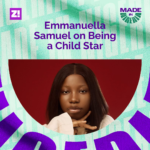
At just barely five years old, Emmanuella Samuel became one of the most recognisable faces in a new era of short-form comedic content. As a former member of the Mark Angel group of comics, her videos, with her sharp wit, were constant fixtures in the pre-TikTok years.
She was nominated twice for the Nickelodeon Kids’ Choice Award: in 2018 as Favorite African Stars alongside Davido and again in 2021 as Favorite African Social Star, which she won.
As a teenager, she has moved away from the sharp-mouthed Emmanuella the public first met and came to love. But she has not moved away from skit-making, as she regularly jumps on trends on TikTok. All this she does while attending secondary school. How does she balance it all?
In this week’s #MadeinNigeria, she opens up about being a child star, going to school, and why her old friends are scared of her now.
This interview has been edited for clarity and length.
How did you start making content?
I started when I was about four years old. At the time, it wasn’t something I took too seriously—I was just having fun. I’d mimic people, act out scenes, and entertain my family without even realising I was creating content. But as I got older, I started paying more attention to it, and eventually, it became something I knew I wanted to do for real.
What has the journey been like so far?
The journey hasn’t been easy at all. People see the fun parts—the recognition, the exciting projects, the love from fans—but they don’t always see the sacrifices. I’ve had to let a lot of things go because of work. Sometimes, I miss out on normal teenage experiences because I have a schedule to keep up with. But at the end of the day, I love what I do, and that makes the hard parts worth it.
How do you balance work and school?
It’s not easy at all, but I make it work. I only take on projects during weekends and school holidays to make sure my work doesn’t affect my studies. I also have a great team that helps me manage everything. Back in the day, I used to read like my life depended on it because I didn’t want to fail. Even now, I take my academics very seriously—I’ve worked too hard to let one side of my life suffer because of the other.
What does it mean to be a teen star in Nigeria?
It comes with a lot of expectations. In school, I find it hard to come out of my class during break time because everyone wants to talk to me or take pictures. It’s exciting, but it can also be overwhelming. Everyone wants to be my friend, and sometimes, I can’t tell who genuinely likes me for me and who just wants to be associated with my fame. But I love the attention—I just make sure not to let it get to my head.
What’s an interesting encounter you’ve had with a fan?
There have been a lot, but one of the funniest happened at an international event in the Caribbean. I was just walking in when some people saw me and started bowing like I was some kind of goddess. At first, I was confused, then I just burst out laughing. It was flattering but also really funny.
What’s it like working as a teen star in an industry full of adults?
Honestly, it’s great. Most of the adults I work with show me love and encourage me. They don’t treat me like a child but as someone who has something to offer. It makes me feel valued and respected in the industry, and I really appreciate that.
What kind of reactions do you get from fans?
Words can’t even explain it. The love is overwhelming. Sometimes, I’ll post something and the response is just mind-blowing. People send me messages telling me how much they admire me, how I inspire them, or how something I did made them smile. Those moments remind me why I do this.
How have your friends treated you differently since you became famous?
A lot of them have changed. Some of my old friends are scared to come around me now—like they think I’ve changed or that I see myself as better than them. In reality, I’m still the same person. But I understand that fame can make people act differently, and not everyone knows how to handle it. At this point, I have only a few close friends, and I’m okay with that.
What do you love the most about being famous?
Definitely the attention and appreciation that comes with it. There’s something special about knowing that people see and celebrate your hard work. It makes all the sacrifices worth it.
What do you dislike the most about being famous?
I can’t just move around freely like my peers. Sometimes, I just want to go out, chill, and be a normal teenager, but that’s not always possible. There’s always someone watching, and that comes with its own pressure.
How has fame changed your life?
In both good and bad ways. On the positive side, it has opened doors for me and given me opportunities I never imagined. But there’s also the downside—sometimes, I read comments on my posts, and they make me want to cry. Other times, I see something nice, and I can’t stop smiling. It’s a mix of emotions, but I’m learning to focus on the good and not let the bad get to me.
What’s next for you?
I’m currently under a new management team called RawTalent.com, and we’re working on taking my career to the next level. If you’ve been following my page, you’ll notice a transformation in the kind of content I put out and the quality of my production. This is just the beginning—I’m excited for what’s coming next.
In the last decade, CJ Obasi has been one of the most ambitious filmmakers out of Nigeria. He burst onto the scene in 2014 with the zombie thriller Ojuju. He has since gone on to direct O-Town and worked on the script for Genevieve Nnaji’s film Lionheart.
Together with Michael Omonua and Abba T. Makama he formed the S16 Collective, under which they launched the S16 Film Festival, a curated art house film festival for African indie filmmakers.
His 2023 black-and-white feature Mami Wata (now in Blu-ray) was Nigeria’s official Oscar selection last year.
In this week’s #MadeinNigeria, he pulls no punches on his thoughts on Nollywood, making ambitious films and the S16 Film Festival.
Photo by Emily Assiran/Contour by Getty Images for Stacy’s Pita Chips
This interview has been edited for clarity and length.
What inspired you to become a filmmaker?
I never really had any particular or stand-out moment in memory where I can say I became inspired to make films. It was just always something that was ever present with me as far back as I can remember. For me, there was never really any other thing I was going to do with my life, other than make films. So, when it didn’t work out initially, and I ended up in a 9-5, I was miserable beyond words. As Igbo, we believe in the chi and being aligned with one’s purpose. In my case, I always thought my chi was a guy with a camera calling out to me, “Come over here, let’s make movies!”
How did you get your start in Nollywood?
Have I started? The truth is I don’t consider myself a Nollywood filmmaker. This has always been my view from the onset of my career and believe me, I got a lot of backlash for it. But it was never personal. I have great respect and admiration for what Nollywood has achieved, and I hope and believe that it’ll continue to scale and grow monumentally. But what I have championed (especially with our collective) is a Nigerian cinema that takes a different path, as far as storytelling, style, tone and aesthetics. I believe that, as a country, we are just as creatively diverse as others, and we are able to offer different palettes of filmmaking. Every country that has a serious film industry offers this – why should we be any different? For some reason, every time I say this people want to pull their hair. Why do we want to box ourselves into one thing? Just never made any sense to me. Still doesn’t.
Your debut film, Ojuju, was a very ambitious breakout success. What challenges did you face while making it, and how did it shape your career?
Ojuju shaped my career in so many ways—and still does. I was blessed that my first film was such a success, especially considering that it was a zero-budget film. Ojuju launched me into the film festival world and opened so many doors that I’m still enjoying to this day. And as far as challenges go, it took everything from us—literally everything. But as it took everything, so did it give back everything.
How did you learn to make films (that goes against the trends in Nollywood) the way you do?
I didn’t “learn” to do that, because my intention was never to go against the so-called trends of Nollywood. At least, never intentionally. That wasn’t the point. The point was and has always been to say, “I’m a Nigerian, and I have a particular thing to say, as well as a particular way of saying it, and I think it’s valid.” But then people and so-called gatekeepers came out and said, “No way, you can’t do that. You can’t do it that way.” So I said ‘Really?” and did the most logical thing I could think of. I doubled down.
How do you typically approach storytelling?
There’s no one way. Some days, you get a story, and it’s almost fully formed. You just kind of dive in and then figure out its mechanics and bones. Other days, something comes and sparks something, and then it builds and develops over time. You leave it in storage for a while, and when you return to it, you find it has grown into something new. So you poke at it, sieve it some more, and then leave it to bake for a little longer in your subconscious. And one day, voila – you have it.
Your films often have a distinct visual style. How do you achieve this?
Style is something I have always believed to be the bedrock of filmmaking. All my favourite filmmakers throughout history have this thing where they direct. I mean, they actually direct their films. You watch their films and you feel an actual director doing their thing, and that has always been attractive to me. I don’t know if I have a particular answer for how I achieve my visual style, other than just being true to my instincts. I think every artist has those. What happens, though, is that as you refine your craft through life experience, reading, watching films (a lot of films), music, travelling and research – you become more in tune with those base instincts and what moves you. The images and sounds that activate things within you, and you become more efficient in tuning into those base instincts, which results in becoming better technically equipped on what and how to channel them into your directorial choices.
What role do music and sound design play in your films, especially in creating atmosphere and tension?
Music and sound design play a tremendous role in my films. There are many levels in a film’s storytelling, such as the acting or performance, the cinematography, and the editing. Music and sound design is another level of storytelling. You can center the narrative of your film as effectively with the sound, as you can with the visuals. If you know what you’re doing, and if you’re in touch with the humanity of sounds, and how they can elicit emotion and feeling. I’m a cinema guy, and because cinema for me is the whole experience, I tend not to see any other way of making films, except to create a fully immersive atmosphere of sound and visuals.
How do you balance staying true to your artistic vision while also considering the commercial aspects of filmmaking?
I think I’ve been hugely blessed in my career, in the sense that I’ve never had to worry about my artistic vision versus commercial success. Not because I don’t think of commercial success, but more so, because I’ve never separated the two. I always believe and still believe that I can do both, and that has worked for me. I don’t know any other way of making cinema, and kudos to those who do. However, for me, the commercial viability of a film is not separate from the artistic vision of the filmmaker. We are the tastemakers.
Photo by Emily Assiran/Contour by Getty Images for Stacy’s Pita Chips
Nollywood has grown significantly in recent years. How do you see the industry evolving, and what role do you expect it to play on the global stage?
As I said, I hope and believe Nollywood will continue to grow in leaps and bounds, and it will. It must. And as for my role on the global stage, I’m just more focused on doing what I’ve been doing, and growing better at my craft.
What do you think a world in which Nollywood and Hollywood collaborate looks like?
I don’t think about it. But it will happen. This is inevitable.
Do you think Nollywood is getting the international recognition it deserves, or is there still work to be done?
The answer is obvious. Nollywood still has a long way to go. And there’s a whole lot of work to be done. And that’s putting it mildly.
Can you tell us about the Surreal16 Collective? What inspired its formation, and what is its mission?
The collective was formed out of a simple desire to see and make other kinds of cinema from Nigeria. It really was that simple. But we quickly realized we would get a lot of pushback, so in order to double down on this mission, we came up with a manifesto, inspired by the Dogme 95 Vow of Chastity.
Surreal16 has been described as a movement pushing the boundaries of Nigerian cinema. How do you and the collective aim to achieve this?
By making such films, as we have made and will continue to make. The S16 Film Festival platforms filmmakers making work outside the Nollywood box, as well as introduces our audience to films from the African diaspora and World cinema that they would otherwise never see in a Nigerian cinema.
The Surreal16 Film Festival is gaining traction. What kind of stories or filmmakers are you looking to showcase, and how does it differ from other festivals?
It just is. There’s no film festival like ours in the country. We showcase some of the most interesting films and filmmakers coming out of the country. A lot of them are the future, I can tell you. We show only exclusively Nigerian premieres, sometimes World or African premieres. But minimally Nigerian premieres. Meaning, if you’re watching it at S16, it’s the first place it’s being shown in the country. We also pay our filmmakers a screening fee, which is not very common with Nigerian film festivals. And lastly, It’s just such a cool festival.
It’s important for Nigeria, not Nollywood. I think Nollywood does its thing, and we do our thing. We do have collaborations and interchange of ideas because we are still fans of Nollywood, especially Old Nollywood. Our 3rd edition was themed “To God Be the Glory” and this was of course a direct homage to the Golden age of Nollywood. I think the beauty of our festival is in its ability to embrace new expressions, while paying homage to what existed before.
Your film Mami Wata was Nigeria’s official selection for the 2024 Oscars. What does this recognition mean to you and the Nigerian film industry?
I mean, it felt great to be selected by the committee and it was such an honour. But there was barely any support on a national level, but this cuts across everything. It’s a national problem. We just don’t take the arts seriously or even national pride. Because if we did, every year, we would champion and rally behind whatever film is selected as our Oscar submission. You know, the way other serious countries do.
What challenges did you face while making Mami Wata, and how did you overcome them?
My producer is better positioned to speak on this, but let me say—making MAMI WATA was the hardest thing we’ve ever done. It was a film that was not supposed to exist. Several people, including so-called friends and partners, tried their best to ensure this, but we had higher powers on our side, who decided the film must exist.
How do you feel about the global reception of Mami Wata?
It’s what you dream to happen for your film. And when it does, you feel like you’ve aligned with your purpose, your calling even. I certainly felt that way about MAMI WATA, and I kind of knew it would happen.
What’s your take on the representation of African stories in global cinema? Do you think they’re being told authentically?
Of course not. But what do you expect when you have outsiders telling our stories? And this has nothing to do with skill or experience. Knowing and being something adds an extra level of authenticity to a film. But in the world of commercial filmmaking, authenticity is only used as a placeholder to sell the product, not as the actual quality or ingredient of the product. Search me.
What advice would you give young filmmakers trying to break into Nollywood or the global film industry?
None. But if anyone really and truly wants to make films because they would rather not do anything with their lives, then my advice is—be strong and courageous for the hunger strikes, for they shall be many.
Where do you see yourself and your work in the next 5 years?
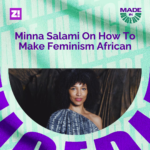
In 2010, a young writer, Minna Salami started a blog. She called it MsAfropolitan and it became her springboard from which she waged her war against the patriarchy.
Her seminal essay on the subject, “Oyalogy – a poetic approach to African feminism,” traces how African women have leaned into feminism for years to protect their communities and themselves.
In this week’s #MadeinNigeria, Minna Salami tries to offer some answers to the question of African feminism.
This interview has been edited for clarity and length.
When was your first encounter with the word feminism?
I first encountered the term when I was at university during a lecture. I was doing my bachelor’s degree in my early twenties in Sweden. The lecture was about gender in media, given by a white male Swedish professor. He showed us a clip and explained the concept of the male gaze, then discussed how feminists had written about it. The only term I kept hearing in his explanation was feminism, and I felt a strong resonance. In that moment, I realized, “Oh, that’s what I am. That’s me.” It was a standout moment for me encountering the term.
Are you one of those feminist who were feminist before they knew the word?
Yes, I’m sure I was born a feminist. My very first memory in life is a feminist one. I was probably about 4 years old, living in Lagos, where I grew up. There was something that girls were not allowed to do that boys were allowed to do, or vice versa. I just remember feeling so angry and thinking, “What kind of nonsense is this? This is so unjust.” That’s my earliest memory, and it’s about my feminist spirit.
What type of child were you growing up at school?
I was definitely more of a studious type of student, but at the same time, I was also really wild in a weird way. During breaks, I would get into trouble. I like to think that if I had lived in Europe as a child, I would have been part of a goth movement. I probably would have had my three or four best friends. But because I grew up in Nigeria, where those kinds of scenes didn’t exist, my best friends and I were all geeks. We were really into reading novels, often ones meant for adults. During breaks, we’d read literature with erotic elements, things we weren’t supposed to be reading. I remember having to wash my mouth with soap several times because of it.
How did you start your famous blog, Ms Afropolitan?
It happened quite organically. I had already been blogging for a few years. I first discovered blogs around 2006 and immediately thought, “I’m setting up a blog.” This was back on MySpace, so you can tell how old I am. I’ve always loved writing, and self-expression has been a big theme in my life. I didn’t initially set out to write about feminism, but since I was a feminist, it ended up being a central theme. I noticed people were really interested in those conversations, so MsAfropolitan just happened. I decided to focus on that theme and set up the blog in 2010.
In your writing, you make a lot of historical references. How deliberate is this?
With all my writing, particularly about feminism, my goal is to advocate for the feminist cause. My motivation is always, “How can I get people to sign up?” I’m not a preacher, and I want people to arrive at their own conclusions, at their own pace. That’s what drives me. It’s not that I’m trying to be strategic, like thinking, “If I write about what happened in Liberia, then it will be relatable.” It’s more of an inner sense of, “This is a topic I know people might be interested in or have heard about,” or I connect it with the theory or concept I want to present.
I think part of the success I’ve had is that I’m able to translate jargon or abstract ideas into a more accessible, approachable style.
One of your seminal essays is on Oyalogy. Where did that come from?
Oyalogy is a concept I created, based on my fondness and curiosity about the Yoruba goddess Oya. A funny side story is that for the longest time, I was convinced that Oya was my Orisha. I looked up the colours that people wear when they an are Oya devotee and studied the associated rituals. I read all I could, interviewed people, and engaged deeply with the topic. Then I learned that Oya is not my Orisha, which was initially disappointing.
However, I kept my connection with Oya because she is considered the feminist Orisha—at least, among the female Orishas, she is the most obviously feminist one, as she is all about social transformation. I had been living with Oya, in a sense, through my research, practice, and curiosity. When I sat down to write, Oya felt like a strong muse. The idea behind Oyalogy was to build a bridge between feminist thinking, a sense of historical curiosity about ancient Africa, and a spiritual sensibility, which I have, and which many of us in our communities also share.
We see references to Oya and Osun, especially in American pop culture. Does this worry you?
I feel very positively about that. I think it’s wonderful and important. African Americans absolutely have every right to these stories. In recent years, there’s been a growing sense of division between Africans and African Americans. To some extent, we can be a bit more proprietary about the indigenous cultures, and I think there are valid reasons for that. One reason is the commercialization of these cultures, something that someone like Beyoncé inevitably contributes to, being one of the wealthiest and most commercially successful pop stars. I understand that there could be concerns around that, and yes, narratives can get distorted, which is a real risk.
However, I also want to remind people—particularly us, from the continent—that in so many ways, we actually have African Americans to thank for reminding us about our rich cultural legacies. When I started writing about the Orisha and Yoruba traditions in the early 2000s, there were very few people on the continent, particularly in Nigeria, discussing it in a contemporary sense. Of course, there were professors and indigenous practitioners, but not many young people were exploring that world. Wole Soyinka was my inspiration—he’s an older figure—but there weren’t many others. The information I found was predominantly from African Americans who had travelled to Nigeria, Brazil, Cuba, and other places.
How did you get your first book deal?
Through my blog. I had been writing Ms Afropolitan for many years before I got my first book deal which was for Sensuous Knowledge. I was one of those maybe annoyingly lucky people in that I was approached by an agent. I say “annoyingly” because for most writers, you have to pursue and chase agents relentlessly. This is why I always say it’s so important to get your writing out there. The only reason an agent approached me was because I had a successful blog. It wasn’t because I was a better writer than others. They saw the traction my blog had and figured there might be interest in a book from me as well.
It took only about two months, and before I knew it, I had a book deal.
What advice will you give to young writers looking for publishers?
The first thing I would advise is to really believe in yourself and know that you have something very unique to offer. As Nigerians, we come from such a rich culture, despite the challenges and complexities of our country. One of the things I consider a superpower for me as a writer is simply being Nigerian and having lived in Nigeria. It gives me the ability to see the world through multiple lenses—colonized, traditional, tribal—all of which are complex and textured. This perspective is a gift, especially for writing. So, first and foremost, be confident in that.
Once you have that confidence, it’s important to feel entitled to success and recognition. When approaching international platforms—whether blogs, newspapers, agents, or others—approach with the mindset that they want to hear from you because you have important things to say. That sense of entitlement isn’t arrogance; it’s a belief in the value of your voice.
Finally, broaden your approach and thinking. Securing an agent or publisher can be challenging no matter where you are in the world, so focus on making your writing visible. Reach out to blogs, contact platforms, or even ask to write for them. Podcasts are another great avenue—podcasters are often looking for guests, so don’t hesitate to pitch your story to them. The key is to get your work out there and make it as visible as possible.
The relationship between feminists and communities is very fraught. In one end, many women lean into them for support and then said communities are also primal enforcers of anti-women oppression. How are you thinking about this?
Community is a complex and often romanticized concept, but when viewed through the lens of feminism, it reveals inherent tensions. Communities are microcosms of society, and as with society at large, they are often patriarchal in nature. This means that while community can offer support and connection, it can also perpetuate harmful norms.
In my writing, I emphasize that community in itself is not inherently positive. For example, alt-right incels and neo-Nazis are also members of communities. What makes a community valuable or beneficial is the intentional work done to ensure it fosters safety, support, and equity for its members—particularly for women.
We have been seeing a backlash against women’s advancement in recent months. Where is this coming from?
Conservatism is undoubtedly gaining traction, though it often operates beneath the surface. There’s a noticeable trend of conflating this conservatism with a sense of indigenous, nativist, and nationalist pride, which makes it seem more palatable or even desirable. This blending of cultural pride with traditionalist values creates a veneer of authenticity that masks its more regressive undertones.
We are living in an era of cultural renaissance, fueled by global recognition of African culture through mediums like Black Panther, Afrobeats, and increased discourse around decolonization. These movements have ignited a rightful sense of pride in African heritage. However, backlash movements have cleverly intertwined this pride with conservative ideologies, positioning them as if they are one and the same.
This conflation is particularly frustrating because it distorts the historical and cultural record. For instance, prudishness and rigid traditionalist values being presented as “authentic” to African culture ignore the fact that many precolonial societies were far more fluid and open, with practices and norms that defy modern conservative interpretations. You can still visit some parts of the continent today and see women embracing traditional ways of life that include bare-chested dress, something far removed from the prudery now being retrofitted into cultural narratives.
This negative conflation is often wielded as a weapon against feminism and other progressive movements. It’s a deliberate strategy to frame these movements as foreign or incompatible with African values, when in fact, much of what is labelled as “traditional” today is deeply influenced by colonial and missionary impositions.
You talk a bit about this in your new book Can Feminism Be African? Please say more.
In the West, populism is often tied to anti-left ideologies or figures like Trump, but in Africa, it manifests in what I term “Populist Anti-Western Nativism” (PAWN)—a concept that encapsulates the rejection of anything perceived as Western. This form of populism isn’t just about political or economic concerns; it’s deeply cultural, with profound implications for social progress.
The driving force of PAWN is a reductive binary: whatever is Western is inherently bad, evil, and “un-African.” This perspective is wielded to oppose progressive ideals like democracy, human rights, LGBTQ+ rights, and, crucially, feminism. These concepts are dismissed as foreign impositions that threaten the supposed purity of African traditions and values.
While it’s important to acknowledge that Western institutions have at times co-opted and manipulated these ideals for their own agendas, the populist critique weaponizes this reality to promote a regressive agenda. By framing progressivism as an external threat, PAWN creates a false dichotomy that undermines nuanced conversations about African identity and progress.
The backlash against feminism is particularly emblematic of this manipulation. Feminism is labelled as a Western import, even though many precolonial African societies embraced principles of gender equity and collective leadership that resonate with feminist ideals. This selective reading of history erases the complexity and richness of African traditions, replacing them with a monolithic and often colonial-influenced narrative.
PAWN exploits legitimate critiques of Western influence but twists them into tools of oppression rather than liberation.
What are the implications of PAWN?
The cultural implications are dire and urgently demand attention. At its core, this ideology fosters a dangerous regression that threatens not only progress on gender equality and human rights but also the broader evolution of societies toward wisdom, development, and conscientiousness.
By framing progressive ideals as antithetical to African identity, PAWN constructs a false narrative that equates conservatism with cultural authenticity. This distortion undermines genuine emancipation by entrenching values that stifle innovation, inclusivity, and equity. The result is a cultural stagnation that impedes the capacity of societies to adapt, grow, and thrive in an increasingly interconnected world.
I find the pop feminist discourse on social media in the country to be stuck in a gender war as opposed to actual female advancement. How do you see it?
The online discourse, particularly on platforms like X, has amplified the raw and often valid emotions tied to the ongoing gender power dynamics, especially within the realms of dating and relationships. It’s easy to understand why this space becomes a battleground—on one side, there’s the frustration of women confronting long-standing inequalities and injustices, and on the other, men grappling with the destabilization of the patriarchal narrative they’ve been taught to rely on.
However, this combative energy, while rooted in legitimate grievances, risks reducing the broader feminist agenda to a perpetual “battle of the sexes” focused primarily on personal dynamics. It’s as if these platforms have become the living room of a couple hashing out their issues in front of an audience, with the nuances of larger structural challenges lost in the din of personal grievances.
While the feminist mantra “the personal is political” reminds us of the importance of examining intimate relationships within the framework of power structures, the problem arises when these conversations become trapped within a narrow scope. The focus on dating dynamics, though significant, often eclipses broader feminist concerns such as economic equity, political representation, and societal reform. This limited framing risks alienating those who might engage more deeply with feminism’s multifaceted goals.
Ultimately, we need to steer these dialogues beyond the confines of online quarrels and acknowledge the wider contexts at play.
What do you hope readers take out of the new book, Can Feminism Be African?
The goal of this book is to ignite critical curiosity and foster a sense of agency and ownership in readers. By addressing interconnected topics such as feminism, populism, history, and politics, the book invites readers to actively engage with these ideas and see their relevance to their own lives.
Central to the book’s message is the concept of ownership—reclaiming one’s narrative, identity, and role within society. Patriarchy, colonization, and other oppressive systems often strip people of their sense of autonomy, leaving them passive in shaping their futures. This book seeks to challenge that passivity, encouraging readers to assert their rights and responsibilities to create a society that aligns with their values and aspirations.
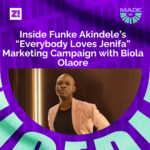
In 2022, Biola Olaore had just resigned from his job in PR and wasn’t sure what he would do next. Then suddenly, an offer he had not premeditated to collaborate with Funke Akindele showed up.
“You wouldn’t want to miss an opportunity to make history alongside the Funke Akindele,” he told Zikoko.
Since then, he has become her publicist, collaborating with her on marketing initiatives for the record-breaking film A Tribe Called Judah and, most recently, Everybody Loves Jenifa.
In this week’s edition of #MadeinNigeria, he opens up on how he worked with her on the marketing for Everybody Loves Jenifa, which, with over ₦1.4 billion in ticket sales, is currently the highest-grossing Nollywood film of all time.
Funke Akindele and Biola Olaore
This interview has been edited for clarity and length
How did you meet Funke Akindele?
Let me start off by saying that she found me! This was in 2022. I had just wrapped up my very third PR project in Abuja after resigning from my job in a PR firm few months prior. The beautiful part is that Chude, whose job I had just resigned from, recommended me to Aunty Funke, and she sent her sister to find me at home in Surulere. That was wild! I have been working closely with her since then.
What was it like working with her on Everybody Loves Jenifa?
So, with Aunty Funke, if you have the opportunity to work with her closely, you’ll realise that one of her life’s missions is to break every marketing protocol and standard that exists in entertainment marketing in the country.
I had worked with her on other projects, but only in the final stages, like PR leading up to the premiere and after that. But this time, she just woke up and decided she wanted to do the PR from the conceptualisation down to the very end. So, I was involved from the day she decided to make Everybody Loves Jenifa.
Funke Akindele is incredibly brilliant and talented at execution. It’s an insane combination. With her, you have to throw away anything you know about PR and just listen to what she wants to accomplish because she’ll definitely tell you exactly what she wants to achieve and how she thinks it should be done. I have never met anyone like her in my entire career.
There are days I sit and hear her say things, and I’ll be like, “What? How does a person come up with this?”
What were your priorities coming up with the plan with her?
It’s understanding the audience, listening to them, and giving them exactly what they want and more. Nobody can market your stuff as much as you, so no matter what idea you bring to her or what you’re working on, she’s on top of it to make sure that vision in her head aligns with the outcome.
She’s the perfect client any PR and comms person will be glad to have. You share an idea with her, and she gets it immediately. For the ones she doesn’t understand, she automatically swings into asking 360-degree questions to understand what is being said.
You said that you started working with her from the start of production. When did PR work start?
The marketing and PR for ELJ started the very first day the first draft of the script was written. Every cast member, scene, location—in fact, everything—was intentionally made and selected to thrill both old, new, and curious fans.
No stone was left unturned.
What were some of your references?
There’s no template for the level of creativity and execution that was done for ELJ. Everything was custom-made. If anything was brought from anywhere else, it’s basically the learning from other projects we’ve done in the past and practically making things we’ve done before better and bigger.
What were some of the themes in the movie you wanted to amplify with the PR messaging?
Everybody Loves Jenifa (ELJ) is a feel-good film that masterfully blends comedy, action, romance, drama and relatability. Since it was created with joy and family in mind, it was crucial to ensure that our campaign reflected this warmth and energy.
We wanted everyone involved in the project to feel the genuine love and excitement that the film embodies; that way, the fans would also feel and see how genuine this project is.
By infusing our campaign with this positive vibe, we created a shared experience that would resonate with our audience and leave a lasting impression.
How did you leverage social media on this project?
Social media is undoubtedly a powerful tool in today’s digital space, and Funke Akindele is a masterclass in leveraging social media to capture attention and build a massive following. Her dedication to continuously improving and expanding what already exists is inspiring.
I feel like she’s always asking herself, “How can I make this better and bigger?” This forward-thinking approach has enabled her to build a loyal fan base, making social media a crucial component of our promotional strategy for Everybody Loves Jenifa.
What were some of your standout moments from the campaign?
There’s so much to pick from: the announcement that featured A Tribe Called Judah and Omo Ghetto, the contents leading to the premiere, have you heard about Everybody Loves Christmas? I’m sure you have.
The cast of Everybody Loves Jenifa
Were there moments during the campaign when you had to pivot or adapt your strategy? If so, how did you manage that?
If you would work on a Funke Akindele project and excel, you have to be ready for a lot of last-minute changes and decisions because, from what I have come to understand on this project, today’s strategy may be outdated by tomorrow morning or over-exploited. We are in the age of fast content, so you always have to be ready to lead in deeds if you want to stand out.
What do you think made the PR campaign for Everybody Loves Jenifa so successful?
I believe the PR campaign for Everybody Loves Jenifa was successful because everyone involved took it personally. This project, from the onset, has never been about profit; it is a labour of love and about raising the bar so high.
The approach to this film was rooted in a deep respect for the audience, and making sure that everyone involved, from cast to PR understood the vision clearly enough to run with it. Simply doing the bare minimum wouldn’t be enough. Fans and humans generally are discerning; they demand excellence and value for their money.
By prioritizing quality and authenticity, we were able to create a campaign that resonated with the audience. It’s clear that when you put love, care, and attention into a project, the results speak for themselves.
This campaign’s success is a result of passion, dedication, and a genuine connection with the people it was created for.
One thing you need to know again is that anyone who repeatedly came to work with a weird or negative energy automatically fell off from the project. There was and is still no place for that. You have to show up wholeheartedly and joyfully, and everyone could see that because energy would never lie.
How do you measure the impact of a film’s PR campaign in Nollywood, especially when targeting such a broad audience?
The fact that this interview is happening in the first place is a true revelation of what has been done. The bar was created and shattered in every ramification possible, from respecting and treating the talents the way they should be treated to ensuring that the film’s delivery is stellar.
This film, at this point, is very much a miracle. I don’t think there’s a Nigerian with working social media who did not get to know about this project.
What moment from the campaign are you particularly proud of?
One moment that stands out? There are so many, this is a huge project but I’ll try to align my response with your question:
1. The day we filmed the Christmas song. I’d been on set since 10 am, and people came and went, taking breaks to recharge. But Aunty Funke was different.
She was there at 10 am, and when I thought everyone had wrapped up, she was still going strong. I took a nap around 1 am, exhausted, but when I woke up at 3 am, she was fully dressed, searching for shoes for a cast member in the costume department.
The next time I saw her, she was in the food department, asking what people would eat at 3 am! I was amazed. That moment, I knew I had to step up my game and match her energy, no matter what.
And I think it’s important to note that she treats everyone equally, with so much grace and respect. Everyone is personal to her. That was beautiful to witness.
2. The premiere and everything leading to that day, truly inspiring and amazing. The premiere was done intentionally, every guest, element and performance was carefully curated to create beautiful experiences.
Biola Olaore has been Funke Akindele’s publicist since 2022
What advice would you give to aspiring PR professionals who want to work in Nollywood?
To aspiring PR professionals who want to work in Nollywood, I’d say that believing in the vision is paramount. It’s not just about the financial gain; it’s about being invested in the project’s success. Adaptability is also crucial — understanding how your client or partner operates and being willing to adjust your approach accordingly.
The moment profit outweighs proper execution, you’ve limited what could have been, and by so doing, you’ve lost the whole definition of PR.
My advice would be to be selective about the projects you take on. If you don’t genuinely believe in the cause or vision, it’s best not to get involved. And if you do decide to take on a project, be prepared to give it your all and more. Half-hearted efforts rarely yield exceptional results.
In 2023, glamorous AI-generated images of stylish Nigerian seniors on the runway went viral. They were the handiwork of Malik Afegbua, a long-time video producer who had worked on TV commercials for brands like American Express, Bet9ja, and Access Bank.
But his curiosity led him down the path of AI. Long before it became a buzzword among Silicon Valley enthusiasts, Afegbua had been tinkering with AI. So when the boom came, he attacked.
In the first Made in Nigeria for 2025, he opened up about how he started as a creative, the biases Africa faces in the AI world, and how Nigeria can cash in big on large language models.
This interview has been edited for clarity and length.
How did you get started in the creative space?
My first company was a clothing line when I was in the UK for school. It was my first-ever attempt at commercial creativity. I was not a traditional fashion designer. I didn’t go to any creative school. I was curious about how to make urban fashion. Back then, it was mostly hoodies and shirts. I bought rhinestone cutters, heat presses, and materials to make my customised T-shirts.
Where did this interest in fashion come from?
I have always been gifted with design. I just have the eyes, so I started designing my T-shirts. My friends will see them and ask, “Where did you get that? Is it from Marks & Spencer, or is it from River Island?” I’ll be like, “I made that,” and they didn’t believe me. Then I told them to challenge me with an idea, and I’ll make the T-shirt for them. That was how I started selling. I got lost on contracts. I was making hoodies for schools, bars, etc.
How did the business do when you moved back to Nigeria?
When I returned to Nigeria for NYSC, I returned with all the equipment I used to make my designs. Then I got a contract to do T-shirts for a political party, and that was when I decided it wasn’t for me. I didn’t take the contract, which was for 40,000 shirts or so.
I realised then that the market was different, and I didn’t want to continue with the fashion line. It was much harder to do in Nigeria, whereas in the UK, it was fun. So, I gave all my equipment to someone who needed it.
I was a producer at Nigezie during my NYSC. That was when I fell in love with media and the effect of storytelling. I realised just how impactful content can be and how it can change perspective. I just saw the power. Then, I set up my first media company, Slick TV. I did a lot of interviews with people who are celebrities now but were not back then. They were still upcoming. I did a lot of TV shows. I got two contracts: one to be on TVC as a filler and Silverbird as an actual show. It was a late-night show. This was before Ndani TV.
I made the shows with Steven Ator (who is Asake’s manager now). He was a producer at Nigezie.
I had an editor with whom I used to work. I used to beg him to edit videos, and he would work on two-minute videos for days. So I told myself that this cannot be hard. I will edit and ask him questions, and he will laugh at me. But I was constantly watching videos on editing, and I got better. It got to the point that I was training people at film school how to edit. I realised that anybody can do anything if you’re passionate about it.
Slick TV was one of our first YouTube channels, but I wasn’t making money or getting ads. I didn’t understand the business back then, and many people who knew what they were doing had been in the industry long before me. I was just passionate about it and spending my money.
So you dumped it?
Yes. I moved away from that and started to create wedding videos. I was one of the first people to start doing cinematic wedding videos. Many people here before me were doing great work, but I always liked to look at the prospect of things. I started asking myself, “Is this scalable? Can I attach something to this?” I didn’t see wedding videos as something that would do well in the future, so I also stopped.
How did you get back to being a producer again?
Tajuddeen Adepetu, the owner of Souncity, got in touch with me and asked if I could do those shows like I did for Slick TV for Spice TV (which he also owned). I had never met him before. I didn’t even know who he was. But we had a meeting, and he gave me my first contract to do TV shows for them.
I already had my production company then. I produced three shows for them from scratch. There were Wedding Planners, Bargain Hunters, and Glam Mamas. They just gave me the brief, and I produced and gave them the finished shows. I did three seasons with them.
What was making those shows like?
For the first season, I hired people who had been in the industry for 10 to 15 years so I could learn proper production. They did the technicalities. I didn’t know how to edit then. I just knew what I wanted. So, I returned to the drawing board to learn how to use cameras and lighting and trained myself. Then I stopped with Tajuddeen.
Why did you end the contract with Soundcity?
I felt I needed to go professional, and I asked myself why, when advertising agencies wanted to do adverts, they went to South Africa to bring people here to direct and get a white crew. A lot of that happened then, and I realised it was quality control. I decided to cross my Ts and dot my Is. That was when I started to get TV commercial jobs. I did a lot of major TV commercials, from Bet9ja to American Express to Access Bank. But nobody knew who I was. I was just doing my thing, making my money.
When did your interest in the virtual world start?
Seven/eight years ago, I was messing around with virtual reality. The cameras were very low quality. There were only Google Cardboards. No Oculus. That was how I trained myself to be a VR producer. I went to big companies to speak about VR content; they were like Nigeria was not ready for it. It was a downer, but I continued. Eventually, Meta saw me, and I did two collaborations with them via Africa No Filter and Electric South. I got a grant to do an immersive project.
I started researching and discovered about artificial intelligence, which was then called Gantt. I began to explore it. I spend a lot of money on technology. Before buying a car, I buy a camera or gear with which I experiment. My wife is never happy about that. I got a high-spec computer on which I worked with Gantt. When generative AI came out, it was much easier for me to do things with it.
Then COVID happened, and interaction with the virtual space boomed. I started asking myself what I wanted to do with it. At this point, I was already training my own data set and creating innovative things.
Why did you want to use AI to create stylish seniors on the runway?
There is a personal reason and a storytelling side. The personal reason is my mother, who died two years ago. She was on life support for a long time. I was just trying to create people of her age who didn’t look impoverished. When we think of elderly people, we think of them as retired, no longer part of society, and not fashionable.
I wanted to change that perception. She liked fashion, and I wanted to put her on the runway. But I had no reference, which was why I created mine. It led to lots of conversation, and it changed my life. I am not popular in Nigeria, but when I leave the country, people really regard me just based on that work. They’ve seen it.
What are you currently working on?
I’m a futurist and like to work on things that don’t currently exist or can shape narratives. Unfortunately, they don’t pay you right now.
But currently, because of the bias that Africa is facing in the AI space, I’ve set up a program to challenge that, that will analyse, collect, preserve, tag and properly use African data to train large language models that represent Africa properly. All the data that has been used to train AI were found online, and they were not filtered. And the representation of Africa is already biased. I am not trying to get my data online but physically here to properly tag and train the AI.
I’ve set up a database that you can go to and crowd-fund data or put in your data and tag it properly. The incentive for people to do this is that they get credit, which they can use for a generative AI I’m working on. This is all self-funded. I am also working on an art installation that bridges traditional art with futuristic technology.
How is the AI space biased against Africa?
If you prompt “A boy in Lagos,” you will likely get an image of a poor baby in dirty Lagos. Even if you prompt, “Handsome boy in beautiful Lagos,” you still get a biased image. If you put “Nollywood,” you get a village. I have to train the AI myself to see us better.
You are also working on a film. How is that coming along?
I’ve had big producers from production companies ask me to develop the script further because they would like to produce it themselves. For a feature film, that will be at the end of the year because lots of things are happening concurrently.
What is the future of AI in Nigeria?
It’s a bit scary and exciting because of the adoption of it. We are in a world where every country can be equal if they do the right thing. There is a reason China is spending so much on AI. Because they know it’s not going anywhere. If you have the upper hand, you control the world. But in Africa, I am not seeing that. I see there is funding for AI, but I don’t see where it’s going. We have to be makers to have control. And this is the only time we have to do that. If there is a lot more adoption, it will be great for Nigeria.
Where do you see yourself in five years?
I plan to own a very big studio—something with a moving stage where you can shoot a film like The Mandalorian. I see myself as a custodian of AI, conducting a lot of training for people and doing amazing things. But who knows? Five years is a long time.
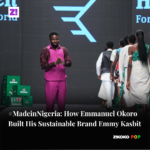
From an early age, Emmanuel Okoro knew he wanted to make clothes. Growing up in South Eastern Nigeria, he experimented with what he wore, restyling and reengineering it to give him the swagger he wanted.
After being shortlisted for the Young Designer Platform at the Lagos Fashion Week in 2018, he presented a collection of clothes for his brand, Emmy Kasbit, made with Akwete, a hand-woven fabric popular in South Eastern Nigeria. Now he is at the forefront of sustainability, showing his collections at shows like Paris Fashion Week. Fans of his work include Toke Makinwa, Angela Merkel and Ebuka Obi-Uchendu.
In this week’s edition of #MadeinNigeria, he opens up about how far he has come on his journey, the cost of making fashion in Nigeria, and his ambitious plans for the future.
What was your earliest experience with fashion?
It goes back to when I lived with my parents in the East. I was born in Abia, but after secondary school, I lived in Calabar until I moved to Lagos in 2015.
When I got back from school, I’ll attempt to make my own clothes. Whether I’m going to see my mother at her shop or wherever I try to make my clothes look a particular way. Then when I got into university, I wanted to make more money for myself and what I could think of was transforming denim jackets by adding studs to them and selling them to other students. People were keying into what I was selling. It was a means to go through school without asking too much from my parents.
Why did you move to Lagos?
I moved to Lagos because I wanted to pursue fashion. As we all know, Lagos is the centre of fashion in Nigeria and Africa. People kept telling me to go to Lagos and take this fashion thing seriously.
But when I came to Lagos, I had to do more research to widen my knowledge. So, I ended up working with some fashion houses in Lagos and interning with some designers. I had started Emmy Kasbit on the low, but it wasn’t official until I felt ready.
What was moving to Lagos like?
I came to Lagos for the very first Africa Magic Viewers’ Choice Awards (AMVCA) because I was dressing a friend, Uti Nwachukwu. He wore the outfit, and people really liked what I had made for him.
That was also when I met Ezinne Chinkata, the founder of Zinkata, who became a retail partner for Emmy Kasbit. She saw me at the awards, and she liked what I wore, and I told her I made it. I also took her to Uti and showed her what I had made for him.
She invited me to her store the next day, and that was the beginning of my career in Lagos. I went back to Calabar and started making plans to move to Lagos. In 2015, I moved fully to Lagos.
How did you meet Uti?
At the time, Uti was the host of 53 Extra on Africa Magic, and they had come to Calabar for the Africa International Film Festival (AFRIFF). He needed a designer and put out the word, and someone recommended me. I dressed him for that event, and he advised me to try the Lagos market.
How were you able to break through in Lagos?
It was very tough trying to break into Lagos, a market that even then was saturated and currently is still saturated. I knew only a few people in the Lagos fashion scene, and it was an ecosystem that demanded a lot of hard work, consistency and networking. I tried doing that as much as I could in those days. I went to many events and made notes. I did a lot of research and asked a lot of questions. People who I saw and loved their style I went to check their Instagram. It was always about enlightening myself more.
What was your big break?
Everything started when I won the Fashion Focus Prize at Lagos Fashion Week prize in 2017. I had enrolled for the Young Designer Platform initially, but I didn’t get in, and that threw me off balance. I thought maybe I wasn’t good enough, and I didn’t want to apply again. But a friend encouraged me to, and I found success the second time.
I went through all the stages and was shortlisted for the top five. We were going to show a collection to win the prize. For me, it was a do-or-die affair because I really needed that big moment. I felt that it would step up my game on the Lagos scene. I won, and it registered my name with the press. I landed my first BellaNaija feature.
What was building a fashion business like?
Branding took a lot of time and hard work. I have a business partner now who focuses solely on the business of Emmy Kasbit while I focus on creating. He is a friend of mind and joined in 2020. Initially, Emmy Kasbit was just a fashion label that made clothes. A lot of mentorships from people already in the industry helped me rethink branding. I knew that fashion was a business, and I had to survive off it and wanted to. Now, we have structure. Even when I’m not in Lagos, the business doesn’t suffer.
Who was the first person you hired?
The oldest tailor on the team. This was after winning the prize. I set up a little production space in my living room. I got his contact from an agent who links designers with tailors, and I told him the skills I needed, and he recommended him. I also had to train him and teach him my style and how I wanted the clothes to appear.
In the early days of building, you were still dropping collections. How did you keep the business afloat?
I believe in consistency. Because I knew I wanted to be here for a long time, even if the business wasn’t making a lot of money, I still did collections. It keeps your name afloat. I don’t think we have missed any season. I knew I had to be consistent. Even when we’re stuck with work, we still find time. We always do two collections yearly.
When did you start to experiment with Akwete?
I never worked with Akwete until my debut season at Lagos Fashion Week, S/S17. I was looking for what would set me apart from the other competitors in the top five. I had a mentor who told me I needed to do something people had not seen before. I went online and researched textiles, and I found a community of Akwete weavers in Abia.
I spoke to one of them, and she keyed into my vision. We designed the production, and she singlehandedly made all the fabrics we used in that collection. It was so well received, but I also knew I owed it to these women to continue this craft. We have to take it to the global market.
What has working with Akwete, a handmade fabric, been like?
It’s been challenging because sustainability isn’t cheap, and working with Akwete also demands so much patience because it’s hard-woven. A lot of time and manpower is involved. It is done by hand, and the women can break down anytime. But what I want to do is ensure that this craft doesn’t go out of style and that the next generation can continue it.
Do you hire the women who weave the fabric for Emmy Kasbit, or are they contractors?
The women are part of the Emmy Kasbit Initiative, which we started in 2022. The whole point of the initiative is to cater for these communities, especially the Akwete communities. We hire the women, and they produce per season.
We have people in charge of quality control. Before a piece leaves, it must have gone through three stages of quality control. We have a quality control manager and a product manager who check the pieces. It’s about letting people get value for their money. Everything must be in place.
What has been your experience working with Gen Z?
I think working with Nigerians generally requires a lot of patience. But I personally like to see the good in people. When you hire a young Nigerian, they might make mistakes, but with time, they get better. I believe that there are processes to things, and over time people evolve to where you want them to be. I have never had an issue with a person just quitting abruptly. I also don’t just hire. I always ask the team for their feedback before we hire, and we collectively agree on who we bring in.
When did Emmy Kasbit begin to go international?
In 2021, Vogue conducted a scouting in Africa in partnership with the African Fashion Foundation, and I was selected. I was one of two winners, and a perk of winning was presenting a fashion film at Milan Fashion Week. After that, we started attending fashion shows. We did not do any shows in Milan, but we’ve done a couple at Paris Fashion Week.
What have you noticed is different from the fashion shows in the West and the ones we do in Nigeria
I think it’s a different audience. Nigeria is where Emmy Kasbit is rooted, so showing here is like showing at home. But in Paris, you’re showing to strangers who might not have seen or heard of you before. You might even send an invite to the press, and they might not come because they don’t know you. But good work speaks for itself, and sometimes they check the work online and are fascinated.
One thing the European fashion scene loves is the good craftsmanship that comes with African fashion. In Paris, when African designers show, people always want to see more. They are used to the silhouettes they see in the West, and African designers are bringing something fresh, and they are eager to see it and discover new talent.
Do you think Emmy Kasbit would have succeeded internationally if you hadn’t experimented with Akwete?
I think so, but Emmy Kasbit’s DNA is Akwete. Perhaps it would have been harder to do something else that would have captivated the audience.
A lot of designers are experimenting with Akwete and Aso-Oke. Do you think this is a trend?
I’ll say that sustainability is at the forefront of fashion right now, and African fashion relies heavily on traditional practices, including tie-dye and hand-weaving. These are the things that make today’s fashion.
We’ve had situations where Western designers have hijacked African stories and not told them the right way. I think that our duty as African designers is to own these stories and tell them better. We do this by reaching into old traditions and presenting them to the world. I think it’s here to stay and not a phase.
Are Nigerian designers becoming too expensive?
What I will say is that the Nigerian economy is a bit shifted at the moment.
So much so that pieces can now start at ₦1.5 million?
To each brand their business model. If a brand offers a garment for that price, then you need to consider the steps the designer went through to make the garment. They must have done their markups. We don’t just sell things at any price. When you look at a garment, you should be able to tell why it is expensive. But really, the state of the economy is primarily responsible. We’ve had times when we reviewed prices at Emmy Kasbit within three days. The economy is affecting all industries.
What do you think of influencer gifting?
We hardly do influencer gifting. Maybe all year, we might just do influencer gifting once. If we do, it might just be for five customers who have been supporters of the brand all year. It’s also a way to promote that collection, so it’s a win-win situation.
What advice will you give to a young designer on attaining profitability?
Know your numbers and target client. Knowing your target client allows you to understand how much your customers can spend. And start from a minimum price. When you build the clientele, you can take up the prices. Also, don’t always expect to make millions from a limited capsule. Sometimes you might run into losses.
Where do you see yourself and Emmy Kasbit in five years?
I still want to be a designer, but we’d have opened multiple stores worldwide, and I’ll be shuffling my stores. I see the brand with multiple retail partners worldwide. I still see us experimenting with Akwete worldwide. I see myself gracing the covers of many magazines.
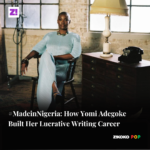
Writing wasn’t Yomi Adegoke’s first choice. She went to Warwick University to study law and, as a hobby, decided to start a pop culture blog. Well, the rest of history. She worked as a writer at Channel 4, The i Paper, the Telegraph, and most recently, the Guardian.
Her 2023 book, The List interrogates the excesses of the #MeToo movement at the peak of the anonymised shitty men list. It became an instant bestseller and is being developed into a TV series by HBO Max, the BBC and A24. She’s an executive producer, naturally.
In this week’s edition of #MadeinNigeria, she opens up on starting a magazine at 20, having a lot to say about #MeToo, and how the left is losing its way.
When did you realise you wanted to be a writer?
It took me a long time. I studied law at university. It wasn’t the cliche of my parent pushing me into law, but I definitely did grow up with the awareness that creative pursuit doesn’t necessarily lead to financial stability, and that was my priority. I’m Nigerian, after all. I wanted something that was going to make sense for my future.
Almost immediately after arriving at university, I knew I wasn’t a lawyer and that liking to argue doesn’t mean you’re a lawyer. Painting and writing were the way I always expressed myself but I saw writing more like a hobby. So I started a blog. It had a couple of readers and was about pop culture. It was actually a guy (who is actually in the acknowledgement of my book, The List) who first told me I could make money writing. He used to read my blog, and he said to me, “Do you realise you can get paid to write this? This is pop culture journalism.” I had not even thought of it. It was a hobby.
The idea of being paid to do something that you enjoy felt kind of foreign to me. I’ve always had this idea that you must toil for your money, so I realised this late.
So how did you get your first writing job?
I took a year out of university. During that year, only God could tell you how many applications I filled out. It has to be in triple digits. I applied for every single internship at every single magazine. I remember applying for a casino magazine, a gardening magazine. But no one was taking me. This was 2012, and England had so many initiatives and charities that would encourage creativity among young people. One was called O2 Think Big and they used to give a grant. It wasn’t a lot of money, maybe like £500, that you’ll use for a creative project. They was also Vinspired, and they gave £300. I took those grants. If I could not get work experience, I was going to make work experience.
So, something that I will never think to do now, I said to myself, “I was going to start my own magazine because I’m applying to all these magazines and they are not hiring me.” You know the vicious cycle: You need experience to get experience. So I was like, “I’m just going to create something and show that as my work experience.”
I launched a magazine called Birthday Magazine, aimed at young black women and girls. I used to distribute it at the hair shops in my area. I lived in an area called Croydon in London and it is a very black area. Back in 2012, the media wasn’t really catering to black women the way it is now. You didn’t have articles about how to look after natural hair in mainstream publications.
I did that for a year, and I used that to say that this is the evidence that I can write.
Why do you think the industry didn’t see your talents prior to starting the magazine?
In the UK at that time, the percentage of black female journalists under the age of 30, even now, is remarkably low, especially if you’re not privately educated, which I’m not. So back then, in 2012, trying to knock on this door, this little scrappy girl who wasn’t white and wasn’t necessarily middle class in the British context, was hard. The things I wanted to write about were the things that I wasn’t seeing in the media generally.
It’s crazy to think of a time when Afrobeats was a niche genre of music. When I was growing up, many white people didn’t listen to Afrobeats and Grime music, and I wanted to write about the music I liked: Grime music, Afrobeats. I wanted to review them, and there just wasn’t appetite for it. I used to write about racism, sexism. I wrote about things that felt community-specific, and they were like, “This matters to you and people like you, but most of our readers aren’t like you”. The pitches I’d send people, they just didn’t get it.
What was the experience building Birthday magazine?
It was hard, but I think I didn’t even notice it so much. I think I was 20 or 21. You just have this delusion and energy when you’re young that you’re able to do things. It was hard, but the stakes felt so low. If the magazine turns out rubbish, they won’t tell me to return the money, you know. I wish there were more initiatives like that. A lot of these charities have been shut down under our conservative government. I was the editor. I was in charge of everything, finding contributors. I look back now and I’m like, who sent me? I was doing photoshoots. We had a website. It was just me on my own working on my laptop.
How do you balance being passionate about work and knowing it is a capitalist system?
I’m freelance now but it’s something that I thought about a lot when I was in full-time employment. When I started my career, we were moving into how many views and shares something gets. The value of the piece is tied to how many views it gets and not if they engaged with it, and often when people share the article, it doesn’t mean they’re engaging with it. This was the rise of the thing that people called “churnalism.” They are basically churning out stories that they think will go viral.
A lot of journalists measure the value of what they write by how viral it goes, and it’s not our fault because if we are not able to get those numbers, the platform could shut down. I struggled because there were so many pieces that were important to me, but I wasn’t sure if people were interested in them. I pitched a story about infant and maternal morbidity rates, but it was difficult to get the piece off the ground. Now, thankfully it’s a conversation we’ve started having.
What is also different now is that I am still a journalist, but my primary source of income is from books. This means that when I’m writing about something, it’s a topic I’m really passionate about. That’s not a luxury most journalists have.
What does it feel like to have that luxury?
I think it feels creatively freeing. I consider myself a privileged person because I used to write for free and have always written for free. To be able to monetise it to a small degree is great, but to be able to monetise it to the extent that it has changed my life is incredible. I feel so lucky that I never feel like I have to do anything I don’t want to.
Why did you decide to write The List?
I wrote it during lockdown. I didn’t think it was going to be lucrative or anything. Everybody was making sourdough bread, and I was like “That’s not me”. Much to my parents’ disappointment, I’m not be able to cook. I didn’t think it was going to be a bestseller or anything. I had hoped it would. But the reason I was able to take that risk was because I had written other books that had been successful. I was trying to write something that meant something to me, and by virtue of that, I think it did very well. I write what feels authentic to me, which many people don’t have the luxury of doing.
The book is also about the #MeToo movement and mob culture. Why is that?
I had a lot to say. In late 2017, I came across many allegations that were disseminated via viral lists. There was a really famous one in America called “The Shitty Media Men List,” which was looking at male journalists that have been abusive. When I saw the list, I was like, “This is great. There is no smoke without fire.” Many women have been denied justice for so long. Men have been able to abuse with impunity. It’s great to see the internet be a means to providing justice. All kinds of things have become social justice causes online, like #BlackLivesMatter.
I grew up watching TV shows like Catfish, where someone is talking to someone they think is someone online, only for it to be revealed it’s someone else. I grew up with my parents always saying, “Be careful of who you speak to on MSN Messenger because you might think you are also talking to a teenage girl unknown to you it’s a man halfway across the world trying to groom you.” Also, as journalists, we’re in the middle of a fake news crisis. Now, we’ve even got AI, which is exacerbating the crisis.
As much as I understood the aims of these lists, as a journalist, I had to question their ethics. Two things can be true at once. It can be true that abusive men need to be held accountable. Women are being failed by the system; that’s either the police, the legal system or just HR at work. But it can also be true that lists of this kind, being anonymous, but also anyone online having access to them means they are very susceptible to being used for nefarious purposes, being undermined which now undermines a whole movement. People lie online.
Nuance is my thing. I’m a fence-sitter, so I was like, “Let me work out my thoughts in writing.” I was going to write a long piece weighing the pros and cons of the ethics of this, but everyone was on lockdown, and I was like, “I could just write a novel.”
There have been arguments about how critiquing the #MeToo movement or the ethics of those lists makes one a right-wing head. What do you say to that?
I think it’s an intellectually dishonest argument. Acknowledging that more than one thing can be true is just part of being a critical thinker. To me, acknowledging that women are very rarely given justice in the legal system does not negate the fact that anonymised lists online that have not been checked are susceptible to being abused. How can you acknowledge that catfishing happens, that we have a fake news crisis and say it’s impossible?
This type of approach to justice is flawed. What I have seen repeatedly happen is that even though 99% of the allegations on the list are credible, if one person was mistakenly put there or you don’t have the context, everybody latches onto that story and says, “Look at this one person.” That pulls our movement backwards.
What is happening is that right-wing people are owning the conversation on cancel culture that should be happening on the left. Rather than weaponising my book, what people are weaponising is the silence of the left, our complicity often in not having real conversations about cancel culture and free speech.
We’ve pretended that everybody who has been cancelled deserves it, which simply isn’t true. There are multiple conversations where someone can say someone has taken advantage of our well-meaning movement. But because we are silent, right-wing people come in and say well, according to the left, there is no such thing as cancel culture. And if you are a person who thinks these lists are flawed, then you need to be having these conversations with us on the right. You then play into the hands of extremists.
There is nothing you can do to stop me from going to Twitter, making a burner account and accusing you of whatever I like. The only thing that is stopping us is sanity. Not everybody is sane online. People will take advantage of anonymity online to lie.
Will you ever write for the website, Unherd?
I personally don’t think that I will need to write for a platform like that. I think that often, a lot of the arguments on the website come from a political viewpoint that doesn’t align with my own. I’m not mad at people who choose to write for people with different views from their own. But I think that my voice is better placed somewhere like the Guardian.
They are preaching to the converted. Many contributors seem to be right-leaning. And they are having conversations often about cancel culture. I might have arrived at a similar conclusion, but I didn’t reach it in the same way.
But it also scares me when people say if you believe this thing as well, then you must share this political idealogy. There are some ideas that are like that. But we’re getting to a place where if someone that is right-wing said the sky is blue, acknowledging it makes you right-wing. That’s not clever. For me, there are some things that are absolutely true. One of them is that anonymised lists being disseminated with certain allegations are subject to potential abuse, and I don’t think that is a controversial issue.
Free speech is a pillar of left-thinking idealogy. But we now allowed the right to come in and commandeer conversations around free speech. Why is Chimamanda speaking about free speech, and she’s being posited as right-wing because she’s speaking about free speech?
With Chioma Nnadi leading Vogue and Kemi Badenoch leading the Tories, Nigerians have risen atop UK legacy institutions. Why do you think this is happening now?
I think it has always been happening. I think Kemi Badenoch has made it more obvious, but Naija no dey carry last. The Nigerian spirit is inherently ambitious. My parents used to say to me if you want to write, you’re gonna be the best writer. If I were really about money, I wouldn’t be a writer. But I think it’s very Nigerian of me to have been able to turn it into a lucrative thing. When you are in the UK, there is that phrase that as a black woman, you’ll work thrice as hard, but my parents never said that to me. They’ve always said you will thrive because of your identity, not in spite of it. I think Kemi Badenoch is getting way too much credit because we’ve been doing it.
Where do you see yourself in five years?
I just finished writing the pilot for my TV show, so my show will be out. My life will be quite different. I’m really excited about it. It will bring a new audience. I’m writing my next book; I hope it will be out. I’m excited about resting and allowing my work to breathe and speak for itself. I’m really excited because I’m just one girl in Croydon talking.
For at least a decade, Tayo Okoya has been part of a new crop of Nigerian designers who produce luxury streetwear clothes. He first thought of the idea of his brand, World Black Fantasy (WBF), as a teenager. But when he left secondary school starting in Nigerian was next to impossible.
While studying Animation, Interactive Technology, Video Graphics, and Special Effects at the SAE Institute Dubai, the idea came to him again, and he launched WBFDubai because he was based in Dubai then. These days his brand has cultivated a cult following that includes Davido, DJ Obi and the rapper Ajebutter22.
In this week’s Made in Nigeria, he discusses building a community, dressing Liverpool FC star player Mohamed Salah, and how we can support small creative businesses.
How did you start WBFDubai?
I conceptualised this brand when I was in secondary school. I was in JSS3, and I used to draw comics and everything during my prep time. However, during one prep time, I decided to draw clothes and came up with the name Black Fantasy. Since then I have been pushing it. I tried to start it in Nigeria before going to Dubai for university, but I didn’t have the support I needed, and the environment wasn’t encouraging. People will laugh at your ambitions and dreams, especially when they are seen as being too big.
When I finished school in Dubai, I had grown the brand enough to register the business. The reason it’s called the WBFDubai is because I registered it in Dubai. I have been doing this business in Dubai for four years. It was recognised back home in Nigeria from Dubai, and people started demanding the products at home.
How did you start your Nigerian penetration?
We were retailing at Garmspot, Alara, and Alté 51. This year, we opened our first flagship store. We did the soft launch in October, but we’re doing the flagship launch in December. It’s a community store, and eight artists came together to design and make the space. All we’re trying to do is represent pop culture. Black Fantasy is about creative freedom and expression. We are black, and we deserve a fantasy.
What has running your business primarily from Nigeria been like?
It’s been hectic in Nigeria. For any business in Nigeria to thrive, the owner needs to be available and represent the business. You need to pay attention to details and show up. The owners of the business need to show up. That is the mistake that most business owners are making today. The businesses that are not flourishing aren’t flourishing because the owners are not showing up.
You have to be there and intentional. You have to pay attention to details as small as the smell and ambience of your space. The little details, down to making sure no cobwebs are in the place and the trash is taken out, are very important. For four months, when I was creating the place, I didn’t have a project manager. I did it myself, calling the AC guy. Working with artisans has been a challenge, but we have to be resilient.
What has been a challenge for you with the Nigerian market?
Getting a community to acknowledge and support your work is a challenge. Some people judge a book by its cover. They think “This person has it good,” but they never know the back story. It’s hard to get the attention of the Nigerian community. They don’t really send you. You have to be doing something out of the box that grabs their attention. With everything you’re building, community is key. You can do whatever you want, but a community must back you.
What has the manufacturing process been like since you moved back home?
I have been manufacturing in Dubai for the past four to six years. The reason for that was I started the business in Dubai, and the people that I worked with were the best people I could find to make my stuff. My products are mostly silk, polyester and satin. This is because that is the only product I could manipulate. I could print on the whole garment. But I also chose them for creative freedom. They were the best to give me the creative freedom that made us stand out. We have unique items. Most of our designs are two pieces. We are styling people.
But we’ve collaborated with some made-in-Nigeria brands that we will work with now that we’ve returned home. Our vision is to have flagship stores everywhere globally. We just want to make quality stuff that we’re proud of. We are very intentional about everything, down to our space, to produce global-standard quality.
Why would you say a WBFDubai piece stands out?
Down to the tailoring, colourway, and fit, our products stand out. You can be in a room filled with many people, but you will stand out in a WBF piece because our designs speak for themselves. I studied 3D design in school, and our designs are mostly 3D renders. We do 3D renders and put them on our clothes. It has this hyperrealist look to it that makes it look unique.
Do you design all the pieces?
80% of the designs are made by me. The remaining 20% are collaborations. I may be online and see someone’s work that resonates with me. I tap in, and if they’re willing to collaborate, we work together. One of our best sellers is called Seven Deadly Sins. This is a collaboration between Hubris World and me. He did a 3D of the lady, and I put it on the shirt and designed the “seven deadly sins” at the back of the shirt. It’s our most demanded shirt. Davido wore the shirt.
Many of the designs from WBF have a gothic theme to them. Why is that?
Black Fantasy is the perspective of the world through a black man’s eyes. It’s the way I look at the world as a black man living on earth. I like to touch on topics and express myself through my art. And for my art, rather than have it on the wall, I put it on clothes that people can wear every day. It may come off as gothic, but for us, it’s just art, which can be interpreted differently. There is always a message behind our work. We just want to start conversations with individuals.
High-quality streetwear and skateboard brands like yours seem to have taken off in the country in the past few years. Why is this only just happening?
Many brands came and left. Not everybody stands the test of time. The truth is that our society needs to learn to support each other more: support your friends and support small businesses. The reason I didn’t start in Lagos, as I told you earlier, was because I didn’t have support. About eight years ago, I was in a room with Santi and some other creatives. I had a creative idea, and I wanted to speak to the owner of a space for a popup, but someone just started laughing at me. But Santi pulled me to the corner and said, “Don’t mind them, just keep doing what you do. Not everyone can understand your vision, but I do.”
15 years ago, I made the first geo Snapchat filters of Lagos. I made Surulere, Murtala Muhammed International Airport, Ikoyi. I made many, and people were like, “Who is this person? Their designs are ugly.” But one person who stood up for me was Bizzle Osikoya, who messaged me and said, “Keep doing what you’re doing, bro.” This is the kind of bullying we get in the creative industry.
So when you say, “Why are people not starting their streetwear brand and building their business?” We are in the jungle. I can’t lie; Lagos is the jungle. They can tear you down so that you end up having a normal nine-to-five or doing a job that you don’t want to do. But the rave is in Nigeria now, and we are the dopest black people, so the world will look at our clothes, fashion, nightlife, and music.
I don’t have any support in my business, not even a bank loan. People may assume that this guy has support from his dad. But the only person who has invested in me is my mom.
How do you attract and work with so many young creatives?
I have doings that have been able to speak for itself. Earlier this year, I had a shoot with Mohamed Salah. How did this happen? My business is registered in Dubai. And I’m just guessing here, but maybe it’s because I was featured in Cosmopolitan magazine’s top 10 black-owned businesses in the UAE. So a company reached out to me and asked if I was interested in a shoot for Visa with Mo Salah. I had a meeting with them, and they asked if I had a UK visa, and that was it. They flew me to Manchester, and we did the shoot. I was happy that my work could bring me here.
People can tell that I am passionate and resilient. I may not have the money to pay them, but they believe in me. When I’m talking to people, they’ll see my name and expect big money. But I feed off energy and vibes, and people who resonate with me can tell that the work will go places.
Where do you see yourself in five years?
I really believe in the power of manifestation. I don’t limit myself. I just make a document with my goals, and I work towards them. And I remain resilient. Like a rolling stone, I’m not going to stop. When I say world domination, I mean world domination. To take over the world, bro.
Ifeanyi Nwune studied engineering at Covenant University, but he has been a creative for most of his life. As the creative director and founder of the fashion label IN Official, he has been at the forefront of pushing African fashion to the global audience.
His pieces have been worn by everyone from Davido to Stevie Wonder to Maluma. He has since built other businesses, including VVS Lagos, a platform for young designers to showcase their work and collaborate. This year, he designed the Africa International Film Festival (AFRIFF) award.
In this week’s Made in Nigeria, he opens up on how he became a multi-hyphenate creative, making opportunities for himself and reverse-engineering aso-oke.
How did your relationship with fashion begin?
I was just trying out my cousin Ugo Mozie’s clothes when he came to Nigeria, and just seeing that I liked weird high-quality ideas. Before then, it was through my mom because she’d always been stylish as hell, and she’d always dressed us a bit more tailored and structured than others. That gave us a bit of an edge on how we wanted to be seen and what we wanted to wear as we grew up.
Why did you decide to become a designer?
I started as a stylist, and I always needed pieces. But I wasn’t seeing the pieces that I wanted. It was also a good way to make money. At the time, I saw one of the richest men in the world, the owner of Zara, Amancio Ortega. I was impressed because he was a cool fashion designer who owns a factory. But besides that, I just like to look and feel cool generally.
What was your first styling gig?
Arise Fashion Week in 2012. I worked as a styling assistant with Bolaji Animashaun, and it opened my eyes. I was 17. The people I met there are the people I call my fashion friends today. Months after the show, I went about emailing everybody, all the music companies. At the time, there were only 20 stylists max in the country. I emailed Chocolate City and got to style one of their artists, Nosa. I did it almost for free. Then I did Project Fame. I was assisting the head stylist at the time, and he got fired, and I got the job for a year.
How was transitioning from stylist to designer like?
It was perfect because I’d always kind of just done styling for fun. I’ve always hated it. I did it for the same reason I started my brand, there were no clothes. Styling just made sense at the time because there was no access to stuff to use. In other countries you have all the budget and all the places to get stuff from. The transition for me wasn’t nothing. I was tired. I hate being told what to do. It was a situation where I had to pick from getting called for jobs or just operating, and if I got a job or not, I was still good.
Why were you good? Were you doing other things?
For me, designing is putting your ideas into the world, while styling is bringing another person’s ideas into the earth. For designing, you dictate the terms; for styling, you have to listen. It’s like being a model, which I was for three months when I was younger. But it didn’t make sense to me because I don’t like listening to people that much.
When I said I was good, I meant to just keep creating my own world and wait for people to align. But also, there was no time in my life when I was only doing fashion. It doesn’t make sense. We are too young to stick to one thing. I’ve always done different things.
Once I dabbled in music, I started figuring out how to get into the music business and actually make something from it. It’s about gaining opportunities from it, not just calling yourself a designer, stylist, or makeup artist. But how much are you making? And what is your structure, and how often do people return to you? Do you deliver? That was what was beaming in my head. It’s not just about calling yourself a name.
It’s just being focused on the vision of making a change in the ecosystem, whether it’s fashion, art, music, or even politics. I’m still in this process every single day, doing things that people don’t expect of us. There is no time you should be doing one thing. It’s just laziness, in my opinion.
Have you considered a lack of opportunity as a reason someone might be doing one thing?
People think you have to wait for opportunities to come to you, but sometimes you have to set them up. It might not come this year. People are just a bit impatient. Sometimes, something that you put your mind to now might not pay off today.
With the styling thing, it might sound all fun now, but back then, I wasn’t making any money. I was just managing before I could get to a place where I could build a business. Making money took me about six years. So that’s what I was saying about opportunities. I took the opportunities that I could take just to build these relationships now. People need to dabble with their creative energy. You might never know what you’ll be good at. Don’t just stick to making clothes. That is not the way to be a billionaire. You have to be diverse and solve problems.
How would you say you’ve changed the ecosystem?
I don’t know. But I think I just diversity and show people it’s more than as a fashion designer you have to do just fashion. I think nobody in the industry—at least in Africa—has been able to cross-bridge the entertainment sector like I have—music, art and fashion. I think Virgil did a lot of that. Daily Paper too. It is not just about one expression.
An important contribution we’ve made is pretty much just showing people that it’s possible. Before now, it’s been older guys popping in fashion or people who are wealthy as hell. For me, I came from nowhere and just continued.
When was the last time you created an opportunity for yourself?
I just did that before this call. I push jobs all the time, every single day of my life. My role is pushing jobs. If you’re not doing that for yourself, then you haven’t started working. You don’t own a business yet.
How were you able to build structure in your company?
Building an efficient team that can execute your ideas has been game-changing because if you don’t have a team that can make your ideas happen, it will just be a long process.
How have you maintained your customers and relationships for years when as you said, you hate being told what to do?
My hating being told what to do doesn’t mean I don’t listen. I always listen to every single customer complaint and figure out how to make their experience better. However, I meant I don’t like listening to people because I’ve worked in companies before, and I know how it is when people are not really doing anything, and they just try to instruct you. “Come this time, go there.” I don’t have to answer to no one. If you order a piece from me that is not ready-to-wear I’ll let you know the time and day that it will be ready. It’s us telling you, but it’s you who made the request. We are definitely still growing and trying to understand customer service as much as possible.
Will you describe yourself as a humble person?
Yes, I’ll say I’m humble, but I’ve heard that people beg to think otherwise.
Why do people think otherwise?
Maybe because of how I carry myself. Personally, I don’t like to carry my accomplishments or my ideas and access on my forehead. I’m the most humble person. If I meet a person now, I’ll relate to them on their level. I don’t need to tell them nothing that they don’t need to know. I’m not the kind of person that will say, I have this, that, nah nah nah. If I meet someone and the person is talking about a little project they worked on, I’ll tell them about a little project I worked on.
I come from a place of just knowing myself, so I’ve never had to be someone else or act. I’ve just had to be and step into what my life should look like. You have to just know yourself and what you can offer to the world. At the end of the day, all this is not from you it’s really just from God. I don’t see the reason to not be humble. People tend to confuse knowing yourself and what you’re saying as pride or ego. It can be that, but it’s not a bad thing. It’s just self-awareness. It’s either that or you’re not going to know your worth. So you can pick or choose.
People have called the fashion industry very elitist. In your experience, is that a fair description of the Nigerian fashion ecosystem?
That is the description of the space globally. What is fashion? Fashion is showbiz. Showbiz is elitist. It’s not real. It’s a facade. It is like creating a world that doesn’t exist and telling everyone you can’t be a part of it. If you don’t know that showbiz is elitist, then you’re not ready for the business. It is not about how you navigate. It’s not a problem. It’s the business.
Fashion is about building worlds that don’t exist. If you don’t want to do that, you can’t compete. It’s a fucking fantasy. What is real is what you make real. It’s the brands that spend time on quality and manage their storytelling efficiently that stand the test of time.
Do you see yourself as the creative director of a fashion house owned by someone else?
A lot of my designer friends don’t really love that. But I see myself in that world for a few reasons. By God’s grace, I’m able to spread my ideas and express them in different languages. If a client hires me for a Wizkid job and a beer job, the expressions will be completely different. If I’m hired to do someone’s brand and translate it into their own language, that will be completely different from what I’ve ever done with my brand. I see myself doing that. At the moment, we produce for other brands as well. Myself and Ugo have our own factory UMIN. Under the factory, we produce my brand and Ugo’s brand.
What makes an IN Official piece stand out?
I think there is something spiritually up with my clothes. I don’t know what it is, but most people connect with it more than they connect with other pieces. Maybe the love that is put into the clothes. Every piece is very intentional. I can make a whole collection, and I won’t wear it because I can’t afford it. But I feel like people who can afford it should buy it.
We come from a place of love. We have personal relationships with every single aspect of the business. We ensure it’s made with the best spirit—no bad energy. I think also the idea of resilience and just continuing is a quality people like. We’ve been able to express ourselves in different eras while keeping the ethos of our design.
We express traditional standard silhouettes that everybody expects but in a more global definition. Because I’m making clothes for an older guy doesn’t mean it will be some basic native. We try to make everything look youthful, young and fresh.
What has your experience been like working with young people?
It’s been a bit hard, I’m not gonna lie. I had one walk out on me at a fashion show. They did something that was not their job. I told them it didn’t look good, and we had an argument, and then they just left. They fired themself. It’s crazy to me because I know how many times I’ve been so pissed at so many people, but I just can’t leave.
Many Nigerian fashion houses now experiment with aso-oke in their pieces, including IN Official. Do you think this is just a phase?
I don’t think it’s a phase, just on a historical level. It’s original to us, and it’s an opportunity to give back to the community that built that story. I’ve been experimenting with it and trying to reverse-engineer it so that we can come up with new ideas for it that people have not seen before and not just do what everybody else is doing.
But I also think we don’t understand what Aso-oke is. I think it’s that word “Aso-oke.” We need to throw away that word first. The first time I heard it, it was called Aso-ofi. It’s a lot more than just Aso-oke. India has its own version, Turkey, Morocco have theirs, and in the end, it’s Aso-oke. Everyone has had woven fabrics forever. Igbos have Akwete. It’s just the same thing. It’s just fabric. The whole Aso-oke thing makes it look like we are going back to some native time where everybody is using some native fabric. This is no native fabric.
In Morocco, we went to this place where they were weaving so much with wool and fleece. And we’re just talking about Aso-oke when there are a lot more things to be doing with woven fabrics. These fabrics should be reverse-engineered to be doing other things. But we’ve kind of boxed ourselves with that name. The story of starting in Osun is cool. But in 2024, it’s beyond that. We need to know that this is a fabric that can be made into anything. We can even make silk Aso-oke. We can make anything.
We are either leading the charge and making people align with the idea of Aso-oke and making the whole world try to import it like they do Turkey fabrics or not.
Will you call yourself a globalist?
Yes
The pushback for people with globalist ideas, especially around culture expansion, is that the cultural significance could be lost. What do you say to that?
There are people in Nigeria wearing Indian Sari every day, looking like fools, but they can’t make their fabric in different styles. We have to just be smarter about how we move and know that if we don’t fight for things that we believe in, no one will. No one cares, really.
Where do you see yourself in 10 years?
I don’t know, honestly. I had a near-death scare when I was electrocuted when I was little. So every single day is a blessing. In 10 years, I pray to God I’m still here and able to do things. I know the brand will be in a place where we can create thousands of jobs, inspire businesses and change the ecosystem.
While studying fashion and textiles at the University of Port Harcourt, Ifebuche Madu travelled to Osogbo to the Nike Art Gallery for her industrial training and learnt the art of Indigenous textile making: Adire, Aso-oke, Akwete, etc.
After she won the Dare to Dream competition for entrepreneurs, she started a fashion and textile business, Afrikstabel Textiles. But later, she realised that textiles were her calling. Today, with Afrikstabel, she’s documenting everything from Aso-oke to Akwete, and even fabrics, she’ll admit, she doesn’t know what they are called.
Afrikstabel Textiles have been used by everyone from Dye Lab to the Nigerian Olympics delegation attire designers.
In this week’s #MadeinNigeria, she opens up about how her journey making Indigenous Nigerian textiles began and the lessons she learned along the way.
How did you get started in textile making?
The story is quite interesting because I had never heard of Adire until my third year in university. I studied fine art and design and specialised in textiles and fashion. As a textile student, it was mostly theoretical until I went for my IT, where I learnt that Ankara prints have no origin in Africa. I was shocked and surprised, which kept me wondering what the Nigerian prints were. When we started studying Indigenous African prints, I heard of Adire. Adire is the more popular one, and I said let’s start from here first.
And when did you start experimenting with Adire?
I started at the Nike Art Gallery in Osogbo. Before I left, I had done some practical work with textiles. But Nike Art Gallery was fun, even though it was a training ground. They gave you Yoruba names. Mine was Asaro. I learnt a lot because I already knew it was what I wanted to do.
When did you start to think about it as a business?
In my final year, I participated in the Dare to Dream competition. I competed with my fabric. I was in the second round when they told me to come with already-made fashion pieces and not just fabrics. I agreed, but I didn’t want to come back because I’m not a fashion designer. I was studying textiles. But I decided to go with personal clothes that I had tailored. I did some more finishing touches, and after everything, I won the competition.
Then we came to Lagos for a fashion show in 2016. It made me understand the business prospects of fashion because the way they appreciated it made me think, “This is something I definitely want to go into.”
I moved to Lagos in 2017. But before I moved, I had started applying for the African Entrepreneurship Award, an African competition for businesses across Africa. I was a finalist and went to Morocco, which really opened my eyes to more possibilities in the fashion business. After the competition, I took the business very seriously.
How did you set up Afrikstabel Textiles?
It started with just Adire. When I returned to Lagos, I outsourced with some guys in Akerele in Surulere. I didn’t have my own space, the right environment, or the capacity to do business at that time. So I got the jobs, I took it to them to make for me, and they did the dying, and I did the selling. I got my own space after like one year or two years. I hired one of the men at Akerele to work for me.
Athletes from Nigeria’s delegation sail in a boat along the river Seine as rain starts at the start of the opening ceremony of the Paris 2024 Olympic Games in Paris, France, on July 26, 2024. (Photo by Aytac Unal/Anadolu via Getty Images)
How did you change from a fashion and textile brand to just a textile brand?
In 2019, I participated in a creative masterclass program with The Assembly Hub for some weeks. We had facilitators, and it was really exciting. During the program, I restructured my business from a fashion and textile brand to just a textile brand after one of the facilitators suggested it.
I changed the story. I changed how I talked about the business. I partnered with artisans across many states in the country. Before I knew it, a radio station from South Africa reached out to me to come on their show. On the show, I met many other brands from the US. That was how I started getting international clients to contact me for fabrics. My first international client was on the show as well.
Why did you decide to bring Aso-oke and Akwete to your offerings?
I did my NYSC in Ondo State in 2018. There, I met a woman whom I commissioned to do some Aso-oke work. She took me to the workshop where she and other women weaved, but when we got there, nobody was weaving. That was when I began to realise that the craft was going extinct.
The women were not working. But the interesting part about the discovery was that I could see people who were so eager to go back to their business. I also realised that the women were grossly underpaid to do the jobs that they got. So I told her I would come back to see how I could work with the community of weavers and bring more jobs for them. I also taught them Business 101, how to cost people for their work, and things like that. Now we have artisans we work with across the country.
With your partnership with the artisans, how do you maintain the quality of your work?
We currently have about 35 in-house staff here in Lagos. Our business is custom-made and B2B (business to business). We don’t stock or have ready-made prints, so it’s based on demand according to customers’ requirements.
So, we do most of the designs in-house and have extensive monitoring in place. We only outsource the very popular designs. Sometimes, the client doesn’t want a custom print. They just want beautiful designs made. Those ones don’t have any specifications. But even then, we have people on site in all the states where we have weavers who also monitor the quality of the work. I also travel regularly to meet with the weavers myself, so they know me.
So all of these things, all these structures are to ensure that the quality of the product is being maintained.
How do you hire weavers?
We typically bring them to Lagos. As I said, I know the weavers, so if we need to hire, we hire from the people we already work with. We have accommodation for our weavers in Lagos.
You made the fabric for the Nigerian football team. How did that come about?
The project started in 2022. We designed the ceremonial outfit for the Winter Olympics in China and again in 2024 for Paris. We already had a relationship with the designers Amen Amen and had produced fabrics for them before. They are based in the US.
What is the cultural significance of Afrikstabel archiving these Indigenous fabric-making techniques?
Indigenous textiles are a mobile museum. I get to carry my culture anywhere I go. You see me, and you can tell that I am from Nigeria by what I’m wearing. Africans in the diaspora are really loving it. You see them wear these textiles on the red carpet, which wasn’t the case before now. I think this trend started in the diaspora when people like Michelle Obama and Jada Pinkett Smith started wearing these fabrics.
What has your experience been like as an Igbo woman working with Aso-oke and Adire, which many people will associate with the Yorubas?
It wasn’t so much fun at the beginning. I faced a lot of language and gender bias. I remember that when I started in the industry, people would call me “Omo Igbo.” It was a woman who started doing this, and she’ll tell the men at Akerele not to work with me. There were people who felt I didn’t deserve to be in the industry. I’m not sure if it’s an Igbo thing or just a woman thing. But many times these biases are happening because of the two at the same time. It’s a very male-dominated field.
What are some of the challenges you currently face in making fabrics?
We don’t have transparency in the market. The raw materials are hard to find, and the prices are very unstable. Getting skilled artisans is also a major problem.
What do you like the most about making these fabrics?
I loved getting my hands dirty. I like to do the job of making the fabrics, not just selling them.
What advice will you give someone wanting to enter this line of work?
I’ll say be consistent. Starting out is very hard, but consistency and perseverance are what make the difference.