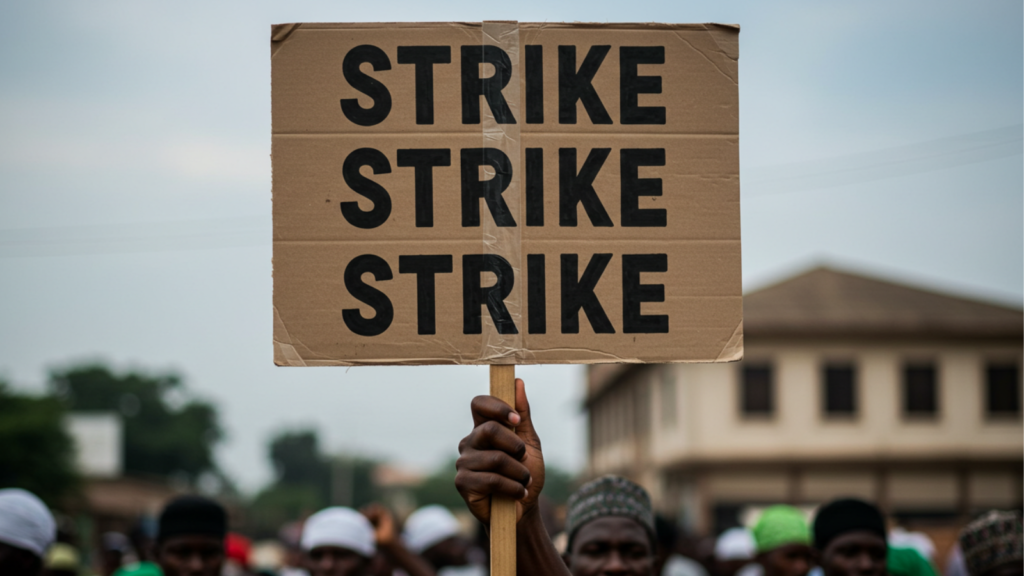
Strikes in Nigerian universities are, unfortunately, nothing new. These strikes have stolen valuable years from the nation’s youth, but they have also, tragically, become a bit of a tradition.
Sometimes they feel like mid-semester holidays that students secretly hope for. The perfect break when you need to catch up with coursework or just breathe a little.
However, the Academic Staff Union of Universities (ASUU) does not want anyone to doubt their ability to raise the stakes when it comes to striking. On August 26, 2025, ASUU warned that if the Federal Government did not meet their demands, they would launch what they called “the mother of all strikes.” Mind you, the union’s longest strike in 2020 lasted nine months, so that’s not a threat to be taken lightly. Nobody strikes quite like ASUU, and they want the Federal Government to remember that they still have the power to shut things down.
This latest threat to strike reflects a deeper issue—a pattern of the APC-led government failing to support Nigeria’s most essential workers.
What does ASUU want this time?
Perhaps the most tragic part of the ASUU versus Federal Government saga is that it feels like watching the same episode on repeat. Once again, ASUU is not asking for anything new, just for the government to honour its promises back in 2009.
This so-called “mother of all strikes” is a painfully obvious case of chickens coming home to roost. In 2022, after months of universities being closed due to yet another strike, the Federal Government secured a court order from the National Industrial Court of Nigeria (NICN), forcing lecturers back to work.
Although ASUU appealed the ruling, the Court of Appeal insisted on compliance before hearing the union’s case. So instead of reaching an agreement, the government used legal force to get lecturers back into classrooms.
It was clear to anyone paying attention that this was a temporary fix. And now, that temporary peace seems to be running out, with ASUU gearing up to down tools once again.
To put it simply, it all comes down to money. Among ASUU’s demands are the payment of outstanding 25 to 35 per cent wage awards, three months’ salary arrears, and promotion arrears that have piled up over four years. In short, ASUU wants to be paid for work that has already been done.
Another long-standing demand is for the Federal Government to dedicate a larger portion of the national budget to education, especially public universities. ASUU has proposed that 26 per cent of the budget be allocated to education.
The 2025 budget stands at ₦54.99 trillion, nearly double the 2024 figure of ₦27.5 trillion. Yet, only 7 per cent of it was earmarked for education. That is incredibly disappointing, especially when the United Nations recommends allocating between 15 and 20 per cent.
And as mentioned earlier, ASUU is not the only group frustrated with the government.
An apple a day and a broken wage structure will keep the doctor away
On July 2, the Nigerian Medical Association (NMA) issued a 21-day ultimatum to the Federal Government, saying doctors would put down their stethoscopes if their demands were not met.

Once again, it is the same old story of the government failing to honour its own promises. According to NMA President Bala Audu, none of the association’s demands were new. They were simply asking for the settlement of 18 months of arrears and for the Federal Government to uphold Collective Bargaining Agreements signed in 2001, 2009, and 2014.
The latest flashpoint was a circular from the National Wages, Incomes and Salaries Commission, which doctors say blatantly ignored those previous agreements.
Nursing pains
Meanwhile, the National Association of Nigeria Nurses and Midwives (NANNM) launched a seven-day warning strike starting on 29 July 2025. The strike was called off on the fourth day after a meeting with government representatives.
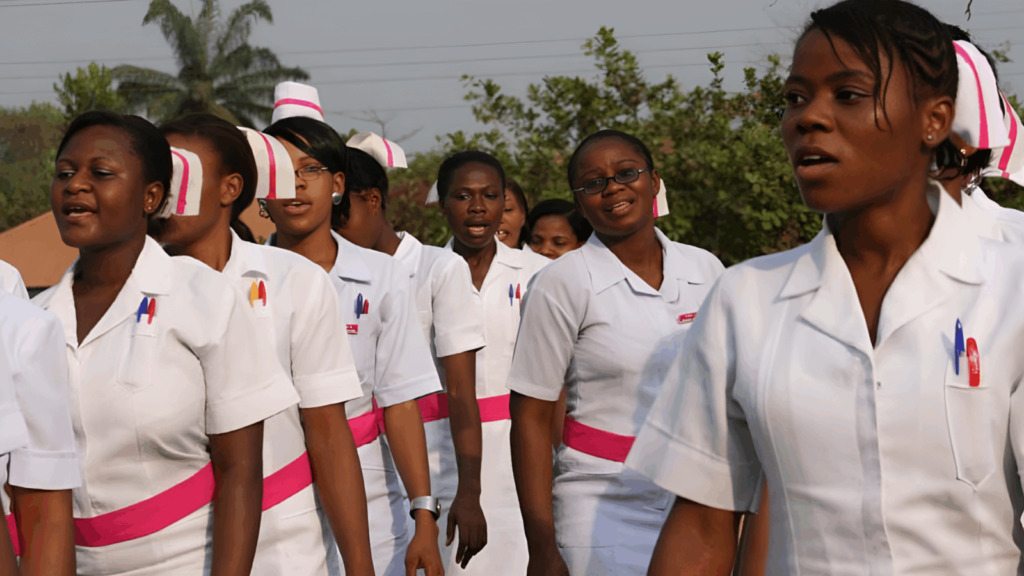
As usual, these resolutions are a temporary patch. The circular that triggered the NMA’s outrage was reversed, yet most of their nineteen-point demand list was left untouched.
Members of the association described the government’s Memorandum of Understanding as “vague, insincere, and devoid of any meaningful timelines.”
Although the NMA did not go on strike, they handed the government another ultimatum. So, clearly, this is another unresolved issue waiting to resurface.
Just like with ASUU, the root of the problem is money. Nigeria’s doctors and nurses are severely overworked and underpaid. There is only one doctor for every 10,000 patients. That means Nigeria’s doctors are 800 per cent more overworked than what the World Health Organisation (WHO) recommends, while making as little as $99 (approximately ₦150,000) a month.
Okay, so the education and health sectors are not getting a lot of love from the government. But how is security doing?
The two-parent household of labour dissatisfaction
You’ve heard of the “mother of all strikes.” But how about the “father of all protests”?
The Nigeria Armed Forces Act and the Nigeria Police Act prohibit serving members of the country’s security agencies from openly criticising their organisations. Since active officers are barred from speaking out, retirees have become the unofficial voice of discontent. They offer a glimpse into how Nigeria’s security personnel really feel.

On July 21, 2025, a coalition of retired senior police officers protested in Abuja, demanding reform of a pension scheme that currently leaves some of them receiving as little as ₦22,000 a month.
Two weeks later, on August 4, retired army personnel barricaded the Ministry of Finance headquarters in Abuja. They made this move to protest the continued withholding of statutory benefits owed to them.
The retired police officers, unsatisfied with the government’s response to their July protest, have promised to carry out what they called the “father of all peaceful protests” in September.
You get a strike, I get a strike, Everybody gets a strike
In January 2025, the Judiciary Staff Union of Nigeria (JUSUN) warned that it was considering strike action to pressure the government into reviewing the poor wages of judiciary workers.
Ironically, reports suggested that staff of the National Industrial Court of Nigeria (NICN) were among the worst affected. Poetic justice, perhaps, that the same court which forced ASUU back to work in 2022 was now at risk of being shut down by a strike.
The government did not respond to JUSUN’s demands until the union began an indefinite strike in June. One of the key issues was that the judiciary staff had yet to receive the new ₦70,000 minimum wage. After two days of industrial action, the government persuaded JUSUN to return to work, promising to pay the outstanding wages.

Back in the education sector, ASUU is not alone in threatening strikes. On 30 August, the Senior Staff Association of Nigeria Polytechnics (SSANIP) issued a 21-day ultimatum to the Federal Government to address unpaid salary arrears.
At this point, it is genuinely difficult to keep track of all the ultimatums, ongoing strikes, planned protests, and looming threats. It is a lot.
But as we have said repeatedly, the problem and the solution are both rooted in money. Nigeria’s essential workers deserve fair pay for the work they do. Right now, the Tinubu administration is failing them, and by extension, failing all Nigerians who rely on these services.
While doctors, lecturers, nurses, and judiciary staff are striking and protesting just to be paid what they are owed, the Federal Government is preparing to increase salaries for top political office holders including Tinubu, Shettima, Akpabio, and others.
On August 18, the Revenue Mobilisation Allocation and Fiscal Commission (RMAFC) announced plans to review the salaries of political leaders upwards. RMAFC Chairman, Mohammed Shehu, stated that the current salaries, including ₦1,500,000 per month for President Tinubu, do not “reflect emerging socioeconomic realities.”
One wonders what he thinks of the salaries being paid to essential workers in education, health, and security who are forced to strike and protest simply to be paid at all.
Ever had a moment where Nigeria’s systems made life harder—or unexpectedly easier? We want to hear about your personal experiences that reflect how politics or public systems affect daily life in Nigeria. Share your story with us here—we’d love to hear from you!
See what people are saying about this article on Instagram
[ad]