• The terrorists, bandits, and kidnappers in Nigeria are not afraid to flaunt their weapons and ransom cash on social media. They post videos of hostages begging their families and friends to pay for their release, all in the full glare of the public.

    It honestly feels like you’re almost as likely to see them on your timeline as you are to see streamers and influencers. Anyone who has come across their posts must have, at one point or another, asked a crucial question: How are they getting away with this, and how has their online presence not yet led the government to track and arrest them?

    Why is there a terrorist on my feed?

    You open up your favourite social media app for another doomscrolling session, and instead of another silly argument on X or cute dance videos on TikTok, you see something very different. It’s men in faded khakis with machine guns, counting massive stacks of cash.

    These men are terrorists, bandits, or kidnappers and the cash is ransom money. So you’re probably thinking, “I shouldn’t be seeing this. It does not belong on this platform,” but you open TikTok again another day, and it’s there; you don’t want it to be, but it just is. That is the bizarre reality we are living in Nigeria. Terrorists and bandits have decided that kidnapping and mass murder are not enough; they now need to be content creators.

    But why do they feel the need to rub their crimes in our faces?

    Everyone’s an influencer now… even terrorists

    If you think the terrorists posting videos on social media are out of place amongst your favourite influencers, you are dead wrong. They are influencers too, just with different goals in mind.

    Social media may be a new platform, but terrorist groups have, for a long time, used mass media to publicise their activities. This is because it allows the world to know what their motivations are. Most importantly, it is a great job advert.

    We have previously discussed how extremist groups in Nigeria use money to recruit soldiers from poor communities. Like in early 2025 when the terror group known as Lukarawas offered ₦1 million to new recruits. The terrorists of Nigerian TikTok are showing off their cash because they want potential recruits to see just how much money they too can make if they join their ranks. The goal is to turn their crime into a successful brand.

    To the poor and desperate youths in the Northern parts of Nigeria, where there is little education and few options, these videos advertise crime as a rewarding career path.

    During the “End Bad Governance” protests in August 2024, a bandit posted a TikTok video asking the protesters to send him their account details.

    At the end of the protests, which were sparked by widespread hunger, the Nigerian government charged a group of minors with treason for taking part in the protest. Treason carries the death sentence. So for those poor boys, the option becomes: die protesting your hunger, or join the extremists in the forests, counting cash.

    In all the madness, there are two nagging questions: Why are the terrorists so bold, and why can’t the government use their digital footprints to track and arrest them?

    Get More Zikoko Goodness in Your Mail

    Subscribe to our newsletters and never miss any of the action

    Where did you buy your audacity?

    These extremists appear in these videos barefaced, completely unafraid of being identified. Security experts believe it is a deliberate strategy to show the government just how fearless they are.

    Basically, they are saying there is nothing the government can do about it. And so far, the Nigerian government is proving them right. So, if you are asking where they bought their audacity, the answer is that the government sold it to them.

    The one group of influencers the government can’t dox

    Government mouthpieces who have spoken on the issue seem to want us to believe that the problem is technical.

    Special Adviser to the President on Policy Communication, Daniel Bwala, has said that terrorists operating online cannot be tracked because they do not use local internet service providers. According to Bwala, Nigerian security agencies can easily track local internet users because there are regulatory bodies that maintain a database of citizens and their phone numbers. But he claims the terrorists use Elon Musk’s Starlink satellite network, and that makes it impossible for the Nigerian government to track them.

    Too many Nigerians have had the harrowing experience of negotiating a loved one’s release over the phone with kidnappers. Well, the Minister of Communications and Digital Economy, Bosun Tijani, says the bandits’ phones cannot be tracked either. Tijani claims they are especially hard to track because they use special technology to bounce their calls over multiple cell towers.

    We can’t track them… except when we can

    We might have bought Bwala and Tijani’s stories if this government could keep its story straight.

    In November 2025, armed men invaded a church in Eruku in Kwara state and kidnapped 38 worshippers. Days later, the worshippers were released. During an interview with Arise News on November 24, presidential spokesperson, Bayo Onanuga, said that the federal government had made contact with the kidnappers and demanded they release the hostages or face consequences.

    He said, “They made contact with the bandits to secure the release of the captives. Our security agencies have systems for tracking these criminals, which allow them to monitor developments in real time.”

    So which is it? Can the government track these criminals or not?

    According to Onanuga, the kidnappers released the hostages because they were afraid of the force the government would come down on them with if they continued to hold them. There is so much to unpack in that statement.

    Why did the government get involved in that particular case and not others? Why is the government allowing armed groups to go scot-free after releasing hostages? Aren’t they just going to find another group to kidnap?

    We have so many questions.

    No more excuses

    Whatever the technical limitations that are preventing the government from tracking and neutralising these violent extremists, it should be a priority to fix and address them.

    Upgrading the digital capabilities of our security forces must be top of the agenda for any spending on defence. We need more than excuses from this government. We need solutions. We need answers. We need a safer Nigeria. And we need it now.

    But if we’re going to get them, we have to demand it. We have to be loud and clear that we are not buying excuses anymore. We want to see results and we want to see action.


    Before you go, help us understand how you and other young people feel about the 2027 general elections by taking this 10-minute survey.


    Ever had a moment where Nigeria’s systems made life harder—or unexpectedly easier? We want to hear about your personal experiences that reflect how politics or public systems affect daily life in Nigeria. Share your story with us here—we’d love to hear from you!


    Click here to see what other people are saying about this article on Instagram

    [ad]

  • On Wednesday, September 4, a Nigerian X user, @letter_to_jack, took to the platform to demand justice for Idowu Christianah, a young woman who was abducted and killed by an acquaintance, Adeleye Ayomide. 

    Ayomide Adeleye: The OOU Undergraduate Who Abducted and Killed a Female Student

    The hashtag #JusticeForChristiannah is now trending across social media. Here’s what we know so far.

    What happened?

    On August 19, 2024, Idowu Christianah was declared missing after her abductors contacted her parents using her own WhatsApp account. The kidnappers sent photos of her captivity via the ‘view once’ feature and demanded ₦1.5 million in ransom. Christianah’s parents raised ₦350,000, which they transferred to a betting account as directed by the abductors.

    After receiving the money, the kidnappers requested a copy of the sender’s bank statement. Christianah’s family complied on August 23, but the abductors stopped communicating afterwards. In the meantime, some ransom funds were transferred into Christianah’s GTB account and later withdrawn into a Wema Bank account linked to the main suspect, Adeleye Ayomide, a 200-level student at Olabisi Onabanjo University (OOU).

    How did the authorities track Adeleye?

    Ayomide Adeleye: The OOU Undergraduate Who Abducted and Killed a Female Student

    On August 26, investigators began tracking the linked bank accounts. By August 29, they confirmed that the BVN tied to the betting account belonged to Adeleye Ayomide. He had already withdrawn ₦100,000 before the betting company locked the account. Investigators also discovered Ayomide had a personal connection to Christianah, with evidence from their Instagram interactions.

    Authorities further tracked Ayomide’s mobile device to his parent’s house in Ikorodu, after which the military personnel from the 174 Battalion were deployed to make the arrest. Upon searching his phone, police found incriminating evidence, including Christianah’s phone and bank records linking Ayomide to the crime. Email conversations between Ayomide and the family were also discovered.

    On September 3, 2024, Ayomide confessed to killing Christianah and burying her in his family home.

    There are additional reports suggesting Ayomide might have been involved in the deaths of his ex-girlfriend in 2018 and his biological sister in 2020 under similar circumstances.

    How are Nigerians reacting?

    The case has sparked outrage across Nigeria, with the hashtag #JusticeForChristianah trending on social media.

    Ayomide Adeleye: The OOU Undergraduate Who Abducted and Killed a Female Student
    Ayomide Adeleye: The OOU Undergraduate Who Abducted and Killed a Female Student

    Celebrities like Ayra Starr have voiced their support, calling for justice and condemning violence against women.

    This is a developing story.

  • On Thursday, March 7, armed bandits abducted over 280 students and staff members of the Local Government Education Authority School (LGEA) in Kuriga village, Kaduna.

    According to an Al Jazeera report the bandits invaded the village around 8 a.m., shooting in the air and causing chaos before they left with the victims.

    Photo Credit: The Punch NG

    An eyewitness in the area spoke with the press and said “They were surrounded from all angles and left with almost 200 pupils and students.”

    Kaduna-born Former lawmaker, Shehu Sanni, also confirmed the kidnapping, noting that a similar abduction case happened in the same location about a month ago. 

    What is happening now?

    The news of the abduction has stirred a flurry of heated reactions from Nigerians across the country, and many people calling calling on the federal government to swing into action and secure the release of the abductees. 

    Meanwhile, the Kaduna state police command spokeperson, Mansir Hassan, noted that security operatives have been deployed to rescue the victims.

     “It’s true, kidnapping occurred, presently we have deployed additional security personnel in the bush to rescue the victims.”  He added,  “All the security agencies in the State, Police, Military, Vigilante and other security agencies have put their heads together and presently in that bush working hard to rescue the victims.”

    Governor Sani visits Kuriga

    The state’s governor, Uba Sani, also visited the village shortly after the incident, promising that the abducted students will be rescued and reunited with their parents soon.

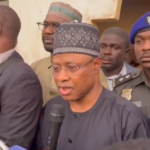
    Speaking to pressmen, Governor Sani said: “We will do whatever we need to do to ensure the safe return of these children. They are my children and it is our responsibility as a government to ensure security.”

    The governor said he has informed President Tinubu and National Security Adviser Nuhu Ribadu about the abduction. 

    He also directed the community to constitute a seven-member committee to provide daily updates as the security agencies carry out their responsibilities.

    This is a developing story.

  • How did this happen? 

    On the evening of January 2, 2024,  a group of kidnappers attacked the Al-Kadiriyah family in their home at Bwari Area Council. In an effort to thwart the operation, the sisters’ father reportedly made a frantic call to his brother — the girls’ uncle — to alert the police. The police arrived at the scene before the kidnappers fled, but they couldn’t stop them. Unfortunately, the kidnappers took their first casualty that same evening. The uncle, who was with the police, was shot dead by the kidnappers. 

    With nothing in their way, the kidnappers took the girls and their dad. This event first broke on social media the morning after, when a family member announced what happened on her X account and prayed for their safe return. 

    On January 5, Mr Al-Kadiriyah returned home. The kidnappers let him go with one demand: a ₦60m ransom for the six girls. The deadline was Friday, January 12. Subsequently, a crowdfunding campaign kicked off on X with the hashtag #Najeebahandhersisters

    Unfortunately, the full ransom couldn’t be realised before the deadline passed, and all efforts to negotiate with the kidnappers were unsuccessful. 

    What’s happening now?

    On Saturday, the girls’ family member, Asiya Adamu, who has been at the forefront of the campaign to get them back home had heartbreaking news: Nabeeha had been murdered by her abductors. Nabeeha was buried later on Saturday.

    The kidnappers have increased the ransom to ₦65m and have given the family a new deadline of Wednesday, January 17, 2024. 

    What is the police doing about this?

    Before Nabeeha’s murder, it wasn’t entirely clear how much the police were involved in the plan to save the girls. The Force Public Relations Officer (FPRO), Olumuyiwa Adejobi, however, claimed the police have been working on the case and urged the family to reach out to him.

    The PRO released another statement, promising that the force is still on top of the situation and “diligently coordinating efforts to address this and prevent any further occurrence.”

    What can you do to help?

    You can lend a voice to the efforts to bring the girls back safely. The hashtag to use is #Najeebahandhersisters. While at it, call on the FCT senator, Ireti Kingibe, and the FCT Minister, Nyesom Wike, to get involved. The crowdfunding campaign to raise the ₦65m ransom is still ongoing. Please, consider making a donation. Find the details below:

  • A Nigerian poet, Oruz Kennedy, and an unconfirmed number of fellow bus passengers have been abducted. 

    Here’s all we know about the situation.

    Oruz Kennedy: Port Harcourt Poet, Bus Passengers Kidnapped

    When did it happen?

    According to information shared by a friend, Oruz Kennedy was kidnapped on Monday, September 11, on a journey from Abuja to Port Harcourt.

    “The kidnap happened on Monday. It’s not just him but the entire passengers on the bus that were kidnapped. They were coming back from Abuja and got intercepted at Kogi.”

    Kennedy had attended a literary festival in the capital city and was returning home when the unfortunate incident happened.

    The poet’s last Twitter post was shared on the same day at 3:34 p.m., suggesting it was a few hours before his abduction.

    Corroborating the story, another friend, @tamaragodubo, took to Twitter calling the attention of the public to the situation.

    “An entire bus was intercepted and the passengers were kidnapped and nobody is talking about it?” she tweeted.

    Kidnappers demand ₦20 million release

    In a Twitter video shared on the same day,  Kennedy’s wife, Faith, confirmed her husband’s kidnap. According to her, the kidnappers reached out demanding a ₦20 million ransom to secure his release.

    “He was kidnapped on Monday on his way back from Abuja and the kidnappers are demanding ₦20m for his release. Most people have been calling to tell me it’s a prank, it’s fake and the rest. I’ve been the one the kidnappers have been reaching out to and I know what I heard.”

    Friends crowdfund to secure Kennedy’s release

    Friends, family members and acquaintances have since taken to social media in a race to raise the ₦20 million ransom to secure Kennedy’s release.

    https://twitter.com/nativepreacher_/status/1701841272216916067?s=46&t=gV-1mmgH3NC_RQhcgp1x3w
    https://twitter.com/iampariolodo/status/1701700677058298115?s=46&t=gV-1mmgH3NC_RQhcgp1x3w

    However, on Wednesday, September 13, @tamaradogubo returned to Twitter announcing that the ransom had been slashed to ₦5 million. According to her, the kidnapper gave an ultimatum of 9 a.m., Thursday, September 14.

    @tamaradogubo returned saying ₦4 million had been raised out of the new ransom. However, she claimed that the abductors insisted on getting the full amount before releasing him.

    Have the authorities been informed?

    Zikoko understands that an official report was made to the police and the anti-kidnapping unit. However, Kenndy’s friend claimed, “There’s been no substantial feedback nor action from them”.

    Several Nigerians on social media have equally tagged the handles of the local authorities to look into the matter.

    What about the other passengers?

    While Kennedy’s case has gained public attention, there are no updates regarding fellow passengers who were also kidnapped along with him.

    This is a developing story.

  • Citizen is a column that explains how the government’s policies fucks citizens and how we can unfuck ourselves.

    What Is #Greenfielduniversity about?

    On April 20, 2020, 22 students and one staff member of Greenfield University, Kaduna state, were kidnapped by unidentified bandits, in what has been a recent spike in cases of abduction and killings in the country. On April 23, three days after this incident, three of those students were killed, with two more murdered on April 26.

    And now, the bandits, according to reports from major news networks, are threatening to kill the remaining people ( now 17 )who are still in their custody if a ₦100 million ransom along with 10 Honda motorcycles are not provided by Tuesday, May 4, 2021.

    The threat was issued, through a 3-minutes recorded audio clip, by the bandit leader Sani Idris Jalingo (who is also known as Baleri), in an interview with Voice Of America (VOA) Hausa.

    What Is The State Government Doing?

    Going by existing reports, not much is known about what the Kaduna state government is doing or intends to do to ensure the safety of the Greenfield students. However, the state Governor, Nasir El-Rufai has said on April 9 that he has no intention of paying bandits or kidnappers as it is not the main objective of his administration.

    While the student’s parents have been able to raise 55 million, the bandit leader, Sani claims that it was used to feed the captives and that it was not enough. In the audio recording shared on VOA Hausa, he reiterated that the killing of the five students was to emphasize the seriousness of their threat and if the rest of their demands are not met, “ the parents will pack their (students) bodies in pickups.”

    How Are Nigerians Reacting To This?

    Nigerians online are calling for the Kaduna state government to intervene through the #Greenfielduniversity hashtag trending on Twitter.

    With many charging the government to consider negotiating with the kidnappers and ensuring the remaining Greenfield students are saved, Nigerians online are hoping that something is done before the kidnappers make do with their threats.

    We will update this story as soon as we receive new information.

  • Nigerian Senate

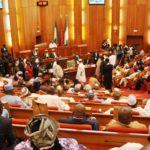
    The Nigerian Senate, on Tuesday, July 14, 2020, passed for the third reading a bill that will ensure that convicted kidnappers are sentenced to life in prison.

    This bill, sponsored by Senator Oluremi Tinubu, representing Lagos Central, is an amendment to the Criminal Code Act Cap.C38, 2004. 

    The bill explains that it is necessary to review the law due to frequent kidnapping cases across states of the federation, which have claimed multiple lives and have scarred survivors and their families. It is, therefore, important to ensure that perpetrators of the crime are punished appropriately.

    Kidnapping is seen as an act of terrorism by Nigeria’s Terrorism Act 2011, and recommends 10 years of jail time for any individual found guilty. 

    However, if this new bill is signed into law by President Buhari, every convicted kidnapper will spend the rest of their lives in prison.

    In addition, the bill also touches on the cases of rape and other sexual offences. It seeks to remove the statute of limitation on defilement and remove gender restrictions in rape and sexual assault offences.

    What this means is that the bill recognises that both men and women could be raped. 

    Amendment  to Section 357 of the principal Acts replaces “woman or girl, without her consent, or with her consent”, with “any person, without consent, or with consent.”

    Meanwhile, the Nigerian Senate had earlier passed an anti-sexual harassment bill aimed at protecting students against sexual harassment by lecturers. Read more about it here.

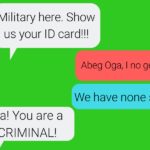
  • In case you missed it, Nigerians are now required to walk around with a valid means of identification to avoid being apprehended by the Nigerian military as suspects of kidnapping, banditry, armed robbery, ethnic militia, or any other criminal activity in the country.

    Apparently, this “Operation Positive Identification (OPI)” by the Nigerian military has been happening in the North-East for awhile now and it will be implemented nationwide from November 1 to December 23.

    So if you’ve been living la vida loca in Nigeria without a documentation to show you exist, you now have about a week’s notice to go get a valid ID card.

    Because, yes, Nigeria is like that.

    Possible Effect On Citizens?

    This military operation was supposed to have commenced on October 7th but it was rescheduled, in order to give the military ample time to prepare. Yet, I’m pretty sure many people are not ready to be accosted by military personnel at anytime.

    We all know the force needs no excuse to harass citizens but they’ve been given a perfect one with this development.

    Considering SARS remains a constant pain in the neck, one that even the Vice President’s interference couldn’t get rid of, is it any wonder that we should be wary about this?

    How Effective Will It Be?

    According to a report by Premium Times, only 19% of Nigerians have national identity cards; we mustn’t forget that many people who register have to wait for YEARS to actually get the permanent ID. There are even more people without a voters card, drivers license, international passports or any other ID. Does this mean people who don’t have ID cards are engaging in criminal activities?

    Isn’t it proper for thorough investigations to be carried out instead of arresting someone on a whim with no evidence in sight because they have no ID’s?

    Can we take a second to realise that the actual (suspected) criminals will actually have proper means of identification? Think of Evans and Hamisu Wadume and then you have your answer.

    Also, isn’t this operation a tad bit inconsiderate to Nigerians? Yes, we know its said to be in the interest of everyone, to rid society of terrorists. But, isn’t there a better way to do this, without infringing on citizens right to freedom of movement?