• On Monday, August 11, Comfort Emmanson, an Ibom Air passenger, was remanded in the Kirikiri correctional facility and placed on a lifetime no-fly ban over an incident between her and the airline’s staff member.

    Since news of this broke out, Nigerians on various social media platforms have compared the outcome of Emmanson’s case to that of popular Fuji musician Wasiu Ayinde Marshal (popularly known as KWAM 1), who was in a similar situation some days ago.

    This article breaks down what happened in both cases and how the authorities reacted. We also examine the legality of Emmason’s detention and the no-fly ban.

     KWAM 1’s situation

    On Wednesday, August 6, videos circulated on social media showing  KWAM 1 in what appeared to be a scuffle with the staff of Valujet Airline over his attempt to board a flight with a liquid suspected to be alcohol, which is prohibited according to  Nigeria’s Civil Aviation Security Programme and ICAO Annex 17.

    Shortly after, the Federal Airports Authority of Nigeria (FAAN) released a statement saying KWAM 1 had indeed breached aviation regulations.

    According to FAAN spokesperson, Obiageli Orah, KWAM 1 attempted to bring an alcohol-filled flask aboard the flight but was told by a flight attendant to comply with aviation rules, which banned liquids above 100ml. 

    The Fuji singer reportedly refused and proceeded to pour the liquid on the officer, who later confirmed it to be alcohol.

    The singer was also seen in viral videos blocking the aeroplane from takeoff with his body while the pilot on duty attempted to proceed.

    [newsletter type=z-daily]

    Outcome of  KWAM 1’s situation

    On Wednesday, August 6, the Nigeria Civil Aviation Authority (NCAA) suspended the two pilots involved in the incident for breach of safety protocols.

    Following public outrage over KWAM 1’s actions, as seen in the viral videos, he was placed on a six-month no-fly ban on Wednesday. However, the next day, Thursday, August  7, it was reversed to an indefinite ban, which will be decided pending the conclusion of an investigation.

    In a statement released on Wednesday through his spokesperson, Kunle Rasheed, KWAM 1 dismissed the allegations, claiming they were exaggerated.

    But on  Friday, August 9,  he released another statement through his spokesperson, apologising for the incident, which he described as “unfortunate,” maintaining that the liquid was not alcohol.

    “Unknown to many, I suffer from chronic dehydration, and my doctor strongly advised that I remain constantly hydrated. This is why I always carry a water flask with me. And contrary to the negative narrative circulated in some quarters, the flask I carried on that particular day contained only water, not alcohol, as wrongly alleged,” he said in part.

    Following his apology, the Chairman/CEO of the Nigerians in Diaspora Commission (NiDCOM), Abike Dabiri-Erewa, posted the singer’s apology on her official X account, calling for his forgiveness.

    The post drew criticism from many Nigerians, who questioned why a government official was making a case for the singer.

    Comfort Emmanson’s situation

    KWAM 1’s case was still under discussion when another viral video surfaced on social media on Monday, August 11. The video shows a similar incident between an Ibom Air passenger identified as Comfort Emmanson.

    In an initial video, Emmanson was seen in a physical altercation with a female airline staff member who appeared ruffled. 

    In another video, Emmanson was seen physically resisting other airline staff attempting to take her away. Her blouse, which was torn in the process, indecently exposed her body.

    Outcome of Comfort Emmanson’s situation

    Shortly after the video made rounds on social media, the Special Adviser on Media and Communications to the Minister of Aviation and Aerospace Development, Tunde Moshood, released a statement saying Emmanson had been charged to court and remanded in the Kirikiri correctional facility.

    The same day, the spokesperson of the Airline Operators of Nigeria  (AON), Obiora Okonkwo, released a statement announcing that it had placed a lifetime no-fly ban on Emmanson.

    “The incident, which Ibom Air described, from the initial refusal by the passenger to comply with safety instructions regarding mobile phone usage, which led to the brutal physical assault on Ibom Air crew members and the attempted use of a fire extinguisher as a weapon.”

    “She is hereby banned from flying with any AON member, either domestically or internationally, for life,” the statement read in part.

    Selective Justice?

    Following the announcement of Emmanson’s detention and lifetime ban, Nigerians on social media pointed out the disparities in how authorities handled her case and how they handled that of KWAM 1

    Another video suggests Comfort Emmanson may have been treated poorly

    Following the announcement of Emmanson’s lifetime no-fly ban and detention, more videos surfaced online, showing the Ibom Air passenger may have been treated badly by the airline staff. In one of the videos, the female hostess in the earlier video could be seen blocking the aircraft’s entrance, preventing Emmanson from exiting, while Emmanson asked to be let out. 

    Eyewitnesses back Emmanson

    As Nigerians called out Nigerian authorities for their treatment of Comfort Emmanson, more evidence which absolved the female passenger of some blame began to surface.

    Emmanson’s detention is illegal

    Since the escalation of Emmanson’s detention and no-fly ban, Nigerians have debated the legality of the measures taken against her.

    Speaking on the issue, Senior Advocate of Nigeria (SAN) Dr. Monday Ubani clarified that her detention goes against her right to a fair hearing under Section 36(1) of the 1999 Constitution.

    ‎“The AON’s unilateral action, without affording the passenger an opportunity to be heard, breaches the principle of audi alteram partem,” Ubani said, pointing out that the no-fly ban also violated her flights to movement within and outside Nigeria.

    “The AON’s unilateral action to impose a lifetime industry-wide ban, without affording the passenger the opportunity to be heard, violates the principle of audi alteram partem.”

    “While an individual airline may refuse carriage to a passenger for safety reasons under its contractual rights, an industry-wide lifetime ban by a trade association like AON amounts to a de facto travel ban. This type of sanction has nationwide and international implications.

    The life-time ban constitutes a restriction on a constitutional right without a court order,” he continued.

    Human rights lawyer, Professor Chidi Odinkalu, has also called out the illegalities spotted in the issue.

    In a post on his official X page, Odinkalu shared a photo of Emmanson’s remand order, pointing out that the date used is illegal.

    Not the first time

    While Nigerians continue to highlight the disparity in how KWAM 1 and Emmanson’s situation is handled in hopes that it will be rectified, there is a probability that it won’t, as this is not the first time Nigerian authorities have acted selectively in delivering justice.

    In January 2025, for instance, Raheem Okoya, son of billionaire businessman Chief Razaq Okoya, was seen in a viral video engaging in Naira abuse at an event. However, he was not detained or imprisoned like others who had committed the crime before him. Instead, he was let off after he tendered a public apology, just as popular musician and close associate of Bola Tinubu Kwam 1, has done.

    Similarly, in May 2025, Chief Government Ekpemupolo, popularly known as Tompolo, was seen abusing the Naira in a viral video. Nigerians called on the Economic and Financial Crimes Commission(EFCC) to punish Tompolo like it had done to other culprits, but this never happened.

    What can you do to change the story?

    While it is true that Nigerian authorities are selective in their duties, citizens can also compel them to do the right thing. In Kwam 1 and Emmanson’s case, you can do either of the following:

    • Talk about it on social media and pressure the government to release Comfort Emmanson from the Kirikiri correctional facility.
    • Use social media to pressure the government to do due diligence with Kwam 1 and follow through with it 
    • Create online petitions calling on the appropriate authorities to release Emmanson, properly investigate the matter, penalise all parties fairly and accordingly. You can create an online campaign here.

    Click here to see what other people are saying about this article on Instagram


    Ever had a moment where Nigeria’s systems made life harder or unexpectedly easier? We want to hear about your personal experiences that reflect how politics or public systems affect daily life in Nigeria. Share your story with us here—we’d love to hear from you!

    [ad]
    
  • Gender-based violence (GBV) is not just a serious and pervasive issue that affects people across all demographics in Nigeria; it also hinders societal progress.

    You probably already know this, but GBV includes a wide range of harmful behaviours directed at people based on their gender. But while all genders are affected by this issue, women and girls suffer it the most.

    Every now and again in Nigeria, reports of different forms of GBV, like rape, domestic abuse, femicide, and many more, make the news, and each time, we ask what can be done to stop this— the answer to that question is not a straight one, as deep fundamental societal issues and norms cause GBV but there is a major solution that can be used to reduce the prevalence of GBV— the law.

    How to fight GBV with the VAPP Act

    Even though there are several laws in place to combat Gender-based violence in Nigeria, this crime has remained a huge issue in the country, mostly because many victims do not understand the legal frameworks available for combatting it.

    This article provides a guide to clear, actionable information about legal avenues available to victims of GBV in Nigeria; this guide will help lead victims to healing and justice.

    Violence Against Persons Prohibition (VAPP) Act: The VAPP Act, enacted in 2015, is at the heart of Nigeria’s legal response to Gender-based violence. This landmark legislation represents significant progress in protecting individuals from various forms of violence, particularly women and girls.

    What are the key provisions of the VAPP Act? 

    1. Comprehensive Definitions: The VAPP Act defines various forms of violence, including physical, sexual, psychological, and economic abuse. This broad definition ensures that multiple forms of GBV are recognised and addressed.
    2. Penalties for Offenders: Offenders face severe penalties, including imprisonment ranging from two years to life, depending on the nature of the crime. This serves as a deterrent against GBV.
    3. Victim Protections: The Act guarantees confidentiality for victims and protects their identities throughout their legal proceedings. This encourages more victims to come forward without fear of stigma or retaliation.
    4. Access to Legal Representation: Victims can seek legal aid to navigate the complexities of the legal system, ensuring they have support during what is typically an overwhelming process.
    5. Protection Orders: This is a special legal tool in the VAPP Act designed to prevent further violence against victims. This order can be used to prohibit an abuser from contacting or approaching the victim. Section 28(1) of the Act allows victims to apply for protection orders that are effective throughout the country. Additionally, the Protection Against Domestic Violence Law (PADVL) in Lagos State provides further provisions for individuals in domestic relationships to seek such orders. 

    Step-by-step guide to reporting GBV

    Reporting GBV is a crucial step in seeking justice and holding offenders accountable. Here’s how this can be done effectively:

    Gather Evidence 

    Preserving evidence is crucial for constructing a compelling case against an offender. The types of evidence that can be collected include:

    1. Medical Reports: Obtain medical documentation that records any injuries sustained.
    2. Photographs: Capture images that clearly show visible harm.
    3. Eyewitness Accounts: Gather testimonies from individuals who witnessed the incidents, as their accounts can corroborate your story.

    Reporting 

    Victims can report incidents at local police stations, NGOs specialising in GBV support, or through dedicated hotlines established for immediate assistance. These hotlines include: 

    1. International federation of women lawyers (FIDA) –  2347088496115

    2. The Mirabel center – 08155770000, 08187243468, 07013491769

    3. Women at Risk International Federation (WARIF) – 08092100009, 08092100008

    4. Lagos DSVA – +2349167802222

    When reporting, it is important to include details such as dates, locations, descriptions of the incident, and any witnesses who may have seen or heard what happened.

    Legal Processes involved in the fight against GBV

    The journey through the legal system can be daunting, but understanding each stage can help manage expectations:

    1. Investigation

    Once a report is made, law enforcement will gather evidence through interviews with witnesses and forensic analysis if necessary. Legal advisors play a crucial role in ensuring that victims’ rights are upheld during this phase. During this process, victims have certain rights, including the right to be treated with respect and dignity by law enforcement officials and the right to be duly informed about their case’s progress and any developments during investigations.

    2. Prosecution

    Once sufficient evidence is collected, charges are filed in court. Victims retain rights throughout the trial process; they should feel safe and supported while testifying and to ensure their comfort and safety, the court may implement measures such as closed hearings or allowing testimony via video link if there are concerns about intimidation.

    3. Judgment

    The outcomes may vary from conviction to acquittal based on the evidence presented. For example, if the accused is found guilty, appropriate sentencing measures may include restitution for victims—financial compensation for damages suffered due to violence.

    The case timeline varies, but staying informed and persistent ensures better outcomes.

    Profiles of Some Organizations Offering Pro Bono (free) Legal Support

    1. International Federation of Women Lawyers (FIDA) in Nigeria: Offers legal representation and advocacy for women’s rights while providing education on legal rights
    2. Women Impact Nigeria (WIN): Committed to combating social injustice and violence against women and girls through a comprehensive legal aid system.  
    3. Mirabel Centre: Specializes in providing medical care and legal assistance specifically for survivors of sexual violence. 
    4. LEEDAP: Provides free legal representation to poor and vulnerable victims of human rights violations.
    5. Project Alert: Focuses on raising awareness about GBV while offering support services such as counselling and legal aid. 

    These organisations play a crucial role in empowering victims by providing essential resources and support networks tailored specifically for those affected by GBV.

    In addition to the VAPP Act, other relevant laws include the Criminal Code, Penal Code, and Child Rights Act. These laws collectively address various forms of violence and discrimination. For example, the Criminal Code outlines offences related to sexual violence, while the Child Rights Act provides specific protections for minors.

    These laws operate at both federal and state levels, with some states, like Lagos and Ekiti, implementing additional gender-based violence laws that complement the VAPP Act. Understanding how these laws interact is essential for effectively navigating the legal landscape.

    Gender-based violence is a grave issue, but victims are not powerless. Armed with knowledge of their rights and Nigeria’s legal framework, survivors can hold perpetrators accountable and begin their journey to healing. With the support of dedicated organisations and advocates, the path to justice becomes clearer and more attainable.

    You are not alone. Seek justice, find support, and break the cycle of violence.


    This article was written by the We Believe You Initiative.

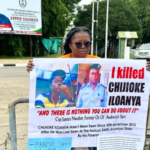
  • Ada is determined to see justice served for the disappearance of her brother, Chijioke Iloanya. Chijioke’s case was part of what fueled the 2020 #EndSARS protest after he went missing in 2012. The notorious Awkuzu SARS in Anambra, where Chijoke lived with his family, is said to be responsible, and there’s a face and name for who to hold accountable. Now, Ada is staging a solo protest at the National Assembly in Abuja, demanding justice for her brother and other victims of police brutality. 

    The Nigeria Police Force’s vision is “To make Nigeria safer and more secure…to create a safe and secure environment for everyone living in Nigeria.”

    However, this vision has been nothing short of a nightmare for Ada and her family, who have been searching for elusive justice for the past 11 years. Ada narrated to Citizen everything that has led her up to this moment.

    Walk us through why you’re staging this protest

    My brother, Chijioke, was arrested by the Nigerian police on November 29, 2012. Then he was transferred to Awkuzu Special Anti-Robbery Squad (SARS) in Anambra state before my mum could bail him out.

    When my parents tried to bail him out at Awkuzu SARS, they denied having him at first. My parents were about to leave the station when they saw my brother being led in, and my mum raised the alarm that he was the one they came to bail out. My parents were thrown out, and it would take several days before they were allowed into the station.

    When they eventually got access, they met James Nwafor, the officer in charge of the SARS unit. When my mum asked for my brother, he told her that if it was those boys (including my brother) she was looking for, he’d already killed them and that there was nothing she could do about it.

    My mum slumped when she heard it and was taken to the hospital. This started this journey for us, and we’ve been trying to get justice in different ways. In 2019, I wrote about it on Twitter. In 2020, I called out James Nwafor because I saw his handle on Twitter.

    I’ve written petitions to the National Human Rights Commission (NHRC). I’ve also written petitions to different Inspector Generals of the Police

    We went to the #EndSARS panel in 2020. The Anambra state government hasn’t made the panel’s recommendations and findings public. No whitepaper has been released either. Nothing has happened. James Nwafor is still a free man while we’re still in the pain of losing our brother and son. Other families have lost someone to James Nwafor, and others have been victims of police brutality. 

    Download the Citizen Election Report: Navigating Nigeria’s Political Journey

    It’s tough what you and your family have had to go through

    I started this protest on July 3. It will go on for ten days, ending on July 13. The reason it’s happening now is because it’s going to three years since we wrote a petition and went to a panel for #EndSARS to demand justice over the death of my brother, Chijioke. 

    The panel made findings and recommendations, but we’ve not gotten that yet, up till now. I’m also doing this because I’m getting tired. I have a life outside of this. My life revolves around Chijioke, and I would like justice for him. It draws me back whenever someone sees me and asks if something has been done about my brother’s case. I have no good answer to that, and that has to change.

    July is also Chijioke’s birth month, which makes this symbolic. His birthday is July 13, which I’ve chosen as the day to end the protest. Because I’ve fought for justice for my brother, other people who have been victims of police brutality have reached out to me as a point of contact. They tell me about family members they’ve lost, and I feel so bad I can do nothing for them. The least I can do is use my voice to speak on their behalf. So while I’m advocating for Chijioke, I’m also trying to get justice for them because we deserve it.

    How’s it been so far?

    I’ve been pushing, although it’s been getting harder and harder. Yesterday’s protest was harder than Monday’s because the sun was scorching hot, and I had to stand for long hours without a place to sit. When I get tired, I sit at the barricades, which still places me under the sun’s searing heat.

    It rained in the morning today so I couldn’t start early. But I’m here now, protesting. I’ve noticed that people have been asking me to go to Ahmed Isah (Ordinary Ahmed of Brekete Family). But when I first tweeted about it, some people like Segalink tried to help, but nothing happened. So I’m conflicted. Do I reach out to him? Would it change anything or not? Also, it’s not just about me. What about other families? It’s a little convenient for me because I’m based in Abuja but what about them? Do they spend their money to come to Abuja to meet Ahmed when it’s easier to arrest James Nwafor immediately? 

    What would you like to see happen?

    Start the investigation and prosecution of James Nwafor immediately. Let each state release its #EndSARS panel reports, whitepapers and recommendations to the public. It makes no sense for ordinary citizens to seek justice through one man who is probably overwhelmed with so much. Why should I rely on a regular Nigerian to help me when we have institutions that aren’t doing their jobs? It’s unfair. I’ve been here since having people look at me with pity, and I don’t want that. I just want justice.

  • “A Week In The Life” is a weekly Zikoko series that explores the working-class struggles of Nigerians. It captures the very spirit of what it means to hustle in Nigeria and puts you in the shoes of the subject for a week.


    The subject of today’s “A Week In The Life” is *Pelumi, a prison warder. He walks us through the prison system during a pandemic.

    prison warder

    MONDAY:

    I wake up by 6 am today. Parade starts by 7 am and I need to be on the parade ground before then. If not, I will be punished. The parade usually involves gathering all the officers and briefing us on the task of the day. Thankfully, my house is a walking distance from the prison. 

    I am working at the gate today. Working at the gate is better than supervising the inmates. This is because of the smell of the prison; water is gold in prison. Each cell has a chairman that supervises the water collection. This chairman has officials who gather the kegs, fetch water for the cell, then resell to the other inmates. Money is also a big deal in prison. 

    One of the chairmen of the cells used to be an armed robber. He killed an 8-year-old girl because she recognised his face from a robbery. This kind of thing makes sympathy for inmates hard. It affects you psychologically. It’s not easy to be kind to this sort of person. So, when the pumping machine or the light is faulty, nobody is in a rush to fix it. After all, these people don’t deserve it. Therefore, the whole place ends up smelling because the inmates haven’t had a bath in days.

    I shake away these thoughts from my mind. They are not my problem. At least, not today. I am not going to be on the inmate supervision shift for a while. So, let me enjoy this moment.

    I play Travis Scott’s highest in the room on my phone and drown out the noise. I am counting down till closing time. I just want to go home and play GTA on my PS4.

    TUESDAY:

    Today, we rejected 15 new inmates because of Covid-19. We have stopped admitting inmates because courts have been suspended. This means that people will be awaiting trial indefinitely until things resume again. The correctional facility is crowded already and it’s tough managing the crowd. We can’t afford a larger crowd in the middle of a pandemic.

    My first day at work was so scary. New recruits were taken into a particular cell holding at least 250 people. We were then asked to walk round the cell to get a feel of it. The number of people in that space was both scary and sad. It looked like something not fit for animals not to talk of human beings. 

    Thankfully, that crowd has been reduced over time. People have been released or transferred out of our facility. I am just thankful that we emptied the cells before Corona came. If not…

    This disease is scary. We are at risk because we can’t afford to stay at home. To protect ourselves, we have provided water and soap in all the cells. The chairmen in the cells have also agreed to make water more available. Everyone is working together because we are all scared. In addition, we also provided hand sanitizers, gloves, and nose masks to each cell.

    Even with all of this, some inmates still think there is nothing to be worried about. That’s their own business. I am impressed with how we are handling this whole thing. From the authorities to some of the inmates.

    At least, I have one less thing to worry about until closing time.

    WEDNESDAY:

    Prison can be scary. People land in here for various reasons. I am happy today because when I get to work, I hear that one of the inmates I like is leaving. He was imprisoned because he defaulted on a loan of ₦700,000. According to him, he failed to pay the debt and was arrested. Even after his family raised the money and paid the debt, he was still sent to jail. It took him 5 years to get justice and fight the conviction. I am just happy that he finally got justice.

    His case is even better. There are other people that have been jailed and they can’t raise bail of N5,000. These people are in prison because of bailable offenses like fighting and roaming around. For some of them, their families don’t know they are in prison because they can’t tell them.

    The saddest case I know is of a soldier that was fighting insurgents in Maiduguri. He left his base without permission for a wedding in Lagos. He then got into a fight with a traffic warden. He was arrested but he felt that his status as a uniformed man would protect him. It did until it was discovered that he left his base without authorization, then they threw him in jail. Now, he can’t call anyone because the repercussion for deserting the army without permission is two times worse than prison. So, he’s going to quietly serve out his sentence here without his family knowing where he is. At the end of his sentence, he will probably pretend that he had a mental illness and return home.

    There are so many of these kind of cases here.

    I keep looking at the time. A few more hours until I can go home to play FIFA with my housemates.

    THURSDAY:

    I don’t want to go to work today. I am not in the mood but I don’t have a choice. If I don’t go to work, I won’t get my temperature checked. If I don’t get my temperature checked, I won’t know whether I have Coronavirus or not. So, I get up to prepare for work.

    I run into my secondary school teacher and he looks surprised to see me in my uniform. He asks me what I am doing and I tell him I am a prison warder. He looks disappointed but I am not bothered. This is part of the stereotype that I face in this job and I am used to it. He seems uncomfortable so he tries to change the topic. I ask him if warders aren’t human beings like him but he doesn’t reply.

    I thank him and leave. I am actually not surprised. After working in a prison for the last 2 years, very little surprises me. I have seen so many things and this is the least of my problems. 

    My problem now is that I am late for work. I have to run if I want to make it in time for the parade.

    FRIDAY:

    American prison is different from Nigerian prison in the sense that the prisoners here fight but they don’t stab themselves. It’s just too much stress for everyone involved. The clinic is not equipped to handle that kind of emergency.

    To discourage inmates from fighting, we have designed a special cell. Our own form of solitary confinement with a twist. You get visitors – big rats. Even me, I am scared of the place, talkless of the prisoners. We don’t beat or force anyone not to fight. The promise of that cell is usually strong enough to make everyone behave.

    There is a hierarchy in each cell. There is the Chairman, then an “inspector general”, his deputy, then the “police.” These people are responsible for enforcing the law in each 53 man cell. The number of inmates varies per cell depending on the size. We hold these elected officials accountable for anything that happens in a cell. So, we warn the chairman to behave and the message trickles down to the other inmates. 

    There is a cell that recently impeached their chairman so they held elections for a new one. After the new chairman came into power, they started shouting like it was the Gubernatorial election. They carried their new chairman in the air and screamed. I had to threaten them with solitary confinement before they stopped shouting. But secretly, I was amused by the politics. 

    While all of this is interesting, I can’t stop thinking of the weekend. Thankfully, I am off-duty. I look forward to drinking a cold Budweiser, flirting with one or two girls, and sleeping. 

    SATURDAY:

    In prison, inmates and warders often watch big matches together during the weekend. But since football is on hold, we haven’t done that in a while. Saturdays without football are tough for me.

    I miss watching football. Especially big matches where both warders and inmates gather and argue heatedly. In those moments, we all come together as one. At least until 90 mins are over. I miss that rush. 

    There is nothing to do today, so I fire up Call of Duty to pass time. I don’t feel like texting any girl today.

    SUNDAY:

    I feel lonely today. I miss my family because I haven’t been able to visit them since the lockdown started. I miss my mum, dad, and siblings.

    The inmates must be going through a lot during this period. They can’t see their family members, they can’t spend time with them. It must be difficult for them. I understand how they must feel to an extent because I also can’t see my family. I feel trapped and helpless. Is this how they feel? 

    I can’t wait for this lockdown to end so I can spend time with my family. I’ll really love to see my family together. Having everyone one around and catching up is nice. If I have learned anything from this lockdown, it’s that I won’t ever take freedom for granted. 

    I miss my people. For now, I call my mum and catch up. At least I still have that luxury.


    This story was edited and condensed for clarity. The image does not represent the identity of the subject.


    Check back every Tuesday by 9 am for more “A Week In The Life Of” goodness, and if you would like to be featured or you know anyone who fits the profile, don’t hesitate to reach out. Reach out to me: hassan@bigcabal.com if you want to be featured on this series.