• This is Zikoko Citizen’s Game of Votes weekly dispatch that helps you dig into all the good, bad, and extremely bizarre stuff happening in Nigeria and why they’re important to you.

    Subscribe now to get the newsletter in your email inbox at 8 am every Friday instead of three days later. Don’t be LASTMA.

    Anyone who envies the job of the Independent National Electoral Commission (INEC) is a bloody liar. Every four years, the commission coordinates a national election involving tens of millions of voters spread across 774 local government areas in Nigeria. 

    And considering the dire consequences of messing up an election, we’d say INEC’s job isn’t the easiest in the world. Some of us can’t even organise a house party without a guest peeing in the kitchen sink.

    INEC Has A James Bond Plan For The 2023 Elections, Sort Of

    [Image source: Shutterstock]

    With the scale of INEC’s task, it’s unsurprising that there are problems. For example, Nigerian elections have suffered from violent acts like ballot snatching and voter intimidation for as long as anyone remembers. 

    But another problem that has prominently hampered Nigerian elections is vote-buying. Party agents target vulnerable voters at the polls and pay them to vote for their candidates. 

    This culture cheapens the democratic process and boosts the victory chances of only the unworthy and desperate. But INEC has a solution for that vote-buying problem ahead of the 2023 elections: secret agents.

    INEC Has A James Bond Plan For The 2023 Elections, Sort Of

    [Image source: Zikoko Memes]

    One of INEC’s core strategies to clamp down on vote-buying is to unleash spies on polling units. These James Bond wannabes are plain-clothed security officers deployed to catch vote-buyers and sellers. But INEC won’t stop there. 

    The agency is also repositioning voting cubicles to make it easier for voters to cast secret ballots. This creates a trust issue between buyers and sellers as a vote-buyer can’t confirm that the seller is voting in the direction agreed between both parties. And if you’re thinking, “That’s what phone cameras are for, duh,” INEC also plans to forbid voters from taking their mobile phones into the voting cubicles.

    INEC Has A James Bond Plan For The 2023 Elections, Sort Of

    [Image source: Zikoko Memes]

    Vote-buying is a very serious problem for Nigeria’s democratic process. The nation’s laws already criminalise the buying and selling of votes with a maximum fine of ₦500,000, 12 months imprisonment or both. But this isn’t enough to deter politicians from buying the conscience of voters.

    However, INEC’s James Bond plan won’t be enough to limit vote-buying. As a voter on election day, when you see something at a polling booth, say something. Your future depends on it.

    What else happened this week?

    Ethiopia withdraws red carpet treatment for Nigerian travellers

    [Image source: Zikoko Memes]

    Nigerians must be crowned the eighth wonder of the world with all the shege that we use our eyes to see as citizens of Nigeria. This week, the Ethiopian government announced that Nigerians have to apply for a visa before they hop on a plane to visit their — let’s not forget — very war-torn country. Before this announcement, Nigerians could jump on that plane first and get a visa on arrival there.

    Ethiopia didn’t even dignify Nigeria with an explanation for why it made this decision, but the same restriction applies to 41 other countries mainly in Africa and South America. At least we can say it’s not only us, but this isn’t about just Ethiopia. The country’s action continues a worrying trend of visa restrictions hurting Nigerians.

    In September, the United Arab Emirates (UAE) reviewed its visa regime and stopped issuing tourist visas to Nigerians under the age of 40 years, except for those applying for family visas. Earlier in July, Turkey also barred Nigerian applicants from accessing the e-visa provisions and they didn’t even bother to announce it. Nigerians need answers as their movement around the world is made harder by the colour of their passports.

    INEC Has A James Bond Plan For The 2023 Elections, Sort Of

    Let my people go! [Image source: Zikoko Memes]

    In times like this, you have to wonder what the Minister of Foreign Affairs is doing, and we assure you his name isn’t Abike Dabiri-Erewa.

    Have you seen this video?

    Question of the week

    What’s the single most important thing you think Buhari needs to do before he leaves office next year?

    Click here to tweet your answer to @ZikokoCitizen on Twitter.

    Ehen, one more thing…

    It’s only months until the 2023 general elections and Governor Babajide Sanwo-Olu announced salary increments for civil service workers in Lagos State. You’re not sleek Cousin Jide. We know vote-buying when we see it.

  • Competition is an undisputed pillar of any democracy, and every four years, Nigerian politicians compete for a limited number of seats. 

    Vote-buying is a problem in Nigeria

    And just like in most competitions, there are hard and fast rules that apply to elections when politicians apply for political office.

    Persuading voters is an essential part of a political campaign and this is how candidates attempt to convince voters to win their votes. In typical Nigerian fashion, electoral candidates make promises to deliver heaven on earth, turn water into wine and remove fuel subsidy

    Vote-buying is a problem in Nigeria

    Candidates also get to push their campaigns through adverts, theme songs and TikTok videos just to connect with the voters. The road to pulling this off is long and exhausting and has an unclear guarantee of success, so Nigerian politicians found a shortcut called vote-buying.

    What’s vote-buying?

    Vote-buying is an illegal transaction between representatives of a candidate and voters. These representatives show up at polling units on election day and use monetary inducements to secure their votes. Even though the rewards range between a measly ₦5,000 and ₦20,000, vote-buying is effective in Nigeria because agents target the most vulnerable communities in a country with millions of extremely poor people.

    Vote-buying is a problem in Nigeria

    Section 121 of the Electoral Act 2022 defines vote-buying as “bribery and conspiracy” which means anyone who directly or indirectly offers to buy votes is guilty. Voters that accept this bribery are also guilty according to the law, and both parties in the transaction are liable to pay a maximum fine of ₦500,000, 12 months imprisonment or both.

    Vote-buying is a problem in Nigeria

    The Electoral Act’s definition and much of the vote-buying conversations in Nigeria focus on the buying and selling that inevitably happens on election day. But there are other types of vote-buying that occur before election day that are also quite common without receiving the same level of scrutiny.

    Stomach infrastructure

    Stomach infrastructure is one of the most prominent building blocks of political campaigns in Nigeria. Candidates try to curry favour with voters by providing them basic food items in exchange for their votes at the polls.

    Vote-buying is a problem in Nigeria

    While critics usually consider stomach infrastructure as just another silly thing Nigerian politicians do, it’s vote-buying. Stomach infrastructure is captured by the definition of “bribery and conspiracy” in Section 121 which stipulates that the inducement can happen “before or during an election”.

    Providing free services

    Nigerian candidates also tend to do things like this:

    It’s not text-book vote-buying and the police won’t arrest anyone for it, but it falls within the realm of the definition of “bribery and conspiracy” defined by the Electoral Act 2022. 

    Any offer of reward designed to alter the electoral behaviour of voters before and during an election is vote-buying. And we’ve seen enough to know Nigerian politicians don’t care.

    Vote-buying is a problem in Nigeria

    As 2023 elections campaigns kick off…

    On September 28th, 2022, the Independent National Electoral Commission (INEC) fired the starting gun for candidates to officially start campaigning for the 2023 general elections. 

    On your mark…

    Many things are going to start happening: more campaign drama, more campaign promises and a dash of vote-buying here and there.

    As campaigns start, it’s your responsibility to pay attention to the real tangibles that matter for an election and pass that education on to everyone else around you. Allow good ideas to lead, not stomach infrastructure that can land you in prison. 

    Vote-buying weakens electoral discipline and fosters a culture of the most undeserving sneaking into important public positions. The only way a candidate should be buying your vote is by presenting their best ideas on how they’ll solve problems that are most important to you.

    Politicians that buy your vote will compromise your integrity and won’t act for the common good if they win. Say no to vote-buying.

    Vote-buying is a problem in Nigeria

    ALSO READ: One of These 18 Candidates Is Nigeria’s Next President

  • More than the freedom of speech and protection of your right to have terrible opinions about anything, elections are one of the status symbols of a functioning democracy. 

    Since no system is perfect, it’s important to always improve them. And if there’s an electoral system in desperate need of improvement, it’s Nigeria’s gbedu.

    It’s going to need more than an oil change

    What are some of the electoral laws from around the world Nigeria could take some notes from? We found a few useful ones.

    Automatic voter registration

    Every election season, Nigerians cry about how the registration process is too frustrating and millions are denied their right to vote. In the last continuous voter registration (CVR) exercise, more than seven million people started their registration but couldn’t finish it when the Independent National Electoral Commission (INEC) shut the door on July 31st, 2022.

    This situation can be avoided if Nigeria decides to automate the registration process. In Sweden, the electoral commission extracts information from the country’s population database. The names of all qualified citizens are included in the voter register 30 days before every election, and eligible voters receive their voter cards by post three weeks before the election

    Argentina, Chile, Hungary, Israel and the Netherlands also automatically register their citizens to vote.

    If Nigeria decides to step into the 21st century and adopt this, the PVC registration process can stop looking like this:

    Flexible polling units

    If a voter in Nigeria relocates from the region they registered to vote, they have to apply for a transfer of polling unit to vote in their new location. This process can be quite tedious, and some people prefer to travel to their former location just to vote, even when it’s inconvenient. Most people don’t even bother.

    But in Australia, voters are allowed to cast their votes at any polling unit in their state or territory. If they’re out of the territory where they’re registered to vote, they can cast their ballot at designated interstate voting centres. Mobile polling teams also move around residential care facilities and remote areas to ensure more people get to vote.

    “Can we have a minute to discuss the gospel of voting?”

    ALSO READ: The Most Dramatic Moments of the 2023 Election Campaign… So Far

    Compulsory voting

    More than 20 countries across the world have compulsory voting laws for their citizens. Eligible citizens are required to register and vote in elections or face penalties like monetary fines or jail time. 

    These laws, practised in countries like Argentina, Australia, Belgium, Brazil and Luxembourg, are intended to stimulate political interest and participation.

    For a country like Nigeria where the voter turnout rate has been dropping since 2003 despite an increase in the number of voters, a compulsory voting law wouldn’t be the worst idea. No longer would youths be playing football in the streets on a day they could be deciding the fate of the country.

    Diaspora voting

    Nigerians in the diaspora have been itching to be a part of the electoral process for years, but the Nigerian electoral system hasn’t warmed up to the idea yet.

    Nigeria can look to countries like Sweden and Australia for lessons on how to make elections more inclusive. Swedes outside Sweden are allowed to cast their votes in advance of election day as long as they’re on the electoral roll. All they need to do is send their vote by post or vote at Swedish embassies and consulates.

    Countries that don’t allow diaspora voting globally are in the minority, and Nigeria is one of them. That can change if we figure out a system that works.

    Electronic voting

    Electronic voting is one of Nigeria’s most prominent electoral battles, but countries like Brazil have hacked the process. Brazilian voters have been using electronic ballot boxes since 2000. An obvious advantage is the speed and transparency. Voters in Estonia also have the option of voting via the internet.

    There are security concerns around electronic voting processes, but it’s not rocket science when we’re ready to commit to it.

    Just gotta figure out all the buttons

    ALSO READ: How You Can Work For INEC During the 2023 Elections

  • More than 90 million Nigerians in 176,846 polling units across Nigeria’s 774 local government areas are registered to vote in the 2023 general elections. 

    How You Can Work For INEC During the 2023 Elections

    To pull off a project of that scale, the Independent National Electoral Commission (INEC) needs more people than it has on its payroll. The agency routinely recruits ad-hoc staff for elections and this gives eligible members of the public an opportunity to be part of the process.

    On Wednesday, September 14th, 2022, INEC launched an online portal for the registration of ad-hoc staff for the 2023 elections. Here’s everything you need to know about it if you’re interested.

    First, what are the ground rules?

    INEC requires that applicants for the vacant roles are clear on three things before they apply:

    1. They must not be a member of a political party.

    How You Can Work For INEC During the 2023 Elections

    This really goes without saying, to be honest.

    2. They must not have expressed online support for any candidate or party.

    How You Can Work For INEC During the 2023 Elections

    So, if your social media profile picture is one with your favourite candidate, you may want to change it or don’t bother applying.

    3. They must reside in the state they select for the application.

    How You Can Work For INEC During the 2023 Elections

    There’ll be no remote work, and deployment is done based on the selected state of residence.

    Okay, so what are the available roles?

    INEC has five roles open for members of the public to apply for:

    1. Supervisory presiding officer (SPO) 

    2. Registration area centre (RAC) manager 

    3. Presiding officer (PO) 

    4. Assistant presiding officer (APO) 

    5. Registration area technical support (RATECH)

    The bar of eligibility for these roles varies, but the roles of presiding officer (PO) and assistant presiding officer (APO) are the most common for young Nigerians.

    How You Can Work For INEC During the 2023 Elections

    What makes you eligible to be a PO or APO?

    You can apply for these roles if you’re:

    1. A current member of the National Youth Service Corps (NYSC)
    2. A former NYSC member who served between 2018 and 2022
    3. A penultimate year student of any federal or state tertiary institution
    4. A staff of government ministries, departments and agencies (MDAs)

    What do POs and APOs even do?

    A polling unit is typically supervised by a PO who’s supported by four APOs on election day. 

    The PO coordinates all election day activities including sorting, counting and announcement of votes at the polling unit. The four APOs are assigned different tasks ranging from registering and inking voters, verification, statistics and queue control.

    What do I need to apply?

    There are 10 important boxes you need to tick before you even think about starting the registration process:

    Cool. I have everything. What’s next?

    You can head over to INEC’s online portal to start the registration process. 

    Is there a deadline?

    The registration portal will shut down at 8 pm on December 14th, 2022.

    ALSO READ: Is Twitter Influential Enough to Swing the 2023 Presidential Election?

  • Valentine is coming; where’s ya candidate?

    “About a month ago, I liked your pictures” are the lyrics to a song that’s always on the lips of Nigerians every February. But in 2023, that song won’t enjoy its usual annual fame, as Nigerians will be too busy getting ready to vote for their next president on February 25th 2023.

    It’s almost eight years since the tenure of the current administration began and the stakes have never been higher. The battle is on for who’ll become the next Nigerian president

    Twitter and 2023 Presidential Election

    …and there’s a long queue of candidates

    Every political party is trying to win the hearts of Nigerians and the action is happening everywhere, including on Twitter where political seduction is in full swing. 

    Twitter and 2023 Presidential Election

    As politicians seek to dominate Twitter for the purpose of election, there’s a question that’s become prominent: Is Twitter sentiment influential enough to determine the outcome of the 2023 election?

    But before I attempt to answer the question, an important announcement: this is a non-partisan piece. This piece doesn’t endorse or discredit any candidate. You have your choice to make. Vote wisely.

    What are the numbers saying?

    Let’s start with a statistical dive into the previous elections. After our dive, we’ll analyse and draw some sensible conclusions. I’m not your STS101 lecturer so I won’t be boring, I promise.

    I tried to get INEC’s data from the past elections and it wasn’t a very friendly process. I couldn’t find all I needed concerning the previous elections, but let’s work with the little I found.

    First, what do we know?

    Let’s start with the number of voters.

    At the end of the 2019 elections, INEC declared a total number of 84 million voters. You can verify this on INEC’s home page.

    Twitter and 2023 Presidential Election

    INEC’s homepage

    Interestingly, INEC’s post-election report in 2019 indicated that only 36% of those 84 million registered voters turned up to vote on election day. You can access INEC’s summary of 2019’s election here.

    Twitter and 2023 Presidential Election

    INEC’s 2019 election result summary

    In the above image, there is a “percentage turnout” at the bottom. This turnout represents the number of people among the registered voters who voted on election day. For example, if Country A has 100 registered voters and 50 people go out to vote on election day, it means the percentage turnout of voters is 50%. 

    The percentage turnout for the 2019 general election reflected a prevailing culture of “chilling at home” on election day among Nigerians who are registered to vote.

    I know what you’re thinking: “But there’ll be more voters for this election.” Of course, there’ll be more voters. The question is how many new voters?

    First, we’ll try to compare the average increase in registered voters every four years, then see what increase we’re working with for 2023.

    Unfortunately, I could only obtain useful data for the 2015 and 2019 elections. Every other data source for the previous election wasn’t directly attributed to INEC, so I decided to leave them out. Let’s look at the 2015 election data obtained from INEC’s report. This data is available for public viewing here.

    Twitter and 2023 Presidential Election

    INEC’s 2015 election result summary

    In 2015, 47% of the registered voters showed up for the election but the percentage turnout in 2019 was just 36%. This means that the percentage turnout rate fell by 11% between 2015 and 2019.  In four years, more people decided to abstain from voting on election day.

    What are we expecting on 2023?

    According to INEC reports, the total number of registered voters increased from 67 million in 2015 to 84 million in 2019. This means the number of registered voters grew by 17 million between 2015 and 2019, a whopping 25% growth rate.

    The voters’ registration exercise for the 2023 election ended on July 31st, 2022 and the following day, INEC reported approximately 12.2 million newly-registered voters. 

    Twitter and 2023 Presidential Election

    INEC will still verify the new accounts, which means the tally will still likely drop by one or two million, but as it stands Nigeria has 96.2 million voters registered for the 2023 elections. 

    Working with that figure, the question is will they all vote on election day?

    ALSO READ: What We Learned From the PVC Registration Drive Now That It’s Over

    We’re getting somewhere

    From the last two elections, the voter percentage turnout didn’t reach the 50% margin. If that trend is anything to go by, it probably won’t reach 50% in 2023 too.

    But let’s get optimistic and assume all the clamour for greater political participation pays off and more people are ready to exercise their franchise in 2023. If we assume a 50% voter turnout, it means we’re expecting 48.1 million voters on election day. That’s significantly more than the number of voters we’ve seen in the past two elections.

    Twitter and the power within

    The EndSARS protest in 2020 proved beyond doubt that Twitter has a significant influence in Nigeria. The movement started a Twitter trend and permeated global conscience and Nigerians took to the streets to demand change. 

    But we still have to determine if Twitter is influential enough to swing the outcome of the 2023 election.

    Nigeria’s 2023 elections mean a lot to over 200 million citizens, but only an estimated 96.2 million of them have the power to vote. The data raises a question — how many of these registered voters are on the bird app?

    How many registered voters are on Twitter?

    We need to first figure out the question of how many of our expected 48.1 million voters are on Twitter. This isn’t an easy question to answer, but we can do some guesswork.

    Is there a probability that a Twitter user who’ll vote on election day won’t engage with a tweet on a political subject?

    How many retweets and likes can we find on these political tweets? How many tweets do we find under the hottest trends? 10k, 70k, 150k, 300k?

    500k?

    I checked the tweets of all the major presidential candidates and I found that, compared to the others, one of them had an overwhelming edge in popularity on the app. He had more likes and positive comments. So, I just decided to stick with that candidate. I checked through his tweets — all of his tweets, actually, because they were less than 500 in total. His most engaging tweet posted on June 7th, 2022 has 102k likes. 

    Let’s cook further

    I checked the number of Twitter followers of the three major presidential candidates. I  have a “no-name” policy so I’ll refer to them as Candidates A, B and C. At the time of putting this together, the total number of followers these candidates have are 1.3 million, 1.9 million and 4.4 million respectively.

    The reality is that all their followers are not Nigerians. Also, not all their followers own a Permanent Voter’s Card (PVC). It’s also very common for one person to own up to four Twitter accounts and follow the same person on these four accounts. And of course, we also know that buying followers is a possibility.

    Let’s make an “unrealistic” assumption and use the candidate with the highest number of Twitter followers to drive home the point.

    If we place the candidate’s 4.4 million side-by-side with our expected 48.1 million voters, it’s not up to 10%. But are there even 4.4 million Nigerians on Twitter?

    In July 2021, The Cable concluded that the number of Nigeria’s Twitter users is around three million. That publication, heavily referencing a report from Africa Check, estimated the number of Twitter users in Nigeria to be less than 3.4 million.

    Twitter and 2023 Presidential Election

    Recent data from Statista highlighted 20 countries with the highest number of Twitter users and Nigeria didn’t make the list. Cuba is currently at the bottom of Statista’s top 20 list with 4.3 million active Twitter users. This means that countries not on that list don’t have up to 4.3 million Twitter users. 

    If Nigeria’s active Twitter users are not up to 4.3 million, then, how many of these “less than 4.3 million” users are registered voters for the 2023 presidential election?

    The plot thickens…

    Twitter can try, but if statistics and numbers mean anything, Twitter alone can’t do too much. If the previous statement is true, then Twitter can’t be described as a major influence on the 2023 elections.

    Of course, Twitter has a soft influence that can snowball into an outsized movement as we saw with EndSARS, but its population alone can’t swing a national election going by just the numbers. The perspective this offers is that the influence battle can start from Twitter but it needs to move offline where the larger populations of voters exist.

    I don’t know who will sit in Aso Rock in 2023 and I choose not to make predictions. But I’m sure of one thing: the presidential election will be filled with unexpected twists, turns and roundabouts. May Nigeria win.

    Twitter and 2023 Presidential Election

    ALSO READ: How to Help Your Presidential Candidate Win Elections in Nigeria


    ‘Leke Olushuyi is an audience-oriented writer. He’s an accountant by day and a writer by night. Leke prides himself in providing content and finance-related services for businesses. He can be found on Twitter @LekeOlushuyi.

  • The Independent National Electoral Commission (INEC) has finally suspended the Continuous Voter Registration (CVR) for Permanent Voter’s Card (PVC) after 13 months. 

    The CVR resumed in June 2021 to give millions of Nigerians the opportunity to register as new voters ahead of the 2023 general elections and millions turned up

    PVC registration in Nigeria

    The registration exercise finally closed on July 31st, 2022 after a dramatic final few weeks, involving a court case to extend it — which was dismissed in favour of INEC. Here are the most important things we learnt.

    Nigerian youths are serious

    By the time the CVR was suspended, INEC had registered a total of 12.3 million new voters in 13 months. 

    — 8.8 million of the new voters are young people aged between 18 and 34 years old. 

    — 4.5 million of total new registrants are students, many of whom are currently affected by the closure of universities due to the strike by the Academic Staff Union of Universities (ASUU)

    PVC registration in Nigeria

    Nigerian youths are often accused of going missing in the electoral process but the number of young, newly-registered voters may suggest a change in the tide. All that’s left is to receive their PVCs and show up for the elections.

    Digital technology makes things easier. Who knew?

    For the CVR exercise, INEC allowed new voters to apply online. This enabled applicants to pre-register and book appointments for a later date to complete registration at INEC centres. The online portal remained open for a year and gave many Nigerians a chance to start their registration process from the comfort of their homes. 

    Like this

    The ease of registration was pivotal to getting many people to register early for the process. This speaks volumes about how much more INEC needs to involve the use of technology in the electoral process to make it more seamless. Nigerians want things to be more accessible and we can’t blame them.

    Online registrants dozed off

    Despite the use of the online portal, a great percentage of Nigerians who started their registration online didn’t complete it. INEC received a total of 10.5 million online applications from new voters, but only 3.4 million completed the process for their PVCs. 

    It means Nigeria could have seven million more new voters right now if people who began the process online, left the comfort of their homes to complete the biometrics capture at INEC stations. Or could it just be because of the manpower issues INEC failed to address at physical locations?

    INEC needs to be protected

    Generally, Nigeria has a worrying security crisis on its hands, so it’s no surprise that it also touched INEC and the PVC registration process. Gunmen killed an INEC official during an attack on a centre in Imo State in April 2022. They also warned people to stop registering for PVCs, threatening that there’ll be no election. 

    The attack resulted in the suspension of PVC registration in the affected area and was one of the black marks on the CVR exercise in a long line of aggression against the electoral process. INEC has suffered 41 attacks spread across 14 states, since 2019, and remains a target for non-state actors.

    PVC registration in Nigeria

    The government needs to provide more security cover for Nigerians going into the general elections to instill confidence in the process.

    The number of new voters still short of expectations

    The demand for PVCs ahead of the 2023 elections has been described as unprecedented, but the numbers simply fail to back up the claim. 

    In 2021, INEC set a target to register 20 million new voters, but the final tally of 12.3 million (61.5%) new voters falls way off that target. It’s also less than the 14.2 million new voters who registered ahead of the 2019 general elections, although that CVR exercise lasted for a longer period — 15 months, as opposed to this period’s 13 months.

    The PVC registration process needs to be more effective

    PVC registration in Nigeria

    Despite INEC’s best efforts, many problems plagued the CVR exercise during its 13-month run. There were periods when centres were overrun by enthusiastic applicants without adequate manpower and resources to deal with them. Many critics have also expressed disdain towards the 13-month timeline of the exercise. 

    With PVC registration now suspended seven months before the election, tens of thousands of Nigerian youths who turn 18 before the next general elections will be disenfranchised.

    INEC’s excuse is that it needs a lot of time to process applications and deliver PVCs to applicants before the elections, but that’s simply not good enough in 2022. The process has to become more efficient to cater to as many eligible Nigerians as possible.

    Our message to INEC:


    ALSO READ: A Reminder That 2023 Is Not Just About Who Becomes President

  • The permanent voter’s card (PVC) has become a household name in Nigeria over the past few months. It may be just a regular plastic card but it’s the only tool Nigerians have to choose their leaders. And with the 2023 general elections only eight months away, it’s almost impossible to survive a full 24 hours without hearing about the PVC.

    Eligible Nigerians need to register for PVC to vote

    The Independent National Electoral Commission (INEC) resumed the continuous voter registration (CVR) exercise in June 2021 for new voters. This allows eligible Nigerians who are 18 and above to register to vote. The CVR also allows those with damaged cards and other card problems to rectify their issues before next year’s polls.

    The deadline for the CVR exercise was initially set for June 30th, 2022 but was recently extended without a definite date.

    We decided to look at all the important numbers one year since the CVR started. These figures are based on INEC’s update of June 27th, 2022.

    8.6 million new voters

    A total of 8,631,698 people have completed their PVC registration nationwide since June 2021. They will join the other 84 million voters that were on the register for the 2019 general elections.

    6 million youths will vote for the first time

    Out of the 8.6 million new voters, 6,081,456 of them are young people between the ages of 18 and 34. This voting demography is followed by 1,748,993 middle-aged new voters between 35 and 49 years of age and 703,968 elderly voters between 50 and 69.

    97,279 people who are 70 and above will also vote for the first time.

    3.1 million student voters

    3,084,924 of the 8.6 million that are fully registered are students who’ll also get to vote for the first time.

    4.3 million female voters

    The gender distribution of new voters is almost evenly split, but there are slightly more women (4,339,006) than men (4,292,690). 

    Offline > Online

    The CVR started in June with an online pre-registration process, but more people started and completed their registration by going directly to INEC centres. Of the total 8.6 million that completed registration, only 3,250,449 started online. To put that in context, a total of 10,487,972 submitted online applications for PVCs since June 2021, leaving more than seven million yet to complete the process.

    Southern dominance

    States in the southern region have set the pace in online applications and the number of applications completed over the past year. These are the top five with completed applications:

    Delta — 396,900

    Kano — 380,582 

    Bayelsa — 379,438 

    Rivers — 372,406 

    Lagos — 371,760

    23.5 million online applications in total since 2021

    A total of 23,560,043 applications have been submitted on the INEC portal since June 2021. This figure includes applications for new PVCs, transfer of voting location, requests to replace damaged or lost PVCs or requests to update voter information records.

    PVC collection

    Those who registered between June and December 2021 are already cleared to collect their cards and those who have been registering since January will start collecting their cards in October 2022. Nigerians currently rushing to register for PVC are unlikely to start collecting their cards until January 2023

    Since it’s unclear when CVR will end, you should go to an INEC centre near you (only if you’re eligible, of course), and register to vote.

    ALSO READ: Zikoko’s Responsible Voter Starter Kit for 2023 Elections

  • In 2021, INEC  set a target to register 20 million new voters before June 2022. But like the many times the government has promised better power supply, they’re nowhere near that target. As of March 2022, INEC only recorded 4.4 million registered voters since June 2021, only 22% of the 20 million target. So what’s going on? Why aren’t Nigerians registering to vote?  We asked Nigerians without PVCs to explain themselves.

    Please note: all the names affiliated with this article have been changed.

    Kemi: I’ve actually tried. Earlier this year, I registered online, but no one from my voting centre has contacted me to come and collect my PVC. 

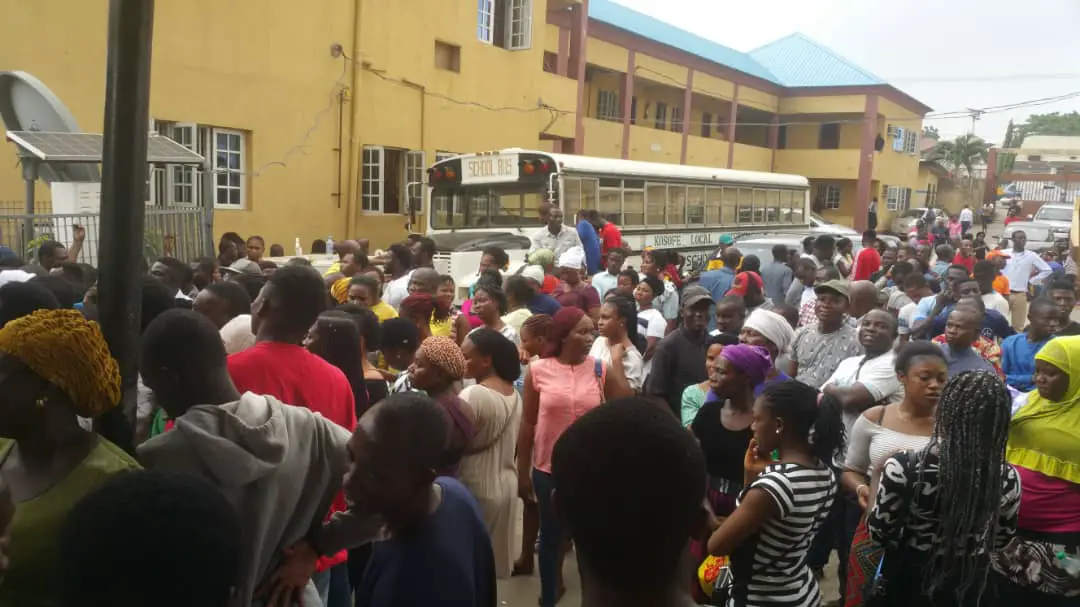
    Salami: Kemi, shey at least you’ve registered? I started my registration online and went for my biometrics but the queue sent me back home. The whole place was crowded. I just postponed the whole thing abeg.

    Tejiri: The same thing happened to me in March. I was told to show up for my biometrics by 1 p.m., but I didn’t get my biometrics done until 4 p.m. Like, I left the queue to sort out an issue with my bank account at a GTB branch and went back to still meet the queue at the Abule Okuta centre in New Garage. And you know how long bank queues are. 

    Kemi: If you people know anyone from Kosofe Local Government Area, beg them to release my PVC.

    Lizzy: The online registration process is stressful because tell me why I haven’t been able to upload my passport.

    Kimi: Look at that. It’s kuku not only me. Every time I try to take a picture, it just shows me “invalid”. It’s quite annoying. Even when I try to add a picture from my gallery, the website rejects it. I don’t know if it’s a studio passport I’ll need to succeed at this point.

    RELATED:  How to Get Your Permanent Voters Card In 4 Simple Steps

    Kemi: Again, Kosofe Local Government I’ve tried my best, please. Help me help my country.

    Susan: LOL. Me and you both sis. I first registered in Ogun State, but I moved to Abuja and applied for a location change. Since January, not a word from either state.

    Ogundairo: I know you people didn’t call those of us with PVCs, but can we talk about how the voting itself is unnecessarily stressful? During the last election, I couldn’t even find a bike to my voting centre. No kekes, no bikes, nothing!

    Tunde: Broooo! 2019 was a big turn off for me to care about 2023. I lived in Isolo then, and there were gangs in certain areas harassing and attacking people they suspected to be Igbo. And it was all because they wanted them to vote for Buhari. I kuku stayed inside my house.

    Lizzy: You’re Igbo?  

    Tunde: No oh, but people always assume I am. So to be on the safe side, I stayed inside. 

    RELATED: Zoning: Who Do Nigerian Politicians Want as Buhari’s Successor?

    Rita: I tried registering and they told me to come back when I turned 18.

    Tejiri: I don’t get. How old are you?  

    Rita: 16. 

    Salami: ???  

    Rita: Doesn’t the country affect me too?  

    Tejiri: LOL. Nigeria isn’t running away. Enjoy being 16 sis.

    Salami: But does my vote really count? 2023 will just be another round of rigging.

    Amaka: Omo. I just need it for identification.

    Kimi: I understand what you guys mean, but how does “not voting” solve anything?  Any move these guys make affects everything. 

    Tunde: No problem. I’m sha travelling in 2023. I’ll see how it goes from the abroad.

    Ogundairo: Kemi, how far? We fit go Kosofe if you’re up for it.

    Kemi: Oya.

    ALSO READ: Zikoko’s Responsible Voter Starter Kit for 2023 Elections

  • Going to prison means losing access to many nice things like freedom, privacy and owambe weekends. But if you’re locked up in a Nigerian prison, one of the nice things you’re technically still entitled to is your right to vote.

    Nigerian senators want over 70,000 prisoners to be allowed to vote in the 2023 general elections

    At all at all naim bad pass

    The 1999 Constitution (as amended) and Electoral Act 2022 that dictate voting guidelines don’t explicitly rule inmates out from voting. But prison inmates have been fighting for a chance to exercise this right because no one cares about it.

    The Federal High Court in Benin City ruled in 2014 that prisoners should be allowed to exercise their right to vote.

    Justice Mohammed Lima said, “To deny inmates the right to vote is unconstitutional, illegal, irregular, unlawful, null and void and of no effect whatsoever. Being an inmate is not an offence that impedes their registration and voting right under Section 24 of the Electoral Act.”

    The court ordered the Independent National Electoral Commission (INEC) to update its register of voters to account for the prisoners. The order was not acted upon when INEC conducted the 2015 general elections the following year. This was because the court narrowed down the ruling to just the five inmates that filed the lawsuit, even though the applicants had filed on behalf of Nigeria’s entire prison population.

    ALSO READ: Zikoko’s Responsible Voter Starter Kit for 2023 Elections

    When the applicants appealed the ruling, the Court of Appeal in Benin ruled in 2018 that the right should apply to every inmate in prisons. But Justice S. Oseji still did not approve an application for INEC to create polling units at prisons. That order also took no effect during the 2019 general elections.

    And that’s where senators come in

    Nigerian senators want over 70,000 prisoners to be allowed to vote in the 2023 general elections

    Senator Abba Moro raised a motion during the Senate’s plenary on March 8, 2022 to discuss the right of prisoners to vote. He argued that the right of every eligible Nigerian to vote remains sacrosanct even if they’re sitting in prison.

    He said, “Being a prison inmate is not an impediment to the criminal’s registration and voting rights as enshrined under Section 24 of the Electoral Act 2022, and denying prison inmates access to the electoral process constitutes an infringement of their rights as citizens of Nigeria.”

    This is the section of the Electoral Act Senator Moro quoted.

    Senator Moro’s motion didn’t specify if prison inmates on death row — Nigeria has more than 3,000 of them — should be able to vote too. When Senator Matthew Urhoghide raised a point about death row inmates voting, the Senate President, Ahmad Lawan, said, “Many of us have that kind of thinking that maybe certain things here may not necessarily be…this thing. It depends on the workability. It’s okay.”

    So, we’re guessing he doesn’t really know how it should work.

    At the end of the debate, senators approved five resolutions:

    1. INEC and all relevant agencies should carry out a voracious voters’ enlightenment in all prisons in Nigeria to educate the inmates on their rights and the necessity to exercise their franchise in the general elections.

    2. INEC and all relevant agencies should update their registers of voters to take into account the prison population for the purpose of election.

    3. INEC should collaborate with the Nigerian Correctional Service (NCS) to locate voting centres at custodial centres across Nigeria to be used for voting.

    4. INEC should allow duly registered and eligible prison inmates to exercise their franchise during all general elections in Nigeria.

    5. INEC should determine the prisoners that are constitutionally and legally qualified, to be registered as voters and vote during elections.

    ALSO READ: Does the National Assembly Hate Nigerian Women?

    Will prisoners vote in 2023?

    We asked INEC about the resolutions that were approved and what the commission plans to do. Rotimi Oyekanmi, the media aide to INEC chairman, Mahmood Yakubu, said the commission won’t make any decisions until it receives official notification from the Senate.

    He said, “The commission will definitely make its decision public.”

    An INEC official representing Yakubu at a public engagement in November 2021 said the commission was already thinking about setting up a structure for prisoners to vote. But it’s unlikely that this will happen before millions of Nigerians go to the polls to vote in 2023 due to time constraints.

    Nigeria’s electoral laws, backed by  court orders, show that the answer to “Should prisoners be able to vote?” is yes. The real question is, “Will they be allowed to?”

    ALSO READ: What the National Assembly Got Wrong About Amending Constitution

  • Citizen is a column that explains how the government’s policies fucks citizens and how we can unfuck ourselves.

    A few weeks, ago we wrote about the by-elections that will be taking place on December 5, 2020, including the most important things you need to know.

    In addition to that, we will be writing about the candidates in the Bayelsa West and Bayelsa Central senatorial by-elections. This is because it is important for you to have a good knowledge of the candidates in the forthcoming by-election in Bayelsa state, so that you can vote more wisely.

    Read: Everything You Need To Know About The Upcoming By-Elections

    1) Bayelsa Central Senatorial Election Final List of Candidates

    This is the final list of candidates for the Bayelsa Central senatorial election:

    1. Lokoja James Pere of the Accord Party (AP)
    2. Franklin Bodiseowei of the Action Alliance (AA)
    3. Azi Flint Munanyo of the African Democratic Congress (ADC)
    4. Abel Ebi Femowei of the All Progressives Congress (APC)
    5. Abson Abalaba of the Allied People’s Movement (APM)
    6. Preye Watson Kosuowei of the All People’s Party (APP)
    7. Efamughe Tunimibofa of the New Nigeria People’s Party (NNPP)
    8. Bolere Elizabeth Ketebu of the National Rescue Movement (NRM)
    9. Cleopas Moses Zuwoghe of the People’s Democratic Party (PDP)
    10. Dauzuo Fawei Young of the Social Democratic Party (SDP)
    11. Ayah Enetimi of the Young Progressive Party (YPP)

    2) Bayelsa West Senatorial By-Election Final List of Candidates

    1. Pereabe Tonbra of the Accord Party (AP)
    2. Omulala Pius of the Action Alliance (AA)
    3. Paleowei Ezebri William of the African Action Congress (AAC)
    4. Paleowei Eretonghan Famous of the African Democratic Congress (ADC)
    5. Oweifabo Felix Ebikemefa of the African Democratic Party (ADP)
    6. Peremobowe I Ebebi of the All Progressives Congress (APC)
    7. Dennis Enebi Micheal of the Allied People’s Movement (APM)
    8. Orlando Salo of the All People’s Party (APP)
    9. Hawkins T Numofe of the New Nigeria People’s Party (NNPP)
    10. Amgbare Kenewenemo R Kenny of the National Rescue Movement (NRM)
    11. Henry Seriake Dickson of the People’s Democratic Party (PDP)
    12. Ariweriyai Tokoni Sylvester of the Social Democratic Party (SDP)
    13. Sunny Pere Agadabiri of the Young Progressive Party (YDP)

    3) How can you find your polling unit in the by-elections?

    A polling unit is where a person can register to vote, or is registered to vote. 

    You can locate your polling unit using INEC’s Polling Unit Locator Tool.

    It is advisable that your polling unit is very near to your residence because of the restricted movement on election days. 

    If you have also relocated to another place outside the where you initially registered, you will have to transfer your registration to a polling unit within your new area of residence as you cannot vote in a polling unit without prior registration.

    You can transfer your registration by following the guidelines on the INEC website. However, you must do so at least 60 days before an election.

    Read: The Zikoko Guide To Getting Your PVC

    We hope you’ve learned a thing or two about how to unfuck yourself when the Nigerian government moves mad. Check back every weekday for more Zikoko Citizen explainers.