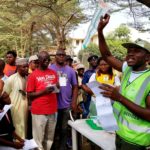
• If you have registered for your Permanent Voter’s Card (PVC) but there has been no time to pick it up, we bring good tidings. The Independent National Electoral Commission (INEC) has pushed the deadline for PVC collection from January 22 to January 29, 2023! This was announced by the INEC National Commissioner, Festus Okoye, in a statement released on January 12, 2023.

    But why was the deadline extended? 

    INEC gave two specific reasons why they gave Nigerians more time to get their PVCs. They are:

    Massive Voter Turnout 

    Since January 6, the number of voters who have collected their PVCs has risen dramatically to as high as 100,000.

    The deadline extension is simply a pat on the head for the turnout of Nigerians so far in collecting their PVCs. It is also a gesture to encourage defaulters to pick theirs.

    To investigate extortion by officials

    Asides giving Nigerians a second chance, Okoye has decided to use the extension to play ‘Sherlock Holmes’. This is to fish out INEC officials guilty of demanding bribes from voters for PVC collection.

    According to Okoye, “the Commission is investigating allegations of extortion by officials at some of the collection centres and inducement by some unscrupulous voters to circumvent processes in order to obtain their PVCs. Those found culpable will face disciplinary action and/or prosecution.”

    INEC officials better watch their back now. Otherwise…

    How would the PVCs now be collected?

    Due to the deadline extension, a few things have changed about the timelines and locations for PVC collection:

    • PVC collection at the registration area (Ward) level is extended by one week from Monday 16th – Sunday 22nd January 2023.
    • PVC collection at the local government level will resume on Monday, 23rd – Sunday, 29th January 2023.

    How to pick up your PVC

    To make your PVC collection less stressful, we made a 4-step list of what you should do so you don’t have to:

    • Go to the state where you did your registration.
    • Locate the local government area (LGA), LGA code with the registration area name (RA Name and code), and the collection centre/ward. You can find the addresses of these wards here.
    • Show up at the collection centre with either your temporary voter card, photocopied driving license, photocopied National Identity Card or passport photo 
    • And voila! You now have your PVC to vote for your favourite candidate in February!

    Good luck!

    In our weekly newsletter, Game of Votes, we write the news and track the 2023 election coverage for citizens, by citizens. Make the subscription of a lifetime here.

  • If there’s one thing the Buhari administration has taught us over the years, it’s always to expect the worst possible outcome. Due to several reasons, such as the unreasonable high costs of living, insecurity and corruption in public offices, many Nigerians have feverishly waited for 2023 as they’d finally have a chance to hopefully kiss the current administration goodbye and bring a new one into power. 

    INEC 2023 elections

    This is why the recent statement on January 9, 2023, from the Independent National Electoral Commission (INEC) Chairman, Mahmood Yakubu, of the possibility that the 2023 general elections might be cancelled or postponed may push many people into a season of prayers, fasting or sacrifices in hopes that this doesn’t happen.

    INEC 2023 elections

    What’s their reason for possible cancellation/postponement?

    Insecurity

    Over the past years, INEC has faced different trials and tribulations. From dealing with arsonists targeting their offices to being unable to operate in over 40 local governments as they are under terrorist control

    INEC believes that this issue hinders the chances of a free and fair election and till a solution is found, the upcoming elections are at risk of being cancelled. 

    We’ve seen this before

    2011 

    Unfortunately, we can’t call this the first time elections have faced the threat of cancellation and postponement. On April 2, 2011, former INEC Chairman Attahiru Jega called off the voting process in some areas and postponed the elections altogether. His reason was the logistics issue they encountered, as some parts of the country couldn’t get electoral materials on time. 

    2015

    In 2015, INEC postponed the national elections (National Assembly and presidency) initially scheduled for February 14 and 28, 2015, to March 28, 2015, and the state elections to April 11, 2015. This was mainly due to security reasons as some parts of the country, particularly in the northeast, were being ravaged by Boko haram insurgents. So, INEC thought it was best to give security bodies time to secure the area well enough to hold elections.

    2019

    Sadly, 2019 wasn’t different from other election years as the elections were also postponed, but this time due to logistics issues caused by bad weather and arsonists’ attack on INEC offices.

    Although INEC has come out to say they are ready to deal with possible challenges, it’s not difficult to see that a pattern has developed through the years. Regardless, we can only hope that INEC finds a way to clear every hurdle in its way, as the people are ready now more than ever to exercise their electoral rights finally.

  • The Nigerian Voter is a series that seeks to understand the motivations that drive the voting decisions of Nigerians — why they vote, how they pick their candidates, why some have never voted, and their wildest stories around elections.

    The subject of today’s The Nigerian Voter is Motunrayo*, a customer service executive in her late twenties, residing in Lagos, Nigeria. She told us about her bad experience collecting her Permanent Voter’s Card (PVC) at the Eti-Osa local government ward and her expectations for the 2023 elections.

    Is this your first time registering for your PVC?

    No, it isn’t. I’ve had my PVC since I first registered in 2014. I know I had my voter’s card before the 2015 and 2019 elections.

    Did you vote in the 2015 and 2019 elections?

    I couldn’t vote in 2015 because I wasn’t in Uyo in Cross River state, where I first registered. However, I was back in Uyo in 2019, so I voted then. 

    Who did you vote for in 2019, and why?

    I voted for Atiku Abubakar of the People’s Democratic Party (PDP) and Peter Obi as vice president. 

    I voted for him then because I liked that Obi as his running mate. With him on the ballot, they seemed like the “lesser evil” out of all the candidates for me. Buhari was contesting for a second term, and comparing his military and democratic tenure combined, he didn’t make a good option for me as a president then. 

    However, I had heard many things about Peter Obi and his experience with the economy and his tenure as Anambra State governor, and thus, I had hope in him to change the country.

    With the PVC you did in 2022, was it a transfer or fresh registration?

    I transferred online because I remember moving from Akwa-Ibom to Lagos state. I had to change the location. 

    Can you remember your first PVC registration? How did it go?

    I remember seeing a huge number of people at the Independent National Electoral Commission (INEC) office. I spent nearly two days collecting my PVC. The first day, I left out of frustration because they were not attending to people fast enough. The second time I ensured I stayed until evening to collect my card. 

    I think the crowd was much because Akwa Ibom is a PDP state, and it is always more than enough sensitisation for people to vote. However, I only registered for my PVC because my dad literally chased me out of the house to do it, not because of any sensitisation. The experience wasn’t any different from now. 

    Can you remember this 2015 PVC collection experience in detail?

    I remember that at some point, they locked the gate because the crowd was so much. People that had connections to the INEC officials bribed their way through the gate. You could see a man and his entire family pass you by from behind and jump the queue, after waiting for hours. I remember coming as early as 6 am on the first day and still not being attended to at 1 pm. 

    I couldn’t even get angry because there were others that had been there for 3 days. There was a lot of harassment from officials, as they would try to beat you if you came too close to the day. 

    Funny enough, the INEC official that attended to me the next day was a really nice person. We even exchanged contacts and she assured me that she’d call when ready. 

    But aside from her, others were just rude and were requesting tips. I wouldn’t have given them, even if I had the money. 

    Did you have to do anything PVC related in 2019? 

    No, I didn’t have to. I just followed my friends to do theirs, and the experience for them wasn’t any different. In fact, one of my friends was so tired that she said she’d go home. But thankfully, she finally got to do her PVC registration in 2022.

    How would you describe your experience with PVC transfer and collection in 2022?

    For the transfer of location, the process was easier because it was online. 

    However, the collection was way more stressful because it was physical. I couldn’t believe that one still had to go through the same process in 2014 — queueing up for long hours and being harassed by security men. I was hoping the PVC collection would be easier for me, but it wasn’t. It turned out to be absolute hell. 

    At first, I thought all would be well because I was tracking the crowd volume in my LGA ward from home through real-time tweets on Twitter. A man then announced that his LGA (Eti-Osa) didn’t have any crowd, and that spurred me on to go and get my PVC almost immediately. 

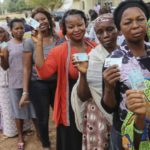
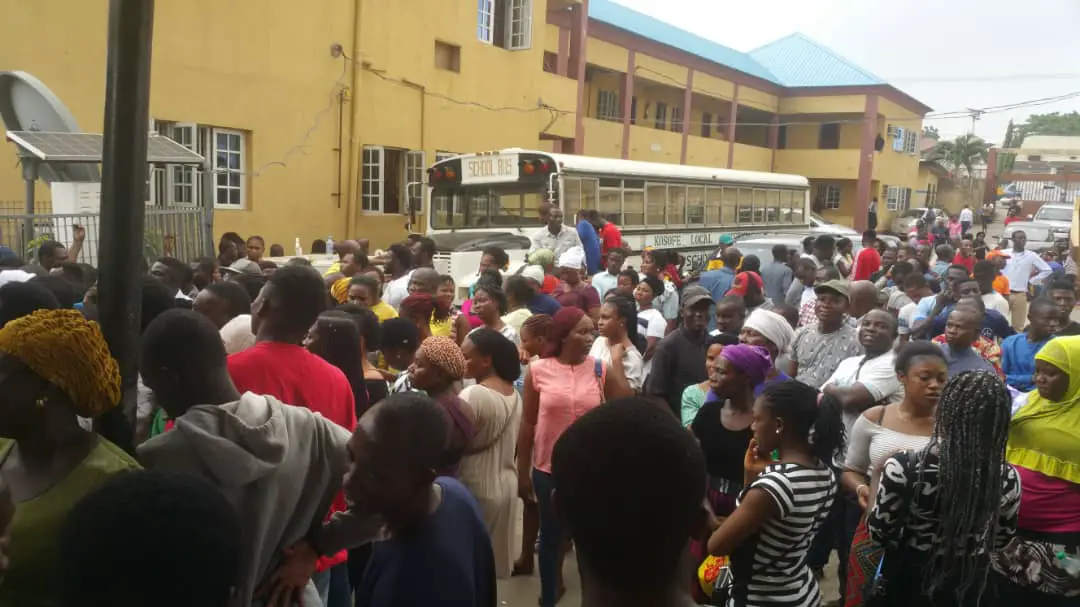
    But to my surprise, there was a large crowd outside. We were then asked to write our names and polling unit codes on a sheet of paper and submit it. After writing, I couldn’t even find an official to submit to. They had this habit of going inside and staying in their offices for long hours before coming out. I don’t have an idea of what they were doing but when they eventually came out, it’d only be with 5-6 cards. People were angry and astonished at the slow rate at which the cards were shared. 

    You’d expect that Eti-Osa, as a popular local government area, would be more efficient, but I only spotted 6 INEC officials that day in an entire local government—

    Wait, just 6?!

    Yes, only six people in an entire local government. I know I saw only 3 of them with official INEC cards, while the rest were probably volunteers or ad-hoc staff.

    That’s crazy. What else happened? 

    I know many people had left by late afternoon because of frustration with the slow rate of distribution of cards. But what was even more frustrating was the fact that they always seemed to call people that had already gone. Like, move on to the next batch already. 

    At 2:30 pm, they announced that it was time for them to close, and everyone was pissed. I know a guy that has been there almost 9 times and his friend (who was also present) confirmed it. I couldn’t finish that day but I was able to collect mine at 10 am the next day with the help of an official. 

    For some reason, there were quite a number of people whose details were omitted and were directed under a tree where the officials would attend to them. Up until the time I left, those officials never came out. I don’t know if they ever did. There was a lady that broke down and cried just because her details were omitted. There and then, I knew that Nigerians were really ready to vote this time. 

    I can also remember the time they locked the gate on the first day after a long period of time. I remember people shouting and yelling, “Give us our cards.” There was a particular security official wearing a Tinubu-Shettima cap on his head (I believe he’s an All-Progressives Congress (APC) supporter). He stayed on the inside and was forcing people out of the gates and wasn’t very courteous. 

    When people started to complain, he went inside, brought out some wires, and started beating people with them, from the inside. The officials on his side of the gate were trying to restrain him and managed to control him after some time. I was amazed that he had the guts to do such a thing in an INEC office. 

    And he wasn’t the only one. With the amount of people wearing Tinubu merchandise, I had to start asking neighbors if I was truly in an INEC or APC office.

    The Eti-Osa local government is highly disorganized and they need to do better. I hope people can still collect their cards because there were so many that were yet to be collected. 

    So sorry you had to witness that. Would you say anything has changed about Nigeria’s electoral system from 2019 until now?

    I’d say the only significant one is the Bi-Modal Voter Accreditation System (BVAS). I hope the Nigerian politicians will let this work. If BVAS is allowed, there would be a decrease in electoral violence like ballot box snatching and all. There’d be more chances of a free and fair election, like what happened in Osun State. 

    I’d also say Peter Obi’s candidacy has changed the political atmosphere this season. Everyone is trying to act like an intellectual and showcase their plans. 

    What would you say is your least favourite part of the electoral process? 

    I hate the fact that they’ve to count the votes manually. I feel technology has come a long way for Nigeria to still use manual processes in vote collation or PVC registration. It should be very simple because most adults have their Bank Verification Numbers (BVNs) and National Identification Numbers (NIN) which they can use to vote. I’d appreciate it if we could move to online voting in the coming years and make voting more seamless with BVN and NIN. 

    Who do you want to vote for in 2023 and why? 

    I am voting for Peter Obi of the Labour Party (LP) because he just seems like the only candidate without a lot of controversies. One of his rivals said he built a particular state. How can one person do that, please? It was the capital city of Nigeria for such a long time before it was changed, so how did you build it? There are so many issues going on with the APC candidate.

    We also need to look at health as a factor for these candidates. Buhari has travelled out of the country so many times, he should be named the “Ajala of Africa”. We don’t need a repeat of that again. Healthwise, Tinubu is not sound enough. His health has deteriorated so he can’t make sensible statements. How would he represent us properly in global events? I feel he is an old man who needs to enjoy his old age and stop running for president. 

    For Atiku, I only voted for Atiku because Obi was on the ticket. But the fact that he has now joined forces with Ifeanyi Okowa is horrible. That’s another disaster waiting to happen. Okowa is one of the worst governors Nigeria has ever had. With the amount of money Delta State gets monthly, it is supposed to be a destination spot for tourism. But it has now become nothing but an eyesore to look at. If you can’t manage a state properly, how would you be trusted to manage a nation?

    With Atiku, he claims to be a unifier. This unifier meanwhile did a lot of fraudulent activities in Customs and illegally sold a lot of companies. And this was a Vice-President then, but how can we trust you with such a past? He definitely doesn’t get my vote for me. 

    With Obi, I love the fact that he is passionate about the issues affecting Nigerians. I love his clean track record as Governor of Anambra state, with no bribery or embezzlement of funds whatsoever. Obi made sure he did a lot of work on the rural roads in Anambra and he rehabilitated and currently visits the hospitals for medical checkups. Obi represents the common man, and that’s why I am rooting for him. 

    Do you know any candidates for the governorship or local government elections?

    I’d say Bankole Wellington for House of Representatives for the PDP and Gbadebo Rhodes-Vivour for Lagos State governor in the People’s Democratic Party (PDP).

    Wait, no one from Labour Party?

    Yes, to be honest. I’ve searched up on governorship, National Assembly and local government candidates from the party, and I don’t think they’ve so much of a strong chance to win this election. They don’t have much political work on their portfolio.

    What are the top three issues you’d love Obi to fix if he is president?

    Security is definitely foremost. I find it hard to travel because the roads are dangerous and flight tickets are expensive. This hurts because I’m someone that really loves to travel. 

    The second is the high rate of unemployment. I graduated in 2015, and I had to stay a year without a job since it was hard to get a job in government parastatals. There should be more opportunities for job creation, and I’d like Obi to fix that. 

    The third is the economy, especially with inflation. I’m so happy I’m a single woman without a family because only God knows how much I’d be paying for foodstuff then. 

    Have you mobilised people to vote for the 2023 elections?

    Yes, in my own small way. I called my cousins, who were at least 18 years old to vote and register for PVCs. I make noise about it all the time on social media. Even in my estate, I’ve earned the nickname of “Peter Obi” because there’s no conversation I’d be part of that I wouldn’t chip him in.  I always love to showcase my interest in politics and the 2023 elections wherever I go.

  • A happy new year to you all. While you’re adjusting to life after Detty December, now’s a good time as a registered Nigerian voter to make it your new year resolution to pick up your Permanent Voters Card (PVC), before January 22, 2023.

    What’s so special about that date? Well, that’s the last day set by the Independent National Electoral Commission (INEC) for anyone to get their PVCs, no extension. We did an explainer here on how to collect your PVC.

    That leaves you with just 18 days to get your PVC if you haven’t already. 

    Here are a few things to know.

    6.7 million PVCs are yet to be collected across 17 states.

    According to a report by Punch, 6.7 million PVCs are locked up in INEC safes across 17 states and the FCT. That’s a lot and INEC is begging you all to go and claim them. 

    On December 29, 2022, INEC disclosed that in Lagos State, 5,816,528 PVCs have been collected while 1,693,963 PVCs remain unclaimed. 

    In the same time period, Edo state had 661,783 voter cards uncollected. Ondo and Ekiti states had 300,000 and 205,127 unclaimed as at December 8. 

    Other states with a high number of unclaimed PVCs include Oyo, 700,000; Osun, 437,454; Kwara, 120,602; Ogun, 400,000; Cross River, 409,604; Kogi, 160,966; Imo, 300,000, Gombe, 231, 900; Anambra, 132,623; Niger,150,988 and over 200,000 in Adamawa. 

    Borno and Plateau States have had decent collection rates with only 80,117 and 49,000 PVCs unclaimed respectively.

    Ride hailing apps are offering 50% off on rides to and from PVC collection centres.

    If you’re in the urban centres of Lagos, Abuja and Port Harcourt, Uber is still in Detty December mood. 

    The ride hailing company is offering a 50 per cent discount on all rides to and from PVC collection centres in those locations. The promo commenced on December 15, 2022 and will continue for up to five weeks from that date. Rides are on weekdays, between 8 am and 5 pm.

    Between January 6 and January 15, PVCs can be picked up at RACs

    The way INEC has designed the collection process is to have PVCs picked up either in all the 774 INEC local government offices, or in the 8,809 registration area centres (RAC), aka wards, in the country. 

    From January 6 to January 15, 2023, PVCs will be available for collection at the RACs.  After then, pickup reverts to the LG offices till the deadline on January 22, 2023. A list of all RACs nationwide is available here

    So there really is no excuse for you. If you decide not to get your PVC because the process is “stressful”, then you’ve lost the right to complain if the wrong people take charge of Nigeria. Choose your stress wisely.

  • The Nigerian Voter is a series that seeks to understand the motivations that drive the voting decisions of Nigerians — why they vote, how they choose their candidates, why some have never voted, and their wildest stories around elections.

    This week’s subject of The Nigerian Voter is Stephanie*, a fashion designer in her late twenties who has served as an INEC official in the 2015 and 2019 elections. She shared her experiences on the job and what next year’s elections for her would be like.

    Why did you decide to become an election official? 

    The money — I didn’t do it for patriotism or anything of the sort. For both elections, I remember I was paid around ₦40,000 for the job, which is some nice spare change to have.

    How does one become an election official?

    There are people who work for INEC full-time, but for elections you can be trained to become an adhoc staff, which is temporary.

    What’s the process like?

    You have to register online and follow the procedures like providing your details including your name and phone number. They’d then send a text to let you know the dates for training which normally happens for a couple of days.

    Wow, sounds cool. So what were your responsibilities?

    I was in charge of voter accreditation for both elections. In the morning, people would come with their Permanent Voter’s Card (PVC) to authenticate their identity as valid voters. There’s a register of voters in each polling unit, and the smart card reader would detect if your name is in the register of that polling unit. The accreditation process usually stops around noon, just before voting starts.

    Are there other adhoc positions?

    I know we’re four workers per polling unit — there are people in charge of ballot boxes and thumbprinting. NYSC corps members are also used because they can easily retrieve their details. It’s been a while so I’ve forgotten some of the other roles.

    Any memorable experiences from working as an election official?

    I can’t say I’ve had experiences that stood out for me, but I remember the smart card reader was always faulty and there was hardly ever any power supply or good data connection for it. I also know there were always representatives from APC, PDP and other parties who make election workers feel comfortable with food and drinks.

    Can you elaborate on that?

    Not really. Their job was to make sure elections and ballot counting are fair. As a rule of the thumb, election officials count their ballots in everyone’s presence for transparency. I believe the party agents might have had ulterior motives like currying our favour towards their side, but I’m not a mind reader.

    Did you have any bad experiences?

    I can’t say I have, because all I needed to do was voter accreditation, and that’s usually in the mornings. I’d mention, though, that the places election officials sleep in are usually unguarded schools. You’d usually also have to sleep with one eye open, as you are sleeping with strangers and you need to safeguard your property. Fortunately for me, I’ve not suffered any bodily harm or loss of property. It’s mostly just discomfort from mosquitoes and sleeping on a chair or table.

    You certainly have a choice to come from home, but it’s usually not advisable because of the restricted movement during elections.

    Are you going to be an INEC official again in 2023? 

    I definitely won’t be, and that’s because I’m scared there’s going to be a lot of blood on the streets with the 2023 elections. Plus, I really just want to vote and do my part as a citizen this year.

    Why are you scared?

    I’ve seen a candidate who feels entitled to the presidential seat and would do everything possible to get there.

    Do you have anyone you’d like to vote for in 2023?

    For governorship and local government, I must confess I don’t know who to vote for yet. For the presidential election, it’s most likely Peter Obi of the Labour Party (LP).

    Why Obi for president?

    I’m just tired of power belonging only to the APC and PDP in this country. They’ve both not taken the country to the greener pastures they’ve frequently promised and the presence of a third force is quite unique. I’m willing to try them and see how it goes. I also believe we can vote Obi out if he doesn’t perform anyway because he doesn’t seem to be power drunk. Let’s make the APC and PDP know we can put anyone in charge, not them. That’s the purpose of a democracy.

    What problems do you want Nigeria’s next president to solve? 

    I would say insecurity. People have been dying from the attacks by Boko Haram and the Indigenous People of Biafra (IPOB). I’d like to travel to my nativeland and feel safe.

    Poverty is another thing. The inflation has gone so crazy with the prices of food going up daily. I’m so lucky I don’t have kids because the bills I currently shoulder would have tripled. Everything is not okay in general.

    Would you recommend that people should be election officials? 

    No, because I feel it may be risky. With agberos roaming around and causing mischief, it’s not the safest of jobs at all.

    Are you encouraging people to vote this year?

    Whenever I see anyone complain of the price hikes in transportation and food, I always remind them it was the incompetence of our present leaders that caused the negative change in things. Therefore, they should take their PVC and make a conscious decision to elect the right people into power in 2023.

  • Every four years, Nigerians make the life-changing decision of who gets into power. We trust the Independent National Electoral Commission (INEC) to ensure the voting process is as fair and seamless as possible. 

    However, there’s a lot of skepticism and tension in the country right now because we’re less than 100 days from the 2023 general elections, and INEC is still facing different trials and tribulations. 

    Arsonists

    Early on December 12, 2022, unknown gunmen attacked an INEC office in Owerri, Imo State using a firebomb. This happened eight days after a similar attack on another INEC office.

    Threats INEC 2023 general elections

    Since the 2019 general elections, INEC has been attacked over 59 times in 29 states, resulting in the loss of thousands of Permanent Voter Cards (PVCs) and ballot boxes and damage to buildings and office equipment. 

    Underage voters

    In 2018, pictures and videos of children voting in Kano’s local government elections flooded the internet. And although a panel was put in place to look into this incident, nothing came of of it. 

    Threats INEC 2023 general elections

    Since then, Professor Mahmood Yakubu has promised Nigerians a clean voter register, especially with the Automated Biometric Identification System (ABIS). 

    Unfortunately, this promise held no water because on November 17, 2022, despite the use of the ABIS, underage voters and multiple registrations were found on the preliminary voters’ register released by INEC for review.

    Threats INEC 2023 general elections

    This brings the credibility of INEC under question. Did the ABIS simply experience a malfunction, or is INEC itself complicit in our problem of electoral fraud?

    Insecurity

    A key issue confronting INEC now is the declining state of our security, particularly in the North. The Speaker of the Borno State House of Assembly recently said Boko Haram terrorists had overtaken two council areas in Borno. This implies that until something changes, the chances of voters’ registration or voting occurring in these areas are zero. 

    Although INEC has tried to solve this issue by relocating polling units and registration areas to safer locations, insecurity will continue to threaten a smooth 2023 election.

    Political Apathy

    INEC has repeatedly complained about political apathy, especially among Nigerian youths. Millions of PVCs are sitting in INEC offices uncollected. This directly translates to a low turnout of voters in certain areas, which completely undermines the efforts of INEC to carry out a fair and credible election. 

    Many people have called the upcoming 2023 general elections one of the most important elections in our history. Therefore, INEC and the government must work together to eliminate any threats or problems we might encounter. 

    Proper security measures must be put in place to protect voters and tackle the attacks on INEC offices. The voter’s register must be cleaned to avoid electoral malpractice, and voter education should be organised to encourage more participation by the people. 

  • When young Nigerians rallied together to form the Youth Party, it seemed to be the long-awaited third force to challenge the old order of politics. But suddenly, to most people, it disappeared into thin air after the 2019 general elections.

    However, what many don’t know is the Youth Party has been fighting for its survival and its main opp is the Independent National Electoral Commission (INEC).

    What actually happened?

    The Youth Party commenced the process for its registration in 2016 but couldn’t complete it till August 2018 due to INEC’s red tape. The late registration prevented the party from fully participating in the 2019 general elections.

    What happened next?

    With registration sorted, you’d think the Youth Party’s woes were finally over, but INEC had even more cards up its sleeves.

    After the general elections in 2019, INEC threatened to deregister parties that underperformed. In January 2020, the Youth Party filed a case against the commission at the Federal High Court, Abuja to prevent deregistration. But INEC went ahead anyway to deregister the party and dozens of others in February 2020.

    In October 2020, the court ruled in favour of the Youth Party and condemned INEC for enforcing deregistration while the case was in court. The commission appealed the decision at the Court of Appeal, but the Youth Party won there too in an unanimous judgement on May 11, 2021. The court ruled the party’s deregistration as “illegal, null and void”.

    Still unsatisfied, INEC  refused to list the party as registered on its website and appealed the judgement again at the Supreme Court. The continuous drag prevented the Youth Party from proper preparations for the 2023 general elections. 

    And at this point, we can’t help but wonder if INEC’s beef with the Youth Party is personal. 

    When the Supreme Court delivered judgement on December 2, 2022, the court handed the Youth Party another resounding victory that finally closed the chapter on this battle because there’s no court left to appeal to. 

    What does this mean for the Youth Party?

    Hopefully, with this judgement, INEC’s witch hunt of the Youth Party is finally over, and the party can field candidates for the 2023 general elections. 

  • This is Zikoko Citizen’s Game of Votes weekly dispatch that helps you dig into all the good, bad, and extremely bizarre stuff happening in Nigeria and why they’re important to you.

    Subscribe now to get the newsletter in your email inbox at 8 am every Friday instead of three days later. Don’t be LASTMA.

    We Need to Talk About Aisha Buhari

    If Aisha Buhari was a fruit, she’d be a strawberry — wonderful aesthetics on the outside, but you’re not always quite sure what you’ll get when you dig your teeth in. 

    As Nigeria’s first lady since 2015, she’s had a reign no one would be able to accurately describe as uneventful.

    We Need to Talk About Aisha Buhari

    Aisha Buhari’s first true moment in the spotlight came in 2016 when she criticised her husband’s running of the Nigerian government. In response, while standing next to Angela Merkel, one of the world’s most powerful women, Buhari said his wife belonged in the kitchen and the bedroom. 

    The episode painted the president as an ancestor from a forgotten ancient past and endeared many people to his wife — the public figure unafraid to speak truth to power in service of the people. But the first lady’s character development arc since that episode is the stuff of an Oscar-worthy film.

    In 2018, many Nigerians had questions when Aisha Buhari accused her aide of collecting ₦‎2.5 billion cash gifts on her behalf only to keep the loot for himself. Even her occasional anti-government rants started to look suspicious when some of them appeared to be fuelled by her frustrations about her brother’s political issues with her husband’s ruling party. And how can we forget the video clip of her fight with her in-laws in 2019, and another off-camera fight with another in-law that led to gunshots inside Aso Rock?

    We Need to Talk About Aisha Buhari

    The year is 2022, and Aisha Buhari’s capacity for attracting ugly news headlines is stronger than our national grid’s willpower. The first lady became a dinner table subject this week when she allegedly ordered the arrest of a university student, Aminu Muhammed, who used Twitter to call her a fat freeloader feeding on Nigeria’s wealth. I’m paraphrasing here.

    The first lady’s action proved counterproductive because now the internet is littered with a multitude of mean-spirited jokes at her expense. This barbaric overextension of state powers to deal with a personal slight that’s a civil case of alleged defamation is the kind of thing that tells you Nigerian politicians don’t exactly understand the times they live in. Have you met the internet, bro?

    We Need to Talk About Aisha Buhari

    What else happened this week?

    Protect INEC at all costs

    As the gatekeeper of what we call democracy in Nigeria, the success or failure of the Independent National Electoral Commission (INEC) is tied directly to the country’s future. So, seeing another INEC office go up in flames this week was a dreadful sight. The latest attack in Ebonyi is the fifth on an INEC local government area office in the past four months.

    Attacks on INEC facilities have become a trend in Nigeria and are designed to either damage the agency’s capacity to conduct elections or scare even more voters away from exercising their voting rights due to the threats of violence. 

    Election candidates may want to use their voices more to ensure this doesn’t become a more common sight.

    Have you seen this video?

    Question of the week

    Fuel scarcity was back in full force again this week. How have you been navigating the latest crisis?

    Click here to tweet your answer to @ZikokoCitizen on Twitter.

    Ehen, one more thing…

    Three Nigerian men caused an international incident when officials found them hiding on the rudder of a ship that travelled for 11 days from Nigeria to Spain.

    The country is hard, but things can always get worse if you don’t seek greener pastures with a clear plan.

  • Dear Nigerians, the moment you’ve been waiting for has finally arrived. The Independent National Electoral Commission (INEC) has officially announced the date for Permanent Voter’s Card (PVC) collection.

    When’s the collection? 

    INEC has given us exactly five weeks for PVC collection — from December 12, 2022 to January 22, 2023. 

    But Nigerians aren’t too pleased with the time period, as most feel the window is too short. 

    How’s it going to be collected? 

    Voters can collect their PVCs at registration centres between  December 6, 2022 and January 15, 2023. 

    After January 15, you’d have no choice but to go to an INEC local government office to pick up your PVC until January 22. Take it from us, you don’t want to wait until that time because the queues will be crazy. 

    What time can citizens pick up their PVCs?

    Citizens can pick up their PVCs between 9 a.m. and 3 p.m. every day, including Saturdays and Sundays.

    What happens if there’s an error?

    Despite the review process of the controversial voter register being closed, INEC has got you covered. Electoral officers will be available to assist registrants with complaints during the PVC collection at help desks.

    Drop the locations please

    Starting from December 12, 2022 to January 15, 2023, you can collect your PVCs at any of these registration area centres nationwide

    From January 15 to January 22, all PVCs would then be collected at INEC local government offices here.

    Remember to mark the dates in your calendars. Good luck!

  • Everything in life comes with a price tag — especially elections in Nigeria. It’s very expensive to run election campaigns and you may have to beg people for money. It’s why crowdfunding campaigns are a common sight during elections. 

    The All Progressives’ Congress (APC) and the Labour Party (LP) recently launched donation websites for their loyal stans to send them urgent ₦‎2k. The APC has gone as far as setting a target of ₦5 billion for donations while the LP’s diaspora gang set a target of $150 million which is more than ₦66 billion. Those are some pretty hefty funds.

    Nigerians have already expressed their concerns over these parties’ crowdfunding tactics and accused the APC of using the app as a disguise to collect funds from state governors. Critics also accused the LP of the illegal use of the Nigerian diaspora to raise funds. 

    With all this going on, it makes one wonder — are there any laws around political crowdfunding during elections? Or are the complaints for nothing? Let’s find out.

    What does the law say about campaign funding?

    In February 2022, President Muhammadu Buhari signed the Electoral Act of 2022 which had quite a lot to say about campaign funding. Some of them are: 

    • Political parties aren’t allowed to hold any funds or keep funds sent to them from outside the country. Looks like a certain candidate needs to read that part carefully.
    • Political parties have to keep accurate receipts of their donations and make these available to INEC on request. The agency must also make these audited returns available for the public to inspect. 

    Now would be a good time to drop the fact that it’s been three years since the 2019 elections, yet none of the parties that participated have submitted their reports. Make of that what you will.

    • Parties must publish all excesses in at least two national newspapers within six months of the election. 

    Are there any limits?

    The new law has increased the total amount a presidential candidate can spend on their election campaign from ₦1 billion to ₦5 billion.


    However, the maximum donation an individual or organisation can make to a political party is pegged at ₦50 million. If it’s more than ₦50 million, the party has to disclose the source of the contribution to INEC. 


    What are the penalties for exceeding limits?

    Candidates who exceed the electoral act’s spending limits could be convicted and imprisoned for 12 months or pay a  fine of 1% of the limit amount. For a presidential candidate, this 1% would be ₦50 million.

    Donors who violate the law can also be imprisoned for nine months or pay a fine of up to ₦500,000 if found guilty. 

    However, these laws have merely been on paper and INEC has often struggled to impose penalties