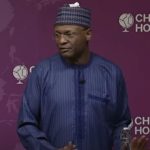
• Up until this week, many Nigerians never knew the name Mahmood Yakubu. In the last few days, though, he has taken centre stage. Yakubu has been cast as a villain for what may go down yet as Nigeria’s most controversial election

    [INEC Chair, Mahmood Yakubu/Punch]

    If anyone doesn’t know, Mahmood Yakubu is the Independent National Electoral Commission (INEC) chairperson. The position of the INEC chair is sensitive, and it’s a requirement that whoever holds that office must be nonpartisan. Typically, and for reasons unclear, INEC chairs tend to be academics. 

    In a joint press conference on February 28, opposition parties called for the removal of Yakubu for conducting what they described as a “sham” election.

    One then begins to wonder how he got there in the first place. Here’s how.

    What the Constitution says about appointing the INEC chair

    The Nigerian Constitution guides how an INEC chair is appointed. We start with section 153, which provides the basis for such an appointment. Fourteen federal commissions and councils are backed by law under this section, including, among others, the national judicial council, the council of state and INEC. Make a note of the last two.

    Section 154 goes into detail on how the INEC chair is selected. Here’s what the Constitution says in subsection 3:

    “In exercising his powers to appoint a person as chairman or member of the Independent National Electoral Commission, National Judicial Council, the Federal Judicial Service Commission or the National Population Commission, the President shall consult the council of state.”

    Is that it?

    Not quite. After the president picks their nominee following consultations with the council of state, the president’s nominee is subjected to the Senate for screening. Only after they pass the screening are they confirmed for the position. The screening process can be tough as it often requires bi-partisan support for nominees to scale through. 

    This is usually the case if the ruling parties and opposition have equal representation. You want to make sure whoever you’re picking has no political allegiances. Former INEC chair, Attahiru Jega, faced tough scrutiny before securing the position.

    Remember, the president has the power to appoint the INEC chair, but only after consulting with the council of state — before the Senate confirms. So who makes up the council of state?

    Council of state

    The council of state is an organ of the government whose role is to act in an advisory capacity to the executive, that is, the presidency. It comprises the president, who is the chair, the vice president who is vice-chair, former presidents and heads of state, senate president, speaker of the house of representatives, minister of justice, attorney general of the federation and all state governors.

    The whole house. But remember, the president is the chair of this council, so their say is final.

    Should the president have such powers?

    It’s clear now that being president of Nigeria is a big deal. This explains why 18 people are vying for a seat that can only take one person.

    [Seat of the president. The Cable]

    That said, there have been debates in the past on whether the president should hold the power to appoint the INEC chair. The chief argument against it is that INEC, by definition, should be independent. It is, therefore, unfair if the president sets the chair of this commission, especially when they can still contest. It’s like a football team getting to pick the referee that officiates their match.

    Then again, a counter-argument was made in 2015 when Attahiru Jega, the INEC chair handpicked by President Goodluck Jonathan, oversaw the election that kicked Jonathan out of office. 

    Ultimately, it comes down to the president’s will and generosity in allowing the INEC chair to perform their duties without undue interference or pressure. As the Nigerian Constitution allows, the president reserves the right to appoint or replace the INEC chair as they see fit.

  •  [countdown date=”Feb 25, 2023 7:00:00″]

    We’re four days away from the 2023 presidential election, with as much anticipation as the Game of Thrones final season – hopefully it’s not as underwhelming. 

    On February 20, 2023, the Independent National Electoral Commission (INEC) released the list of polling unit and collation centre agents submitted by the political parties for the upcoming 2023 general elections.

    But before we go into the details of the list, who are polling unit agents?

    A polling agent is someone appointed by a candidate or political party to oversee the conduct of the polls on election day. This is important because it enhances the transparency and legitimacy of the electoral process. 

    So, what are the significant highlights of INEC’s polling unit agents list?

    There are 1,574,301 polling unit agents

    INEC revealed 18 political parties and over 1.5 million polling unit agents would participate in the upcoming 2023 elections. 

    Further breakdown of the list showed that the Peoples Democratic Party (PDP) had the highest number of polling unit agents at 176,588, followed by the All Progressives Congress (APC) at 176,223, the New Nigerian Peoples Party (NNPP) at 176,200 and the Labour Party (LP) with 134,874. The other 14 political parties have a combined total of 910,426 agents.

    68,057 collation agents will be present at the registration centres (area, ward, local government area and state)

    The report also showed that 68,057 collation agents would be at the registration centres. On further review, you’d see that the NNPP has the most collation agents at 9,604. They were closely followed by the APC with 9,581, the PDP at 9,539 and LP with 4,859 agents. 

    There will be 27 agents at the National collation centre

    The APC, LP and PDP have two agents each, the NNPP has one, and the other political parties have 20 agents.

    Kano has the highest number of polling unit agents

    Kano has the second-highest registered voters, with about 5 million voters. And it’s once again pulling great numbers as it has the highest number of polling unit agents with 145,393. Lagos, Rivers, Kaduna and Katsina are other states with high polling unit agents. 

    Hopefully, this election will turn out to be as free and fair as possible because the last thing Nigeria needs now is another unqualified leader not deserving of his political seat. 

  • On February 13, 2023, the Independent National Electoral Commission (INEC) announced that 240 polling units (PU) nationwide would be excluded from voting. However, don’t worry. It’s not for the usual reasons.

    The commission explained that there’d be no elections in these 240 PUs because between June 2021 and July 2022, when the Continuous Voter Registration (CVR) was on, no single voter chose those polling units as their preferred voting point. There was also no transfer to these affected PUs.

    Which polling units are affected?

    The polling units cut across 28 states of the federation. INEC shared the complete list via its Twitter page. Here are a few screenshots of some of the excluded PUs.

    What else should I know?

    The INEC chairman Mahmood Yakubu explained that polling units increased in 2021 from 119,973 to 176,846, adding over 56,000 PUs to the existing number. This process is called delimitation

    In simple terms, this refers to the drawing of electoral boundaries by dividing them into wards and polling units. The last time such a thing happened was in 1996.

    The chairman also spoke on the mock accreditation exercise on February 4. He said the feedback INEC got from it was that many Nigerians weren’t aware of the location of their PUs. He promised that a phone number would be available soon for people to send texts to confirm the location of their PUs.

    INEC also said voters whose PUs have been changed would receive text messages from them.

    How can I locate my PU?

    If you’re a registered voter unsure where to vote, visit this link here. All you’ll be required to provide is your name, date of birth, and state and local government of registration. Oh, there’s a captcha test too, but that’s easy. Alternatively, you can locate your PU using your voter identification number (VIN). 

    A comprehensive list of PUS by name, code number and their locations by state, local government and registration area will be made available by INEC soon.

    Join the Citizen Situation Room and Helpline on WhatsApp today to get real-time gist and drama on the 2023 elections.

    You should also sign up for our Game of Votes newsletter. We help you make sense of news jargon and keep you up-to-date, especially with election news. Make the subscription of a lifetime here.

  • I bet the Independent National Electoral Commission (INEC) can’t wait for the elections to be over. The pressure on them has increased several notches with the elections less than three weeks away. From having to extend PVC collection deadlines more than once to allegations of misconduct with the use of BVAS and, recently, calls for the removal of one of its resident electoral commissioners (REC).

    But the last hasn’t been heard of controversies involving INEC. The latest that has tongues wagging is that the Lagos chapter of INEC might enter into a partnership with the notorious MC Oluomo. What could go wrong, eh?


    What’s the gist?

    On February 7, 2023, INEC held a consultative meeting at its Lagos office. The Lagos REC, Olusegun Agbaje, disclosed that it had no option but to work with Musiliu Akinsanya (aka MC Oluomo) to distribute election materials on election day. His reason was that the Lagos state government had banned road transport unions.

    [MC Oluomo. SocietyNow]

    These include the National Union of Road Transport Workers (NURTW) and the Road Transport Employers Association of Nigeria (RTEAN). As a result, he said he had no choice but to work with the Lagos park management system and the National Association of Road Transport Owners (NARTO), alleged to have links with MC Oluomo.

    Naturally, members of the opposition aren’t happy with the development.

    The People’s Democratic Party (PDP) has also kicked against it.

    Before we get into why there’s opposition to this move, what possible “benefits” could INEC get from working with the Oluomo-led parks management committee?

    Pros of working with transport workers 

    Caveat: this isn’t an endorsement 

    For starters, movement is heavily limited on election day. The only vehicles permitted to ply public routes are security vehicles, observers, and those with special status to transport sensitive and non-sensitive election material. Here’s where transport workers come in.

    [Empty Lagos roads on election day. AFP]

    They belong to the transport union and understand the terrain. This means they can swiftly dispatch materials on election day faster than usual by taking shortcuts and avoiding troublesome areas. They are also practical, logistically speaking. Ride-hailing services are obviously out of the question, bikes are banned, and even if they weren’t, they wouldn’t be suitable. INEC doesn’t have enough vehicles to dispatch to over 13,000 polling units in Lagos. 

    Based on personal experience from the last election, what often happens is that INEC works with select members of the transport unions to move these materials. They assign buses to wards, and the drivers work with the supervisory presiding officers, who transfer several presiding officers to these buses. One bus could carry ad-hoc INEC officials to polling units within the same vicinity, saving time. 

    As a rule, the buses must be accompanied by security agents wherever they go. The same applies to reverse logistics after elections have been conducted and the materials are being transported for collation.

    Cons of working with transport workers

    Yo, it’s MC Oluomo. The MC Oluomo. Here’s a guy notorious for thuggery and has claimed to be mentored by the All Progressives Congress (APC) presidential candidate, Bola Ahmed Tinubu (BAT). 

    [Remember when Teni said she’d call MC Oluomo for your case?]

    The optics aren’t great for INEC, which is supposed to be an unbiased umpire. Although INEC has said it’s not dealing with him in particular, it’s not very reassuring and raises fears that trouble might be brewing ahead.

    INEC should address these concerns publicly because Lagos will be contested keenly in the coming election. Security agencies must remain on high alert to stem any potential threats of violence. This means INEC’s policy of attaching security agents to these vehicles must be followed strictly. The names of these drivers must be publicly available so they can be identified if they try anything funny.

    Haveyou signed up for our Game of Votes newsletter yet? We help you make sense of news jargon and keep you up-to-date, especially with election news. Make the subscription of a lifetime here.

  • In case you missed it, February 5, 2023 was the “final” deadline for collecting permanent voters cards (PVC) ahead of the general election. The Independent National Electoral Commission (INEC) twice extended this deadline from January 22 to January 29 and, most recently, February 5. 

    It’s unclear if there might be another extension. So far, INEC has been silent on whether there’d be another extension, but word on the street is not many Nigerians are thrilled about this.

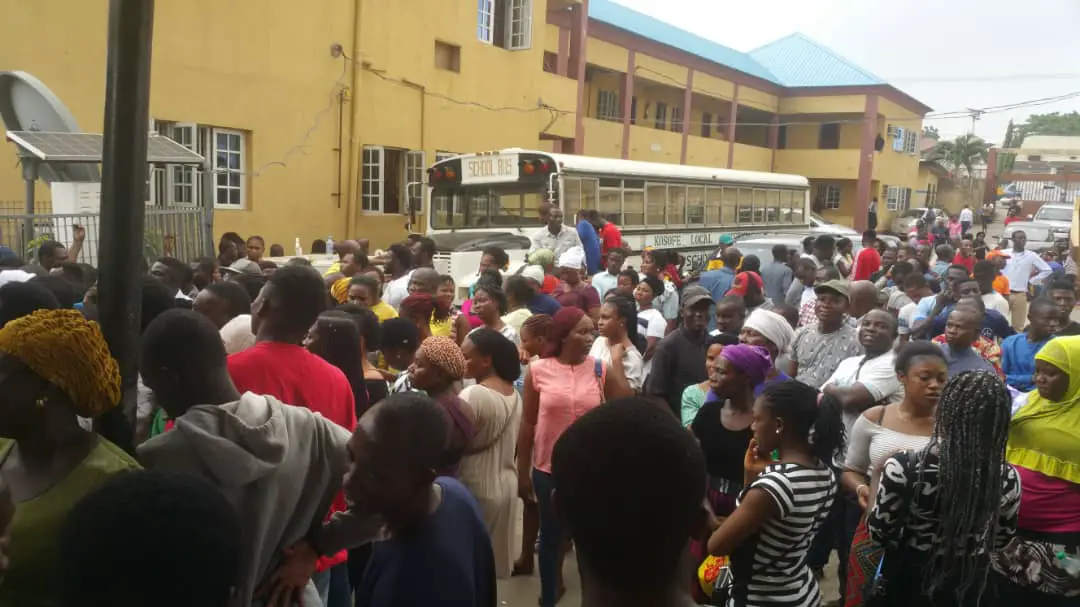
    [Crowd at a PVC collection centre in Abia state. The Sun]

    Citizen spoke to a couple of young Nigerians asking why they hadn’t gotten their PVCs, and we got some interesting responses ranging from apathy to frustration with the process. 

    [PVC collection survey summary. SBM Intelligence]

    Here’s what they said.

    Deborah*

    “I don’t have a personal voter’s card and did not register for one during the registration period. I suffer from an intense form of voter’s apathy, unconcerned about the electoral process and its likely outcomes. Perhaps, I hold a pessimistic attitude towards Nigerian elections, but I have no faith in the system to provide the leadership that Nigeria requires. 

    “I find all the candidates who are currently forerunners to be largely underwhelming. There’s the APC candidate with his failing health, there’s the PDP candidate clueless and capitalising on the goodwill from past positions held, and there’s the Labour Party’s candidate whose claim to fame is his appeal to millennial and Gen Z voters. 

    “If these are my options, I’d rather sit the elections out. Whatever the results — and it is one of the hardest to call in the history of elections in Nigeria —, we will live with the consequences. Above all, I pray for a peaceful transition of power. We deserve to catch a break.”

    Feyisayo

    “When the announcement first came out for PVC registration, I registered on my browser. I even asked around about how to go about it and in the beginning I was dedicated towards getting my PVC. I was in Akure when I started my registration. 

    “Unfortunately I wasn’t sure where I’d be during the election period, I had relocated to Lagos and had to think about the process involved with transferring my PVC or even registering again at another local government. I settled for Kosofe local government at the time. I took time off work to go there to register. 

    “The INEC officials had given me an exact date to come around and I thought it would be better organised because I had an appointment. But when I got there, I saw a crowd of people. I was like, ‘no way.’ The last time I did this was during NYSC and I’m not subjecting myself to this hassle without knowing anybody at INEC. That was basically what discouraged me. I don’t think I waited more than 30 minutes before I went back home.

    “Now though, I kinda regret it. I feel bad and maybe I should’ve waited for a few hours to get my PVC.”

    Vera

    “God knows I tried. I couldn’t get my PVC because it wasn’t found physically at the INEC office even though it reflected on INEC’s portal that it was available. Between November and February I went to their office in Oshodi ten times. Of course I feel bad I couldn’t get my PVC but I know I tried my best so my conscience is clean.”

    Tolu

    “After I finished my online registration I was supposed to go to the local government office on a given day. Unfortunately, I couldn’t go and I just lost track of the whole thing. The process seemed too complicated and wasn’t easy so I just didn’t bother anymore. I don’t feel anyhow about not getting my PVC. I don’t know if that’s the right answer but I just don’t feel anything.”

    Korede

    “I registered online early last year in Abeokuta. I went to the INEC office once to ask about my PVC. They told me it wasn’t ready. I asked a contact at their office to help me confirm the status of my PVC and he kept telling me it wasn’t ready. I was surprised, how can it not be ready? I’ve registered since. I feel bad that I wasn’t able to get my PVC but life goes on. We go still vote, anyhow.”

    * Respondent chose to remain anonymous

    Are you signed up for our Game of Votes newsletter yet? We help you make sense of news jargon and keep you up-to-date, especially with election news. Make the subscription of a lifetime here.

  • Now’s not a good time for Davido, the People’s Democratic Party (PDP) and  supporters of Ademola Adeleke. An election tribunal sitting in Osun state on January 27, 2023, annulled the governorship election result of July 16, 2022, in which the Independent National Electoral Commission (INEC) subsequently declared Adeleke winner.

    The initial victory, which came over the incumbent All Progressives Congress (APC) governor, Gboyega Oyetola, saw Adeleke win with 403,371 votes to defeat Oyetola, who got 375,027 votes — a 3.5% margin of victory.

    However, the three-person tribunal led by Justice Tetsea Kume voted 2-1 to overturn the result.

    What was the ruling?

    The tribunal declared that INEC did not comply substantially with the Constitution and the provisions of the Electoral Act. The tribunal ruled that there was “overvoting” and declared that Oyetola won the election, polling 314,931 votes, while Adeleke got 290,266.

    Justice Kume ordered INEC to withdraw Adeleke’s certificate of return and issued another to Oyetola, who he declared the lawful winner.

    How did things play out in court?

    Emmanuel Ujiadughele, a source in court when the ruling was read said:

    “The tribunal ended its proceedings today after the petition was filed on August 5, 2022. There were five parties to that petition. The first and second petitioners were the APC and Gboyega Oyetola. The first, second and third respondents respectively were INEC, Ademola Adeleke and the PDP.

    “There were three grounds on which the APC challenged the election. The first was that Adeleke wasn’t qualified and that he forged the certificates he submitted to INEC when he contested in 2018. The tribunal ruled that although forgery was proven especially with his secondary school certificate issued by Muslim High School in Osun state — at a time when the state hadn’t been created— his other accompanying certificates exonerated him from the issue of forgery. The tribunal ruled in favour of the respondent.

    “The second however, was on grounds of overvoting. The third was on grounds that INEC didn’t conduct elections in compliance with the Electoral Act. The tribunal ruled that overvoting occurred as stated by the petitioner. It also said that both parties benefited from overvoting. The tribunal ruled that INEC’s actions amounted to tampering with official records by producing multiple results and manipulation of the Bimodal Voter Accreditation (BVAS) machines.

    “According to the tribunal, INEC’s defense was erroneous. This was in respect to the terms of the sections of relevant laws they quoted. APC had challenged the results in 749 polling units in 10 local governments of Osun state. 

    “After deliberations, the tribunal deducted from places where there was overvoting. Former governor Oyetola scored 314, 931 votes while Adeleke scored 290,266 votes. The tribunal ruled that Adeleke didn’t score enough votes to be declared the lawful winner of the election. It ordered INEC to withdraw the certificate of return issued to Adeleke.

    “There was a minority judgment which noted that the petitioners failed woefully to prove their case and ruled in favour of the respondent.”

    What does this mean?

    History appears to be repeating itself, and it’s two times unlucky for Adeleke against a familiar foe. In March 2019, a three-person tribunal declared Adeleke winner over Oyetola after a September 2018 governorship contest that Oyetola narrowly won. However, the victory was nullified by a court of appeal, and Oyetola was reinstated. 

    The silver lining for Adeleke is that he can challenge this ruling in court and hope for Oyetola’s good fortune. Still, this spells even bigger worries for INEC, who initially basked in the success of BVAS in conducting the election. A claim that overvoting still occurred is a reality check for INEC, with presidential elections less than a month away.

    Adeleke has called for calm. All’s not lost yet. Perhaps they could get a favourable ruling at a higher court and hopefully, look forward to a better time.


    We write the news and track the 2023 elections for citizens by citizens in our weekly newsletter, Game of Votes. Make the subscription of a lifetime here.

    Starting next week (January 31st, 2023)
  • People with disabilities in Nigeria have especially tough lives. Many of them find it difficult to get good jobs, they suffer from discrimination and stigma and can’t access many public places or facilities like banks, transport buses, hospitals or supermarkets.

    Unfortunately, this exclusion spreads into civic activities like voting as many visually impaired Nigerians are unable to effectively exercise their civic rights. 

    What guidelines has the law made for blind and visually impaired voters?

    According to Section 56 of the Electoral Amendment Act 2015: “ (1) A voter who is blind or is otherwise unable to distinguish symbols or who suffers from any other physical disability may be accompanied into the polling unit by a person chosen by him and that person shall, after informing the Presiding Officer of the disability, be permitted to accompany the voter into the voting compartment and assist the voter to make his mark in accordance with the procedure prescribed by the Commission.”  

    Simply put, visually challenged people are allowed to bring someone to help them. But, this undermines the entire voting process because they could be cheated or influenced into voting for candidates they do not support.

    However, there is another provision of Section 56 of the Electoral Amendment Act 2015 which states: “The Commission may take reasonable steps to ensure voters with disabilities are assisted at the polling place by provision of suitable means of communication, such as Braille, large embossed print or electronic devices or sign language interpretation, or off-site voting in appropriate cases”. 

    So, has INEC taken any steps to make the voting process more inclusive?

    On May 3, 2018, during a campus outreach at the University of Abuja, the Chairman of the Independent National Electoral Commission (INEC), Mahmood Yakubu, announced that measures had been taken to ensure visually impaired people could vote unaided. These measures were:

    • Braille Ballot Guide: This envelope-like leaflet, would help voters identify the names of all the political parties immediately a ballot paper is inserted into it. 
    • Magnifying glasses for persons with albinism.

    Was this effective in the 2019 elections?

    When these measures were put in place for the 2019 elections, many visually impaired people were happy at the long-awaited inclusiveness and at the chance to have 100 percent confidence in their votes. 

    Unfortunately, their hopes were dashed as many of them reported that the INEC officials themselves were confused when they asked for a ballot guide. Some officials said they didn’t know what a ballot guide was while others said it wasn’t available in the polling unit. 

    Visually impaired vote elections inclusiveness INEC

    It’s almost like the talk of inclusiveness had been a fool’s dream. So, once again, voters with visual impairment may rely on the help of others to cast their vote. 

    Consequences of the lack of inclusivity 

    Voter apathy

    One of the issues facing our electoral system today is voter apathy and this time, INEC might be the one encouraging this. Many visually impaired voters are getting tired of a system that isn’t considerate of their situation. As a result, many of them have sworn to not vote again till a lasting solution is found. 

    Visually impaired vote elections inclusiveness INEC

    Political candidates are at a disadvantage

    Statistics show that there are about 7 million visually impaired people in Nigeria today with a significant fraction being adults of voting age whose votes can be the determining factor to push a candidate to victory. However, if the right medium isn’t provided for them to carry out their civic duty, we shouldn’t really call the elections a free and fair one.

    Although INEC has promised again that people with disabilities would be able to vote in the upcoming general elections without issues it’s difficult to take their word for it after the 2019 disappointment. 

    Are you signed up to our Game of Votes newsletter yet? We help you make sense of news jargon and keep you up-to-date especially with election news. Make the subscription of a lifetime here

  • It’s one month until the presidential election. Almost everyone’s giddy about the prospect of choosing Nigeria’s next President. 

    So it’s fascinating to learn that the two leading parties, the All Progressives Congress (APC) and the People’s Democratic Party (PDP), have commenced court proceedings seeking the disqualification of their opposing principals. 

    This led us to ask, what needs to happen for a candidate to be disqualified from contesting for president? But, before we answer that, let’s see if something like this has happened.

    Is this the first time this is happening?

    No. In the lead-up to the 2015 presidential election, the current president Muhammadu Buhari was at the centre of a certificate scandal

    Section 131 of the Nigerian Constitution covers the qualifications for becoming President

    Subsection (d) reads, “A person shall be qualified to the office of President if he has been educated up to at least school certificate level or its equivalent.” The problem was, despite Buhari’s claim at the time that his school leaving certificate (WAEC) was with the military, they initially denied having it. After much back and forth, Buhari’s academic records were released to the public. However, their authenticity remains an open question.

    What are eligibility requirements to become president?

    The essential requirement needed to be President, not stated in the Constitution or the Electoral Act is money. Lots of it.

    Beyond being a joyful spender, section 131 of the Constitution provides four personal requirements, namely;

    1. You must be a Nigerian citizen by birth
    2. You must be at least 40 years old
    3. You must belong in a political party and sponsored to the office of the President
    4. You must be educated up to at least school certificate level or its equivalent

    So what needs to happen to be disqualified from becoming president?

    Section 137 of the Constitution provides grounds for disqualification to the office of President. Unlike the qualification requirements, this one’s a longer list. A person shall not be qualified for office of the president if they;

    1. Have dual citizenship, although this is subject to the provisions of Section 28 of the Constitution.
    2. Served two terms as President already which excludes Buhari and former president Olusegun Obasanjo.
    3. Have been declared to be a lunatic or of unsound mind by any law in Nigeria. Sounds fair. Nigeria’s hard enough as it is and we don’t want to worsen things by electing a mentally unfit person.
    4. Are under a death sentence, or sentenced to prison for fraud. 
    5. Are convicted of fraud or dishonesty less than ten years before the election date.
    6. Have been declared bankrupt. Because someone who can’t manage their own affairs shouldn’t be trusted to manage that of a country.
    7. Haven’t resigned from any public office at least 30 days before the election.
    8. Belong in a secret society. Because why?
    9. Have been indicted for embezzlement or fraud by a judicial commission or tribunal.
    10. Present a forged certificate to the Independent National Electoral Commission (INEC).

    How likely is it for anyone to be disqualified at this point?

    There have been allegations of corruption and forgery levelled against the top two parties both within and outside. Aspirants have the right to challenge the results of primaries as provided in Section 29 of the Electoral Act.  

    However, INEC, as an umpire, has limits on how it can intervene. For example, in 2019, a federal high court in Abuja in a case between the Social Democratic Party (SDP) in Kogi State and INEC, ruled against INEC saying it had no power to disqualify a candidate that its party has cleared. 

    There’s good reason to believe that despite court cases springing up this late, the presidential candidates may still have to slug it out at the polls on February 25. 

    Ultimately, the people will pass judgment with their ballots.

    We write the news and track the 2023 elections for citizens by citizens in our weekly newsletter, Game of Votes. Make the subscription of a lifetime here.

  • It’s 38 days to the start of Nigeria’s 2023 elections. The Independent National Electoral Commission (INEC) has been involved in a lot of recent troubles. This includes the attack on seven INEC offices in the last four months, the near removal of Mahmood Yakubu as INEC chairman, amongst others.

    This is why Yakubu decided to use his Chatham House outing on January 17, 2023, to reassure citizens of the commission’s credibility. He also gave some updates regarding the 2023 elections and future laws. Here are some of them:

    The 2023 elections are for the youth

    Yakubu has confirmed that the winner of the 2023 elections would be determined by the youth. This is simply because they have something going for them this year — their high numbers.

    According to Yakubu, “the 2023 election is the election of young people because they have the numbers. Even the majority of PVCs collected are by young people. Out of the 93.4 million, 70.4 million registered voters are between the ages of 18 and 49.”

    This is a solid increase from the last four years. The total number of registered voters in 2019 was 84 million, with 51.1% of these voters as youths aged 18-35.

    The 2023 elections will hold despite reports of insecurity

    It is no longer news that Nigeria’s insecurity numbers keep rising at a worrisome level. 

    This is especially felt in regions such as the North-East with Boko Haram, North-West/North-Central with the onset of banditry, and in South eastern Nigeria with violence from the Indigenous People of Biafra (IPOB)

    However, Yakubu has assured Nigerians that the elections will hold no matter what. He also said that the commission would take the insecurity bull by the horns through the use of two tools:

    • Election Violence Mitigation and Advocacy Tool (EVMAT), is a research and diagnostic tool for predicting and reducing the risk of election violence before elections. 
    • The Election Risk Management Tool (ERM) tracks and reports general risks to elections.

    People who have been displaced by these conflicts are not left out. The INEC boss has plans to make registered Internally Displaced Person camps (IDP) camps into polling units. 

    INEC supports diaspora voting, but lawmakers are against it

    With several questions from the audience about diaspora voting, Yakubu reiterated that the commission is in full support of Nigerians in foreign countries being able to vote from wherever they are.

    However, the bill to include diaspora voting as part of Nigerian law was refused by lawmakers in the National House of Assembly (NASS) in March 2022. Therefore, Nigerians should continue to beg the NASS lawmakers to make a diaspora voting law.

    INEC may introduce body odour as a means of voter accreditation in future

    Yes, you read it right, body odour. The INEC boss is open to having machines that can detect individual body scents/aromas to verify genuine voters in polling units in future elections. It’s very similar to how dogs can identify house residents by smelling their scent.

    The use of cell phones and cameras would be banned to avoid vote buying

    Dirty party agents will have a tough time with vote-buying this year, as Yakubu has mentioned that voters will be prohibited from using cell phones and cameras in voting cubicles.

    This is because of the recent “mark, snap, and show” tactic. Here, a voter will go into the voter cubicles, mark the ballot and snap it with their phones for later payment by the party agent.

    Every voter in the queue before 2:30 pm will vote

    Previous experiences in past elections show that there are instances where voting closed for the day in the evenings. This is to the dismay of voters who had not yet cast their votes.

    Yakubu assured Nigerians that as long as a voter shows up at the polling unit between 8:30 am and  2:30 pm and is in the queue, they’d be allowed to cast their vote. Even if it takes all night to do it.

    He also mentioned that this usually happened due to the separation of voter accreditation and the casting of votes. 

    To counter this, there will be simultaneous voter accreditation and ballot casting. This is so that you, the voter, can attend to any other business at hand.

    We write the news and track the 2023 elections for citizens, by citizens in our weekly newsletter, Game of Votes. Make the subscription of a lifetime here.

  • This is Zikoko Citizen’s Game of Votes weekly dispatch that helps you dig into all the good, bad, and extremely bizarre stuff happening in Nigeria and why they’re important to you.

    Subscribe now to get the newsletter in your email inbox at 8 am every Friday instead of three days later. Don’t be LASTMA

    Doyin Okupe Resignation Sanwo-olu Meffy

    In the popular Game of Thrones series, power was obtained and kept through alliances. And regardless of the lies, betrayals and deaths, people did everything to maintain these alliances because of the benefits attached to them. We can easily say Nigeria’s political sphere is a game of thrones. 

    For 16 years, the People’s Democratic Party (PDP) dominated the political scene; until, in 2013 the major opposition parties: the Action Congress of Nigeria (ACN), the All Nigeria Peoples Party (ANPP), the Congress for Progressive Change (CPC) and a faction of the All Progressives Grand Alliance (APGA), assembled to form the All Progressives Congress (APC).

    Tinubu Alliance Brymo INEC

    Bola Ahmed Tinubu (BAT) –the Presidential candidate of the APC for the 2023 elections– was one of the brains behind this merger. To ensure his victory at the 2023 polls, he is again rumoured to be seeking an alliance with other parties. Tinubu’s presidential campaign can be described as “interesting”. 

    Although he has repeatedly proclaimed himself as Nigeria’s long-awaited saviour, some team members aren’t turning a blind eye to the many holes in his campaign. For instance, the absence of some APC members from his campaign and lack of endorsement from APC chieftains. So, to boost his chances, they plan to form alliances with smaller parties. 

    Some political parties, such as the African Action Alliance (AAA) and the All Progressives Grand Alliance (APGA), have said a big God forbid to the possibility of such an alliance. 

    However, a faction of the Social Democratic Party (SDP) is more than ready to accept Bola Tinubu with open arms. 

    Tinubu Alliance Brymo INEC

    I wonder how their presidential candidate, Prince Adewole Adebayo, feels about this.

    What Else Happened This Week?

    The Cancel Train Is Here For Brymo

    The election season is known to bring out the absolute worst in people, and sadly, the Nigerian singer Brymo finally let his intrusive thoughts win. 

    Brymo, over the years, has made himself known for more than just the music. From showing us how well he can rock a g-string to self-proclaiming himself “Nigeria’s artiste of the decade”. Unfortunately, over the past few days, his actions have left a bitter taste in many people’s mouths. 

    Brymo kicked off this year by claiming Igbo people aren’t ripe for the presidency, and against better judgement, he is yet to refute this statement. Instead, he has continued what seems to be an endless rant justifying his views, even going as far as cussing the entire tribe out.  

    Tinubu Alliance Brymo INEC

    Many people, including celebrities like Paul Okoye, have called him out on his comments, but we’re in the cancel era and just talking isn’t enough. A petition has been filed to ensure he doesn’t win any award in the 2023 All Africa Award Music Award (AFRIMA), and so far, it has over 12,000 signatures. 

    Everyone is entitled to their choice of candidate, but we should draw the lines on bigotry. 

    Video of the week

    Question of the week

    With less than three weeks till the old naira notes become illegal, have you gotten a hold of the new banknotes yet?

    Ehen, one more thing…

    On January 10, 2023, the federal government dispelled all doubts and reassured us that the 2023 general elections would definitely be held. But here are some of the issues INEC’s been facing so far.