• Every week, Zikoko seeks to understand how people move the Naira in and out of their lives. Some stories will be struggle-ish, others will be bougie. All the time, it’ll be revealing.


    Grow your wealth in both dollar and naira, earning up to 15% in USD and 25% in naira. With flexible rates that move with the market, you can switch between wallets anytime to match your financial goals. Start here.

    Naira Life #333 bio

    What’s your earliest memory of money?

    I heard the term “school fees” for the first time in primary one, and I had two distinct thoughts. The first was, “Why is anyone charging money for school?” School felt like an essential part of life, and I didn’t know people paid for it. 

    The second thought was, “Does my mother also pay school fees?” She was a teacher, so I assumed we both had to pay school fees. When I asked her, she laughed and explained that she worked to get money and then used the money to pay my fees. That’s the first time I realised things weren’t free. 

    What was money like growing up?

    I spent most of my childhood unaware of whether we were rich or poor. My mum didn’t allow thoughts like that to fester. When I asked for something she couldn’t afford, she’d emphasise the importance of being content with what I had. There was no room for self-pity.

    My mum also handled the money and was responsible for financial decisions at home. I can’t remember what my dad did for money. I just know he fixed or repaired things.

    In JSS 3, I finally noticed we really didn’t have money like that. I kept missing school and almost didn’t write the junior WAEC due to payment delays. 

    One annoying boy in my class kept pointing out that it was because we were poor. I got my revenge on that boy by beating him to the first position. At least, academics vindicated poverty.

    I’m screaming. When was the first time you worked for money?

    2016. After graduating from uni — I went to a school in Kenya — I took an 8-month internship at a bank. My pay was KSh 10,000/month, which was about ₦25k. The money wasn’t even enough to cover a student, much less a working person. 

    Fortunately, I lived with someone, which cut down my food expenses. I only spent on transportation, data, and the occasional snack at lunch. It was still not much money to live on, but moving to Kenya for uni had taught me how to manage money. I’d learnt to channel the little I got from my mum and random donations from strangers to school fees and necessities, so adjusting to my pay wasn’t so difficult.

    I’m curious. Why a Kenyan uni?

    I finished secondary school at 14, and I think my mum was scared that Nigerian universities wouldn’t want to take me. So, she sent me there and we made it work.

    Fast forward to my internship at the bank. It was finance-related, and I enjoyed it. But I wasn’t sure I wanted to make a career out of it. My interests veered towards development, governance, and public speaking because that was all I did in school. I participated in many extracurricular events in my undergraduate days: hosted events, participated in school council elections, and attended every campaign. I’d hear there was a “save the trees” campaign somewhere, and I’d go. Did I care about the trees? No, I just loved attending and participating in the campaigns. 

    It was pretty clear my passion was in the development sector. So, while I worked at the bank, I also applied for a master’s degree in development studies. Unfortunately, I didn’t get a scholarship. So, after my internship ended, I packed my bags and returned to Nigeria. 

    What was the plan?

    I decided to do my NYSC. I returned in 2017, and it was a fantastic idea because I finally got to work with a development organisation. The NGO paid me ₦25k/month, and I got the ₦19800/month stipend from NYSC. 

    The highlight for me was how much I learned. I travelled to 13 states and multiple communities across Nigeria, doing important work. I hoped they’d retain me after NYSC, but I only did two extra months of consultancy with them. At least they paid me ₦120k/month for those two months, which I left in a savings account.

    I’d also saved most of my salary throughout service year — I lived with people, so my expenses were minimal. So, after the consultancy, I carried all my savings and travelled to Rwanda for vacation. Now that I’m saying this, I realise I can have a sort of arrogant confidence about money and don’t mind spending it on things I want. I was jobless and had nothing to return to, but I still went ahead and travelled for a month.


    Join 1,000+ Nigerians, finance experts and industry leaders at The Naira Life Conference by Zikoko for a day of real, raw conversations about money and financial freedom. Click here to buy a ticket and secure your spot at the money event of the year, where you’ll get the practical tools to 10x your income, network with the biggest players in your industry, and level up in your career and business.


    What did you do when you returned?

    I was unemployed for five months, applying for several jobs. I survived that period by just staying indoors and avoiding billing. I also lived with a very chill person, and they allowed me to figure things out. 

    I finally landed a job in May 2019. It was another NGO role, but my salary this time was ₦88k. A month later, I left it for a communications intern role at an NGO that paid ₦80k.

    Wait. Why?

    It’s funny, but the ₦80k job had a better work environment. The office had natural light, and my colleagues were younger. It looked like a more challenging environment with better opportunities for me, so I took the pay cut. 

    It wasn’t great money, but I could finally move to my own apartment. About eight months into the internship, my salary was reviewed to ₦120k. A few months later, an older colleague sent me an opportunity to join the global arm of the NGO. I applied and got the job. 

    It was wild because I was just an intern, not an officer or advisor. It was practically unheard of for an intern to jump to the global branch. My salary jumped to ₦350k, and I mostly worked remotely since I worked with the international team. It was sweet. I only left the job in 2021 because I finally got a master’s scholarship after years of trying.

    Love it! You had been trying while working?

    I never stopped trying. I even furnished my apartment lightly because I kept waiting for an admission to click. The thing is, I was getting the admissions, but funding was the problem. 

    When funding finally came, I packed my bags and moved to the UK. I’d saved about ₦2m over the years, and everything went into visa fees (plus the crazily expensive £600 health surcharge), flights, and shopping.

    The scholarship also came with a stipend, about £3k/quarter. It wasn’t enough to cover all my bills and £450/month rent, so I got two part-time hybrid jobs. It was basically the same job in two different places. My school had an online platform where students could access courses, and I helped two different departments optimise the digital learning experience for fellow students. The pay was £10/hour, and I split my 20 hours/week work limit between both jobs.

    Was that good money?

    It was. I worked both jobs until I finished my postgraduate program in 2022, saving £3k in the process. Foolishly, that money still went to the British government. 

    I couldn’t stay back in the UK without transitioning to a work visa, and I heard of an option where I could pay £2k for a post-study work visa. It’d allow me to stay in the UK for two years. It was enough time to hopefully find an employer willing to sponsor a longer-term skilled worker visa. 

    So, I used my savings to pay for that, but unfortunately, I didn’t get a sponsored job. Actually, I got a job with an NGO, but it was a £600/month internship that couldn’t sponsor my visa. I just took it because I’d finished my program, and there was no scholarship stipend anymore. 

    Less than a month later, I landed a remote senior advocacy role with another US-based NGO. This one paid $3500/month. It made escaping the UK much easier.

    How did you go from wanting a visa to wanting to escape?

    You know how I once left a job because another office had natural light? The whole UK doesn’t have natural light. The sky is always grey and drizzling, and the people never smile. I’m a very expressive person, and the place was too gloomy for me. It was borderline depressing.

    Besides, the UK internship was just one year, and the US job paid six times what I earned. There was no point waiting for a visa when I didn’t like the country and was constantly fighting depression. So, I told my UK employer I wanted to return home for a short break. I returned to Nigeria and completed the rest of my internship remotely while working with the US people.

    Was the plan to return to Nigeria permanently?

    The plan was to come and decongest for about three months, soak up some sunshine, and eat amala. I even tried to rent an apartment for three months, but I saw a three-bedroom flat for ₦1.5m/year. That was equivalent to my one-month rent in the UK, where I shared a bathroom with five people. 

    I took the place thinking, “Well, if I leave before the rent expires, it won’t pain me because that’s what I’d have spent for one month.” It’s been two years, and I’m still here. 

    I faced a lot of backlash from people. The common consensus was: Why would you leave the abroad to come back here? But I told people, “Omo, you can pick the struggle you want.”

    You can do well financially, have great pictures abroad, see snow, and be depressed. Or you can come back to Nigeria, be with your people and just be in community and content. My two-year UK visa has even expired, so I’m still here for the foreseeable future.

    What’s your income like these days?

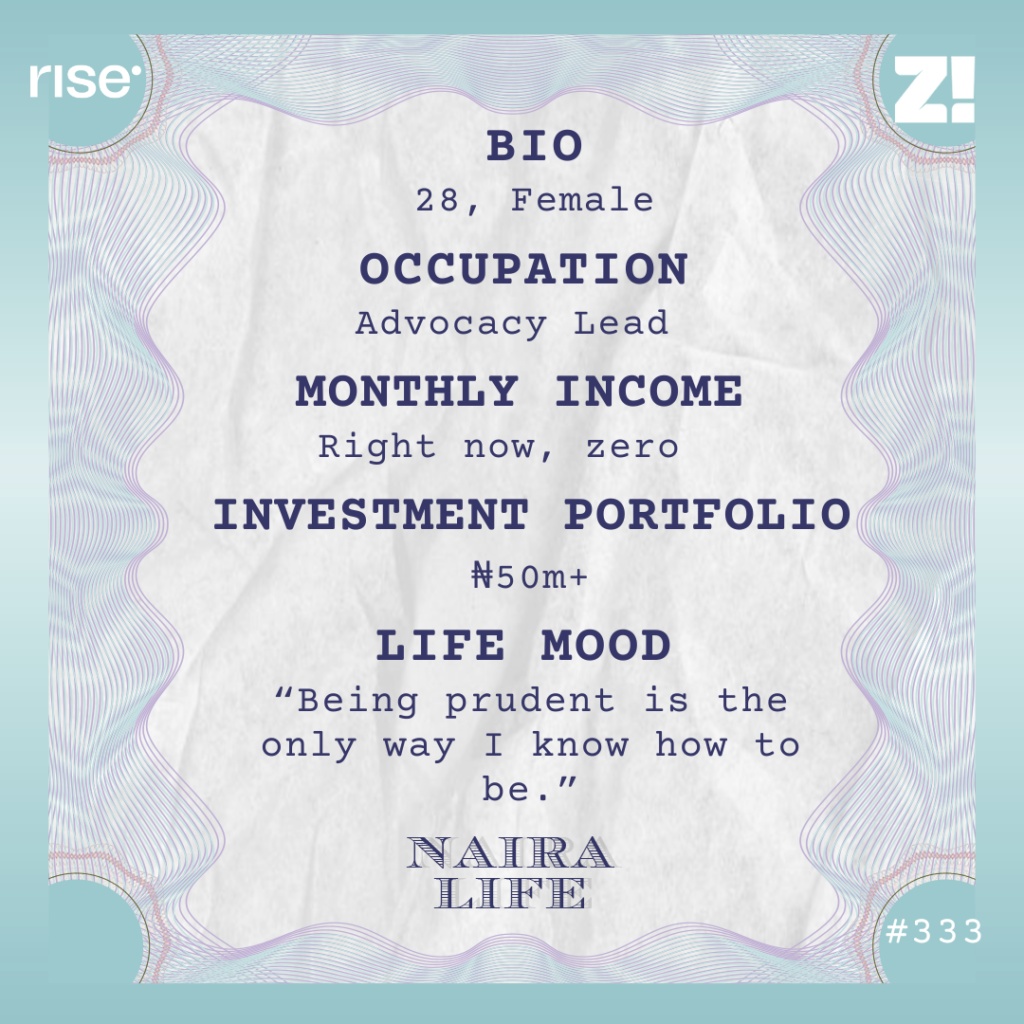
    It’s actually zero. I just started a three-month sabbatical this July. But, up until June, I worked with the US-based NGO that paid me $3500. My salary increased to $4k/month after about a year.

    Why are you on a sabbatical?

    Burnout. I’d been tired for a while, and a few months ago, I had a terrible travel experience in an African country that led to a four-day detention. I think the trauma and general exhaustion from life just triggered a mental breakdown. I couldn’t concentrate at work and needed a break. 

    I wanted to take a year off, but my money will finish, and I was scared I’d completely lose the motivation to return to work. So, three months seemed safe. Right now, I plan to get back to myself first and hopefully get back in a mental space to think about work.

    Fingers crossed. How did you financially prepare for a sabbatical, though?

    I didn’t need to plan anything, so it wasn’t hard. I’ve automated my finances in a way that I think should sustain me even if I didn’t have to work for a year. 

    I typically live way below my means. I wouldn’t touch July’s salary on a normal day because I’m still living on January’s salary. Only 25% of my earnings go to day-to-day living expenses, 20% to tithe, offering, and children-based charities, and the rest to savings and investments.

    For the latter, I have a high-yield savings account on a fintech app that also allows me to invest in stocks. My savings and investment budget is $2200/month, so I put $1200 in low-risk stocks on the app and $1k in the high-risk ones. My portfolio is currently $23k (about ₦35m).

    I also have ₦5m in a fixed-deposit account because my brother got into uni last year, and I wanted some money aside from my main purse in case I needed to dip into it to sponsor him. I also have two plots of land I got for ₦15m early this year and ₦1m in Nigerian shares to diversify my investments. 

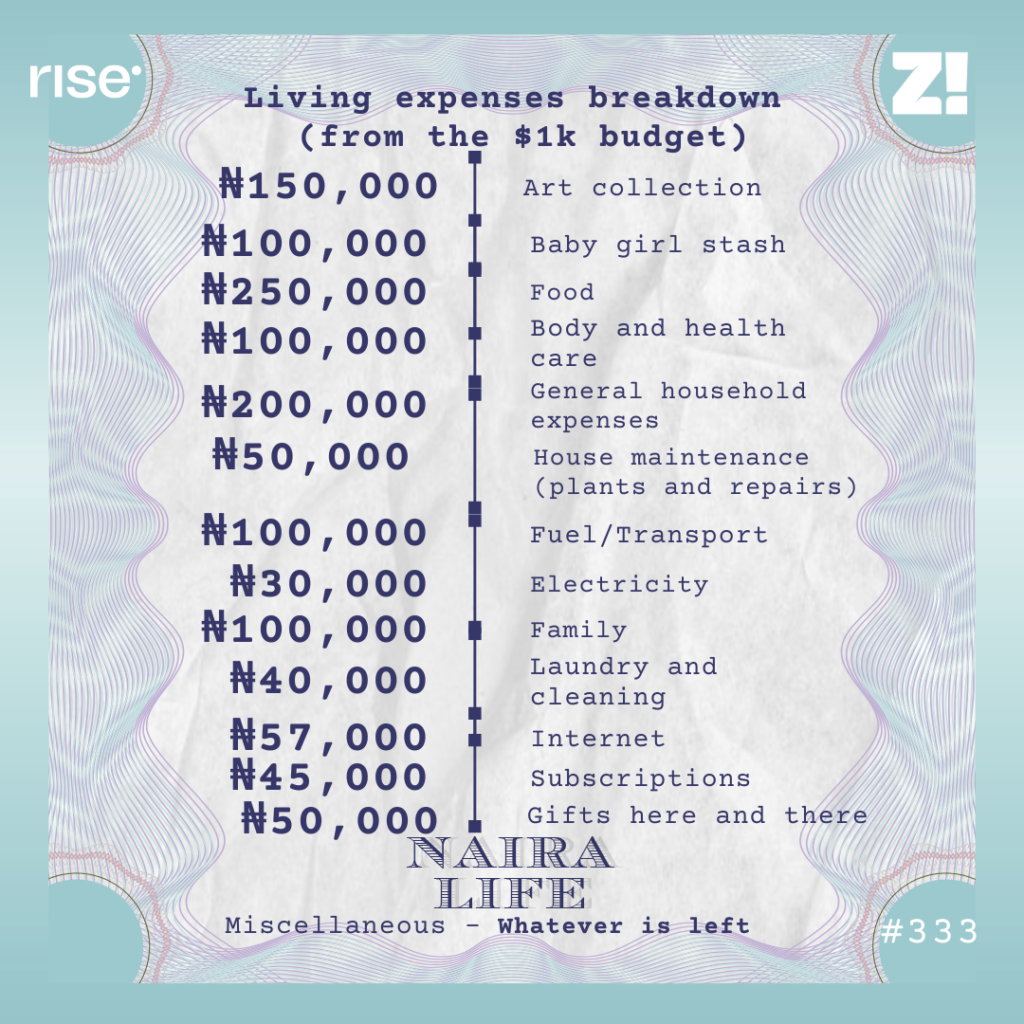
    Can you break down the day-to-day living expenses bit for a typical month?
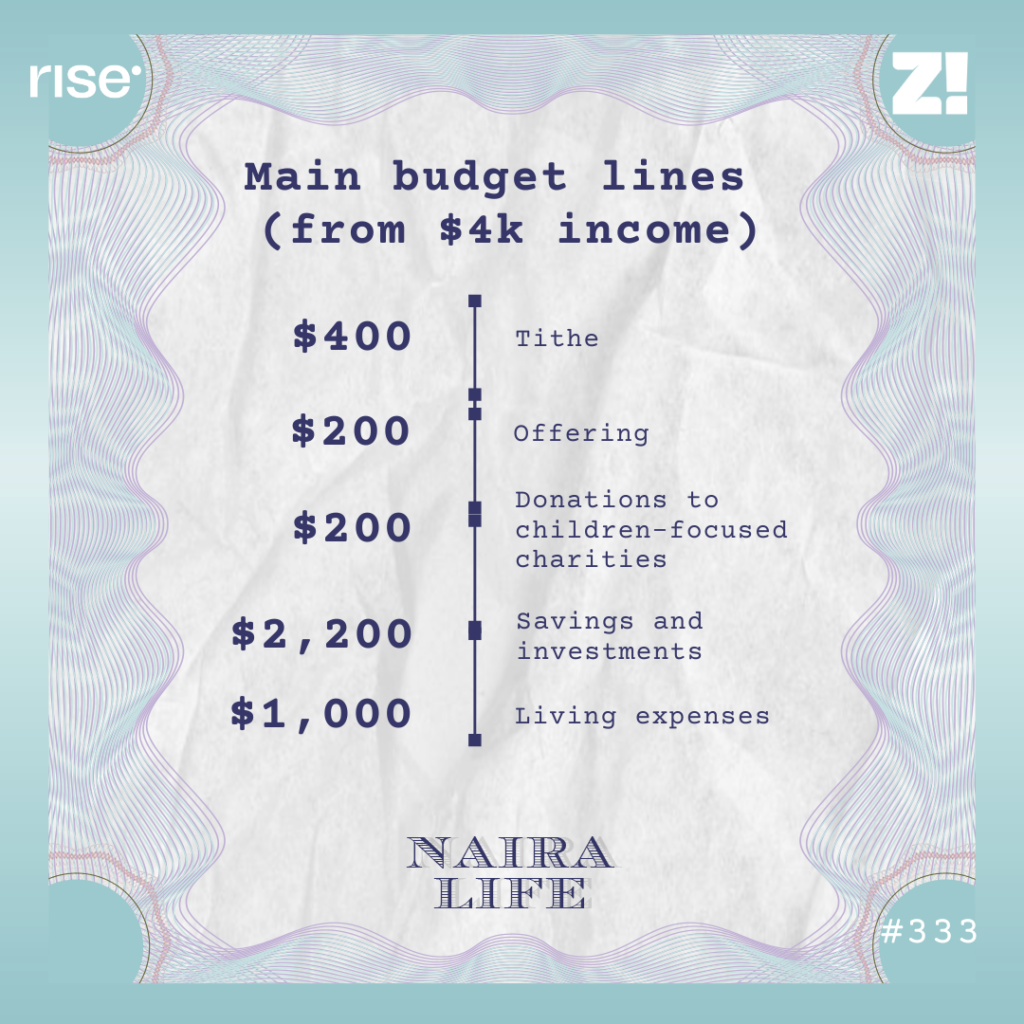
    I’ve been collecting art since February because I dreamt that my artist friends will soon blow and I’m hoping their art will become millions in my house.

    I rate it. Do you deliberately set out to live below your means?

    It has much to do with how I grew up; the “be content with you have” mindset. I literally just started learning to buy new things for myself. My mum was the queen of thrift shopping and seeking out bargains. I can spend five years researching a product I want to buy to ensure I’m getting value for my money, no matter how negligible the amount. 

    The only thing I don’t have a budget for is travel. Once there’s a destination and I have the money for it, I’m gone. I’ve been to over 20 countries, and no one paid for any. I don’t even think twice about the money. I also spend money on friends and relatives.

    But when I’m not travelling or giving people money, I’m keeping it. Sometimes I wonder what I’m keeping money for. The whole “Pay yourself first. Invest before you spend” rhetoric doesn’t apply to me because I don’t need discipline to save money. 

    Tell me more

    Being prudent is the only way I know how to be. I’ve noticed there’s a bit of perfectionism in how I handle my finances. I believe God gives me everything I have to be a good steward of it. What will I have to show for the money if I’m just flinging it around, spending like crazy? Besides, how much is the money sef? If God can’t trust me with something small, how will he trust me with more?

    So, I guess in my head, I’m just keeping money and waiting to discover what I’m supposed to use it for. One thing I really want to do, though, is to buy a three-bedroom apartment one day so I can give it to my granddaughter. It’s funny, but it has to be my granddaughter. It feels symbolic. Maybe that’s the thing I’m keeping money for. 

    Have you made any lifestyle changes since you’ve gone on sabbatical?

    I was hoping to cut down my expenses, but I can’t lie; lifestyle inflation has entered. It’s not yet the end of the month, but I’ve already maxed out my baby girl stash by 300%. I just have more cravings these days. It’s like I just want to eat amala and buy two-piece outfits. 

    I’ve not gone beyond my total budget. Even if I continue like this for three months, I won’t eat up to one month’s salary. But I’m a little disappointed I haven’t been able to shrink my expenses since I’m not earning. I need to do better.

    How has your income growth over the years impacted how you think about money?

    I think it’s a full circle moment because I remember reading a Naira Life story in 2019, and there was a chart that showed how the guy’s income grew over the years. It was a straight upwards slant, like from zero to 100 real quick, and I remember showing my colleagues. 

    We also plotted our own graphs to look at our career trajectories and see how our growth could be just as slanted. It’s interesting because if I were to do that now, my upward growth would be just like that guy’s own.
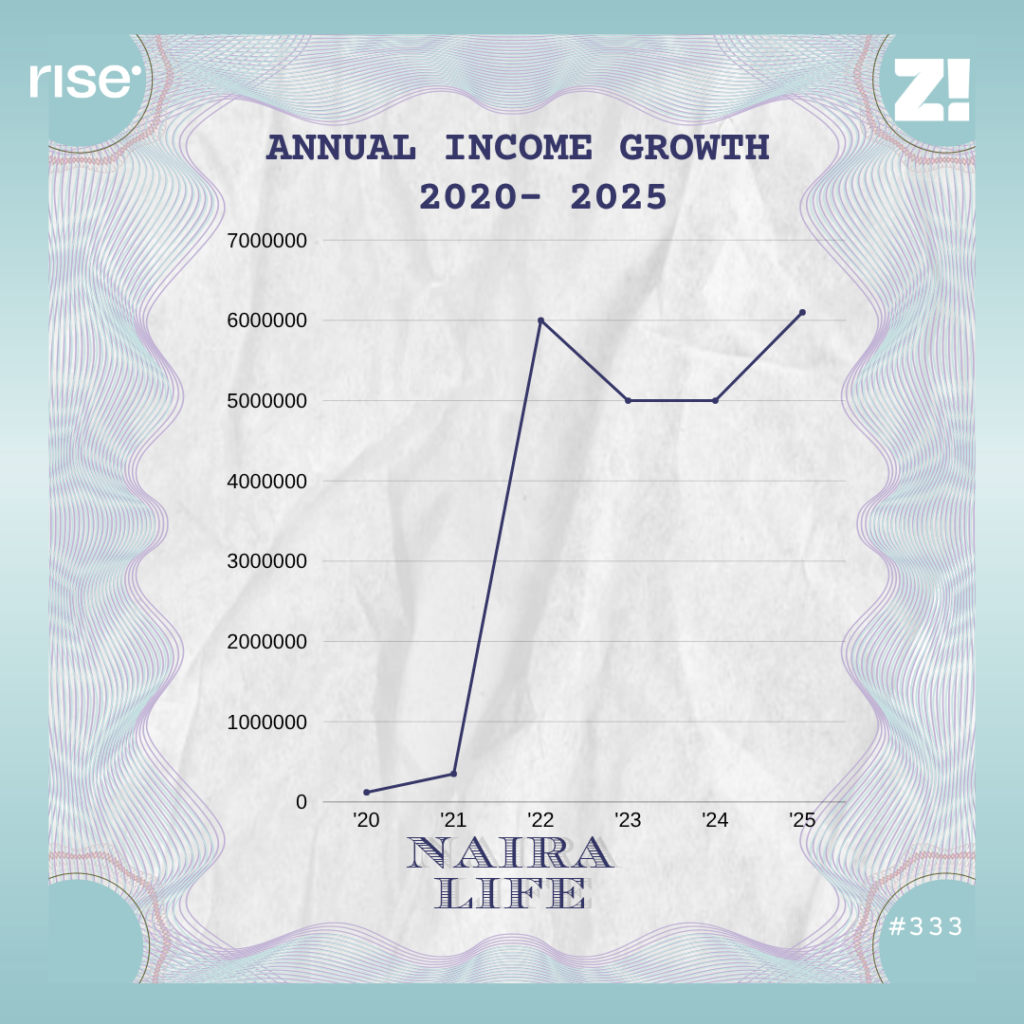
    I’m responsible for more now, but the principles have always remained the same. I’m content with what I have and diligent with managing and multiplying whatever comes into my hands when it eventually does. I live below my means, but I also believe in spoiling myself occasionally. That’s all there is to it.

    Is there an ideal amount you think you should be earning right now?

    I don’t know. I want money, but I don’t want to be the one earning it anymore. I’m very much romanticising the idea of being an “Iyawo oga” so I can use my money to buy a beach house in Epe. 

    Haha. What about something you want but can’t afford?

    I want a Mercedes-Benz. I have the specific model and colour in mind, but while I can afford it, I can’t afford the mental gymnastics that come with owning a Mercedes right now. Maybe unless I also get a mechanic attached to it so they can handle all the wahala that comes with driving that car.

    What was the last thing you bought that required serious planning?

    A ₦12k wok. I went to like three different stores before I settled on one, but that thing is fantastic. There’s no stir-fry I can’t do in that thing, and it cleans easily.

    If we were going for a more conventional answer, I’d say the last month-long slow travel I did across two countries. It cost me $6k, and I had to do some financial planning for that.

    Do you have any financial regrets?

    I lost about ₦700k in total to bogus farm investments during my NYSC period in 2018/2019, and I still feel foolish that I didn’t run when they said they’d give me 20% returns per month. Maybe I was just a thief.

    Skrimm. How would you rate your financial happiness on a scale of 1-10?

    In terms of how much I’m earning, I’d say 7. I believe I should be earning within the $8k – $10k range for my work. I’m probably not earning that yet because of where I am. But in terms of how I handle my finances, I’d say 8/10. I’m not doing badly, but I want to practice letting go of certain expenses and be better.


    If you’re interested in talking about your Naira Life story, this is a good place to start.

    Find all the past Naira Life stories here.
    Subscribe to the newsletter here.

    Get More Zikoko Goodness in Your Mail

    Subscribe to our newsletters and never miss any of the action

    [ad]

  • Financial comfort in Lagos, a city known for its high cost of living and fast-paced lifestyle, is influenced by multiple factors. 

    While ₦100k might be a fairly comfortable figure for a single NYSC member who lives and works in Ikorodu, it might barely scratch the surface for a family of three in Ikeja or the 9-5er who lives on the mainland and braves the daily Mainland-Island commute for work.

    So, what’s the magic number? What salary can actually make life in Lagos feel comfortable? In this article, we’ll dive into the numbers and explore what it takes to live your best life in Nigeria’s bustling economic hub.

    But first, what does it mean to be financially “comfortable”?

    Defining “Comfortable”

    While a comfortable salary is subjective and primarily based on individual needs and lifestyle, a salary can be generally considered comfortable if it allows for a good quality of life without significant financial stress. 

    The level of comfort obtainable, however, differs across income categories, lifestyle and household size. Finance analyst Onome Ohwovoriole explains this below:

    • Borderline Poor/Basic Comfort: This category earns within the ₦70k – ₦100k/month range. While they can afford the essentials like rent or food, they are not without financial stress. The most affordable single room in Lagos costs an estimated rent of ₦200k – ₦300k/year, which is about ₦16k – ₦23k of the individual’s monthly income going to rent alone. This leaves them with around ₦50k – ₦70k left to figure out food, transportation and the bare utilities.
    • Lower Middle Class Comfort: This category earns within the ₦150k – ₦300k/month range. They can afford essentials like rent and food, but often have to supplement their income with tips or loans.
    • Upper Middle Class and Entry Level Rich or Affluent Comfort: These two categories earn above the ₦500k/month mark (usually within the ₦10m – ₦100m per annum range) and are lumped together because they can afford to go beyond essential expenses to consider travel, prioritise a better quality of life and other expensive lifestyle choices.  

    How Lifestyle Choices Impact Comfort

    According to Onome, spending habits also vary across the income categories, and these lifestyle choices play a huge role in the comfort levels of the individuals in these categories. Single people tend to have a higher propensity to spend compared to families. However, some families have a bigger pool to spend from, especially dual-income households

    For the average Lagos household, the bulk of expenses are food and transportation, with between 50% and 70% of the salary going to both categories jointly. The split between both buckets varies depending on household size and lifestyle choices.

    Food quality also differs from one household to another and across comfort levels. With food inflation constantly increasing, it means more people are limited to the food options they can afford, regardless of whether their nutritional needs are met. So, while a growing child needs protein like chicken and eggs for brain development, he might have to settle for crayfish if his family can’t afford ₦8k for a crate of eggs or ₦5k for a kilo of chicken. 

    Beyond food, transportation and rent, priorities start to change depending on demography. Households with young kids spend a chunk of money on tuition. For these households, comfort might mean letting go of expensive housing to afford better schooling options for the children. 

    The upper middle class can afford travel, but depending on priorities, they can consider cheaper alternatives, like local destinations, to overseas travel. So, there is comfort, but it is subject to multiple factors.

    Get More Zikoko Goodness in Your Mail

    Subscribe to our newsletters and never miss any of the action

    5 Lagos Residents on What Salary Feels Comfortable

    33-year-old male civil servant living in Badagry

    Salary: ₦95k/month

    What’s your current living situation? I live in a rented ₦200k/year one-bedroom apartment with my wife and toddler. My workplace isn’t far from where I live, so I walk 15 minutes to and from work. 

    I have the option to take a ₦200 keke in the morning (it sometimes increases to ₦250 in the evenings), but it feels like a waste of money. That’s almost ₦10k on transportation at the end of the month. I can’t afford that.

    Can you break down your typical monthly expenses? I give my wife ₦10k weekly for food, so that’s like ₦40k/month. She often complains that it’s not enough, but she makes it work. 

    Then, I contribute ₦20k/month to my ajo group to save for rent. Last year, I took a loan from work to support my brother in buying an okada, so I repay ₦15k every month and will finish all payments in August. I use the remaining money to buy snacks at work or toys for my toddler. 

    Most of the time, I’m broke by the middle of the month, and I have to borrow money from my wife, who’s a teacher. I don’t usually pay her back, but she does the same to me, so it’s fine.

    Do you feel financially comfortable? No, I’m far from comfortable. After repaying this loan, I plan to take another one to buy a keke so I can use it for business. If I make an additional ₦100k monthly, I should be okay.


    RELATED: 6 Nigerians Earning Between ₦30k and ₦4m Open Up About the Lives They Can Afford


    27-year-old female teacher living in Ikotun

    Salary: ₦70k/month. Online tutorials bring this to ₦120k/month

    What’s your current living situation? I live with my husband and his sister in a two-bedroom apartment that we rent at ₦600k/year. I teach at a school an hour from my house and often use public transportation. Other times, I hitch a ride with my colleague who lives a bus stop from my house and walk the rest of the way home. 

    Since I’m married, I don’t have to worry about rent, utility bills, or a significant chunk of food expenses. My sister-in-law is in secondary school, and I often assist my husband with her tuition and day-to-day needs like toiletries. But most of my income comes back to me. 

    Can you break down your typical monthly expenses? Transportation comes to ₦30k/month, and I spend ₦15k monthly on data. Then, about ₦30k on personal expenses like skin care and hair.

    I give my sister-in-law a ₦1k stipend for school transport and lunch every weekday, so that’s like ₦20k. Her tuition is ₦80k, but that’s every three months and sometimes my husband pays. Another ₦25k/month goes into supporting food expenses, usually when my husband is broke.

    I try to save ₦20k with a savings app, but I’m not consistent with that because by the time I remember to save, money has finished. 

    Do you feel financially comfortable? Not at all. I’m only surviving because my husband pays my bills. If not, I’d probably be living hand to mouth. I can’t even afford to put my parents on a consistent allowance. I only send them money when they ask. I need to earn like ₦400k to feel reasonably comfortable.


    26-year-old female banker living in Ikorodu

    Salary: ₦600k/month

    What’s your current living situation? I live with my elder sister in her apartment. Neither of us drives, so we use public transport. We hardly ever cook; we just order in. It’s not cost-effective, but no one has the strength to do anything after a long day at work.

    I earn more than most people I know, but I don’t know if I’m financially responsible for just myself, because the black tax is crazy. The billing from my parents is quite significant.

    Can you break down your typical monthly expenses? 10% goes to my tithe. Then, I send at least ₦60k monthly to my parents. I spend ₦210k on transport and feeding. Sometimes, emergencies come up, and those take up quite a bit.

    I save what I can with Piggyvest and Cowrywise. I recently depleted my savings by using them to finance my Master’s program and fund my dad’s business. However, my saving grace is my Cowrywise Duo Savings plan with my boyfriend. It’s comforting to know that I have some money somewhere. 

    I intend to explore investment opportunities this year and raise my savings up to ₦1m.

    Do you feel financially comfortable? I wouldn’t say I’m financially comfortable. I want to be able to save more. The more you earn, the more you tend to spend, so I can’t give an estimated amount that would put me at ease.


    23-year-old male architect living in Ikoyi

    Salary: ₦200k/month. Extra income from his side hustles at an interior design firm and architectural design studio brings his income to ₦1.5m

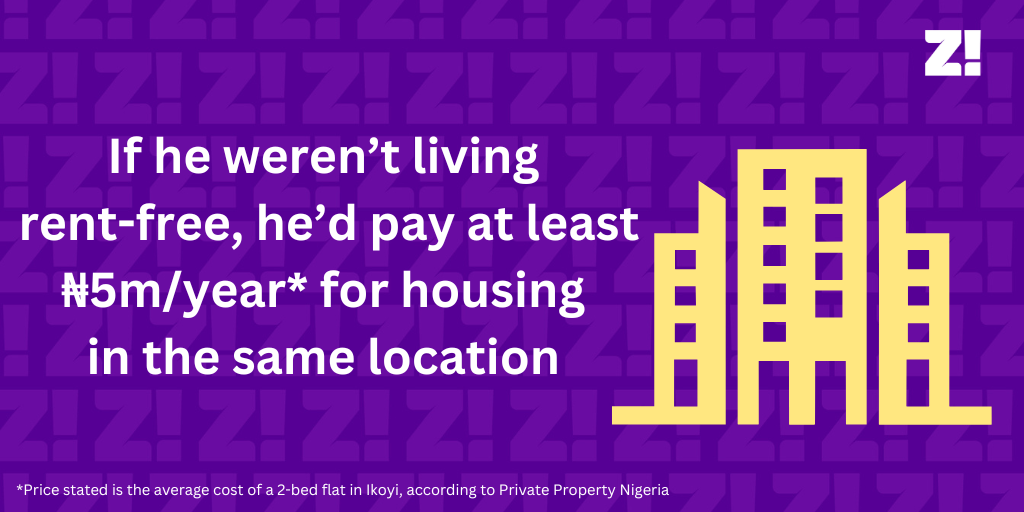
    What’s your current living situation? My family owns my house, so I don’t pay rent. Also, I live alone. My architecture work is fully remote, so I barely leave my house. I sometimes have to use ride-hailing services to supervise sites on the mainland and align with the builders and engineers to ensure they are working accurately.

    I’m not financially responsible for anyone. I get black tax, but it’s not consistent. I prefer to cook at home, but time is never on my side, so I order in mostly. As a result, my feeding expenses are usually on the high side. 

    Can you break down your typical monthly expenses? To be honest, I haven’t tried to track it before. But I know I spend about ₦200k on transport and ₦200k on feeding every month.

    I travel from Lagos to Abuja during festive periods twice a year, and a round trip costs close to ₦190k. I also subscribe to many entertainment platforms. I pay for Twitter, Netflix, Prime, Spotify, YouTube Music, Crunchyroll, and other entertainment platforms. I don’t keep tabs, but it should be over ₦100k/month. Internet data subscription also costs me ₦50k monthly.

    I don’t deliberately save or invest; I just keep whatever I have in my account. I don’t use any savings platform, but I have some crypto holdings.

    Do you feel financially comfortable? I’m financially comfortable, but if I can earn ₦20m monthly, I will be totally at ease.


    41-year-old male engineer living in Lekki

    Salary: ₦900k/month. 

    What’s your current living situation? I live in a rented ₦5m/year three-bedroom apartment with my wife and two kids. The only reason I live in such an expensive place is because of the proximity to my wife’s workplace. Plus, her annual bonus at work pays 60% of the rent, so the balance isn’t that crazy.

    Even though we’re a dual-income household, it still feels like we’re drowning in financial responsibilities. I have to pay a ₦2m/year service charge, handle school fees and whatever extra charges the school conjures up, and feeding. There’s still black tax because everyone thinks living in Lekki means I’m wealthy. 

    Can you break down your typical monthly expenses? I spend every single kobo of my salary every month, and it’s honestly not great. At least ₦400k goes to food, and another ₦100k goes to the live-in help and occasional dry cleaning. My car takes ₦56k for fuel every week, so that’s over ₦200k monthly. 

    Then, my parents, siblings and in-laws call for money occasionally, and I have to drop something. This doesn’t include the expenses my wife takes care of, like our children’s day-to-day expenses, medication, clothing, internet and other miscellaneous expenses. 

    I have no savings, but I have two plots of land, so that’s an investment.

    Do you feel financially comfortable? I don’t. I earn more than some of my friends, but I’m just one emergency away from abject poverty, and that’s concerning. I might feel comfortable if I earned ₦10m/month.

    The Bottomline

    While a salary plays a primary role in providing financial comfort, factors like location, household size and lifestyle are just as important.

    For single people living in more affordable areas of the Lagos mainland like Ikotun and Badagry, ₦150k – ₦300k can be a comfortable salary. For families, however, ₦500k – ₦900k might be more realistic for comfort, even more if they live in high-brow areas like Lekki.

    With inflation rising year-on-year, today’s comfortable salary may not be enough to afford the same quality of life next year. It’s essential to plan for continued financial comfort by exploring side hustles and passive income options, saving and investing for emergencies and income growth and generally taking financial management seriously. 


    ALSO READ: 5 Nigerians Open Up on How Relocation Has Shifted Their Financial Realities

    Join 1,000+ Nigerians, finance experts and industry leaders at The Naira Life Conference by Zikoko for a day of real, raw conversations about money and financial freedom. Click here to buy a ticket and secure your spot at the money event of the year, where you’ll get the practical tools to 10x your income, network with the biggest players in your industry, and level up in your career and business.

    [ad]

  • Every week, Zikoko seeks to understand how people move the Naira in and out of their lives. Some stories will be struggle-ish, others will be bougie. All the time, it’ll be revealing.


    Kwakol Markets is a global broker that lets you trade multi-asset financial markets with ease. They aim to provide transparent and innovative technology that gives you a simple, secure and superior experience. Start trading with Kwakol Markets today and create the future you deserve.


    What’s your earliest memory of money?

    My dad would bring bundles of cash home when I was around 7 or 8 years old. 

    He supplied construction materials to the military and got paid in bearer cheques. I’d find him removing money from brown envelopes and stashing them in his safe. My mum’s a nurse, so we were quite comfortable.

    How comfortable?

    My dad worked in the medical arm of the military, but we didn’t live in the barracks. We had our own place, and I attended an elite private secondary school. It wasn’t strange for students to bring ₦500 or ₦1k to school daily for lunch and end up unable to spend it all. My classmates even started a class savings bank of sorts where we all dropped money we weren’t using till whenever we wanted to take it out. I was one of the highest contributors.

    What did you spend your savings on?

    Random snacks and stuff. I even started a business selling stationery to my fellow students.

    What inspired you to start?

    My dad had a cool collection of ink calligraphy pens, and I regularly took them to school. My classmates loved them, and I started exchanging the pens for money.

    My parents soon noticed the missing pens and encouraged me to start a business with them, rather than selling my dad’s pens. My mum bought the first set of supplies: a dozen 20-leave notes, a dozen HB pencils, a couple of lucky racer biros and six ink pens.

    You were officially open for business

    I was well-liked in school, so many students patronised me. My mum helped me restock during the weekends, but after the first set of materials she paid for, I gave her money for the rest from the sales I made during the week. 

    My profits were almost double the cost of the materials, and I spent it mostly on snacks.

    The business only lasted two terms before the school management shut it down. They also got wind of the large sums in our savings bank and put a stop to that too.

    Na wa

    I didn’t try another business until I joined my department’s basketball team in uni. 

    Wait, let’s rewind. How did you start playing basketball?

    I usually followed my dad to the gym at the national stadium in 2013. He encouraged me to play basketball instead of sitting and waiting for him to finish his sessions. The admission fee to the basketball court was ₦500, and I played and discovered I liked it. 

    My senior secondary school didn’t have a basketball program, so even though I was in SS 1 at the time, I went to play in the JSS 3 program of my old school. I did a few competitions with them for the one year I played with them — I stopped when I moved to SS 2.

    But I missed competitive basketball. Fast forward to 2016 when I got into uni, the basketball community was the first thing I sought out. However, they didn’t let first-year students join the school’s team, so I couldn’t join until I moved from the main campus to the medical campus for my second year in medical radiography.

    How did the business come in?

    I schooled in the East, and we didn’t have access to basketball essentials like compression pants, shooting sleeves, and good basketballs. I decided to use my “living in Lagos” advantage, so whenever I went home on holiday, I’d purchase the materials with my pocket money (monthly allowance from my parents) and resell them in school. 

    I made a ton of profit, too. I could sell something I got for ₦1k at ₦4k or ₦3,500. I did that for almost two years while also playing competitive basketball. We typically played in school and inter-school events and won a couple of games too.

    Did you ever get paid for winning games?

    Never. We were even the ones spending our money. We got our own kits, painted the court and constructed our own hoops. There was someone from school management who was supposed to be in charge of those things, but this is Nigeria.

    I stopped the business and active basketball after a freak injury in my third year. I slipped on spirogyra while walking out of my room and dislocated my ankle. I initially thought it was a minor injury and even played a couple more games. But when I started feeling throbbing pain in my leg, I decided to quit the game. I limped for a long time after that.

    So sorry about that

    Thank you. After dropping basketball, I started exploring other options to make money. One day, someone asked if I could crack Photoshop. I’d been something of a computer whiz since secondary school, thanks to the comprehensive practical lessons my school provided. I even became a certified network professional with Cisco in 2016.

    So, I said yes to the Photoshop cracking request, and they offered me ₦5k. I was shocked because I was going to do it for free. That’s when I realised I could make money with tech. 

    Soon enough, word got around, and other students on our campus knew me as the guy to see if you needed help with your computer. It wasn’t very consistent, but I made the odd ₦5k to ₦10k fairly regularly. However, it wasn’t until my final year that my finances boomed.

    What happened?

    In 2019, my mum helped me land an academic writing gig with a friend of hers who was studying for a master’s degree in the US. She was also working and couldn’t keep up with the assignments and weekly projects. I got paid $10 – $15 per project. Then she introduced me to some fellow students to write for them as well, and I started earning $50 – $80 weekly.

    Mad

    I became confident in my writing skills. I mean, I was doing postgraduate-level work for international students as an undergraduate. So, I started actively searching for academic writing gigs. It paid off because I got clients from the UK and even started contracting out gigs to my friends and took a 50% cut of whatever we got paid.

    I was still interested in tech, so on the side, I was also coding and designing websites as practice projects during a free three-month product design training/internship with a Fintech company.

    During this time, I did about four freelance design gigs that paid an average of $150 each. There was still the monthly allowance I got from home — usually ₦50k.

    To put it simply, you were balling

    I was basically spending the money I made on food and enjoyment. I ventured into crypto trading too, but it didn’t end well. I bought $45 worth of Dogecoin in 2021, and it fell crazily. I think I eventually sold it for $5.

    I also spent about $1k trading Bitcoin, Ethereum, ADA, and a few other coins, but I didn’t make any profit before I got tired of the whole thing. 

    The following year, I landed a product design job for a US company.

    Tell me about it

    I should mention that if it were up to my parents, I’d be a practising radiographer now. My family is very medically inclined, but I was never interested in it. I just did the course for them. 

    After graduation, I was expected to go on a one-year internship even before NYSC. But I told my parents to give me three months to do product design, and if nothing came out of it, I’d focus on medical radiography.

    One day before the three months elapsed, my current employer announced some app updates on Twitter. I looked through their website and noticed a few problems, so I mentioned this to him in the thread. He reached out to me via DM and acknowledged that the data from their software backed up my analysis and wondered how I detected the issues so quickly. He asked if I had more insights, and I responded that I wouldn’t do that for free.

    Next thing, he asked for my rates and portfolio, promising to send a contract across. This was around 12 a.m. I thought, “Is this one whining me? Who sends a contract without an interview?” 

    A few days later, I signed a 1099 contract for $5k/month.

    Wow. How did that feel?

    I kept thinking, “This thing can’t be this easy now,” until I got a cheque at month’s end for $3k as I didn’t work a complete month. The money was paid to my cousin’s US account because it was a hassle getting paid in Nigeria, and I was constantly asking her to check the money in her account to confirm it was real.

    LOL

    On July 25, 2022, I got ₦1.5m — the naira equivalent — in my account, and I started shouting, “I’m a millionaire!” I can’t forget that day.

    I immediately sent my dad ₦300k and took my family out for a treat the next day. Over the next couple of weeks, I bought some tech gadgets. I got a new laptop for ₦600k, an iPhone 12 pro max for ₦600k, and a Series 7 Apple watch for about ₦200k. 

    [ad][/ad]

    What’s working for a US-based company like?

    The different time zones mean I work between 8 p.m. to 6 a.m. They also pay by the hour, so when broken down, my pay is around $30/hour. I didn’t always make the full $5k; it was usually $4k. 

    However, I got promoted to design lead about six months later in January 2023 and took on more responsibilities, so I max out my hours and get the full $5k now. That’s about ₦3.5m/month, and it sometimes gets higher depending on the exchange rate.

    How has this impacted your relationship with money?

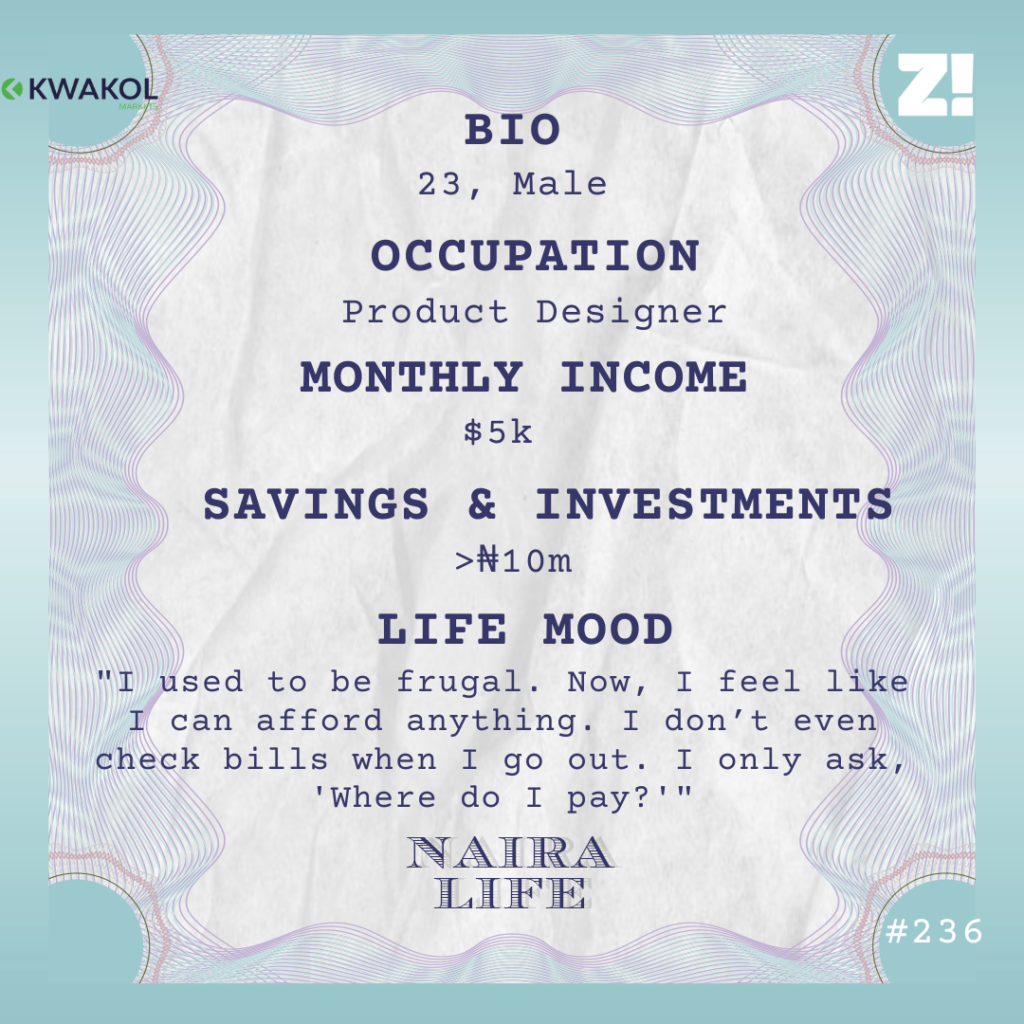
    My relationship with money has gotten very bad. I used to be a very frugal person — remember how I used to save in school? But now, the money just goes as it comes. I think this is what they call lifestyle inflation. I now feel like I can afford anything. I don’t even check bills when I go out. I only ask, “Where do I pay?”

    It’s made me a bit out of touch about how much money is worth because if I hear someone complaining about needing money, it’s like, “Is it because of this amount you’re complaining like this?”

    Last month, I visited a high-end restaurant with my cousin and just went straight to ordering. My cousin looked at me and said, “Are you seeing the prices of these things?” I wasn’t. 

    Looking back, I realise I probably spend someone’s monthly salary on food regularly, and I ask myself how I got here. With what I earn, I should have a few tens of millions in investments, but I don’t. 

    Do you have any investments at all?

    Since the whole crypto brouhaha, I’ve tried to make safer investment choices. I currently have about $1k worth of Apple, Microsoft and Tesla stocks. I’m no longer trading crypto, but I’m currently holding about $6k in Bitcoin. Then there’s about ₦5m in a Nigerian account.

    Can you break down your monthly expenses?

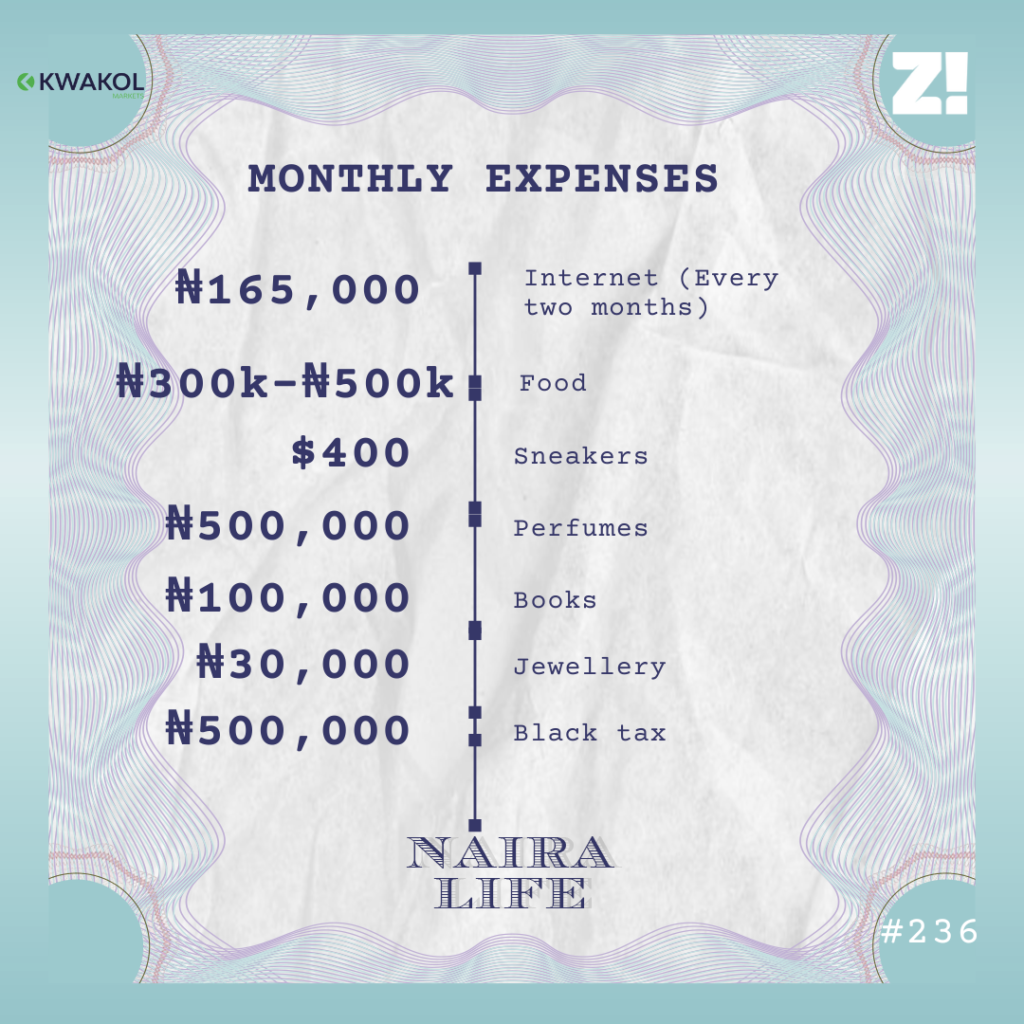
    I spend so much on food because I eat out every day except Sunday, and sometimes I buy food for my youngest sister or my mum. 

    I live with my parents, so I don’t pay rent. My family knows how much I earn, which explains the black tax. Just a week ago, I gave my youngest sister ₦250k for her secondary school graduation. There’s also the odd flight ticket request, money for phone repairs, or school expenses for my younger sister who’s in university. I also collect things a lot; my recent obsession is perfume. 

    How are you thinking about long-term career plans?

    Well, I have two companies, so I plan to be even more into tech.

    That came out of nowhere

    I hardly remember them because I don’t handle the day-to-day activities. The first one is an outsourcing company for tech talents in Africa. I started it with my best friend when I just got my job — my boss was always asking me to refer tech talents. That’s how the idea to match African talents to companies looking for cost-friendly alternatives to Silicon Valley guys came about. A week after launching, we got paid $5k to analyse data. It was more like an in-house contract, but it was still talent sourcing as we had to find and pay a team of data analysts to get the job done.

    The second company is my private design studio which I started in the third quarter of 2022. Design requests go straight to my work email, and I take on contract projects from time to time if I feel it’ll be beneficial to my portfolio. If not, I refer someone else for it.

    How do the companies run?

    We acquire clients for the talent outsourcing company via cold emailing and running targeted ads on social media. Right now, everything is on hold till next month because we’re in the process of setting up properly and revamping our operations. 

    How much do you think you should be earning, with your skill level and businesses?

    $10k – $12k/monthly.

    Is there something you want but can’t afford right now?

    I want to visit the UK, France and Spain, but with the current state of the economy, I can go and return to an empty account. Hopefully, it happens before the end of the year.

    How would you rate your financial happiness?

    In terms of financial liquidity, it’s definitely a 10. There’s really nothing I need that I can’t buy, maybe except a private jet. 

    But if you mean my relationship with money, it’s a 5. I feel like there are some things I should have that I don’t. 

    I recently had to pause my plan to purchase some plots of land in Lagos and Anambra at about ₦20m because I couldn’t afford it. But if I calculate what I’ve spent on frivolous items over the last six or seven months, it’ll very likely be more than ₦20m. I’m not happy with my financial decisions so far, and I know I can do better.


    If you’re interested in talking about your Naira Life story, this is a good place to start.

    Find all the past Naira Life stories here.