• Before gaining global recognition, M.anifest — born Kwame Ametepee Tsikata — had already cemented his name in African hip-hop. When The Guardian named him Africa’s foremost rapper in 2015, it felt like the mainstream was finally catching up to what many had long known. By 2016, he released Nowhere Cool, a critically acclaimed concept album that resonated deeply with West African youth, including me, inspiring many to find and amplify their voices — whether conventional or unorthodox.

    A decade and three albums later, success may come easier, but M.anifest’s music remains grounded, vintage, and deeply connected to the grassroots. His sound keeps you present, forcing reflection on both self and society. His latest project, NEW ROAD AND GUAVA TREES, released under hip-hop icon Nas’ Mass Appeal Records, is no exception.

    At a time when hip-hop’s tides have shifted — where rappers often chase commercial success by recreating pop hits — M.anifest stands firm in his artistry. The 42-year-old is carving his own path, determined to be a powerful alternative voice that brings rich, relatable African narratives to the heart of global rap storytelling.

    With this new album, M.anifest tells me he’s in his “world domination” era — something he speaks about with both excitement and conviction. 

    In our conversation, we dive deep into themes of urgency, creative agency, his inspirations, the evolution of African hip-hop, and what it means to be an alternative voice in the mainstream.

    What is the story behind the first track, “TIME CATCH”?

    “TIME CATCH” is about seizing the moment. The idea is that time is ever present for us; it’s time to make a thing. For me, who’s been doing what I’ve been doing for a long time, I think I felt that sense of urgency in terms of being on a very steady trajectory and being able to make contributions, but I felt like there’s a maturation.

    It’s almost like you’re making Akpeteshie, a method where palm wine ferments, and there’s a maturation process for it to become the hard liquor. That’s where I feel like I am now. I have gained all this experience, musicality and all. It’s time to have a global reach because I have everything it takes.

    But yeah, there’s this kind of urgency in which our lives revolve around because the future is being shaped and the way that our countries are mismanaged. Individuals always wake up with that sense of urgency. You’re going against the grain. You might have park problems, transportation problems, and a shortage of red tape bureaucracy. So, I think that’s why it was necessary to begin that with “Fire on this mountain,” even though it’s a personal feeling.

    In the same song, after you sing “Fire on the mountain,” you continue with “Flames so exciting.” Why?

    “Flames so exciting” because there’s excitement, and I don’t mean that negatively. There’s an excitement that comes with that urgency and you just have to embrace it and find a way.

    The second song on the album, “EYE RED,” describes anger and frustration. Are you speaking for the people?

    There are two stories behind it. There’s the sonic story of it, which is where it began. One of my producers, MikeMillzOn‘Em, and I were creating the song from scratch, and I asked him to look for a couple of percussion loops. So, he went through his sound bank and mistakenly clicked on something with the horns. I said, “Wait. What the fuck is that? Yo, guy, just mark that.” I wanted it to be innovative, and that’s how it feels, with a different kind of bass and elements that just pronounce the feeling of an anthem for the desperate voices and the desperate feelings to overcome.

    My state of mind when we made the song had that urgency. It’s why the song is relatable and feels immediate. It’s a song we can make twenty times over regarding these feelings of anger and frustration. When we make music like this, it must feel like it needs to move people. So, it had to have that pulsating feeling. It’s not supposed to be a dirge or lullaby — it should be something the people can rally behind. 

    When I make albums, I always say that there’s a song that’s like decorating a place. It’s like interior decoration. If you’re going to decorate a living room, you need a centerpiece, right? It might be a couch, a table, or something that informs how you set up everything. “EYE RED” is the one for this album. Immediately, I made it, I knew where everything else would go.

    NEW ROAD AND GUAVA TREES artwork

    How do these feelings tie into the entire album and its title NEW ROAD AND GUAVA TREES?

    These are the feelings that most of us wake up with when we live on this side [of the world]. People are trying to make a life for themselves in places that seem to be working against them.

    The title is personal in terms of an individual memory. When I was younger, I lived in a place called New Road (in Ghana), but it’s metaphorical in terms of trying to take a new road and making a fruitful climb. My house had a guava tree, and I used to climb it quite a lot. It was one of my favourite trees because it was easy to climb and also had fruits. It was just a trigger point regarding the idea of a fruitful climb.

    Were you also intentional about the production? It’s avant-garde.

    The whole album was put together because I called my guy Budo. He used to be my main producer, but we hadn’t worked together for fourteen years. In that time, he’s done stuff for Doja Cat, Macklemore, and more. And then I’ve done my thing, too. We reconnected when I released my Medina to the Universe album in 2021.

    Sometime in the beginning of 2023, I was trying to make a new album. I discussed it with my manager and others, and it felt like the world drew me to Budo. So, I called him and told him that I felt an immense creative energy and I wanted to work on a project and ideas that’d be bigger. Making that connection and getting in sync with the ideas worked for this album and its production. We finished most of the album in three to four weeks in Seattle. We just corrected and refined some things over time.

    Get More Zikoko Goodness in Your Mail

    Subscribe to our newsletters and never miss any of the action

    This new album art weirdly connects me to your Nowhere Cool album art

    There’s a parallel there. It was uncanny. After NEW ROAD AND GUAVA TREES was done, I took a look and realised the kind of continuum it was then. However, we approached this artwork intending to just play into African reality. All our leaders are commissioner generals, and they’re always commissioning things. We felt taking on a character on the cover was important to embody that.

    It’s a bit of satire because we’re commissioning a new road on the cover. Regarding the album, I’m taking a new road and doing that with all earnestness.

    Does African literature impact the new album like Nowhere Cool?

    Not directly. But I remember when I was floating the album title to a few friends of mine, one comment was like, “This feels like a book title,” and I like that. I fed into that idea a bit in terms of just the aesthetic of everything. But I’m a person who’s definitely informed by the pantheon of the Chinua Achebes and the Ama Ata Aidoos. [whose Nowhere Cool novel inspired M.anifest’s Nowhere Cool album.]

    Speaking of books, what are you currently reading?

    I was supposed to finish The Message by Ta-Nehisi Coates. It’s an easy read. I started, but I got distracted. A friend of mine bought it for me, so I was checking it out. However, I need to get Nnedi Okorafor’s new book, Death of the Author. I’m travelling soon, so I’ll get it. That’s what I’m going to be reading.

    Anyway, the last thing I read was a re-read a few days ago. It’s a two-hour read about Anderson .Paak and the family he comes from. I will send it to you.

    Also, I recently realised that my new album and one of my favourite books ever, The Fragrance of Guava (by Gabriel García Márquez), have similar titles.

    What impact do you hope  NEW ROAD AND GUAVA TREES makes?

    I truly believe that the energy in which one creates and how one feels is infectious. I’m currently in a very effortless, intentional, and confident phase. And that energy is going to be contagious in terms of how the music is received. So, this is going to be a more global outlook in terms of reception. I’ll work hard to ensure that happens in terms of marketing, promotion, and other things. Also, Mass Appeal has been super helpful with the album push. That boosts my confidence about it.

    The Mass Appeal Records deal for this album is a huge one. Tell me about it

    Shout-out to Lanre Masha, the current director at Orchid Music. He put the play together and made the connection between Mass Appeal and myself.

    M.anifest and Nas

    As a non-conforming artist who isn’t following the mainstream’s rulebook, what would you do differently if you were new on the scene right now?

    That’s an excellent question, my brother, and I have such a long answer for you.

    I have a theory right now that we’re heading towards a place where the most successful section will be the one that makes the most meaningful music, which will also be jams.

    Please, expound

    Some of the things that people think we should create for escape, we already have it in us. When you’re going to make a jam, you want to be able to bop. So, nobody’s going to tell you to break a bop. It’s intuitive for us to a certain degree. We don’t even have to force that so much. But this kind of one-way mentality of everybody trying to be in the club, trying to pop champagne or whatever, is rubbish.

    Africans have been making jams to escape, but they can still say something. So, I think there has to be a fearlessness that I’d encourage anybody who’s super creative like there has to be a fearlessness. There has to be a “Fuck it” attitude to begin with.

    But then, there’s the other aspect that comes after you do it over and over and try to figure out your hacks. Back then, the hacks were like the chorus, the hook. Then, some people came, and they did whatever they wanted to do. In some eras, it was the beats. Now, it’s finding moments of ideas that stick. In this era of TikTok, hooks are not even worth anything much. Sometimes, it’s a different part of a song that catches on.

    I’m just saying there are hacks that everybody can find for themselves, and it might take ten years to hack. For some, it might be fifteen. But everybody wants it tomorrow. That’s the problem. Of course, people want to eat. I get that. But there has to be a way of figuring out hacks that are not always immediate. The majority of people are not going to have an overnight blow-up. Most people have a longer, steady trajectory of building a base, and then they can eat.

    What will you say African Hip-Hop needs to be a part of the global conversations?

    African Hip-Hop, like any other African music, will always need a level of innovation and identity to be seen in the world. Those two things—identity and innovation—together make things seen.

    Innovation is the thing that makes people say, “That’s incredible”, or as “What is that?” Identity is part of that innovation. But it’s also something that firstly makes the people who the music is from feel like this belongs to them to a certain degree. And when I say the people, I don’t even mean everybody. It can even be a small niche of people. It could be just skateboarders in Africa. I don’t mind. I think those two things are essential.

    If you notice, Hip-Hop is probably the most influential music on Afrobeats, even Amapiano. Many of the guys who make this music used to be rappers, but they found a musical identity with something. In that same fashion, if you’re a Hip-Hop artist from Africa, you should think about the cool and innovative you’re trying to do, the identity of the thing you’re trying to create, and how to craft it without it being contrived. We can’t let innovation be something that only those in other genres do by being inspired by Hip-Hop.


    ALSO READ: “I’m Not Worried About Legacy” — Vector on Being a Loverboy, Legacy, Spirituality, and his New Album

    [ad][/ad]

  • Ghana has always been popular for its thriving Hip-Hop and rap scene on the African continent. In 2020, the wave of drill music crashed on the Gold Coast, specifically Kumasi, and birthed a local sub-genre of rap music called “Asakaa” or Ghanaian Drill. It’s a blend of drill music and hiplife, characterised by red bandanas (an imitation of Los Angeles’ Blood gang), gang signs, streetwear, and the Indigenous elements of Kumasi.

    Drill music is a youth-driven culture. Much like street-pop music, drill dives deep, painting a vivid picture of street life and activities.

    Although many collectively refer to the music as “Asakaa”, the sub-genre shouldn’t be mistaken for the nine-man group and pioneer known as Asakaa Boys. “Asakaa”, coined by DJ and producer Rabby Jones, comes from the “Saka”, an informal pronunciation of “Kasa”, the Twi word for “talk.” Heavily influenced by the US culture and lifestyle, Asakaa Boys americanised their hometown Kumasi with a code name: Kumerica. It became a movement for these Kumasi drillers and inspired other famous Ghanaian artists like Black Sherif and Yaw Tog.

    Ghanaian drill music became viral with Asakaa Boys’ Akatafoc single in 2020, a year after the group made Big Flex, their first drill jam. Drill music soon became trendy across cities, and more young Ghanaian artists started to hop and dragon-glide on it.

    Four years after Asakaa, once considered underground, gained ground in Ghana, it has produced promising young music exports. It’s received global stars’ support from the UK’s Stormzy and Headie One. Ghanaian drill or Asakaa’s now also included in the popular genres in the new Grammys’ Best African Performance category introduced in 2023. So far in 2024, Asakaa playlists on Spotify have over two million streams and feature over 38 million user-created playlists.

    Just like the 234Drill movement is growing to be the next big thing in the Nigerian music scene, Asakaa is gaining momentum in Ghana. If you want to get familiar with it, here’s a highlight of drillers making waves in the Asakaa movement.

    reggie

    reggie, AKA Reggie Osei, introduced drill music to Asakaa Boys, the Kumerica group credited for pioneering Ghanaian drill. With four projects (“Straight Outta Kumerica 1-2”, “2 TIMES A GUY”, and “Most High”) to his name, reggie has built a reputation as one of the most consistent drillers on the scene.

    Black Sherif 

    Black Sherif went mainstream, singing about emotional pain on drill beats. “Of course, I fucked up / Who never fuck up, hands in the air” is arguably one of the most quoted lyrics in Nigeria and Ghana in 2022. Second Coming (original and remix) by Black Sherif buzzed so much that it won the Best Hip-Hop Song of the Year at the 2022 Vodafone Ghana Music Awards (VGMA). His successful “The Villain I Never Was” (2022) debut album is a bag of emotions and melodies— a proper introduction to Black Sherif’s music.

    Yaw Tog

    One of Ghana’s youngest music stars is Yaw Tog. Fame found him at age 17 in high school in 2020. Directly influenced by the Asakaa Boys, he became one of the Ghana drill’s torchbearers. Yaw Tog’s breakout single, Sore remix, features Kwesi Arthur and Stormzy. He’s witty, fierce, and unapologetically Ghanaian.

    Jay Bahd

    Jay Bahd’s strongest lyricism is street tales, youthful exuberance and new-found successes. If you dig that, add his music to your playlist. One of his recent singles, Hate, features African Hip-Hop legend Sarkodie. 

    O’Kenneth

    O’Kenneth was featured on Yaw Tog’s Sore and Kawabanga’s Akatofoc, the records which helped propel Ghanaian drill to prominence in 2022. Since then, he’s released four albums and put himself in conversation. Spotify recognises him as one of the top five most streamed Ghanaian drillers on its platform.

    Nigerian Drill Music Is Also Hot Right Now and These Are the 8 Drillers You Should Listen To 

  • Nina Simone once said, “It’s an artist’s duty to reflect the times,” so Nigeria deserves all the artistic scrutiny it gets. While there are uncountable songs about the many social issues that resonate with Nigerians at the moment, we highlighted the seven that are articulate about our collective sentiments on electricity issues.

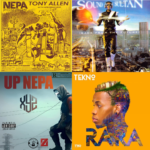
    NEPA — Tony Allen

    In 1985, the late Tony Allen released Never Expect Power Always (NEPA), and he just might’ve jinxed us for good with that title. The song was all about how useful electricity supply is to society and how its inconsistency affects people.

    Just Like That — Fela Kuti

    Fela trolled the government on “Just Like That”, a track off his 1986 Teacher Don’t Teach Me Nonsense album. “White man rule us for many years, we get electricity constantly. Our people come take over, dem come build Kainji Dam. Dem come build the dam finish. Electricity come stop.”

    N.E.P.A. Bring The Light — Neo

    N.E.P.A. Bring the Light is a 2007 pop-rock song by a Nigerian band called Neo. Listeners will croak at the part that goes, “I went to NEPA office, they told me they never took the light.” 

    2010 Light Up — Sound Sultan feat. M.I Abaga

    Sound Sultan sang, “When we ask our government o, when Dem go give us light, dem say na 2010,” over a decade ago. It’s 2024 and nothing has changed. We’re still asking when we’ll have stable electricity.

    Rara — Tekno

    In 2016, Tekno bemoaned how frustrating generator noises are on this danceable hit. He talked about fuel scarcity and encouraged government officials to invest in structural development. That was eight years ago. Nothing till now.

    Nepa — A-Q

    On “Nepa” off his 2020 God’s Engineering album, A-Q reminds us that Nigerian electricity always disappears anytime rain comes around. He compares NEPA to rappers that splurge on shiny jewellery but have no longevity. Another proof Nigeria’s messy situation is still bad enough to remain a relevant pop culture reference. 

    UP NEPA — XYZ

    When hip-hop music producer and rapper, XYZ, lamented about the light issues on UP NEPA in 2023, he told us ceiling fans don’t roll when there’s no light. But the call-and-response chorus is where all the fun is at — “When I say Up, you say NEPA / Up! Nepa!” NEPA, please, answer our desperate cries.


    Psst! Have you seen our Valentine Special yet? We brought back three couples – one now with kids, one now married and the last, still best friends – to share how their relationships have evolved in the last five years. Watch the second episode below:


  • The current burst of youthful energy in Nigerian Hip-Hop is thanks to drill music, a bubbling subgenre. +234 Drill, as Nigerian rappers call it, has enjoyed visibility and churned out great records this 2023. 

    In March, we introduced you to the Nigerian drill artists you should know about. To celebrate the end of year, we picked out 30 impressive drill tracks of 2023 and narrowed it down to 14 undisputed jams of the year. 

    Bump this:

    AGBALAGBI – OluwaMillar

    The intro to AGBALAGBI flows with joyous flutes that cue in a sample of a Baba Suwe classic, “Agbalagbi to ju agbalagba lo”. The chorus is catchy, but the verses are even more infectious. It doesn’t only tick the boxes of puns and punchy one-liners, it’s a showcase of superiority that distinguishes MC OluwaMillar from the crowd with spellbinding tongue-twisting rhymes and apt football references in mostly Yorùbá. You may be good, but Millar says he’s better. 

    AGBALAGBI artwork

    No Excuses — MOJO AF & EESKAY

    MOJO AF and EESKAY are skilled rappers and braggarts. On this upbeat drill record, EESKAY’s verse hammers on the years he’s spent in the game, consistently working hard to stay in the conversation. He passes the baton to MOJO AF, who drops self-appraisal bars, stoner quotables and money brags. These guys are always an exciting duo when they come together, and some rap listeners’ new favourites.

    Omo Yahoo — Norchkingz

    This song went viral on TikTok and exposed indigenous rapper, Norchkingz, to a broader audience. Omo Yahoo captures the youthful exuberance of the internet fraud lifestyle with uncouth bars. It sarcastically asks “ballers” from wretched homes if their parents know they’re squandering millions — a Nigerian reality.

    FLATLINE – Tomi Obanure & KVV (Kinfxlk)

    “If you’re not gang, why you throwing up gang signs?” Obanure and KVV of Kinfxlk take a swing at pseudo-gangsterism with the hook of this track. With the music video, they paint vivid imagery that’ll comfortably sit under horrorcore, an anthem bursting with the obtrusive energy of Olympic weightlifters. Their music may be niche, but it’s quickly gaining traction with Abuja at the forefront of Nigerian Hip-Hop — thanks to the meteoric rise of ANTIWORLD GANGSTAS and Psycho YP.

    Grealish — Runjozi

    Titled after Jack Grealish, a Manchester City football club player, this song talks about feasting on opps and beats like “Popeye’s spinach”, but its sweetest part is the thematic beat that protrudes over Jozi’s baritone vocals. A skilled rapper, music producer and sound engineer, Runjozi distinctly designs his sound around his flow, cadence and voice texture. Grealish is the third track on eight-man rap band, BAD INFLUENCE’s Under the Influence EP, and it’s an absolute sports car stereo tester.

    Apapa — Alpha Ojini

    The sapa tale on Alpha’s self-produced jam is more celebratory than sympathetic. Of course, he had to douse the heavy lines on finding beauty in the struggle with humour. Alpha has lofty dreams of owning shipping containers in Apapa, living his best life and compensating for all the times he was down. Don’t we all?

    Oloun — PayBac iBoro feat. Payper Corleone

    Oloun, the 12th track on PayBac’s latest album, West African Goat, had him diluting his passion and persistence with prayerful yearnings to succeed. PayBac iBoro has cemented himself as one of the most consistent and diverse Naija rappers. From boom bap trap and drill to soulful rap songs, Afropop and alternative music, he proves to be a trailblazer on the modern Nigerian rap scene.

    Hamilton — T.O.D SZN feat. Mo’Gunz

    Hamilton sparks with a tone sinister enough to wake night marauders. Although juiced up in metaphors and street slang, T.O.D SZN and Mo’Gunz paint a picture of explicit street violence and what it means to be territorial. Their charismatic back and forth is simply a rap lover’s delight.

    Jaiye or Not — D.S.6

    “Jaiye” is Yoruba for “enjoy”. This hard-hitting tune about only living once, in multilingual delivery, skippy drums and haunting melodies, has become the Nigerian driller’s template for a local resonating hit. In the current music climate, anthemic songs in four minutes are rare. Jaiye Or Not by D.S.6 (Droxx and Slimsyxx) is one of those rarities.

    Numero Uno — Mo’Gunz feat. President Zik

    In a rap world complicated by ego and one-man movements, Mo’Gunz stakes his claim as “number one”. He is insatiable about taking over the game, but he’s also open to healthy collaborations. Numero Uno is a brute, bouncy, sing-along rap jam.

    Darth Vader — Kaylu

    It’s a different feeling when you’ve been in the game for a while but you don’t get the accolades you think you deserve. Kaylu sees that the mainstream music game differs from his champion days in Unilag. Strapped up to ignite momentum on bigger stages, Darth Vader is his entry as one of Naija’s most powerful rap Jedi ever.

    OSHAMOR — Qeeb feat. Mo’Gunz

    Qeeb has been silent since 2021, but his latest EP, ROUGH & READY, released in October 2023, mirrors his go-getter mindset. He channelled this energy especially with Mo’Gunz on OSHAMOR (meaning “You know”). If head-knocking verses and an aggressive chorus about pushing through hurdles get you pumped, here you have it.

    Superman — Kene Himself feat. Droxx & Soto Eon

    Kene Himself’s baritone vocals erupt with the command of a sophisticated Igbo chief as he runs through this beat with a sharp verse about poise. Superman’s chorus is infectious and memorable. And Droxx’s and Soto Eon’s contribution took the song from a nice rap joint to a spirited one.

    Afghanistan — Rebelwav & Droxx

    Collaboration has been one of the most vital elements of drill music. It’s why Rebelwav and Droxx have been more visible in 2023. On this track, they liken their daily Nigerian experiences to harsh living in Afghanistan — a well-understood exaggeration. Afghanistan is the last track on their joint EP, Haram Pack, which dropped in November. 

    ALSO READ: Drill Music Is Hot Right Now and These Are the 8 Nigerians You Should Listen To 

  • After making fans wait eight years for his fifth studio album, releasing and changing his tracklist three times, Reminisce finally released it to the public on October 27, 2023.

    Many Nigerian OGs are tiring out, and their new albums barely give the value of their previous work. But not Reminisce, who’s been in the game since 2003. He returns with Alaye Toh Se Gogo, his first body of work since El-Hadj in 2016, and it’s worth the wait. 

    On first listen, there’s no ascertaining what direction he’ll attack in, even though a general idea of his brand pops in one’s head — clever one-liners and lamba, charging quotables and daring subliminals at foes, sexcapade and high-libido anthems, with some romantic cuts, of course.

    He’s been in the limelight for eleven consecutive years since 2012, remaining highly rated and critically acclaimed through it all — “do am if e easy,” Reminisce dares naysayers on the opening of this new album.

    Alaye Toh Se Gogo is a street laurel that loosely translates to “certified boss” or simply “top boy,” but the type that Dushane in the grimy British TV show Top Boy would aspire to become. It’s a different beast when a veteran steps out, especially after hibernating for almost a decade.

    The first track, Eyes, is a look-back at the uneasy come-ups he achieved against odds. He shares how if music hadn’t paid off for him, an unclean route would’ve likely made a way. This is a story that finds resonance with many individuals around the world.

    Mayorkun’s support in chorus duty makes it the perfect album opener — a good combo of rap and singing — as Reminisce fires two shells of boastful yet introspective verses. He had to remind listeners and the competition that he gets sharper with age. He already proved he’s among the meanest rappers in the country.

    Awon Aye follows. In Reminisce’s singing bag, another ammo spawned, shot at animosity and jealousy. He cleverly interpolates Pasuma’s Ligali into the hook, giving a local tongue-lashing vibe to it. This song is potent enough to give supposed detractors a wobbly walk when they pass by.

    Since Omo X 100 dropped in 2021, Olamide only sings the chorus on their music collaborations, the heavy rap-lifting left to Reminisce. However, on their latest, Orin, the third track on ATSG Vol. 1, they relayed their silent battles and unexpressed emotions, which they compensate with a rewarding bank account and baller lifestyle. They talk about how hard it is for men to bottle up their feelings and keep rising to the occasion. Though soul-lifting, this track is a classic case of men drowning in hustle as a suppressant or escape from vulnerability and life’s drama.

    If you’re familiar with Reminisce’s catalogue, all the man wants is his money and more money. This is the theme of Hustle featuring Bnxn and D Smoke. Alaga recounts his struggles to succeed and the vim to push his hustle and never stop.

    Well, what’s a Nigerian to do?

    The next track plays, and with it comes a realisation that Reminisce’s rap cuts are getting shorter with each song. In just a minute and approximately thirty seconds, Reminisce went full rapper mode on Recycle, just flexing his lyricism. It’s unsatisfying, but there’s more rap on the next track, E.N.K.R. The album version of the previously released song includes Ycee and artist-producer, Rhookcastle, who had the most outstanding performance on it.

    Reminisce gets on his “sex symbol” assignment with innuendos at the core of his music on this album. On Shina Peters with Mohbad, he paints a picture of his sexual affairs — straight to the “ta-ta-ta” playlist.

    Although Rotate brings out your waistline and legwork, it ends before four steps are made. Another display of Reminisce’s versatility, he effortlessly sings fuji with a new-age delivery that maintains its tempo and modulation, making street-pop his domain. Olu Maintain, the next track, showed him in his fresh pocket; a drill jam alongside youngins Dremo Drizzy, OdumoduBlvck and Powpezzy.

    Oxlade’s falsetto cued in Why?, a romantic song in which Reminisce remained uncouth. The longing expressed on the song segued into Mora, a folklore performance — one of the best songs on the album — quite similar to his 2017 hit, Ponmile.

    Although a filler Reminisce insisted on keeping on the album despite his team’s stance, Tight featuring Kayode, is a chilled braggadocious song about making money and having fun. It also speaks to Reminisce’s dedication to propelling young talents to a wider audience. Kayode, Powpeezy and even OdumoduBlvck, who recorded his verse for Reminisce before his breakout song, Declan Rice, dropped earlier in the year. On the Zero Conditions podcast, Reminisce mentioned how he’d rather do this than tweet about his support for the “young cats”.

    The album ended with an acoustic rendition of Mora, the perfect street song to express love that doesn’t want to end.

    Alaye Toh Se Gogo is a solid body of work away from his previous works and successful formula. It offers cohesive production and stellar performance at the age of 42. Age is just a figure in hip-hop. Legends in their 40s and 50s, like Show Dem Camp, M.I Abaga, Nas, Wu-Tang, still make music, cancelling the old “too old to rap” narrative. Fact is, if you got it, you got it.

    Reminisce got it. 

    Alaye Toh Se Gogo is the new honour the street has bestowed on him. This title encapsulates his evolution as an artist, solidifying his superstardom and street legend.


    It’s three days to our meat festival in Lagos. Get your Burning Ram ticket ASAP.

  • 2023 is stacked with so many music releases that it’s easy to lose sight of  some tracks we’ve found remarkable in the year.

    In this list, we carefully curated twelve great songs that went under the radar when they were released.

    Show Me Something — WeTalkSound ft. PDSTRN, Kaey & Vader the Wildcard

    Aside from being Nigeria’s largest creative community and incubating talents, WeTalkSound, a.k.a. WTS, curates musical experiences and releases with its assembly of musicians. PDSTRN, a singer-rapper, takes the chorus of Show Me Something, and Kaey handles the first verse and hook. Vader, also a rapper, sings the second verse. If you’re looking for a groove your babe can whine to, or something you can ride to, press play on this.

    Tales By Moonlight — Oyedele

    If you weren’t a get-inside kid while growing up in the Southern West of Nigeria, you’ve likely heard the Yorùbá nursery rhymes that opened this record. Oyedele switched between singing and rapping and a sprinkle of call-and-response with ‘Tilewa, the featured artist, to examine relationship nuances.

    Tánwá — The Musical Being

    Only a few artists are still very active in the Nigerian folk music scene. The Musical Being strides in rich Yorùbá lyricism that shines together with his commanding vocals. Tánwá opens the titular EP and offers a message of hope that hangs between prayers and positive manifestations. The Musical Being joins the list of young musicians like Dotti the Deity and Mo’Believe, keeping the neo-folklore music alive.

    Alive — Jola Bello

    Though this song, Alive, can wash all over any listener who’s not reciprocated with the love they give out — Jola’s only trying to fire up the burning desire for intimacy. In what sounds like an assurance she can’t give, Jola sings, “Hop on me like a German / hop on me, hop on into freeway.” Alive is her second song produced by Kemena.

    Devotion — IDVH

    IDVH is a singer-songwriter, music producer and sound engineer who released a new EP, Xpress Music Vol. 1, in September. In Devotion, he’s having an honest conversation about his expectations from relationships. You have to wonder why he’s not staying single until he meets someone who genuinely likes him — instead of taking and giving half-baked romance. But his choice of song is so catchy that one runs back the tune and delves into his whole catalogue.

    Run Me Love — Shalom Dubas

    Guitar riffs are always consistent on Shalom’s songs. Run Me Love isn’t exempt. It’s a dreamy song about a love interest who is unsure of what they want.

    “Do you want to whine me or whine on me?” The rapper wants to be certain.

    Flashing Lights – Tekno

    For the first time in my life, I’m rinsing and repeating Tekno’s music, and it’s beyond my usual allure of party, clubbing and jams filled with lamba. Flashing Lights is the third song on his latest album, The More The Better. This song is simple yet gets listeners emotionally invested in it. Flashing Light was my go-to during my just-concluded talking stage that led nowhere. Though that has ended, Tekno’s song will be on a playlist I’ll share with a new person. It’s that sweet.

    Amma Hoe — Bizzonthetrack

    When we count Nigerian artists who feed their listeners every three market days, mainstream or underground, Bizzonthetrack stays in the top ten list.It’s hard to miss his sexually-liberating amapiano jam, Amma Hoe. True to his nature, Bizz refuses to confuse any lady about what he wants from them. Currently, he’s into the business of making legs vibrate, nothing deep and serious.

    Another Day, Another Naira — Kaey 

    As a Nigerian living in Nigeria, money preoccupies the mind before bed. When you wake up another morning, you’re screaming about money again. It’s even harder for a young creative person trying to make something because Nigeria is no country for dreamers. Another Day, Another Naira explores the hustle culture in Nigeria that prioritises money over everything else.

    For everyone caught up in the hustle and bustle and stuck in the rat race, Kaey fixed an anthem for us.

    Flying Corks — Brotha Pollock & Mxps Rellington ft. Ghaffar

    Taking a trip into Brotha Pollock’s grimy lo-fi production and Mxps Rellington’s novelist mind, you’ll find psychological depth and dramatic structure, strings and references of pop culture moments — weaved together to present vivid imagery of respects they deserve and keeping their Hip-Hop music undiluted.

    Mxps Rellington compares his grand moves to that of Dostoevsky. Name a more clever rapper.

    To You — Dwin, the Stoic ft. Ogranya

    When two brilliant singer-songwriters come together, a heart-bending magic is expected. Dwin, the Stoic and Ogranya wag their voices like a wand and deliver a heartbreak ballad about a love that shouldn’t crumble, hoping to spellbind their lovers to stay around with them. One can listen to To You and feel the waves of melancholy crashing down or the breeze of the beach blowing one’s colourful shirt. No matter what, the song will make you feel something.

    Unconditional — Mojeed x Czure

    Spellbound by his themes of immigration, Lagos nightlife, and chasing the bag, amongst other mundane things, Mojeed has put himself among the elite Nigerian rappers who can ghost us, and when he comes back, we’re there — listening. On his first 2023 drop, Unconditional, he opens up about his availability to a romantic relationship that’s not one-sided. The beauty of this record is the culmination of growth and maturity Mojeed has laid on Czure’s production.

    He smoothly delivers in Yorubanglish, a mixture of Yorùbá and American-accented English, that has become the signature style of Mojeed.

    He gave us Unconditional to hold body while he preps a mixtape, Monkeys, Men & Martians, and an untitled EP marked for this November.

    ICYMI, our Burning Ram Meat Festival is happening in Lagos on 11th November.

    Cop your ticket here asap.

  • We have English-speaking rappers people often mistake for “hardcore rappers”, and Ibile United — an umbrella term for local Yoruba rappers. Although some of them mix some pidgin here and there, they’re not the same as rappers who strictly rap in Pidgin. Also, these pidgin rappers don’t enjoy as much attention as their counterparts expressing through other tongues.

    This is a list of seven hard Hip-Hop artists who rap in Pidgin. You should be rinsing and repeating their work.

    Erigga

    Erigga, a.k.a. Paper Boi, is highly revered for spitting in Nigerian pidgin, telling relatable stories from the streets of Warri. When Erigga flows on soulful Hip-Hop beats and reflects on his life or talks about the ills of the music industry, he’s a different beast. Please start with the intro, Industry, and Death Bed on his Okorowanta album.

    DanDizzy

    DanDizzy,a Port-Harcourt-born artist, became famous for his impeccable freestyle ability. 

    Get a music box and play DanDizzy any instrumental, and he’s ready to go on and on. It’s interesting how he switches flows and makes bars out of anything in pure pidgin and PH slang. 

    His studio releases include Who Goes Der!, Denge Pose feat. BadBoyTimz and Yawa feat. Skales. DanDizzy sings, too, a lover at heart on Garni.

    ODC

    If soulful, Boombap and Lo-fi raps is your taste, ODC is the guy you turn to. His hard-knocking delivery and classic Hip-Hop samples, but the stories come from the gritty streets of Surulere. 

    ODC kicks knowledge, lifelines, hard punchlines, and puns that make you go “Ugh”. Yes, that’s how crazy he goes with the bars. He has The Illest series (three volumes) with South-African-based Nigerian producer MHP. They are a perfect pair because their styles are complimentary.

    Abstraktt

    If you see Abstraktt, you’ll think he’s never stepped foot on Lagos mainland or heard of Ikorodu. But when he drops his pidgin lamba, a big surprise hits you. Trap, drill, and afro-swing are his usual play stations.

    [ad][/ad] Bops like 2Fresh, Guyman, and Allow Me to Rap will convince you on the first listen due to their relatability and fun choruses. When you see Abstrakkt outside, hail him as one of the unique rappers out right now instead of confusing him for DJ Consequence — he remarked on No Wahala.

    Knowledge (of Ajebo Hustlers)

    Knowledge weaves words together in pidgin and Port-Harcourt dialects, handing you vivid imagery of his socio-political thoughts, relationship issues, and his raunchy side. He’s also comical, which makes his raps more digestible. Most of his verses are on songs and projects like Kpos Lifestyle Volume 1 and Bad Boy Etiquette with his fellow Ajebo Hustler, Piego.

    hyph!

    hyph! has a mystical personality; there’s no face to the brand. hyph! just drops the music. He spills his mind on moody beats that sound comforting, especially after a weary day. hyph! has three tapes to his name — Bicycle Lane, blue+black and [h.i.M] on which he showcases his production skills and tells stories of his unemployment, the 2020 lockdown, cash chasing and lost faith.

    His music is currently available on Soundcloud.

    Reeplay

    Straight out of Abuja, Reeplay has made a name for himself as one of the distinctive spitters in the federal capital’s music scene. Although he’s humourous, Reeplay raps in an aggressive way that amuses and keeps the listener engaged — every bar is either a claim or a brag or just a funny comparison of something. You want to hear what more he has to say. In songs like Comot for Sanko, Na Now, Not Sorry and Who Is Reeplay, he details his time in jail and the tough streets of the Buj.

    Yo, ICYMI, our Burning Ram Fest is coming soon.

  • Artistes are stepping up and sharing personal experiences about mental health, which is bringing the topic into the spotlight and inspiring others to open up too.

    June is men’s mental health month and though it may come as news to some men, we hope it becomes a normalised culture that won’t need reminder at its time. Here are a few deep-cut songs,with themes around mental health that men should listen to.

    Trigger Warning: there are mentions of suicide and suicidal thoughts. 

    Duade — Show Dem Camp ft. Cina Soul

    In 2019, SDC released its classic album, Clone Wars IV: These Buhari Times; an audio-documentary of the Nigerian political, cultural and mental ecosystem. The fourth track, Duade, (featuring Ghanaian singer-songwriter Cina Soul,) explores the topic of masculinity and depression. Tec opens the song with a message about how men in this part of the world don’t have an outlet to talk and often grow up thinking it’s wrong to express themselves emotionally or be vulnerable. 

    A Self Evaluation of Yxng Dxnzl — M.I Abaga ft. Niyola

    This song starts with a voice note of M.I’s mum telling him to always do the right things and not forget where he comes from. But all M.I wants to do is “drink, fuck, smoke, chill, party all day still,” with an admission that he’s been battling a deep depression and can be the worst guy sometimes.

    This song comes from his most vulnerable piece of art, Yxng Dxnzl (A Study on Self Evaluation). Across the ten-track album, listeners experience the rapper at his most human and honest form, tying mental health awareness with his personal journey, insecurities and short samples of his therapy sessions at the end of each song.

    Wetin We Gain — Victor AD

    Wetin We Gain was one of the biggest hits of 2018. Apart from its catchy chorus and relatability, different meanings (like quick wealth and internet scams) have been attached to the song, in opposition to its actual message; a cry to the heavens for a breakthrough. But it’s even deeper. The most memorable lines of the song expresses the daily fear of average Nigerian men, who feel pressure to be the breadwinners of their families.

    I’m A Mess — Omah Lay

    After his latest release, Boy Alone Deluxe, we can all agree Omah Lay is the current Nigerian poster boy for vulnerability and emotional travails. On I’m A Mess, he deeply expresses his broken heart, sadness, and finding escape in liquor. Baring age and gender, everyone can relate to this song due simplicity, both in production and lyricism.

    It’s Okay To Cry — Yinka Bernie ft. Joyce Olong

    Nigerian multidisciplinary artist Yinka Bernie accurately describes the feeling of being stuck; an experience that a lot people today can relate to, on Joyce Olong-assisted It’s Okay To Cry. Inspired by personal experiences which made Bernie doubt his music career; he soothes listeners with an encouraging message of hope and the acceptance of vulnerability: “It’s okay to cry, it’s okay to feel lost inside.” This song feels like reassurance in audio form.

    Submit your story here.

    Odeshi — Alpha Ojini ft. Ogranya

    Alpha Ojini’s Tears Are Salty For A Reason EP is filled with deep cuts tracks of vulnerability, but Odeshi explores masculinity and mental health profoundly. Ogranya lays a chorus that expresses bottling up tears and other emotions, and Alpha details struggling with mom’s demise and the ‘manly’ approach his tough dad gave him to deal with the long-time grief. All of this is coupled with the mental stress of surviving Nigeria and an ex serving him breakfast. Ogranya ends the song with “I go still commit” which translates to taking one’s own life; an expression of the last resort if the darkness doesn’t stop hovering over him. It’s a powerful record that reminds one why mental health is important and issues shouldn’t be bottled.

    A Song About Suicide (Mr. Babalawo Reprise) — PayBac iBoro

    Nigerian rapper PayBac iBoro has been a big advocate of mental health since he made an official entry into the Nigeria music industry in 2015. On his 2018 album, The Biggest Tree (his present to all depressed West African kids), is A Song About Suicide. PayBac expresses strong suicidal thoughts and his final wishes after he’s gone, over a dark fusion of Afrobeats, African percussion, trumpets sounds — all instruments you’d find at interments. Overall, the song is based on his fight to hold tightly to life and his beloved family and friends.

    Dance In The Rain — 2face Idibia

    This is one of 2Baba’s greatest recordings. A record that pushes a message of deep appreciation for life and enjoying it, taking every breath of air, being present in the moment and staying open to possibilities. In a period like this, this song is a good refresher and great reminder to chin up and stay positive.

    How Bad Could It Be — Burna Boy

    Off of Burna Boy’s 2022 album Love, Damini, this song opens with the voices of U.K singer Jorja Smith, Nigerian boxer Kamaru Usman, dropping statements about self-control; and making rational decisions during intense situations. Burna Boy glides on the guitar and laid-back beat that accompanies it, singing about the punctures of anxiety and dreadful feeling of searching for answers in the wrong places.

    take a break — Odunsi (The Engine)

    Odunsi talks about his mom’s constant complaints about his absence from home. But she needs to understand he’s been busy working hard to achieve success and make her proud. If he’s not making things happen for himself, who else will? These are some of the mentally-challenging situations inspired by his personal experience, the song encourages resting and recharging to avoid burnout.

  • It can’t be argued that some of the exceptional music talents of the Nigerian music scene are in the form of a duo. These artistes are either paired up by birth, friendship, partnership or alignment of dreams. 

    Here are some of the exceptional musical duos currently holding it down.

    Show Dem Camp

    Tec and Ghost have been incredibly consistent as one of the major frontiers of African Hip-Hop. For over a decade, they’ve been killing it with their series of Clone Wars and “Palmwine Music”. The former which caters to core Hip-Hop fans first came out in 2010, now in its fifth installment. “Palmwine Music” was introduced in 2017 and its fourth installment came out 2023. SDC, as they’re popularly known, is consistent in  providing a platform to new and young artistes via their music projects. In case you’re wondering which Nigerian rappers are currently touring North America, “It’s the Show Dem Camp, omo yes indeed.”

    The Cavemen.

    Made up of siblings Benjamin James, a drummer and Kingsley Okorie, a bassist; the Cavemen are  known for their fresh take of Highlife music. Their Headies-award winning debut album, “ROOTS” was released in 2020 and made fans out of many young Nigerians. The Cavemen’s sophomore album “Love and Highlife” came out in 2021. The album boasts of features from Made Kuti, Efuk Ubong, PC Lapez and Cobhams Asuquo.

    Umu Obiligbo

    Chukuemeka and Ifeanyuchukwu Obiligbo are also siblings making Highlife music. Their discography boasts of two recording albums and two EPs. Their traditional and cultural approach has gained them placements on Basketmouth’s “Yabasi” and Larry Gaaga’s “Rattlesnake” soundtrack albums. Umu Obiligbo toured the U.S this year, and concluded the European leg two months ago.

    ATTENTION: tomorrow, all the hottest babes are partying at HERtitude 2023. Have you bought your ticket?

    Ajebo Hustlers

    Straight out of Port Harcourt, singer Piego and rapper Knowledge, known for their strong street poetry and rap-highlife fusion, began their musical journey in 2015. Five years later, they got the mainstream’s attention with their “Barawo Remix” that featured Davido— the song which originally addressed the gruesome killing of the ALUU 4, became the unofficial anthem during the End SARS protest. Ajebo Hustlers released their full length debut titled “Kpos Lifestyle Vol. 1” in 2021, the same year they became the first artistes and musical duo in Apple Music’s “Up Next” programme.

    READ: We Don’t Rate You If You’re Not Listening to These 10 Female Artists

    Lost & Found

    Though rappers Boogey and PayBac iBoro have their solo careers, through their super rap group “Lost & Found,” they’ve given us some of the most memorable lyrical sparring moments ever. “Face-Off”, their debut, came out in 2016. Their latest offering is the critically acclaimed “Alternate Ending” released in 2019. Boogey hasn’t released new music in a while, PayBac keeps pushing the envelope with his latest, “West African Goat”.

    BOJ and Ajebutter22

    These guys have had each other as guest artistes on their songs multiple times, but the first time they put out joint music in 2018— their EP, “Make E No Cause Fight”, their chemistry was so evident. The second installment of the EP included rapper Falz as primary artiste.

    P-Square

    Legendary! That’s the word for them. More than two decades they’ve championed the Nigerian and African music scene; dropped serial hits, inspired kids to dance and toured around Africa. After their public, messy break-up in 2017, the twin brothers, Paul and Peter Okoye, took to solo careers; though not as  successful as their group career. After years of the feud, the brothers reunited in 2021. In the last 24 hours, news of their new album has been going around. We’re excited.

    The Grey Area

    Consists of singer-songwriters 3rty and Kid MARLEY. Although their solo careers are not taking back seats, they came together to become The Grey Area in 2015. They put out their self-titled joint album in 2018. With organic instruments, interesting perspective and strong storytelling, they’ve proved to be one of the best duos since Don Jazzy and D’Banj. In preparation for their next offering, they’ve started receiving beats.

    ALSO READ: The Real Reasons Why You Didn’t Listen To Nigerian Music Before 2010

  • We know most Naija slangs originate from our iconic Afrobeats music. But what you probably don’t remember is we have Nigerian rappers specifically to thank for the virality of common sayings, like “boys are not smiling”. 

    We were surprised by this discovery too. And there’s more.

    Sweet Boy

    After dropping his controversial This is Nigeria in 2018, Falz made an anthem that brought all men under one umbrella. As members of Sweet Boy Association, every Nigerian man could identify as male slay queens.

    Note: “Sweet boy” is not the direct opposite of “Yoruba demon”.

    Soft Work

    Two years before he became a soft boy, The Bahd Guy did the soft work that gave him his soft lifestyle. Off his 2016 Stories That Touch album, Soft Work was a hit that went on to become a phrase for “rich behaviour”.

    Soft like Tony

    In 2022, M.I Abaga released The Guy, his long-awaited fourth album and eleventh project. The biggest song off the album, it namedrops Tony Elumelu, and “Soft like Tony” has become the phrase of choice to show admiration for a wealthy businessman.

    Chop Life Crew

    Chop Life Crew is a musical collective that stormed into the mainstream in 2019 with the self-titled, viral single, Chop Life Crew, featuring Prettyboy D-O. “Chop Life Crew” isn’t just a cool name for a group of people who love enjoyment, it’s a lifestyle.

    Something Light

    Falz collaborated with another Nigerian rapper, YCee, to give stellar verses on one of the hottest songs of 2017. They go back and forth on the song, exploring Nigerian women’s wants and needs. “Something Light” is one of the popular sarcastic phrases Nigerian music has created.

    Bad Belle

    Late Nigerian comedian and actor Jagua, born James Afolabi Afolayan, had a popular sitcom on NTA that ran from the 70s to 80s. His series My Belle O, My Head O, mainly revolved around “neighbours” that waste their time being angry on unimportant things. Decades later, M.I a.k.a The Guy applied similar message and title in his 2014 single Bad Belle that featured popular OAP, Moti Cakes. The rap song dominated the airwaves and streets, and gave the phrase more popularity amongst younger generation.

    RECOMMENDED: These New Rappers Show Us That Rap in Nigeria Is Far From Dead

    OG B4 IG

    Notable Nigerian rapper and voice of the street, Reminisce, integrates the phrase “OG before IG” in this song to describe how legendary he’s been even before the advent of IG. The phrase has since become a salutation in the streets.

    KPK (Ko Por Ke)

    Rexxie and Mohbad did a serious thing with the record, KPK (Ko Por Ke), in 2021. Every line stuck, pulsating throughout that year. KPK and its mates, OPP and OPG, are posh acronyms of Yoruba words that mean “abundance.” 

    STOP: Sponsor your favourite hot babe to HERtitude 2023. Get the ticket here:

    Alaye Jor Jor Jor

    True Nigerian hip-hop fans were present at the peak of Vector tha Viper and M.I Abaga’s beef in 2019, when they attacked each other with diss tracks. But only one of them gave us a memorable phrase that’s become the Naija version of “Bitch, pleeease.” 

    Who U Epp

    Undoubtedly one of the biggest Nigerian songs of 2017, Olamide Baddo — popularly known for dropping street OTs — linked up with Wande Coal and Phyno to give us Who U Epp. The jam and iconic street slang encourage us to dismiss arrogance and “smelling” entitlement.

    Ekelebe Stunner

    OdumoduBlvck’s latest single, named after English footballer Declan Rice, has a relaxed vibe but is lyrically focused on overcoming enemies. And “Ekelebe Stunner”, a phrase from the song, is now slang for a dirty Nigerian Police slap.

    Omo x100

    Respected rappers, Reminisce and Olamide, came together again on the sensational Omo x100. Immediately it dropped, other rappers did covers and freestyles that pushed the song as the inspiration for a generic internet term that describes feelings of shock, admiration and disgust.

    Japa

    When Naira Marley released Japa in 2018, his style was still strange to listeners, but his sound was irresistible. Japa came out at a time travelling out of Nigeria in search of greener pastures. The desire to avoid a situation or leave Nigeria for a new dispensation is best expressed with “Japa.”

    Boys Are Not Smiling

    This is a classic statement that captures the hot anger and frustration of being Nigerian. It quickly became cool and gained public acceptance after Boys Are Not Smiling came out in 2011. It featured veteran rapper Terry tha Rapman, off Olamide’s debut album, Rapsodi.

    Mafo

    With Naira Marley on the verses and Young John handling the production, this 2019 banger made a huge impact on the Nigerian soundwaves and vocab. “Mafo” is a Yoruba word that means to “don’t be broken.” It was the Marlian president’s way of telling us not to fret in face of adversities. Even though you’re a Nigerian living in Nigeria, you’re stronger than your cross. Mafo.

    Article was updated on 17th May 2023.


    ALSO READ: Can’t Get These Slangs Out of Your Head? Blame These Artists