• In 1998, this 53-year-old retiree took charge of her financial freedom with small, consistent investments. Over the years, she strategically grew her assets and positioned herself for an early, comfortable retirement. 

    This is how she made it work in Nigeria. 

    As Told To Aisha Bello
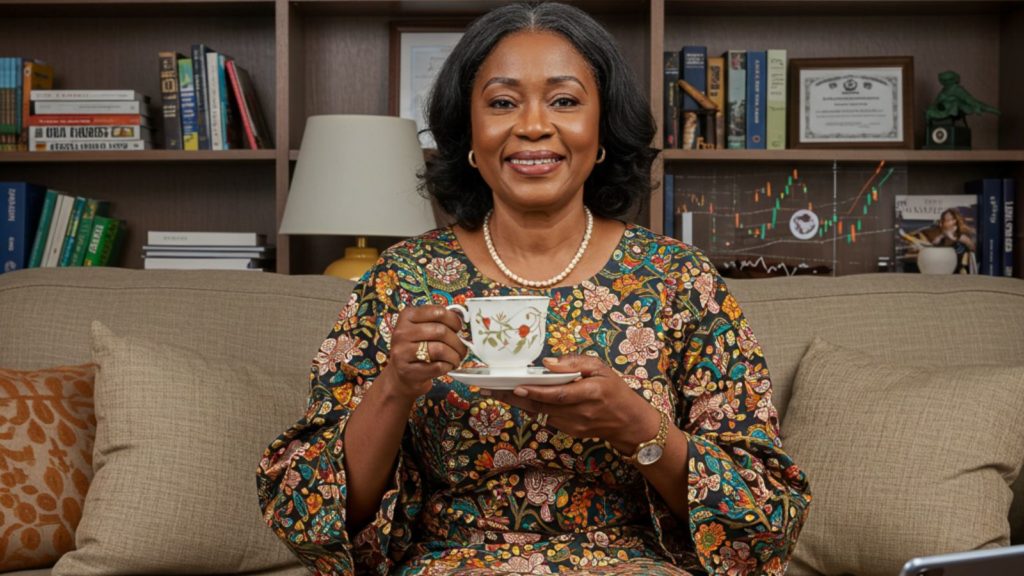
    Model not affiliated with the story. Actual subject is anonymous.

    I spent my entire career as an accountant in an insurance company, helping people plan for retirement. During my active years, I saw firsthand what happens when people don’t prepare early enough — the anxiety, the regrets, and the desperate attempts to stretch out insufficient pensions. 

    I was 26 when I received my first paycheck, and I never wanted that to be me.

    Also, I didn’t grow up rich. From a young age, I understood that if I wanted financial security when I was older, I had to build it myself. So, while most people were thinking about how to spend their salary, I was thinking about my retirement plans.

    That’s why, from my first paycheck, I made a non-negotiable rule: save and invest 40% of my income, no matter what.

    27 years later, I retired at 53 as a director, with a portfolio worth over ₦1 billion spread across real estate, stocks, bonds, forex, and fixed deposits. Over the next 20 years, I’ll also receive a monthly pension of ₦500,000.

    This didn’t happen by luck. It was the result of deliberate decisions, smart investments, and some hard lessons along the way.

    Breaking down my Retirement Portfolio

    Here’s what my assets look like today:

    Now, let’s talk about how I built each of these.


    Fixed Deposit: The early money move that made a difference (₦65M)

    In 1997, I started my career as an entry-level accountant, earning ₦16,000 per month. At this point, the Nigerian minimum wage was ₦450 before President Olusegun Obasanjo passed a new wage bill to give workers ₦5,500 in 2000. 

    At the time, I wasn’t investing; I was just saving aggressively. But everything changed when a friend at National Bank introduced me to fixed deposits. 

    That small decision laid the foundation for the rest of my financial journey. 

    My organisation had a unique payment structure: I received a portion of my salary monthly, while the rest was paid upfront at the beginning of the year. My basic salary (₦16,000) accounted for 60% of my total income (₦26,000 per month), while the remaining 40%, which covered housing and furniture allowances, was paid in bulk annually.

    In 1998, I decided to take a risk with my annual upfront salary, which was about ₦128,000. 

    Subsequently, I saved my annual upfronts in fixed deposits with the National Bank until the bank failed to meet the Central Bank of Nigeria’s capital requirement in 2002. The CBN took control, and three years later, the bank was acquired by Wema Bank. Afterwards, I made fixed deposits with different banks to grow my savings.

    Today, I no longer use banks for fixed deposits — except for VFD Microfinance Bank, where I’m a shareholder. Instead, I invest through asset management companies like Vetiva, FSDH and Anchoria because of their higher interest rates.

    For instance, GT Bank’s fixed deposit rate is 5.25% per year, and FSDH’s returns can be up to 10% per annum, depending on the investment amount.

    Right now, I have ₦65 million in fixed deposits and earn fixed interest annually.  

    Real Estate: My biggest asset class (₦500M)

    I’ve always believed that owning property is key to financial security in Nigeria. 

    In 2001, I bought my first property in Isolo, Lagos, for ₦7 million. When I sold it in 2008, its value had appreciated to ₦100 million, a 1328% increase. 

    In 2009, I bought a plot of land in Ajah for ₦3 million. Seven years later, I sold it for ₦45 million. The value skyrocketed because of rapid development in the area; new housing projects were being built, and the road network improved significantly, driving more people to rent homes there. 

    I currently own three properties in Lagos worth a combined ₦500 million and earn ₦10 million in rental income from each property annually. 

    FGN Bonds: My safety net (₦300M)

    I prioritise security, so Federal Government of Nigeria (FGN) bonds have always been part of my plan. And as an accountant, I’ve always known about them.

    FGN bonds are managed by the Debt Management Office (DMO), which allows the government to borrow money from citizens in exchange for interest payments. 

    Regular FGN bonds require a minimum of  ₦50 million, and these predominantly long-term investments range from three to fifty years.

    FGN Savings Bonds, which are short-term, offer a more accessible option. They have a minimum subscription of  ₦5,000 and a two- to three-year term. Once the bond matures, the principal is returned.

    With FGN Savings Bonds, I receive quarterly interest (coupon payments), while longer-term FGN bonds pay interest twice a year. At the beginning of every month, the government issues savings bonds for those who want to buy; the most recent interest rate was around 18%.

    My children also have FGN Savings Bonds, and they’re already earning passive income, with quarterly interest payments deposited into their accounts. Since they don’t need the funds, I reinvest their earnings to compound their wealth over time.

    To get FGN bonds, you need an agent. I have bought through GT Bank, FSDH, and Vetiva in the past, but I currently use Afrinvest. I reviewed their financials while working, so I knew it was safe to go through them.

    I hold both short- and long-term FGN bonds worth ₦300 million. 

    Foreign Exchange Investment: Beating inflation with hard currency  ($25,000)

    For foreign exchange investments, I use Zenith Bank and FSDH for fixed deposits and Vetiva for my Eurobond investments. This is different from online forex trading, where people actively buy and sell various currencies to make a profit. Forex trading is high-risk and requires active monitoring.
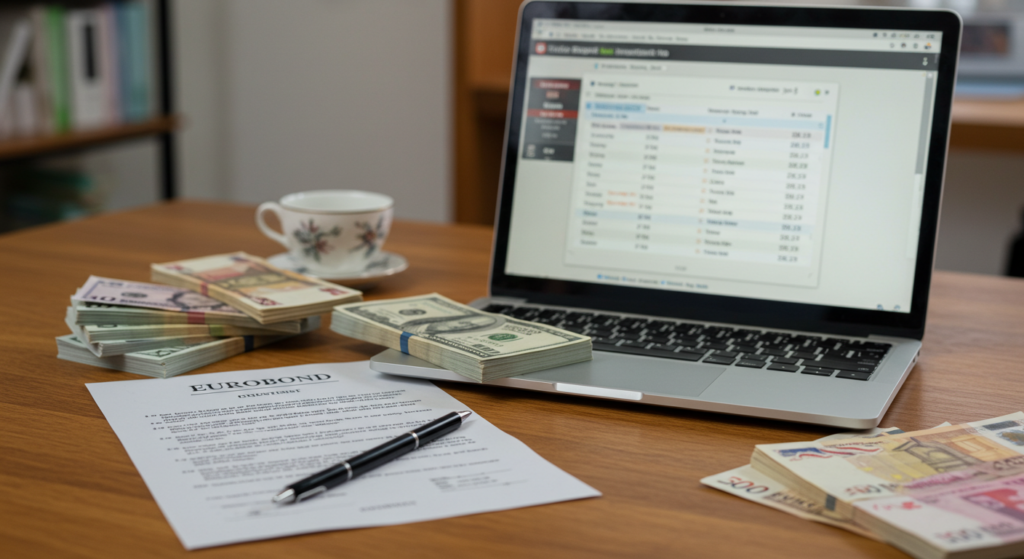
    I focus on foreign currency investments by depositing dollars in fixed-income instruments like Eurobonds and dollar-denominated fixed deposits. This protects my money from naira devaluation while earning a stable return.

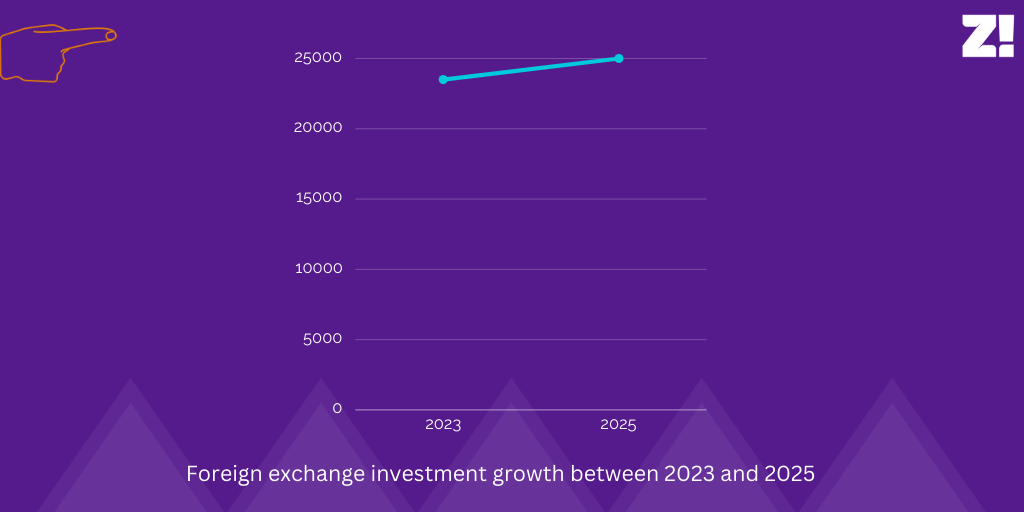
    I started investing in forex two years ago when the naira started losing value. My initial investment of $23,500 has since grown by 6%.
    Stocks: Slow and steady growth (₦22M)

    I invested heavily in stocks until the 2008 stock market crash changed everything. The market dropped by at least 70%, and people lost their lives over the financial ruin. At the time, I had invested ₦500,000 and later bought rights issues worth ₦4 million to increase my shares. Rights issues allow existing shareholders to buy more shares when a company wants to raise capital.

    The Nigerian stock market has only recently regained some stability. After the 2008 crash, I stopped actively investing in stocks, though I held the ones I already owned. I still receive annual dividends from solid companies like GTB, First Bank, Flour Mills, Nestlé, and Transcorp Hotels. At this point, I’ve already gotten my initial investment and continue to earn from them.

    The only new stock I’ve bought recently is VFD Microfinance because I trust the company’s growth potential. I initially invested ₦5 million, then bought their rights issue for ₦8 million. 

    Today, my stock portfolio is valued at ₦22 million.
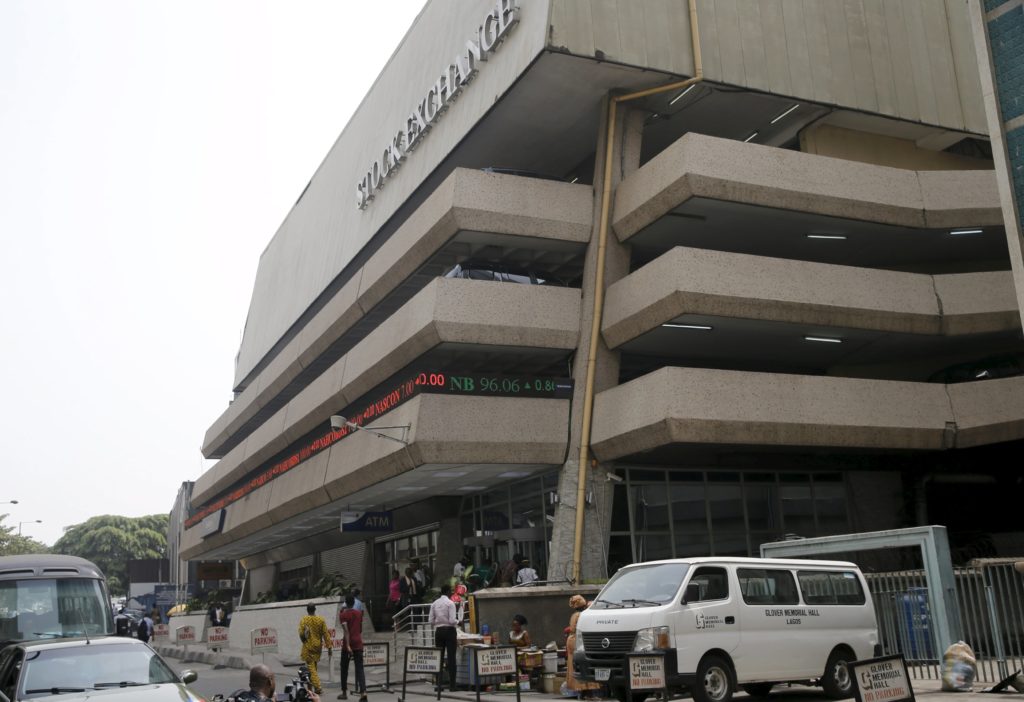
    Anyone interested in stocks can’t just walk into the Nigerian Stock Exchange (NGX) building on Lagos Island to buy shares; you need a licensed stockbroker. They handle buying and selling on your behalf. I used to use Meristem but now work with FSL Capital Limited.

    Pension: The passive income that gives me peace of mind (₦500K/Month)

    In 2004, the federal government introduced a new pension scheme that required me to contribute 8% and my employer 10% of my salary towards retirement. 

    I also had the option for voluntary pension contributions, which I locked into because it meant more pension income. Before this, we had a fixed system where every employee had to pay ₦4 monthly, while the employer added  ₦10. That didn’t do anything, but the new scheme meant my pension was directly proportional to what I earned in service.

    When it comes to pensions in Nigeria, you can either choose Programmed Withdrawal (PW) or  Annuity. With Programmed Withdrawal, you receive a set amount of money for a set period, say 10 or 20 years, after which the payments stop. 

    An annuity, on the other hand, is paid for life. When you opt for an annuity, your money is transferred to a life insurance company that administers income until you die. This type of pension is for life but can be transferable to living family members based on the specific terms of the contract.

    I opted for Programmed Withdrawal because, as an accountant, I prefer to have control over my finances. With an annuity, I’d need to transfer my entire balance to an insurance company and receive fixed payments for life. I don’t need any company to manage my money; I have the experience. With Programmed Withdrawal, my funds remain invested, and  I can still benefit from returns. 

    I now receive a monthly pension of ₦500,000 and will continue to receive that for the next twenty years. 

    In addition, I bought a personal pension plan from the insurance company where I worked. A year before retiring, I stopped the plan, took my money, and invested it in other assets.


    Investment Diversification: Not all eggs in one basket

    If a project requires funding, I liquidate some of my investments to finance it. Then, when I have more funds available, I’ll reinvest.

    But the rules are different with government bonds. If I invest in a two- or three-year bond,  I wait until maturity to access my funds. Although I can sell the bond, it’s not a liquid asset, and I won’t get my money back immediately.

    In contrast, fixed deposits with banks are more flexible. If I invest in a one-month fixed deposit, I can withdraw my funds at the end of the month or even before that if needed.

    I’ve had real estate projects that required funding, so I terminated some investments to finance them. Then, when I generated returns, I reinvested what I took out. 

    I believe in diversifying my investments, so I don’t put all my eggs in one basket. I mix fixed deposits, government savings bonds, real estate, and shares. I’m also into foreign exchange investments. If I decide to run a business now and invest some funds, that’s diversification.

    This way, I can rely on others for support if anything happens in one sector.

    My Two Cents on Investing For The Future 

    Economic challenges are constant – inflation, downturns, market volatility, and instability have always existed and won’t stop. Regardless of any economic downturn, you must plan and invest towards your retirement to ensure a secure financial future. My two cents:

    • Start early, no matter how small. 
    • The best time to start investing is with your first paycheck.
    • Prioritise investments over saving. Think of savings as money you can access anytime, but it doesn’t grow much. And investments as money locked for a period, earning higher interest.
    • When you save, your money sits in the bank, earning minimal interest, but when you invest, you put your money to work.
    • Don’t worry if the interest seems small at first; consistency is key.
    • Increase your investments as your income grows.
    • Aim to save at least 30% of your salary.
    • If 30% is too much, start lower and increase it gradually.

    Bottom Line

    Don’t be greedy about earning high interest rates. Explore low-risk investments, start investing early, be consistent, and aim to invest at least 30% of your income. 


    Editor’s note: This subject chose to keep her legal name and information confidential for privacy reasons, and Zikoko has verified her assets and earnings via income statements and necessary documentation.


    ALSO READ: I’m 22, and This Is How I Grew My Money by 29% in 2024

    [ad]
  • PS: She never saves in naira.

    Vol 16 | 06-02-2023

    Brought to you by

    Good morning! 🌞

    Today’s #NairaLife subject reminds me of myself, minus the $150k in savings, of course. It’s great to save for the future, but what happens when you don’t have enough money to live the life you want now? Come back and answer when you’ve read the story.

    On Love Currency, our subject may not have $150k, but she’s been saving since she was 10. Now, she’s saving more than half her salary and planning her relocation to the UK — which may or not be because of her boyfriend.

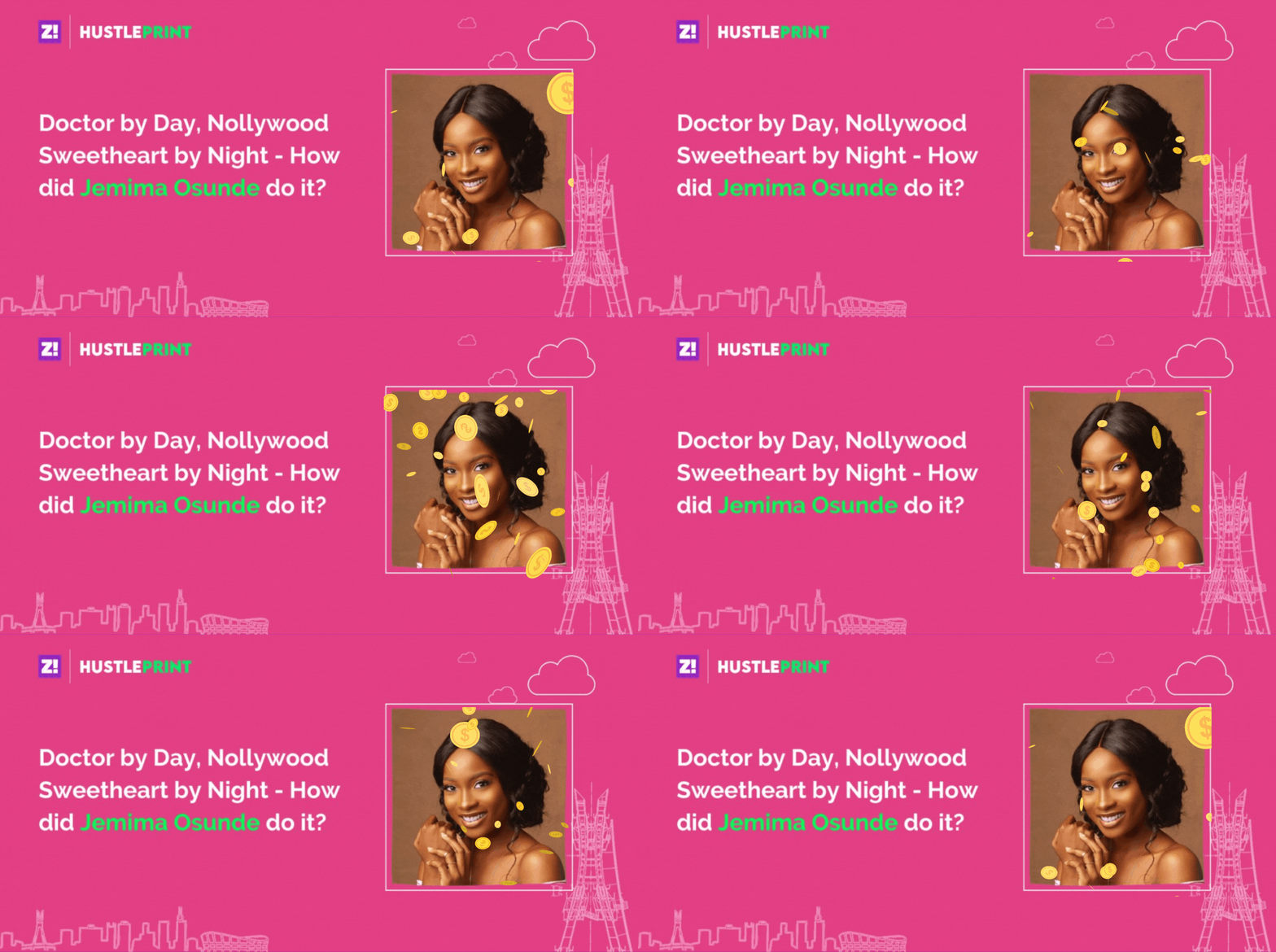
    Enough savings talk. What’s the craziest career pivot you’ve seen? For our first Hustleprint story, we got Jemima Osunde to tell us how she makes the most out of Physiotherapy and Nollywood.

    In this letter:

    • Last Month in Money
    • #NairaLife: She’s Saving For Her Future, and She’s at $150k
    • HustlePrint: Doctor by Day, Nollywood Sweetheart by Night, How She Do Am?
    • #LoveCurrency: Dating in Port Harcourt on a ₦249k Lab Scientist Salary
    • Money Meanings: “Savings”
    • Game: #HowMuchLast
    • Where The Money At?!

    Last Month
    In Money


    ₦48,809,521,349.60
    That’s what £88 million looks like in naira, and it’s what Chelsea paid to Shakhtar Donetsk for Mykhailo Mudryk’s controversial signing. Controversial because Arsenal also had eyes for the winger, but as they say, money answereth all things.

    ₦30,000,000
    That’s the amount of new naira notes the Central Bank of Nigeria (CBN) in Bauchi claims to allocate daily to all banks in the state. Does anyone know how much is allocated daily to other states? Because the long queues for cash don’t seem to be letting up.
    Four days to go
    CBN’s deadline extension for depositing old naira notes ends on February 10th 2023. Do you think it’ll also mean an end to the current new-naira-notes scarcity?

    She’s Saving For Her Future, and She’s at $150k

    The 28-year-old lawyer on this #NairaLife has over $150k in savings but put her financial happiness at 5/10. Why? Because the money is for her future, and she needs money for now.

    Honestly, I see her point.

    Read her story here

    What Do You Want to Do Today?

    I want reliable information to make business and lifestyle decisions to live a Sparkling Life. I want to bank with Sparkle, because it’s digitally simple ✨

    This is partner content.

    Download the Sparkle App Today!

    Doctor by Day, Nollywood Sweetheart by Night, How She Do Am?

    “My self-given nickname is “one true self”. I’m an acting physiotherapist, doctor-actress, health worker-entertainer, whatever version people prefer. I’m one person living the best of both worlds, that’s what makes me who I am.”


    Read Jemima’s story here

    Dating in Port Harcourt on a ₦249k Lab Scientist Salary

    Peace* is working two jobs, saving more than half her salary and planning her relocation to the UK. In this story, she talks about saving since she was 10, getting back together with her ex after a year and her father’s disapproval of marrying at a young age.

    An excerpt: “I used to keep some part of whatever money I was gifted in a pink purse she gave me. Even though I kept the purse in her room, I remember sneaking out random ₦200s and ₦300s to give my uncle who lived with us then. He promised to buy me a car when I was in university.”

    Read the full article here

    Money Meanings

    Game: #HowMuchLast

    #HowMuchLast is a game where we show you an item and you tell us (and the world) the highest amount you’d pay for it.

    Some weeks will be Okin biscuit, some others will be SUVs.

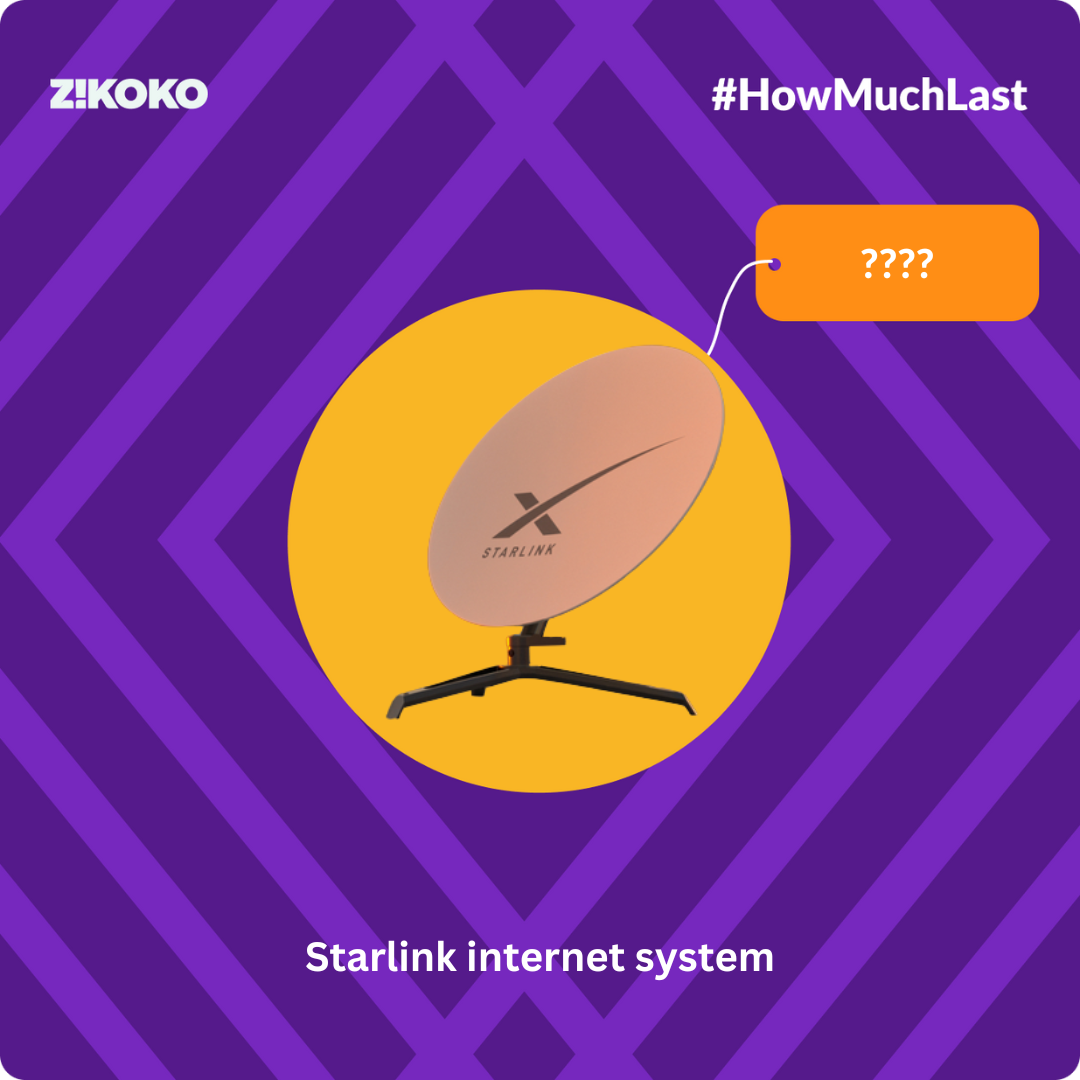
    Today, let’s see how much you’d be willing to pay for high-speed internet. #HowMuchLast for the Starlink internet system?

    What’s the most you’d pay? Tweet at us here.

    Where The Money At?!

    We can’t say we’re about the money and not actually help you find the money.

    So we’ve compiled a list of job opportunities for you. Make sure you share this with anyone who might need it because in this community, we look out for each other.

    Again, don’t mention. We gatchu.

    Share this newsletter

    All good things must come to an end. But not this good thing. We’ll be back next week.

    In the
    meantime, keep reading Zikoko’s articles and be sure to share the love.

    Till next week…

    Yours cashly,

    Tife,

    Zikoko’s resident money girl

    Did someone awesome send this to you?

    Subscribe to this Newsletter

    18, Nnobi Street, Surulere, Lagos,
    Nigeria

    Unsubscribe

  • The governor of the Central Bank of Nigeria (CBN), Godwin “Meffy” Emefiele loves dropping bombshells on Nigerians — from banning crypto trades to redesigning the naira. He dropped  another one at the 57th annual banker’s lecture on November 25, 2022.

    From Emefiele’s revelation, we now know Nigeria no longer earns anything from selling crude oil. It would be so funny if it wasn’t so sad. A country of 200 million people went from being ballers to mechanics in eight years under a government that promised to deliver positive change.

    How did Nigeria get here?

    When Russia invaded Ukraine in February 2022, the war presented opportunities for other oil-producing countries. With Russia, a major oil producer cut off from the global oil market, other countries could step up and grab the money on the table. Many countries stepped up but Nigeria has proved to be the black sheep of the oil-producing family.

    The signs were already there. In February 2022, Timipre Sylva, the minister of state for petroleum resources, said the increase in prices of global crude oil was bad for Nigeria. When the seller of a product complains that prices are too high, despite the fact that there are willing buyers, you know there’s fire on the mountain.

    In June 2022, Angola surpassed Nigeria for the first time as the biggest oil producer in Africa. It’s even worse that this happened at a time when Angola was reporting declining figures.

    So why’s Nigeria not earning from oil?

    Well, we can think of a few reasons.

    Subsidy

    In September 2022, The Economist wrote a report on how Nigeria was failing badly while its classmates were flying high. The newspaper identified several reasons why Nigeria wasn’t remitting forex earnings from oil.

    A major issue highlighted is what economists describe as “price control”. It’s what happens when instead of allowing the market to dictate the price of a commodity, the government intervenes by introducing price caps. The intervention allows consumers to buy the product at a lesser price than it would ordinarily cost. If that sounds familiar, that’s because it’s what Nigerians know as oil subsidy. 

    The NNPC pays the difference from its profits and sends whatever’s left to the government as remittance. So zero remittance means there’s nothing to declare because subsidy has gulped everything and subsidy is a glutton. By next year, subsidy payments by the Buhari administration since 2015 would hit ₦‎11 trillion.

    Oil theft

    You could write 1,000 books about the scale of oil theft in Nigeria and they wouldn’t cover the depths of the problem. The unending large-scale theft of oil has gone on for decades in Nigeria and depleted our output. Between January and July 2022, for instance, Nigeria lost $10 billion to oil thieves. The reason Angola can buga for us is because we’ve not been shining our eyes. As a result, we’re not producing enough to meet our quota and be profitable.

    Cash shortage

    Everyone knows you need money to make money. But the NNPC is so short of cash after paying for subsidies that it struggles to cover production costs for pumping crude oil. Remember that our oil refineries don’t work, so the cost of refining our oil is also part of what gulps money and ensures that the CBN’s vault remains cold and lonely.

    What can be done about this?

    The buck stops at Buhari’s table. It doesn’t look like he has the will to solve the crisis as he’s already decided to unlook the current fuel scarcity that has seen marketers sell petrol at wild prices. 

    Clearly, leakages need to be plugged and we have to come to terms with the fact that subsidies are unsustainable. Already, the Buhari administration has announced the move to end subsidy payments by June 2023 — when it would no longer be in power. Things could get very tough before they get better.

    ALSO READ: Nigerians Cry About Another Fuel Scarcity but Buhari Unlooks

  • Will you listen?

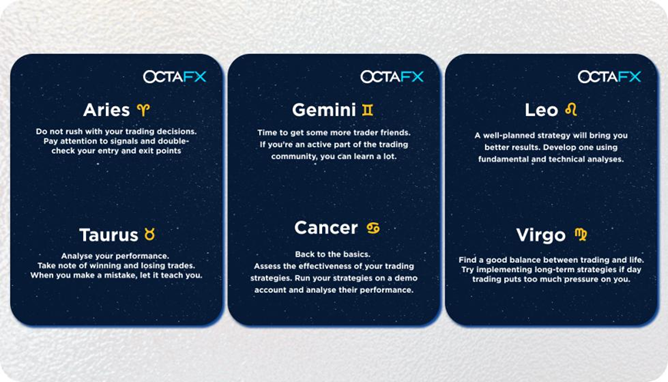
    Aries

    Do not rush with your trading decisions. Pay attention to signals and double-check your entry and exit points.

    Taurus

    Analyse your performance. Take note of winning and losing trades. When you make a mistake, let it teach you.

    Gemini

    Time to get some more trader friends. If you’re an active part of the trading community, you can learn a lot.

    Cancer

    Back to the basics. Assess the effectiveness of your trading strategies. Run your strategies on a demo account and analyse their performance.

    Leo

    A well-planned strategy will bring you better results. Develop one using fundamental and technical analyses.

    Virgo

    Find a good balance between trading and life. Try implementing long-term strategies if day trading puts too much pressure on you.

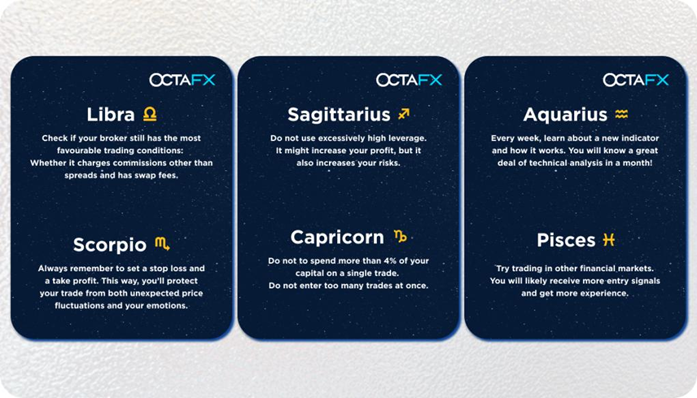
    Libra

    Check if your broker still has the most favourable trading conditions: whether it charges commissions other than spreads and has swap fees.

    Scorpius

    Always remember to set a stop loss and a take profit. This way, you’ll protect your trade from both unexpected price fluctuations and your emotions.

    Sagittarius

    Do not use excessively high leverage. It might increase your profit, but it also increases your risks.

    Capricorn

    Do not spend more than 4% of your capital on a single trade. Do not enter too many trades at once.

    Aquarius

    Every week, learn about a new indicator and how it works. You will know a great deal of technical analysis in a month!

    Pisces

    Try trading in other financial markets. You will likely receive more entry signals and get more experience.


    NOTE: We made those astrological predictions to cheer you up a little! Always rely on data and analysis when trading Forex. Don’t forget to learn the basics of Forex trading. OctaFX has lots of educational materials on its site and YouTube page that will help you begin your Forex journey.

    Follow @octafx_official on IG and visit https://www.octafx.com/ for more.

  • On Friday, September 17, 2021, a video of the Central Bank of Nigeria’s (CBN) governor, Godwin Emefiele – lovingly called Meffy by the interwebs – went viral. In it, Meffy was calling out abokiFX — a website popular for publishing currency exchange rates. While speaking to journalists, he said that abokiFX engages in “foreign exchange manipulation and speculation”, and that Olumide Oniwinde, the owner of abokiFX, is an illegal foreign exchange dealer. 

    Meffy also warned that “those who feel they want to support him (abokiFX) to fight me, come out, let’s fight”. 

    So basically this was Meffy that day:

    Why Is The CBN After abokiFX?

    abokiFX posts information about the exchange rate of the naira. The website provides official Bureau De Change (BDC) and black market rates of the naira, including other forex information. 

    But the Central Bank is not convinced that publishing information is all abokiFX or its owner does. According to Meffy, the owner of abokiFX, Olumide Oniwinde, directly benefits from the rates he quotes daily on his website.

    At the press conference, Meffy questioned the operations of abokiFX:

    • Have Nigerians ever asked how abokiFX collects its data?
    • How many BDCs have seen staff of abokiFX come in to ask for daily rates?
    • How many BDCs send daily returns on exchange rate to abokiFX?
    • How does abokiFX determine what the FX rate is?
    • How does abokiFX collect its data?
    • How can an unlicensed single person be the one that sets exchange rates in a country?
    • Why is abokiFX setting the exchange rate in Nigeria?
    • Why is Olumide Oniwinde targeting Nigeria?

    The CBN is concerned about how abokiFX comes about the exchange rate information it displays on its website. The CBN believes that abokiFX is setting the price of the naira out of its own imagination so that its owner can benefit from the fake rates by selling naira at unnecessarily high prices.

    Section 2 of the CBN Act gives the CBN the power to ensure price stability of the naira. By looking at the activities of abokiFX, the CBN is exercising this power.

    What Is The Real Forex Rate of the Naira?

    The official exchange rate to the dollar is ₦410.60. The CBN says this rate is the genuine rate and that it has enough dollars to meet the needs of every Nigerian who needs dollars to import goods, pay international school fees or do other things.

    The CBN claims that every Nigerian can buy dollars and other foreign currencies they need at the official rate and that banks will attend to Nigerians even if their dollar needs are more than the recommended amount.

    But some Nigerians don’t believe this. They say that the exchange rate to the dollar at the BDC and parallel market is still at ₦570 and Bureau De Change operators and black market operators are still relevant in the forex market.

    https://twitter.com/Ambrosia_Ijebu/status/1440631952336252938?s=19

    Why Do Nigerians Buy Forex From Black Market Operators?

    The reason why many Nigerians patronise BDC operators and black market forex dealers aka “Aboki Wire” is because of the lack of access to foreign currency at the banks. Some Nigerians claim that bank officials keep forex while others claim that banks won’t sell dollars or other foreign currencies to them to pay for visas and other personal things.

    According to a comment from a Nairametrics article:

    Since 2015, the CBN has banned 41 items including rice, furniture and textiles from access to forex so as to “help conserve foreign reserves”. The CBN also banned the sale of forex to Bureau De Change operators to help stop illegal activities. But these moves may be part of the reasons why the unofficial rate of the naira to the dollar and other currencies keeps increasing.

    At the moment, the price you have to pay to get dollars may just depend on who you believe more — Meffy or Aboki Wire.

  • Ever wondered what it takes to start and master Forex trading? We spoke with a Pro, and here are some vital nuggets you might want to note.

    How did you come across/ get into Forex trading? How can others do the same?

    As a young man making just above minimum wage back then, I was attracted to Forex by the flashy lifestyle. Those who said they were traders showed me a dream that wasn’t possible, so I started trading and began haemorrhaging money. I had 5,000 Pounds Sterling and was highly displeased that I wasn’t getting the desired results. My Forex guy then told me to be patient and learn.

    I started practising with a demo account and dedicated my time to learning as much as I could. One of the things that helped me was books like ‘Forex Revolution’. I started to try different things and learn about the psychology and methodology of how people and the market works.

    For anyone who wants to go into Forex trading, I will say: First, do not go into it for the wrong reasons e.g greed.Get a proper understanding of the fundamentals and technical aspects. Set up a demo account with your demo broker. Understand that what matters is making money consistently, not one grand cashout idea. That’s not sustainable. You need to have a systematic approach that works for you as well.

    Beware: In Forex, you think you are in control, but you are not.

    Can you disclose your largest earnings from Forex? And how did it happen?

    After 5-6 months of learning all I could, I jumped back into the market and spotted an opportunity. Since I was armed with enough information, I was able to jump on the opportunity and that yielded 82,000 GBP.

    How about your loss? How did you bounce back?

    My biggest loss was 41, 000 USD. Currently, I have some losses running, but I’m not so bothered because I know things will bounce back. Most times, people lament about their losses because they get excited and jump into a trade without proper market analysis. My advice is to never have a running position value of 50 % of your capital – that’s the fastest way to get doomed.

    How big is too big in Forex trading? Are goals/dreams ever too big?

    Dreaming is good when it’s not coming from a place of greed. So, don’t be greedy. Look at it this way: if you fly too close to the sun, you’re bound to get burnt. Again, it’s all about applying psychology.

    Would you say luck or hard work has been responsible for your success in Forex trading?

    It’s hard work and a little bit of luck. I put in the work, there’s no way around it. Social media has created a perverted idea of making money. If you think it’s that easy, do it.

    What values resonate the most with you and your success?

    Discipline, proactiveness, self-control, and not being greedy. One always has to have ears to the ground. Before I carry out any trade, I apply some psychology and think: What are the co-relations? I never move blindly.

    How important is your choice of broker to your success, or is it inconsequential?

    It is highly important to get a broker who is easily reachable, transparent, and quick with execution. One who understands that you are a starter and is highly responsive. I think most upcoming traders don’t know that they can and have the right to ask their broker questions like, “What is happening?” Or “Are you regulated?” Shoot your broker an email and ask important questions like that. Because one thing you don’t want to do is trade on an unregulated platform.

    What is your go-to strategy when trading?

    What I use is the inverted triangle pattern. I developed this strategy myself. It keys into the endogenous, exogenous, and technical factors before arriving at an analysis. This helps me determine what the economic activities happening within and outside the country are and how they affect the market before making a trade. I would say that developing a personal go-to strategy is paramount if you want to develop a long-term career in Forex.

    How do you act in a market frenzy (positive or negative)?

    The market is highly volatile and this messes a lot of people up, causing them to lose money. How to avoid this is to be as calm and collected as possible. Make use of your leverage, but don’t overdo it. Always ask yourself, “What percentage of my account am I willing to lose?” That way if you do lose it in a moment of frenzy, you won’t be left distraught.

  • If you get less than 10 on this Forex trading quiz, then maybe you should look for another hustle. Or, look for a way to become a Master at it.

  • In 2020, the pandemic changed the world. A lot of profitable offline businesses had to close and lay off their employees. With thousands of unemployed in Nigeria and all over the world and the poor economic state of even the leading countries, thousands of people have decided to look for alternative sources of income. And Forex trading has become a response to many. If you are among those who would like to try your skills in this market, learn what qualities a successful trader should possess.

    Traits of a Successful Trader

    When you look at the traits of a successful trader, it becomes clear that they also have bad days. The main characteristic of a professional is the achievement of a stable result. Consider trading as a professional activity and develop useful qualities in yourself. If you would like the Forex market to become your main source of income, be ready to keep learning all the time. So, find educational resources like the ones provided by Forextime and stay tuned with the publications.

    What are the qualities you need to possess?

    Discipline

    Discipline is a powerful weapon of a successful trader. Indiscriminate actions cause chaos and lead to a quick failure.

    Patience

    Patience is an important character trait that needs to be developed. As noted by the best Forex traders, it is worth waiting for one profitable deal rather than opening many positions with no effect.

    Control

    Which is necessary to manage risks, capital, emotions, investments, and the trading process. Such a trader always knows what to do, even if the action leads to a lower profit.

    Passion

    Those who are not interested in trading will not learn to trade profitably. Making a profit will be casual and short-term.

    Self-control

    Self-control is achieved when there is a clear plan of action and when a trader is in no hurry to take risks, thinks over every step, even if they see an overbought or oversold market.

    How to become a successful trader?

    In addition to a deep understanding of market trends and adaptation to trading rhythms, successful traders are distinguished by endurance, consistency, and flexibility of thinking. There are strategies with different levels of risk, but a plan is part of each one. To stick to it, here are the main recommendations for FXTM Nigeria traders who want to be successful:

    • Do not give in to excitement;
    • Determine the income limit for the day;
    • Set the maximum allowable loss level for the day;
    • Determine the optimal number of transactions for one trading session;
    • Take breaks in case of failure.

    The stock market is volatile, so you need to have a flexible mindset. But without setting limits on the number of trades, the size of profits and losses, it is hard to maintain a strong position. A scalper can make more deals during the day than a day trader. If you find it difficult to determine the optimal number of transactions — use the limits of income and expenses. They can be set both for one day and a week or a month. But setting limits on days will be analogous to signals for an action (entering a trade or completing a trading process).

    Remember to take a break after a failure. For scalpers and day traders, a few days a week is enough. It is necessary because, after the fiasco, you will be tempted to recoup. And when emotion prevails over reason, the likelihood of losing money increases. Plus, traders can make mistakes due to fatigue. Start trading in a calm, relaxed state after studying charts and news.

    How to develop the necessary qualities and gain knowledge?

    You can develop the traits of a successful trader by communicating with experienced market participants. You will receive valuable advice from them and be able to adopt profitable trading methods. Joint trading on a demo account contributes to:

    • Strengthening self-control;
    • Increased confidence;
    • A better understanding of market mechanisms;
    • Getting the necessary practice.

    After completing training practice, you will be able to move on to real trading. As you gain experience, income will increase, and the number of losing trades will decrease. We also strongly recommend keeping a trader’s journal and statistics. Then you will be able to assess the dynamics, react quickly, correct the strategy and promptly seek advice.If necessary, an individual risk manager can be assigned to you, accompanying you at the stage of learning and gaining experience. Select a broker that offers this kind of service to its clients.

    Final Words

    Trading is a business. And any business does not standstill. You cannot find a formula for success and use it all your life. You will need to track trends and constantly look for new successful solutions. Your commitment and readiness for hard work will lead you to high profits!

  • Every week, Zikoko seeks to understand how people move the Naira in and out of their lives. Some stories will be struggle-ish, others will be bougie. All the time, it’ll be revealing.

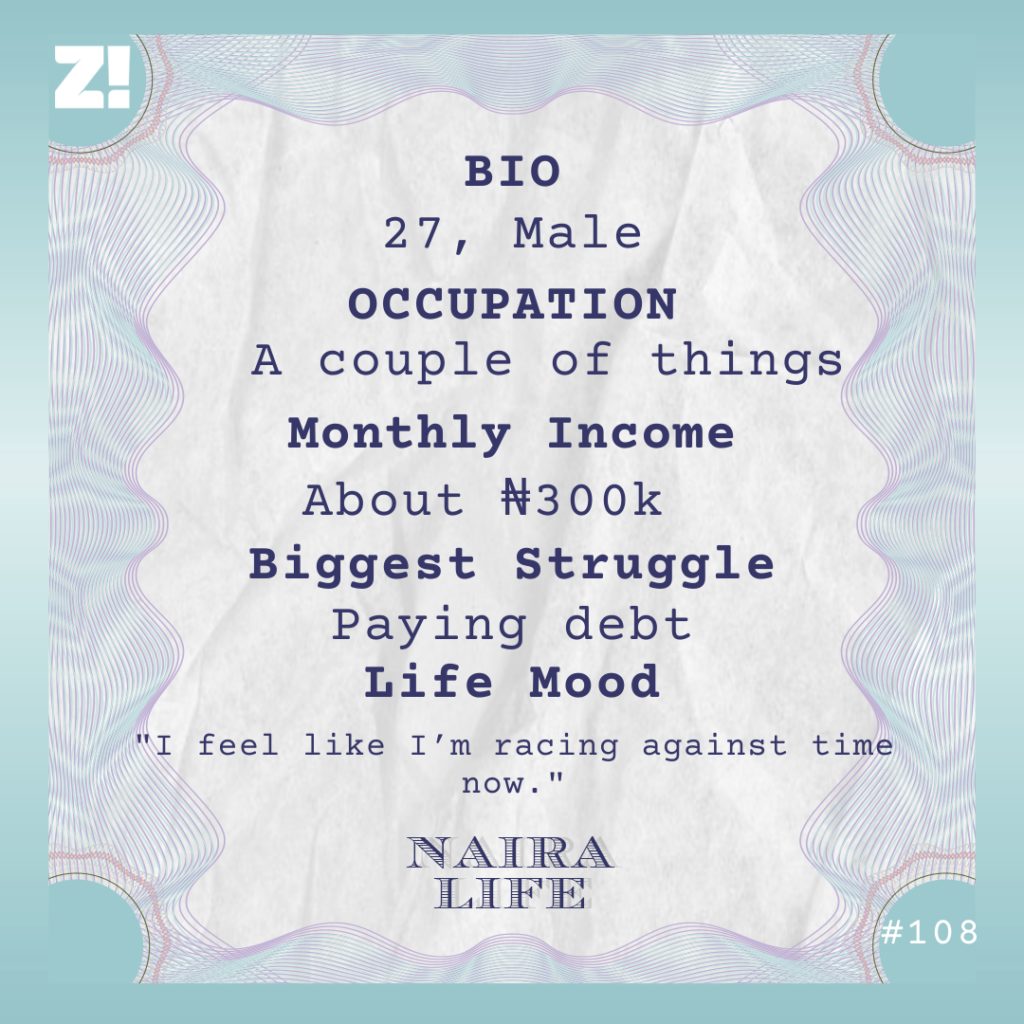
    The subject of this story works with small businesses. But before this, he tried to build two businesses from the ground up. The first one landed him in debt. The second one ended with some more dire consequences: legal troubles and debt.

    What’s your oldest memory of money?

    When I was about to finish secondary school, my dad was laid off at his investment banking job. My mum was also a banker, but she had been laid off years earlier and had moved on to other things. 

    Do you remember how this changed things?

    The driver was the first to go when my dad lost his job. My dad started saying things like, “Let’s find a bike to take you to school.” Then it became hard to afford rent. My parents were building a house already, and we moved in although a lot of work hadn’t been done. We slept on the floor for a while. 

    My dad never found another job, so it was all on my mum. And she managed it well because the lack wasn’t evident from the outside.

    What was the first thing you ever did for money?

    ASUU went on strike when I was in 100 level in 2009, and I returned home. Unfortunately, it was one of those long ones. After spending a couple months at home, I grew restless and wanted to do something. The house help had left, and my mum was looking to fill the position. I told her I’d do it, but we had to sign an agreement. I didn’t think she would take me seriously, but she asked me to draw up the terms. She was impressed with my proposition and agreed to pay me ₦10k every month for my work. 

    LMAO. You got paid for what most of us did for free?

    Yup. After two months of doing this, they called off the strike. When I was returning to school, she added ₦20k to my ₦10k allowance and told me that was my salary for the months I worked for her. I was like, “Oh, I can make money from anything?” 

    In school, a final year student who was a friend needed money for his project. I decided to loan him ₦15k for a month at a 10% interest rate. I pitched it to him, and he agreed. He returned the money plus interest at the end of the month. I felt if I could do it for one person, I might as well do it for 10 people.

    Another friend wanted to buy a phone. I loaned him ₦15k and jacked the interest to 15%. He also returned it on time. I decided to go all in. I turned my room into an office and started telling people that I operate a short-term loan business. Students always needed money, so the word started spreading.

    Mad oh. 

    There was a challenge though.

    What was that?

    Answering the risk question. The chance of students defaulting on loans was very high. But I made everyone who wanted a loan submit the original copy of their school receipt, and I held on to it until they returned my money. My client base started to grow. Now I needed to figure out how to get more capital, so I started putting my monthly ₦10k allowance into the business. Omo, I drank garri ehn. 

    Haha. But it picked up?

    Yes, more than I expected. My model was referral based, and I only dealt with people who were recommended by someone I knew and still had at least one year to spend in school. By 300 level, I’d built some structure and started paying myself ₦5k as salary every month.

    Haha.

    But I also knew it wouldn’t be sustainable in the long run, especially since I was running everything with my personal resources. I split the business into two and started funding students who had small businesses. I gave them working capital, and at the end of an agreed period of time, we split the profits. 

    How did it work out?

    Great! Before the end of my third year, I had disbursed over ₦100k to people and small businesses. Because I was running two businesses, I brought in someone as my partner to monitor the small businesses and ensure that I got all my money back.

    People were noticing what I was doing, and my clout shot through the roof. The rich kids on campus started hitting me up and going, “I have this ₦200k I’m not using. What can you do with it?” I started investing money for people and giving them their capital and returns at the end of the semester. I did that until I left uni in 2013. 

    NYSC?

    Yes. One of my roommates from uni reached out to me and told me he knew a guy making good returns from palm oil. He shipped kegs of palm oil from the south-south where it was cheaper and sold at a higher price in the south-west. The numbers made sense, so I convinced my partner to let us give it a try. I told a few other people I knew from school and raised about ₦500k. The plan was that the guy would give us 5% of the capital every month. 

    And…

    He turned in the first and second month payment. I think ₦35k each. At the end of the third month, my partner called me and went, “We’ve not heard from this guy.” I called his number but couldn’t reach him. I’ve not seen him since that time, and it’s been more than six years now.

    Whoa!

    I couldn’t bring myself to tell the people that invested that I’d lost their money, so I was paying them as though the business was profitable. I took more money from people and paid those that had invested earlier with it. I hoped to get a hold of the guy and get the money back before anyone noticed. I was in about ₦700k debt before I realised that it wasn’t sustainable and came clean to the investors. I had to figure out a way to pay them. 

    How did that go?

    It was crazy. I started a food items delivery business for corps members in the town I was serving to pay the debt. I raised money from people who trusted me — it was more than ₦100k. I’d buy crayfish and periwinkle, which were cheap where I was, and ship. Corps members always wanted to buy food items and send them home because they were cheaper there.

    I also had links to restaurants and food services providers and supplied these food times to them. I built and monetised the entire logistics value chain. This brought in at least ₦50k monthly. By the time I finished my service year, I’d cleared my debts and had ₦300k in savings. 

    That’s awesome. 

    I returned home and the question was, “What do I want to do next?” I wanted to do an MBA, but my mum said no. I couldn’t afford to pay for an MBA myself, so I decided to take JAMB and go for a degree in Economics. I was in the middle of the application process when an uncle called and convinced me to do my master’s degree in a science-related course to appease my parents. Then I could go for my MBA after. I thought it was a fair deal, and I took it. This was 2016. 

    What happened after?

    It was quiet at first. But I was already hooked on doing stuff with money, so I was restless about taking a break. I sold small gadgets for a while, but that didn’t bring a lot of money.

    Towards the end of my programme, a friend I knew from uni reached out to me. He wanted to start a fintech company and operate in the payment space. I thought I could use my experience in uni and during my service year to do something new. I signed on and dropped out of school to do this with him, even though I was in the middle of my final exams.

    Omo

    Yup! My plan was to return to school later and finish it. 

    We started as a micro-lending platform for market women. His dad had a relationship with microfinance banks, and we leveraged that. We gave the women small loans for their businesses. He dropped most of the money — mine was mostly working capital, about ₦40k.

    Interesting. 

    Then he heard that forex trading was the hot thing. He was like, “How about we build a platform and get people to trade for us?” We would get people to give us money to invest and the traders would put the money into the market. We pivoted into it and got some people to invest, and it picked up from there. It was fine for a while, but we started losing money.

    When did this start?

    I actually don’t know. I was handling operations and comms. My ex-partner was supervising the trading room. I was supposed to know what was happening there, so I could figure out how to manage investor’s expectations and all, but I didn’t. My partner always told me everything was fine, even when it was not. 

    When did you find out?

    We were close to one of the payouts, so I doubled down on asking for updates on when the funds would be available. That was when he eventually came clean and admitted that we were dealing with a significant draw down and had lost all of the money people had with us. 

    How much?

    It depends on who you ask. I have no idea of the exact amount. He was in charge of getting money from investors. And when everything happened, they said it’d run into a couple millions of naira.

    Oof.

    My ex-partner went into hiding. He wasn’t picking up calls or responding to messages. I thought that since I was the company’s comms guy, I could pacify the investors. Haha. I got arrested. It was a case of if you can’t find a way to give him to us on a platter, we’ll come for you.

    Ah. 

    I was the fall guy. I spent nights in the police jail. The question I kept hearing over and over was, “Where did you keep the money?”

     It was a harrowing experience, especially for my mum. By the time law enforcement looked at our trade records, finished their investigations and found that we weren’t trying to rob people and actually incurred losses, she had spent so much money in legal fees trying to get me out, and the family was in debt.

    Do you know how much she spent?

    For my bail alone, the family raised close to ₦500k. The ensuing drama cost her at least ₦5M. She took loans with crazy interests to raise the money. The money went to paying my legal fees, law enforcement and some of the aggrieved creditors.

    I’m curious, where was your ex-partner in all of this?

    His family had clout, so they shielded him. He even tried to travel out of the country. 

    Gosh, I’m sorry. 

    Things began to calm down in 2019, but I still had to keep showing up at the police station to continue the cycle of interrogations. I was at the lowest point of my life in 2019. I had nothing. I’d started two businesses I thought I could build to something, and both put me in trouble and debt. I couldn’t even go back to school. The shame wouldn’t let me. 

    I started the year with literally nothing. Later that year, I got a job at a non-profit where I worked on content and business advisory. They paid me ₦20k, and I stayed with them for two months. 

    Why did you leave?

    A mentor contacted me. He was organising a training programme for government officials close to retirement and needed someone to do a workshop on how to avoid investment pitfalls and manage their funds. He thought I had quite the story to share. I was paid ₦150k for that, but it felt like ₦50M. 

    Oh man. 

    I mean, I was struggling to buy a one gig data subscription at the time. That gig was a turnaround for me. I put everything into it.

    What happened after?

    I got more gigs. A feasibility study here, a business plan there. I was getting ₦150k-₦250k on each job and using everything to help my mum clear the debt she was paying off. Most of the jobs came from my mentor’s network, so he decided to integrate me into his company.

    I joined his team, and after some time, I started managing a team myself. I got a monthly stipend from my boss to help with remote work set up, but my main pay came from the projects I could execute in a month, and these were getting me an average of ₦300k monthly.

    What does the company do?

    Business consulting for SMES. Some of these businesses are understaffed and need fixers like me to help create plans and business documents and help them find ways to source funds.

    The projects could be anything: creating a feasibility study or developing a social media campaign. My job function changed according to the projects. I could be Head of HR or Chief of Staff. 

    I did this for a few months. Then Covid started.

    How did it affect you?

    You know how some people talk about how their income saw an uptick because of the pandemic? I’m one of those people. There was a huge demand for people with technical skills. Organisations were organising virtual events and needed help setting them up. Companies were looking for people to help their staff adjust to working from home. Things like that.

    My team made an average of ₦​250k on each project. After taking out 10-15% admin fees for the company and allowance for the team — we were often an average of five on a project. I had at least ​₦​100k left. We did an average three of these projects every month.

    Mad. 

    I was still paying off my debts, but things were beginning to pick up. Then my dad died in 2020. I couldn’t even grieve him because I couldn’t stop working. I was handling a project in the middle of all the burial arrangements. He died when I just started to turn things around. Also, I can’t shake off the sentiment that my legal issues may have been a factor in his death, and I’ll probably live with that guilt forever. 

    I’m really sorry for your loss. The last couple of years have been rough, but where are you at now?

    I’m still at the company. I have a team of six people who work with me on these projects. At the end of the month, I still make up to ₦300k, even after paying the company and my staff. 

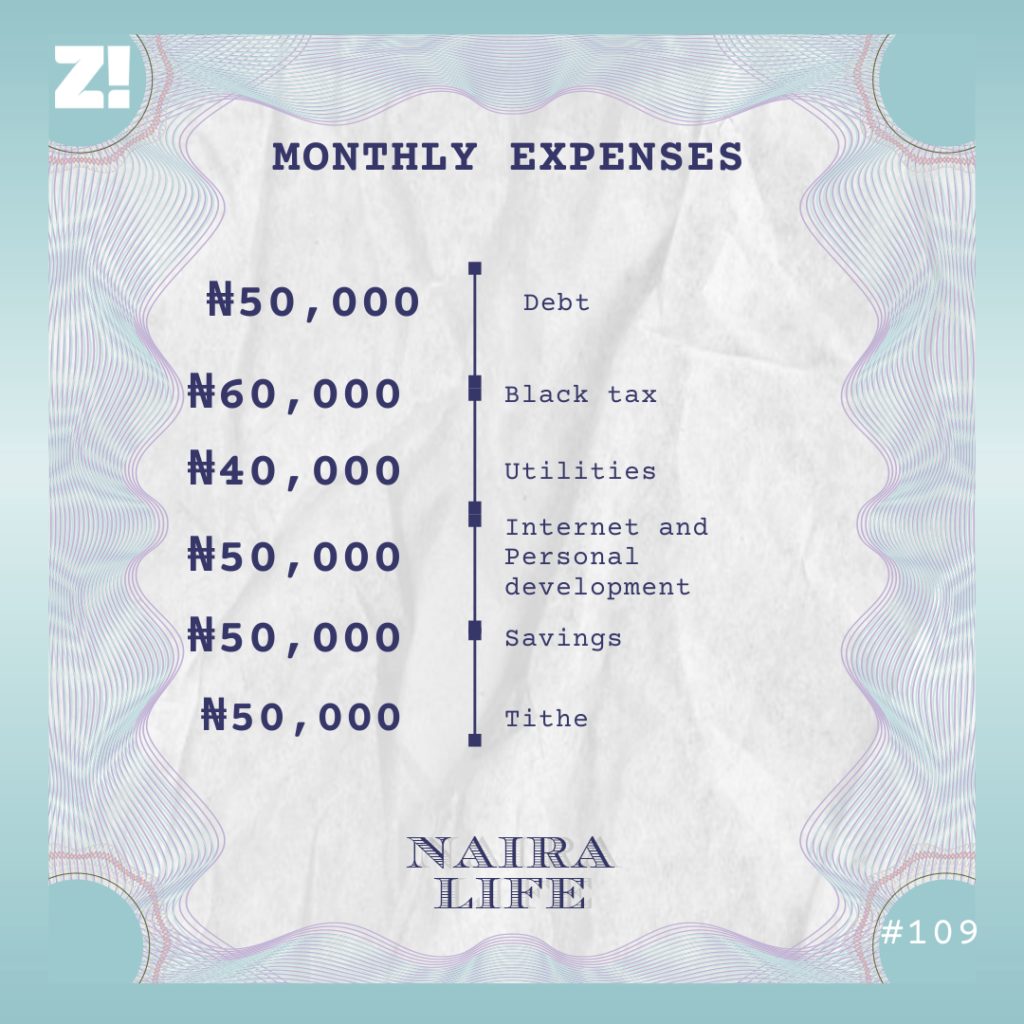
    Let’s break it down.

    When do you think you will finish paying off your debt?

    I’m hoping it will all be over next year. First quarter of 2022 in the worst case scenario.

    What do you imagine life will be like when this happens?

    There will still be bills to pay, but nothing as crippling as this. I’ve learned to be more resourceful than ever and looking out for actual opportunities. It’s why I consult for like seven businesses. The challenge is that I bring people on these projects, so I share profits I could have kept. That said, I’m confident my family will never lack. 

    With everything that’s happened, how do you feel about investments now?

    I’m currently averse to investing in anything even though I know that it’s not wise. I’d rather just save. I’m currently my investment, and that’s why I’m putting money into personal development — training programs and short courses.

    If someone comes to me and goes, “There’s an investment opportunity.” I’ve logged out already. There’s some PTSD I have to deal with first before I go down that route again. If that ever comes, I’d stick to real estate investments because they are a relatively safer option.

    How would you say all of this has shaped your perspective about money?

    First, maybe don’t invest money with people because you know them or trust them. Before I put resources in any project now, I have to know everything about it. Also, I place a high premium on personal development. Whatever money you invest in yourself will hardly go to waste. 

    Is there anything you want now but can’t afford?

    I’d like to put about $10,000 in a dollar-denominated portfolio. But I currently can’t do that because I’m not earning enough. If I don’t have any project coming in, I’m toast. Also, my girlfreind came at a time when I’d lost hope and stuck with me until I snapped back to reality. I’d like to marry her as soon as possible, but I’m not sure I can afford that this year. 

    Rooting for you. This was heavy, but on a scale of 0-10, how would you rate your financial happiness?

    5. I feel like I’m racing against time now. I’ve kind of wasted some time I’m not getting back. And playing catch up is very exhausting. This number I gave myself is even me being nice. But when I clear my debt and settle down to start a family, this number can move to 8.

  • Every week, Zikoko seeks to understand how people move the Naira in and out of their lives. Some stories will be struggle-ish, others will be bougie. All the time, it’ll be revealing.

    My favourite first question is –

    Hmmm..First memory of money?

    Haha. Exactly. 

    It was in secondary school. My allowance for the week was ₦250 per day or something. So I got maybe ₦1k a week. I spent it on meat pie.

    I was not one of those “I am saving my money.” Tuck shop!

    Haha! Do you remember the first thing ever that you had to do for money?

    My transcribing job in uni. It was such a sweet gig. Some lady doing her PhD abroad was interviewing a lot of people, and she needed the oral interviews transcribed. 

    What year was this? 

    In 2015 or so. She was paying me in a foreign currency, and the thing is I didn’t know what I was doing. I was 18.

    Wait, how did you find the job?

    In my hostel, everyone looked at me like somebody that takes any opportunity she sees. I’m smart, I’m quite the talker, and I find it easy to communicate with people. Someone told someone, who then said I could do the job. 

    Hostel clout. 

    Sweet stuff. I wasn’t even getting the money directly. The person was sending it to the babe I knew, then that one was paying me. I’m not sure how much they were sending me, but I knew I was getting scammed. 

    I was in like 100L going to 200L at the time. I remember that there was a break, and I was doing most of it at home. 

    What did you study?

    Biology. if you’re reading this, please don’t do it. If you put me in a lab now, we’re all going to burn, hahaha. I can’t mix shit. I don’t even remember the thing they were teaching us. Heck, I didn’t even collect my certificate. 

    Hmmm. So, you channeled all your energy to collecting your transcription money eh? 

    Yesss. I think the whole money I made was up to ₦600k. I was getting payments after every few transcriptions. I’m not sure how much it was per transcription because of the varying length. 

    Hmm. 

    I spoilt myself with the money. I even changed my wardrobe haha. That period was the wildest. 

    I’m listening. 

    My mum knew I was getting money somewhere else, so she stopped sending me money. Omo, she just relaxed and was like, “Peace.” 

    Things switched up when I ran into someone during a class – we had a mutual friend – she was ranting about all the pages that she needed to manage on social media.

    My friend told me she was going to ask the social media manager to offer me the gig. 

    I was like, so I can be posting, and they’ll be giving me money just to post things?

    Did you get the gig? 

    It never clicked. In fact, I don’t think we talked about it past that day, but a seed was sown in my heart. I went back to my hostel and started researching. I couldn’t stop or sleep, and I just started courses.

    Do you remember the first course you did?

    Shaw Academy’s Digital Marketing course. I can’t remember now if it was free or I got a scholarship, but it was from an ad. 

    I knew I had to practise everything I was learning, but nobody was going to give me a job. My sister ran an event planning business, so I just collected her accounts and practiced. 

    But I wanted to work at a place where someone could validate what I was doing, so I started applying for digital marketing jobs. Any small thing: “I’m an avid something-something,” until I finally landed an interview. And what did they say when I showed up? “Your CV is impressive.” Hahaha. Those people are still owing me ₦20k till day. 

    Is there anybody that is not being owed ₦20k for work like this? 

    And that was actually my first salary o. I went thrice a week, and my transport fare was 19,800 by the time I calculated it. 

    Only 200 in real earnings? 

    Basically. When I got that job and my friends would ask me, “Are you going to class today?” I’ll say “No, no. I’m going to the office.”

    My friend was the one who was taking attendance for me. 

    You were clearly uninterested in school. 

    Yep. My school didn’t give me the course I wanted to study. And now that I think of it, I’m not sure I’m even cut for the one I wanted to study. 

    This new chapter of my life was very exciting for me, and I poured all my energy into it. It was interesting, having strategy meetings, hahaha. 

    Tell me. 

    My boss would just come in with egg rolls and drinks for everybody. Then he’d gather all of us into his office like, “Everybody gather round, what are we doing in this session?” And me sef, I’ll sit down and be forming strategist. 

    What did the business do? 

    Sell soup. I was doing photoshoots for soups and posting online, hacking angles and shit. I loved it because everything I was learning, I got to apply. After three months, I quit sha. The guy ran me street because I didn’t know you were supposed to collect salary before you quit.

    Why did you quit? 

    My boyfriend. He was like, “Baby girl you don’t need to do this, you’re stressing yourself.” The job was in fact stressful. 

    When I actually quit, I was already looking for other jobs close to me and that’s when I got the job that I feel like made the difference. It was a Digital Agency, my real bootcamp. I interned with them for 6 months. I didn’t feel like an intern to be honest; they didn’t even regard me as an intern. 

    I feel like I learn fast because to be honest, I was not bad at my job. I got a ton of accolades, and most importantly, exposure to managing big Nigerian brand accounts. My salary was ₦20k, but because of how close it was to where I lived, transport in a month cost about ₦4k. 

    By the time I finished my internship, I was in my third year and was supposed to find a placement for my industrial attachment from school. Then I landed a social media manager role. I was doing social media calendars, SEO and chopping insult on top of ₦20k. 

    By Year 4, I got a job with another agency that paid ₦70k. Omooooo. 

    Mad o. 

    That was when I really felt like Omooo. I started working with them around the time when I was working on my final year project – this was 2018. I was working during the day and sleeping in the lab. When I finished my project, and I left the agency too – I was there for three months. 

    Why did you leave?

    My mum’s house was closer to the outskirts of Lagos, and I just couldn’t continue like that. Leaving home early, getting home late. I needed to move out, but all I had saved up was ₦200k, and it wasn’t enough. 

    The second reason I left was because I got a remote job. The owner of the business is Nigerian, but they registered their business abroad. Now, I use that in a lot of interviews like, “I’ve also worked with a US agency as their social media strategist.” The pay was ₦50k. 

    What came next? 

    I applied for another job and got it. This one was on the island, and now I had a solid reason to move out. They were paying ₦140k. 

    What year was this?

    I think 2018. I moved to a hostel of sorts that cost like ₦250k a year. Also, I left the company after three months. 

    Why? 

    The office was horrible – we were always sweating. I don’t like suffering. I also think the people that owned it didn’t care about the company. It felt like they stumbled on an idea and then, “Omg, we got so popular, we can’t stop doing it now.”

    I joined at the time when they were still trying to figure out if they were a hobby or a company. This was early 2019, and I was 22. 

    For my next job, I saw a tweet for a digital marketing role at a startup. I applied and got the job at ₦250k a month. In six months, it was increased to ₦392k or so. Because the startup was building for users, it exposed me to real life things that matter. Growing numbers, making things that customers want. It also gave me a career capital. 

    In between, I had side projects that contributed to my income. 

    2020?

    Because of the pandemic, I took a pay cut, so my last salary was about ₦320k or so. But I was not really relying on that because I had this client in Hong Kong that was paying me about ₦700k monthly.

    For?

    I wasn’t earning the whole ₦700k. Part of it was paying staff salaries because I had a small team. I feel like there are so many small gigs I didn’t mention, but I’ve almost always been working on small gigs. I even registered a company at some point in 2018, which I ditched when I joined the startup in 2019. 

    Interesting. 

    We used to work on my client projects and handled social media for companies. There was the graphics designer, social media manager, etc. So let’s say I get paid ₦250k; I supervise, run ads and then we split the money. 

    This is how I ran the Hong Kong gig. They were a company trying to break into the Nigerian market. When they asked me early this year whether I wanted to get paid in naira or dollars, I said naira. 

    Ouch. 

    I just became smart o. Anyway, I did that for about four or five months, but it just made me more stable for the year. I have a flatmate, and our rent is ₦1 million. We split 50-50. 

    Anyway, I quit the startup in the middle of the year, and the next jump happened.

    Are we there yet? 

    Yes. I went from earning ₦320k monthly to earning $4k monthly. I wanted to run mad. We had been doing the whole interview –

    Let’s start from how you found the job.

    I had a lot of offers from Nigerian companies, but my eyes were set on the international market. One company offered 650k, but I no do. With the startup I worked at, I needed something that felt like a jump. 

    When did you want to start collecting dollars? 

    I was okay earning my naira jeje, until I heard what my flatmate was earning. I was like “SIS! Put me through!” She’s still my oga, but I don’t think I’m doing badly. The first company that interviewed me abroad said they couldn’t hire me because I’m Nigerian. Basically, they didn’t want to go through relocation trouble. 

    I was just applying sporadically to things. Sometimes, I’ll just google “Successful companies in X industry,” then check the career pages of all the companies listed. Working remotely helped me have time for this. 

    I just organised my portfolio around the work I did at the startup in detail. In fact, I made it into Google Slides.

    There was this company that I was very sure I was going to get the job, but they ghosted me. Then I found one other company scattered across a few cities in the world. I can’t even remember how I found them, probably on one of those sites for remote job opportunities. I looked at the job description, and I was like, I can do all these things na!

    They gave me a test, and I literally sat down for hours working on that test. The scope of the test they gave me? I’d never done it before. So, I just did what I’d been doing – 

    Google. 

    Yes! I put everything together in a document. I know I did a good job. The next day, we had a call. Once I knew I would get it, I texted my flatmate: “I’m in!” But I knew she was going to come running and screaming, so I followed it with “Still on the call.” I can’t even remember anything they said after they confirmed me. 

    When people talk about how 2020 has taken a lot from them, I just stay silent because this year has brought a lot for me. My job win made me forget all my past difficulties. After I got the job, I blew all my savings for rent. The first thing I did was book a massage. 

    Haha. How much did you have in your savings?

    About ₦500k. My rent was ₦500k. I can’t even remember what I spent it on. I was just having ideas and ordering food. There’s the dress I bought, the tattoo, and even a gym subscription. Then I had an annoying gynaecologist miscellaneous that cost ₦200k. 

    That’s how I’m spending my money now. I’m ridiculous.

    How do you get your money?

    I had complications with getting my money in the first month, but I ended up using my bank. Everyone around me was sad for me because the exchange rate was definitely not the best deal. But when I looked at my account balance and saw plenty of zeroes, I didn’t even hear what they were saying. 

    First of all, I got paid more money for only seven days of working in a month than my previous salary. Then they sent money for me to buy a new Macbook.

    I think I got a little over ₦1.3 million. Right now, I haven’t really set up any saving structure. I’m just vibing. The salary after that first one is still in dollars. 

    So, this is the part where we break down your expenses. 

    So, the thing is that I’ll be moving in 2021. I don’t feel very settled right now. In fact, there are purchases I want to make — like a monitor — but why should I buy one when I’m moving soon?  I’ve just been spending on vibes. 

    What’s the most expensive thing you’ve bought since you collected your first salary on the new job? 

    I randomly bought solid speakers for my situationship. But that’s not the most; it’s a lot of tiny things. Like for example, I gifted random people 15k each. 

    See ehn, I think everyone should do two things: 

    • Have an emergency fund 
    • Then prioritize enjoyment. 

    Some days, I’ll be lying on the bed and I’ll just open my app and be smiling.

    Between 2015 and now, how have all of this has shaped your perspective of money or opportunity. 

    My current mindset is that there’s nothing that I want that I can’t get. All my career moves have been wild. My mobility has always been: “I want better, and I take steps to get that better.”

    As for money, just go and look for ways to earn more money. It’s a priority to earn more. There’s only so much you can do from saving and investing. 

    What’s something you want that you cannot afford?

    To be honest, nothing o. Except to japa. Even the Japa sef, it’s not something I was seriously planning until my company relocation came up. 

    If I wasn’t going to leave Nigeria, my answer would have been moving to another apartment and  a car. I’m so comfortable now with the things that I have, and I’m just living in the moment. 

    What is something you wished you could be better at financially?

    All these investment stuff. But to be honest, I feel like if I wanted to, I’d do it. The options are there, but right now, I don’t think I’m not ready for it. I might have a spending problem, but I think it’s because I’m a nice person. My friend’s birthday can come up and I’ll be like, here. 

    Do you have any financial regrets?

    If I regret something, somebody should actually slap me because all the money I’ve made in my career, in a few months, I’ll make everything again. Abeggi, I no regret anything. 

    What’s something you bought recently that significantly improved the quality of your life? That just made you feel comfortable.

    My chair, my Macbook. My gym sub too because I like how I feel when I work out. 

    Last question, on a scale of 1-10, financial happiness?

    I done tear the scale mehn. I’m happy!