• Nigerian footballers have built reputations for talent, grit, and consistency on pitches worldwide. But how much do they actually earn?

    From Premier League regulars to stars in Italy, Germany, and Turkey, these players have worked their way up from youth academies in Lagos, Jos, and London to sign multi-million-euro contracts with top clubs. Here are the top 10 highest-paid Nigerian footballers in 2025, what they earn, where they play, and how they got there.

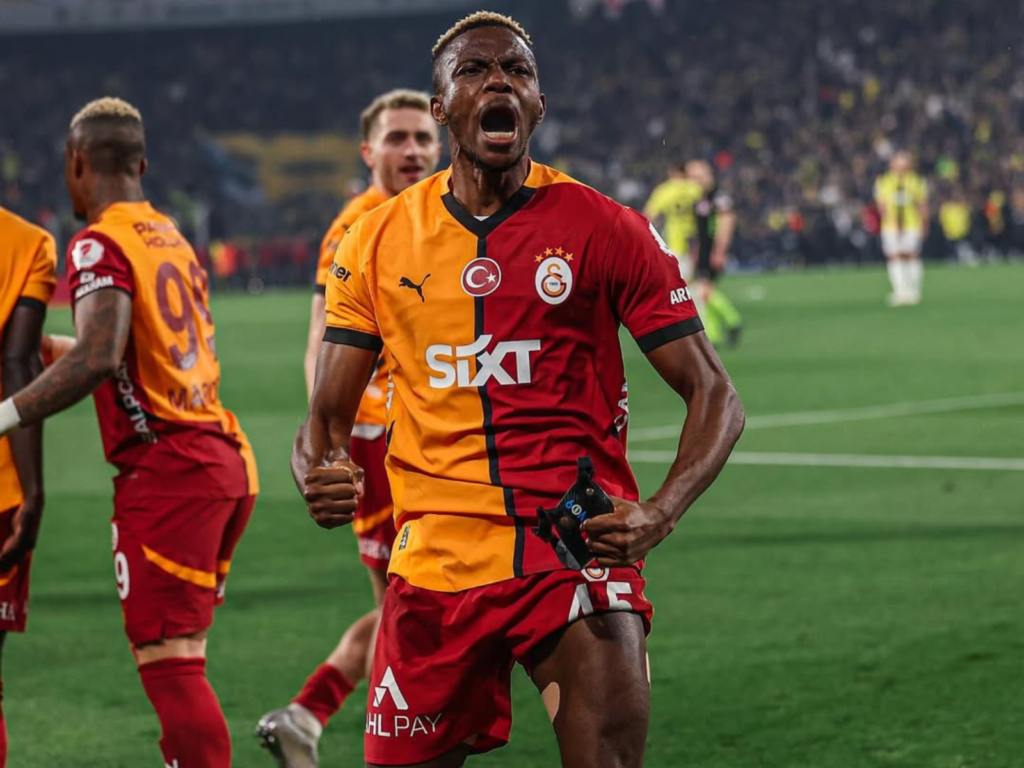
    1. Victor Osimhen — €10 million/year | Highest Paid Nigerian Footballer

    Victor Osimhen plays for Galatasaray in the Turkish Süper Lig, on loan from Napoli. He earns €10 million gross per year (about €192,000 per week), with his current contract at Napoli running until the end of the 2024-2025 season, making him the highest-paid Nigerian footballer in 2025.

    Osimhen started his career at Ultimate Strikers Academy in Lagos and gained international attention after winning the Golden Boot at the 2015 U-17 World Cup. He went on to play for Wolfsburg, Charleroi, and Lille before joining Napoli in 2020.
    2. Samuel Chukwueze — €5.13 million/year

    Samuel Chukwueze plays for AC Milan in Italy’s Serie A. He earns €5.13 million per year (about €98,000 per week), with his current contract running until 2028. 

    Chukwueze started his career at Diamond Football Academy and gained international recognition at the 2015 U-17 World Cup. He joined Villarreal in 2017, where he spent six seasons before moving to Milan in 2023.

    3. Alex Iwobi — £4.1 million/year 

    Alex Iwobi plays for Fulham in the English Premier League, earning £4.3 million per year (around £80,000 per week), with his current contract running until June 2028. Iwobi joined Arsenal’s youth system at the age of 8, broke into the first team in 2015, and moved to Everton in 2019. He signed for Fulham in 2023.

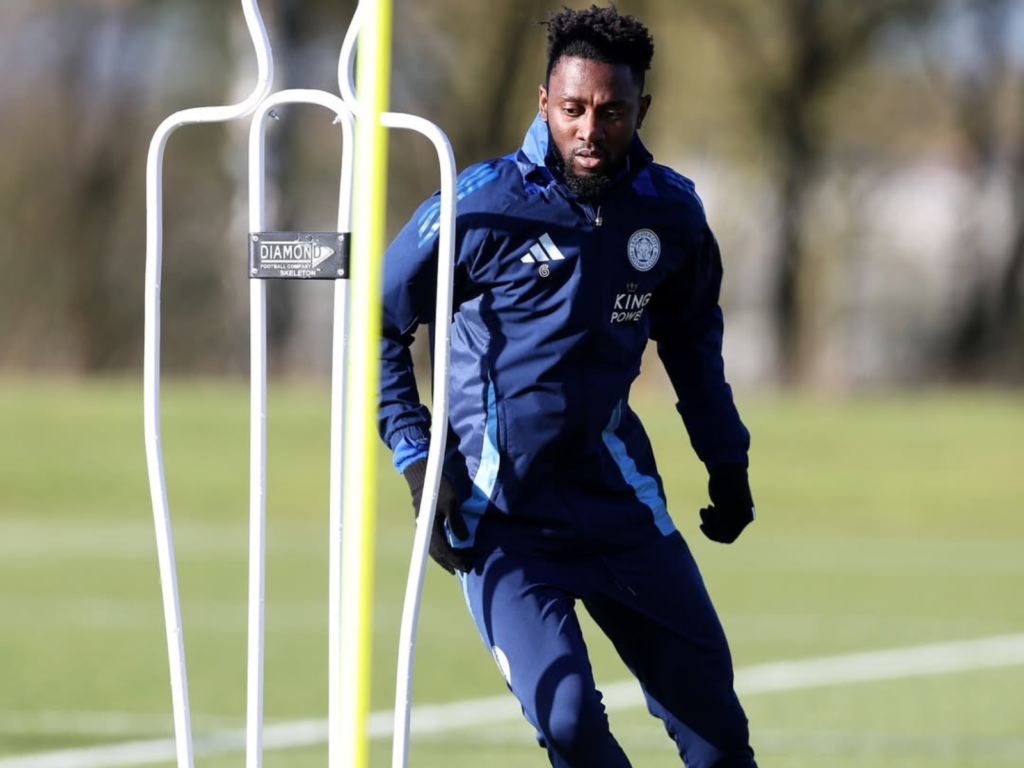
    4. Wilfred Ndidi — £3.9 million/year 

    Wilfred Ndidi plays for Leicester City in the English Championship. He earns £3.9 million per year (around £75,000 per week), with his current contract running until June 2027, earning him his spot as one of the highest-paid Nigerian footballers in 2025. 

    Ndidi began his career at Nath Boys Academy in Lagos, moved to Genk in Belgium, and joined Leicester in 2017, where he became a key part of their midfield. Despite Leicester’s relegation, he remains one of the highest-paid Nigerian players in Europe.

    Join 1,000+ Nigerians, finance experts and industry leaders at The Naira Life Conference by Zikoko for a day of real, raw conversations about money and financial freedom. Click here to buy a ticket and secure your spot at the money event of the year, where you’ll get the practical tools to 10x your income, network with the biggest players in your industry, and level up in your career and business.

    5. Kelechi Iheanacho — £3. 9million/year

    Kelechi Iheanacho is currently on loan from Leicester City to Middlesbrough, earning about £3.9 million per year (roughly £75,000 per week)  based on his existing Premier League contract. Iheanacho rose to prominence after winning the Golden Ball at the 2013 U-17 World Cup. Shortly after, he joined Manchester City’s academy, moved to Leicester in 2017, and is now spending the 2024–25 season in the English Championship.
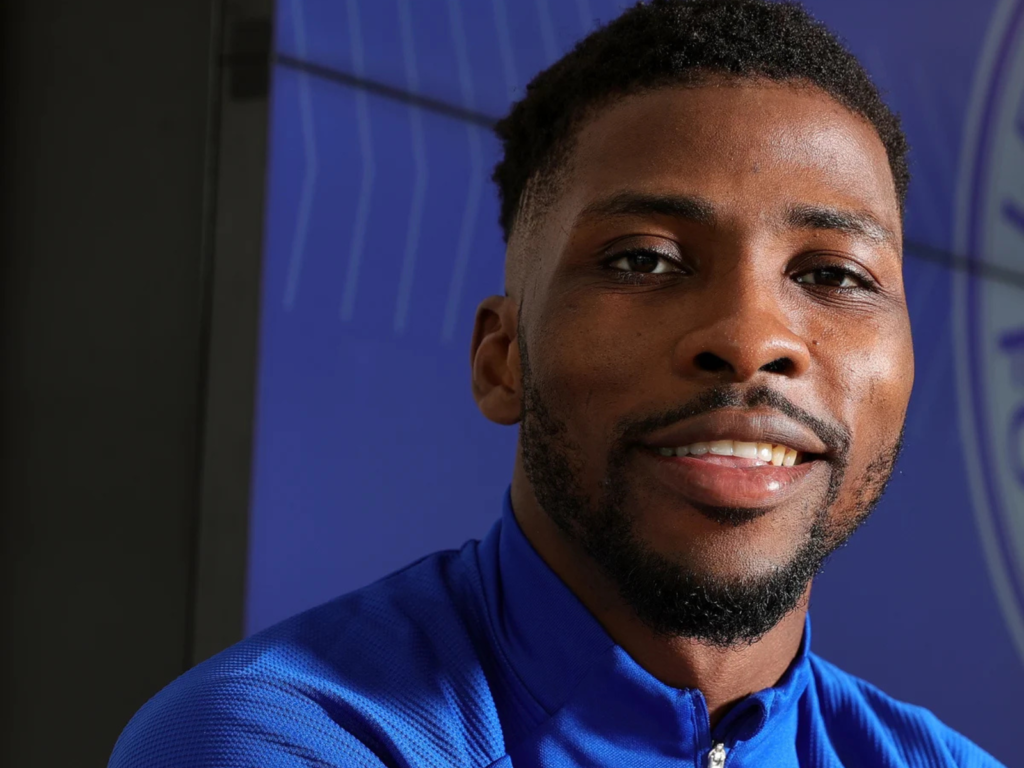
    6. Joe Aribo — £3.6 million/year

    Joe Aribo plays for Southampton in the English Championship. He earns £3.6 million annually (about £70,000 per week), with his contract expiring in June 2026. Aribo began his career in England’s lower leagues with Staines Town and Charlton Athletic before making a name at Rangers. He signed for Southampton in 2022 following a strong showing in the Europa League final.
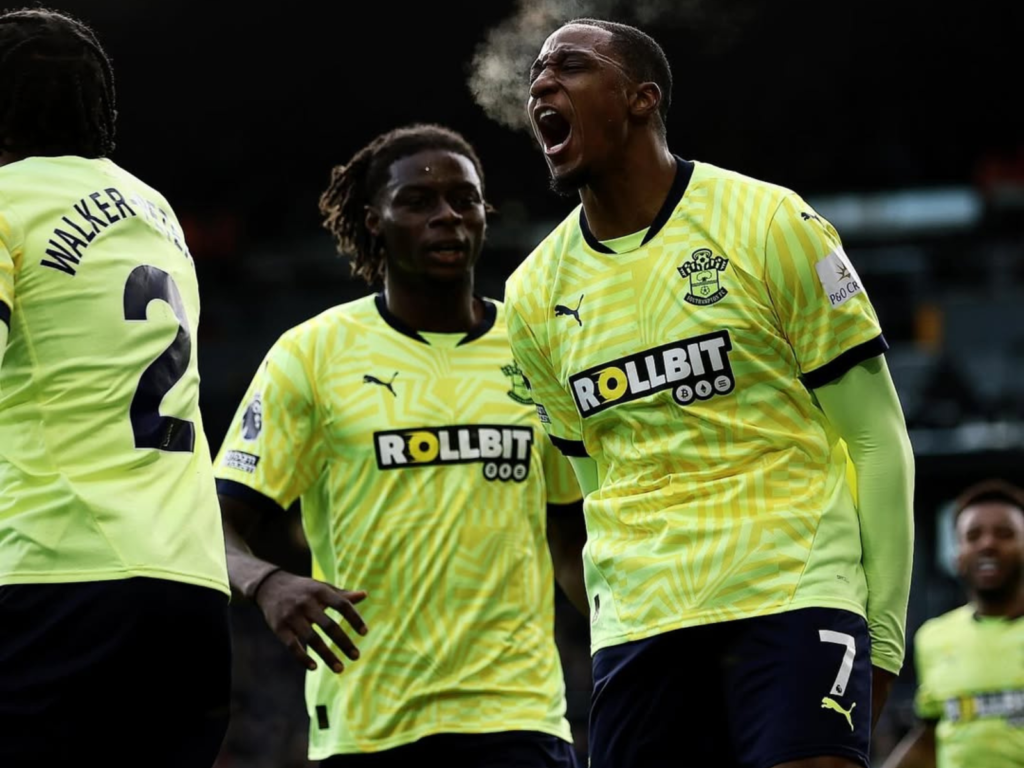
    7. Taiwo Awoniyi — £2.6 million/year

    Taiwo Awoniyi plays as a forward for Nottingham Forest in the English Premier League.

    He earns £2.6 million per year (roughly £50,000 per week) and has a contract that runs until 2026. Signed by Liverpool in 2015 but unable to secure a work permit, Awoniyi spent years on loan across Europe before joining Union Berlin and eventually moving to Forest in 2022.
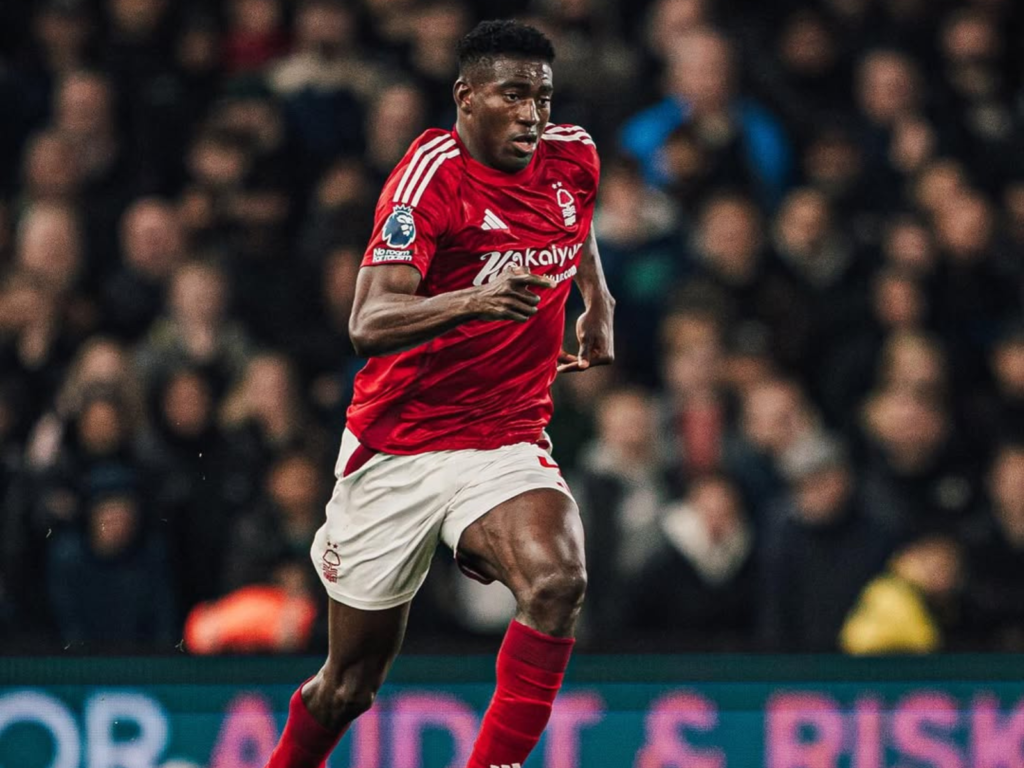
    8. Calvin Bassey — £2.3 million/year

    Calvin Bassey plays for Fulham in the English Premier League. He earns £2.34 million per year (approximately £45,000 per week), with his deal set to run through 2027. Bassey came through Leicester City’s youth system, moved to Rangers in 2020, then spent a season at Ajax before joining Fulham in 2023.
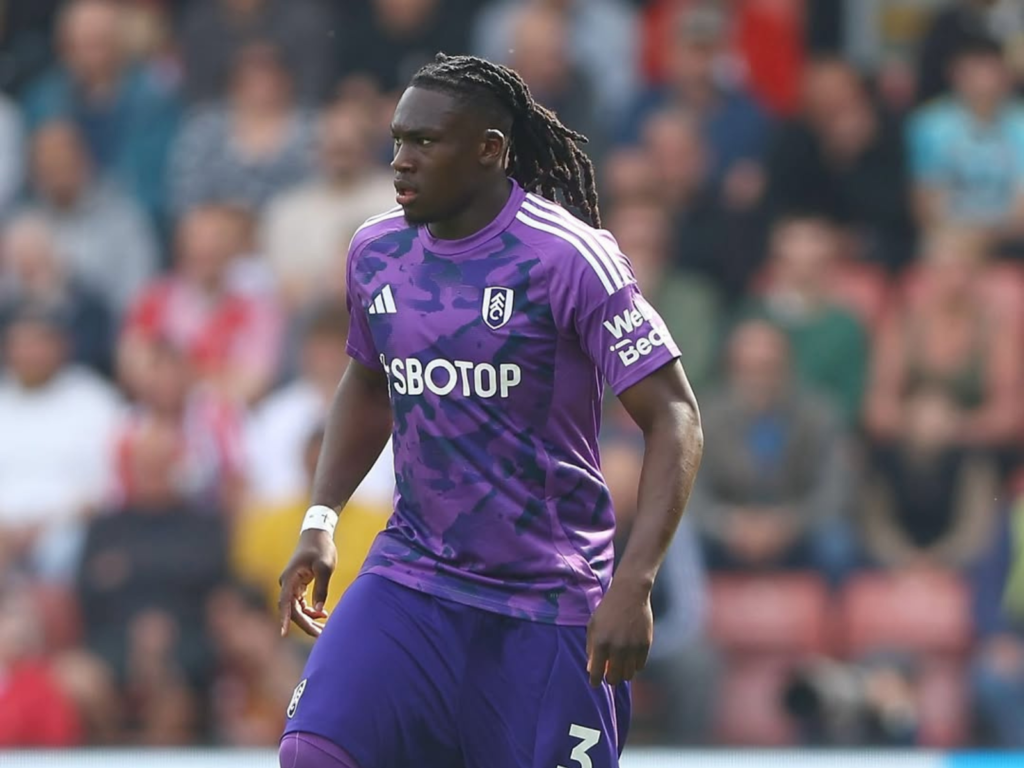
    9. Ola Aina — £2.08 million/year

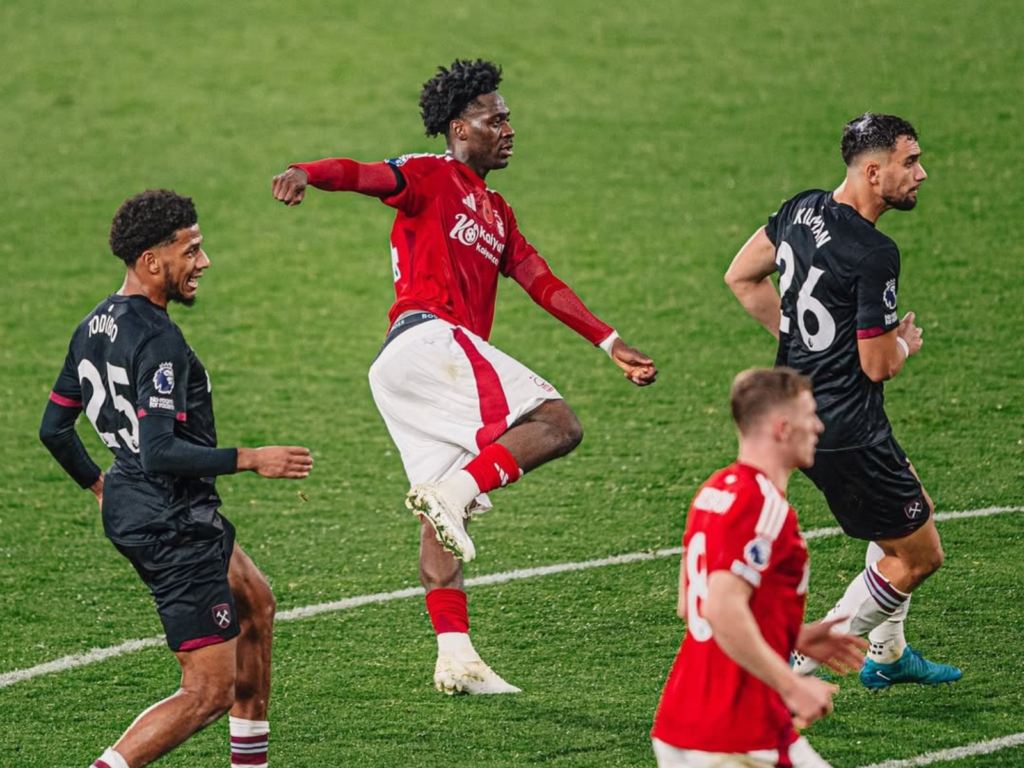
    Ola Aina plays for Nottingham Forest in the English Premier League. He earns £2.08 million per year (around £40,000 per week), with his current contract running until June 2025 following a one-year extension. Aina came through Chelsea’s academy and spent time at Torino in Serie A before joining Forest in 2023. He has been a consistent presence in Nigeria’s national team.
    10. Victor Boniface — €2 million/year

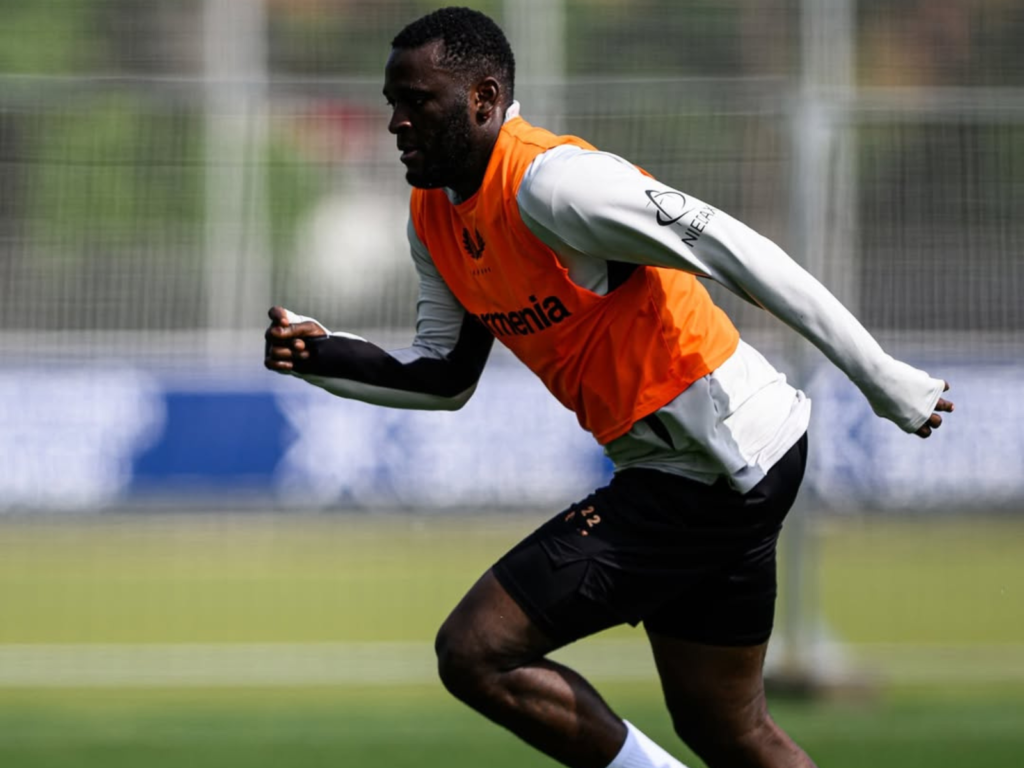
    Victor Boniface plays for Bayer Leverkusen in the German Bundesliga and currently earns around €2 million per year (about €38,462 per week), making him one of the highest-paid Nigerian footballers in 2025. Boniface began his professional career at Bodø/Glimt in Norway, then moved to Union Saint-Gilloise in Belgium before signing for Leverkusen in 2023.
    Click here to see what other people are saying about this article on Instagram


    Also Read: Top 10 Richest Men in Nigeria — And What You Can Learn From Their Big Money Moves


    Get More Zikoko Goodness in Your Mail

    Subscribe to our newsletters and never miss any of the action

    [ad]

  • Whether it’s Messi, Ronaldo, or Yakubu, this quiz knows who your football GOAT really is.

  • Can you match these popular football players to the clubs they currently play for? If you think Ronaldo plays for Real Madrid, quickly unhinge that thought before you start the quiz.

    Go on:

  • Don’t call yourself a big football fan if you can’t match these coaches to their clubs.

    Take the quiz:

  • As told to Mariam: 

    In this article, Stella talks about wanting to be a footballer as a child but not having the resources or the support needed to do so. 


    I started playing football when I was eight years old. At first, I played with the boys in my village. Then I played at school competitions and with the local church team. At some point, I was even the captain of my school football team  When I scored goals, I won gifts. Sometimes, people gave me money for playing so well. The money wasn’t a lot, but it meant something to me. My football coach at school made me promise that I would never stop playing football. 

    I lived with my aunty, and she hated that I played football. When I was 11, my school had a competition, which I told her about. t But on the day of the competition, she refused to let me go. I cried so much but she stood her ground. Before she went out, she left me with a list of chores to complete. After washing the plates, I decided to go to the competition. I ended up scoring the winning goal that day. It was amazing but by the time I got back home, it was already 10 p.m. I was too afraid to go into the house because I knew she would beat the hell out of me, so I slept outside the house. The next morning, she still beat me. I could never forget that day.

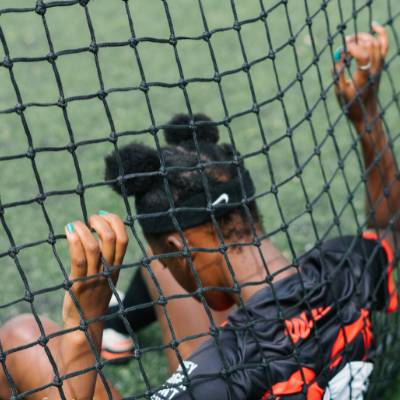
    female footballer holding net

    I was the only one on my team that didn’t have football boots. I couldn’t afford them on my own, and I knew my aunt would never buy me a pair of football boots. My mum didn’t even have money to send me to school so I knew there was no use asking her. I used to dream of going to Owerri to buy football boots. A few weeks after I graduated in 2019, my mum sent me to Owerri to be a live-in nanny for one woman so I could make money for the family. 

    In that house, the woman made me hawk pure water every day. I would stand on the street waiting for people to buy from me. Sometimes, I would get lost on my way home because the roads confused me. Whenever I got home, she would beat me. There was always a reason to beat me. I didn’t get to play football, so I was sad all the time. 

    During Christmas in 2019, I went to the village to see my family. One day, I saw my football coach and he asked if I still played football. I told him no because there was no money or no one to support me. He didn’t say anything else. He just walked away. I cried when I got home that day. I wished I had someone to support me. 

    I complained to my mum that the woman in Owerri was maltreating me, and she agreed to let me come back home. When I returned home, I helped her at her shop and helped her run errands. I was still sad when I came back because I wasn’t able to play football. I would find myself pausing to cry. 

    I went in search of my old team. Some of us had gotten admission into the university. They would call me whenever they had a match to play. One day, one of my teammates told me about a football club that was looking for female football players. She gave me the address of where the screening was to be held. During the week, I took a bus to the place. 

    They asked us to play football as part of the screening process. I scored a goal from a corner kick and they were impressed. They asked me to come as often as I could. I went there almost every day. One day, I came even though I was sick. We started playing and I was doing well. I noticed that when I passed my ball to my teammates, they wouldn’t pass it back to me, even though I was in a good position to score a goal. The rest of the team spoke Yoruba and I didn’t, so it was easy for them to talk about me. That made me feel bad and I cried on my way home. I decided to stop going to the stadium. 

    In January, there was a competition and I joined the game. My team ended up winning. Some of my teammates were people I met at the football agency. Later that week, representatives from the agency reached out to me. They wanted me to join their team. They offered me a one-year contract where they would pay me  ₦30k every month. That means I would stop playing matches for other brands or even for leisure. I signed and joined their team in March, 

    For a while, I felt good with myself. At the end of April, they paid me ₦5000. When I asked, they said some money was deducted for health insurance and tax. By May, I realized that there was a long list of fines. It included things like being late to training, unwarranted yellow or red cards or fighting within the agency’s premises. At the end of the day, you are left with nothing. 

    In June, they told us they had issues with their bank account so they didn’t pay us that month. They didn’t pay in July either.  I have gotten used to it. I am just happy I get to play football. My dream is to play football professionally and represent Nigeria internationally. I have three siblings in the village and they all look up to me. I pray I don’t disappoint them. 

    Subscribe to our HER newsletter for more stories about African women and how they navigate life.

  • Can you identify up to 7 of these Nigerian female footballers?

    Give it a try:

  • You think you’re a true football fan? Identify up to 8 of these Nigerian footballers to prove it.

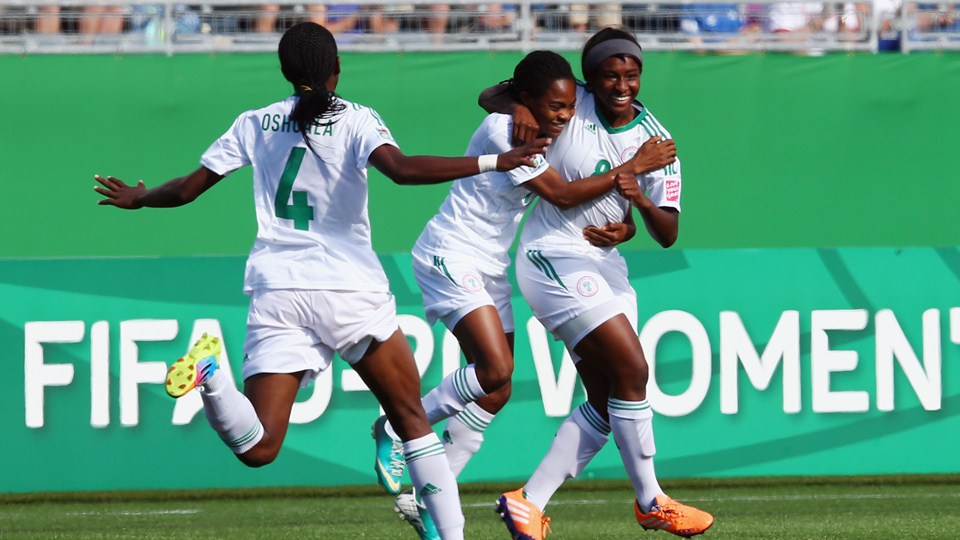
  • Ardent lovers of football will recognise names like Cynthia Uwak, Courtney Dike and Asisat Oshoala in the female football industry.

    These footballers are part of the women who keep the game as interesting as the contemporary football matches played by their male colleagues.

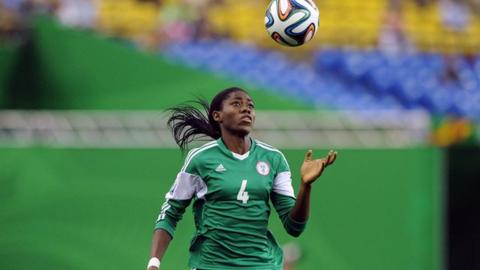
    Dropping out of school to pursue a career in professional football, Asisat got her big break when she got offered a chance to represent Nigeria at the FIFA U-20 Women’s World Cup in 2014.

    She brought all her skills to the field and earned herself the Golden Boot and Golden Ball awards for her brilliant performance throughout the tournament.

    This trailblazer joined the Nigerian Senior female team, the Super Falcons, to represent Nigeria at the African Women’s Championship.

    The team won the tournament and she was presented with the golden ball award for being the best player in the competition.

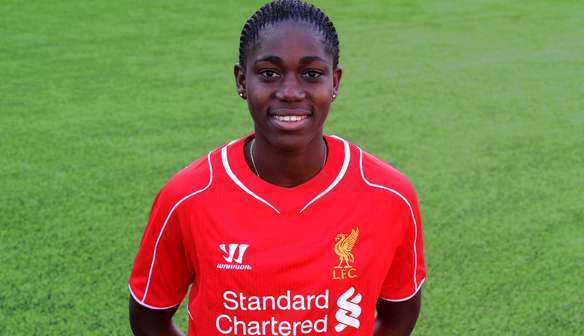
    In 2015, she joined international football club managed by Matt Beard, Liverpool Ladies.

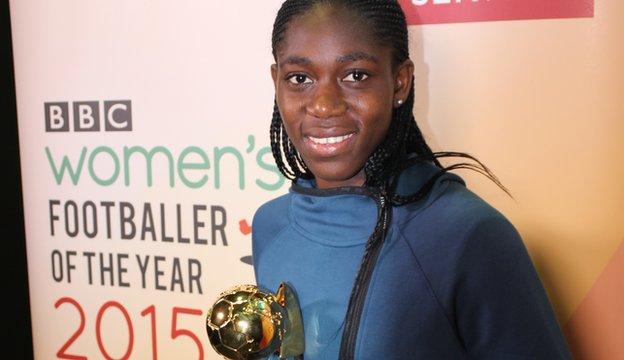
    That same year, she won the BBC Women’s Footballer of The Year award and is the first African woman to play in the FA league.

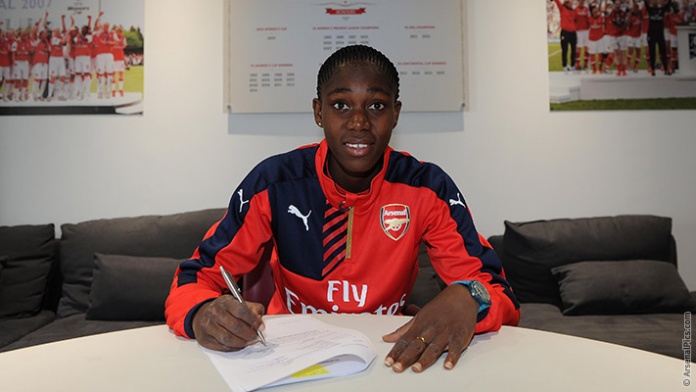
    Arsenal Ladies made Liverpool Ladies a transfer bid for Asisat early in 2016.

    On March 18 2016, she completed the signing process for Arsenal Ladies and is set to join the team immediately.

    This goes to show how underrated female footballers are. Slay on, Asisat!