• Every week, Zikoko seeks to understand how people move the Naira in and out of their lives. Some stories will be struggle-ish, others will be bougie. All the time, it’ll be revealing.
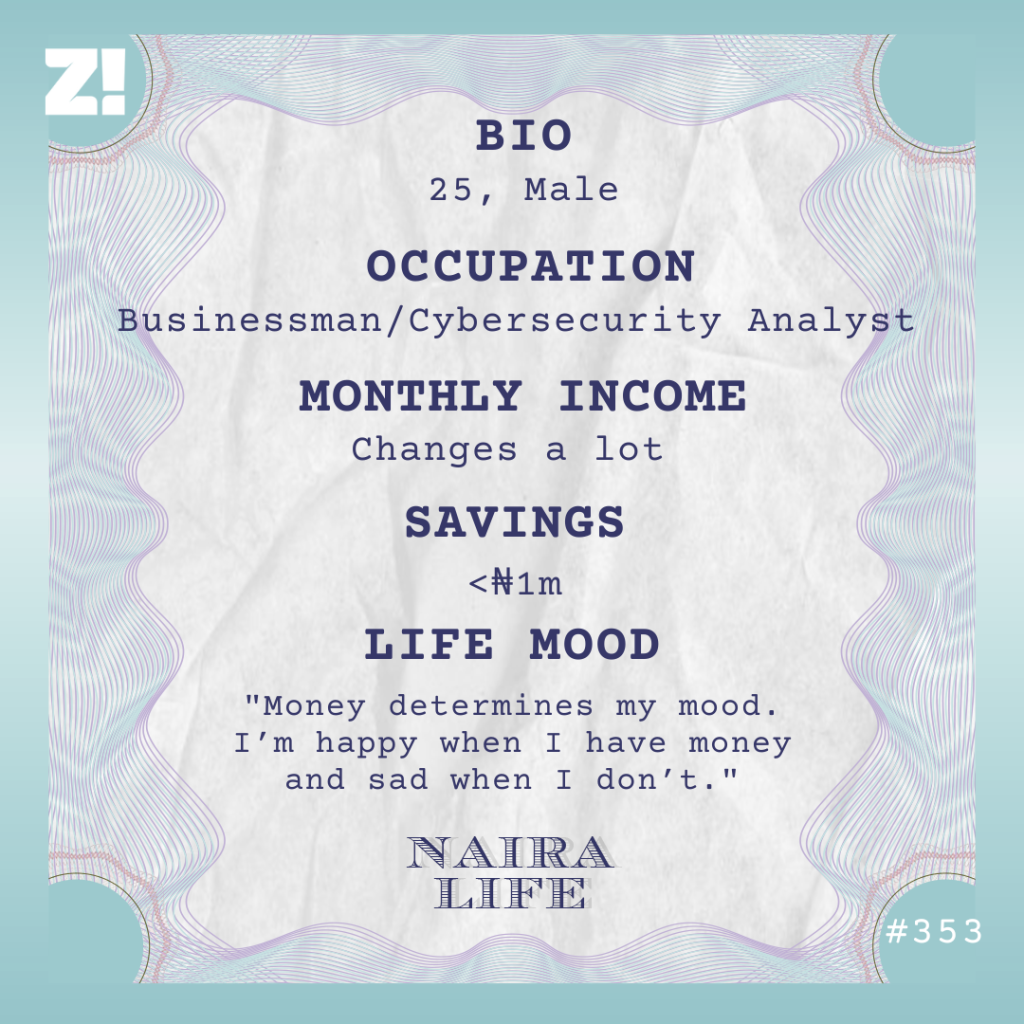

    Nairalife #353 bio

    What’s your earliest memory of money?

    I began to have a strong desire to make money when I was 11 or 12 years old. It was largely due to my family’s financial situation. I didn’t know what having money meant, but I knew what poverty looked like, and I wanted better.

    Tell me more about your family’s financial situation

    I was raised by a single mother who didn’t make a lot of money as a civil servant, so things were difficult. While my friends attended private school and received toys, I attended public school and managed food. 

    I noticed this difference in our quality of life pretty early, so I often thought about making money. The first time I was able to do so was at 15 years old.

    What did you do?

    I taught primary school students. I was still in secondary school at the time — either SS1 or SS2 — but I’d work as a holiday lesson teacher for makeshift schools in the area for ₦4k/ month.

    I also made money running errands for people, mostly in the ₦20 or ₦50 change they told me to keep. There was also an estate beside my street where I’d go to help rich people bathe and walk their dogs for little money here and there. When the dogs had puppies, I helped the owners market and sell them on an online marketplace and earn between ₦2k – ₦4k in commissions.

    I finished secondary school in 2016 and returned to teaching at schools. The first job I got paid ₦8k/month, but I worked there for only two months. I was more of an errand boy and cleaner than a teacher. I moved on to another school that was supposed to pay me ₦12k/month. I didn’t last one month there because the middle-aged proprietor began to move funny.

    How so?

    The man was making some “funny” sexual advances. I ignored him until he started asking me to wait behind after others had left. Ah, I resigned immediately.

    Next, I worked as a cleaner at a school for ₦15k/month. I worked there for three months before I got an admission offer to the university. This was still 2016.

    Did you also try to make money in uni?

    I had to. I didn’t have a specific allowance from home. Sometimes I’d get ₦2k per week, other times ₦5k or even ₦1k if I collected food stuff. Money wasn’t consistent, so I needed to find ways to support myself. I did that by rearing rabbits.

    Rabbits?

    Yes. I love animals. I bought one rabbit, which I reared at home before I got into uni. She gave birth to six kits. Three died, and I took the remaining three with me to school when I resumed. That drew attention to me, and I became the guy who bred rabbits. 

    Gradually, people started to find me whenever they wanted to buy rabbits. I’d help arrange the purchase from a farm and earn commission. Over time, I expanded my operations and used any extra money that came my way to buy a few more rabbits and build a cage. That way, I could breed my own rabbits, sell them, and make a higher profit. I was selling them as pets, not for meat, but I was still making good money. 

    “Good” might be a stretch because I’m talking like ₦3k/week, but for someone who often trekked an hour to school because of transport fare, it was good enough for me to survive.

    You mentioned you were selling the rabbits as pets, not meat. Is there a difference?

    Yes. To sell rabbits for human consumption, you need to sell in large quantities to be able to meet clients’ demands. That’s big man business, which I didn’t have the capacity for. I only had like 7 or 8 rabbit kits a month. So, selling them as pets was the way to go for me. 

    People hardly bought rabbits as pets, but I had a strategy that allowed me to sell them at a premium price. I’d create content about how rabbits were quieter, cheaper to feed and maintain than dogs. I also spread the word that my rabbits were trained. Rabbits aren’t easy to train, but since mine were often in my room, they got used to being around humans. 

    I’d make videos to show how I could call them to come to me. The rabbits came because they knew I probably had food, but to people, it showed that the rabbits were trained and could listen to commands. So, while others could sell a rabbit for ₦1500 or ₦2k, I could sell mine for as much as ₦5k or ₦8k. Guys even bought them to gift their girlfriends. Business was good.

    However, as I was getting money, everything went back into the business. I had to expand and feed the rabbits, and it became difficult to maintain. Then, a bag of rabbit food was ₦3k. Imagine a struggling student buying bags of food every week for rabbits. 

    So, even though the business grew very fast in just a year, it fell off just as fast. The final blow came when I was in 200 level.

    What happened?

    There was an outbreak of the RHD virus that unfortunately affected my rabbits. I had 8 breeding does at the time and I lost them one by one. I tried different remedies, even asked the person I got them from, but nothing worked. 

    So, whenever I noticed one got sick, I’d ask my roommate to put it down, so at least we could eat. I eventually sold off the remaining three for about ₦26k and the cage for ₦1k. I was able to make that much from the rabbit sale because one of them was an imported Angora rabbit I’d bought for ₦30k. I eventually sold it off for ₦20k. That’s how I stopped the business. 

    Get More Zikoko Goodness in Your Mail

    Subscribe to our newsletters and never miss any of the action

    Phew. Sorry about that. What did you do next?

    I briefly worked as a hostel agent and reposted pictures and videos of available hostels from another agent. 

    The first day I went for a physical inspection myself, I realised there are some jobs that need you to be mentally and physically fit. I went down with malaria after one inspection waka and decided the business wasn’t for me. ₦4k in commission was the only money I made from that stint.

    During this period, forex had started to gain ground in my city. Someone I knew from another hostel did a giveaway, which I participated in but didn’t win. Then I entered his DM and was like, “Omo, this giveaway you did. I’m broke o. I really needed the money.” 

    He asked me to come to his office to see him. I did, and he told me how I could start a forex business. 

    He explained that I could raise money from people, invest it on their behalf, and collect a percentage of the profit. He gave me ₦4k to start. With that ₦4k, I designed a flyer and started posting about the forex opportunity. 

    To be clear, were you trading forex?

    No, I was just the middleman. I worked with a trader who traded the money for about two weeks before paying out the profit. The profit margin on investments was around 20% – 30% bi-weekly, and my cut was typically 5% or 10% of the total investment + profit, depending on my agreement with the investor (the person whose money I was taking). 

    For instance, if someone invested ₦1m and we earned ₦1.4m after two weeks, I’d only return ₦1.2m or ₦1.3m and keep the balance. Fortunately for me, people trusted me, and it was easy to convince them to give me their money. 

    In the first month, I rallied five people who invested between ₦400k and ₦3m. By the end of that month, I had earned ₦1m in commissions. To give you a full picture of how crazy that was, I’d never had up to ₦80k cash at once at that time in my life. 

    When I saw that ₦1m, I went to the bank and withdrew ₦200k. Then, I took it home, poured the money on my bed and slept on it. I had never seen that amount in cash before. The next day, I packed the money again and deposited it back into my account.

    That’s wild. How did this sudden windfall impact your lifestyle?

    Omo, I didn’t handle money well, and I think that was natural. I mean, I went from struggling to survive to making my first million. It was a big change. 

    Some people say that money can’t change them, but I believe it’s because they haven’t seen the amount that’ll change them. Money changed me, and I didn’t quickly realise that I was losing my head.

    I started making money from forex, and suddenly I couldn’t cook again. Me, who used to cook palm oil rice and slice onions inside tomato paste to make stew, suddenly realised I wasn’t eating healthy. So, I started ordering food. 

    I went from eating chicken once in a blue moon to three times a day. Now, I can’t bring myself to eat chicken anymore because that’s all I ate when I started making money, and I’m tired of it. 

    My lifestyle completely changed. I bought my first iPhone, an 11 Pro Max. Also, I started going to the club, buying expensive stuff and hanging out with friends. 

    You were balling

    I was. People kept investing in the forex business, and I continued to make money. This was around 2019. I even registered my brand as a proper business, employed a graphic designer and social media manager to create content for me. I think I paid the designer ₦15k/month. 

    It was a structured setup, and I made money. At some point, I had up to ₦9m and was even considering buying a car. Then, you could get a small Toyota car for like ₦1.5m. I didn’t go through with the purchase because I couldn’t drive and didn’t really need a car.

    Interestingly, the period when I finally attempted to get a car was when the business came crashing down. This was in January 2021.

    It turned out that the people trading the money weren’t legitimate forex traders. It was a Ponzi scheme, and they ran away with ₦6 billion of people’s money, including mine and my investors.

    Damn. I imagine your investors tried to recover their money from you

    Of course. I nearly died during that period. Interestingly, I had just returned from a vacation and only had ₦32k in my account when everything went to shit. Investors wanted to kill me with calls. Some turned to the police. 

    One time, I had just returned home from settling police officers after one arrest when a police van from a different station came to pick me up. I became a celebrity; the police were just looking for me. I couldn’t stay at my hostel either because of the guys who wanted to beat the hell out of me and burgle my apartment. I had to stay at a friend’s place.

    How did you get out of that situation?

    My saving grace was that I’d made my investors sign an MOU. In the document, I’d set up the contract so that they were essentially agreeing to recover only 5% of their initial investment in the event of a crash. I’d done that after a smaller crash had happened to limit my exposure and how much I had to pay back. Many people didn’t read the fine print of the MOU and simply signed it. 

    So, when that wahala started, I created a group with all 19 investors affected and showed them evidence of what had happened. I’d been clear from day one that I wasn’t the trader; just a middleman. Fortunately for me, most of the people who invested heavy amounts of money chose to let it go. It was the ones who invested little money that wanted to take my life. One of the guys who arrested me invested ₦10k. I eventually returned his 5% as ₦500 data. 

    I sha found a way to return most people’s 5%. Some of them argued that the agreement wasn’t legal because there was no lawyer present when they signed it. It was a lot of back and forth, but that’s how that era ended. 

    I lost everything and went right back to being completely broke.

    Phew. Out of curiosity, did you invest in any safety net when you were making money?

    Hmm. I invested in myself alone. I consider that period the biggest mistake I’ve made, but also not exactly a mistake. There is some money you make in life that only comes with lessons. People say, “opportunity comes but once,” but that’s only helpful when the opportunity comes to someone prepared and mature. 

    Imagine that kind of opportunity coming when I was barely 19 and with the limited exposure I had. I was bound to make mistakes, and I don’t regret it. I’d make the same mistakes again if the situation repeated itself with the same level of knowledge I had then.

    Omo, I lived the life then. Land of ₦1k, I didn’t buy. Instead, I invested in myself aggressively. I went on multiple vacations, started looking good, and bought whatever I wanted. I even bought diamond earrings for the girl I was dating at the time. On her birthday, I used a car to deliver gifts to her. Me too, I know I made mad idan moves. Giveaway dey cry.

    I’m screaming. How did you cope with the lifestyle changes that came with losing everything?

    It was tough. A few weeks after the forex incident, I travelled out of my school area to stay with a family friend for about a week. I just needed a place to survive. That visit unexpectedly provided me with a lifeline.

    When I had money, I’d developed an interest in drones and had bought one for ₦40k just to practice with. When I visited the family friend, I decided to do what I knew how to do: be a middleman. But this time, for drones. So, I got prices from a vendor and began posting drones for sale. 

    My first sale came with a ₦35k profit. When I closed that deal, I said to myself, “Okay. Maybe there’s something here.” That’s how I started selling drones. I also took on a few drone event coverage gigs and got someone to operate the drone while we shared the ₦15k – ₦30k coverage cost.

    Over time, I made enough money to upgrade my drone, which cost approximately ₦500k, then later to a more expensive one. In 2022, I upgraded my business registration to include my drone sales and event coverage business. It’s still my primary source of income today. 

    I also earn random money from real estate commissions on the side, as I served my NYSC year with a real estate company between June 2024 and 2025. However, it’s not consistent. I don’t market it a lot because I don’t want to take attention away from my major hustle, which is selling drones. 

    What’s your income like these days?

    My income is wildly unpredictable. I run a business, and can’t determine when people will buy. I can make ₦300k this month, ₦1m the next and absolutely nothing for the next couple of months. 

    In March 2023, I made ₦2m in one month. The next time I made money from drones that year was in December, and I made only ₦40k. That’s how it is. I’m not selling fish. Drones are expensive, and I tend to only make a good profit when people buy expensive ones. I might only make ₦20k on a ₦200k drone, but I can make over ₦200k from a ₦3m drone. Unfortunately, those deals only come occasionally.  

    Besides the drones, I take on various random jobs to earn money. I can take on a video editing gig today and help someone buy a pet tomorrow for little money here and there. Even if it’s ₦10k or ₦15k, just bring.

    I get it

    I’m also on the lookout for remote cybersecurity internships. I studied a professional diploma course in cybersecurity during my NYSC year after a Twitter contact told me about a scholarship opportunity. The scholarship allowed me to pay $15/month instead of $30 for the one-year program. I was interested in tech and mostly curious about the field, so I joined. 

    The only problem now is that landing my internship might mean rearranging my life. I’m not based in Lagos, and most of the opportunities I’ve found require moving there. It’s crazy because these internships don’t want to pay more than ₦50k/month. 

    Even crazier, I’m seeing jobs requiring three years of experience offering ₦250k – ₦300k. That’s not nearly enough to justify a move to Lagos. So, my goal is foreign remote jobs that pay in dollars. 

    How would you describe your relationship with money now?

    I’ve seen money, so it doesn’t freak me out anymore. It’s safe to say I can’t make the mistake I made when I was touching forex money. However, money determines my mood. I’m happy when I have money and sad when I don’t. 

    That said, I think I’m in a better place. I’m not where I want to be, but I can manage my life with what I earn. I may not like chicken anymore, but I can afford it. I don’t spend carelessly, but I still make sure to buy things that make me happy. 

    I also try to save in a way that my savings can “save” me when I’m not making sales. I don’t have a specific figure I save each month, nor do I lock away money. What’s the point of locking it just to enter debt when I urgently need it? So, I just do what I can.

    What do your savings look like now?

    I don’t think it’s up to ₦1m. My dog has been ill for a few weeks, and I’ve been spending a lot of money on his health. I also recently got some perfumes and am preparing for December oblee and expenses. So, that’ll most likely eat into my savings.

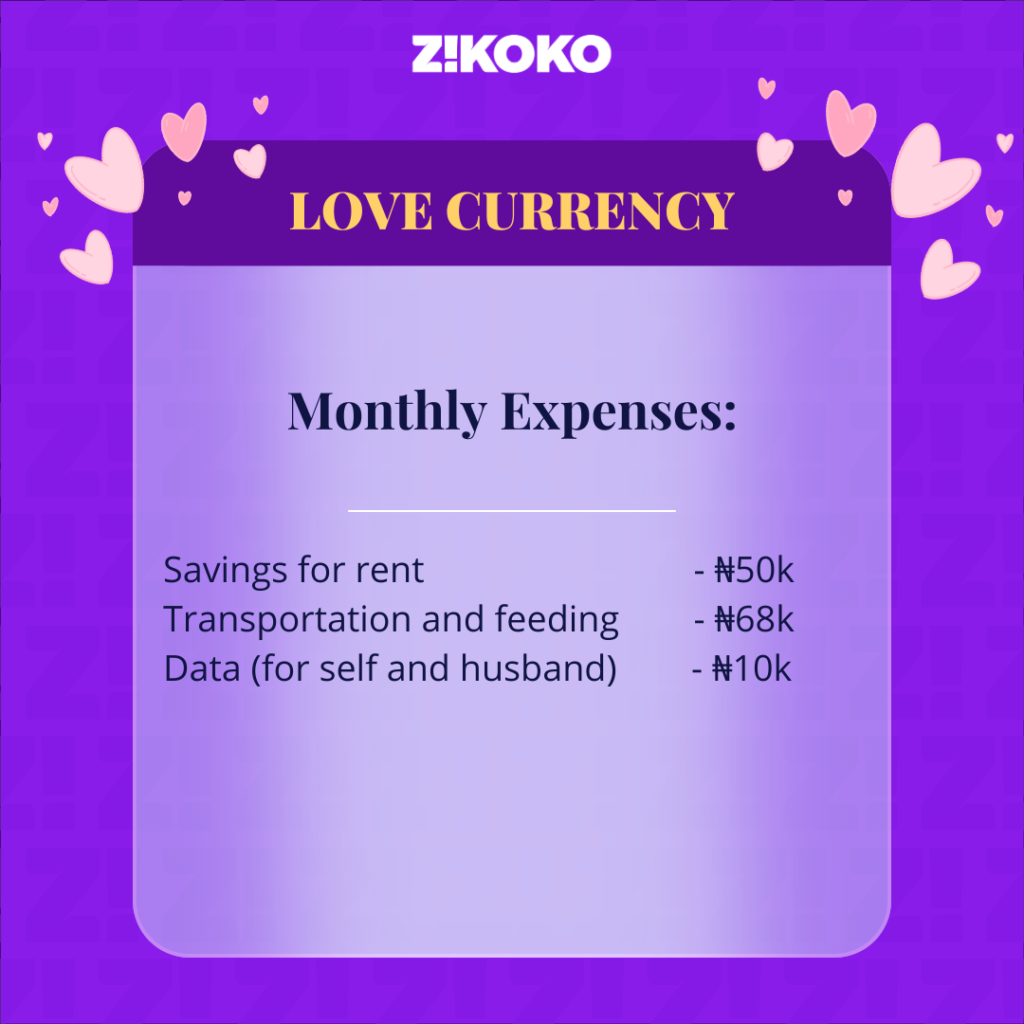
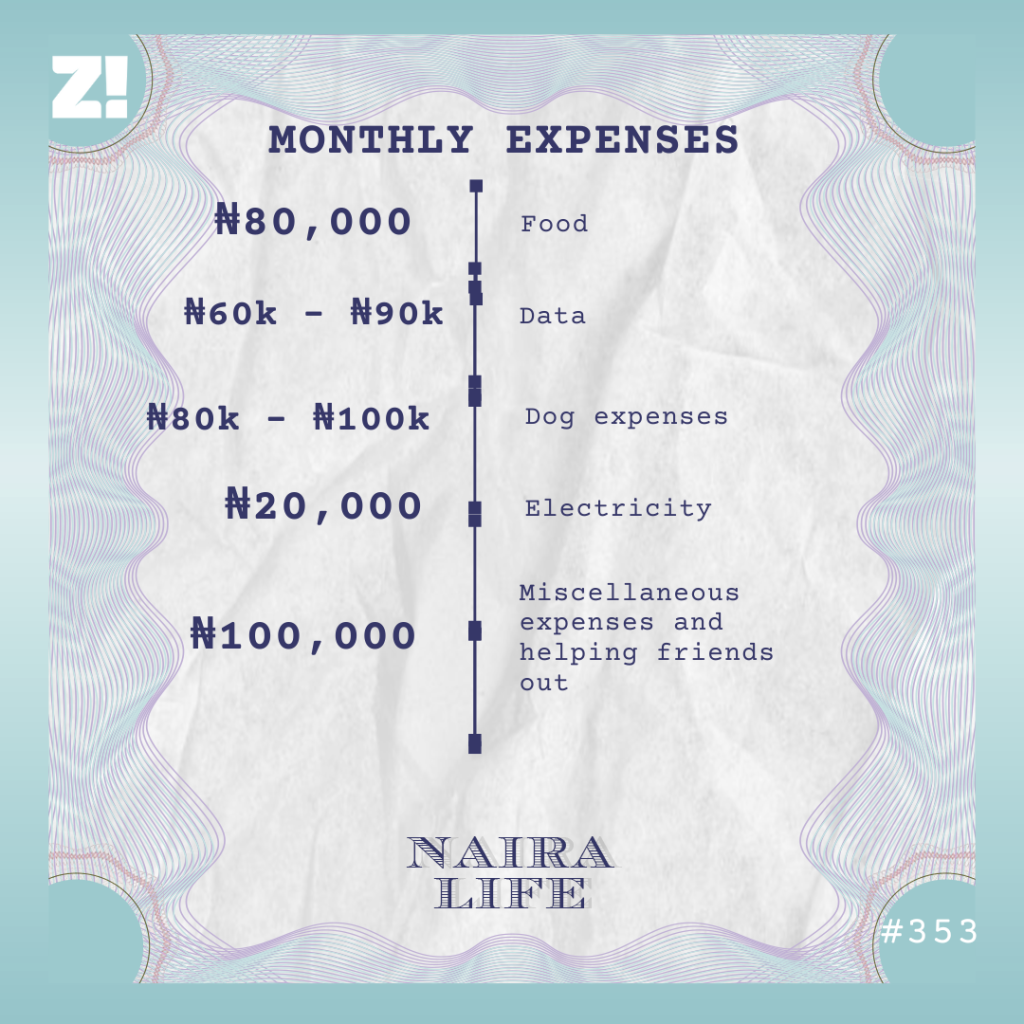
    Let’s break down your typical monthly expenses

    This depends largely on how much money I make each month. I can spend carelessly when I have money, and be extremely prudent when I’m broke. But here’s a decent average:
    Nairalife #353 expenses

    What do future plans look like for you?

    I hope to have a strong and steady business. I would hate to be working a nine-to-five job. If I have to, it has to be remote work. I just want a stable life with a supportive partner and to be able to afford the basic good things of life. Yearly vacations wouldn’t be bad, either.

    Is there anything you want right now but can’t afford?

    A power bike. I ride my friend’s own and would really love to own mine soon. I might need around ₦3.5m to ₦4m for that. I can’t even save towards it because expenses keep coming to take away whatever money I manage to keep aside.

    I can relate. How about the last thing you bought that made you happy?

    I bought my perfume collection a few weeks ago, and my total spend was slightly above ₦200k. I liked that I was able to afford what I wanted.

    How would you rate your financial happiness on a scale of 1-10?

    5. I’m grateful that I can live a good life to a certain extent. However, I don’t have a stable income, and I’m unable to make long-term plans as a result. 


    If you’re interested in talking about your Naira Life story, this is a good place to start.

    Find all the past Naira Life stories here.
    Subscribe to the newsletter here.

    [ad]

  • Every week, Zikoko seeks to understand how people move the Naira in and out of their lives. Some stories will be struggle-ish, others will be bougie. All the time, it’ll be revealing.


    GrabrFi gives Nigerians access to open a US checking account, receive USD payments, spend globally with an international Mastercard, and convert funds to naira—all with no hidden fees. Built for remote workers, freelancers, and creators earning globally. Start here.


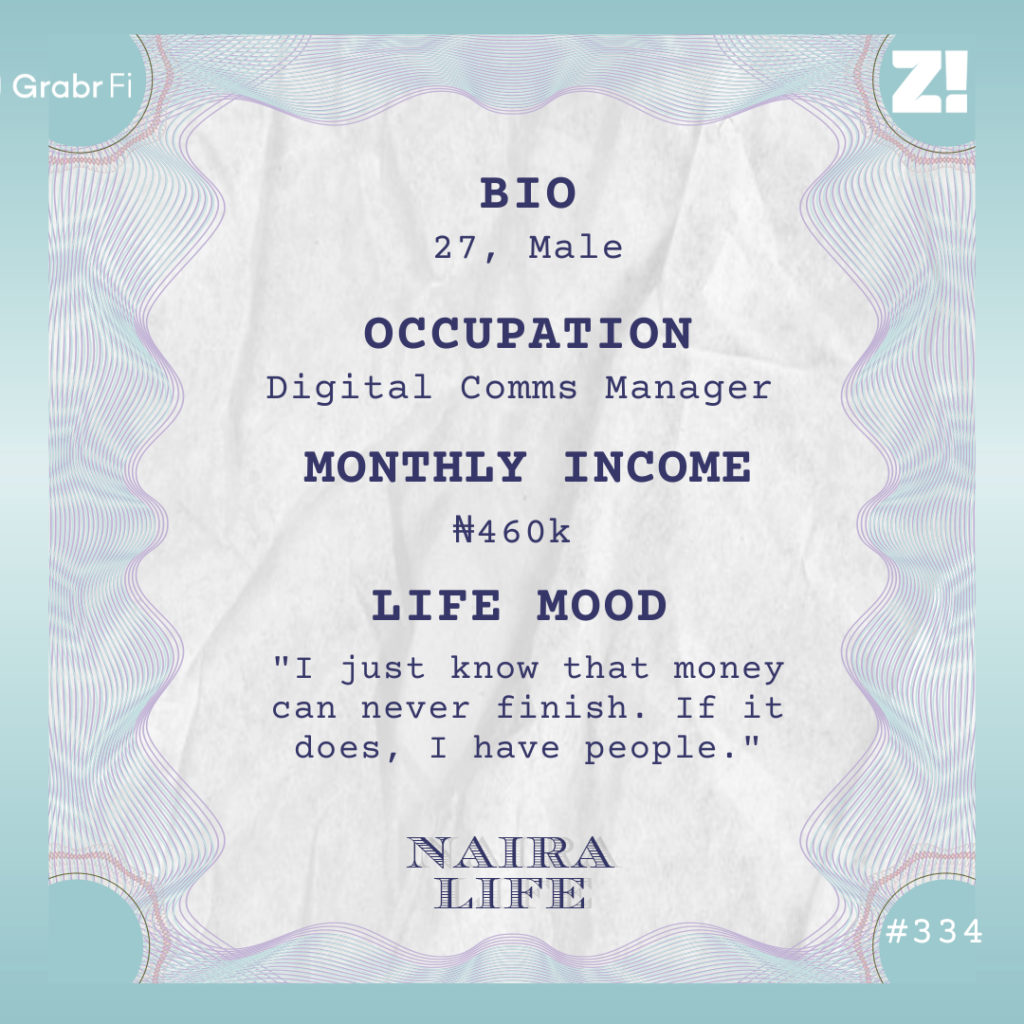
    Nairalife #334 bio

    What’s your earliest memory of money?

    Two events come to mind. When I was around 10, I started helping my dad keep stock records at his factory, and he paid me ₦20 or ₦50. I can’t remember how much exactly; I just know it was a very small amount of money.

    The second event is also within the same period. My dad sat my brother and me down and gave us a book he titled “Be wise.” Then, he taught us about the Book of Proverbs and how to manage money. I think he saw how I was blowing money anyhow, and wanted me to be more intentional about how I spent. He talked a lot about saving. To be honest, I didn’t really care.

    Ah. So his speech didn’t have any effect on your life?

    Well, it did a little. At least, in secondary school, I saved for weeks to get my first phone: a Tecno L3 for ₦13500. I remember printing out the picture of the phone and putting it on my locker so I could see it when I woke up every day. I saved all my ₦1k/week pocket money and any extra money I got from relatives to get that phone. 

    Saving for the phone may have been an isolated event, though. After secondary school in 2014, I got a job working for my cousin. She was in a different state and needed someone to follow up on her clients for some training programs she organised. My job was basically to call the clients and schedule the training. 

    She paid me ₦10k/month and recharge card. I did that for three months and blew all the money on parties and other random things. See why my dad was trying to get me to make better financial choices?

    Haha. I see. Speaking of, what was money like growing up? You mentioned your dad had a factory

    Yeah. He made and supplied fragrance across the country. It was like our family business; my mum worked there, too. I was a nepo baby growing up. There was no stress about money or anything like that. 

    At some point after secondary school, things changed a bit. The insurgency in the north — apparently, northerners buy fragrance the most — and the fluctuating exchange rate affected business. My dad had to switch business models, and our living standards reduced slightly. But it was nothing major. We moved from about 17 cars (including personal and commercial) to about four. 

    I mean, there were still cars. Let’s go back to the stint with your cousin

    I did the job for three months and didn’t do anything again for money until 2016. By then, I was in 200 level at uni. Does this classify as working for money, though? That was when MMM and its cousins were popping, and I used most of my ₦60k allowance to get in on the action too.

    I actually made a lot of money in those Ponzi schemes. Money flowed in, and I lavished it on clothes, food, outings, and my babe. She was in Ireland, and I’d regularly send her money in Bitcoin. I had no plan for the money, so I didn’t even take note of how much I was making and spending. After the schemes crashed that year, I still had about ₦200k. I spent that one, too. 

    In 2018, I started getting a little serious about money. I was in 400 level, and decided to try some businesses with my friends.

    What kind of businesses?

    The first one we tried was importing electronic shisha pens from China. I told my parents, and my religious mum wanted to lose her mind. But my dad said, “Abeg, let’s run this thing.” He gave me the initial capital I used to import the first set of goods. 

    The profit was high. Each pen cost ₦500 and we sold it at ₦5k – ₦8k. It would’ve been great, but we sold too many on credit and getting paid became a hassle. Plus, shisha doesn’t hit like weed does. It’s just like puffing flavoured smoke. So, the pens weren’t too popular. Overall, we had a lot of operational inefficiency, and the business didn’t kick off. We did it for six months.

    The next business I tried was a total failure. 

    What happened?

    I went to school in a state that isn’t as developed as Lagos, and my business idea was that people could pay me a percentage to get them gadgets from Lagos. The first client I got wanted an iPhone 6. 

    He gave me ₦40k, and I found someone willing to sell me the phone on an online marketplace. I paid the person and never saw the phone. Long story short, I had to pay off the ₦40k gbese. That’s how the business ended. 


    Join 1,000+ Nigerians, finance experts and industry leaders at The Naira Life Conference by Zikoko for a day of real, raw conversations about money and financial freedom. Click here to buy a ticket and secure your spot at the money event of the year, where you’ll get the practical tools to 10x your income, network with the biggest players in your industry, and level up in your career and business.


    Phew. Did you try another?

    No abeg. After uni in 2019, I returned to Lagos and chilled for a bit. I felt NYSC was a waste of time, so I didn’t go immediately. Instead, I took advantage of Buhari’s N-Power scheme to learn mixology. I didn’t pay for it; they still paid me ₦10k/month. My dad also supported me with pocket money that year.

    To finish the training, I did a three-week internship at a hotel. I suffered in that hotel, sha. Imagine standing for hours to fold towels. I just kept thinking, “So people actually do this?” It was really depressing. It took me going to NYSC camp in November and blowing all the money I’d gathered — about ₦100k — for me to leave that depressive state. So, if you’re ever in a shitty head space, the key to recovery may be to blow money away. 

    Skrim. Results may vary. What did you do after camp?

    I didn’t want to return to the hotel, so I called my cousin and told her I wanted to do digital marketing. I first learned about digital marketing in university when I attended a seminar on the topic. I liked its flexibility, and I continued gathering bits of knowledge about it over the years. 

    So, when it came to looking for a PPA, I knew that’s what I wanted to do. My cousin helped me land a ₦25k/month social media management internship with a design agency. This was in addition to NYSC’s ₦19800 stipend and the ₦10k from N-Power. The N-Power payments lasted a year. After about two months, the NYSC stipend also increased to ₦33k, bringing my total income to almost ₦70k.

    Was this good money?

    It was. I didn’t have major expenses; I lived with my parents and drove to work. My dad also paid for fuel, so my life was chill.

    Things changed when COVID hit. My job slashed my salary to ₦20k, and the lockdown affected my dad’s business. By then, he’d switched from producing fragrance to running event centres, and no one was going to events. No money entered that house during that period. Omo, I touched suffer. For the first time in my life, my brother and I had to contribute money to support the home’s expenses.

    Thankfully, things looked up towards the end of 2020. I got my first big boy job as an account executive at a marketing agency.

    How much was the pay?

    ₦150k/month. I deployed paid media ads for national and international brands. It was a huge deal, but it was also stressful. At least the money made up for the stress. My family’s situation had improved, so I didn’t have to pick up bills. I was just sending money on outings and food.

    You were balling

    Yes, and it gets better. My brother is an ethical hacker, and he managed to find a loophole in the betting system. 

    I can’t really break it down, but it involved depositing naira and withdrawing the higher dollar equivalent before converting again at the black market rate. The exchange rate meant we made far more than we put in. We also kept the money in USDT and Bitcoin. Essentially, we were betting without losing money. In a day, we could make up to ₦500k.

    You say?

    See, there was money. We balled for five months before the loophole closed. We’d go for long drives, stock the fridge with chocolate and do whatever we wanted. My brother was the brains of the operation, so he had a higher share of the loot. While he used his money to buy lands, I was just balling mine. 

    I had a girlfriend, and we could just wake up on a random day and decide to chill at hotels. I still saved a little sha. I had ₦1.2m saved when the operation finally crashed. Losing that income source pained me, but it is what it is. I also quit my job. This was in 2021.

    Wait. Why did you quit?

    The job stressed me too much. Agency work is a lot. My blood pressure consistently spiked, and it was too much for me. So, I quit and crashed at my friend’s place.

    For about two months, my routine was to wake up, smoke, spend the day lying down on my friend’s couch, and eat noodles. After I got that out of my system, I turned to freelancing. I figured it’d give me more control over my time, and I could still do digital marketing without an agency breathing down my neck.

    How did that go?

    I had a good start. A friend I’d made at the agency called and offered me a gig. It was for a brand I’d worked with before, so the campaign went well. The downside to freelancing was the pay, which is based on the campaign budget. 

    For instance, the campaign budget could be ₦10m for a quarter. The agency takes 10%, which is ₦1m. Out of that ₦1m, my pay is 30%, which is ₦300k, and that’s it for the quarter. Sometimes the agency won’t even pay on time and pile up payments for months. 

    On a good month, I was averaging ₦75k – ₦100k/month. Other months, I was poor as they come. I had the time I wanted, but money? That was another story. After freelancing for about 10 months, I decided it was enough. I applied for my current job at a government-owned agency and got the role.

    What was the role?

    Digital communications manager. When I joined in 2022, my net salary was ₦350k with allowances as high as ₦100k/month. I just got promoted this year, and my net salary has increased to ₦460k. Allowances are an extra ₦140k-ish monthly, but it’s paid in bulk at the beginning of the year. This windfall is around ₦1.6m/year.

    Not bad

    I won’t even lie; I live a comfortable life. I mean, I still want far more than what I currently have. I want to drive a Mercedes-Benz and travel to Casablanca. But I have the basics. I live in a shared apartment and pay ₦450k for rent. My transportation costs aren’t too crazy.

    I also don’t have any black tax nonsense. I still get financial support from my dad and brother. For instance, they just increased my house rent, and I’ll probably have to leave. I know I can rely on my dad and brother for support. He also readily sponsors my personal development plans. 

    I’m a part of the Toastmasters community, and my dad paid the initial ₦145k fee for me to join. He also sent me ₦100k for my birthday. My dad randomly sends money to my brother and me. We don’t ask, but he does it. Who am I to reject free money?

    I understand like mad. How would you describe your relationship with money?

    Very chaotic. I just know that money can never finish. If it does, I have people. I believe in borrowing money from friends to make considerably large purchases. So, instead of using 100% of my funds, I can borrow like 50%. That way, I don’t stretch my account too thin and can easily pay it back. I can’t spend my money and then start soaking garri. That’s nonsense.

    I started this “strategy” when I was freelancing. When I noticed I could make money this month and make nothing the next, I borrowed. The money would help me guide until money came again. I also stretched the repayment plan so I could afford to repay without stress. 

    I don’t borrow often, only strategically, and my creditworthiness is very high. People know I always pay back, so they don’t have problems loaning me money. I recently borrowed ₦600k from a friend to buy an iPhone. I spaced the repayment into three months, and paying back was easy. 

    Interesting. 

    Also, still on my relationship with money, I’m the worst at keeping track of my expenses. I’ve tried, but it’s not working. So, I don’t overthink it. Once I’ve paid for a few necessary things, I lock my money in a separate account and keep it as a backup for rent or emergencies. It’s not really savings because I still take from it, if necessary. 

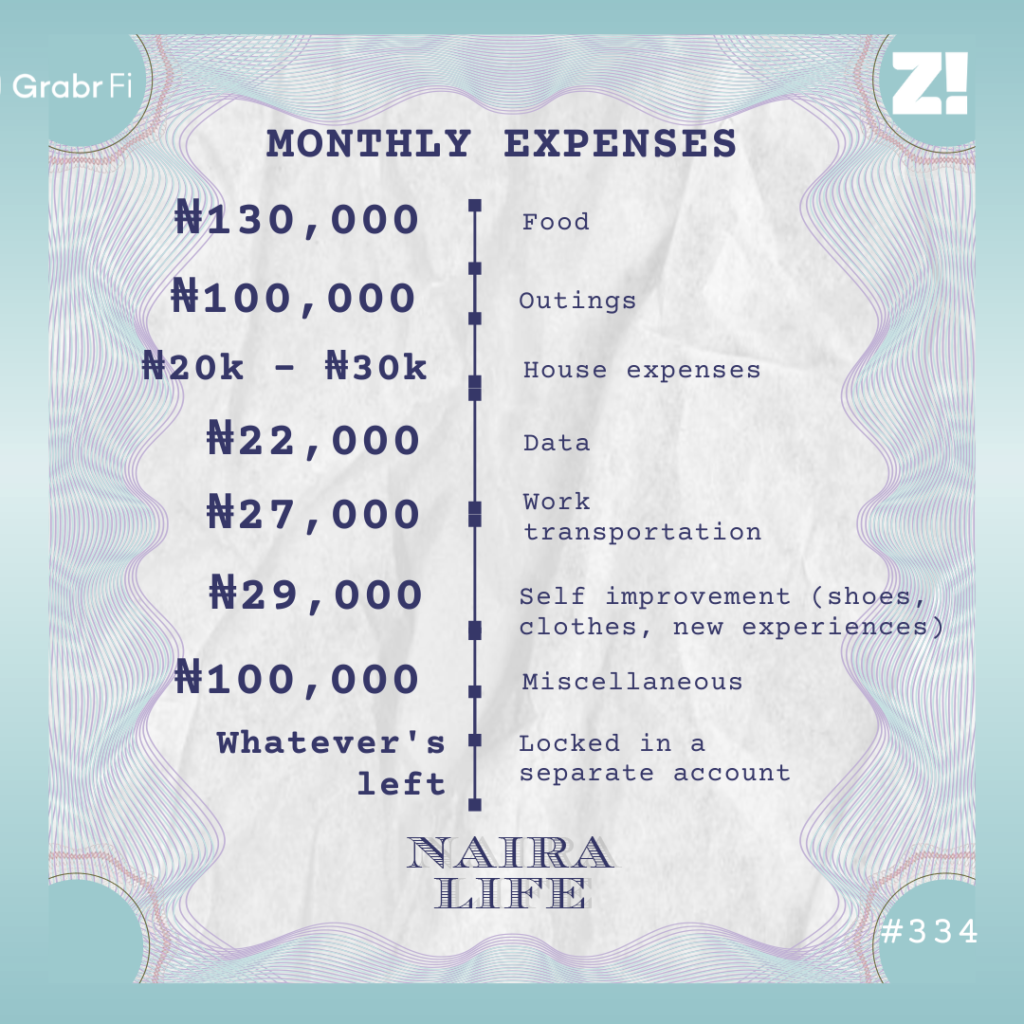
    What do these expenses look like in a typical month?

    Tracking isn’t my strength, but I’ll try.

    Nairalife #334 expenses

    Is there anything you’d want to be better at regarding your finances?

    I want to be better at managing it and having a tracking system so I know where my money is going. 

    Do you have any financial regrets?

    Maybe I shouldn’t have gotten a 9-5 job. Freelancing would have given me more self-control because I’d know I don’t have a set amount of money coming every month.

    Besides that, I don’t have any regrets. I’m comfortable. It can be a softer life, but I dey okay.

    How much do you think would give you a softer life?

    ₦4.5m/month. I’m not necessarily expecting that from a salary. I’m thinking more in terms of starting my own business or joining the family business. I have a few ideas in mind, but I’ll wait for them to happen first before I share. But I definitely want to go into business. Let me have some free time and money to loaf around and allow the devil to use me small.

    Screaming. Is there anything you want right now but can’t afford?

    A Toyota Camry. I haven’t even checked the price.

    How would you rate your financial happiness on a scale of 1-10?

    7. I’m doing pretty well for myself. I don’t lack or want anything. I’m single, so no Nigerian babe to give me unnecessary expenses. I can be better, but I’m doing okay right now.


    If you’re interested in talking about your Naira Life story, this is a good place to start.

    Find all the past Naira Life stories here.

    Subscribe to the newsletter here.

    Get More Zikoko Goodness in Your Mail

    Subscribe to our newsletters and never miss any of the action

    [ad]

  • When Fathia* (29) got engaged to her long-term partner, Seyi*(31), she imagined their future would be built on teamwork. But after a job loss created a major financial imbalance, the tension in their relationship has started to grow. Now, she’s caught between the fear that her support might be breeding resentment, and the scarier thought that silence might cost them everything.

    This is Fathia’s Story, As Told To Mofiyinfoluwa

    My fiancé, Seyi, and I have been together for almost four years. We got engaged last year, and while we’ve always had our ups and downs, I truly believe we are perfect together. From the beginning, we had a healthy dynamic. He had a solid job at a bank, and I work in tech. Even though I earned a little more, it was barely an issue. We split bills evenly, he took the initiative on dates, and we agreed to split rent when we moved in together. He was generally thoughtful and dependable.

    But last November, he lost his job during a round of mass layoffs. At first, nothing major changed. He kept applying for roles, networking, and doing everything he could to bounce back. I didn’t hesitate to step in. I had enough to cover rent and other expenses, and it felt natural to take that on while he figured things out. If you love someone, you show up. That’s how I saw it.

    Thankfully, he landed another role at a startup in February. When I asked about the pay, he said it matched his old salary. I was relieved and thought we could return to our normal routine. But instead of things improving, he grew quiet and withdrawn. At first, I blamed it on the stress of adjusting to a new work environment, but then we had our first major argument that exposed everything. 

    We’d planned to get married next March and agreed to save 40% of our monthly earnings in a joint account to fund the wedding. Of course, we paused that plan when he lost his job. But now that he had another, I brought it up and even set up the account myself. That’s when he started dodging wedding conversations. One day, out of nowhere, he suggested we move the wedding to 2027.

    Get More Zikoko Goodness in Your Mail

    Subscribe to our newsletters and never miss any of the action

    I was stunned. We’ve been engaged for a year already. My family barely tolerates us living together before marriage, and I don’t think I can mentally survive another two-year wait. I pushed back hard, but he refused to give me a clear reason for the delay.

    Out of frustration, I confided in a mutual friend. That’s when he casually dropped a bomb — Seyi borrowed money from him to cover his share of our rent for the year, which we recently paid. I was shocked and couldn’t believe what I’d heard. I had offered to pay the full rent if things were tight, but Seyi insisted we split as usual. If his new salary matched the old one as he claimed, why borrow money? Something wasn’t adding up.

    Worried and, honestly, suspicious, I went through his phone. I expected to find some major spending or money going elsewhere. Instead, I discovered the truth; his new salary was less than half of his previous salary. I now earn over three times more, and he never said a word. That discovery hit me like a truck.

    What confuses me is why he kept this hidden. I’ve never thrown money in his face. I’ve always tried to make him feel secure. I asked for his input on all our decisions, even when he lost his job, and tried to be extra thoughtful and sensitive. But maybe that’s part of the problem.

    When we discussed the joint account a while back, I remember how tense he became. He got defensive and said I was doing “too much” and “trying to control everything.” That comment stuck with me since then, and now, I’m scared to bring up the salary lie. I don’t want to embarrass or make him feel emasculated, but I wish we could be honest with each other.

    I don’t even mind taking on most of the wedding costs. I’ve thought about it seriously. But now, I keep asking myself if I’m really doing too much. Where is the line? 

    I mentioned it to my sister recently. She didn’t say much, but her expression said it all. She’s the kind of person who believes the man should be the provider, no matter the situation. And while I don’t agree with that, I also can’t shake the fear that maybe I’m missing something.

    Click here to see what others are saying about this article on Instagram


    Read Next: An Abortion Made Me Lose My Soulmate 

    [ad]

  • The topic of how young Nigerians navigate romantic relationships with their earnings is a minefield of hot takes. In Love Currency, we get into what relationships across income brackets look like in different cities.


    How long have you been with your partner?

    I’ve been married to my husband for 10 years, and we’ve been together for 12.

    How did you both meet?

    Funny story. Akin was in a relationship with one of my old classmates, and we met when he accompanied her to my school’s alumni reunion in 2012. The lady abandoned him to flirt with another former classmate, so Akin angrily left. The whole drama played out in front of almost everyone at the reunion, and I remember feeling so embarrassed for him.

    A few days later, I saw his Facebook profile and impulsively sent a friend request. He accepted almost immediately and sent me a message. He remembered me from the reunion, and we joked about how his babe left him for another guy. About three months after we started chatting, we met up, and love entered the picture. I moved in with him a month after we started dating.

    So fast?

    Akin was the first boyfriend I ever co-habited with, and I don’t even know where the confidence came from. My landlord had just increased my rent from ₦66k to ₦120k, and there was no way I’d pay that amount for a tiny face-me-I-face-you room. The initial plan was to find another apartment my ₦35k receptionist salary could afford, but househunting took a lot of time.

    Akin didn’t want me to rush into getting an apartment that’d turn out worse, so he asked me to move in while I searched. I never thought I could co-habit with a lover because all you ever hear is that men take advantage of free bumbum and cooking. 

    But I asked myself, “What’s the worst that could happen?” At 28 years old, I wasn’t a small girl. If I became uncomfortable with the situation, I could just leave. So, I stayed, and it turned out well. 

    What was co-habiting like?

    It was pretty smooth. Akin and I worked well together and shared everything from finances to chores. When I told my friends I paid for foodstuff and handled bills around the house, they thought I was stupid. Like what woman lives with a man who isn’t her husband and pays for things? But I didn’t see it as a big deal.

    Did you both share the bills and expenses equally?

    Not at all. It wasn’t like he asked me to bring money for anything — he worked in a bank and earned way more than me — we just liked to spend on each other. 

    I could buy foodstuff on my way home from work, and he would do the same the next day. If NEPA bill met me at home, I would just pay it. That’s how we did it. Akin paid the rent, though.

    When we got married in 2014, we still approached our finances the same way. That said, we’ve had to make several changes over the years.

    What kind of changes?

    Between 2014 and 2017, Akin was the sole provider. I had our children and couldn’t juggle motherhood with a job. 

    However, he lost his bank job in 2017 and started a tiles business, which meant we were no longer sure of a specific amount coming in monthly. So, I looked for a job to support the family.

    I got a teaching job with the federal government through a family friend, and my first salary was around ₦80k. Once I received my salary, I’d take ₦15k out for transport and sit down with Akin to plan how to spend the rest. On his own part, he sent his weekly profits to me to hide in a separate account for our rent. 

    It probably sounds like we were so in sync, but we occasionally fought about money.

    What were the fights about?

    First, they were mostly due to financial pressure. I felt like I couldn’t even dictate how to spend my hard-earned money because he kept tabs on my salary. When I felt like that, I complained, and it almost always led to arguments.

    Sometimes, Akin also kept profits to himself and would go weeks without giving me any money to keep. Whenever I noticed that, I complained, and he’d argue that he also wanted to hold money in his hands and spend without having to explain to me. 

    At that point, I’d go, “Ehen? But you know exactly how much I earn and help me spend it right?”

    So, yes, we fought about money a lot. But after the flare of emotions had died, we’d talk about it and understand it was normal for both of us to feel that way. It’s normal for us each to want to dictate how we spend our own money. But ultimately, we had to put family first and combine our resources for our children. When money fights happen now — which isn’t often — we try to remember that.

    Glad it’s working out. What are your finances like these days?

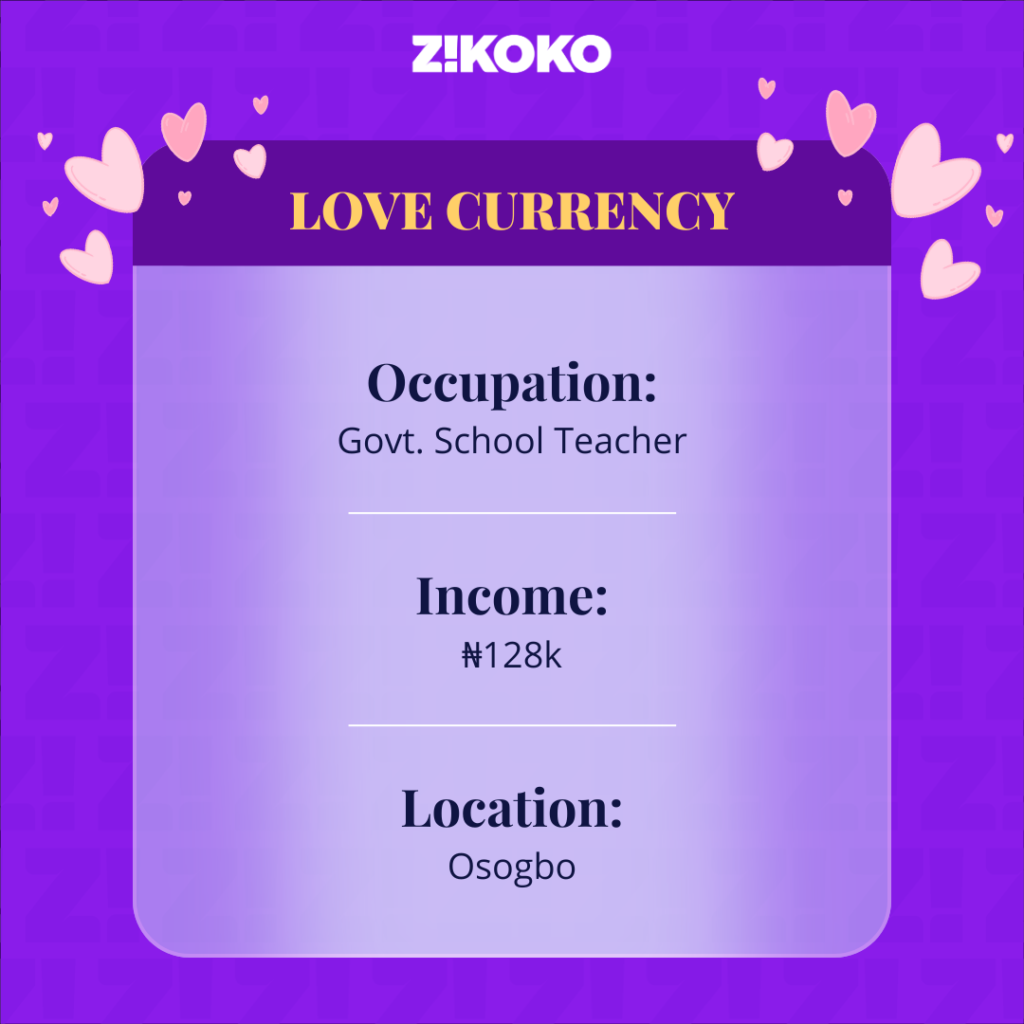
    Numbers-wise, we earn more, but I don’t think it shows in our standard of living. In a good month, Akin can make like ₦200k from his business. I now earn ₦128k, bringing our total average monthly income to ₦300k+, but we still struggle a lot.

    Our house rent is ₦650k, and I save at least ₦50k monthly for that. The remaining ₦78k can’t feed my family for three weeks, and there are still small expenses like children’s clothes, medication and the rest. 

    Akin still keeps money with me, but now we use that to handle school fees and major expenses. For example, we bought a washing machine for ₦180k in 2024. Everything else he makes goes into daily expenses like transportation, feeding, utility bills, fuel and sending money to our families.

    Do you both have a relationship budget for dates and romance stuff?

    Romance ke? Haha. We don’t o. Sometimes, my husband buys me suya when I disturb him about no longer putting effort into toasting me. We also take the children to cinemas and eateries during festive occasions. On my last birthday, he bought me a bag and a pair of shoes. I also bought him shoes for his birthday.

    I don’t mind that we don’t always buy each other things or go out. I know how difficult things are, so it won’t be reasonable for me to ask. My husband is kind to me and helps me with everything. 

    Before we got the washing machine, Akin did all the laundry by hand. He’s a good man, so I understand our situation. I don’t mind spending all my money to make our lives easier. That “the man must provide everything” story doesn’t apply in my home. 

    What’s your ideal financial future as a couple?

    My husband and I always talk about owning our home one day. If big money hits our hands, we’ll just erect a building of two or four flats so we can live in one flat and rent out the others for passive income. That would solve more than half of our problems.

    Interested in talking about how money moves in your relationship? If yes, click here.


    *Names have been changed for the sake of anonymity.


    NEXT READ: This Social Media Manager Wants Her Close-Fisted Boyfriend to Change or Risk Losing Her

    [ad]

  • The Nigerian experience is physical, emotional, and sometimes international. No one knows it better than our features on #TheAbroadLife, a series where we detail and explore Nigerian experiences while living abroad. 


    LemFi is the no. 1 mobile transfer app for sending money from the UK directly to Nigerian banks within minutes at the best rates and with zero transfer fees! Sign up today and enjoy a £5 bonus for your first transfer to Naija. Download now!


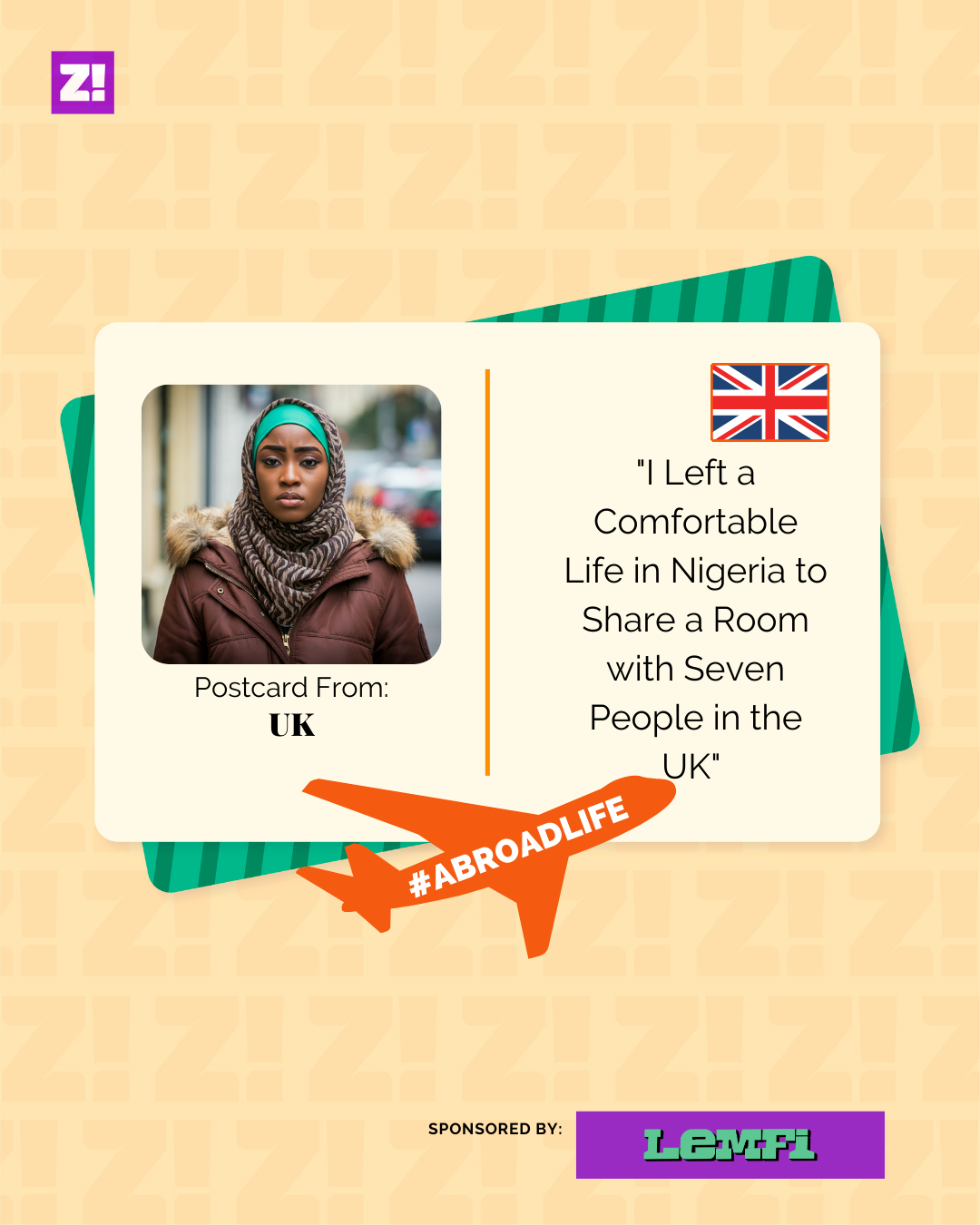
    Mariam, the subject of this week’s Abroad Life, knew comfort,  financial safety and annual vacations in Nigeria but when she moved to the UK, life forced her to live in the worst condition she’d ever known. She talks about sharing a one-bedroom apartment with seven other people and struggling to continue her education in the UK.

    Where do you live, and when did you leave Nigeria?

    So I am based in the UK, and I left Nigeria two years ago.

    When did leaving the country become an option for you?

    It just happened. My parents decided that it was time to move. I was in my first year of university when they started making preparations, and they wanted us to leave as soon as possible because of me.

    Oh, why?

    They didn’t want me to continue my education in Nigeria. I was still a fresher, about to write my first semester exams, when they started making relocation plans; I was coming back from night class one day, and my mom called me, telling me that they’d booked my flight.

    That’s interesting. How has life been since you moved?

    It started out really rough. When we moved here, we expected jobs and accommodation because of the route my parents came in with, but none of that happened. Thankfully, we had family members that we could stay with.

    We were a family of five staying with a family of three in a one-bedroom apartment. That was how stranded we were. That situation made me realise that moving abroad isn’t the flex people make it out to be. My parents had friends who had gone through the same route; those friends were offered rosy promises but suffered the same disappointing experience we did , and they didn’t tell anybody in Nigeria. They actually went through worse than we did because they didn’t have family members in the UK. They had to sleep in airports, but they didn’t tell us that was what they encountered coming here because they didn’t want people to know that they were suffering abroad, so they just suffered in silence and waited for the people who were coming to experience it themselves. 

    What was it like living in that kind of condition?

    It was easy at first. Most people try to be nice to visitors when they arrive, but we still had some misunderstandings.

    There were times when my siblings and I would have to go hungry because we didn’t want to bother the family we were living with. My parents were always out looking for jobs, but we still couldn’t afford even snacks.

    It was almost like we left a good life in Lagos to come and live in the worst conditions in the UK. I think we all regretted moving at that time. We still had people back home who had high expectations because we were abroad but the good thing is that if you’re suffering abroad, it’s not easy to tell because the system is kind of supportive. People can’t even tell that you’re suffering because you still look good in pictures.

    Can you tell me more about what life looked like in Nigeria?

    We were a middle-class family, and we were really comfortable. Our parents could provide for us, and we didn’t have to struggle compared to when we initially moved to the UK. We could afford whatever we wanted. We could even go on vacation abroad.

    Do you know why your parents made the decision to leave Nigeria?

    They didn’t really have reasons because they travelled a lot. They’ve been in and out of the country for recreation and holidays. I think my mom was the main driver behind that decision. She made the decision out of fear for the future of her kids. I’m her first child, so she had already planned my life for as long as possible.

    My dad worked in a multinational company in Nigeria so he had friends whose children graduated and started struggling to get good jobs.  Even the ones that were relying on their parent’s connection to get good jobs still struggled. All my mom wanted to do was make sure I didn’t end up in that situation.

    How is life now compared to when you first moved?

    It has improved significantly. Things eventually fall in place when you have God by your side. We have our apartment now. 

    We moved into the apartment at midnight, and I can still remember how we carried our boxes on our heads. We had to sleep on our clothes the first few weeks because it was an unfurnished apartment.  It was a tough situation to adjust to. 

    Back in Nigeria, my parents were landlords, so it was a humbling experience watching them build their lives from scratch. It made me realise that things can change in a split second. Our quality of life has improved so much now. I literally quit my job last month because I can’t be bothered. That’s how comfortable we are now.

    Are you back in school now?

    My siblings were able to start their education in the UK easily, but, I couldn’t.

    I was told that I had the option of going back to write my General Certificate of Secondary Education (GCSE) or write the Confirmation of Acceptance for Studies (CAS) exam because they didn’t recognise my secondary school leaving results.

    If I had gone back to write GCSE, I would have been in the same class as my younger sibling. This was hard for me to process, not only because I would have been in the same class as my younger sibling, but I would also have had to go back to where I was academically about three years ago. 

    Thankfully, I met someone who helped me get through that situation. Apparently, the school I was applying to didn’t recognise the results, but there were many other schools that had similar cases with immigrants. If I didn’t reach out to this man, God knows where I’d be academically. I later got into college after waiting for a year; I’m currently in my second year of college, and it’s been an amazing experience. I got a scholarship, I’ve made new friends, and I’ve been helping immigrants who are in the same academic situation

    Would you say you now prefer life in the UK to your life in Nigeria?

    I definitely prefer the systems and structures the UK has set up compared to Nigerian systems. I really love the UK education system because when you work, you see the results of what you do. Quality of life is also better here, but life here comes with some cons–you can get all the opportunities you want and still not be happy with yourself, whereas in Nigeria, you can be yourself, and people will accept you.

    Moving here, I didn’t know the different layers of identity I’d have to pick up. I got here and realised that I was a black Muslim woman. You also have to be able to identify when people are being racist towards you. I’ve had some experiences I would rather not revisit.

    So, in essence, the UK offers loads of opportunities, but Nigeria offers peace of mind, happiness, and connection with your family. My long-term goal is to build my life here and move back to Nigeria. That’s how bad it is.

    On a scale of one to ten, how happy are you living abroad?

    I’m grateful. That’s all I can say.


    This episode was brought to you by LemFi.


    Do you want to share your Abroad Life story? Please reach out to me here. For new episodes of Abroad Life, check in every Friday at 12 PM (WAT). 

    [ad]

  • Recently, American actress Gabrielle Union and her husband became the subject of multiple internet think pieces after she revealed they take a 50/50 approach to their finances as a married couple.

    Considering Nigeria’s mainly patriarchial society that still pushes the male-head-of-household mantra, I reached out to married Nigerian women to confirm whether there are Nigerian homes that employ the 50/50 approach to finances, too. It turns out, there are.

    “At least, nobody can call me a burden” — Tola*, 33

    I got married immediately after graduating from the university in 2015. I didn’t have a job, but he made enough money for both of us. He never complained about it, and I didn’t think getting a job was necessary. When we had twins in 2017, he began to murmur about expenses. One day, I asked him for money for a friend’s asoebi, and he said, “Do you want to kill me with demands?” I reported him to an older friend who told me to get something to do if I didn’t want my husband to develop hypertension.

    When my children turned six months, I told my husband I wanted to find a job. He agreed, and luckily, I found a job quickly and got my sister to live with us and help out with the kids. Now, I give him half of my salary immediately it enters and still buy things in the house. My family usually says, “Isn’t your husband supposed to be taking care of you?” I don’t care. At least nobody can call me a burden.

    “It just works” — Precious*, 29

    My husband and I have a joint account, (separate from our personal accounts), where we send half of our salaries at the end of every month. It’s money from this account we use to sort out household expenses. We’ve done that for two years now, and it works for us. When money in the joint account isn’t sufficient for a particular expense, my husband makes up the difference.

    “It’s my way of showing support” — Lolade*, 27

    My husband and I have always gone 50/50, even before marriage. We’d go 50/50 for major dates and did the same for our wedding. Now, he handles household expenses like rent, fuel and major home repairs, while I handle groceries, data and Netflix bills, and little needs. When we have kids, we’ll also figure out a way to split. I earn more than he does, so it’s my way of showing support.

    “It’s quite tough” — Mimi*, 36

    My husband is really conservative. If not for the state of the nation, he wouldn’t even allow me to work at all. He got me a clothes retail shop some years ago on the condition that I’d use my income to support the home. It started out well, but recently, I’ve had to take up almost 70% of the household expenses, including the children’s school fees. He’s usually owed salaries at his workplace, so most times, we have to borrow from my business. This money hardly gets refunded. It’s quite tough because I have zero savings, and I can’t even complain because it’d seem like I’m being disrespectful.


    RELATED: “My Take-Home Salary Doesn’t Take Me Home” – 7 Nigerian Blue-Collar Workers on Their Incomes


    “We only go 50/50 on rent” — Nana*, 28

    When we decided to move to Lekki to be closer to work in 2021, we agreed that we’d have to split the ₦3m rent because neither of us could afford it alone. That’s the only thing we split 50/50. For other household expenses, we just attend to them as they come. He can buy foodstuff at the supermarket on his way home today, and I can remember we need engine oil when I step out tomorrow and just buy it.

    “It’s not a rigid arrangement” — Chinny*, 30

    My husband and I each earn below ₦100k per month, and we know it’s impossible to have an average standard of living if we rely on only one person’s salary. So, we pool half of our resources together to settle the bills and school fees of our two kids. It’s not a rigid arrangement. Some months, I may take up 70% of the expenses, and other times it’s 40%. We just do whatever we can to survive.

    “It sometimes feels unfair” — Glory*, 31

    My husband and I decided to go 50/50 when I got a job that paid more than his in 2021, but it sometimes feels unfair. I only agreed to go 50/50 when money started being an issue in the house. He felt I had money but was comfortable with him being broke, so I agreed to the arrangement to let peace reign. His idea of 50/50 doesn’t apply to household chores. I still do everything in the home. I’ve brought this up a number of times, but he takes it to mean I want to start ordering him around because I have money. If I can support him with the finances, why can’t he support me with chores?

    *Names have been changed for the sake of anonymity.


    NEXT READ: 6 Women on the Burden of Being Breadwinners in Their Families

  • One day, you’re wondering where to find the shortest fuel queue. The next, central bank decides to change its currency, fix a short deadline on old notes, then goes ahead to make the new notes scarce and force everyone to go cashless.

    I didn’t think it’d be an issue really, until my bank started acting like the weapons fashioned against me, and I couldn’t even go cashless in peace. 
    So, I tried to survive on only ₦500 cash at hand for two weeks, and I’m still alive. It’s very likely you don’t have cash too — or you don’t have enough for the necessary small transactions — so let me teach you how to survive this period.

    Stay at home

    Whoever invented introverts knows ball. I’m not much of an outside person, but this period has further taught me the wisdom of sitting at home and eating whatever I have in my kitchen. If work makes you leave your house every day, I sympathise with you.

    Do online transfers for EVERYTHING

    When they work, at least. A friend told me how she transferred ₦300 to a pepper seller. Thing is, you won’t know who accepts transfers unless you ask. Ask that okada man for a transfer option today.

    Become interested in fitfam

    Do you really need to take a bus when you can walk? Do you actually crave shawarma, or are your village people just working overtime? You can always tell yourself you’re pursuing your fitness goals.

    Sleep

    You can’t spend money while you sleep.

    Shop at supermarkets

    Since the major problem is cash, do your shopping at places where POS transactions are readily available. Of course, your bank can still disgrace you, but what’s life without a little risk?

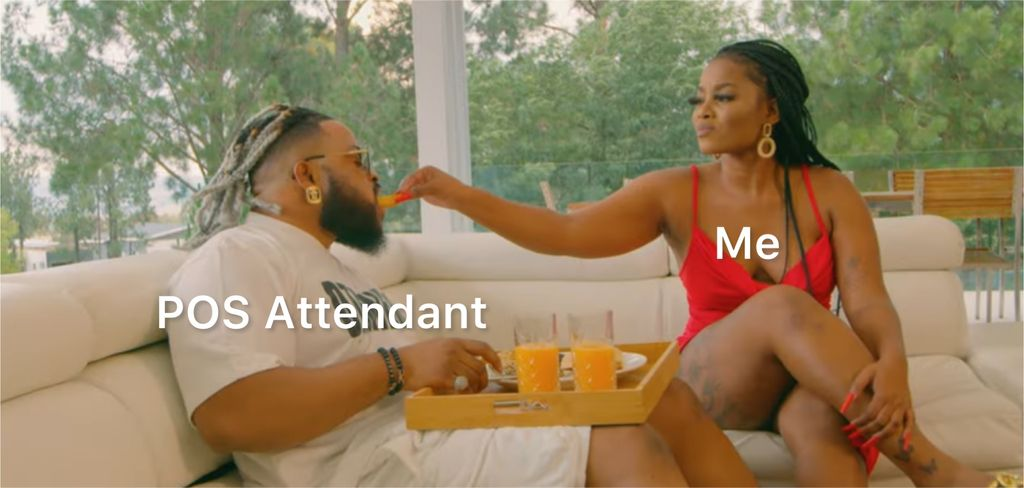
    Date a POS attendant 

    Who knows, you might get free new notes as a relationship privilege. Plus, imagine dating one of the hottest set of people in Nigeria right now.

    Just give up

    Even if you survive the two-week mark, what’s the assurance that the cash situation would’ve improved by then? God, actually abeg.


    RELATED: What Nigerian Banks Should Do Since Banking Isn’t Their Calling

  • What do you need to stop or start doing if you want your account balance to increase in stature? Take the quiz, and we’ll tell you.

  • Cryptocurrency is everywhere. All over social media, you are likely to run into TundeBTC, Amaka.Eth, Ima.sol, and similar nicknames. You want to be one of them but don’t know how to start. Or you’re simply curious about crypto as a concept. 

    This article is for you, welcome.

    Here are 5 things you need to know to be a proper crypto bro and get started as a crypto trader in Nigeria

    1. Do Your Research

    Cryptocurrency, blockchain and other related concepts can seem complex to understand, particularly with the way it is spoken about online. It often comes across as rocket science that can only be comprehended by super geniuses. We can assure you that point of view is a limited one and only exists for gatekeeping purposes. 

    This may sound overly simplistic but all it takes is a google search to start off your journey into demystifying cryptocurrency. There are tons of articles, crypto blogs, podcasts, and youtube videos explaining different terms and concepts within the crypto-blockchain ecosystem. Filter the social media crypto noise and do your own research. A great place to start is this free online crypto academy where all the crypto terms are explained in layman terms for quick understanding.

    2. Use a Reliable Cryptocurrency Exchange

    There are many crypto exchanges online, which is a good thing. The problem however is selecting the right one for you. As a crypto trader, there are certain basic criterias an exchange platform must meet such as low barrier entry, easy KYC process, affordable rates and 24/7 customer service.

    As Nigerians, we need an easier way to get into crypto and exchanges that are tailored to our reality are the best fit. Fortunately, we have several homegrown crypto exchanges like Quidax, Buycoins and Yellow card. They all have amazing features. Quidax has an order book and 0% maker trading fee. Buycoins has instant P2P. Yellow Card has quick crypto-to-cash conversion and vice versa, little to no transaction fees, best rates in the market, plus you can literally trade with just 500 Naira.

    3. Keep Your Eyes and Ears Open 

    Crypto trading requires a significant level of alertness. While it is inadvisable to dedicate every waking hour to monitoring the charts and keeping up with crypto online community discussions; It is necessary to stay up-to-date. Keep your eyes open for change in trends and keep your ears open for trading tips.

    4. Avoid Market Peer Pressure

    Peer pressure in the crypto ecosystem is very real. Even the most experienced traders have fallen prey to it at one point or another. Some might say it’s part of the cryptocurrency experience. Still, crypto peer pressure or FOMO (Fear Of Missing Out) can be avoided by always doing due investigation before buying any coin, token, NFT, or investing into a defi or web3 project. The crypto-blockchain ecosystem is as full of scammers as it is full of genuine innovators. Do not let market peer pressure coerce you into staking all your money on a scam project or investing all your funds into a scam coin/token.

    5. Never underestimate security of your assets 

    Online security has never been as important as it is today. If you look up “crypto hack” on the internet, you will find over 10 serious hacks that have happened just this year alone. Your money and assets deserve to be stored in a safe wallet. You deserve to trade on a platform that values the security of your identity and assets. Exchanges like Yellow Card understand this and have fully implemented safety measures to ensure your funds stay protected.

    Conclusion

    Trading crypto is not as mysterious or as exclusionary as social media makes it out to be. 

    You just need two things – research and a solidly built cryptocurrency exchange to get you going. 

    One of the best things about choosing Yellow Card as your crypto exchange is that with just 500 naira, you too can become a Bitcoin Baddie or a Boss.eth. You also get great USDT rates, because what good is your money if you can’t get the best value for it? Sign up to sell USDT at the best rates in Nigeria.