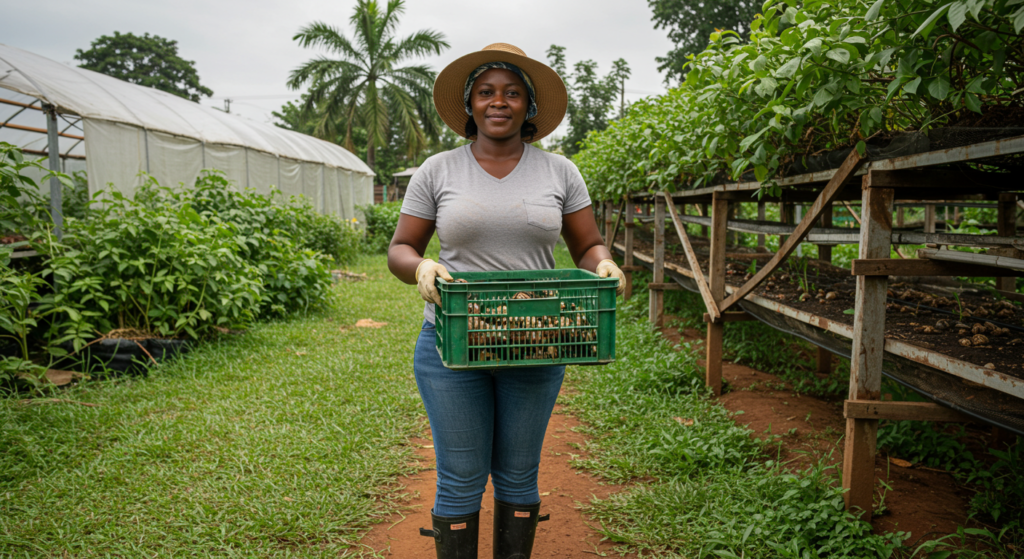
• When Ọmọlará*, 35, first tried snail farming in 2016, everything went wrong. She had no roadmap,  her snails died, and she ran out of savings. But she stayed on, learning from mentors, farming in her backyard, and documenting everything online until people started paying attention.

    Today, her farm processes up to 2,000 snails monthly, serves clients across Nigeria and the diaspora and generates up to ₦100 million in yearly revenue. 
    As told to Aisha Bello

    I run one of Nigeria’s fastest-growing snail-farming businesses. But I didn’t start with a grand vision nine years ago. I just needed something to keep me busy while waiting for NYSC.

    Growing up, snail hunting was just something we did for fun. After it rained, my friends and I would run into uncompleted buildings with empty buckets, looking for snails. Older boys in the area even paid us a few naira to hunt for them. I never thought I could turn that childhood pastime into a multimillion-naira business.

    But in 2016, fresh out of university and stuck at home for a year due to a missing exam script, I attended a youth seminar at church. A speaker listed small business ideas under ₦100k — zobo making, beadwork, and soap making. Then he mentioned snail farming. That one caught my attention immediately. My mind went back to those rainy days as a child. I was curious, excited even. It lit something up in me.

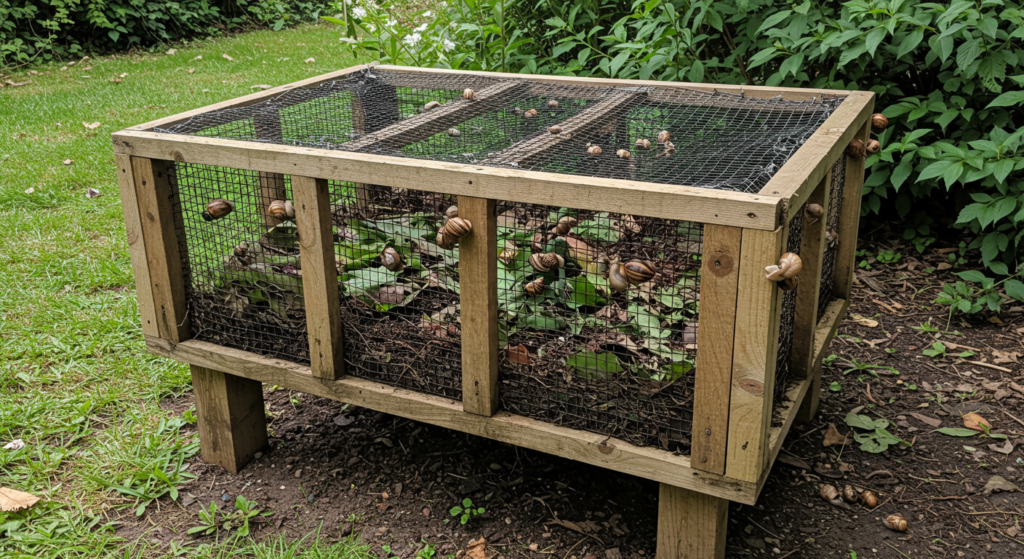
    After the session, I approached him, and he linked me with a snail farmer in Akure. I started my first snail farm behind my student apartment with ₦30,000. This covered 30 snails at ₦450 each, a basic hutch box, some training materials, and their initial feed.

    I didn’t know it then, but I was stumbling into the business that would define my life.

    My First Attempt Failed, But I Couldn’t Let It Go

    I didn’t know what I was doing. I went for NYSC in 2017 and returned in 2018 to find most of my snails had died from neglect. I had just a few left. I had been running the farm blindly, with no fundamental understanding of incubation, feeding cycles or how to prevent mortality. Dead snails can’t be sold; once they go bad, they’re worthless.

    But I couldn’t shake the feeling that this business had potential. I held on to the surviving snails and their eggs, cared for them through the rest of 2018, and eventually found a bulk buyer.

    That year, I sold 50 snails to a small chops vendor for ₦1,000 each. That ₦50k confirmed two things: people would actually pay good money for snails, and if I positioned myself well, the market would come.
    How I Turned a Failing Hobby into a Scalable Business

    After that first sale, I went all in. I took branding and business classes, networked with other agripreneurs, and trained with a prominent snail farmer who had overcome every hurdle I faced. I learned from him, implemented his strategies, and finally started seeing results.

    I began sharing my farming journey on social media to document my progress. To my surprise, people were genuinely interested. They wanted to know how I was doing it, what mistakes I was making, and how to get started.

    2019-2020: Building the Foundation That Changed Everything

    My early setup was primitive — wooden hutch boxes arranged in square formations. But as I gained knowledge and confidence, I knew it was time to scale properly. 

    In 2019, my husband and I used a plot of land behind our house to build a trench system using concrete blocks  — a more durable and efficient snailery structure. The construction alone cost about ₦1.5 million, and we spent another ₦1 million stocking the farm with quality breeding snails.

    The funding came from multiple sources: my savings from my 9-to-5 job and support from my husband. I also received grants: ₦1 million from an SME organisation and another ₦1 million grant from a philanthropist.

    We had stocked 2,000 breeding snails across different sizes, some selling for ₦600, others for ₦1,000, ₦1,500, and ₦2,500 depending on their size and age.
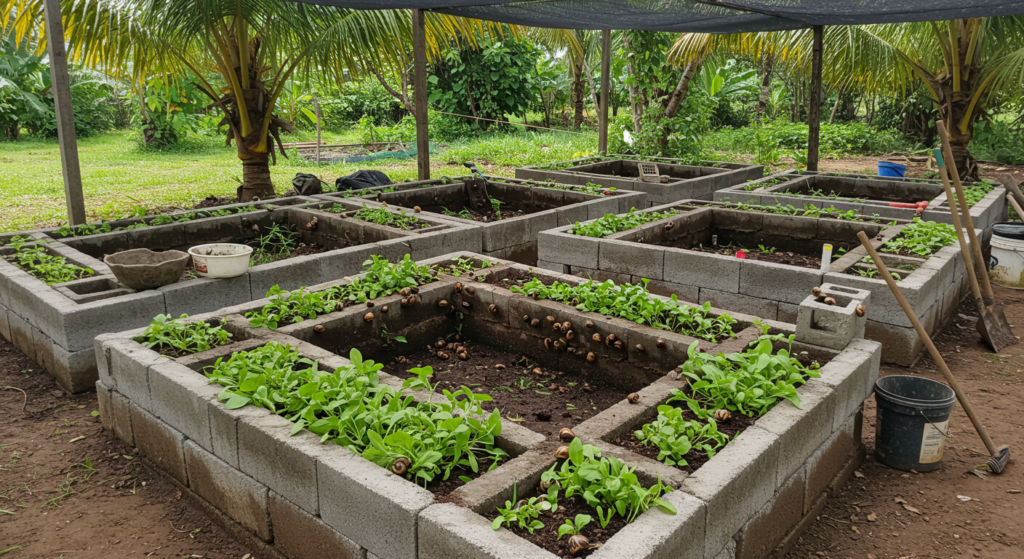
    Here’s where snail farming gets interesting: those 2,000 breeding snails produced about 12,000 offspring. Even with a 10% mortality rate, I had roughly 10,000 snails to sell at various stages of growth. 

    The beauty of snail farming is that you don’t have to wait for every snail to reach full maturity, which can take 18 to 24 months. Instead, we raise them in batches and sell them at different stages: growers, point-of-lay, breeders, and jumbos. This model allows us to keep cash flowing consistently.

    On good months, I earned up to ₦1 million; on average months, around ₦700k–₦800k; and even during slow periods, revenue rarely dipped below ₦500k. By the end of 2019, my annual revenue had crossed ₦10 million. But that was gross revenue, not profit. 

    After accounting for key expenses, including staff salaries, operational costs, and feeding (which can cost up to ₦450,000 monthly on large farms), my net profit averaged around ₦3 million. Still, it was the year that proved my business model was viable.

    Then, by 2020, COVID-19 had forced everyone online, and my social media pages blew up.

    I had been posting educational content, feeding videos, behind-the-scenes clips of our snails laying eggs, and updates on snail growth. The visibility translated to bulk orders, followers who trusted my process, and people ready to pay for snails and knowledge.

    2022: The Breakthrough Year

    The real explosion happened in 2022. COVID-19 accelerated my social media presence, and I strategically diversified my revenue streams. I introduced online coaching, physical training, and paid consultations.

    Monthly revenue became more consistent. This was the turning point, and I consistently earned ₦1–2 million monthly from snail sales alone. For the first time, I could pay myself a proper salary and have enough to reinvest in the business.

    By the end of 2022, the business generated over ₦50 million in annual revenue. The key was building multiple complementary income streams and leveraging a network approach to supply. 

    This is what I mean: My farm couldn’t meet all the demand, especially as my social media following grew and bulk orders increased. So, I began to buy back snails from students I had trained, colleagues in the industry, and even my mentor to fulfil large orders.
    2023-2024: Scaling to ₦100 Million

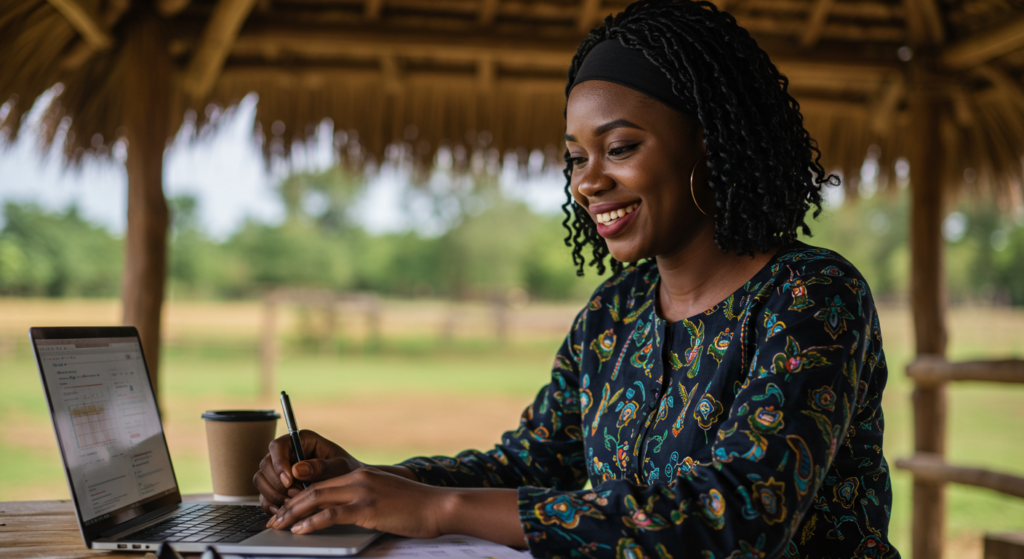
    In 2023, our annual revenue crossed ₦80 million. By the end of 2024, we had hit nearly ₦100 million in total sales. A major driver of this growth was visibility. Today, I have over 100,000 followers across all my social media platforms. That audience has allowed me to diversify my income and build a sustainable business model with multiple revenue streams:

    • Direct snail sales: We sell 1,500–2,000 snails monthly, with prices ranging from ₦1,600 for breeders to ₦3,600 for jumbo snails. On average, monthly sales bring in ₦2 million; during peak seasons, revenue can reach as high as ₦6 million.

    • Training and consultancy: We offer webinars, on-site training, and paid one-on-one consultations. Online training costs ₦50,000, physical sessions go for ₦150,000, and consultations cost up to ₦150,000. A single webinar can generate ₦1–₦1.5 million in revenue.

    • Farm setup and construction: We also build snail farms for clients. In 2024, we constructed a full farm setup for a client worth ₦7.5 million.

    • Shell recycling: We crush, and process discarded snail shells into powdered calcium, which we sell to other snail farmers as a natural supplement to strengthen shells, boost egg-laying, and improve hatch rates. It’s an overlooked but valuable income stream.

    • Off-take from trained farmers: When demand exceeds what our farm can produce, we buy back snails from our students, colleagues, and mentors. This allows us to meet bulk orders without overstocking while helping others earn.

    • Investor partnerships: As the business gained traction, long-time followers and supporters began offering to invest. In 2022, I formalised a debt funding model where individuals could fund specific expansion efforts like stocking or infrastructure in exchange for a fixed return on investment (ROI). Depending on the duration, investors earn 20% or 25% ROI, with their capital repaid at the end of the agreed term, usually at year-end.

    Together, these efforts helped us scale from ₦50 million in 2022 to ₦80 million in 2023 and just under ₦100 million in 2024.
    2025: The Greenhouse Revolution

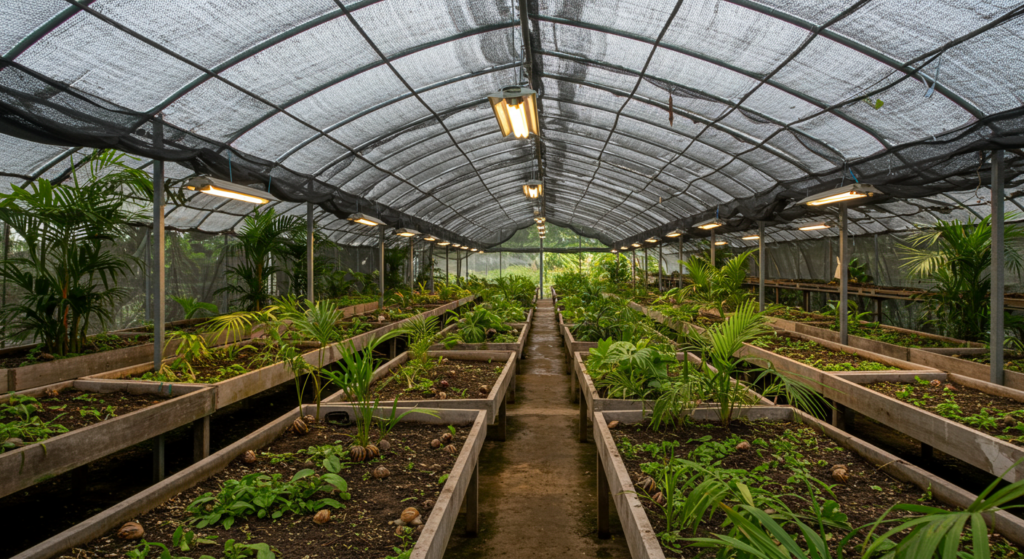
    After deducting all expenses in 2024, the business retained a modest profit, part of which I reinvested into our most ambitious expansion yet: a fully netted, climate-controlled greenhouse system that cost ₦7 million. This cutting-edge structure now operates alongside our original concrete block trench system. 

    The greenhouse allows us to rear snails more efficiently, with lower mortality rates and reduced feeding costs. It’s designed to produce up to 30,000 snails every 18–24 months, significantly increasing our output and improving our margins.

    The Vision Forward

    Our goal is aggressive expansion: produce more snails, create more jobs, and build a sustainable agricultural enterprise that can compete globally. For young people considering agriculture, understand this: farming isn’t just about planting or rearing. It’s about building systems, creating value chains, and solving problems profitably.

    The patterns of snail farming never change: rearing, feeding, incubating, managing mortality, and selling. But the business model around these fundamentals can be infinitely creative. Success comes from treating agriculture as a serious business, not a side hustle.

    This journey has taught me that in agriculture, knowledge is money, persistence pays dividends, and social media can transform traditional farming into a modern, scalable business. 


    Names* have been changed for anonymity.


    Zikoko’s first-ever money event is happening this August! Join us at the Naira Life Conference on August 8th — a one-day event where successful business owners will share the honest, hard-earned strategies that helped them scale, stay afloat, and thrive in this economy. Secure your seat here.
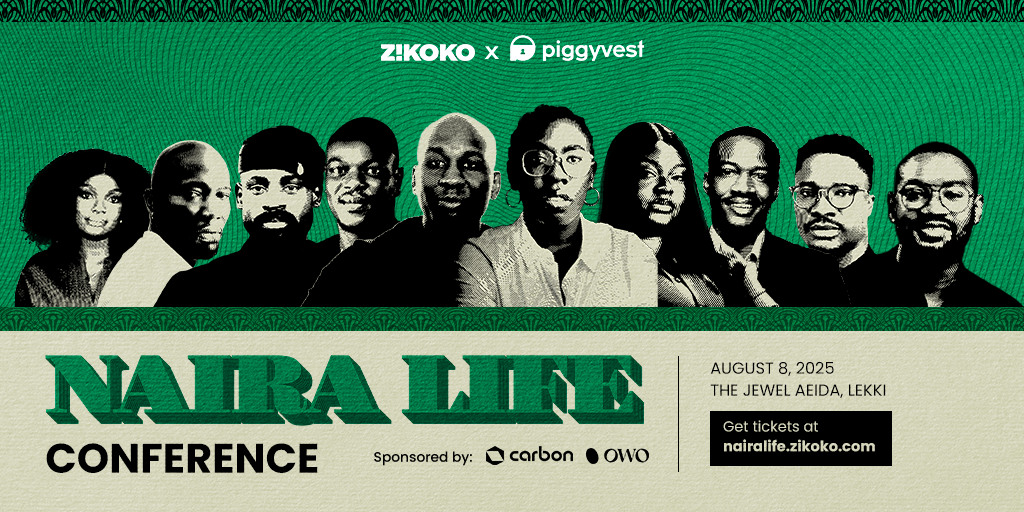

    Join 1,000+ Nigerians, finance experts and industry leaders at The Naira Life Conference by Zikoko for a day of real, raw conversations about money and financial freedom. Click here to buy a ticket and secure your spot at the money event of the year, where you’ll get the practical tools to 10x your income, network with the biggest players in your industry, and level up in your career and business.


    Next Read: My ₦2 Million Poultry Business Crashed After I Moved Down South


    [ad]
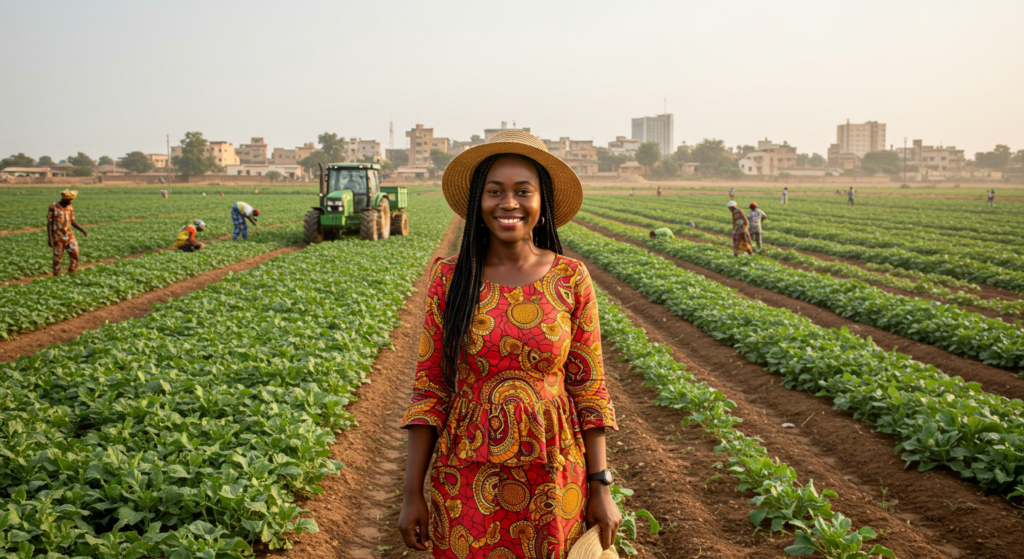
  • Hanan* (27) was pushed to the reins after her father’s death almost resulted in the loss of her family’s farms and their primary source of income. 

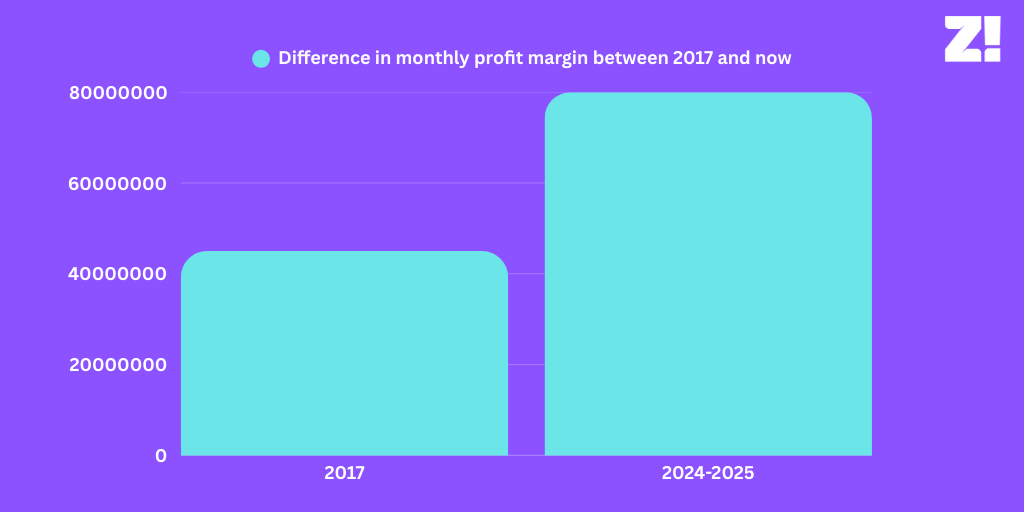
    Six years later, she’s learned how to oversee hundreds of acres of farmland activity, improve operations and double the business’s profit margin to ₦80m/Month. Now, she wants to create a path of her own.

    This is how she is doing it.

    As told to Boluwatife

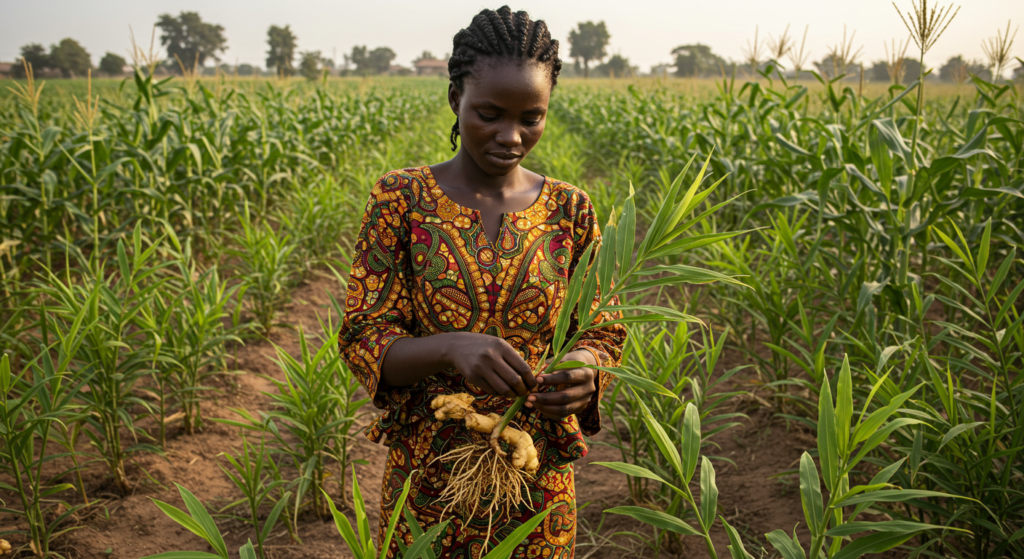
    Model not affiliated with the story.

    Farming has been a part of my life for as long as I can remember. My grandfather owns most of the land in our village in northern Nigeria, which is the foundation of my family’s farming legacy. 

    My dad took over after my grandfather passed, and his interest in the farm began to rub off on me as soon as I could walk. During school holidays and most weekends, my siblings and I were on the farm learning about the crops and distribution channels and even planting new crops with the workers.

    The farm consists of multiple batches of land in various locations, and we grow everything from rice, maize, beans, groundnuts, and ginger to breeding livestock like chickens, cows, and goats. 

    My dad passed away in 2017, and I suddenly gained control of our entire farm operations. I was 21 and had just entered the university. 

    I thought I already knew a lot about running the farm. It turned out I didn’t. 

    First steps: Learning the ropes

    The farm is about two hours away from the city where I grew up. Because of the distance, my dad spent most of his time in the village during the farming season when he was alive. 

    While my siblings and I usually joined him during holidays, I didn’t do much of the planting. Somehow, my crops always turned out wrong, so I gradually stopped going to the farms. 

    Instead, I kept up with the buying and selling side of things from the city. We have several long-term clients, mostly manufacturers, to whom we supply farm products. For example, we supply raw rice to one of the popularly known rice brands in the country; they just process and bag it. We also supply ginger to drink factories. 

    These distribution efforts involve a lot of contract work and managing the workers and clients. So, I assisted my dad with this aspect of the business — I didn’t need to go to the farm.

    But after my dad’s death, I was the obvious choice to keep the farm running. My elder brother was also in the running, but he knew even less about our operations than me and wasn’t as business-savvy. 

    I had to work with our oldest farm workers to learn more about the crops. My mum and uncle also taught me how and when to make decisions. I spent all my time moving from one farm to another, overseeing operations like our organic fertiliser production, handling staff and other local farmers, and resolving issues. 

    I began actively running things in 2018. 

    At the time, I was still trying to find my feet in school. My new responsibilities at the farm meant I constantly missed classes and finished 100 level with several carryovers. By the start of 200 level, I was already considering dropping out of school. The only thing that kept me going was remembering the premium my dad paid for education. As the first daughter, I needed to set a good example for my siblings. 

    So, regardless of how I felt, I had to keep pushing and focus on achieving my goals without getting distracted, even if some of those distractions were my family. 

    Navigating extended family problems

    Since my dad’s death, I’ve had to fight for my right to run the farm. My dad’s siblings — who have no idea how the farm runs — wanted to take over. 

    They were already on the farm’s board of directors and were involved in major decisions. They also received a percentage of the farm’s monthly income. Still, they wanted complete control. They preferred that their children run it rather than “this small girl.” 

    I knew the farm would ultimately shut down if I handed operations over to them. They knew nothing about farming, and I couldn’t watch my father’s hard work go down the drain. The farm also has over 200 workers. What would happen to their jobs if everything went downhill? So, I refused to let go.

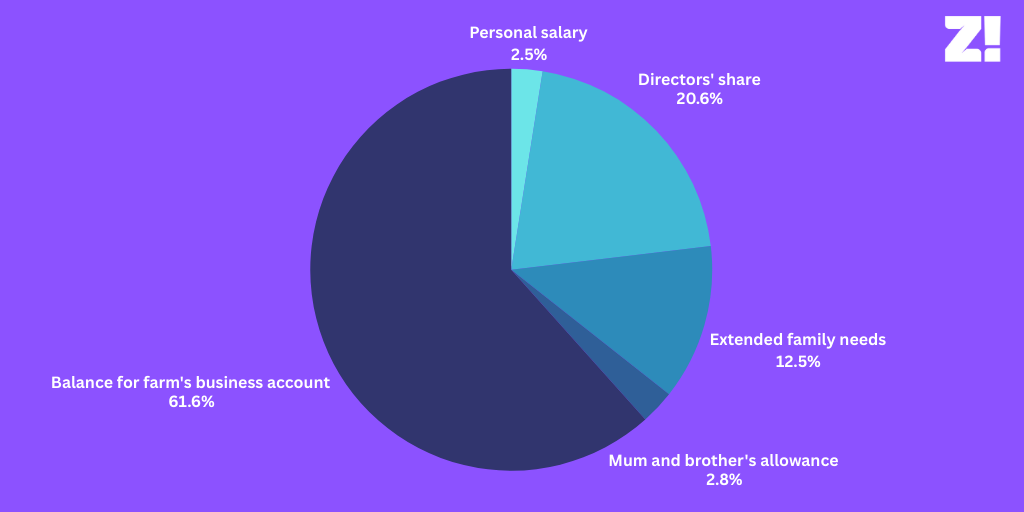
    In the end, culture helped. Culturally, my dad owned everything my grandfather had, so there was a limit to how much his siblings could fight me. They still receive a director’s share today —  ₦5.5m/month each for the three of them, plus portions of farm produce. They still cause trouble if their farm produce gets to them late or isn’t as much as they expect. 

    I just consider navigating their troubles one of the many sacrifices to keep the business running.


    RELATED: I Lost My Parents to Inheritance Wars. I’m Not Leaving Money to Any Family


    Finding balance and doubling the farm’s profit margin

    I like to say farming is bipolar. Sometimes, you do everything right, and the harvest is good. Sometimes, the weather just doesn’t cooperate, and the harvest isn’t great. 

    I’ve learnt to accept that harvest might not be great once or twice a year and prepare for eventualities. Before my dad passed away, we turned to local farmers when we didn’t harvest as much produce as expected. Instead of disappointing our clients, we’d buy produce from the other farmers.

    It’s expensive because the crop would be in high demand. So we could buy a bag of ginger ₦10k higher than the usual price. The price difference meant losing money, as we needed multiple bags to meet clients’ demands.

    We fixed that issue by building a ₦3.5m warehouse in 2020. Now, we buy crops, especially ginger, when they’re cheap and store them until we need them. There’s minimal loss because the crops still move quickly. Ginger, for instance, is in such high demand every year. It’s funny because we don’t even use ginger in my state; it’s just the rest of Nigeria.

    In 2022, we started exporting ginger to the US. This opportunity came from a business event I attended — I met some investors and pitched my business to them. The ginger we grow in Nigeria is very different and much better than that in America. I sent the client free samples; we’ve been doing business ever since.

    When my dad ran the farm, our monthly operating costs (like staff payment) averaged between ₦1.5m – ₦2m, and monthly profit averaged ₦45m. Now, we make up to ₦85m in a good month — only ₦5m of this goes to operating costs, the rest is profit. Some of our successes have come from my ability to make business connections through social networking and plan for eventualities, like the warehouse we built and introducing security measures like CCTV systems and military personnel on the farm to reduce employee theft.

    The current market price for some crops has also increased profit margins. For instance, a bag of ginger was ₦20k+ a few years ago. Now, it’s almost ₦250k, and I know how to make a good deal. I can negotiate with a local farmer to buy all his ginger at ₦2m when demand is low and sell it at ₦8m later. 

    That said, a good percentage of the farm’s profit goes to the family. I pay at least ₦10m/month to a family account, which sorts my siblings’ school fees and extended family needs. The thing with being a well-known family is that the billing never ends, and it’s often overwhelming. One family member can come to ask for money for their child’s wedding; another will come for school fees, or to fix their car, or their roof and so on. 

    The ₦10m in that account usually finishes that same month. I pay my mum ₦1.2m/month and ₦1m/month to my brother. Sometimes, it’s less than that because he’s terrible with money and often touches business money he can access. 

    Then, I pay myself ₦2m/month. I don’t always pay myself, especially when there are multiple family requests, and I want to limit our expenses. After paying my dad’s siblings their director’s share, the rest of the farm’s profit goes into the business account in case of unplanned events.

    Future plans for the farm and my career

    I’m very involved in the farm’s operations. But we have structures that ensure the farm runs smoothly without my physical presence. So, I’ve tried to pursue other career prospects outside the farm. 

    I started building a startup in 2023 to connect virtual assistants (VAs) to foreign clients after I noticed the high demand. I charged the VAs 20% of the agreed pay when I connected them to a client, and for a few months in 2023, I earned $1200/month from the startup. 

    But I got busy again with the farm, and things fizzled out. Last year (2024), I wanted a change of environment, so I moved to a different city. I also tried to pursue the career thing again. A job I applied to offered me ₦150k, and I immediately knew 9-5 wasn’t for me.

    So, I’m working on properly setting up my startup, and my deadline to make it work is the end of this year. If it doesn’t work, I’ll close it and focus on the farm. It’s not like I stopped running things over the phone since I left my state.

    Another thing I want to figure out is my finances. By that, I mean growing it even more and having a healthy safety net. I have two financial personalities: there’s the one who wants to enjoy the money I work for. The stronger personality is the one who wants to save all my money. I want to be able to comfortably provide for my family and set up my younger ones in case something unfortunate happens to me or the farm. 

    So, I tend to save more. I have about ₦76m saved up in commercial banks and other money tied up in gold and silver. Jewellery is the only investment I’m comfortable with. I hate losing money, so you can never catch me investing in forex or things I can’t hold. I won’t do more than ₦1m if I absolutely have to. I can afford to lose that. 

    Get More Zikoko Goodness in Your Mail

    Subscribe to our newsletters and never miss any of the action

    My two cents for young people who’d like to invest

    There’s more to explore in terms of earning and investing than the options we find on the internet. Take farming, for example; it can be really profitable.

    I’d advise anyone interested to do adequate research and go into farming. They don’t need to trade or plant; they can just try warehousing — buy directly from local farmers, store in a good warehouse and sell later. I have friends who have made good money with warehousing. Some even send the produce abroad. 

    Farming has its disadvantages, but the advantages are higher. Be open to exploring other businesses and investment ideas. You won’t regret it.


    ALSO READ: I Make Up to ₦700,000/Week Trading Gold in the Forex Market — Here’s How I Do It

    Join 1,000+ Nigerians, finance experts and industry leaders at The Naira Life Conference by Zikoko for a day of real, raw conversations about money and financial freedom. Click here to buy a ticket and secure your spot at the money event of the year, where you’ll get the practical tools to 10x your income, network with the biggest players in your industry, and level up in your career and business.

    [ad]

  • Every week, Zikoko seeks to understand how people move the Naira in and out of their lives. Some stories will be struggle-ish, others will be bougie. All the time, it’ll be revealing.


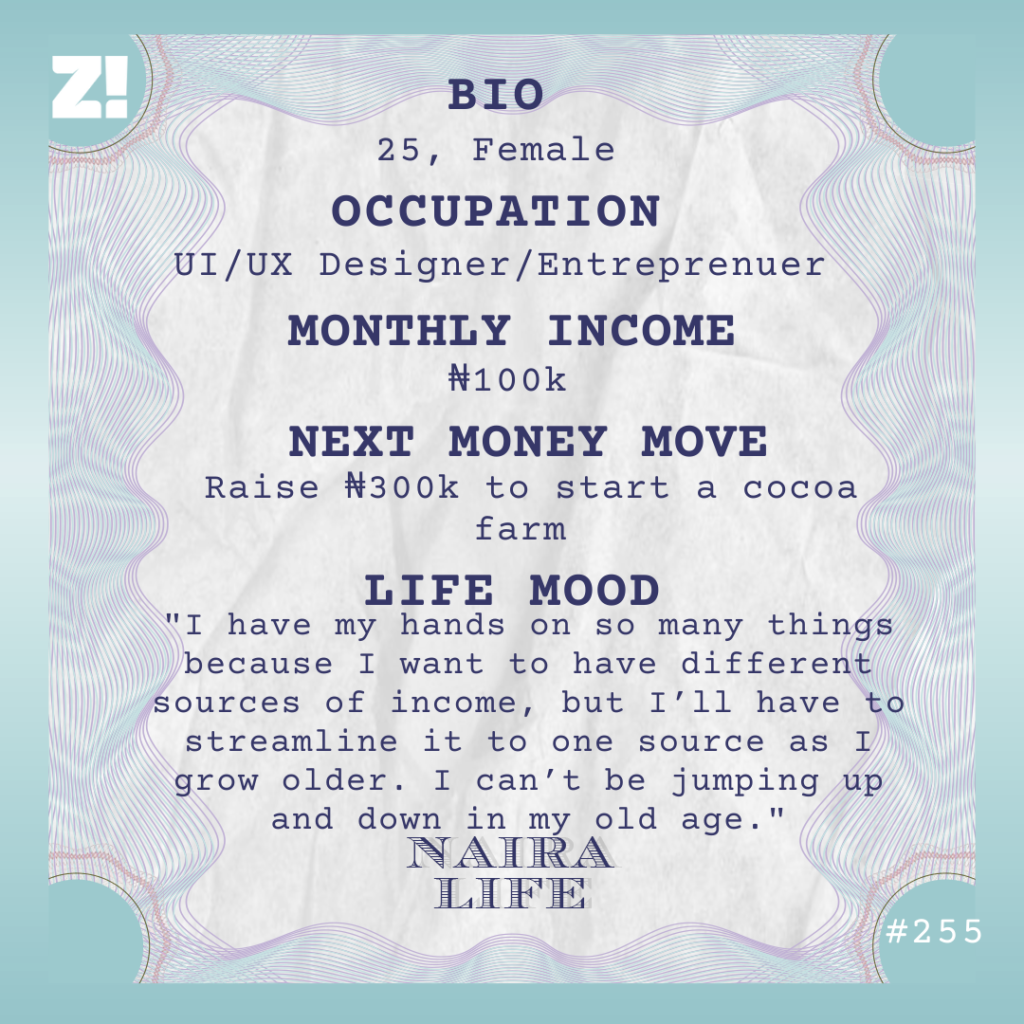
    Nairalife #255 bio

    What’s your earliest memory of money?

    Making ₦200 – ₦300 from braiding hair when I was 15. I was in secondary school, and I taught myself how to make hair by plaiting the grass stalks in my boarding school’s compound. I also practised on a senior student’s hair. Then I started making simple braid hairstyles for people in my area whenever I was home from school. 

    I also tried my hand at making braided wigs and sold a few to neighbours at ₦1k – ₦1,500. I remember feeling so excited that I was making my own money. It’s funny because it’s not like I didn’t have parents to give me money, I just wanted to make mine.

    Why do you think that was? This desire to make your own money?

    I’m the first child of a large polygamous home. My dad had a cocoa farm that wasn’t doing great, and we had several members of our extended family living with us at different points. So even though my dad did his best, many people depended on him for money.

    I grew up knowing I couldn’t always wait for my dad. I had to work for whatever money I wanted.

    Where was your mum in all of this?

    I was the only child on my mum’s side, and she mostly depended on my dad too. He once gave my mum money to start a provisions business, but she was forced to close it after a few months. My dad would take money from the business to help these same family members, and my mum also had to feed them with the business proceeds. At one point, my mum opened another shop in a different location without my dad’s financial input so she could have a say in how the finances were managed. 

    Back to hairdressing. Did it help you become somewhat independent?

    The jobs weren’t consistent, so I just did it to get the usual ₦1k every other week. I took a break in 2015 when I got admitted into a polytechnic. 

    I didn’t make hair or do anything for money because I was focused on leaving the school. 

    Why?

    I decided I didn’t like the school from the first day I stepped foot there. You won’t believe they welcomed me to school with a cult fight.

    I spent all my time there writing JAMB and applying to other schools. I finally got admitted into a university and started classes in 2017.

    I had a sister in the same uni too, and she told me the students loved to look fashionable. So, I decided I could make a fortune by offering them nail services. 

    What did this involve?

    I took some money from my ₦10k monthly allowance and went to the market to get the materials. A bottle of nail polish cost ₦100, and I got nine colours and a hardener for ₦1k. I also bought nail polish remover for ₦150 and a couple of nail files, buffers and artificial nails. I put all my tools in a basket and started moving from room to room in the hostel, looking for clients.

    I charged ₦500 for both hands (with artificial nails) and ₦200 if it was just normal painting. I charged an additional ₦200 to paint both sets of toes.

    Sounds affordable

    It was, and it made the business an instant hit. The students in my uni typically held many events, and when these happened, I’d have as many as six clients and make about ₦3k daily. 

    By 200 level, I had to move off-campus — only first-year and final-year students were guaranteed hostel space. Staying in an off-campus apartment with my sister was a big blow to my nail business. I could no longer move from room to room to find clients. It was time to find something else. 

    What did you find?

    Makeup. Just before the end of the session, an entrepreneurship class in school tasked us with learning a skill during the three-month break so we could present what we learned when we returned to school. I’ve been interested in makeup since childhood, so I decided to learn it.

    What was learning it like?

    I found a professional at home and paid ₦30k for a one-month class. I’d drag a friend along to practise on her face. I also regularly followed YouTube tutorials. When school resumed in 2019, I began telling everyone I was now a makeup artist.

    At first, I charged ₦2k for a face beat, but when the cost of products started to choke me the following semester, I increased my price to ₦3,500. I usually had three to four clients daily across different hostels. 

    In final year, I moved back to the school hostel and restarted my nail business. This time, I charged between ₦1k – ₦1,500 to fix nails. I also increased my makeup rates to ₦5k – ₦6k. I was constantly booked and made about ₦20k weekly from both businesses. 

    The money was good, but my partner introduced me to UI/UX design in 2020. I saw yet another opportunity to make money.

    Let me guess, you grabbed it

    I procrastinated for a bit sha. My partner was in the Google Developer Students Club, and I joined in 2021. The training was free, but omo, it was hard. 

    My beauty industry experience helped me quickly understand the user interface bit because I was already dealing with colours every day. However, it took me about three months to get a hang of the user experience part. 

    Did you get any UI/UX gigs while in school?

    I didn’t prioritise getting any. I was already making money with makeup, so I decided to focus on learning and mastering my UI/UX skills. 

    When I graduated in 2021, I got two small UI design gigs on Twitter. I got these gigs because I was already vocal about my skills on the app, and someone reached out to me to redesign a website for ₦20k. The second gig was a simple landing page website design that paid ₦40k.

    When NYSC came in 2022, I was posted to a school, but I paid someone ₦25k to change my PPA to a fintech startup because I wanted to do more UI design. I don’t even know if he worked with NYSC; someone just introduced me to him. Thank God they didn’t scam me.

    LOL. Tell me about the job

    I was supporting a UI/UX designer on the team. For some reason, I didn’t ask if they’d pay a stipend in addition to NYSC’s ₦33k monthly allowance. But the job came with a free room in the office, so my accommodation was sorted. 

    The designer I was supporting was redesigning a product, but she was preparing to leave the team and was distracted. So, I decided to do the work myself and did three different redesign variations within a week. I later learned they planned to pay me ₦10k/month, but the MD was impressed with my work and decided to give me a ₦20k bonus that month. 

    I got ₦30k in my first month and expected only ₦10k the next month. But I got ₦30k again. I asked HR, and they said the increase was because I was the only designer they had at the time, and they hoped to retain me after my service year. In my head, I was like, “Wow, nice one.”

    Were you still offering makeup services on the side?

    Not really. NYSC was in a different state where I didn’t know anyone. Two months into the job, I got a part-time design job on Twitter. It paid ₦50k, and only required me to work on the product for two hours every weekday. 

    The project ended five months later, but then they asked if I could manage social media for their sister company as they didn’t have a manager. By now, you should know I can say yes to anything as long as there’s money in it.

    Screaming. So you took the job?

    The job was onsite in a different state, as I’d need to take videos and create content. I told them I’d take the job if they gave me accommodation. They agreed, and I moved to the state in December 2022. The pay was  ₦150k/month.

    But you weren’t done with NYSC

    I was going to round up NYSC in February 2023, but my PPA was already having money issues. They’d offered to retain me at ₦70k/month (including the free accommodation). But they started laying people off in December. We even closed for the year in the second week of December because of the money issues. I couldn’t wait around to find out, so I told them I was leaving and would return for my final clearance. They were okay with it. 

    So, I moved states for the second job. It was an event video coverage company, and I had to follow them to events to create content. It was crazy stressful. I’d never experienced something like that in my life. We could go out all day, return at 6 a.m. the next day and still go out again in the afternoon. I suffered.

    Did the pay help the suffering, at least?

    If anything, it allowed me to save more. During my service year, I regularly saved the ₦30k from my PPA and lived on the ₦33k allowance from NYSC. When I got the ₦50k side gig, I also saved part of it and spent the rest on random shopping or sending money home to my mum.

    I had about ₦200k in savings when I started the social media job and saved an additional ₦100k from my first salary. Subsequently, I tried to save at least half of my salary monthly. 

    But I wasn’t enjoying the job at all. In January 2023, I got another UI/UX design side gig at ₦50k/month. Then I was referred for and landed another ₦50k/month social media management gig for a US client the following month.

    You were juggling three jobs?

    Yes, and it triggered a mental breakdown. My primary 9-5 was stressful and extremely toxic. Our MD used most of the company’s funds to relocate, and we were left with the HR officer who was a bully. I was planning to resign in June when they called me in March 2023 to tell me they no longer needed my services.

    The crazy thing is, I resigned from the US job only two weeks earlier because my head wasn’t in the right place, and I needed to reduce my workload. I had no idea I’d lose my 9-5 so soon. I was left with only the ₦50k/month UI/UX job. 

    But I’d saved up ₦600k from my earnings, and I used it to buy a MacBook so I could focus on design. I didn’t want to do anything social media-related again.

    How were you surviving on ₦50k/month?

    I told my employer I could now work full-time with them, and they increased the salary to ₦70k. I also moved in with a family member to reduce my running costs. I tried getting side gigs again, but nothing came.

    Then I thought, if a job won’t work, why not school? So, in July, I told my parents I wanted to apply for a master’s abroad. They agreed, and I began the process of getting my transcript from uni for the application process. I took permission from work for this, but one day, they felt I was asking for too much permission and asked me to leave the company.

    Just like that?

    Just like that. They also complained that I was delaying tasks, but I was severely burnt out. It felt like I was just learning how to work afresh. That’s how I sha became jobless.

    For the next two weeks, I cried daily. I lost my confidence and questioned my abilities. Like, wasn’t it this same me that was hyped at my PPA then? Had I gotten so bad?

    When I was finally done crying, I told my parents I was now unemployed, and my dad demanded I start a business. I considered my options and told him I wanted to sell thrift clothes. He gave me ₦500k. I used half of that to buy stock and launched the business online in August. Within a month, I had 30 orders and made ₦36k in profit.

    Not a bad start

    However, I was still interested in UI/UX design, so I decided to start afresh. I paid ₦40k for an online three-month design course to rebuild my confidence. I’d create content for my business in the mornings and then study after.

    In October 2023, I thought about returning to makeup but going at it differently. I opened a YouTube channel and started doing makeup looks and sharing via YouTube Shorts.

    Why YouTube Shorts?

    I noticed people preferred short-form content. My first video had 10k views because I used a trending sound. It motivated me, and I thought, “Maybe I can blow on YouTube”.

    Remember the master’s admission I was pursuing? I got admission in October 2023 at a UK university. The deposit was about ₦4m after conversion. My dad sent it, but before I could make the payment, the exchange rate increased from ₦1k to a pound to ₦1,300, and the deposit was now about ₦5m.

    Damn

    My dad couldn’t afford it. Even the ₦4m was everything he’d made from selling a cocoa harvest. He hadn’t even paid his farm staff. So, we agreed to defer the admission to 2024, and I returned the money to him.

    Since school was off the table, I focused my attention on YouTube, my design classes and business. By December 2023, I’d grown my subscribers to almost 200, using only YouTube Shorts. I intend to start vlogging properly in 2024 to cross the 1000 subscribers and 4000 watch hours threshold to get monetised

    What about your thrift business?

    The business is no longer doing as well; I make an average of ₦50k/month from it. But it’s business money, so it goes back into the business. I still have about ₦200k left from the initial business capital saved up, and I might restock in a couple of weeks. 

    These days, I survive on the occasional design gigs I get through my partner, and that brings in an average of ₦100k in a good month.

    What do your expenses look like in a good month?

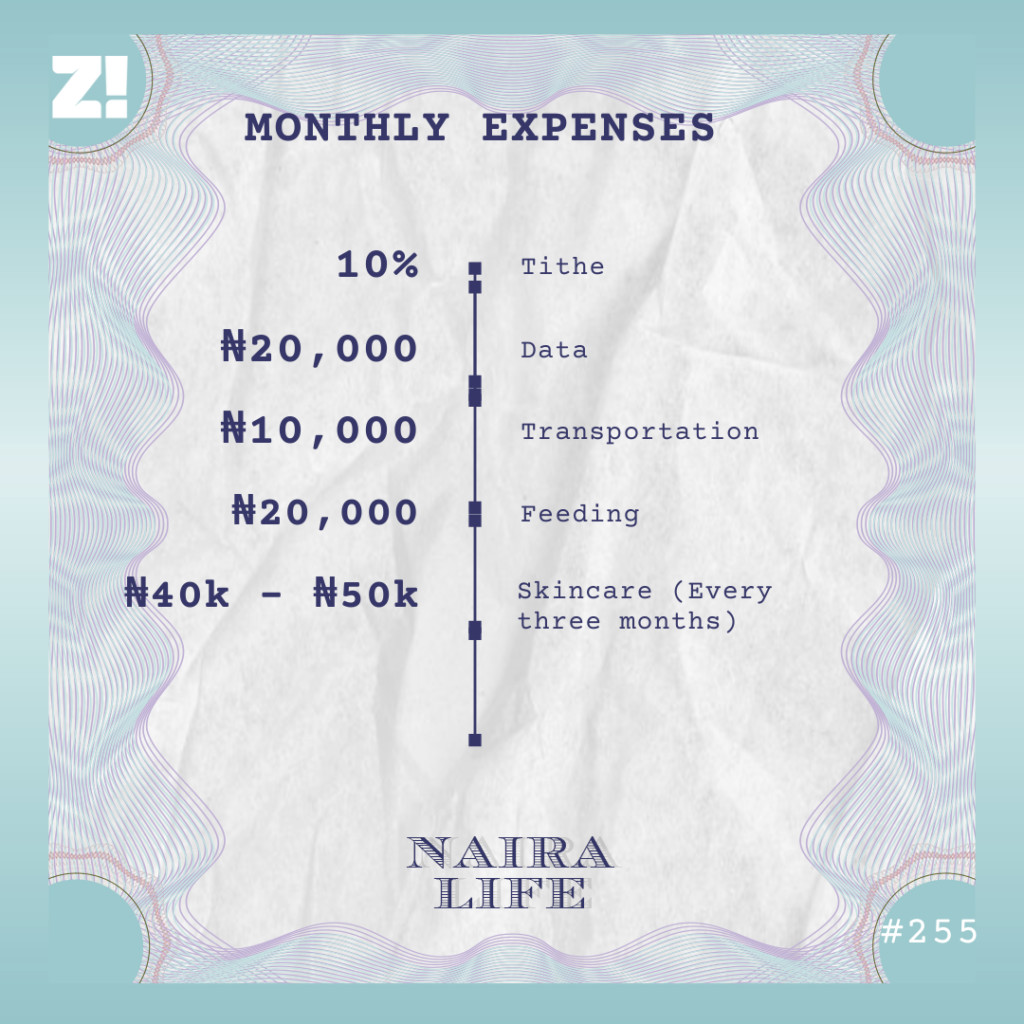
    Nairalife #255 Monthly Expenses Breakdown

    I’m trying to live on a ₦50k monthly budget, so I can save anything else that comes in. This is possible because my parents and partner support me financially when I have nothing — they’re essentially my safety nets. I just moved into my own apartment in January 2024, and it cost me ₦270k, with some financial help from my parents. 

    Before moving into my apartment, I hardly spent on data and food because my partner took care of it. 

    It’s interesting you lost jobs twice in a year but didn’t exactly go broke

    For me, being broke means not having a job that constantly brings money at the end of the month. Though it wasn’t consistent, I was still getting money.

    I was broke — I still am — but my safety nets and savings have helped me survive. I believe your savings can save you. Also, don’t just spend money the way you see it. You should always plan how you intend to spend. I usually weigh my options and decide the importance of things per time to determine what should take my money in one period of time.

    What do you see when you think about your financial future?

    Ah. I always hope for the best o. I have my hands on so many things because I want to have different sources of income, but I’ll eventually need to streamline it to one source as I grow older. I can’t be jumping up and down in my old age. I’m still looking for a good-paying job. I really want to do user experience research and product design. I might just put the business aside if I find a job now.

    How much is a good-paying job for you right now?

    That’s tricky. What if I say a figure now, and Jesus says, “That salary you mentioned is exactly what you’ll get?” What if He has a bigger plan for me? If I have to share sha, I’d say a minimum of ₦200k/monthly or $1k if it’s a foreign company.

    Curious. Do you have a retirement plan?

    I plan to invest in a cocoa farm like my dad once I have enough money. This is how cocoa farming works: You rent a farm that already has cocoa seedlings — so you don’t have to start planting all over again. Renting one can cost as much as ₦100k annually, depending on the farm size. Then you hire people to care for the farm and harvest the ripe cocoa in December. 

    Right now, a kilo of cocoa is about ₦5,200 and a bag contains 66 kilos. That’s ₦343,200 from one bag of cocoa. You can harvest up to 10 – 12 bags and sell them to those who export to other places. You can also decide to pay the person you hired to take care of the farm with one-third of the harvest.

    I also plan to go into the palm oil business. That one just involves buying multiple kegs of palm oil in January and storing them to sell in December when they’ve doubled or tripled in price.

    That’s interesting. How much do you think you’ll need to start cocoa farming?

    I’ll need about ₦300k to rent a farm and start operations. I can actually start any time and make that amount back fully in a year because the dollar-to-naira rate influences the price of a cocoa bag, and since that’s consistently increasing, the profit would increase too. 

    However, I intend to build my business to a point where it’s profitable enough for me to be able to remove that kind of money to invest somewhere else. I’ll also have financial support from my dad when that time comes.

    How would you rate your financial happiness on a scale of 1-10?

    2. I still don’t have a job, so I’m not happy with my finances. I hope to get a job before March 2024 and possibly monetise my YouTube. Maybe by then, things will start looking up.


    If you’re interested in talking about your Naira Life story, this is a good place to start.

    Find all the past Naira Life stories here.


    [ad][/ad]

  • “A Week In The Life” is a weekly Zikoko series that explores the working-class struggles of Nigerians. It captures the very spirit of what it means to hustle in Nigeria and puts you in the shoes of the subject for a week.


    The subject of today’s “A Week In The Life” is an Agripreneur and a teacher. He’s pursuing agriculture [with Farm Kwara] in a rural community in Ilorin to fund his passion for teaching. He tells us about life in the community, some of the challenges of agriculture and the educational system, and how he’s making an impact in the community through education. 

    MONDAY:

    My body is programmed to wake up by 5 a.m. every day. I wake up, read my bible, meditate and ask myself: “What do I want to achieve today?” After I’m done ruminating over the question, I set out for the farm and my day begins. 

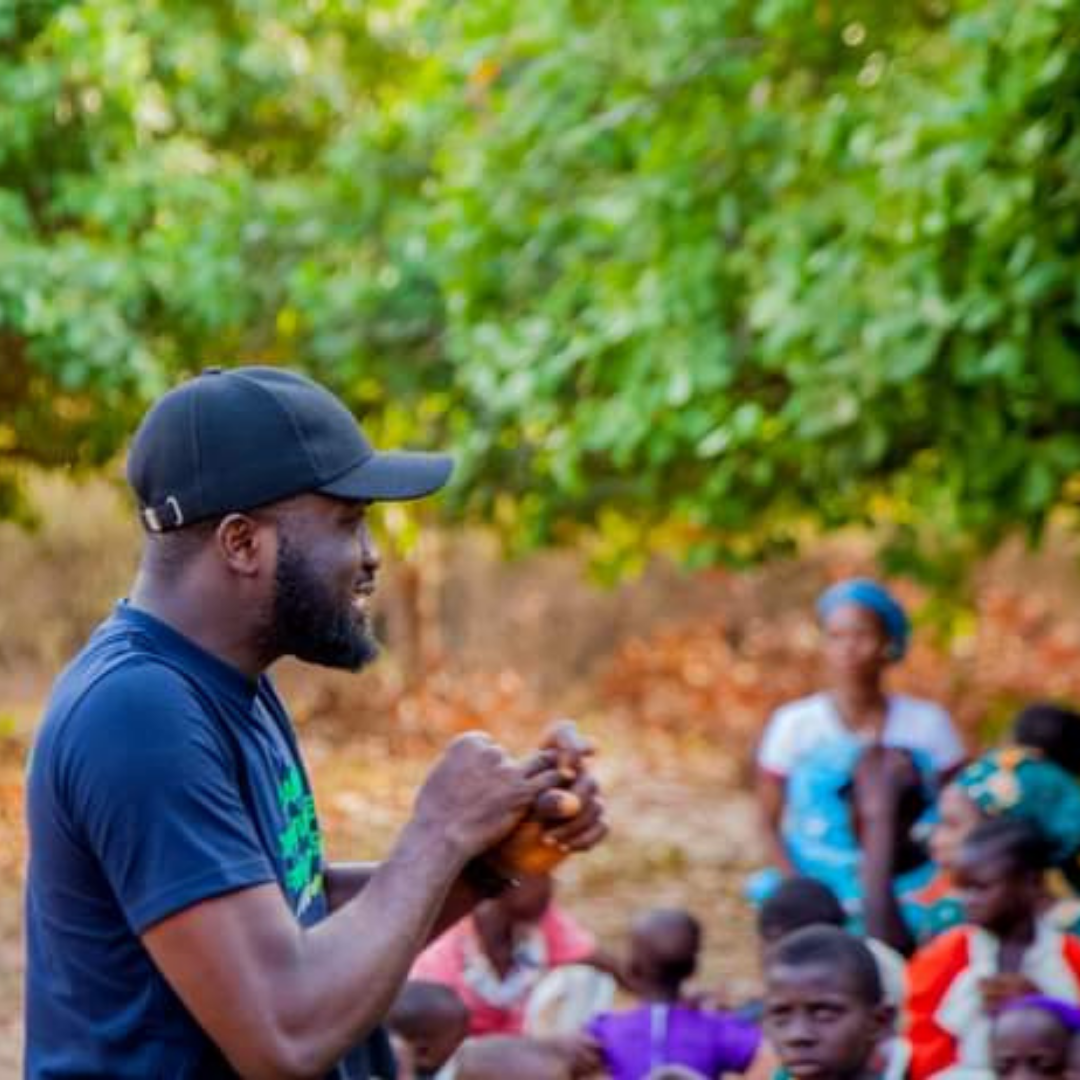
    Supervising soya bean planting on a farm in the rural part of Ilorin has been an interesting experience for me. On some days, the sun beats my head so much that I go home with a mild headache. On other days, I have to walk for miles on end for farm inspection. But I don’t complain because it is what I signed up for. It’s easy to bear the stress of agricultural work because I know that by 4 or 5 p.m., we’ll close for the day and my day can really begin.

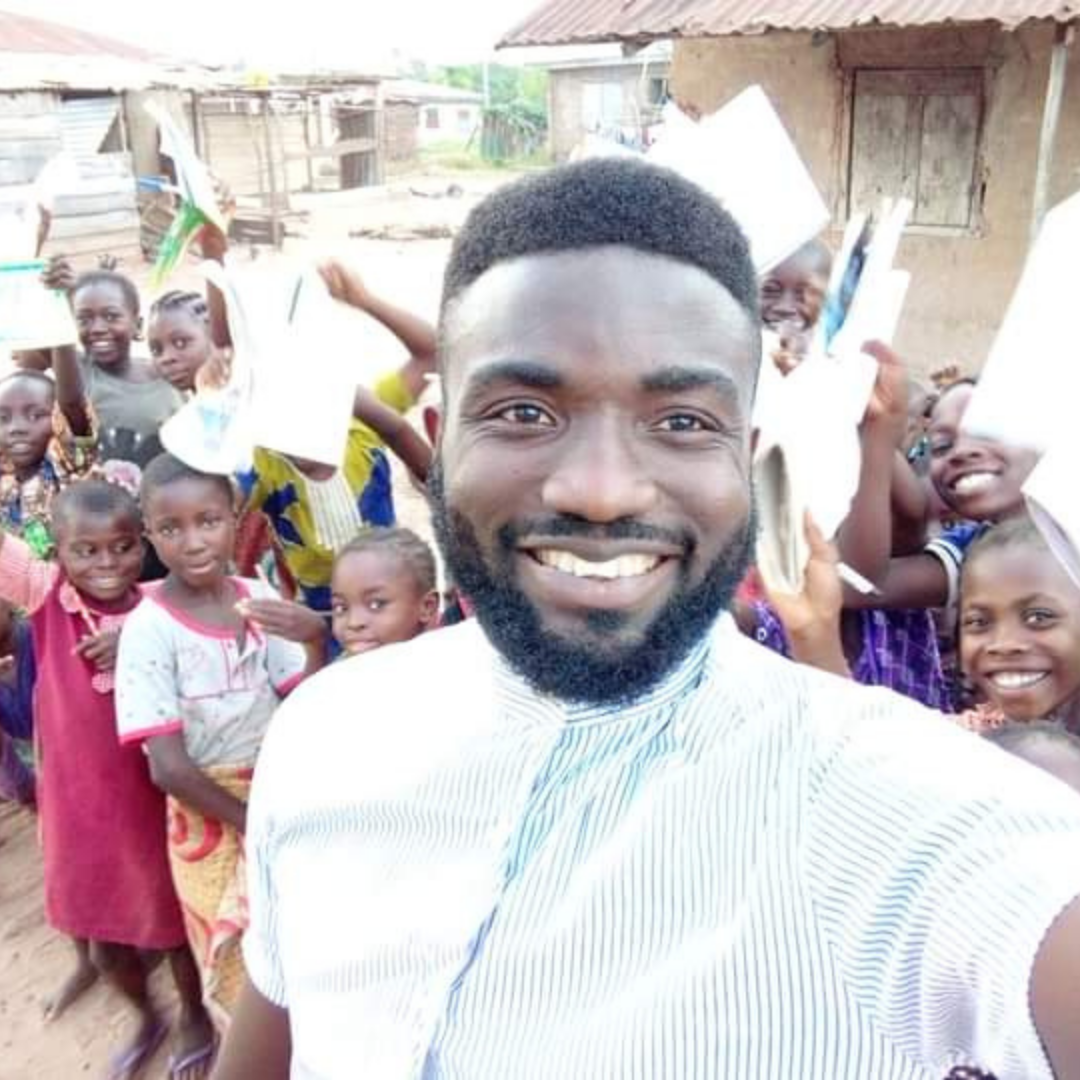
    Because I live in the community where the farm is located, I have “free” time after work every day. I observed that because the school in the community has neither teachers nor books, the children are at an educational disadvantage. Therefore, I took it upon myself to teach the kids every day after closing from work. Every day between 5 – 7 p.m. is when my day truly begins.

    TUESDAY:

    My experience in the community has been eye-opening. Seeing suffering is humbling. Sometimes it’s difficult to see a future for the people in the community because everything there is killing them; no access to education, harmful beliefs, culture. However, I’m going to try my best regardless of the situation on the ground. 

    Everything I do is informed by my own experience and upbringing because I know what it’s like to struggle academically and to be at the mercy of strangers and extended family members. I’m happy I can make an impact through education.

    It hasn’t been easy because it takes a level of perseverance to change the minds of people in the rural community. And this difficulty is transferred from parents to children. Even people with access to education are still struggling not to talk of those that don’t have access. 

    Compared to Western nations, our education system is backwards and not optimal — we don’t have effective tools for communication and many students can’t think outside of the curriculum. It’s surprising when I tell people about learning to code and they say it’s limited to only science class students. I gave a lecture a few weeks back where supposed graduates hadn’t heard of Linkedin before that day — how are these so-called professionals supposed to position themselves in a digital world? In future, I plan to do a campus tour on the relevant 21st-century skills because it appears that many graduates are in the dark. 

    WEDNESDAY:

    People are always asking me “If you’re so passionate about education and impact, why are you an Agripreneur?” My reply is because cash funds passion. Trying to change things without money is a fool’s errand. Education is a long term goal for me and I need farming to build wealth. If I want to be an astounding educator, I need exposure and travelling because travelling is a form of learning. Passion can also make you wealthy, but there’s a high chance that if it doesn’t, frustration will make you abandon the passion. 

    Today is one of those passion vs. I can’t kill myself sort of days. I’m in no mood to teach the kids after returning from work because I just want to sleep. However, when I think of the kids and their desire to learn, I summon the energy to stand up. 

    I’ve come a long way with these kids and it has been rewarding. When I first got into the community, these kids couldn’t communicate in English talkless of memorising anything in English. During one of our classes, I taught them an affirmation — I am who I am because God made me so. I’m a solution provider and a generation that can’t be shaken. I had to explain the meaning of the song in Yoruba for the kids to grasp the importance. Imagine my surprise when I heard these kids reciting the song verbatim over the next few days. One boy in particular, Iyanu, made me so happy because he used to run away at the sight of a chalkboard and his mates termed him an olodo. It was such a huge moment seeing this boy recite the song alongside his mate. 

    I’m not shy to say that I feel fulfilled because of Iyanu and his friends. I love these kids. 

    THURSDAY:

    I wake up by 5 a.m. today. I read my bible, meditate and tell myself: “An ideal future is one where I’ve built a sustainable wealth system that can fund my passion for impact. To achieve that, I must always be seeking ways to improve my value by constantly learning. An ideal future is investing in people’s lives such that when I’m long gone, my name will open doors for my children.” After I’m done with my affirmations, I set out for work. 

    FRIDAY:

    If I become the minister of education, the first thing I’ll do is get teachers trained because nemo dat quod non habet — no one gives what they do not have. The next point of call would be to increase the incentives for teaching. I remember collecting irregular ₦20,000 as a teacher and telling myself that I couldn’t continue like that. As long as teachers still get paid poorly, they can’t perform effectively. Teachers are frustrated and passion can’t feed them. 

    The next thing I’ll do is revisit the curriculum; Nigeria needs to shift from paper-based learning to practical based. We need more real-life experiences if we hope to train graduates that can be useful in the real world. In addition, there would be bootcamps in tertiary institutions where trends in a particular field would be analysed, forecasts made and the curriculum tweaked to accommodate these realities. It’s only by staying on top of trends that we can produce relevant graduates, and it’s sad that the curriculum doesn’t accommodate this reality. 

    Thank God it’s Friday, so I’m not even going to bother my head thinking about Nigeria’s problems. I’m looking forward to the weekend because I’m travelling to Ilorin city to see my friends, grudgingly watch Manchester United play and read if I can. At least I’ll get a break until Monday when the hustle begins all over again.


    Check back every Tuesday by 9 am for more “A Week In The Life ” goodness, and if you would like to be featured or you know anyone who fits the profile, fill this form.

    [donation]

  • Every week, Zikoko seeks to understand how people move the Naira in and out of their lives. Some stories will be struggle-ish, others will be bougie. All the time, it’ll be revealing.

    What is the first thing you ever did for money? 

    Haha. Farming. The first thing I did was farming. 

    Do you remember the first money you made from farming?

    I farmed about three plots of land and harvested two bags of rice and sold it for no more than ₦4,000. This was around 2008, and I was 21. I sold it in the market. 

    Oh okay, so this was after your secondary school? 

    No. I finished secondary school in 2014. I started in 2008. 

    When did you finish primary school?

    2006. 

    Oh okay. Uhm, when did you start primary school?

    I started in 2000. 

    What do you remember from before 2000? 

    I was helping my parents on the farm after school. We used to grow rice, yam, cassava, groundnut and maize. I told them that I want to go to primary school. I can’t remember, but the school fee was 1,000-something naira. After that was secondary school, which I finished in 2014. But I didn’t write WAEC till 2015. 

    What did you want to study when you wrote WAEC? 

    Petrochemical Engineering. Due to finances, I couldn’t even bother with admission. I still want to go back to school.

    Ginger! What next did you do for money after that? 

    Before I started working again, I went to a computer institute for six months. I learned MS Word and all of that.

    Did you use it when you finished?

    No. I’ve forgotten some of the things I learned. Sha, after my six months course, I travelled to Oyo State. I went to work for a local government chairman. I was an attendant in his supermarket and did housework too. 

    How much did it pay? 

    I can’t remember, but the money wasn’t much. I think it was ₦15,000. This was 2015. I worked there for a year and half.

    How did you find the job? 

    A job agent. When people need workers, they go to these agents. The agents get contracts from all these big people that give work. When they need a worker, they reach out to the agents, and then we apply for the job from the agents. 

    Oh, so that’s how you found the job from Benue.

    Yes. I know the agent personally; we’re from the same place. 

    What type of job does the agent find? Do you know another person that uses this agent?

    A lot of jobs, and a lot of people. There’s supermarket work, housework, dry cleaning, and even gardener work. 

    Oh okay, after you spent one and the half years at that supermarket, where did you go next?

    I came to Lagos to look for work.

    What was the first thing you did in Lagos?

    I came through a friend I met when I was in the village – he was already in Lagos. I called him to ask him to let me know if there was any work in Lagos. He told me there was no work, but if I wanted one, I had to come and look for it myself. 

    I wrote my CVand started applying. I got my first job at a hotel. 

    Niceee. 2016? 

    Yes. It was paying like ₦30k. 

    What was it like, being your first job in Lagos? 

    I was amazed that there was a place where people gathered for the joy of doing all sorts of things. But it was my first experience sha. 

    How long were you there for? 

    One year. I travelled home in December 2017 because my dad was sick. I stayed at home for two weeks, and before I came back, they replaced me.

    Eish. So what did you do when you came back?  

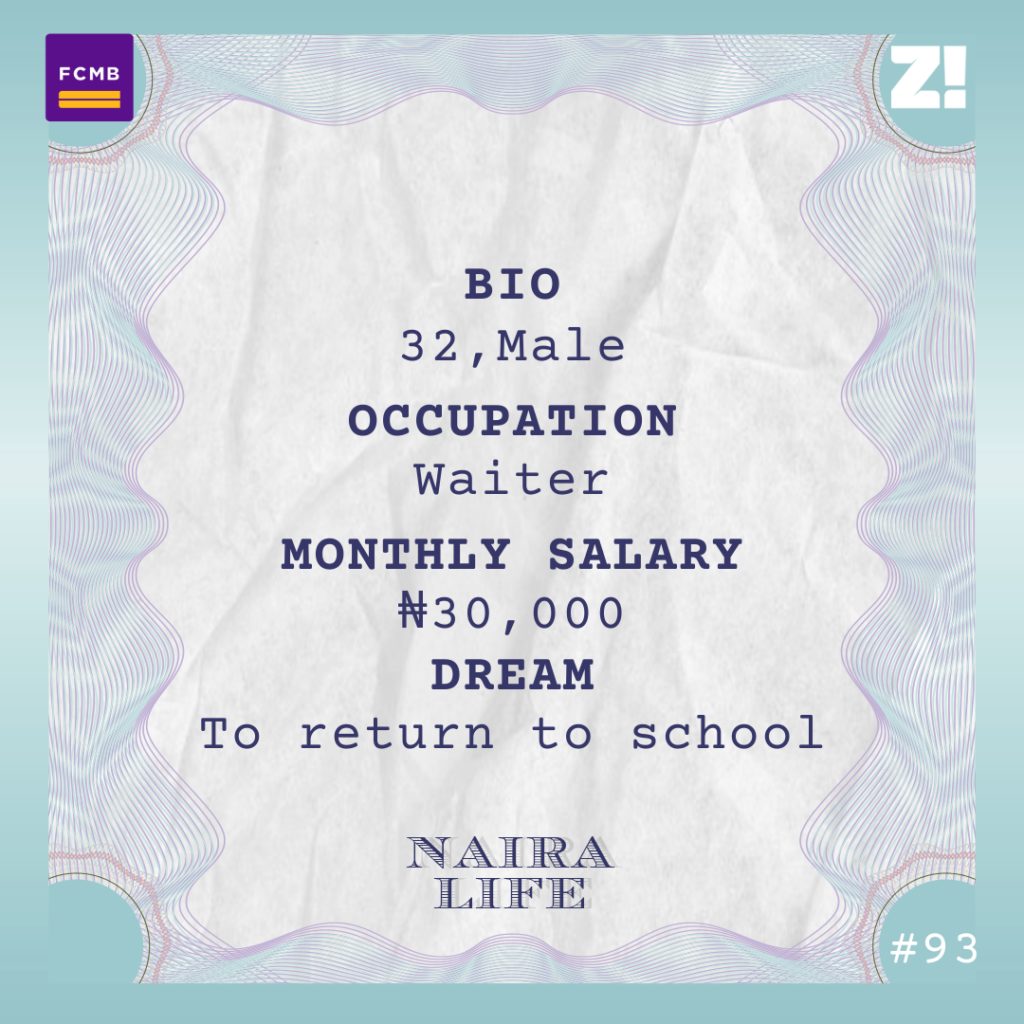
    I started submitting my CV again. I got a job as a waiter. That one also paid ₦30k. After one year, they promoted me to cashier, and I started collecting ₦40k. I worked there till the end of 2019. They were cutting down staff, so they told me to leave. 

    I was unemployed for three months and just looking for a new one throughout. I’m not sure how many jobs I applied to, but I remember that I printed my CV 10 times. Nobody responded. 

    How did you survive during that period? 

    My savings. I had two hundred and something in my savings. I spent about ₦70,000 from my savings. It was my friend that helped me find the job I finally got. It was a job as a waiter in a restaurant. The salary was ₦30k. I didn’t want to accept it at first, but they said they’ll give me accommodation, so I accepted it. 

    When I started, there was no accommodation, even till today. They also said that beyond my salary, I’d get a commission on service charges; nothing. 

    Ah. 

    Not too long after I started, we went into lockdown. 

    COVID.

    Yes. When the pandemic started, we were hoping that the lockdown would be for just two or three weeks. But no, it continued. Everyone was at home, everything became expensive. In my area, pure water that was three for ₦20 has become one for ₦10. The rice that I used to buy for ₦1,200-₦1,300 became ₦2,400. 

    No money coming in during the lockdown; anything from your company? 

    Yes. They sent me ₦10k. 

    So, you resumed work after the lockdown ended?

    Yes. They also increased my salary to ₦35k. 

    What’s it like working at a restaurant? 

    The best thing about it is that you meet so many people. For me, it’s the superstars. I meet them face to face and have the privilege to chat with some of them and make them comfortable. 

    Who’s the first superstar you attended to? 

    Davido. That day, he came with a small group, ordered light food and Hennessy. Then AY. Don Jazzy, Wande Coal. 

    Who’s your least favourite type of person to attend to? 

    Some people order things they don’t know. Even after explaining why they shouldn’t, they’ll go ahead and order it. Once their food is ready, they’ll say, “What’s this rubbish?” Then they’ll not take it.

    So who pays for it? 

    Sometimes, it’s the company. They change the order with the hopes that the customer will come back again. 

    What’s your average order at your restaurant? 

    I don’t know, but the minimum order is mostly ₦10k. There are some restaurants with a minimum spend. That is, if your order is not up to ₦10k in some places, we might gently tell you to order more than ₦10k. I know one restaurant that has ₦20k minimum order tables. 

    What’s the biggest bill you’ve ever seen?

    ₦800k+

    Ah, how did the kitchen react? 

    In most restaurants, the kitchen doesn’t know how much people are spending. It’s only the waiter that knows because they’re the ones attending. 

    But when a waiter sees it, you’ll just tell yourself, “Hmm, I wish I had that kind of money to spend.” You’ll see someone spend all the money you have in thirty minutes. But also, the salary is not why I work at the restaurant. The salary is small.

    Why? 

    It’s the tips. Last month, my salary was ₦35k. But if you add tips, sometimes it’ll be up to ₦50k. The highest I’ve made in a month is ₦120k. In September, I made ₦90k, including my salary. 

    Interesting that tips are how you actually make a living. How many people do you serve in a day?

    I can do like 5 tables in one hour, and I work for 9 hours, 6 days a week. I have one day off. 

    Busy week. Let’s break down how you spend monthly. How much do you save? 

    I try to save up to ₦50k per month. It’s from those savings that I pay my house rent – ₦150k per year. Then I try to send money home from the rest. It’s not fixed sha. 

    Do you ever think about your life and wonder what small decisions you could have made that’d make things different? 

    I should have left the village since. My parents don’t like their children being far from them. When I had to travel for my first job in Oyo, I left by force. I told them I could not live with them again. 

    If I know, I for don commot house since. 

    Hmm, okay. What’s something you want now but you can’t afford?

    My education. I had a revelation — I get them about five times every month. And it’s always about education.

    Tell me what you see.

    One day I was fasting, and I just lay down on the rug. I think I fell into a trance, because I was awake. I saw myself in a very big school, I don’t even know the school. As I walked in, I heard a voice tell me to go left. 

    On the left, I saw a staircase. As I tried to climb the staircase, something was blocking me. I don’t know what it was, but I struggled till I made it. 

    I met one woman past the stairs, and I told her I came to get admission forms. She gave me one. 

    The second time, I found myself sitting in a class, listening to a lecture. 

    That’s powerful. That’s what your mind wants.

    Actually, I want it. 

    I understand that education is generally important, but why is it so important to you? 

    The Bible says the gift and the calling of God are irrevocable. But when you have a calling from God, and you know you have it, you have to press towards it for a better understanding.

    For me, education is how I can begin to fulfil my calling. 

    Hmm, I feel you.

    You know, when I was a child in the village, people used to bring things to me to help them fix. I’m not sure how, but I helped them fix a lot of things. That’s when I started developing some interest in engineering. But that had to wait. 

    Do you ever think of where you will be in five years?

    In five years, I don’t want to be in Nigeria again. My choice is Canada.

    Do you know the process of going to Canada?

    No, I don’t know the process. See, if I have a good job in Nigeria, I can stay.

    What is a good job to you?

    A job that pays well. 

    How much is well for you?

    Hmm. 

    Say it with your full chest. 

    ₦300k a month.

    What’s something you bought recently that made you feel good?

    Recently? I’m not sure. One day I wanted to buy a new phone, one fine Samsung. I looked at my account and said, how will I use this money to buy only a phone?

    How much was the phone?

    The phone is ₦135k. I would have been happy if I bought that phone, but I just can’t drop the money. 

    I feel you. On a scale of 1-10, how will you rate your financial happiness?

    1. I appreciate my current job, but I want a better one that pays me more. To tell the truth, I really appreciate this conversation. 

    I appreciate you too, man. One more thing, have you ever considered going back to farming? 

    Hahaha, not for now. 

    Ah, why? 

    It’s not only that the stress is too much, but produce for the work is low. 


  • I was on the brink of giving up.

    Okay, let’s rewind a bit. I have always wanted to venture into farming, maybe it’s because I believe there is so much potential in the business. But every attempt at getting started and keeping up with it has been a serious pain.

    Who did I offend?

    First, I started out trying to cultivate maize on one acre of land and let me just tell you now, it’s not beans. The headache started with the farmer I partnered with because even though he had some experience with farming, he didn’t know too much about maize and he could have advised me on a better seed variety. At the end of the day, I waited to harvest the remaining maize and prepare to sell. What no one tells you about agriculture is the insane risk that is involved especially if your farm isn’t insured, and that’s exactly what happened to me. I didn’t insure my maize farm so I bore all the losses.
    Thankfully, I was relaying this story to a good friend of mine who had a smile plastered on his face while I was recounting this horror story of an investment. At the end of my long pitiful recount, my friend just shook his head and told me that had he had already read a lot of similar stories online and that was why he took the safer and more guaranteed route. He told me that he also had a maize farm and his farming has been nothing but smooth. He didn’t have to deal directly with farmers, because he sure didn’t have the time to train them, neither did he deal with labourers or selling the farm produce at the end of the farm cycle. I almost fell off my chair. 

    Is this real?

    So I probed further and discovered that my friend had invested in agriculture through a platform that took care of dealing directly with farmers. The farmers had hands-on training from dedicated farm specialists, they were given improved seed varieties and were always on-ground to monitor the farmers, from planting to harvest to getting off-takers for the product so that there is nothing like wasted produce or the farmer can’t sell after harvest. To say “I felt I had just been handed a hot EXPO to profitable farming in Nigeria” was an understatement. I was excited.
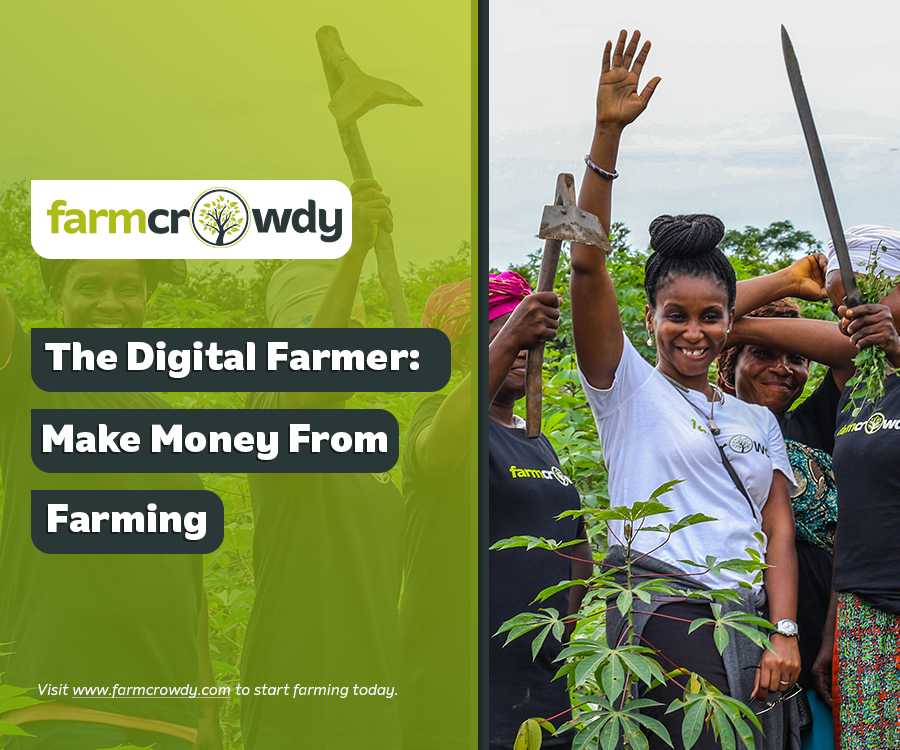
    So, I invested the little money I had left from my misadventure into my old maize farm and used it to sponsor maize farms on this Agric platform which I later got to know was Farmcrowdy. Of course, I still did my research and I kept seeing nothing but good reviews, coupled with my friend’s testimonial, I just went ahead. Sat down, relaxed and waited for the harvest while getting all the farm updates on my dashboard. At the end of the farm cycle, I collected my initial investment plus pure profit, without lifting a finger. I have not looked back since then and I have continued to sponsor more farms to build my personal investment portfolio in the agriculture space. My name is Nnaemeka Obinna and I am now a proud farmer because I farm on Farmcrowdy. Better to work smart, than to work hard!
  • While some people love NYSC with all its wahala, we all have to admit that having to teach during NYSC isn’t the coolest experience.

    And while many of us aren’t even over this teaching idea, a civil society organisation, Buhari Youth Organisation, believes the NYSC service year should be devoted to farming.

    According to their spokesman, Abdul-Waheed Odunuga, the NYSC scheme needs to restructured so that graduates can help boost Nigeria’s agricultural sector during their service year.

    He suggested the state and federal governments create farms where graduates can learn agriculture and farm while serving the country.

    Instead of them to suggest realistic solutions to the unemployment problem in Nigeria, they’re talking about farming.

    Anyway, the corpers can kuku use the farming as an excuse to join fitfam, muscle cannot waste.

    Or they could just start one farm in their backyard, don’t say we don’t do anything for you guys.

    In this age where graduates of developed countries are making ground-breaking discoveries, some people still believe Nigerian graduates would be better off learning a trade.

    Nigeria will only keep up with the rest of the world if opportunities can be provided for its citizens to improve the failing sectors in the country.