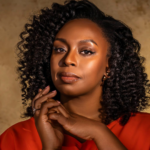
• There are only a handful of writers working today in the world who have attained celebrity status quite like Chimamanda Ngozi Adichie. Her TED talk, “We Should All Be Feminists” was sampled by Beyonce. Later, Dior printed it on T-shirts. She has graced the covers of magazines like Harper’s BAZAAR and Vogue. Tickets to see her deliver speeches sell out in seconds. On social media, her devotees proudly call themselves “The Daughters of Chimamanda.” Fans of her work almost held vigils outside bookstores anticipating her latest drop, Dream Count. 

    Odeluwa Abba!

    What has made her so popular among young women? I spoke with one such woman to try (because we can only try) to understand the gravitational pull she has on her fans.

    As told to Tomide by Mariam.

    Growing up, I always loved reading. One of the books that stuck with me as a child was Purple Hibiscus, Chimamanda’s debut novel. I was in SS2 when it was assigned in my literature class. At 14, I appreciated its storytelling and setting, but I didn’t fully grasp some of its themes. However, Aunty Ifeoma’s character stood out to me — a strong woman raising her children on her own. She was one of my earliest introductions to the idea that women could be independent and capable in a world that often insisted otherwise.

    As I grew older, I understood the book differently. Eugene wasn’t just a strict father; he was an abuser. It made me realise how men who are admired in public can be entirely different — and much darker — behind closed doors. But the real shift in my perspective came when I read Dear Ijeawele, Chimamanda’s book on raising feminist children. It resonated deeply with me because, even as a child, I questioned the way things were.

    Why were girls always the ones expected to cook, clean, and do most of the chores? These skills weren’t embedded in our DNA, so why were they treated as if they were? During Ramadan, I noticed how women were constantly occupied with cooking while men had the freedom to focus on prayer. I knew something about these gender roles wasn’t right, but Dear Ijeawele put words to the thoughts I had been carrying for so long. It was affirming to see someone write so passionately about these issues, making me feel seen and understood.

    That’s the power of Chimamanda’s writing — it reinforces the belief I’ve always had: girls should be raised to be their own people, not just groomed to become someone’s wife. Her books remind me that I’m not alone in these thoughts. They make me reflect: Are we the way we are because of how we were raised? What other norms have we accepted simply because society told us they were normal?

    Get More Zikoko Goodness in Your Mail

    Subscribe to our newsletters and never miss any of the action

    Her writing also challenges how we treat and address women. Why do we call women “Dr. Mrs.” instead of just “Dr.”? Why is a woman expected to change her surname after marriage? These seemingly small details carry deeper implications, and her work reaffirms that women can be loud, stubborn, and unapologetically themselves. And that’s more than okay.

    Every writer has their own way of telling stories, but Chimamanda’s writing stands out for its clarity and depth. Her storytelling is both poetic and powerful, making it easy for readers to connect with her words. There’s a profoundness in the way she crafts her characters and their experiences—raw, relatable, and deeply human.

    Whether it’s Kambili’s silent struggles in Purple Hibiscus or Ifemelu’s complex journey with race and identity in Americanah, Chimamanda’s characters feel real, their emotions tangible. Americanah is my favourite of her books because, in my opinion, it’s where she most deeply explores feminism and identity. Through Ifemelu’s experiences, she dissects the ways gender and race shape our lives, making the novel not just a story but a lens through which to view the world.

    In “We Should All Be Feminists” (which is also a book) she writes, “We teach girls to shrink themselves and make themselves smaller.” This powerful quote is one of the defining statements that cemented her voice and influence in both global and local cultural conversations.

    In the week leading up to the release of her new book, Dream Count, the excitement was everywhere. Book lovers, reading clubs, and literary circles buzzed with anticipation — Chimamanda Adichie was the name on everyone’s lips. It was a moment of unity, a celebration of her impact on literature and culture.

    Beyond her writing, her influence extends into real-life recognition. She made history as the first woman to receive a chieftaincy title in her hometown — a powerful testament to how her work and ideologies manifest beyond the page. Chimamanda is more than a writer; she is a symbol of possibility, a reminder that aspirations have no limits.

    It’s impossible to talk about great and influential Black, African, or Nigerian writers without mentioning her name. I love that her work is not just celebrated but deeply appreciated across the world.

    People won’t stop talking about Dream Count. Over the past few weeks, I’ve read every article I could find about it. Just like I binge-watched all of Chimamanda’s YouTube videos back in university, I found myself jumping from one article link to another. Book lovers attended her events, bought copies of the book, and even got her autograph. That’s influence. I wish I wasn’t in Nigeria — or at least, I wish I wasn’t a broke babe — because I would have been there, too.

    For me, Chimamanda and her books are the perfect conversation starters with fellow book lovers. Lately, I’ve even bonded with people over her recent Vogue interview

    In The Guardian article, I liked how she addressed some of the criticisms she has received, especially about Cancel Culture. She spoke about the importance of people being able to share their opinions and defend themselves. One of the points she made was about trans women and how, in her view, they don’t have the same lived experiences as cis women, particularly regarding safety and social conditioning. I understand where she’s coming from, but I also see how trans women begin to experience many of the same struggles that cis women face. It’s a complicated topic, and honestly, I’m still figuring out where I stand. It’s difficult to take a firm position without enough knowledge.

    But that’s the beauty of discussion — engaging, listening, and allowing conversations to shape and refine our opinions. If I could talk to Chimamanda, I’d tell her how important her books are, though I’m sure she’s heard that countless times. Still, I’d want her to know that her work has shaped so many young Nigerian feminists, including me. It’s astonishing to see how much she has done for women and people in general through her writing.

    We need to read, learn, and understand that there is no limit to what we can become. Society will always try to dictate who we should be, but we don’t have to conform. Women should have the same access and opportunities as men—in school, in workplaces, and in every part of life.


    Wait, babes. Tickets to the hottest women-only party are now available. Get your HERtitude tickets here.

    [ad][/ad]

  • On October 1, 2023, the Big Brother Naija All-Stars season came to a dramatic close with season under-dog, Ilebaye Odiniya, emerging as the winner of the ₦120m prize ahead of franchise superpowers, Mercy Eke and Cee-C Nwadiora. From the nooks of the internet came a revelation that had X roaring, less than two weeks later.

    Unveiling the tyrannical reign of VVIPs and their misappropriation of funds, a series of tweets, threads and spaces painted the picture of a fandom racket. Everything from buying of votes and “trends” to fan service bordering on celebrity worship, drawing subtle parallels with Nigerian elections.

    Since its inception in 2006 and reintroduction in 2017, Big Brother Naija has attracted massive public engagement across the country and Africa, arguably second to Afrobeats in this regard. BBN fandoms are highly organised and known to go to great lengths to support their faves. They crowdsource for funds and spend tens of millions for anything that’d give their favourite housemates an edge, in and out of the house.

    When “Lockdown” housemate, Erica Nlewedim was disqualified from the show in 2020, fans raised $66k for her because they believed she would’ve been the clear winner — the cash prize was about $100k at the time. Other housemates, Pepper Dem’s Tacha Akide, Lockdown’s Dorathy Bachor, Neo Akpofure and Laycon, and Shine Ya Eye’s Liquorose and Saskay, have each reportedly received a Mercedes Benz from their fans.

    While harmless and even admirable at face value, fandom activities have increasingly transitioned into toxicity and even fraudulent activities over time. On October 12, 2023, just days after the finale of the latest BBN edition, fans came on an X Space to complain about the misappropriation of funds they’d contributed to voting for Mercy Eke. They believed Ilebaye wouldn’t have won if the voting funds were appropriately deployed.

    These complaints opened up a conversation about gross misconduct within the BBN fandom, all seeming to stem from figures known as “VVIPs”.

    The rise of VVIP fans

    VVIPs are fans who are well-known to the general fandom in the BBN social media space. It often starts with them showing up online to support a housemate 24/7 and evolves into a persona other fans rely on for the gist of everything happening in the house.

    Later on, the housemates’ social media handlers start to notice their usernames and interact with them. With this influence, they take up the responsibility of crowdfunding for their faves, actively pushing their matter online and developing an in-person relationship with them. 

    After their faves come out of the house, they become the liaison between them and their fandoms, receiving contributions on their behalf from thousands of fans, organising gifts, passing messages from fans to the BBN stars and more. Some become mini-stars in their own right.

    [ad]

    Once the public witnessed 2017’s “See Gobbe” season finalists, Bisola Aiyeola and Efe Money, become household names — with Bisola transitioning into the highly gatekept Nollywood and Efe having superstars like Olamide, Davido and Wizkid promote his new album — the stakes to win increased. The first VVIPs emerged during the 2018 “Double Wahala” season, with the popularity of housemates like Cee-C, Miracle, Tobi and Alex, and the rush to make sure they won.

    Social media-savvy users with time on their hands decided to spearhead the newfound mission to make stars. However, with each passing season of the reality TV show, general BBN fans have grown wary of these VVIPs, likening them to Ponzi schemers.

    For the 2023 All-Stars’ season alone, fans claimed to have contributed anywhere between ₦4m and ₦50m to VVIPs for votes to make sure Mercy Eke won. According to Mercy and Cee-C fans, if the money was spent on the service, Ilebaye wouldn’t have stood a chance. 

    On the X Space mentioned earlier, fans also claimed they contributed ₦37m as a cash gift to Whitemoney, but he never got it.

    Alleged voting fraud

    The VVIPs often receive money from housemates and their teams or from fans, to set up voting centres. They receive tens of millions of naira to deliver large voting numbers, in a situation that rings similar to the streaming farm conspiracy surrounding the music industry. 

    Online conversations surrounding the All-Stars’ finale revealed cases of VVIPs running away with the money, only spending part of it on the votes and even spending it on other housemates instead. This calls into question the very ethics of buying and selling votes for a competition when in the end, housemates with organic backing almost always win.

    We tried to get the inside scoop from these VVIPs, but they’re as elusive as Big Brother’s identity. Some posted receipts on their X pages to prove the money they received was used appropriately, but the fandom drama continued. One alleged VVIP, X user @mumchomzy, even threw in the towel after facing the wrath of fans.

    She shared multiple receipts and screenshots of text messages. But fans refused to accept she did the work and Mercy still didn’t win. Following the backlash, she hosted a three-hour space to announce the end of her stanship. 

    According to @mumchomzy, VVIPs are at the mercy of sim and voting vendors — people who’ve made a business out of bulk voting by proxy. And the whole process of supporting housemates is simply risky because there was no way to regulate the vendors.

    Rigging the X trends table

    The most popular BBN housemates have been known to feature on or top the X trends table several times. Stars like Tacha, Mercy and OG housemate, Ebuka Obi-Uchendu, trend when it’s their birthday or they’re involved in any viral conversation.

    The post-All-Stars BBN fandom conversation exposed another factor that gets housemates on that table — money. According to X users, housemates or their VVIP fans, pay to trend on the popular table that gives general fans bragging rights. Some VVIPs do this by paying influencers or blogs millions of naira to mention their faves enough times on X. 

    Many BBN fans believe this is how housemate, Alex Asogwa, stayed on the trends table during the All-Stars season. While it isn’t fraudulent, fans agree that it further exposes the BBN world as predominantly inorganic. 

    Fans called out X user @princessdaprada — ex-BBN Lockdown housemate, Prince Nelson’s younger sister — after she revealed she’d paid for Alex to trend on the platform. On October 24, in a follow-up Space and X thread, which she’s since deleted, she explained that she didn’t pay specifically for Alex to trend but for a full PR package.

    It’s like a popularity contest where money talks.

    What does any of this mean?

    Is this a call to the organisers of Big Brother Naija, because what can they do about it? There’s nothing moral about reality TV. The working formula is showcasing the worst in people for clicks. If the organisers cared about how fans engaged, winners wouldn’t be up to the public.

    This is more a reality check on the crazy lengths fans will go to for their faves (contributing millions to make other people celebrities, in this economy?)

    Image Source: X.com/@_NiyiDaniels

    It’s a lesson in the wild world of reality TV where anything goes, and fame is up for grabs to the highest bidder.

    We spoke with vocal BBN fans about whether that’ll affect their engagement with future shows, and if they feel like they’ve lost something. X user, @munaliscrys, who’s been voting on and off since the Lockdown season of 2020, shared how she’s always known VVIPs existed and people bought votes, but she didn’t care enough to figure out why. 

    “I knew about the voting scams, but it didn’t make me second-guess anything. I know my vote is doomed from the start. Also, I don’t use my money to vote. I press a couple of things on my phone, and it’s done, so I’m never too pressed about anything that happens afterward.”

    When asked if she’d vote next season after everything we know about the voting racket now: 

    “I won’t think twice about voting. People opened a GoFundMe for Star Girl Erica, so I wasn’t surprised people contribute and spend millions to buy votes. It’s their money, and it feeds my entertainment. If stans want to spend money to make sure my ship continues kissing on my screen, then who am I to complain? BBN scams happen all the time, so this just felt like one of them. It was a bit funny though, can’t lie.”

    Most avid BBN watchers were well aware of the presence of VVIPs and voting rackets before the big showdown on X after the All-Stars finale. Another fan who’s spent money to vote on multiple occasions said, “In fact, I had popcorn ready when everything went down on Twitter (X). But hearing people speak about it directly made the reality of voting different. You really can’t trust every vote-selling vendor. 

    I’ll think twice about voting in the next season. I can’t be voting and some vendor sends me fake proof whilst gathering my money to buy houses and disappear. I also realised Nigerians are rich, and they need to put me on. They’ve got money they want to use just for their entertainment. From the first year I got into BBN till now, I still can’t comprehend it in its entirety. The whole thing is crazy, but not to them and their pocket.”

    Welcome to the showbiz jungle, folks.

    READ THIS NEXT: Timeline of Silence: Why Does Sexual Violence Have Little Consequence?