• Every week, Zikoko seeks to understand how people move the Naira in and out of their lives. Some stories will be struggle-ish, others will be bougie. All the time, it’ll be revealing.


    Nairalife #320 bio

    What’s your earliest memory of money?

    I remember my dad visiting us and giving me money gifts, usually ₦100. I was around 6 or 7, so ₦100 was big money. It was extra special because my mum didn’t give my siblings or me money. So, I looked forward to my dad coming home.

    Your dad didn’t live with your family?

    He didn’t. My dad was a trader who often travelled to Niger Republic for business. It was mostly just my mum, my siblings, and me at home. As a child, I associated my dad’s coming home with the opportunity to get money, which was fun. 

    But as I got older, I realised he was abusive, and my mum preferred it when he wasn’t around. He beat her and barely provided for anything besides rent and school fees. Once, I heard my mum complain to someone that all my dad dropped in four months was ₦20k. 

    I didn’t know what ₦20k could do, but the way she lamented, it was clear it wasn’t enough. She had to handle every other expense with her ₦8k/month teacher salary. Throughout my secondary school years, I had to join the school bus before dawn because my mum had persuaded the driver to carry my siblings and me for free, and that was the only time that worked for him.  

    Phew. That must have been tough

    One time, I went to a neighbour’s house to beg for food because my mum was crying in the room about the lack of food. I told the neighbour my mum was crying, and she gave me a tuber of yam.

    But when I returned home and showed my mum the yam, she was furious. She was like, “Who sent you?”

    We truly had nothing, but she preferred to pretend. Another time, she fainted at our compound gate because of stress. Things were really hard.

    However, despite our situation, my mum refused to let me work. It was always, “Focus on your studies”. Even in uni, I didn’t do anything until my final year. And it wasn’t as if I was receiving one big allowance. 

    At that point, my mum had stopped teaching and was in the process of starting her own school, so I had to go to my dad for money. Once he sent me ₦5k/month for pocket money, it was a struggle to get any more money from him. 

    How did you manage to survive in uni then?

    Thank God for my boyfriend. I probably would’ve starved if he weren’t there. 

    My dad’s major concerns were my school and accommodation fees. I was basically on my own for the rest. Omo, I managed so much in the first two years in uni. I couldn’t afford clothes or even make my hair. 

    The first time I braided my hair with an attachment was in 200 level, and it happened because a hairdresser I knew saw me walking around with my rough hair and was like, “Ah. What’s this? Just buy one attachment and come, let me braid your hair for free.”

    I didn’t know students could have money until I accidentally saw my friend’s account balance, and it had about ₦80k. I asked her how she had all that money, and she put me on.

    I’m listening

    She advised me to add extra money to the cost of the school expenses I shared with my dad. Since he only attended to those requests, it was the only way I could make money. 

    So, I started adding ₦10k to ₦20k to anything school-related, and he paid it. My mum was aware of my arrangement, and sometimes I sent her the extra money because I knew my dad didn’t give her anything. 

    You mentioned finally working for money in your final year. How did that happen?

    There was a brief ASUU strike in 2019, so I found a job in a factory that produced baby wool. I worked there for a month and earned ₦25k. 

    I graduated from uni that same year and went for NYSC. The state government paid me ₦5k/month, and the federal government paid me the ₦33k NYSC stipend. It wasn’t great money, but I was posted to a village and didn’t have major expenses. In fact, I didn’t touch a kobo from the stipends. I’d graduated from uni with about ₦300k in my savings — money I’d gathered from my dad and boyfriend — which was more than enough for service year.

    What happened after service year?

    I tried to get a government job, but the man everyone said could help me wanted me to sleep with him. That wasn’t an option, so I decided to try a business while I waited to find a job.

    I bought bags of rice from a neighbouring community and brought them to the state capital to sell. I did that for the remaining months of 2020 and made a ₦30k profit on 100kg bags of rice. At the same time, my dad suffered a stroke and had to return to Nigeria. He also tried to connect me with people to help me find a job, but nothing worked. 

    Then, in February 2021, my mum called to complain that my dad intended to take my younger brother to Niger to manage his tailoring materials business. My dad needed an eye in Niger to monitor the operations and apprentices.

    Get More Zikoko Goodness in Your Mail

    Subscribe to our newsletters and never miss any of the action

    Why was your mum unhappy about that?

    My brother had just finished secondary school, and going to Niger meant he wouldn’t return to school anytime soon. My mum wanted him to go to uni, so she wasn’t on board. In the end, we decided I’d be the one to go to Niger to oversee my dad’s business. 

    I was supposed to spend a year while my dad recovered, but it’s been four years now, and I’m still here. He’s now used to staying in Nigeria.

    Do you get paid to manage your dad’s business?

    He initially said he’d pay me, but when I didn’t see any money, I started paying myself. I manage the money, so I pay myself a portion of our monthly profits. 

    The money isn’t set in stone, since we don’t make the same profit every month, but I get an average of ₦200k. I don’t get as much as that on most months — the economy has significantly dipped since the military took over Niger in 2023. Before this happened, it wasn’t unusual to make ₦200k profit in one day.

    I notice you keep talking about money in naira even though you’re in Niger

    I’ve been thinking in naira since 2023, which is a result of the economic changes here and Nigeria’s currency devaluation.

    Before 2023, the naira had a higher value than the CFA. However, now 1000cf is approximately ₦2700, and the exchange rate is often subject to change. I don’t have a bank account here, so I still keep my money in my Nigerian account. It’s just easier to think about everything in naira.

    The business should ideally make me think in CFA, but I convert business money to naira. I used to deposit CFA into the business account here in Niger, but I stopped a few years ago when my dad visited and withdrew all the funds. He said he needed it to fence his land, but my mum confirmed he didn’t do anything. 

    Since then, I’ve converted business funds and kept them in my account, so I have some control over them. But that doesn’t mean I don’t send money to my dad when he asks for it, which is often.

    How often?

    Very often. He’s a major reason my salary is irregular. My dad is constantly demanding money from the business. I mean, as often as twice a week, and I have no choice but to give him money whenever he calls. 

    At first, I tried to caution him about his spending, but he’d scream about how it was none of my business. It’s his business, and he can do whatever he wants. After a while, I grew tired of the money disputes and let him do as he pleased. At least whenever he complains about the business not doing well, there’s an account book to show the role he plays in that.

    I don’t even know where or how he spends his money because he still doesn’t give my mum money. I know he has a knack for buying drinks for people and dashing them money, but he shouldn’t be burning through cash as quickly as he does. He still takes money from the business for things like school fees and house expenses, so I don’t know what he’s spending on.

    I occasionally sneakily send money to my mum from the business. He has explicitly asked me not to send his money to my mum or siblings. But that one is his own. I can’t be suffering in this extremely hot weather and not be able to help my family. 

    What quality of life would you say your income affords you?

    I save far more than I spend, and I have minimal expenses, so I’d say life is quite good. Sometimes I regret coming here to work for my dad, but I can now support myself, so it’s not all bad. At least I can buy what I want without waiting on anyone.

    Recently, I purchased some land in Nigeria for ₦2m. The money came from my savings, and I still have approximately ₦6 million saved. 

    Do you have plans for your savings?

    For now, it’s a safety net. Sometimes, when my dad starts ranting about how the business is his, he makes comments like, “I can throw you out anytime.” So, if he does throw me out, I’ll have something to fall back on.

    Let’s talk about your expenses. What do they look like in a typical month?

    NairaLife #320 monthly expenses

    I live with three boys, so my feeding budget is nonexistent; we just constantly buy food. I do a lot of bulk food shopping when I visit Nigeria, but I don’t even have a range of how much I spend. The budget for my mum’s feeding comes from the business.

    Out of curiosity, do you plan to manage your dad’s business in the long term?

    I don’t have another plan at the moment. It’s like my brain has been clouded since I came to this place, and I feel stuck. I wasn’t like this before. I once considered pursuing a master’s degree and finding employment. But since I got here, the only thing I think about is the day-to-day of the business. I’m stuck in the routine of going from the house to the shop and back.

    I often wish I hadn’t come here in the first place because managing my dad and the business is really overwhelming. He wouldn’t be constantly calling me for money if I weren’t working for him. 

    Maybe I’d have gotten a government job back in Nigeria, and my life would’ve been different. The salary might not be as high as what I make here, but I would have peace and feel like I’m making progress. On some days, I can’t even gather myself to go to the shop and just lie in bed all day. It’s exhausting.

    I hope everything becomes clearer soon. How would you rate your financial happiness on a scale of 1-10?

    9. I don’t have a money problem anymore, so at least I’m happy on that front.


    If you’re interested in talking about your Naira Life story, this is a good place to start.

    Find all the past Naira Life stories here.

    Subscribe to the newsletter here.

    Join 1,000+ Nigerians, finance experts and industry leaders at The Naira Life Conference by Zikoko for a day of real, raw conversations about money and financial freedom. Click here to buy a ticket and secure your spot at the money event of the year, where you’ll get the practical tools to 10x your income, network with the biggest players in your industry, and level up in your career and business.

    [ad]

  • Hanan* (27) was pushed to the reins after her father’s death almost resulted in the loss of her family’s farms and their primary source of income. 

    Six years later, she’s learned how to oversee hundreds of acres of farmland activity, improve operations and double the business’s profit margin to ₦80m/Month. Now, she wants to create a path of her own.

    This is how she is doing it.

    As told to Boluwatife

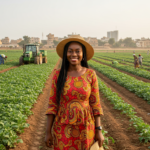
    Model not affiliated with the story.

    Farming has been a part of my life for as long as I can remember. My grandfather owns most of the land in our village in northern Nigeria, which is the foundation of my family’s farming legacy. 

    My dad took over after my grandfather passed, and his interest in the farm began to rub off on me as soon as I could walk. During school holidays and most weekends, my siblings and I were on the farm learning about the crops and distribution channels and even planting new crops with the workers.

    The farm consists of multiple batches of land in various locations, and we grow everything from rice, maize, beans, groundnuts, and ginger to breeding livestock like chickens, cows, and goats. 

    My dad passed away in 2017, and I suddenly gained control of our entire farm operations. I was 21 and had just entered the university. 

    I thought I already knew a lot about running the farm. It turned out I didn’t. 

    First steps: Learning the ropes

    The farm is about two hours away from the city where I grew up. Because of the distance, my dad spent most of his time in the village during the farming season when he was alive. 

    While my siblings and I usually joined him during holidays, I didn’t do much of the planting. Somehow, my crops always turned out wrong, so I gradually stopped going to the farms. 

    Instead, I kept up with the buying and selling side of things from the city. We have several long-term clients, mostly manufacturers, to whom we supply farm products. For example, we supply raw rice to one of the popularly known rice brands in the country; they just process and bag it. We also supply ginger to drink factories. 

    These distribution efforts involve a lot of contract work and managing the workers and clients. So, I assisted my dad with this aspect of the business — I didn’t need to go to the farm.

    But after my dad’s death, I was the obvious choice to keep the farm running. My elder brother was also in the running, but he knew even less about our operations than me and wasn’t as business-savvy. 

    I had to work with our oldest farm workers to learn more about the crops. My mum and uncle also taught me how and when to make decisions. I spent all my time moving from one farm to another, overseeing operations like our organic fertiliser production, handling staff and other local farmers, and resolving issues. 

    I began actively running things in 2018. 

    At the time, I was still trying to find my feet in school. My new responsibilities at the farm meant I constantly missed classes and finished 100 level with several carryovers. By the start of 200 level, I was already considering dropping out of school. The only thing that kept me going was remembering the premium my dad paid for education. As the first daughter, I needed to set a good example for my siblings. 

    So, regardless of how I felt, I had to keep pushing and focus on achieving my goals without getting distracted, even if some of those distractions were my family. 

    Navigating extended family problems

    Since my dad’s death, I’ve had to fight for my right to run the farm. My dad’s siblings — who have no idea how the farm runs — wanted to take over. 

    They were already on the farm’s board of directors and were involved in major decisions. They also received a percentage of the farm’s monthly income. Still, they wanted complete control. They preferred that their children run it rather than “this small girl.” 

    I knew the farm would ultimately shut down if I handed operations over to them. They knew nothing about farming, and I couldn’t watch my father’s hard work go down the drain. The farm also has over 200 workers. What would happen to their jobs if everything went downhill? So, I refused to let go.

    In the end, culture helped. Culturally, my dad owned everything my grandfather had, so there was a limit to how much his siblings could fight me. They still receive a director’s share today —  ₦5.5m/month each for the three of them, plus portions of farm produce. They still cause trouble if their farm produce gets to them late or isn’t as much as they expect. 

    I just consider navigating their troubles one of the many sacrifices to keep the business running.


    RELATED: I Lost My Parents to Inheritance Wars. I’m Not Leaving Money to Any Family


    Finding balance and doubling the farm’s profit margin

    I like to say farming is bipolar. Sometimes, you do everything right, and the harvest is good. Sometimes, the weather just doesn’t cooperate, and the harvest isn’t great. 

    I’ve learnt to accept that harvest might not be great once or twice a year and prepare for eventualities. Before my dad passed away, we turned to local farmers when we didn’t harvest as much produce as expected. Instead of disappointing our clients, we’d buy produce from the other farmers.

    It’s expensive because the crop would be in high demand. So we could buy a bag of ginger ₦10k higher than the usual price. The price difference meant losing money, as we needed multiple bags to meet clients’ demands.

    We fixed that issue by building a ₦3.5m warehouse in 2020. Now, we buy crops, especially ginger, when they’re cheap and store them until we need them. There’s minimal loss because the crops still move quickly. Ginger, for instance, is in such high demand every year. It’s funny because we don’t even use ginger in my state; it’s just the rest of Nigeria.

    In 2022, we started exporting ginger to the US. This opportunity came from a business event I attended — I met some investors and pitched my business to them. The ginger we grow in Nigeria is very different and much better than that in America. I sent the client free samples; we’ve been doing business ever since.

    When my dad ran the farm, our monthly operating costs (like staff payment) averaged between ₦1.5m – ₦2m, and monthly profit averaged ₦45m. Now, we make up to ₦85m in a good month — only ₦5m of this goes to operating costs, the rest is profit. Some of our successes have come from my ability to make business connections through social networking and plan for eventualities, like the warehouse we built and introducing security measures like CCTV systems and military personnel on the farm to reduce employee theft.

    The current market price for some crops has also increased profit margins. For instance, a bag of ginger was ₦20k+ a few years ago. Now, it’s almost ₦250k, and I know how to make a good deal. I can negotiate with a local farmer to buy all his ginger at ₦2m when demand is low and sell it at ₦8m later. 

    That said, a good percentage of the farm’s profit goes to the family. I pay at least ₦10m/month to a family account, which sorts my siblings’ school fees and extended family needs. The thing with being a well-known family is that the billing never ends, and it’s often overwhelming. One family member can come to ask for money for their child’s wedding; another will come for school fees, or to fix their car, or their roof and so on. 

    The ₦10m in that account usually finishes that same month. I pay my mum ₦1.2m/month and ₦1m/month to my brother. Sometimes, it’s less than that because he’s terrible with money and often touches business money he can access. 

    Then, I pay myself ₦2m/month. I don’t always pay myself, especially when there are multiple family requests, and I want to limit our expenses. After paying my dad’s siblings their director’s share, the rest of the farm’s profit goes into the business account in case of unplanned events.

    Future plans for the farm and my career

    I’m very involved in the farm’s operations. But we have structures that ensure the farm runs smoothly without my physical presence. So, I’ve tried to pursue other career prospects outside the farm. 

    I started building a startup in 2023 to connect virtual assistants (VAs) to foreign clients after I noticed the high demand. I charged the VAs 20% of the agreed pay when I connected them to a client, and for a few months in 2023, I earned $1200/month from the startup. 

    But I got busy again with the farm, and things fizzled out. Last year (2024), I wanted a change of environment, so I moved to a different city. I also tried to pursue the career thing again. A job I applied to offered me ₦150k, and I immediately knew 9-5 wasn’t for me.

    So, I’m working on properly setting up my startup, and my deadline to make it work is the end of this year. If it doesn’t work, I’ll close it and focus on the farm. It’s not like I stopped running things over the phone since I left my state.

    Another thing I want to figure out is my finances. By that, I mean growing it even more and having a healthy safety net. I have two financial personalities: there’s the one who wants to enjoy the money I work for. The stronger personality is the one who wants to save all my money. I want to be able to comfortably provide for my family and set up my younger ones in case something unfortunate happens to me or the farm. 

    So, I tend to save more. I have about ₦76m saved up in commercial banks and other money tied up in gold and silver. Jewellery is the only investment I’m comfortable with. I hate losing money, so you can never catch me investing in forex or things I can’t hold. I won’t do more than ₦1m if I absolutely have to. I can afford to lose that. 

    Get More Zikoko Goodness in Your Mail

    Subscribe to our newsletters and never miss any of the action

    My two cents for young people who’d like to invest

    There’s more to explore in terms of earning and investing than the options we find on the internet. Take farming, for example; it can be really profitable.

    I’d advise anyone interested to do adequate research and go into farming. They don’t need to trade or plant; they can just try warehousing — buy directly from local farmers, store in a good warehouse and sell later. I have friends who have made good money with warehousing. Some even send the produce abroad. 

    Farming has its disadvantages, but the advantages are higher. Be open to exploring other businesses and investment ideas. You won’t regret it.


    ALSO READ: I Make Up to ₦700,000/Week Trading Gold in the Forex Market — Here’s How I Do It

    Join 1,000+ Nigerians, finance experts and industry leaders at The Naira Life Conference by Zikoko for a day of real, raw conversations about money and financial freedom. Click here to buy a ticket and secure your spot at the money event of the year, where you’ll get the practical tools to 10x your income, network with the biggest players in your industry, and level up in your career and business.

    [ad]

  • Does your dad have a mysterious “close friend” whose kids call him Uncle, even though they look suspiciously like him? Is there a familiar face that keeps popping up on your social media feed, or an awkward silence whenever you ask about an unfamiliar face in the family photo album? If you answered yes, it might be time to wear your investigative cap and prepare yourself.

    We know the signs to look out for before these secret step-siblings show up unannounced in future.

    1. Suspicious family gatherings 

    If certain “family friends” always make it to your family events, and they seem overly familiar with your parents, that might be a sign. Especially if they don’t really talk to anyone else but somehow know all the family gossip.

    2. Unexplained phone calls and messages

    Screenshot

    If your parent takes calls in hushed tones or leaves the room to “catch up” with someone who’s not in your contacts, you might have some siblings they’re not telling you about.

    3. Overly generous family friend gifts

    If a “family friend” sends your parent generous gifts, funds, or long messages on your birthdays or other milestones, it’s worth wondering if they’re more than just friendly gestures.

    4. Mysterious photos around the house

    If you notice random photos of unfamiliar children in your family albums or at your grandparents’ house, and your parents get awkward when you ask, that’s a big red flag.

     [ad]

    5. Family members who look like you

    If you’ve ever bumped into someone who looks eerily like you or shares certain family traits (same nose, same eye shape), especially if you’re in the same town, you might have uncovered a sibling.

    6. Weird responses from older relatives

    When older relatives mention a mysterious “other family” and quickly change the topic, that might be them trying not to spill a big secret.

    7. Odd social media friend requests

    If people with family names you don’t recognise pop up in your “People You May Know” or try to friend you on social media, especially around your parent’s age or younger, take note.

    8. Secretive road trips

    If your parent “just has to step out” for day-long road trips that they can’t really explain, it might be a meetup with another family.

    9. Over-familiar strangers

    If someone at the grocery store or out in public randomly approaches you and seems to know an unusual amount about your family, it could be a hint.

    Read this next: I Don’t Think My Siblings Like Me

  • Every week, Zikoko seeks to understand how people move the Naira in and out of their lives. Some stories will be struggle-ish, others will be bougie. All the time, it’ll be revealing.

    Bamboo is the easiest way to access smarter investment options and earn real returns. Invest in the biggest companies on the US Stock Market or earn up to 8% with Fixed Returns. Download and start investing today.


    Since 2013, the subject of this week’s #NairaLife has worked for her brother’s publications as a writer, manager, HR and never earned more than ₦100k a month. If she could do it over again, she’d never work for him. But that’s just one of her many regrets.  

    Tell me a bit about growing up

    I’m the third child of four children. My dad was a civil servant who worked as an engineer, and my mum was a teacher. We weren’t wealthy, but we also weren’t poor. My dad was a strong believer in going to school and getting jobs after — not business. So we went to good schools and lived in a nice small estate. After school, I went to my friends’ houses to play. That’s just how stuff was. 


    As a child, I was obsessed with books. They even used to call me “Information Minister” because I knew something about everything. I was sure I wanted to work in the media in some way. 

    Did this affect what you studied in university?

    I didn’t even go to art class in the first place. I was in commercial class, and by the time I figured that we didn’t do literature in commercial class, it was too late to switch. I finished secondary school in 2003, but I didn’t go to university until 2005, at 18 years old. Even then, I had to restart university in 2006. 

    I have so many whys

    I couldn’t get into a federal university to study Sociology and Anthropology in 2004 because of my low JAMB scores. In 2005, I applied again and also didn’t get admission, but for some reason I don’t know, I told my dad I did, packed my bags and went to resume. 

    Resume where ma?

    When I got to school, I didn’t see my name on any admission lists, but I didn’t want to go back to Lagos. I was tired of staying at home. 

    I called my dad to tell him I hadn’t been admitted, and he came to school to see a friend in the school’s senate who could help me get admission. The best the person could do was get me in to study a foreign language. I took it. But I wrote JAMB again sha.

    The next year, I got in to study international relations in the same school. 

    What was money like for you in this period?

    My dad paid my fees and gave me between ₦5k and ₦10k monthly as allowance till he passed away in 2009. My mum handled the family’s finances after that. She sold plantain chips, shoes and did other businesses on the side to augment her teaching salary. 

    Thankfully, my older sister, the firstborn, had graduated, and my older brother and I graduated a year later. So she didn’t have to spend too long worrying about multiple children’s fees. 

    What does an international relations student do after they graduate?

    I went for NYSC in a South-South state — the first big mistake of my career. 

    Why?

    I believe if I’d redeployed to Lagos, my life would be much different now. I’d have started my career with a job at an actual organisation and built a professional network, and that would’ve put me on a different path in life. 

    Instead, I stayed in the south because I wanted to experience a new place. This was 2011 when there weren’t so many job opportunities in places outside Lagos. I’m sure it’s different now because people can easily find jobs online, but back then, there just weren’t many opportunities. 

    How were you getting fed?

    My NYSC teaching job paid ₦5k monthly. NYSC had also just started paying ₦19,800, so that was pretty great too. I could save most of my money because I lived with a friend’s family that fed me. 

    I sha tried to build my career from there because I didn’t want to return to Lagos skill-less. I took a physical bead-making class for ₦15k, and a project management course where I had to go for classes on Saturdays for a few months.  

    Did you get anything when you got to Lagos?

    I returned in June 2012 and just chilled at home till December. Then I made another career mistake.

    My older brother had to go abroad on a government-funded scholarship because he finished with a first-class degree. But he’d always wanted to own a business since we were kids, so he decided to set up something, and he involved me. 

    What’s that?

    An online platform that shared viral fashion, pop, breaking news and gossip content. I thought it was something I could do, so we started in January 2013. 

    By watching videos online, I learnt how to distribute content and use WordPress. So I wrote articles and shared them on social media. My salary was between ₦5k and ₦10k monthly, from money the company got from Google AdSense when our articles got views. 

    Between January and June, we added two more publications. One was for sports, and the other for entertainment. One of my siblings even quit their job to come and be the writer for the entertainment publication for a brief stint. 

    So, family business?

    Exactly. Two years into the business, we had to get additional writers because I couldn’t do all the work on my own. So, in addition to writing, I had to train new writers, edit their work and manage the company. My brother was in the UK all the while the company ran, so it was all me running the day-to-day. 

    That year, my salary increased to ₦25k, and then ₦50k. But in that same 2014, I had another of my biggest career regrets. 

    Tell me

    Business with family can be funny like that. My brother had returned to Nigeria, and we got into frequent arguments concerning business operations. He’d always complain that I wasn’t doing enough when he wasn’t even actively involved in the running of the company. Whenever we got into an argument, I threatened to leave the company. One time, I left, and God, I wish I didn’t return. 

    Why did you?

    The thing is, I was too comfortable. I’d been working from home all along, so I didn’t have many responsibilities, I heard that finding jobs was difficult, and I was working with family. Also, I lived on the outskirts of Lagos, and commuting would have been challenging.

    After a month, I went back to work. Again, big mistake. It just meant I was getting more and more stuck.

    In what ways did this happen

    By 2015, the major publication we started with was growing, and the company was making money from ads. At this point, we’d gotten a workspace and 10 employees. 

    I had to grow into my role as the managing editor, head of operations and HR. I was the one that put out applications, interviewed people, hired and onboarded them. At this point, my brother had left the company in my care because he got a really good-paying job offer. My salary was still ₦50k. 

    For all of that?

    Somebody call HR… Wait, that’s you

    2016 to 2017, I started feeling stuck. I knew my career wasn’t growing. It’d been seven years since I graduated, and I was earning ₦50k. Writers that had zero job experience came to the company, got trained by me, stayed three to six months and left for much bigger companies. I was lonely because I couldn’t be friends with my coworkers who I was meant to be managing, and I was working a lot, so I didn’t have time to have a social life. My esteem was so low.

    But it felt like there was an internal battle going on in me. While I was feeling all of this, I also felt obligated to stay in my brother’s business and help it grow for the family’s sake. So it was just difficult. 

    There was even a short period where I sold second-hand shoes and bags to coworkers, siblings and church members. It didn’t work because I’m just not built for selling. I think I got it from my dad.

    2017 again, another incident happened that felt like a sign that it was time to leave, but I didn’t. 

    I’m listening

    We got a proper office space for the first time. We’d bought furniture, internet, set up everything. It was exciting. The night before we were meant to move in, I was scrolling on Twitter when I saw there was a huge fire somewhere. The address looked familiar.

    A factory close by caught fire and our new office space was among the collateral damage. 

    You know when they say something is burnt irredeemably? We couldn’t pick out one item from the place the next day. 

    That’s horrible

    It felt like a good time to leave to find something else. Not because the company wasn’t going to continue running, but just because it was a significant event that meant I could take a step back and assess my options. But because of the fire, it also felt like a bad time to leave. 

    So I stayed and worked on the new idea my brother had — an online platform that focused on women in Nigeria. Women’s news, health and wellness, relationships, fashion and lifestyle content. My brother was sure it was going to be a hit because it was niche, specific content, and we didn’t know anyone doing stuff like that. 

    Was it a hit?

    Yes. We got sponsored posts and ads, and it grew fast, but it just meant more work for me. I was now overseeing three publications. 

    In June 2018, I was tired and overwhelmed, so I took a one-month break from work. That month, I applied for jobs, but nobody was going to hire me. 

    My only work experience was from my brother’s company. I mean, I’d done a lot of good work, but my CV was a reflection of my esteem, so it was poorly constructed to seem like I’d done nothing. 

    See, it was a terrible month. I got so many rejections. I began to think of all the people I’d trained who were doing so well. I thought of my mates from university. They were doing well. I was so overwhelmed with sadness, I just returned to work in July. 

    Was anything different?

    The publication for women did a content partnership with a top Nigerian bank. That felt fulfilling. It pushed my salary to ₦100k by December. 

    Also, my brother had moved abroad, so all our interactions were now online.

    That same December, my brother and I had another fight because he still felt I wasn’t doing enough, and I left the company again.

    For good?

    Nope. Let me just say here that my brother is the best brother anyone can have. He’s always been my biggest supporter — even financially. In January 2019, my CV was better because he’d helped me edit it and added that I worked with the bank too. I got job interviews this time, but nothing clicked. 

    By April, the publications weren’t doing well because I wasn’t around, and the writers could do what they wanted — like not publishing on time or at all — so my brother decided to shut things down completely. Instead of watching him shut it down, I decided to take complete ownership of the women’s online platform. We gave the writers a few months’ notice that we were ending things, and I became the sole owner and writer of the publication.

    But again, I made a mistake. 

    Oh dear

    We didn’t discuss finances. So I “owned” the company, but he still handled the financial aspects. So money for sponsored ads was still going to the company account, but I was being paid a ₦60k salary. 

    That’s how most of 2019 went. In October, a popular international news agency launching in Nigeria reached out to my company on Twitter for a content partnership. At first, I thought it was a scam, but when I saw other Nigerian publications announcing partnerships with the agency, I decided to give it a try. 

    How did it go?

    I got to the office, introduced myself, and people were excited to finally know the person behind the publication. Someone even took a picture with me. Me o. It’s not like I was hiding my identity before. I’m just not the type of person to constantly talk about my work publicly. So seeing people react like that was a confidence booster. 

    The deal was that they were going to pay ₦15k per article for 15 to 20 articles a month for three months. After that, we’d discuss whether to renew. 

    Sweet

    A week before we finalised the deal, I rejected a ₦50k monthly job offer from an NGO I applied to as a comms intern. They also were willing to increase the pay to 100k after three months and make me a full-time staff.

    Why?

    I thought the news agency contract was good enough and that it was going to be renewed. Taking the NGO job would’ve meant I was tied down to it, instead of having time for the news agency contract. 


    After three months, the news agency didn’t renew the contract. They couldn’t keep paying so much money to so many partner publications. 

    By the end of those three months, I had ₦400k in my account. That was good money for me. But I started regretting rejecting the NGO job. I would’ve gotten to work somewhere else and maybe begun to network and build my career. 

    Instead, I was back to square one — writing for the women’s publication, earning ₦60k and feeling stuck. 

    2020?

    Terrible year. I fell into a deep depression. I was so lonely, I had to go live with my younger brother. There weren’t even any work events to go for. At least, there, I’d see people and network, even for a short period. I considered freelance on Upwork and Fiver, but no luck. Being a beginner — someone who’s never done any work on these platforms — makes it difficult to find jobs. People prefer to hire freelancers who have “experience” on the platforms. 

    What was happening with the publication?

    I was still working on it. 

    Life was frustrating. People that knew me on the surface level thought I was doing okay financially and enjoying my career. 

    Has anything changed since then?

    In 2021, I got a six-month contract job for an international NGO in Switzerland. I applied for a content role, but the job turned out to be a community manager role. The pay was ₦100k. By December, I was ready to quit because the company culture wasn’t the best. This was my first job as a community manager and I don’t think my manager was patient enough. But my friend advised me to stay. By January, they fired me. They said they saw I was struggling to fit in. It pained me that I didn’t quit first. 

    Also, sometime last year, I did a ₦3k per article job but stopped after one month because they only paid after 10 articles and still took out taxes.

    Other than that, I’ve been focused on my publication. I’m in the process of taking over completely, finances and all. We’re sorting out documents. 

    How do you think things would’ve turned out if you’d left earlier?

    I feel I would have had better friendships and relationships and even gotten married if I had switched jobs. It feels like the years are just passing by, and I’m in the same spot. I feel alone professionally, financially and emotionally. 

    But I’m also sending CVs out because I desperately need a job. I’m also currently looking at a career switch to product marketing/management. I’m taking online courses and looking out for internships. 

    But I also think my life has been a lesson from God, so I can advise younger people around me to get jobs first before they jump into entrepreneurship — just so they understand what starting a career feels like. 

    How much do you make on an average month?

    Like ₦60k. On some months, my siblings send me money. 

    What do you spend money on in an average month?

    What’s something you want but can’t afford?

    Rent money. My younger brother has moved to the UK, so when our rent here expires later this month, I have to pay. 

    And your financial happiness on a 1-10 scale?

    Let’s say 4. At this stage of my life, I should be earning more. I just need a big break.


    Bamboo is the easiest way to access smarter investment options and earn real returns. Invest in the biggest companies on the US Stock Market or earn up to 8% with Fixed Returns. Download and start investing today.