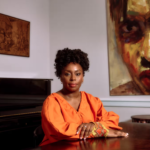
• There are only a handful of writers working today in the world who have attained celebrity status quite like Chimamanda Ngozi Adichie. Her TED talk, “We Should All Be Feminists” was sampled by Beyonce. Later, Dior printed it on T-shirts. She has graced the covers of magazines like Harper’s BAZAAR and Vogue. Tickets to see her deliver speeches sell out in seconds. On social media, her devotees proudly call themselves “The Daughters of Chimamanda.” Fans of her work almost held vigils outside bookstores anticipating her latest drop, Dream Count. 

    Odeluwa Abba!

    What has made her so popular among young women? I spoke with one such woman to try (because we can only try) to understand the gravitational pull she has on her fans.

    As told to Tomide by Mariam.

    Growing up, I always loved reading. One of the books that stuck with me as a child was Purple Hibiscus, Chimamanda’s debut novel. I was in SS2 when it was assigned in my literature class. At 14, I appreciated its storytelling and setting, but I didn’t fully grasp some of its themes. However, Aunty Ifeoma’s character stood out to me — a strong woman raising her children on her own. She was one of my earliest introductions to the idea that women could be independent and capable in a world that often insisted otherwise.

    As I grew older, I understood the book differently. Eugene wasn’t just a strict father; he was an abuser. It made me realise how men who are admired in public can be entirely different — and much darker — behind closed doors. But the real shift in my perspective came when I read Dear Ijeawele, Chimamanda’s book on raising feminist children. It resonated deeply with me because, even as a child, I questioned the way things were.

    Why were girls always the ones expected to cook, clean, and do most of the chores? These skills weren’t embedded in our DNA, so why were they treated as if they were? During Ramadan, I noticed how women were constantly occupied with cooking while men had the freedom to focus on prayer. I knew something about these gender roles wasn’t right, but Dear Ijeawele put words to the thoughts I had been carrying for so long. It was affirming to see someone write so passionately about these issues, making me feel seen and understood.

    That’s the power of Chimamanda’s writing — it reinforces the belief I’ve always had: girls should be raised to be their own people, not just groomed to become someone’s wife. Her books remind me that I’m not alone in these thoughts. They make me reflect: Are we the way we are because of how we were raised? What other norms have we accepted simply because society told us they were normal?

    Get More Zikoko Goodness in Your Mail

    Subscribe to our newsletters and never miss any of the action

    Her writing also challenges how we treat and address women. Why do we call women “Dr. Mrs.” instead of just “Dr.”? Why is a woman expected to change her surname after marriage? These seemingly small details carry deeper implications, and her work reaffirms that women can be loud, stubborn, and unapologetically themselves. And that’s more than okay.

    Every writer has their own way of telling stories, but Chimamanda’s writing stands out for its clarity and depth. Her storytelling is both poetic and powerful, making it easy for readers to connect with her words. There’s a profoundness in the way she crafts her characters and their experiences—raw, relatable, and deeply human.

    Whether it’s Kambili’s silent struggles in Purple Hibiscus or Ifemelu’s complex journey with race and identity in Americanah, Chimamanda’s characters feel real, their emotions tangible. Americanah is my favourite of her books because, in my opinion, it’s where she most deeply explores feminism and identity. Through Ifemelu’s experiences, she dissects the ways gender and race shape our lives, making the novel not just a story but a lens through which to view the world.

    In “We Should All Be Feminists” (which is also a book) she writes, “We teach girls to shrink themselves and make themselves smaller.” This powerful quote is one of the defining statements that cemented her voice and influence in both global and local cultural conversations.

    In the week leading up to the release of her new book, Dream Count, the excitement was everywhere. Book lovers, reading clubs, and literary circles buzzed with anticipation — Chimamanda Adichie was the name on everyone’s lips. It was a moment of unity, a celebration of her impact on literature and culture.

    Beyond her writing, her influence extends into real-life recognition. She made history as the first woman to receive a chieftaincy title in her hometown — a powerful testament to how her work and ideologies manifest beyond the page. Chimamanda is more than a writer; she is a symbol of possibility, a reminder that aspirations have no limits.

    It’s impossible to talk about great and influential Black, African, or Nigerian writers without mentioning her name. I love that her work is not just celebrated but deeply appreciated across the world.

    People won’t stop talking about Dream Count. Over the past few weeks, I’ve read every article I could find about it. Just like I binge-watched all of Chimamanda’s YouTube videos back in university, I found myself jumping from one article link to another. Book lovers attended her events, bought copies of the book, and even got her autograph. That’s influence. I wish I wasn’t in Nigeria — or at least, I wish I wasn’t a broke babe — because I would have been there, too.

    For me, Chimamanda and her books are the perfect conversation starters with fellow book lovers. Lately, I’ve even bonded with people over her recent Vogue interview

    In The Guardian article, I liked how she addressed some of the criticisms she has received, especially about Cancel Culture. She spoke about the importance of people being able to share their opinions and defend themselves. One of the points she made was about trans women and how, in her view, they don’t have the same lived experiences as cis women, particularly regarding safety and social conditioning. I understand where she’s coming from, but I also see how trans women begin to experience many of the same struggles that cis women face. It’s a complicated topic, and honestly, I’m still figuring out where I stand. It’s difficult to take a firm position without enough knowledge.

    But that’s the beauty of discussion — engaging, listening, and allowing conversations to shape and refine our opinions. If I could talk to Chimamanda, I’d tell her how important her books are, though I’m sure she’s heard that countless times. Still, I’d want her to know that her work has shaped so many young Nigerian feminists, including me. It’s astonishing to see how much she has done for women and people in general through her writing.

    We need to read, learn, and understand that there is no limit to what we can become. Society will always try to dictate who we should be, but we don’t have to conform. Women should have the same access and opportunities as men—in school, in workplaces, and in every part of life.


    Wait, babes. Tickets to the hottest women-only party are now available. Get your HERtitude tickets here.

    [ad][/ad]

  • After more than a decade away from fiction, Chimamanda Ngozi Adichie returns with a new novel, Dream Count, published by Narrative Landscape Press. The book follows four women: Chiamaka, an aspiring travel writer; Zikora, a lawyer based in Washington, D.C.; Omelogor, a finance professional in Abuja; and Kadiatou, who is from Guinea and works as Chiamaka’s housekeeper in the U.S.

    Told from their individual POVs, Dream Count takes readers on a journey into the lives of these women, tracing their experiences through the men they have loved but hated loving, the men they wanted to love but couldn’t, the men they loved who didn’t love them back, and the way longing has shaped their lives.

    Photograph: Jared Soares/The Guardian

    Chiamaka, the daughter of a wealthy Igbo businessman, perhaps more than any of the women, has a complicated relationship with romance. When she meets Darnell, an academic with radical political views, their relationship is charged with contradictions—her privilege and his disdain for it, her generosity and his resentment of it. Their dynamic raises broader questions about gender and power, echoing ongoing debates in contemporary Nigerian society.

    Zikora, raised with traditional ideals, has always believed that patience and virtue will lead to romantic reward. But after a painful encounter with a college basketball player, she starts to question whether the rules she has followed were ever truly in her favour. Her evolving perspective forces her to reassess what she wants and what she is willing to accept in love and life.


    ALSO READ: Everything You Need to Know About Chimamanda’s New Novel “Dream Count”


    Omelogor—whose name Adichie spells with an unconventional ‘r’, sparking linguistic debate—initially seems the most pragmatic of the four. She is strong-willed and opinionated, qualities that make her both admired and criticised. In Nigeria, she runs an underground grant scheme for women, a modern-day Robin Hood effort. But when she moves to the U.S. to study the effects of pornography, her certainty wavers, and she begins to struggle with depression.

    If these women had Instagram accounts, they would be beloved by the crowd that worships wealth, their credentials drawing the kind of reverence reserved for the ultra-privileged.  But in Dream Count, we get a front-row seat into their lives and how, thousands of miles away in the U.S., the expectations of their Igbo society still try to humble them. 

    Chiamaka’s rejection of Chuka—a successful, charming man considered an ideal match—elicits accusations of ingratitude, despite his apparent attentiveness to her desires. Adichie asks: What does gratitude look like in love? Must a woman always be grateful simply because a man chooses her?

    The novel’s emotional centre, however, is Kadiatou, a dreamer in her own right. In her village, a lover once painted America as a land of promise, a place where she and her daughter could build a better future. She fled, leaving behind not just home but painful memories, including an encounter with a powerful man who exploited her trust.

    In the U.S., she builds a life through hard work, only to face another violation—one that echoes real-world events, particularly the case of Nafissatou Diallo, the hotel cleaner who accused a prominent politician of assault.

    Through Kadiatou’s story, Adichie examines the intersection of wealth, justice, and power, highlighting the ways in which the system is stacked against those without privilege. But in Dream Count, solidarity emerges as a force for change. The women, each shaped by their own battles, find ways to support one another in seeking justice, purpose, and self-definition.

    At its core, this book is gloriously about mothers and daughters and the contours of their relationships. The real thing. Chiamaka and her mother. Kadiatou and her daughter. Zikora and her mother. Omelogor and her aunty. How they love each other, how they fight, how they make peace.

    With Dream Count, Adichie reminds us all that all kinds of dreams are possible for those who dare to dream. We talk about how the limits of our imaginations inhibit us. Good then for the ladies of Dream Count that they have boundless imaginations.


    ALSO READ: The 10 Best Short Stories by Chimamanda Ngozi Adichie, Ranked

    Get More Zikoko Goodness in Your Mail

    Subscribe to our newsletters and never miss any of the action

    [ad]

  • After an 11-year hiatus from the bookshelf, Chimamanda Ngozi Adichie’s new novel, Dream Count, will be released on March 4, 2025.

    Like a breadcrumb trail from a toxic lover, Adichie has been teasing the novel with short stories. First, Zikora (which instantly became my second-best Adichie work after Americanah, the best book I’ve ever read) was an Amazon Original, and last week, Chuka was published in The New Yorker.

    I know you can’t wait to dive into Dream Count when it drops, but in the meantime, now is a great time to revisit some of her short stories.


    Subscribe to the Zikoko Pop newsletter, The Feed, here.


    Here are Chimamanda’s best short stories, ranked.

    10. Cell One

    Image source: The New Yorker

    Cell One follows a young woman who becomes increasingly disgruntled by her brother’s reckless behaviour and her mother’s inability to hold him accountable. After he is arrested for committing a crime, he begins to reconsider his attitude toward life and starts to de-centre himself.

    This is a powerful story about the lies that patriarchy tells men about masculinity. Although it sits at the bottom of my ranking, I particularly loved this story because of its raw and honest perspective on the complex relationship between mothers and their sons. 

    It is part of her 2009 short story collection, The Thing Around Your Neck, but was first published in 2007 in The New Yorker.

    Where to read: The New Yorker
    Where to buy: Rovingheights Books

    9. On Monday of Last Week

    Poster for On Monday of Last Week film adaptation

    On Monday of Last Week follows Kamara, an immigrant in the U.S. who starts a job as a nanny and begins to interrogate her queerness. Hired by the husband, Kamara’s perceptions shift when the wife, an artist, asks her to undress. This interaction leads Kamara to consider what it might feel like to be with her.

    Part of Chimamanda’s The Thing Around Your Neck collection, the story delves into themes of identity, desire, and the complexities of sexual awakening in an unfamiliar cultural context. It was first published in Granta magazine in 2007 and has been adapted into a short film.

    Where to read: Granta Magazine
    Where to buy: Rovingheights Books

    8. Imitation

    Nkem, a young wife living in the US, learns that her husband is having an affair with a younger woman in Nigeria, and she immediately feels threatened. Her friend in Nigeria regularly updates her about her husband’s new relationship, but when Nkem discovers that he has moved his mistress into their Lagos home, she realizes she must act. Determined, she decides to return to Lagos with her two children.

    Imitation, part of Chimamanda’s The Thing Around Your Neck collection, is a story about infidelity and the strain of a distant relationship. It explores how distance can lead to emotional disconnection and the ultimate unravelling of a marriage.

    Where to buy: Rovingheights Books

    7. The Shivering

    After the Sosoliso plane crash in 2005, Ukamaka’s Nigerian neighbor, Chinedu, shows up at her door, reminding her of everything she has forgotten about Nigeria. As he enters and begins to pray with her, Ukamaka’s mind drifts to the possibility that her lover might have been on the flight. But beneath his outwardly devout demeanour, Chinedu hides many deep secrets of his own.

    The Shivering is a poignant story about the real struggles of queer Nigerian immigrants living in the U.S. It explores themes of identity, secrets, and the complexity of belonging — both to a home country and to one’s true self.

    Where to buy: Rovingheights Books

    6. The Thing Around Your Neck

    A friend of mine once texted me after they had sex for the first time, saying they had “loosed the thing around their neck.” I can’t make these things up. But I digress, and I think I’ve already given away too much of the plot of “The Thing Around Your Neck,” a short story from Chimamanda’s The Thing Around Your Neck collection.

    The story follows a young woman who, after escaping a traumatic experience with her uncle in America, moves out of his house and starts life alone in this new country. As she begins her new life, she notices something unsettling: a sensation around her neck that becomes more pronounced at night. It’s a powerful coming-of-age story that delves into the complexities of identity, survival, and the emotional scars that linger long after trauma.

    Where to buy: Rovingheights Books

    5. The Visit

    The Visit is an Amazon Original short story, published as part of its Black Stars series. This speculative fiction piece by Chimamanda reimagines a matriarchal society where men are at the bottom of the gender hierarchy, and masturbation has been outlawed because it is considered murder.

    The story follows a dutiful husband whose life takes an unexpected turn when an activist friend visits him. Their conversation forces him to rethink his role as a submissive husband, the career he put on the back burner, and the possibility that his wife might be having an affair with a clerk at work.

    Where to listen: Audible

    4. A Private Experience

    Here, two women — one Igbo, the other a northern Muslim — from very different backgrounds take shelter together as unrest grips the city of Kano during Sani Abacha’s regime. Chika, a medical student at the University of Lagos, and the northern woman, a mother trying to balance family life, find themselves forced into an unexpected moment of intimacy and understanding.

    This short story, published in The Thing Around Your Neck, explores themes of class, religion, and ethnicity. Yet, it subtly reveals how these perceived differences are, in many ways, a facade. When their safety is at stake, none of the institutions meant to divide them come to their aid.

    Where to buy: Rovingheights Books

    3. Chuka

    Image source: The New Yorker

    This is Chimamanda Ngozi Adichie’s most recent work, published in The New Yorker in anticipation of the release of Dream Count. Adichie also narrated the audio version herself.

    The story follows Chiamaka, a 39-year-old travel writer, as she ultimately rejects a marriage proposal from a 40-something hunk of an Igbo man — a charismatic, childless bachelor who is incredibly good in bed. The piece is unapologetically bold in its exploration of female desire.

    At the heart of Chuka is a profound question that Adichie poses at the end of the story — one worth contemplating: “I was not grateful to have been loved. What is this gratitude to look like? Is it to be a state of being, to live adrift in gratitude because a man loves you?”

    Where to read: The New Yorker
    Where to listen: Spotify

    2. The Arrangement

    Image source: The New York Times

    This is a very entertaining work of fiction by Chimamanda, published in 2016 in the New York Times. It is a fictional depiction of the then-candidate for US president, Donald Trump, and his wife, Melania Trump. It follows Melania as she reassesses her place in Donald’s life, even as her family powers through a presidential campaign. It is sharp, witty, and wickedly good.

    Where to read: The New York Times
    Where to listen: Audible

    1. Zikora

    Published in October 2020, at the height of the pandemic, Zikora is an Amazon Original short story that resonated deeply with me. At first, I listened to the audio version, performed brilliantly by Adepero Oduye, and then I read it — again and again. The language, as expected from Adichie, is lucid and rhythmic.

    The story follows Zikora, who is ghosted by Kwame after he learns she is pregnant, leaving her to navigate childbirth with only her mother by her side. At its core, Zikora is a meditation on a woman’s right to choose, mother-daughter relationships, and — especially in light of Dream Count — the complexities of friendship.

    Where to listen: Audible


    ALSO READ: Everything You Need to Know About Chimamanda’s New Novel “Dream Count”


  • Penguin Random House, the American publisher of Nigerian writer Chimamanda Ngozi Adichie has announced a new novel from the author, Dream Count. It follows a Nigerian travel writer, Chiamaka living in the US.

    Release date

    According to the publisher, the book will be released on March 4, 2025. Chimamanda worked on the book for ten years and it follows 4 women and their “longings and desires.”

    It is the Zikora book

    Chimamanda has already released a portion of the book as part of an Amazon original short story called Zikora. Zikora follows a young Nigerian lawyer based in the US as she carries her pregnancy to full term abandoned by the child’s father and her ex-boyfriend. On Instagram, Chimamanda had promised that Zikora was part of a longer project that she was working on.

    In the plot released by Penguin Random House, one of the characters in Dream Count is named Zikora.

    What did Chimamanda say?

    In an Instagram post on Wednesday, Chimanda spoke about the book publicly for the first time.

    “DREAM COUNT is contemporary: Covid. Sexual assault inspired by a true story. Depression. A man’s extreme ‘ghosting’ of a woman. Fibroids. Teenage self-esteem. PMS. But also timeless: Injustice. Dignity. Regret. What is a full life? What does ‘meaning’ mean? DREAM COUNT is global: Brazil, Amsterdam, Conakry, Enugu, Maryland, Copenhagen, Mexico, Abuja, Korea, Santiago, Delhi, London, Cartagena, Anambra, New York, Portugal, Washington DC, Kenya, Germany, Italy, Addis, Switzerland, Zambia, Paris, Skopje, Lagos. But quintessentially African at heart,” she said.

    “DREAM COUNT is provocative: Omelogor gives men helpful tips in a blog called “For Men Only.”
    And multi-faceted: Zikora is devoutly Catholic. Kadiatou is a Muslim. Omelogor is agnostic. Chia is a dreamer. DREAM COUNT revels in language. Some sentences sing, some are poetic, all are truth-seeking, especially about love. Solid have-your-back-for-life love between friends. Romantic love. The one who could have loved you. The one you want to love but can’t. The one you love but can’t call love. The one who should have stayed. DREAM COUNT is serious and curious and probing and funny. The writing process has been arduous and has also been filled with ardor. I am deeply excited about this book. I am so proud to have finished it. I cannot wait for my wonderful fans to read it,” she added.

    Storyline

    Dream Count follows Chiamaka, “alone in the midst of the pandemic, as she recalls her past lovers and grapples with her choices and regrets. Zikora, her best friend, is a lawyer who has been successful at everything until—betrayed and brokenhearted—she must turn to the person she thought she needed least. Omelogor, Chiamaka’s bold, outspoken cousin, is a financial powerhouse in Nigeria who begins to question how well she knows herself. And Kadiatou, Chiamaka’s housekeeper, is proudly raising her daughter in America—but faces an unthinkable hardship that threatens all she has worked to achieve.”

    What should you expect?

    According to a post by Random House, Dream Count is about the love and heartbreaks that the women endure. “In Dream Count, Adichie trains her fierce eye on these women in a sparkling, transcendent novel that takes up the very nature of love itself. Is true happiness ever attainable or is it just a fleeting state? And how honest must we be with ourselves in order to love, and to be loved?” it says.

    “A trenchant reflection on the choices we make and those made for us, on daughters and mothers, on our interconnected world, Dream Count pulses with emotional urgency and poignant, unflinching observations of the human heart, in language that soars with beauty and power. It confirms Adichie’s status as one of the most exciting and dynamic writers on the literary landscape.”

    This is Chimamanda’s first feature-length novel in 11 years. Her last was Americanah. In 2023, she published her first children’s book Mama’s Sleeping Scarf.

    Also read about one of Chimamanda’s Short Stories that is being adapted into a film