• In November 2022, former President Muhammadu Buhari authorised the launch of redesigned naira notes to help the Central Bank design and implement better monetary policy objectives and enrich the collective memory of Nigeria’s heritage. But that single decision disrupted the daily lives of millions of Nigerian citizens, with the cash scarcity effects harsher on some than others. 

    Mandy* (29) knew her life was going to change in 2023 — she had been admitted to a Czech university, paid tuition fees, and secured accommodation. But one naira redesign policy changed everything and left her bankrupt. 

    This is Mandy’s story, as told to Margaret

    I was planning to relocate to the Czech Republic through the student route during the peak of cash scarcity in 2023. My admission was already secured, and I was supposed to start my new life later that year. I had been trying for months to get an interview date. I finally got one after months of trying, and it was scheduled to be held in Abuja, so I had to travel from Lagos.   

    When I got to the embassy for my interview, I was informed that I needed to pay for a visa application. They insisted they wouldn’t take cash transfer—only cash in legal tender, because the old notes were out of circulation then. The embassy charged ₦86,000 per person. I had money in my bank account, but couldn’t get cash near the embassy. I roamed the streets of Abuja looking for where to get some money,  eventually finding a POS agent willing to give me ₦100,000 in exchange for ₦140,000.

    My hunt for cash had made me stray quite a distance from the embassy, so I had to find my way back after I got the money. When I returned to the embassy, I got the most heartwrenching news—I was told I missed my interview time. I didn’t get the chance to get my visa denied or approved; I completely missed my opportunity to be interviewed. I had already paid my tuition and secured up to six months of student accommodation in the Czech Republic.

    Get More Zikoko Goodness in Your Mail

    Subscribe to our newsletters and never miss any of the action

    I considered reapplying for the visa, but getting it would have taken months. I ended up missing that opportunity completely. My rent in Nigeria had expired, and I didn’t renew it because I expected my relocation plans to work. My landlady relocated the year before and sold the house. The new owner decided to sell the property and chose not to rent the apartment to any of the old tenants. He asked all of us to move out. That’s how I went from being a renter in Lagos to becoming homeless and squatting with my friend’s former flatmate, who was a man. 

    I didn’t like my accommodation situation, but the only other place I could stay was my mom’s. However, it was outside of Lagos, and my work was Lagos-based. None of my close friends had the luxury of accommodating me, so I had to sleep on someone else’s couch for three months before I finally got money to rent another apartment.

    It took four months for the school to process my tuition refund, but I had already lost nearly ₦700,000 because of the fluctuating exchange rate. I completely lost the money I paid for other parts of the process (like medical charges and other non-refundable expenses). I also lost the money I spent translating my documents from English to the Czech language. All the irrefundable expenses came together to form about ₦700,000. 

    Mentally, it took a toll on me. Squatting with two men in their 30s isn’t the ideal life any woman pictures for herself. The only thing I don’t regret is never cooking once in that house. I work remotely, and they go out daily. If I had cooked just once, it would’ve become my job by default, so I made sure it never happened. For three months, I ate takeout for breakfast, lunch, and dinner every day. But the feeding wasn’t as stable as I wanted because my income wasn’t stable either; I wasn’t working a typical 9–5 job. Some days, I had to eat whatever I could find because I couldn’t afford to order three meals daily.

    Even though I was squatting, I still had to contribute to buying internet,  electricity and the cleaning. Nothing about that situation was convenient, especially not the bathroom-sharing part. One day, I was about to bathe when one of them barged in, forgetting I was even there.  It was such a lucky thing that I  was still dressed, but after that, I made sure to always wait for everyone to leave the house before I used the bathroom. 

    Sometimes, they’d have women over, and I’d have to start explaining myself. I didn’t want any woman dragging me because I was staying in “their man’s house.” There was just too much anyhowness I had to manage and it was painful, especially because I had gone from renting a two-bedroom apartment to sleeping on someone’s couch. 

    It was even more painful to think that I had paid six months’ rent for an apartment abroad. I’m thankful I could get that back, but the money didn’t come when I needed it. It took a lot of paperwork and 60–90 days before they refunded it. 

    It took months to rebuild my life. After everything I’ve been through, the idea of relocating still scares me. I didn’t even renew my passport for a long time because I didn’t want anyone convincing me to try again. The PTSD I had from the entire experience was so heavy that I kept the passport hidden far away.

    Also, that whole trauma wasn’t even from just one failed attempt; this wasn’t my first time. I had tried relocating before, and let me tell you, the whole process is mentally exhausting; You lose friends and you lose relationships— you never really start things with  people you could’ve been with  because you’re “leaving.” You just keep waiting.

    I’m going to try again. Hopefully, this time is the last. I don’t know where I’ll go to yet, but anywhere else is better than here. 

    Honestly, I still hold some grudge against the Buhari-led administration. Witnessing the #EndSARS movement and the Twitter ban changed my perception of the administration. I’m sure he might’ve done good things, but the ones I experienced were painful. The trauma from #EndSARS hit home. Some people might have forgotten because it didn’t affect them personally, but some of us will never forget.

    When I decided to leave Nigeria before 2022, it had less to do with Nigeria; I just wanted an escape, and I felt stuck after a bad friendship breakup. Now, I’m just trying to escape from Nigeria itself. It’s not even just about me anymore; it’s about my family. If one of us gets out, it becomes easier for the others to follow. 

    Things have gotten too bad. These past two years, and the six more we’re heading into, do not look promising. I won’t waste my 30s waiting for this country to change. I won’t do it.

    Click here to see what other people are saying about this article on Instagram

    [ad]
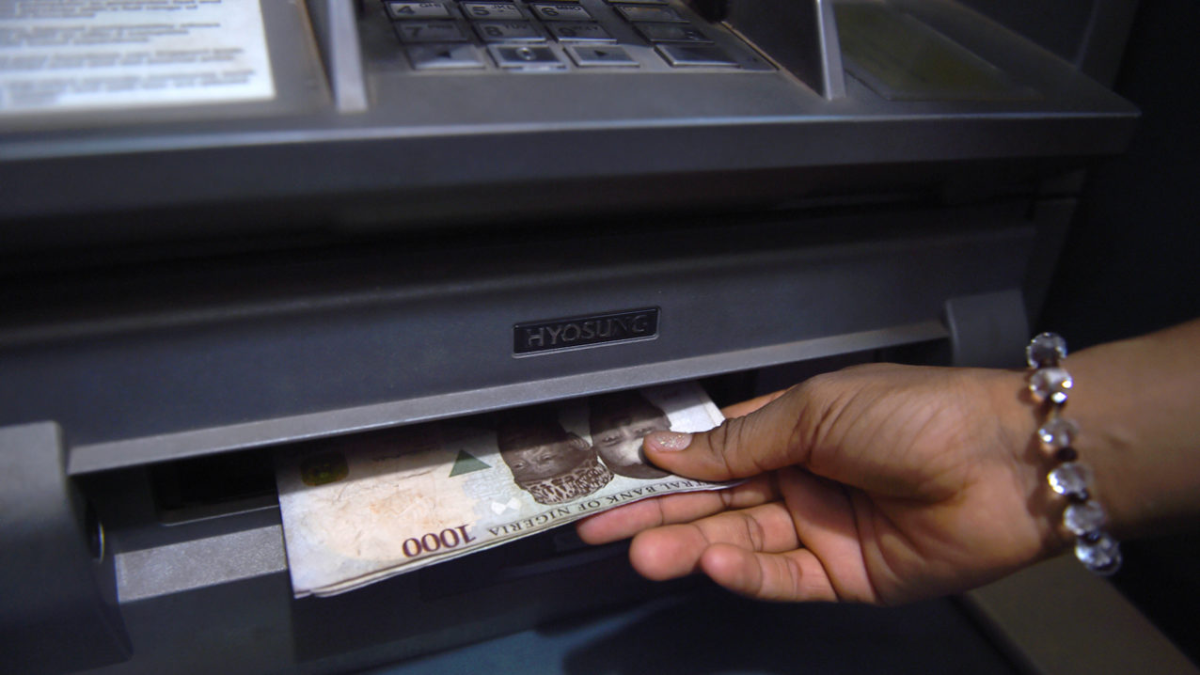
  • If you’re a Nigerian reading this, chances are you’ve been frustrated and stranded so many times because the Automated Teller Machines (ATMs) attached to banks and other designated spots around you do not have the cash to dispense, so you had no choice but to opt for Point Of Sales (POS) merchants who in turn, charge an arm and a leg before they give you the cash.

    If this is you (it’s you for sure), you’re in luck because the Central Bank of Nigeria (CBN) has decided it’s seen enough of this mess and has come up with a solution to relieve your stress. On November 29, the CBN outlined recommended steps for customers to use in reporting banks that cannot provide them with cash through Over-The-Counter withdrawals or ATMs.

    In a circular titled ‘Cash Availability Over The Counter in Deposit Money Banks (DMBs) and Automated Teller Machines (ATMs),’ the CBN instructed banks to ensure that cash is always available to customers or face the repercussions that will come with it from now on.

    “DMBs are directed to ensure efficient cash disbursement to customers Over-the-Counter (OTC) and through ATMs as the CBN will intensify its oversight roles to enforce this directive and ensure compliance,” the circular read in part.

    Continuing, the CBN provided steps that it wants customers affected by cash scarcity to take in reporting banks so that they (CBN) can get rid of issues “hindering the availability of cash” and help improve cash circulation. We list the steps below.

    How to report a bank for cash scarcity

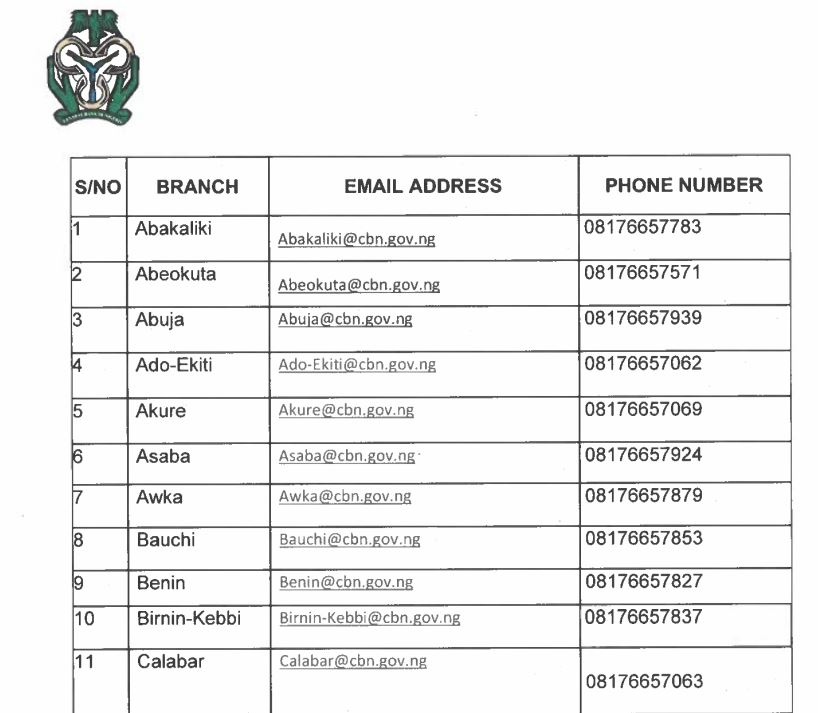
    CBN branches in Nigerian States with their respective phone numbers and email addresses. Photo credit: Punch newspaper
    1. Call the designated phone numbers of the CBN branch in the state where the defaulting bank falls under and provide them with your account name, name of the defaulting bank, the amount that you want to withdraw (but could not), time, and date when the incident occurred.
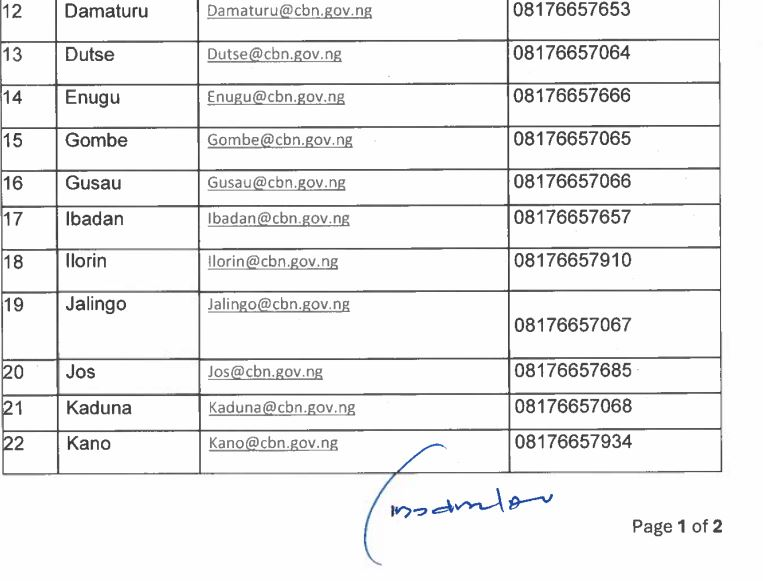
    CBN branches in Nigerian States with their respective phone numbers and email addresses. Photo credit: Punch newspaper
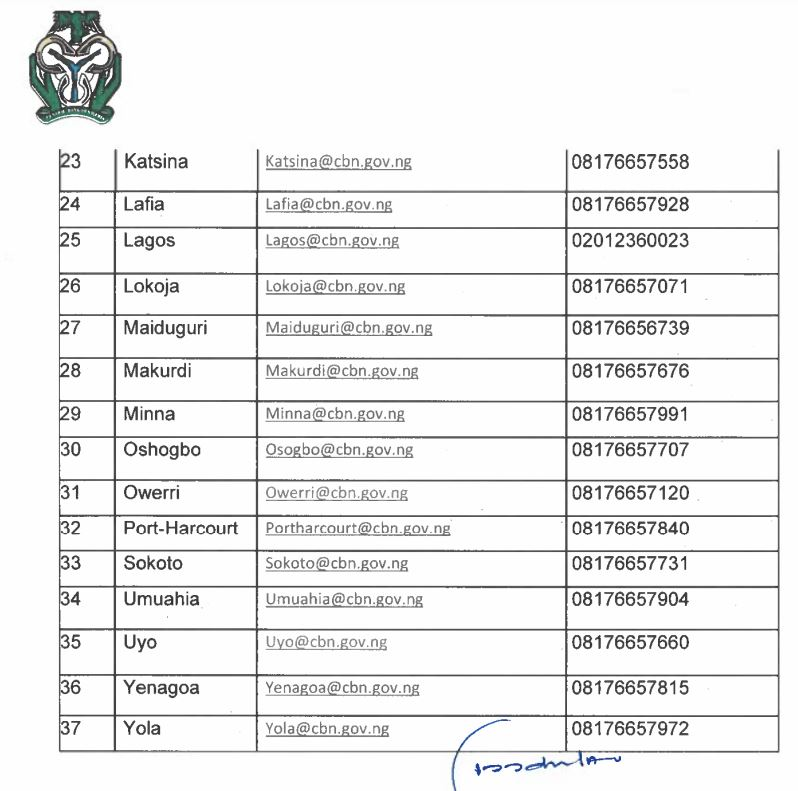
    1. Send an email to the designated email address of the CBN branch in the state where the defaulting bank falls under and provide them with your account name, name of the defaulting bank, the amount that you want to withdraw (but could not), time, and date when the incident occurred.

    How will this help?

    CBN branches in Nigerian States with their respective phone numbers and email addresses. Photo credit: Punch newspaper

    Over the past months, Nigerians have suffered on and off cash shortages from bank counters and ATMs that have led them to frequently patronise POS merchants or find other alternatives.

    Most recently in November, people were so frustrated with this shortage that they took to X to call for an end to POS businesses as they believed they were the major cause of the cash scarcity across the country.

    But POS operators have said they’re not the problem. According to the National Secretary of the Association of Point Of Sale (POS) users in Nigeria, Isa Zakari, the shortage of cash has majorly been caused by bankers (who own many POS outlets) removing chunks of money meant to be in circulation for regular customers and putting them at their outlets who then charge outrageous amounts for the cash.

    He added that the cash scarcity can also be traced to greedy bank managers and bankers who have been known to sell cash to some POS operators as well as people from the Niger Republic that now increasingly use the Naira as an alternative to the shortage of theirs.

    In November, Daily Post Newspaper also spoke to bankers who denied the claims of the POS operators and bounced back the blame on them instead.

    With this new directive, Nigerians will no longer have to play a guessing game to figure out who the guilty party is because banks will now be required to ensure that cash is available to customers both over the counters and at ATMs or face strong consequences from CBN.

    Will it work? Nigerians might have to find out by calling and emailing the CBN with their complaints.

  • Before you argue for or against POS agents, you might want to read Gbolahan’s* story first.

    He talks about navigating assumptions about POS agents being opportunistic, wanting people to be more understanding and why he intends to stick with the business.

    As told to Boluwatife

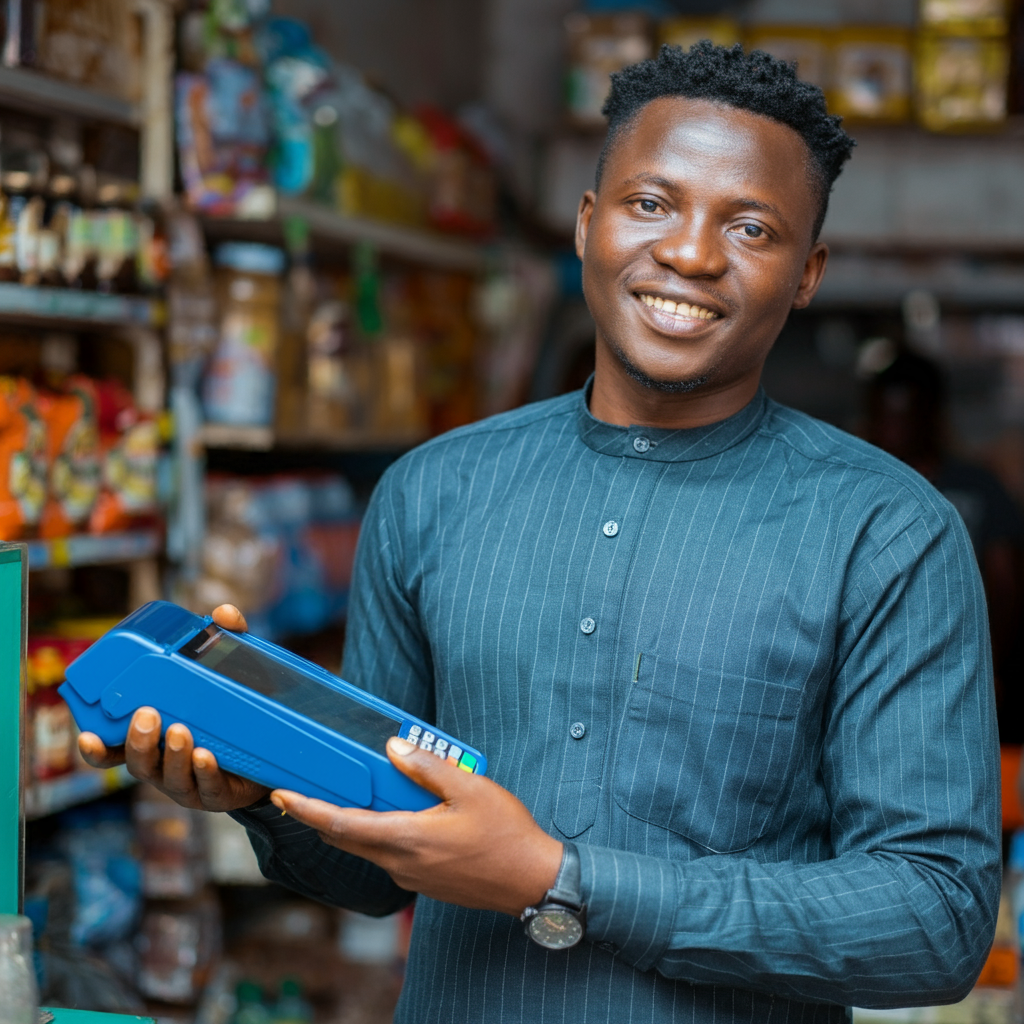
    Image: Zikoko

    I’ve been in the POS business for about three years now, and while carrying out online payment transactions for money wasn’t exactly my dream job, it pays my bills. At least I’m making money in an honest way, and I need Nigerians to respect that.

    My POS business has saved my life in more ways than one. In addition to being my primary source of income, it has helped me develop a sense of self-worth and independence. My parents are poor people who have struggled all their lives and often rely on the generosity of others to survive, always looking for the next “helper” to bless them. So, subconsciously, I also grew up with that mentality.

    After classes, my friends and I would hang around the supermarket opposite my secondary school to hail the customers who drove in to buy stuff, hoping they’d dash us money. I learned to size people up and guess how much they had so I could determine how well to greet them. When I wasn’t doing that, I was directing traffic at owambe parties so the drivers could find their way out and hopefully give me the random ₦100.

    I actively participated in giveaways before they became a thing on Twitter. In my polytechnic, I attended several fellowships not because I was interested in God but because the executives often held airtime giveaways and sometimes shared food to encourage people to join the fellowship. 

    I was also the “urgent ₦2k” guy to my friends, often asking for one financial help or the other. I realised people had begun to know me for constantly begging when my classmates shared one of those anonymous message links on our department WhatsApp group so we’d shade each other for fun. One person said something like, “If a week goes by without Gbolahan asking for money, heaven can come down.” Everyone laughed, and I acted like it was funny, but it really pained me. 

    So, as soon as I finished my OND in 2021, I decided to look for whatever means possible to make my own money. I’m sure my mum expected me to return to school for my HND the following year, but it just wasn’t possible.

    I’d barely managed to pay my OND school fees by begging family members and gathering whatever money I made from the owambe food server gigs I got during the weekends. I knew no one was going to sponsor me to school. It was better to hustle to make money rather than get a certificate I’d now struggle to get a job with after school.

    That’s how I started my POS business. It took me only about ₦20k to apply for the machine and register, but my mum still had to borrow ₦150k from a microfinance bank for me. The extra cash was so I’d have something to deposit in my wallet and have some money at hand to give customers. 

    Business has been good. I make up to ₦10k on a very good day and no longer need to beg anyone to survive. I even repaid half of the amount my mum borrowed for me to start the business while she paid the balance. I can now afford to drop money for food at home and buy myself clothes.

    I’m very proud of my work and always encourage people to start the business too. The only downside is that most people make it seem like we’re wicked opportunists who are using our fellow Nigerians to make money.

    There’s nothing my ears didn’t hear during the cash scarcity last year. I was waking up as early as 4 a.m. to queue at bank ATMs to collect cash because, scarcity or not, I had to do my business. Even with that, I still had to buy cash from market women, fuel attendants and drivers because the ATM withdrawal limit was only ₦20k. There was a time during the scarcity that I bought ₦10k cash for ₦2k. 

    Of course, after going through all that to get cash, I had to increase my transaction charges to make a profit. But people just thought I was being wicked and choosing to take advantage of the situation. I remember getting the insult of my life from an old woman because I charged her ₦2k to withdraw ₦10k cash. Another one accused me of hoarding cash when I said I didn’t have any to give her.

    The cash scarcity issue has gone, but people still treat POS agents somehow. A few months ago, I had some issues with my kiosk location, so I moved it to just in front of a bank in my area that’s known for always having issues with its ATM. When people come to the ATM and can’t get cash, they have to patronise me. A few people have complained about this while withdrawing cash from me, as if I’m the one who spoilt the ATM. 

    I also see people come online to talk as if POS agents are destroying banks. Some even say the authorities should ban us. Imagine. Instead of facing the government and making them explain why it’s more difficult to get cash now, we’re blaming people who are just trying to survive. 

    We’re simply filling a vacuum caused by the different policies the government and banks are implementing. I wish people would understand this and appreciate that POS agents are even making it easier for them to access their money. You can’t please everybody sha.

    I don’t have any other business ideas for now, so I’ll stick to my POS. If I stop it, who will feed me? Nigerians should just leave me alone.


    *Name has been changed for the sake of anonymity.


    NEXT READ: I Want to Be Like My Mum, but Inflation Is Making That Impossible

    Get more stories like this and the inside gist on all the fun things that happen at Zikoko straight to your inbox when you subscribe to the Zikoko Daily newsletter. Do it now!

    [ad]