• More Nigerians are breaking into the global workforce and earning in dollars while living at home. As remote work spreads across industries, platforms connecting African talent to international companies have never been more accessible. Whether you’re a developer, writer, designer, marketer, or virtual assistant, the opportunities are real — if you know where to look.

    We have curated 15 trusted platforms that consistently offer remote jobs paid in dollars. They’re global-facing, open to international applicants, and worth exploring if you’re looking to build a remote career from Nigeria.

    1.  Wellfound (formerly AngelList Talent)

    Launched in 2012 and rebranded in 2022, Wellfound is a remote job platform focused on startup roles in software, product, design, marketing, and operations. It hosts over 130,000 job listings from early—and growth-stage startups, many offering remote, USD-paying roles. 

    The platform is known for its salary and equity transparency, and users can apply directly without needing cover letters. It works best for people with some experience who are willing to complete profile assessments and tailor their applications to stand out.

    2. Toptal

    Toptal is not your average freelance platform. Founded in 2010, it connects top-tier talent — developers, designers, finance experts, and product managers — with companies like Airbnb, Duolingo, Motorola, and Shopify looking for remote contractors. But it’s also one of the most selective platforms out there: only about 3% of applicants make it through its rigorous screening process, which includes language tests, technical interviews, and a paid trial project. 

    If you do get in, you’ll find high-paying jobs with global clients, flexible schedules, and long-term contract options. Toptal is best for experienced professionals who are confident in their skills and want to skip the noise of lower-paying freelance sites in exchange for quality gigs and serious pay.

    3. LinkedIn

    LinkedIn isn’t just a networking app; it’s one of the most effective platforms for finding remote jobs, including roles that pay in USD. The key is knowing how to use it: tailor your profile to match the roles you’re looking for, set job alerts with keywords like “remote” and “worldwide,” and engage with posts from companies hiring globally. 

    You’ll find opportunities across tech, marketing, design, writing, admin, and more, many of which are open to African talent. Plus, recruiters often contact candidates directly, especially those with strong, active profiles. LinkedIn should be part of your daily routine if you’re serious about building a remote career.

    4. WeWorkRemotely 

    We Work Remotely is one of the most popular job boards for remote work. Launched in 2011, it’s become a go-to platform for companies hiring remote-first teams, especially in tech, product, marketing, and customer support. You’ll regularly see listings from startups and established names, offering roles open to applicants worldwide. 

    The site is simple to use — no account needed to browse — and many listings pay in USD. It doesn’t offer as much candidate support or filtering as other platforms, but its sheer volume of listings and global reach make it a solid starting point for anyone looking to land a remote job fast.

    5. Dribbble Jobs

    If you’re a designer looking to get paid in dollars, Dribbble is one of the best places to start. Originally a community platform for showcasing design work, it also hosts a job board where companies post full-time, freelance, and remote design roles, everything from UI/UX and product design to illustration and branding. 

    Many listings are remote-friendly and USD-paying, especially those from startups and international clients. You’ll need a strong portfolio (your Dribbble profile can double as one), since most companies recruit directly from what they see. It’s ideal for creatives who want to be discovered for their work, not just their CV.


    Zikoko’s first-ever money event is happening this August! Join us at the Naira Life Conference on August 8th for honest, practical conversations about building a high-earning career from scratch in Nigeria. At the Career Growth track, you’ll hear from professionals who have scaled their income exponentially, moving from entry-level salaries to remote roles paying in dollars. Learn how they did it, what they’d do differently, and how you can chart your own path. Get 30% off your ticket when you buy now. Don’t miss the early bird window!


    Join 1,000+ Nigerians, finance experts and industry leaders at The Naira Life Conference by Zikoko for a day of real, raw conversations about money and financial freedom. Click here to buy a ticket and secure your spot at the money event of the year, where you’ll get the practical tools to 10x your income, network with the biggest players in your industry, and level up in your career and business.

    6. RemoteOk

    Remote OK is a straightforward job board with listings for remote roles across tech, design, marketing, customer support, and more. It pulls jobs from various sources and labels each by location, salary, and whether it’s open worldwide or to specific regions. You’ll find everything from early-stage startups to large companies hiring remote workers, many paying in USD. 

    The site also shows how many people have viewed and applied to each role, which can help you prioritise. It doesn’t require signing up to browse or apply, making it a fast, practical tool for discovering global remote jobs.

    7. Outsourcely

    Outsourcely is a remote job platform that connects freelancers and remote workers with startups and small businesses, mainly in the US and Europe. You’ll find customer support, writing, design, admin, marketing, and tech jobs. Many roles are part-time or long-term freelance contracts, and most pay in USD. 

    To get started, you’ll create a free profile, list your skills, and set your rates. What makes Outsourcely different is that employers can contact you directly once your profile is live; you don’t always have to apply first. It’s a good platform for people looking for consistent, remote work without the heavy competition you’ll find on bigger freelance sites.

    8. Remotive

    Remotive is a remote job board that focuses on startup and tech-friendly companies hiring worldwide. It’s well-organised, easy to navigate, and covers various roles, from software development and design to customer support, marketing, sales, and HR. Most companies that post on Remotive are remote-first and open to international talent, with many offering payments in USD. 

    You don’t need to create an account to browse or apply; jobs usually link directly to the company’s application page. There’s also a filter that lets you sort jobs by time zone, which is helpful if you want to avoid night shifts. If you’re looking for remote jobs that aren’t limited by location, Remotive is a solid place to start.

    9. JustRemote

    JustRemote is a remote job board with listings across tech, marketing, writing, customer service, and more. It’s not as crowded as some of the bigger platforms, which means less competition for each role, but you’ll still find a decent mix of full-time and freelance jobs, many of which pay in dollars. You can browse jobs by category or filter by region if you want roles that don’t require overlapping with US time zones.

    10. Contra

    Contra is a freelance platform built for independent creatives and tech professionals: writers, designers, marketers, developers, and more. Unlike most marketplaces, it doesn’t charge commissions, so you keep 100% of your earnings. The platform focuses on project-based, remote-friendly work, with many clients paying in USD. You can create a clean profile that doubles as a portfolio, pitch to roles, or get discovered by clients browsing for talent. It’s ideal for freelancers who want more control over their rates, visibility, and workflow, without getting lost in a sea of low-paying gigs.

    11. Jobspresso

    Jobspresso is a remote job board focusing on tech, marketing, writing, and customer support roles. The platform curates listings from companies hiring remote workers, many based in the US and paying in dollars. You’ll find full-time and contract roles from startups and well-known names alike. 

    It’s easy to browse jobs without an account, and each listing links directly to the application page. While the number of new listings isn’t as high as some bigger boards, the quality is solid, and everything posted is remote by default.

    12. Who Pays Technical Writers

    Who Pays Technical Writers is a crowdsourced database that lists how much companies pay technical writers for articles, documentation, tutorials, and other writing projects. The list is updated regularly and includes details like pay rates (often in USD), submission processes, and the kind of writing each company is looking for. 

    It’s beneficial if you’re pitching as a freelance writer or looking to break into technical writing with fair, transparent pay. While you won’t apply for jobs directly through the site, it’s a powerful tool for finding well-paying clients and avoiding lowball offers.

    13. Superpath Jobs

    Superpath is a niche job board for content marketers, especially those in the tech and SaaS space. Most roles listed are remote and paid in dollars, covering everything from blog writing and content strategy to SEO and editorial work. 

    The platform is part of the broader Superpath community, which offers resources, salary transparency, and a Slack group for networking. It’s handy if you’re a content marketer looking for jobs at startups or growth-stage companies. The listings are curated and relevant, so you’re not wasting time sifting through unrelated roles.

    14. Arc Dev

    Arc.dev is a remote job board built for developers. It features roles in full-stack, backend, frontend, DevOps, and blockchain. Most jobs pay in USD and are open to global applicants. You can apply directly or join Arc’s vetted talent network, which involves a skills assessment and matching process. 

    The extra effort can pay off: vetted users get faster access to high-quality job matches with less competition. If you’re a developer looking for serious remote work without endlessly chasing gigs, Arc is one of the more focused platforms.

    15. Turing

    Turing connects experienced software developers with long-term remote roles at US-based companies. The platform handles the vetting process upfront, including technical tests, coding challenges, and interviews, and only accepts candidates who meet its standards. 

    Once you’re in, Turing matches you with jobs that pay in USD, with full-time hours and competitive rates. Most roles are in web and mobile development, backend systems, and cloud engineering. Unlike freelance marketplaces, Turing offers more stability. The company hires you as a contractor, but you work as part of the team. It’s ideal for mid- to senior-level developers looking for reliable, high-paying remote work without constantly job hunting.

    Quick Tips to Stand Out and Get Hired

    • Tailor your applications: Don’t send the same CV everywhere. Highlight the exact skills each job requires.
    • Show your work: Have a clean portfolio, GitHub, blog, or LinkedIn page that shows what you can do.
    • Work on your timezone game: If you can overlap with US or EU hours, mention it clearly.
    • Use the platform: Some platforms (like Contra or Wellfound) prioritise candidates with completed profiles and assessments.
    • Follow instructions: A surprising number of applicants ignore basic application steps — don’t be that person.

    Editor’s Note: This article is for informational purposes only. We encourage you to do your own research before signing up.


    Also Read: 6 Online Platforms That Pay Nigerians to Train AI


    Get More Zikoko Goodness in Your Mail

    Subscribe to our newsletters and never miss any of the action

    [ad]

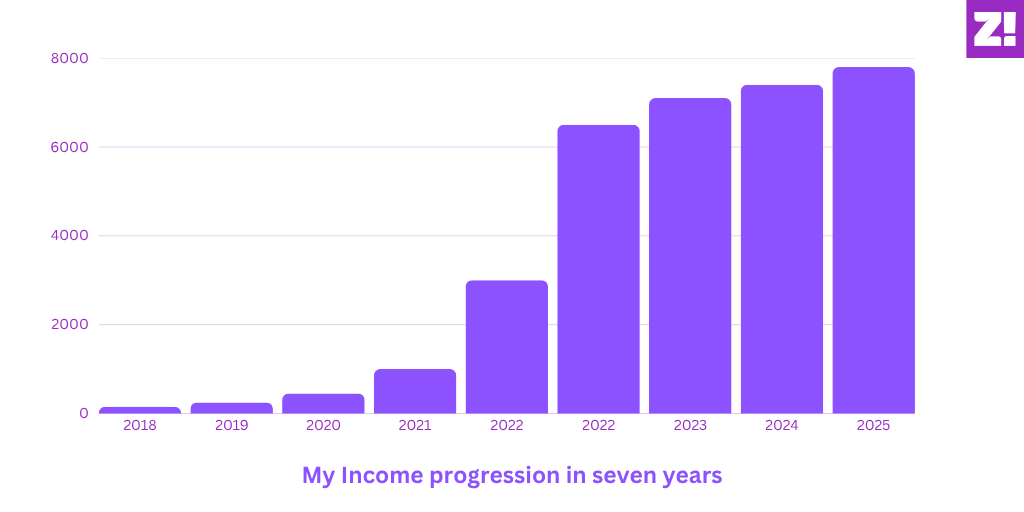
  • In an earlier story, we explored how this remote product marketing manager went from earning ₦160k/month to $7.8k/month in just seven years. 

    Now that the money’s here, what’s she doing with it?

    In this follow-up, she breaks down exactly how she spends, saves and invests her income — and what financial stability looks like now that she finally has it. 

    As told to Aisha Bello

    I work remotely from Nigeria and only travel to our European HQ once a month.

    I currently earn $7,800 monthly, about ₦12 million at today’s rate. While that’s a lot by Nigerian standards, I don’t approach money with panic or pressure.

    I’ve always had a calm, almost fluid relationship with money. Even when I wasn’t earning much, I never obsessed over it. I didn’t grow up greedy for money either. But now, with a stable income, my mindset has become more intentional, and it shows up in how I invest, spend, and save.

    Income: How The Money Comes In

    I earn my salary in dollars and receive it directly into a domiciliary account. From there, I decide what goes into investing, what I convert to naira, and what I leave untouched. I also have a business debit card from my company for work travel expenses.

    Spending: What My Money Goes Into Monthly

    As soon as I get paid, I convert $2,500 to naira to sort my monthly bills and family responsibilities. Here’s what that usually covers:

    • Family support: My dad is late, so I care for my mum and three sisters. Two are at university here in Nigeria, and one is studying abroad. Depending on the month, I spend up to $1,500 on family support alone.

    • Rent: I live with my partner, so we split rent. My share is ₦2.5m/year.

    • Power and utilities: I spend around ₦200k monthly on electricity, and another ₦100k on internet and other subscriptions.

    • Groceries: I don’t eat out much. I prefer cooking, mainly organic, homegrown food. Grocery shopping costs me about ₦250k each month.

    • Miscellaneous spending: I budget another ₦200k–₦250k for impulse purchases, self-care, or random wants.

    I don’t always spend the full $2,500 I withdraw. If I have money left at the end of the month, I carry it over and withdraw less the next month. 

    Join 1,000+ Nigerians, finance experts and industry leaders at The Naira Life Conference by Zikoko for a day of real, raw conversations about money and financial freedom. Click here to buy a ticket and secure your spot at the money event of the year, where you’ll get the practical tools to 10x your income, network with the biggest players in your industry, and level up in your career and business.

    Savings & Investments: How I Handle What’s Left

    I’m not the most aggressive investor, but I’m consistent. I’ve been investing in U.S. stocks through Bamboo since January 2023. Every month, I allocate $1,000 to buy shares in the same nine companies: Amazon, Nvidia, MasterCard, Meta, Microsoft, Google, Netflix, Apple, and the S&P 500 index.

    I’m not chasing quick gains. I picked those companies because they’re stable, and I believe in slow, steady growth. So far, I’ve invested $20,563, and my current portfolio return is about $8,000. 

    The rest of my dollar income? I leave it untouched in my domiciliary account. I just like knowing I have a safety net; if anything happens, I’m covered.

    A Typical Workday in My Life

    I work a regular 9–5 and have a mini home office where I spend most of my day. But on slower days, I sit in the living room, eat something nice, watch TV, and chill.

    My team is global, so I work across time zones, but the schedule is flexible. There’s no micromanaging or mandatory hours. When I travel for work, the company covers everything — flights, Ubers, meals.

    One of the things I value most is the supportive environment. My colleagues are kind, respectful, and often older, which gives me space to learn and grow without pressure. It’s honestly one of the reasons I enjoy my job so much.

    Bottom Line

    Wealth means stability — having my needs covered, supporting the people I love, and still having something left over.

    I’m not chasing a glamorous life. I just want comfort, consistency, and peace. So every month, I build toward that — one stock purchase, one budget, and one grocery run at a time.

    Money isn’t the main character in my story. But now, it finally supports the life I want to live.


    Also Read: I Went From Earning ₦160k/Month to $7.8k Working Remotely. Here’s How I Flipped My Career and Income


    Get More Zikoko Goodness in Your Mail

    Subscribe to our newsletters and never miss any of the action

    [ad]

  • Her career started with a ₦160k/month executive assistant role. Seven years later, she’s managing $5 million marketing budgets, launching global products used by millions, and earning $7.8k/month — nearly $100k a year — from her apartment in Lagos.

    But this leap didn’t come easily. Getting here took heartbreak, hundreds of rejections, a career pivot, and relentless learning.

    This is how she moved up to become a globally respected product marketing manager and how she’s planning for what’s next.

    This Day

    I currently work remotely as a product marketing manager in Web3, helping one of the world’s oldest internet browser companies explore the future of decentralised technology. I earn $7,800 a month.

    I launch software products at my job. This might sound vague, but “products” aren’t just apps: they can be features, experiences, or systems. My job is to take those products to market, craft their story, figure out how they fit into people’s lives, and ensure the right people find and understand them.

    Web3 itself can be a difficult concept to grasp. But I’d explain it as a new way of building systems: financial, digital, communal, where everyone has access, everything is transparent, and no one person or company holds all the power.

    In my role, I work closely with the product team to decide what we build, why and when we build it. This means prioritising what our users truly need. Sometimes, product managers and engineers get caught up in the technical magic of building and forget the human being at the other end. My job is to sit in that middle space between user and product. I translate the needs of real people into the roadmap, so that what we build solves the problems that actually matter.

    But here’s where it all started for me.

    The Early Hustle

    In 2018, fresh out of uni at 20, I felt a heavy urgency to get my life moving. As the first of four kids, I carried the pressure to succeed.

    I tried front-end development using React but hated it. It felt mechanical, like bricklaying. I needed a job that could give me creative joy, so I started showing up daily at a coffee shop on Victoria Island with my laptop, applying for any job I could find.

    One day, a woman — clearly someone important — walked in for a meeting. When she finished, I introduced myself and asked to be her assistant. To my surprise, she said yes and hired me on the spot. She was the CEO of a Lagos-based company, and I became her executive assistant, earning ₦100k. I helped her manage tasks, meetings, and day-to-day operations.

    At the same time, I also tutored kids. I’d signed up with a home tutoring agency and was getting ₦30k a month teaching science subjects after work. One family, a Lebanese father and his two daughters, liked me enough to cut out the agency and hire me directly, which bumped my tutoring income to ₦60k. Altogether, I was making ₦160k a month.

    Eight months later, everything unravelled. The company where I worked as an executive assistant collapsed amid fraud allegations, and the founders were declared wanted. It was a wild ending, but by then, I had tasted what it meant to hustle and find my footing, and I was ready for more.

    Building Skills, Earning Little

    I aggressively hunted for jobs, applying to anything I felt remotely qualified for: marketing, social media, assistant roles, etc. Then, one day, I sent my CV to a recruiter I found on Twitter.

    That’s how I landed my first remote role in 2019, as a content assistant at a US-based natural hair extension brand run by a Nigerian-born founder. She was open to hiring from Nigeria, and I got lucky. From my apartment in Lagos, I planned and scheduled social media content, ran competitor research, brainstormed campaigns, and helped manage the blog. It was my first taste of working internationally.

    The pay was ₦150k monthly, sent via WISE. I still kept up with home tutoring after hours to make ends meet.

    But eventually, the cracks started to show. We were a team of four — all Americans except me. I felt isolated —a distant cog in a system I wasn’t fully part of. With growing personal needs, I knew it was time to move on. I wanted to earn more and matter more.

    Learning on the Job

    By late 2019, another unexpected break came through. Because of my content assistant experience, I landed a role as a content specialist at a US-based B2B SaaS company. It felt like a fluke of luck: I wasn’t a trained writer, but the job required constant writing. Their SEO strategy demanded a stream of articles, and I had no choice but to figure it out fast.

    The first few weeks were intense. I leaned heavily on Google, my teammates, and a brilliant editor who shaped my writing from scratch. It was baptism by fire, but I grew rapidly. I earned $250 monthly, not much more than my previous salary, but the real gain was skill.

    Then, in early 2020, a friend sent me a job link. I wasn’t looking, but I applied anyway. It was a content coordinator role at a fashion startup in East Africa. I got the job: $450 a month, or about ₦270k at the time.

    For the next year, I ran the content calendar, managed writers and editors, drafted weekly newsletters, posted on social media, and brainstormed editorial themes. It was structured but creative work. I was deep in content strategy and digital storytelling, balancing trend research, editorial deadlines, and brand messaging all at once.

    I learned how to lead a team, own processes, and communicate ideas that moved people. It wasn’t glamorous, but it laid a strong foundation for everything that came next.

    Join 1,000+ Nigerians, finance experts and industry leaders at The Naira Life Conference by Zikoko for a day of real, raw conversations about money and financial freedom. Click here to buy a ticket and secure your spot at the money event of the year, where you’ll get the practical tools to 10x your income, network with the biggest players in your industry, and level up in your career and business.

    The Pivot That Changed Everything

    In January 2021, while still at the fashion startup, a friend messaged me: “Are you open to a new job?”

    I wasn’t actively searching, but she had a lead: a content specialist role for a child company under one of the largest global crypto and Web3 companies. 

    I figured, why not?

    She sent my résumé to the recruiter. I didn’t think much of it. The job was for a Lagos-based team, though tied to the global company. I barely took the interview seriously. They sent me a task — a writing sample, and I remember submitting something I immediately hated. I stayed up, rewrote it from scratch, and asked them to ignore the first draft. A few days later, they sent me an offer.

    It came with a huge salary jump — $1,000 per month. That was more than double anything I’d ever earned. And the role turned out to be so much more than content.

    I was hired as a content specialist but quickly found myself doing product marketing: launching features, crafting go-to-market strategies, and building narratives around new releases. Blog posts, newsletters, social campaigns; I figured out how to communicate product value. That’s when I realised: this is what I love. Not just content writing but telling the story of a product strategically, creatively, and holistically.

    At some point, I asked for a title change, from content specialist to product marketing manager. It just fit better. I didn’t want to code or be a product manager, but I wanted to be close to the product, shaping how people saw and interacted with it.

    I stayed for nearly two years. It paid well; the best salary I’d ever earned. But I didn’t love the job. The work culture was tough, heavily influenced by a rigid, top-down hierarchy that didn’t suit me. It’s also the only job where I ever had a serious conflict with a colleague; the kind that led to HR intervention.

    Despite the money, I wanted out. So I quietly started searching again.

    From $1K to $6.5K/Month: The Leap That Paid Off

    This was the turning point in my career.

    By early 2022, I knew I wanted to leave my job, but didn’t know where to go. I was casually applying to a few local companies when a friend sent me a Naira Life article about a 24-year-old content marketing writer earning $93,000 a year.

    I was also 24, in the same line of work, but I was earning just $12,000 a year.

    That story lit something in me. I read it again and again, sometimes first thing in the morning. It became my north star. I remember thinking, She doesn’t have two heads. So why not me?

    I started deliberately and consistently applying for international roles for the first time. Until then, every remote job I’d gotten was a stroke of luck; someone had sent me a link or referred me. This time, I was hunting hard. I started in April 2022 and didn’t stop for eight months.

    It was exhausting.

    I’d apply, get rejected, apply again, get close, only to be turned down. Sometimes, I’d ask for feedback, then go back and tweak my résumé, read up on what they said I lacked, and keep going. I had learned how to navigate interviews, write better applications, and ask better questions.

    But the rejections wore me down. I was miserable at work, but couldn’t leave without something better. 

    The burnout was real. I barely left the house. I’d wake up, apply to ten jobs, and return to bed. From staying inside so much, I developed a vitamin D deficiency. I was exhausted mentally, physically, and spiritually. 

    In June, I broke down. I took a one-month break, emptied my account, bought a car, and disappeared for a bit, like a personal rebellion against how stuck I felt. But by July, I got back on the grind.

    In November 2022, after what felt like a hundred failed attempts, something finally clicked. I landed a product marketing specialist role at a Web3 startup. The pay was $2,000 a month, and they bumped it to $3,000 two months in. It was progress, but the company culture was off. I didn’t feel settled, and after three months, I left.

    The real breakthrough

    I applied for a new role through AngelList (now WellFound) and got the job. The offer? $6,500 per month.

    $78,000 a year.

    I couldn’t believe it when I saw the figure. I remember staring at the offer letter, stunned. It was more money than I ever thought possible.

    That job was everything I’d worked for in 2022. During that year, I’d been obsessively learning, taking courses, reading blogs, and sharpening my skills. It finally paid off. I had spent six months there as a product and content marketing manager. But then, out of nowhere, the company ran into funding problems. They announced we might only have a few months of runway left.

    I was devastated.

    After grinding for a full year to find that job, after finally feeling like I was getting somewhere, it all felt like it was slipping away. I was emotionally drained.

    The thought of starting the job hunt all over again made me feel sick.

    But just before I left that role, in June 2023, I got a LinkedIn message from a recruiter hiring for a role in the global tech company I currently work for. They were expanding into emerging markets and building a new product in the Web3 space, and they needed someone with my experience.

    She asked if I was interested. I said yes. Then she ghosted after I asked about the salary. But she’d dropped a link to the job in her message, so I applied anyway.

    A few days later, HR reached out. During our first call, they asked for my salary expectations. I said $7,000/month. She paused and said she’d have to get back to me.

    She did. The company approved the amount, even though it was above their initial budget, because I had the experience the team needed. They made an offer, and I accepted.

    That’s how I landed my current role.

    At the Top: Launching Products for Millions

    In July 2023, I stepped into the role of Product Marketing Manager for a new product launch. I worked remotely from my studio apartment in Lagos, earning $7,100/month. That product now has over 7 million users, and counting.

    Nearly two years later, I’m earning $7,800/month. It’s been a steady, satisfying climb, and it feels especially significant because I still live where I started: Lagos. But now, I live comfortably.

    I send my mother between ₦500k and ₦1 million every month without blinking. I used to dream about that, but it’s been a long time since I needed something I couldn’t afford.

    I was recently promoted to Senior Product Marketing Manager, and my contract now runs for the next three years. That kind of security is rare in tech, and I don’t take it for granted.

    I work with teams worldwide, managing people, leading strategy, and running marketing budgets of over $5 million annually.

    More than that, I feel respected, valued and trusted. My colleagues support me, and they see me for who I am, not just for my skills. That’s not common, and it’s not lost on me.

    Stability and What It Means to Me

    Recruiters have tried to poach me. Some have dangled offers twice, even three times what I currently earn. One role came with a $22,000/month salary and relocation to the UAE. It was very tempting.

    But I turned it down.

    I’ve come to understand the value of stability. I like what I’m doing right now. I believe in the product we are building. I believe in the mission and the company’s ethos at the moment. And sometimes, that matters more than the highest bidder.

    This company has existed for almost 30 years, longer than I’ve been alive. That kind of track record means something to me. It’s a different kind of security. And I’m not willing to trade that for the uncertainty of a startup barely five years old, no matter how flashy the salary is.

    Sure, I know there’ll always be higher-paying jobs whenever I decide to move on. But right now, I have enough. Life is good, and my family is living comfortably, and that’s more than I could say a few years ago.

    The Future: What’s Next

    Lately, I’ve been thinking more intentionally about what comes next. I’ve realised I want to move into venture capital.

    I love product marketing: the strategy, the storytelling, the process of turning ideas into launches that land. But now, I want to do it at scale, not just for one product but for many simultaneously. VC feels like the next step. It’s a chance to help multiple startups grow, using everything I’ve learned so far.

    To get there, I know I’ll need more than technical expertise. I need a stronger foundation in business, the kind that comes with an MBA. In a few years, I’m planning to go back to school for an MBA focused on startups, finance, or growth strategy.

    An MBA will give me the business acumen and credibility that VCs demand. It’ll also help me stay relevant globally, which matters to me. I don’t plan to stop working with international companies anytime soon. I want to stay remote and global and continue playing on a bigger stage.

    VC is the goal. When the time is right, school is part of the path to getting there.

    My One Cent for Anyone Starting Out

    If there’s one thing I’ve learned, it’s this: never stop learning, and don’t stop showing up.

    It’ll be hard. You’ll feel stuck. You’ll doubt yourself. But you can’t let that stop you. Keep pushing, keep learning. That’s the only way to grow.

    I also think that too many people are chasing quick wins. They jump from job to job for a slightly higher salary, without pausing to build anything deep. But real growth comes from staying long enough to learn something real. From watching how people with 10, 15 years of experience move, think, and work. From putting your head down and mastering your craft.

    I’ve seen it too many times: teams where everyone has five years of experience or less, and no one’s really learning from anyone. Everyone’s good at a little bit of everything, but no one is excellent at any one thing. That’s not how you build depth.

    So here’s my advice: pick something, and do it really well. Don’t let shiny new job titles or inflated salaries distract you. There’ll always be a new hot role. A new industry. A new trend. But the people who win are the ones who stay focused and put in the reps.

    Whatever path you choose: design, writing, engineering, product marketing, own it. Go deep, and get so good at it that when you walk into an interview room, there’s no question who the best candidate is.

    That’s the only real way to stand out in a crowded job market. It’s not by knowing a little about everything, but by being undeniably great at something.


    Click here to see what other people are saying about this article on Instagram


    Also Read: This Consultant Went from Earning ₦183k/Month to ₦2.6m/Month in 5 years 


    Get More Zikoko Goodness in Your Mail

    Subscribe to our newsletters and never miss any of the action

    [ad]

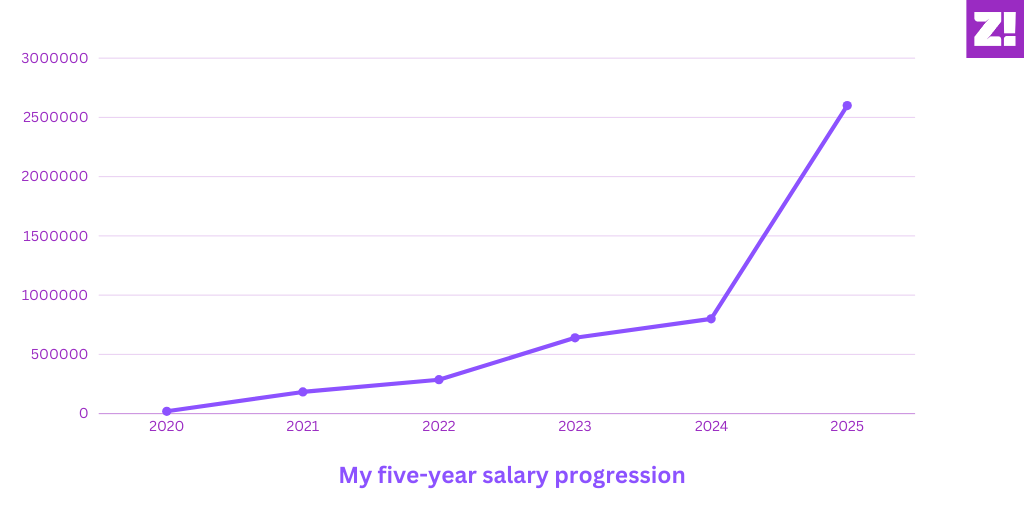
  • At 27, *Ifeanyi earns ₦2.6m monthly as a management consultant in Nigeria, but this wasn’t the plan. Graduating with an accounting degree from a private university in Nigeria, he set out to build a career in finance and investing. But two years later, he pivoted to consulting, starting at the Nigerian branch of a “Big Four” before moving to one of the world’s leading consulting firms.

    His career hack? Strategic job-hopping and always solving for himself first. Here’s how he made his biggest salary jumps and what he’s doing to secure an even bigger paycheck.

    This is *Ifeanyi’s story, as told to Aisha Bello:

    I’m a management consultant at a leading global firm with a presence in Nigeria. While I’m based here, my work cuts across industries and markets worldwide. I solve complex business problems for companies across various sectors. A consultant’s job is to step in with a fresh, strategic perspective whenever a company faces a challenge. Think of us as brains for hire or doctors for businesses.

    Starting Out: Equity Research Analyst (₦183k/month) | 2021 – 2022

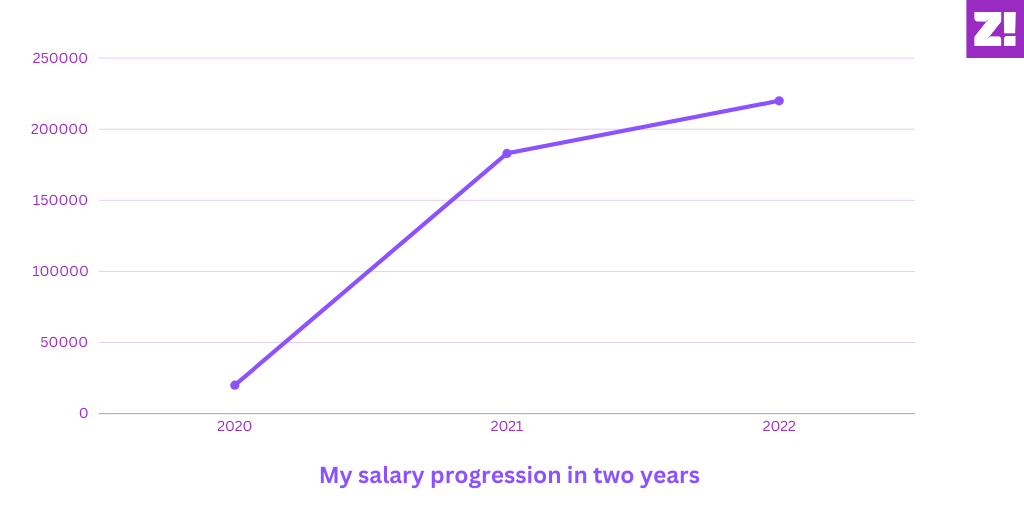
    Fresh out of university, I landed an internship at an investment bank that paid just ₦20k/month. It was a great learning experience, but I needed something more sustainable.

    But first, NYSC. 

    I was posted to Abuja for my service year. Five months in, I secured an entry-level role as an intern analyst at a financial advisory firm, earning ₦150k/month plus my NYSC allowance (₦33k), bringing my total earnings to ₦183k/month.

    After NYSC, I got promoted to a senior role in the same firm, and my pay increased to ₦220k/month. However, I wanted to transition to private equity, so I left.

    Private Equity Firm (₦220k/month) | 2022

    By mid-2022, I joined a private equity firm as an analyst trainee, but the pay was the same as my previous role. I was excited about the switch, but a “Big Four” firm came calling two months in.

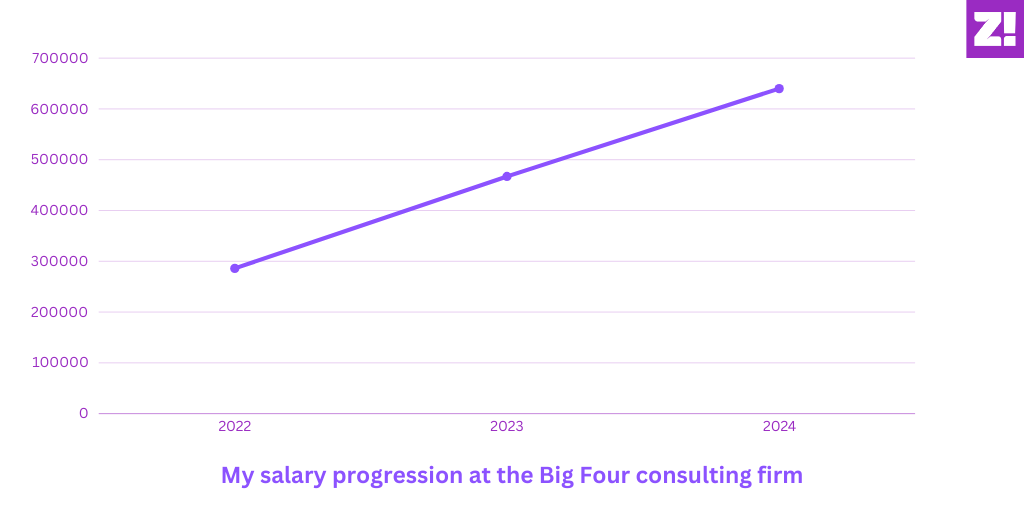
    Big 4 Consulting Firm (₦286k → ₦640k/month) | 2022 – 2024

    I’d always wanted to work at a “Big Four” because of the strong global brand and career progression opportunities. 

    The Big Four— Deloitte, EY, PwC, and KPMG — are the world’s largest accounting and consulting firms  by revenue. These firms have offices in major cities worldwide and are known for their competitive salaries and global presence.

    I got the offer towards the end of 2022, and started as a graduate trainee in their Risk Consulting unit, earning ₦286k/month. However, within a week, I discovered another unit focused on management consulting. It was broader, more generalist, and felt like a better fit for me. So, I spoke to my manager, reached out to the new unit’s leadership, made my case, and transferred immediately.

    Consulting is fast-paced. One month, I could work on a public sector project; the next, I’ll be deep into oil and gas or banking and finance. The constant challenge kept me engaged.

    After a year, I was promoted to Analyst in 2023,  earlier than the usual 18- to 24-month timeline.

    I had been identified as a top performer. I took on more work, delivered results, and earned the trust of my seniors. Seeing my performance, they recommended me for the promotion. I moved up, and my salary jumped to ₦467k/month. 

    Get More Zikoko Goodness in Your Mail

    Subscribe to our newsletters and never miss any of the action

    By mid-2024, it was reviewed to ₦640k/month as part of a company-wide cost-of-living adjustment.

    I was on track for another promotion to Senior Analyst, which would have bumped my salary to ₦800k/month, but I left before this happened.

    Big Four firms may have global brand names, but each country operates independently. The Nigerian unit, for example, is owned and run by Nigerian partners, just like the US and UK branches operate separately.

    They share a name and some resources but aren’t one big global company. That’s why working at a Big Four firm in Nigeria doesn’t guarantee international mobility. I wanted something different: a consulting firm where my career wouldn’t be tied to just Nigeria. So, I made my next big leap. 

    The Big Move: Global Consulting Firm (₦2.6m/month) | Present

    At junior levels, salaries at consulting firms are fixed; no negotiation. The only way to increase your earnings is to move to a firm that pays significantly better. 

    That’s exactly what I did.

    Breaking into this firm wasn’t easy. The interview process is one of the toughest in the world, and candidates spend months preparing for it. 

    So, I spent 5-6 months on rigorous case interview practice and hundreds of mock sessions. I used online platforms to connect with other candidates and practised with people already working at the consulting firms.

    Then, I started applying to top-tier global consulting firms, and by mid-2024, I had landed an offer. My remuneration would be over three times what I earned at my “Big Four” job.

    I resigned from my “Big Four” job and transitioned to my present firm shortly after.

    Beyond the pay and global mobility, promotion politics was one of my biggest reasons for leaving. At my current firm, that’s not a thing. If you deliver results, you get promoted.

    I currently earn a net salary of ₦2.6 million monthly, and a pay bump follows every promotion. 

    I work at a firm that operates at the same global standard, and my role now extends beyond Nigeria to international projects.

    But the job is brutally demanding. Late nights are the norm, and wrapping up before 11 p.m. counts as an early finish. It’s incredibly fast-paced, so getting time to rest and recharge is a rare luxury. But I put up with it because I enjoy the work, and the rapid growth makes it all worth it.

    Key Lessons from My Salary Progression

    I’ve never been afraid to leave a job, even after a month or two. 

    People call it job-hopping, but it’s about making moves that serve my personal growth and financial goals. In just five years, I’ve worked at five different companies. Here’s my two cents about career growth: 

    • Always solve for yourself first: If your salary isn’t growing significantly, look for better opportunities.
    • Strategic job-hopping works: I took control of my career and didn’t stay in roles that didn’t push me forward.
    • Brand matters: Working at a global-recognised firm opens doors to better pay and career growth.
    • Negotiation is limited, so play the long game: Your level determines your salary in consulting. If you want more, aim for a firm that pays higher at your level.
    • Stay ready for opportunities: I secured my current job six months before resigning. Have a plan before making any move.

    What the next five years look like 

    I don’t see myself staying at any company for over two or three years. My primary focus is delivering my best in my current role, but when a better opportunity comes knocking, I won’t hesitate to make the jump. 

    That said, I don’t see myself returning to a Big Four. That’d be like a footballer playing in the Europa League, then levelling up to the Champions League, where the competition is tougher, the stakes are higher, and the rewards are greater. There’s no going back once you’ve played at the highest level. 

    People say consulting is for those still figuring out their long-term career path, and maybe they’re right. It throws you into different industries, working alongside top executives and decision-makers you wouldn’t otherwise have access to. That exposure is priceless, and it shapes your next career move.

    Maybe I’ll find my place in banking and finance or oil and gas. When I do, I’ll go all in. But for now, I’m focused on growing, learning, keeping my options open, and playing at the highest level I can.

    Join 1,000+ Nigerians, finance experts and industry leaders at The Naira Life Conference by Zikoko for a day of real, raw conversations about money and financial freedom. Click here to buy a ticket and secure your spot at the money event of the year, where you’ll get the practical tools to 10x your income, network with the biggest players in your industry, and level up in your career and business.


    Also Read: Top 10 Highest-Paying Careers in Nigeria by Industry


    [ad]

  • Everybody needs somebody to guide or back them up as they grow through the ranks of the career world. We spoke with 5 Nigerians and they shared their journey with us, and who the career “hero” in their lives are.

    Dive in.

    John, 24, M

    My career in tech just kicked off, and I can’t wait to see how the growth curve is going to look like. But that doesn’t mean I don’t have people who have been instrumental in making this a reality. They are largely people I met on social media, Twitter to be precise. If someone had told me in 2019 that I would be a “tech bro” in 2021, I would have laughed it off with “Meee??”, because I didn’t dare to dream this big. I was content in my comfort zone writing articles as many as 15 articles a week for shitty pay. These people showed me that there is more I could be doing, so many opportunities just waiting to be grabbed by the collar. They probably don’t know it, but those are the people I consider my career heroes. They totally transformed my mindset towards life in general, not just career related matters – that the world is ours for the taking, if we can only two into that consciousness.

    Nike, 28

    I wouldn’t be where I am now in my career journey if not for my big sister. The interesting thing about our relationship is that she doubles as sister and career coach/mentor because of her line of work – Human Resource – and that’s something I hold very dear. Not everyone has that privilege. I remember when I was made redundant at my bank job after 4 years of service, it was such a hard blow to my career and self-worth as a person that I lost all zeal to apply for new jobs. I felt like I could never get a better offer than what I had at that job. But my sister was having none of that; from opportunities to constantly reminding me how much of a badass I am, she pulled me up. And I think that’s what matters in the end, having that one person who refuses to give up on you no matter what.

    Nana, 26, F

    My current place of work is basically my first official taste of the career world. I started as an intern, and now, I have grown to a Sales Manager position. I’m thankful for the people who supported me in those early days, particularly my team lead then who was very supportive and patient. She taught me every single thing I know in Sales. I’ll forever be grateful for that, because Sales was like a whole new world altogether for me and I struggled to get the hang of things at first. She gave me the opportunity to prove that I could do good work, and never stopped pushing me to be better.

    Phoebe, 27, F

    The career hero that stands out for me is the person who offered me my first hands-on job. Before that, I was out of school and did not have a lot of experience working on real projects. The experience I had was mostly working on things with my school mate. But then one day, I was in a cab ride with her (my career hero) and she mentioned needing extra hands for a job, and I was excited to come on board. I would say that is where I got the most practical experience and improved on my skills. It equally opened me up to better opportunities that came along the way.

    Semilore, 25, M

    Can you believe there was a time I was earning 5, 000N per month? Now, that I’ve 30xed my income and made significant progress in my career journey, I try to understand how I survived. Crazy times. I owe it all to my current boss who saw potential in me even when I was blind to it and steered me in the right direction. I mean, I had dreams and an idea of where I wanted to be career-wise, but I lacked guidance. I can’t stress how important it is to have someone hold your hand during those shaky, uncertain phases. It prevented a lot of pitfalls I would have fallen into if I was walking blindly.

    Join Fuzu in saying “Thank you” to all the amazing career heroes out there by celebrating your own career hero at www.fuzu.com/nigeria/career-hero.

    Fuzu, Africa’s No. 1 career development platform, is collecting the heroic baton from here. Register at fuzu.com/nigeria to enjoy free, advanced and all-round support in your career journeys. Whatever your needs are; career goal setting, career coaching, professional CV creation, AI-based job recommendations, CV application management and feedback, personalised learning, skill validation, and community engagement, Fuzu has your interest at heart!