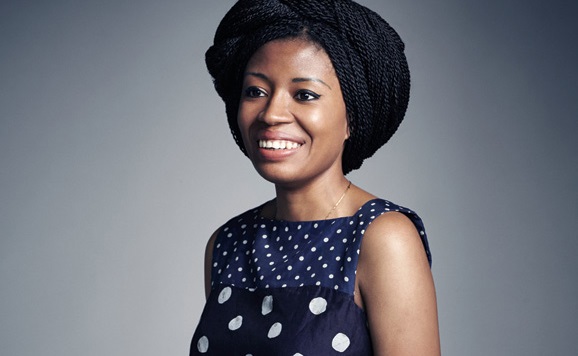
• When Ore Akinde, 25, picked up a crochet hook in university, she didn’t set out to build a fashion empire. It started as a creative outlet, a way to craft and experiment. But within a few years, what began as a side hustle has become a thriving fashion business with customers across Nigeria, the US, Canada, and Europe. Now, Ore is focused on building a sustainable ecosystem and redefining how Nigerians see handmade fashion.

    Where It All Started

    For Ore, crocheting started as a creative experiment.  “I crocheted for fun,” she says. “But even from the start, I took it seriously.”

    Her first piece was a humble collaboration with a photographer friend in 2017, styling a model in one of her handmade designs. “The photos never even made it out,” she laughs. “But that was the first time I imagined crochet as fashion, not just a primary school craft.”

    Back then, crochet wasn’t the trend it is now. Nigerians still saw it as a home economics project, a pastime for school girls, not a wardrobe essential. “People didn’t wear crochet on their skin,” Ore explains. “They thought of it as bags or thick knitted sweaters. Knitting isn’t even the same thing. I had to introduce crochet as fashion.”

    Ore’s edge was simple: she wore her brand everywhere. “I carried it on my head,” she says. “Everywhere I went, I wore crochet. Bags, tops, anything. People had to see it to understand it.” She became a walking billboard for a style no one believed in yet.

    But crochet wasn’t her first venture. She tried selling Ankara. Then hairdressing. “Ankara was capital-intensive, and hairdressing was just too much labour for too little pay.” Crochet, however, clicked as she neared the end of her first year in university. Two years later, she landed her first major order — ₦100,000, a small fortune for a student. “That’s when I realised this wasn’t just a hobby. It could be something big.”

    The Internship That Pushed Her to Bet on Herself

    In her third year at the University, Ore interned at a chaotic radio station. The hours were brutal, salaries were delayed, and the experience was borderline exploitative. “I worked from 7 a.m. to 7 p.m., pouring myself into tasks that yielded no income. Even after I left, my boss reached out to ask for a loan.”

    That internship became a turning point. “It was clear that this environment wasn’t for me. My crochet side hustle was already making enough to pay my boss’s salary. So why wasn’t I doubling down on what was already working?”

    At this time, Ore’s business was averaging ₦400k per month. But when the lockdown hit, everything changed. With the world stuck at home and shopping online, her revenue jumped to ₦700k, and the business began to take off.

    To reach more international customers, she set up an Etsy store. It worked at first, but by 2021, the platform became unsustainable for her business. “Etsy was a great starting point,” she says, “but the fees and restrictions were holding us back. We needed to build our own website — a digital home that truly reflected the brand and made payments easier for our customers.”

    That year, Ore’s monthly revenue climbed to ₦1 million, hiring five staff members across logistics and production to keep up with growing demand.

    When she graduated in 2022, she had a choice: chase a 9–5 she didn’t believe in, or bet fully on the business that had financed her life in university: paying her school fees, rent, and even salaries for a small team of interns.  It was time to bet on herself.

    “I was scared,” she admits. “I’d never worked a proper job before, and running a company is different from running a one-woman hustle.” But she packed her bags, moved to Abuja, and leapt. “I did it afraid. I remember almost crying at the airport. My parents wanted me to finish NYSC and settle down first. But I knew if I didn’t start now, I might never.”

    New Beginnings, and a Multi-Million Naira Revenue

    Relocating to Abuja allowed Ore to focus on the business full-time, free from the demands of being a student. With more time and headspace, she could scale operations, taking on larger orders and running the business from her apartment. That same 2022, she hit her first ₦2–₦3 million in months. “One customer placed a ₦1.6 million order,” she recalls. “That motivated me.”

    At this point, the business still ran like a side hustle. Interns were unofficial, and operations were fluid. “I was learning on the job,” Ore says. “Hiring people who didn’t meet expectations, not communicating because I didn’t want to hurt their feelings. I’d prioritise their comfort over the business. That caused resentment.”

    Another mistake she made was saying no out of fear. “I turned down so many opportunities because I didn’t feel ready. When the Oyo State government invited me to train women on crochet, I was young and thought, ‘What do I know?’ They reached out multiple times. I just ghosted them.”

    It wasn’t until 2023 that Ore realised she needed to sit up and truly understand the business side of things. Until then, she had been winging it — no bookkeeping, structured operations, or clear financial systems. “I hadn’t properly understudied how real businesses worked,” she admits. “If I wanted to scale beyond a side hustle, I needed to do better.” That year, she began taking business operations and management courses, determined to transform her passion project into a structured, scalable brand.

    Ore officially registered her company in Nigeria in 2023 and completed its US registration the following year.

    2024: The Year She Rebuilt Her Business

    By 2024, Ore had learned the hard lessons. She restructured the business from the ground up, drafting proper contracts for her staff, hiring an executive assistant, and expanding her team to 10 people, including a creative director, social media manager, lawyer, and a full production unit.

    She also doubled down on marketing and operations, determined to move from a one-woman hustle to a well-rounded fashion company.

    That year, she launched her first official collection: the First of Fall. “It was my attempt to move from being just a designer to a full-fledged fashion brand with seasonal collections,” she says. The launch was a success. Six outfits, gender-inclusive designs, bags, bikinis, and caps. “It was the first time I worked with an official photographer, models of different body types, and it paid off.”

    But 2024 wasn’t all wins. Ore made a ₦5 million gamble on a girls’ collection that didn’t launch as planned. “We overshot. We spent so much on production, but the release was delayed for months. Sales didn’t come in as expected. It set us back.”

    That period became her toughest, the “brokest” the business had ever been. Yet, it forced her to reevaluate. “I had to learn it’s okay to fail, to make mistakes, and to communicate better with my customers. That collection didn’t go as planned, but it became one of my most important learning experiences.”

    Peak Moments and Ongoing Battles

    By the end of 2024, Ore’s brand peaked with the Ozzy Jumper, a collaborative piece with fashion icon Ozzy Etomi. “It became our bestseller,” she says. “Over 200–300 orders. One was sold for ₦416K.” That piece was a breakthrough into new customer segments. “Ozzy is a trend setter.”

    But beyond aesthetics, Ore’s real business pivot came with infrastructure. Registering in the US, integrating Stripe for payments, and setting up systems that allowed global customers to buy seamlessly. “Before, it was a struggle with PayPal, CashApp, Venmo. Now, we’re accessible in 190 countries.”

    About 50% of her customers are in the US and Canada, 25% in Nigeria, and the rest are scattered across Europe and the UK. But growth hasn’t been linear. “In 2024, there were months we did ₦5 million, others ₦10 million. And sometimes orders dip, and we have to push harder.”

    In hindsight, Ore wishes she had spent more time understanding business operations before diving in. “I was crocheting and learning as I went. It would’ve been helpful to understudy a real system.” Still, she’s making up for lost ground. Plans for a business MBA  in Fashion Communication are in motion.

    Expanding Beyond Fashion: Ruggings and New Frontiers

    Beyond fashion, Ore is diversifying. She recently launched a second franchise, Ruggings, which she aims to firmly establish within Nigeria’s interior design space. Their first collection, a line of plushies, was released in July 2025, marking Ruggings’ official debut.

    What’s Next for Ore Akinde?

    Ore plans to release a new collection this summer, a key driver for 2025’s revenue. But beyond custom orders and viral jumpers, she’s focused on building a sustainable crochet fashion brand. 

    “In the next four to five years, I want my business to produce 100 to 200 orders a month,” she says. “We’ll have our own atelier, not just a small store, but a space that feels like a home for creativity. A place where outfits are made, yarns are designed, and rugs are crafted. It’ll be big enough to hold all my people working at once, and it’ll be busy because the business itself is thriving.”

    Ore’s vision isn’t just about fashion; it’s about owning the supply chain. She plans to import her own yarn and eventually create custom yarn lines for other creatives. “I don’t want to just be a retailer. I want to be a producer.”

    In the immediate future, she’s gearing up for pop-up events in Lagos and Ghana, her first venture into physical retail after years of made-to-order sales. “We’re taking it one step at a time. Walking too fast while carrying something heavy? You’ll fall. I don’t want that.”

    But she’s also painfully aware of the cultural disconnect around handmade products in Nigeria. “People here don’t understand the effort. They think handmade should be cheap. So you have to find your people, the customers who get it. Branding and constant visibility are key. Always put your work out there.”

    What keeps her grounded through entrepreneurship’s unpredictable highs and lows is simple: choice. “Every time it gets difficult, I remind myself I chose this. Business is wild. When it’s high, it’s very high. When it’s low, it’s low. But I’ve learned not to let the lows crush me or let the highs carry me away. It’s all about balance.”

    Creativity, she’s learned, can’t be forced. “When my brain feels foggy, I don’t push. I let it rest. Ideas come back when they’re ready. Sometimes I even get them in my dreams, I wake up and jot them down before they run away.”

    The atelier isn’t here yet. The studio and the in-house yarn production are still in the works. But for Ore, that’s the beauty of it. “I don’t just want a store. I want an ecosystem. A space where everything we create comes to life in its full expression. I’m carrying it carefully, one steady step at a time. There’s no point rushing to build something that can’t stand tall.

    We’re focused on growing without compromising our production quality, prioritising quality over quantity, and staying true to handmade craftsmanship,” she says.

    For Ore, what started as a personal hobby is now evolving into a hub where creativity, commerce, and craftsmanship co-exist.


    Next Read: Nigerians Say My ₦250k Crochet Slippers Are Too Expensive. But I’m Building a Luxury Brand Like Dior 


    Join 1,000+ Nigerians, finance experts and industry leaders at The Naira Life Conference by Zikoko for a day of real, raw conversations about money and financial freedom. Click here to buy a ticket and secure your spot at the money event of the year, where you’ll get the practical tools to 10x your income, network with the biggest players in your industry, and level up in your career and business.

    [ad]

  • The #BoF500 Gala, the annual event where the Business of Fashion celebrates luminaries in the fashion world was held on Saturday last weekend and many Nigerians were in attendance. 

    The photographer Stephen Tayo and the founder of the streetwear community Street Souk, Iretidayo Zaccheaus, were part of the 2024 BoF500 class, its annual “list of people shaping the global fashion industry, curated by the editors of The Business of Fashion, based on nominations and on-the-ground intelligence from around the world.”

    While the event was underway, Nigerians at Paris Fashion Week decided to seize the opportunity to pepper everybody, posting bestie photos with The Bear star Ayo Edebiri, and sharing clips of Wizkid as he performed live at the after-party. 

    See below all the Nigerians who made the BoF500 Gala a full-blown Naija-to-the-world affair:

    Ayra Starr

    Wizkid

    Ayo Edebiri

    Stephen Tayo

    Grace Ladoja

    Iretidayo Zaccheaus

    Reni Folawiyo

    Irene Ojo-felix

    Wisdom Kaye

    Swanky Jerry

    Eniafe Momodu

    Ugo Mozie

    Elizabeth Elohor Isiorho

    Follow Zikoko today on X and become that person in your WhatsApp group who always has the inside gist. Thank us later.

  • Every week, Zikoko seeks to understand how people move the Naira in and out of their lives. Some stories will be struggle-ish, others will be bougie. All the time, it’ll be revealing.

    Several times, I’ve tried to track someone who fits into this profile of Textile magnate for #NairaLife. I failed every time, include this time. But this post is an attempt to cope with a failure. It’s my first time trying this, but here it is; the NairaLife of a textile magnate as told to me by her son.

    Hey man, I really want to talk to your mum, but it’s not looking feasible. 

    Yeah, but she’s told us a lot of stories, so I might be able to give you your story.  

    We’ll try. How about you tell me the first money she ever made? 

    At 17, she left her small village and headed to Lagos to work as a maid. This was 1975. Her mum was a petty trader and her father sold drinks.

    Woah. Did she describe what the work was like? 

    She’d do housework in the morning, then head to the market to sell stuff. She’s never mentioned how much she earned, but she said that every month, she’d save something that felt like 10 shillings. 

    Nigeria had already switched to the naira by 1975.

    Yeah, but I think people were still actively referencing the pound and shilling at the time.

    The main reason she was even able to save that much was that she still found time to go and sell ice water.

    Pure Water’s ancestor eh? 

    Yes! And that flavoured water that they called condense. A few years later, her boss passed away, so she had to leave. Then she got married in 1980. To be honest, it felt more like an introduction, the way she described it. 

    At 21 right? 

    Yes. Whatever it was, it didn’t last, but it was during that marriage she tried to sell gold – it was actually GL (gold layered), not pure gold and that was her first break. It wasn’t much of a break, to be honest, but it was important. The market was really good at that time.

    We’ll get to the marriage part, but how did she pull it off?

    She joined a co-operative and took a loan from there. Then she added her savings and that was what made the difference for her. Now, about that marriage.

    About that marriage. 

    She left because she wanted children badly, and the man had some sex-related issues. 

    That’s quite sad. 

    Yeah, it is. She sold gold for a few more years before she switched to another business. 

    Which one? 

    Beauty products. Apparently, gold business stopped booming when she joined, so she had to try another business. 

    But she also didn’t stay long with cosmetics – about a year. She discovered the next big one: clothes. 

    1985?

    Yes. At this point, she’d already saved up a lot of money from doing business over the years. But to start the business, she needed a lot of capital. So she applied for a bank loan. Did I mention that at this time, she’d already re-married?

    Ah, interesting. 

    Yes, she married someone else in 1983, my dad, haha! Anyway, she applied for a bank loan and needed collateral. Her husband owned a house, but when she asked him, he didn’t drop his house documents. 

    Wow. Why didn’t he give her? 

    Family issues. My mum actually married into an already polygamous family. The other wives? Those ones didn’t agree o. That period was the most difficult time for her. 

    Wild. Did she eventually get the loan? 

    You know that friend that you really like, but somehow, both of you don’t end up marrying each other? Yeah, he was the one who gave her the documents to his properties as collateral. It was one of those really big houses that people built in the 80s that had a lot of rooms. Big deal then. 

    How much was the loan? 

    Enough to fund containers of lace material. She can barely remember the exact numbers. She struggles to remember numbers. One thing she remembers for sure is that she took that loan from Metropolitan Bank, and what happened next surprised everybody. 

    Tell me. 

    She travelled to Bangkok, where she bought two containers of goods. It was a massive hit. She made about three-fold of the goods she bought in revenue. In a really short time, she completely paid back the loan and started funding more return trips to China, South Korea, and even Rome at the time. Then she rewarded herself with her first house.

    That is incredible. 

    She did this year in, year out. By 2001, she acquired another piece of land in Lagos and built a house. Then we moved into the new one and put the older one up for rent. 

    Has she ventured into anything else since then? 

    In the mid-2000s, she tried importing other stuff, but the markets were too unpredictable, from bags to flasks. She had another big break again later. 

    What was that? 

    A Bureau De Change – she got a licence to start one. When I knew the details a few years ago, the business was doing up to $200,000 monthly. She also invested in treasury bills. 

    That is wild. 

    Then real estate. Buy, develop, rent out. Recently, she bought a duplex in one of these quiet estates – about 65 million. But altogether, she has five houses – four in Lagos and one in her village. 

    Your mum is on a rampage. 

    Hahaha. The funny thing is that she didn’t go to any school at all. Not even primary – 

    Wait. What?

    She actually started at a grammar school, but someone came from Lagos to take her to become a maid. She didn’t spend enough time there for it to feel like education. Don’t forget that she was living in a village in the sixties and seventies. It’s one of the things that pushed her to make sure that all her kids got the best at any time.

    Your mum didn’t go to school, but her financial intelligence feels solid.

    Remember when she was living as a maid? The woman she was living with sold fabrics. The woman used to travel, so she’d leave her with the shop to manage. 

    Also, the people selling gold used to travel a lot, so that’s where the yearning to travel came from. When she married my dad, she got more exposed to how importing and all those things worked – my dad had worked in the importing/exporting business in the past. 

    I find it interesting, your mum’s relationships was how she got her education. 

    Yeah. When she’s with people who are more educated than her, she stays quiet and absorbs. 

    Let me give you an example. There’s an older woman that my mum respects a lot. She’s richer, well educated, and one day in the 2000s, my mum opened up to her like, “I have all this money, and I don’t know where to put it.”

    “Shares,” the woman said. And that’s how my mum bought her first set of shares in the early 2000s. She’s been giving my mum advice since then. 

    That is interesting. 

    Everyone I know who’s worked with her — whether it is people selling fabrics too or just associates — all of them are better off. Let me tell you about my favourite one. 

    I’m listening.

    There’s this guy she hired in 2002. When he just started, she quickly realised how dependable he was. The problem was, he didn’t have any education beyond primary school. 

    So she sent him to school. He became that older guy in secondary school. Wrote WAEC. Got into a polytechnic, studied accounting part-time. All this while, he was still part of the business. 

    That is amazing.

    He literally runs the day to day of the business right now. The Bureau De Change was his idea. Now, what my mum did was give him money to start his own fabrics business.

    Instead of him having to start from scratch, she buys for him with his money and he stocks his goods in her stores. So he’s making money without having to worry about all the moving parts of running a business by himself. 

    So, she’s incubating him.

    Exactly. Right now, he’s at least 10 million naira liquid in personal cash. At this point, in fact, he’s actually family.

    Whenever she’s successful at anything, she’d always drag someone else into it.

    I’m curious to know how those relationships she’s built has affected you and your siblings.

    The interesting thing is, the relationships she’s built work well for her directly. But not necessarily directly to us the kids. 

    Please explain.

    You know how people always say “oh your parents have connections and all that?” That didn’t really favour us. She did have a lot of connections, but in the markets, not necessarily in other places. But even that is not important to me. I don’t even see it as a negative, just her reality. 

    There are five of us children, and she made sure to give us the best possible education she could afford.

    How much will you say she spent on y’all’s education? Round figure.

    First of all, between the first and fifth child, there are 10 years. One government uni, Three private universities in Nigeria, one abroad. In that time, she’s spent no less than 40 million. I know this because the one that went abroad in the UK cost her about 30 million. 

    I remember this one because when he was misbehaving and stressing her life, she used to call that amount a lot, like “Odindin taty million”.

    I’m curious about how she made the school choices for y’all.

    You know the interesting thing is, she knew she wanted to give us the best, she just didn’t know what the best was. 

    So for example, when we were in secondary school, we found out about a much better one from our friends. So we told her we wanted to go there, and she moved us there. 

    My dad wasn’t really involved in all this, because even if you’re a responsible person when there are too many kids to care about, attention is divided. Frankly, we didn’t need him.

    Anyway, when my brother was going to university – a Nigerian private university – we told her the price of the school fees per session, and she screamed. It was just over a million naira.

    But you know what changed her mind? 

    What?

    My brother’s admission letter came by mail, and when she saw the packaging of the box, she was like hmmm, it looks like it’s not a waste of money.

    Let’s talk about business, what are your mum’s biggest strengths?

    She has a serious appetite for risk, but most importantly, she knows when to cut her losses and move on. 

    About losses, tell me about her biggest loss that you remember recently. 

    Election season is good business because you make a lot of ankara for political rallies. So, she commissioned one of her people in India to design it. What did they do? A horrible job. The politicians rejected it. 

    That was a big loss. The worst part is that she had to take a loan to fund that project. I think the amount she asked for in loans, it meant that every day, the money she had to pay back way +30,000. Every day of the week. 

    Woah. Did she pay off the debt?

    Yes she did. She just rallied all her funds and cleared that. It hit her real bad. The whole family felt it.

    At least now she’d debt-free right?

    Debt-free ke? No oh. All these people are never debt-free. She’s owing her foreign partners, for example. A lot of the time, when they take these goods from Asia, they don’t even pay for it in full. There’s already trust, and so people pick up goods and pay for it later. It’s a risky business, but the rewards are high. When you pick up goods and you don’t make a profit, you bear the risk.

    Take that ankara contract, she ended up selling it as stock.

    Stock?

    That’s what they call it when they have to sell less than the landing price. The thing is, when you’re making clothes for politicians, especially election season, you make container loads.

    Crazy. Tell me about containers. 

    Let me break it down for you. One bundle of lace has 15 yards. The way they pack the bales in a container, one bale of lace might be up to 20 bundles. And one container can hold up to 500 bales. 

    What you’re telling me is that a container can hold up to 150,000 yards? 

    If your maths is correct, yes. 

    How much does a bundle of lace cost? 

    To be honest, I can’t tell you much about that, since I’m not really involved in the business, but there are ranges. There are the general laces, but because of the reputation she’s built over the decades, she mostly sells the premium ones. 

    But I can tell you that when they’re making sales, ah. 

    What is ah?

    A few Decembers ago, they sold over ₦7 million worth almost every day for two weeks. 

    Ah!

    Aha. One day – I think I was helping her look for some info on her phone – I saw an account balance SMS of 127 million. 

    Serious question: did they split the message into two because the zeroes were too much?

    Hahaha. I used a toothpick to count the zeroes. This was sometime within the last two years o, but it’s tougher these days sha. 

    Corona? 

    Yes. People aren’t going to parties, so people aren’t buying clothes as much.

    What do you think her business looks like in, say 5 years?

    This question is one of my leading sources of worry. You know how parents hand over the management of their businesses to their children? 

    It doesn’t look like that’s what’s going to happen in this case. 

    Two of my older siblings want to japa. My younger sibling is already abroad. I’m the only one whose mind is still here. 

    So, you want to join the business? 

    Nope. I have no interest in it. 

    Ehn?

    Yes. Notice how I don’t even know much about the business? 

    I’m trying to understand why you’re not interested in joining the business. Tell me about what you currently do. 

    I work as a Client Accounts Manager in small financial institution earning ₦80k, net. 

    Ehn? 

    Yep, it’s crazy. The company I currently work for, the pay structure is annoying, and there’s very little growth year on year – I’ve been there for three years, started as an intern. 

    To be honest, it’s like that 80k is just money for me to leave the house. My mum is nice and all, but you don’t want to be at home with her all day. The kind of things you’ll hear ehn. 

    Have you ever considered just working for her? 

    I don’t want to work for her. I want to do something else, and I told her about it. She’s ready whenever I’m ready. 

    Right now – and I know it sounds strange – but I feel stuck, because even though I know I want to do something else, I’ve not figured out what the other thing is. 

    On a scale of 1-10, how would you rate your happiness?

    3. To be honest, I have no money needs. I live with my mum, but I also have a flat in one of her houses that I can move into whenever I like.  I have over 2 million in savings that I’m not touching. But I feel the need to be more involved in building something. 

    I just don’t know what for sure yet. 

    Have you ever wondered why your mum has stayed successful?

    I asked her once and she said something I’ll paraphrase, “I always have people to ask questions to on things I don’t understand, and I keep them near. I know how to manage credit facilities, and most importantly,” she always says this one, “I’m always willing to take risks.”

    Of all her five kids, there’s not a single one of us to match the appetite for risk that has brought her to where she is today.

  • Amaka Osakwe isn’t your average fashion designer. Since the creation of her brand, Maki Oh, in 2012, Amaka has totally bossed the fashion industry, in Nigeria and abroad.

    Every year, since 2013, the Business Of Fashion 500 (Bof500) recognizes and credits people who have shaped the fashion industry with their work. And this 2016, Amaka Osakwe made the list of the 500 fashion influencers.

    https://www.instagram.com/p/9GvKNbnU08/?taken-by=maki.oh

    For those JJCs who don’t know, Maki Oh has dressed the biggest names you can think of: Genevieve, Lupita, Solange, Rihanna, Mummy Beyonce and our biggest mummy, Michelle Obama.

    https://www.instagram.com/p/3eOZEInU5i/

    Her clothes even made it to Beyonce’s amazing album, Lemonade.

    https://www.instagram.com/p/BEllGTXnU57/?taken-by=maki.oh

    She creates the most beautiful things with Adire and other African prints.

    https://www.instagram.com/p/4kMoL4nU9K/?taken-by=maki.oh

    It’s obvious at this point that the only way for Amaka Osakwe and her brand is up.

    https://www.instagram.com/p/BDglUzmHU59/?taken-by=maki.oh
    You can read her profile here and view her iconic pieces via Instagram.