• It’s about to be a hell of a day for patients at the University College Hospital (UCH) Ibadan because their doctors have decided to stand on their ten toes against the horrible condition they’ve had to live in for months.

    What’s going on?

    On Monday, February 17, members of the Association of Resident Doctors at UCH Ibadan officially embarked on an indefinite strike to protest the electricity blackout in some parts of the hospital. This story actually goes way back; stay with me.

    How it started

    UCH owed the Ibadan Electricity Distribution Company (IBEDC) so much money (₦3.1 billion to be exact), and the electricity company had been patient with them since 2019 when the bill started piling up. But on October 26, 2024, they decided they had enough and cut off the hospital’s power supply over an outstanding ₦400 million debt, part of its accumulated bill.

    102 days of darkness

    For 102 days, the entire teaching hospital was in absolute darkness. Both doctors, patients, and students in the hospital were deeply frustrated by this, and they spoke out several times. The first was through a protest held in November 2024 by relatives of the hospital’s patients; “We are tired of our loved ones suffering; patients are dying because they cannot receive the medical tests needed for treatment,” one of the protesters said at the time.

    Nothing was done about the complaints raised in the November protest, so months later, medical students schooling in the teaching hospital protested on January 25, 2025, in State and Federal Secretariats about the same issue, yet nothing was done. On February 10, they organised a second protest at the office of the hospital’s Chief Medical Director (CMD). Power was restored to the hospital two days later, except it didn’t get to the doctors’ quarters.

    The last straw

    It was one thing when the entire hospital did not have light, and it was a different level of frustration seeing that the main hospital had been disconnected while residential parts of the hospital remained in darkness. The resident doctors at UCH weren’t having it, so on Friday, February 14, they held an emergency meeting, and issued an ultimatum after, saying they’d go on an indefinite strike if power was not restored to the residential areas of the hospital, latest, 4 pm on Monday, February 17.

    The doctors were not shitting around because after they saw that their warnings were ignored, they embarked on the strike just like they said they would and at the time they specified.

    Why does this matter?

    It’s a no-brainer— the doctors at UCH have endured horrible working conditions and deserve better. Additionally, the absence of doctors has automatically put the lives of patients at risk, but the authorities who should solve both problems are not doing anything about it.

    It’s even crazier because UCH is not the only Nigerian hospital that has had to deal with poor electricity supply. The Lagos University Teaching Hospital (LUTH) have had this issue in the past, and so have Primary Healthcare Centres in the Federal Capital Territory (FCT), AKA, where the President lives.

    While the primary concern in these situations is usually the well-being of the patients, the medical professionals suffer, too. It’s not just poor power supply; they also have to endure other terrible things like late and sometimes non-payment of salaries. The situation is so bad that  16,000 doctors have left Nigeria in five years. It got even worse because, in 2024 alone, a whopping 15,000 doctors left the country.

    As of March 2024, there were only 55,000 licensed doctors in Nigeria. Lagos and Abuja alone had a huge chunk of the doctor population (12,300), leaving the rest of the country with 42,700.

    With the crazy number of doctors’ exodus recorded in 2024, Nigeria might be in big soup because even more doctors might leave, as nothing much has changed. This possible reduction in the doctor population will leave Nigeria open to massive casualties in the event of a disease outbreak. With big donors like the United States taking a step back in foreign aid, there is no better time for the government to sit up than now.

    What can you do to change things?

    Part of the oversight functions of the National Assembly is to summon government officials and ministries for questioning over poor performance and other similar issues. The medical sector is long overdue for serious intervention, but since that has not happened yet, you can pressure the National Assembly into taking action by doing the following:

    • Reach out to the lawmaker representing your constituency and tell them what you want. You can find their contact details here.

    • Consistently talk about it on social media through the use of hashtags. Start a digital campaign by creating a petition for a state of emergency or urgent intervention in Nigeria’s healthcare system. You can create your petition on platforms like this.

    • Start a digital campaign by creating a petition for a state of emergency or urgent intervention in Nigeria’s healthcare system. You can create your petition on platforms like this.
    [ad]
  • Before October’s blackout, Ibrahim Samin got about five hours of electricity daily, so it wasn’t a big deal when he didn’t get any on October 21. But what he thought was a temporary outage turned into ten days of absolute darkness. In that time, he’s spent over ₦150,000 buying fuel, lost jobs from customers, and temporarily shut down his business. 

    After nearly two weeks without electricity, the 28-year-old tells Zikoko Citizen how the blackout currently happening in parts of Northern Nigeria has taken a major toll on his life.

    Monday, October 28 – Day 10 of the blackout

    “Right now, as I’m having this interview with you, I don’t know the fate of my business because I can’t afford to buy petrol every day to keep it running.

    “Ten people in my family are directly dependent on me, but now, I have to sit and explain to them that I’ll have to cut what I spend on them every day,” Samin tells Zikoko Citizen.

    The welder who lives and works in Kaduna State describes the 10th day of the blackout as the “most frustrating” day since this ordeal started.

     “A customer brought a contract to me, and we settled on a price, but after checking the prices of things that I need to buy, I saw that taking the job will cost me three times what it cost before the blackout,” he said, explaining that the only logical thing to do to temporarily shut down his business. This is especially painful for him —since he started out as a welder, he’s never had to close his workshop except on important holidays.

    Sadly, Samin’s situation has now become common among Nigerians living in the North. Since the blackout happened, there have been reports of business closures, hikes in prices of services tied to electricity, and deaths in hospitals.

    Samin will protest if he has to

    At the moment, Samin has no money coming in and still has to provide for his family. With all of this weighing heavily on him, he has taken to trending different hashtags like #BringBackOurLight, #savenorth, and #enoughisenough on his X account to raise awareness on the issue. Hundreds of other affected people in Northern Nigeria are consistently trending these hashtags to get the attention of the authorities, with some calling for protests. Samin doesn’t think a protest is a bad idea. He tells Zikoko Citizen that he has participated in protests since 2011 and will join this one if it happens.

    Why is there a blackout in Northern Nigeria?

    For people like Samin, it’s been ten days; for some, it’s been two weeks, and for other people, it’s been eight days—the count is not the same, but 17 out of the 19 northern states have been without electricity for two weeks. According to the Transmission Company of Nigeria (TCN), this is happening because the Shiroro-Kaduna transmission line, which provides electricity to the entire region, was vandalised by insurgents. Even though the issue is affecting the whole region, it’s especially worse in states like Gombe, Kaduna, Jigawa, Kano, Bauchi, Zamfara, Adamawa, Niger, Kogi, Taraba, Sokoto, and Plateau.

    Are the authorities doing anything to fix it?

    TCN says it’s had some delay in fixing the damage due to security concerns, but after President Tinubu summoned Minister of Power, Adebayo Adelabufor a meeting on Monday, October 28,  he said security was no longer a problem and that the issue will be fixed in about five days.

    “Mr President has instructed the National Security Adviser (NSA), the chief of defence staff, the chief of Army staff, and the Chief of Air Staff, to provide the required security for the people that will fix the demolished line.”

    “With the provision of full security, the TCN staff will have the confidence, together with the contractors, to go to the field and fix it,” he said.

    Adelabu and the President are not the only ones who had a meeting concerning the issue — On Monday, October 28, governors of all 19 Northern States and some traditional rulers had a joint meeting in Kaduna State where they discussed the blackout among other issues affecting the region.

    Several politicians like former Presidential aspirants, Rabiu Kwankwaso, Peter Obi, and Atiku Abubakar have also called out the Federal Government and the TCN to relieve the people of the suffering brought on by the power outage.

    What now? 

    Nigerians on social media are not holding their breath on the promises of the government and the TCN. They are saying “enough is enough” and are preparing to come out in numbers for a peaceful protest from November 4, if their electricity situation is not resolved.

  • There’s nothing that screams witchcraft more than a group of people rejoicing over pulling the switch that puts millions of people into eternal darkness.

    Yet, that’s what happened when members of the National Union of Electricity Employees (NUEE) went on strike on August 17th 2022.

    Why?

    The NUEE’s strike was against the treatment of electricity workers by the government-owned Transmission Company of Nigeria (TCN).

    The strike commenced only days after the union released a circular for its members to stop working. 

    Their main goal was to show the government pepper and flex their muscles over the millions of Nigerians who depend on their services. 

    But what were the issues?

    The NUEE listed three key issues as the reasons why it was going to war with the government. 

    The most pressing one of those issues was regarding work promotions. A new directive by the TCN had mandated that some classes of staff will have to undergo a promotion interview before they can be promoted.

    Oh, the horror of interviews!

    The NUEE doesn’t like this basic requirement we all have to face at our jobs for two reasons: it wasn’t consulted and it’s against its union rules. That second reason is probably responsible for the first reason, but we move.

    The NUEE also listed the stigmatisation of its staff from the office of the Head of Service as another grievance to iron out. This stigmatisation manifests in the form of preventing union members from working in the other areas of the power sector. 

    The third issue was the government’s failure to ensure that over 2,000 former staff of the Power Holding Company of Nigeria (PHCN) are paid their severance packages. 

    These workers lost their jobs when the government privatised PHCN and the union has been campaigning for them to receive their dues for years. During one of NUEE’s strikes in the past, the government reached a December 2019 agreement to ensure the payment of the severance package, but that hasn’t happened. And the NUEE finally said:

    So the only reason a country of over 200 million people was held hostage with darkness was that a union couldn’t iron out its issues with the government in a civil manner. Hence, the strike.

    What happened to the strike?

    Once the protesting workers put Nigerians in darkness, the government moved at lightning speed to organise a reconciliation meeting. After hours of negotiations, the NUEE agreed to suspend the strike.

    And what’s a Nigerian problem that can’t be solved by setting up a committee? This committee is tasked with dealing with the issues and submitting a report in two weeks.

    What did the strike affect?

    It’s not like it needs any help, but the strike led to another collapse of the national grid. This collapse left many Nigerian businesses resorting to alternative power sources that are very costly to keep up with these days.

    The NUEE promised to restore power immediately after suspending the strike. But many parts of Nigeria are still left in darkness 24 hours later, proving once again that it’s easier to break something than fix it.

    What happens if issues aren’t resolved in two weeks?

    “Hello Darkness, my old friend.”

    ALSO READ: What Happens When the National Grid Collapses?

  • Nothing reminds you that you live in a third-world country quite like how frequently the national grid collapses. Nigeria’s electricity grid failed for the second time this year on March 14, 2022. And that’s already half of the four times it collapsed in 2021. 

    The national grid collapses regularly

    There are many reasons why the national grid collapses, including natural causes like the weather and man-made issues like Nigeria’s village people blowing too much air into the voodoo doll. The only people smiling to the bank during national grid blackouts of this nature are phone charging centres and filling station owners. 

    For the rest of us enduring another collapse of the national grid, these are the greatest annoyances:

    Generator concerts

    Generators shine when the national grid is down

    Generators have Grammy-winning performances during this period

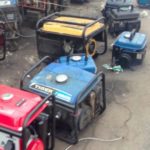
    Since generators have become a national symbol in Nigeria, someone should put them on the coat of arms. Nigeria has an estimated 22 million gasoline generators scattered around the country. The collapse of the national grid means more generators are working around your neighbourhood, putting in more daily hours than Buhari does at the Presidential Villa

    Generators are lifesavers, unlike Buhari, but they are way too loud and bad for your personal health and the environment — just like Buhari. This means any time the national grid collapses is not the best time to be a Nigerian.

    Fuel queues get longer

    The latest collapse of the national grid has the worst timing. It’s happened right in the middle of a nationwide fuel scarcity that’s lasted over one month since someone slept on their job and allowed bad fuel into the country. To power your generator, you need fuel. This means more people are turning up at filling stations and the queues are getting longer. 

    The national grid will stress you every time

    ALSO READ: Fuel Scarcity Again? Here’s the Full NNPC Gist

    Cost of doing business rises

    Generators, fuel queues and all attendant issues that come with blackouts will stress your business and your life. If you run a small business in Nigeria, your profits just got smaller. No dorime for you this weekend.

    ALSO READ: Why Nigeria (Probably) Needs a 102-Year-Old President

    Productivity inside the mud

    It’s not that you don’t want to be productive o, but how can you function properly when you have to worry about how to get through all the special issues an electricity blackout creates? 

    There’s still that heat issue

    Yet another reason why the latest national grid collapse is mistimed is that it’s happening when it already feels like someone forgot Nigeria on a gas cooker. Dealing with heat is harder when there’s no electricity to power your cooling devices. Watch out for that heat rash.

    It never ends

    The most important lesson to learn from Nigerian history is it’ll always repeat itself. The national grid has collapsed more than 130 times in the past eight years. While in the middle of one, you’re already expecting the next. It’s not healthy for anyone, but that’s the price to pay for living in a third-world country where problems are recycled.

    The good news is a bill was passed by the National Assembly on March 1st, 2022 proposing to decentralise power generation, transmission and distribution and make them the responsibility of state governments. If the bill becomes law, it could mean the end of national grid failure. Until that happens, strap in for your quarterly national grid disaster.

    ALSO READ: Zikoko’s Responsible Voter Starter Kit for 2023 Elections