• Peter Gregory Obi has gone from a dismissed, little-known candidate to a household name in the race for Nigeria’s 2023 presidential election. Since May 2022 when the Labour Party (LP) candidate made the controversial switch from the People’s Democratic Party (PDP), there have been rallies, lawsuits, allegations, and even a passionate and unified ‘Obidient’ force fuelling his campaign to become Nigeria’s next president.

    [Source: BusinessDay]

    On Day 4 of “The Candidates” presidential town hall series hosted by Daria Media in partnership with Zikoko Citizen, Obi appeared alongside his running mate, Dr Yusuf Baba Datti-Ahmed, to discuss their plans for Nigeria with the host, Kadaria Ahmed.


    We highlighted some of Obi’s plans and what it means for Nigerians if he becomes president:

    “Economy is the base of our problems”

    For Peter Obi, the answer to almost all of Nigeria’s problems is transitioning from consumption to production. 

    The candidate said, “The economy is at the base of all our problems. Yes, we have security problems, but one can link it directly to the economy. When over 130 million people don’t know where their next meal will come from, one is bound to have a crisis.

    “One needs to first and foremost look at food production, and how you can feed the country. The greatest physical asset in the country is the uncultivated land in the North.”

    All of this sounds nice, but it takes close to two years for uncultivated land to be made suitable for farming. What exactly would Obi do before then? These were questions Kadaria asked but no specific answers were given.

    “My government will be a government of national unity”

    According to Obi “It’s my commitment to ensure the security of lives and property of Nigerians and ensure there’s a united Nigeria, through equity, justice and doing things following the rule of the law.”

    To drive home his point about championing unity, he sneaked in a diss directed at the presidential candidate of the All Progressives’ Congress (APC), Bola Tinubu, who recently vowed to “send Peter Obi back home” from Lagos to his native Anambra State.


    “If you check our utterances, we’ve never said things like “let’s send Peter Obi back to where he’s coming from.” I’ve lived everywhere and I’ve maintained that no one should vote for me because I come from the southeast, or vote for me because it’s my turn, but go for our track record.”

    Part of Obi’s unification plan includes “aggressively” pulling people out of poverty in the North. Despite not getting a concrete roadmap for how this would be done, it’s a welcome change to see a candidate in the town hall series highlight the poverty in the North. A United Nations (UN) report states that 70% of residents in the North-West live below the poverty line.

    “Subsidy must go”

    If Obi becomes president, fuel subsidy is going to be a thing of the past, as he doesn’t understand why a large chunk of Nigeria’s ₦‎6 trillion deficit goes into subsidy. He also believes subsidy is “organised crime” and should no longer be a part of Nigeria’s economy. 

    But what does it mean for Nigerians? For one, the cost of fuel and commodities in the market will rise since citizens would bear the full cost of fuel production. However, Obi plans to make sure refineries are up and running as soon as possible, so as to cushion the effects of pricing.

    How well can this work? Only time can tell.

    The solution to IPOB’s agitation is dialogue”

    Military intervention isn’t top of Obi’s list in tackling the separatist agitation of the Indigenous People of Biafra (IPOB). Instead, he’s more interested in sitting with them for a dialogue.

    According to Obi, “Everywhere in the country is full of agitation, which is a result of leadership failure over the years. There is nothing wrong with agitation. We’ll dialogue and discuss with everybody. The reason why IPOB is agitating is because of injustice.”

    Well, we can only wonder how far dialogue would help here as IPOB members have already established the fact they don’t even want an Igbo president. What if IPOB doesn’t listen?

    “I will declare a war on power”

    Nigerians may have the chance to experience uninterrupted power supply, as Obi believes Nigeria has the capacity to transmit 12,000MW of electricity. He promised to fix the problem of transmission infrastructure to make this a reality.

    The candidate also promised justice for middle and low-income earners for tariffs, as he plans to charge those who can afford and subsidise for those who can’t. At least, the days of seeing things like this are over:

    Obi also promised that any of the privatised companies that could generate 100MW of power without licensing would be supported.

    “I will pull people out of poverty”

    For Peter Obi, the days of Nigerians struggling in the trenches are over, especially for owners of small businesses. How will he do this?

    The candidate said, “People know that MSMEs are the foundation of every economy, even in the West. Big countries like China and Indonesia know this.”

    When pressed for specifics, Obi promised to create fiscal and monetary policies with government grants through the Bank of Industry (BOI). But how useful will this be for new startups? The BOI only caters to startups with three years of acceptable track performance; not to mention the strict conditions beneficiaries have to pass.

    If Peter Obi is going to address MSMEs, it should be looked at with a more critical point of view, and also with the consideration of “baby businesses”.

    ALSO READ: Here’s What Rabiu Kwankwaso Wants To Do As Nigeria’s Next President

  • Since Atiku Abubakar won the presidential ticket of the Peoples Democratic Party (PDP) in May 2022, he’s known no peace from people within his own party. A group of PDP governors known as the G5 has been pressing his neck frustrating his sixth attempt to become Nigeria’s president.

    The G5 recently visited party chieftain, Bode George, in Lagos State in a bid to resolve the conflict within the party just three months to the 2023 presidential election. Here are the key takeaways from the meeting:

    • The G5 members had a “naming ceremony” and decided to call themselves the “Integrity Group”.
    • They’re now open to “reconciliation talks” to resolve all conflicts in the party.

    But, who exactly are these G5 members?

    [Source: Vanguard]

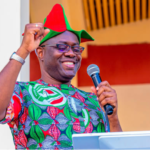
    Nyesom Wike — Rivers State

    [Source: Vanguard]

    If we’re talking about PDP OGs, Wike is definitely one of them, which is why it’s not a surprise he’s the G5’s ringleader.

    He began his political career as the executive chairman of Obio Akpor Local Government Area in Rivers in 1999. In 2007, he was appointed the chief of staff to the governor of Rivers State, Rotimi Amaechi. 

    In July 2011, President Goodluck Jonathan appointed him as the Minister of State for Education and promoted him to Minister of Education in September 2013. He then stepped down as a minister to contest and win the 2015 governorship election in Rivers State.

    With his second term as governor ending in 2023, he contested for the PDP’s presidential ticket but lost to Atiku. After his loss, Wike has been on a rampage and has done everything in his power to fight the man who denied him the ultimate prize

    Wike has also been pushing for the resignation of Iyiorcha Ayu, as he believes the party’s national chairman shouldn’t be from the same region as the presidential candidate. He’s also made numerous allegations against the chairman to force his resignation. It’s been an endless battle, and we can only wonder if these reconciliation talks will be for good this time.

    Seyi Makinde  —  Oyo State 

    [Source: Punch]

    Popular opinion on Twitter says that Seyi Makinde is the “best governor in Nigeria” but what makes him tick? Makinde, unlike Wike, hasn’t always been a member of the PDP. He first contested in a senatorial election as a candidate of the All Nigeria Peoples Party (ANPP) in 2007 but lost. He joined the PDP in 2010 to contest the Oyo South senatorial district a second time and lost again.

    But if there’s one thing we know for sure, it’s that Makinde never says never. He lost the PDP’s Oyo governorship ticket in 2014, and moved to the Social Democratic Party (SDP) to contest the 2015 governorship election, which he lost before he returned to the PDP to win the 2019 governorship election.

    Since then, there have been notable achievements in his career as governor, from renovating 299 primary healthcare centers to regular pension payments for civil service workers in Oyo State.

    With the 2023 elections, however, Makinde seems to be switching to the other side of the fence again, as he’s been seen to be supporting the All Progressives Congress (APC) candidate, Bola Tinubu. Even Peter Obi, the Labour Party (LP) candidate, has met Makinde for consultations, which raises many questions.


    Samuel Ortom — Benue State

    [Source: Vanguard]


    Interestingly, Ortom won his first term as Benue State governor in 2015 as a member of the APC. However, he switched camps to the PDP in 2018 due to an “internal crisis” and won re-election in 2019. Ortom’s reign hasn’t had so much of a smooth run, and has been tainted by communal crises that have claimed thousands of lives. 


    He’s one of the G5’s loudest voices against Atiku and recently clashed with the candidate over his stance on the Fulani herdsmen blamed for attacks in Benue. He also believes a southerner should be president, which is possibly why he went all the way to Labour Party to give his support to Obi instead.


    Okezie Ikpeazu — Abia State

    [Source: Vanguard]

    Ikpeazu isn’t an alien to controversy as he was accused of submitting false information to the PDP during the 2015 elections and was sacked as governor. However, he appealed the court ruling and won, and he was even successful in running for a second term.

    Since then, he has been accused of siphoning government funds to his own personal companies and has been flagged by the Nigeria Labour Congress (NLC) as the state with the highest number of unpaid salaries.


    Ifeanyi Ugwuanyi — Enugu State

    [Source: Premium Times]

    If the G5 was a secondary school classroom, Ugwuanyi would be the quiet boy sitting in front.

    Once a member of the House of Representatives in 2003, he’s serving his second term as the governor of Enugu State since his first victory in 2015. He’s known for the rehabilitation of key roads in Enugu, including internal roads in Nsukka and Achi.

  • For the next few days, Zikoko Citizen has partnered with Daria Media to bring exclusive coverage of “The Candidates”, a series of presidential town halls where each candidate gets to speak to the electorate on their plans for Nigeria. 

    November 18, 2022, was day two of ‘The Candidates’ and the turn of the African Action Congress presidential candidate (AAC), Omoyele Sowore who showed up to answer some questions, alongside his running mate, Haruna Magashi.

    Here are some quick facts you need to know:

    • Sowore founded Sahara Reporters in 2011. The media organization focuses on “evidence reporting  on the corruption of politicians.”
    • He is the presidential candidate of his own party, the AAC. The party was founded in 2018.
    • He ran for the presidency in 2019 but lost.
    • Activism and revolution have been a thing for him since his university days. He was also part of the June 12 1993 protests of MKO Abiola that resulted in his exile to the United States. 
    • He also started the #RevolutionNow protests for which he was arrested in 2021.
    • His running mate, Magashi, is a lawyer and businessman.

    Now you know about Sowore and his running mate. Here are some of the promises the activist made for Nigeria:

    There will be no “violent revolutions”.

    With Sowore’s history with protests, it’s no wonder that the host, Kadaria Ahmed, first asked him about the possibility of more protests erupting across the country if elected. 

    He responded by saying that his message from 2019, which includes the improvement of national security, promotion of sustainable growth, and self-sufficiency in key areas of the economy hasn’t changed. For him, this is the “revolution Nigeria needs” but it doesn’t need to be violent.

    Electricity will be used to improve Nigeria’s GDP.

    One point Sowore hammered on a lot during the conversation was the need to increase the nation’s power supply to 700,000MW. 

    According to him, “if there’s enough electricity being supplied in Nigeria, this will increase production in Nigeria, which should therefore increase investor interest and ultimately the country’s GDP”.

    If this happens, we believe that it could be a great tool for economic growth. Nigeria only transmits 3500MW out of 5000 MW to consumers across the country. 

    Even 5000 MW seems to fall short, as 1000MW is the international standard for a population of one million people. Now with Nigeria’s 200 million people, do the math on how much power there needs to be produced. 

    The rich will not profit from fuel subsidy. 

    Sowore schooled the audience a bit on fuel subsidy. He said that the word “subsidy” has been demonized and that the subsidy is actually for the benefit of Nigerians. 

    According to him, some “oligarchs” or rich individuals in society are adding their profit to the subsidy. This defeats the purpose and makes fuel products expensive. 

    He added that his solution will be to rebuild refineries. He said that, “building refineries would cut off all importation of our fuel from foreign companies.”

    Now, while this may have some solid benefits, there may be a negative impact on Nigeria’s daily N2K. 

    Let’s give some context. 

    In Nigeria, fuel subsidy is what the Federal Government pays to balance what is being paid by the consumer and the cost of supply for this fuel. This helps you not to feel the burden of the high production costs of fuel. 

    However, the government has been spending quite a lot on maintaining this fuel subsidy, as N18.39 billion was spent in 2022. Imagine if that money was being used to pay off part of our N42.84 trillion debt. debt Nigeria incurred. There would be some hope of the country getting out of debt. 

    Women will not be treated as ‘signage’.

    When asked what he thinks about the low rate of women’s participation in politics, Sowore was insistent that women are always being used as ‘signage’ in every political gathering to be discarded later on. 

    He also stated that women “make up 51 percent of the population”. Thus, there’s no reason why women couldn’t elect their fellow women as president or senator or any other political position in his regime. He brought up the 35 per cent affirmative action bill, adding that the percentage was too “small and insignificant” when they make up 51 percent of the population. 

    Although the actual percentage of women in Nigeria is 50 percent, not 51 percent, we definitely agree that there should be a rethink of the policies that affect women participation in politics.

    Nigeria’s debt will be cleared by chasing its debtors.

    What’s the answer to removing Nigeria’s debt? For Sowore, it’s to press the necks of Nigeria’s debtors. 

    He mentioned that a ‘transition team is already in place pending when he is elected. This transition team already has a list of Nigeria’s debtors, the biggest of them all being oil companies. 

    He claimed that these oil companies owed up to N8 trillion in debt previously to the Federal Government. Currently, N2.1 trillion has been paid. 

    He promised that when he is president, he will make sure these oil companies will have no choice but to pay up the full debt.

    Stay glued to our pages on Twitter, Instagram, and Tiktok for more exclusive coverage of “The Candidates”. You can also follow @TheDariaMedia on Twitter and Facebook and @dariamediang on Instagram.

    We will be back again with Day Three of ‘The Candidates’, scheduled for November 19, 2022.

  • Quick Facts

    • For day one, The Candidates hosted Prince Adewole Adebayo of the Social Democratic Party (SDP), along with his running mate, Yusuf Buhari.
    • The SDP is one of the oldest political parties taking part in the 2023 elections. It was formed in 1989 by former military leader, Ibrahim Babangida. It was part of a project meant to usher Nigeria into a democratic era.

    As promised, Daria Media in partnership with Citizen is bringing to you exclusive coverage of The Candidates. On November 17, 2022, we played host to Prince Adewole Adebayo of the Social Democratic Party (SDP), along with his running mate, Yusuf Buhari.

    What key areas did they focus on?

    Adebayo in conversation with the host, Kadaria Ahmed, led the discussion by explaining to Nigerians the reason we should vote for him ahead of the 17 other candidates. He believes that of all of them, he is the one with the best understanding of the issues. 

    He highlighted five issues he would tackle on getting to office. Poverty, insecurity, infrastructural deficit, lack of investment in agriculture and health and devolution of powers (restructuring). He promised 50-50 gender inclusion in his government and an end to university strikes.

    What interesting things did he say?

    Adebayo wrote off 14 of the candidates saying that only four or five had any real plans for the country. He made a claim that the SDP was the first party to burst the myth that Nigeria is broke. Adebayo insisted that it isn’t, adding that 80 per cent of Nigeria’s oil is being stolen.

    Adebayo made an even bolder claim of providing 30 million jobs within 18 months in office. When Kadaria pressed him that this was highly unrealistic, he doubled down on it. He said that he would get those jobs from five sectors of the economy. These include agriculture and agro-allied industries, ICT, (the social sector which includes healthcare, job creation via road infrastructure), and new technology which centres on cryptocurrency.

    Any controversy?

    Adebayo spoke on the issue of self-determination. He said no to secession. Adebayo claimed that he had been to all 774 local governments in Nigeria. No one in the South-East wanted to break away from Nigeria, including the Indigenous People of Biafra, (IPOB). His words, “I have more respect for Nnamdi Kanu than the people in government”.

    Nnamdi Kanu [Image source: Punch]

    Kadaria pressed him further and asked what he would do about those who are adamant about being marginalised and want to leave. “You can walk away”, he said. “That’s why we issue passports”.

    Any shots?

    Of course. He took aim at Peter Obi of the Labour Party (LP), making references to how he invested state money in “family business”. Adebayo also took shots at bad boy Buhari who he accused of irregularities in governance. He went as far as calling out former president, Goodluck Jonathan.

    What were reactions like?

    One member of the audience, Mike, felt that Adebayo did not present practical solutions. He said nothing was raised about the creative industry. He noted that filmmaking is a potential area for job creation.

    Similarly, one of the pundits, a podcaster, Ireti Bakare-Yusuf , laughed at Adebayo’s plans concerning crypto as a moneymaker for the economy. She noted that the crypto space has been bleeding a lot in recent times and isn’t viable for job creation.

    Overall, it was a thrilling affair and we look forward to day two of The Candidates scheduled for November 18, 2022.

    If you’d like to learn more about The Candidates, Citizen will be providing exclusive coverage for the duration of the town halls. 

    Follow us on Twitter, Instagram, and Tiktok for more information. You can also follow @TheDariaMedia on Twitter and Facebook and @dariamediang on Instagram.

    ALSO READ: Citizen Partners with Daria Media to Present ‘The Candidates’

  • Can there ever be a dull moment with Bola Ahmed Tinubu? It seems very unlikely, as the All Progressives Congress (APC) presidential candidate always seems to break the internet with political gaffes, proof of life jpegs, and even his absence from political events.

    The latest news on Tinubu is the APC presidential campaign in Plateau, Jos. Tinubu seemed to bring the Lagos party vibe to Jos, as the big guns of the APC made an appearance. 

    Those present included  President Muhammadu Buhari, Senate President Ahmed Lawan, Speaker of the House of Representatives, Femi Gbajabiamila, National Chairman of the All Progressives Congress (APC), and Senator Abdullahi Adamu, amongst others.

    A lot of things happened, but let’s start with the funny moments.


    “God bless PD..APC!”

    During Tinubu’s “prayer sessions” for Nigeria and his political party, Tinubu made yet another political gaffe, as he almost shouted “God bless PDP” before catching himself and mentioning APC.


    Social media has been going wild over the statement, as many are wondering if the talks about his struggles with dementia are valid, thus making him unfit to lead. But it could also be that Tinubu is dropping teasers for his ‘newly formed’ party, PDAPC. 

    Who knows?

    The Tinubu-Buhari brotherhood 

    Nigerian president, Mohammadu Buhari, and Tinubu seem to have a very good synergy, as the president appeared to have some extra time on his hands to reiterate his promise to back up his buddy as well as handover the party flag to Tinubu.

    People however are wondering how this free time wasn’t available to visit flood victims.


    To show gratitude to his oga, Tinubu decided to give him a “Portable-like’ shout-out. Buhari’s face clearly showed that he wasn’t impressed.

    https://twitter.com/HilaryChristo15/status/1592588493167161344?s=20&t=ioe5UceZzYKIhRW6hjlmdg

    Simon Solomon Lalong

    His political party wasn’t the only thing that slipped Tinubu’s mind, as the presidential candidate mistakenly called Plateau State governor and Director-General (DG) of his campaign Solomon instead of Simon Lalong.

    The Obi diss

    In the midst of his forgetfulness, he didn’t forget to diss his political rival in the Labour Party, Peter Obi. Tinubu promised to “return Obi to Anambra” as the former Anambra state governor to Tinubu “doesn’t know road”.

    Tinubu also seems to be having a problem, as former Lagos state governor, with Obi’s residential address. He claimed that Obi lives in Lagos, not Anambra. Pele oh, landlord.

    The Tinubu campaign wasn’t all fun and games though, as some tragic events happened as well:

    A Lawmaker died  

    A lawmaker, Hon. Abdul-Sobur Olayiwola Olawale slumped during the rally and died moments later. Before his death, he represented Mushin II constituency at the Lagos State House of Assembly.


    Tinubu got stoned out of Jos

    It seems as though the heavy security measures by Tinubu were not efficient enough, as it appears the campaign ended with the crowd throwing stones at Tinubu. We don’t know yet why this happened, but it could be that they were fulfilling Tinubu’s dare to “stone him if he fails after two years” in 2016.

    https://twitter.com/ChudeMedia/status/1592575868127150080?s=20&t=fS7IwTJFNyVqTIiqKLFMgg
  • If there was anything we learned on Monday, it is that nobody is above political breakfast. The Labour Party (LP) presidential candidate, Peter Obi got his in the form of a ₦50 million lawsuit from an activist, Wale Ojo-Lanre, on the use of a toddler, Chioma as a “poster child” in his political rally in Lagos.

    According to Lanre, he decided to be a voice for the voiceless and fight for the rights of this toddler as a “concerned Nigerian and a friend of litigation.” 


    However, Obi doesn’t have to bear the cross alone, as his comrades were also mentioned in the suit. They include the mother (Queen), the Labour Party, the Federal Government, and the Attorney-General of the Federation.

    But that’s not all, folks. Not only does Lanre want N50 million from Obi’s pockets, but he also decided to make some other demands:

    • Peter Obi and the Labour Party should delete their tweets and several other posts on their social media accounts about the underage girl-child.
    • The Federal Government and Attorney-General are to separate the mother and daughter and the girl should be placed in welfare custody.

    But was Peter Obi wrong in the eyes of the law?

    Here’s what the law says. 


    Sections 29 and 33 of the Child Rights Act of Lagos State, states that anyone who exploits a child in any form or way not already mentioned in this Part of this Act which is prejudicial to the welfare of the child commits an offense.

    The punishment is either a fine of N500,000 or imprisonment of up to five years. Even though the amount charged may sound like a hefty sum, count Obi out if you think he’s going to choose imprisonment when he wants to be president.


    The use of underage children in politics

    Sadly, this is not the first time underage kids will be used in the course of political ambitions. It is quite common during election season.


    In 2018, Umar Ganduje, a Kano State governor was accused of using schoolboys in Kano. This was in response to a viral video of him receiving a $5 million bribe. The boys were seen campaigning for Ganduje and asking viewers to vote for him. But INEC later checked it out and decided that the video was from Kenya and not Nigeria.

    In 2012, a video went viral in Sokoto showing dozens of kids and teens voting with fake voter cards. 

    Recently in November 2022, underage kids were spotted as registered voters in INEC’s online voter registration. This is a crime under the 2023 Electoral Act of Nigeria.

    Keep in mind that according to INEC, the ideal age for voters is from 18 years and above.

    Why are underage children used in elections?

    Some electoral officials claim that sometimes the children are used because their parents insist they are up to 18. 

    They also claim that they allow children to vote because any attempt to stop them could lead to violence in these usually “volatile” parts. But what violence is an underage child capable of? 

    What can INEC do?

    If an underage child is used illegally for a rally, or in the polls, it is the duty of INEC to specifically investigate such rallies and polling units and take necessary action.

    INEC, we are waiting for you to do your job.

  • Nearly four months after the Independent National Electoral Commission (INEC) ended its last batch of voter registrations, it has released the official register of confirmed voters. 

    I have taken a closer look at the register so you don’t have to. To help you, here are some of the major highlights, with context.  

    An explanation of Nigeria’s voter count (2019-till date)

    During the last election year (2019), Nigeria had 84 million voters.  The 2023 INEC voter register shows that the voter count has increased by 9,518,188, bringing the new count to  93.5 million

    It was also announced in October 2022 that 12.29 million voters had successfully completed their registration while 2.78 million voters were removed as ineligible voters. 

    Now that you know the basics, let’s look at what stood out for us in the register:

    Delisted southern voters

    When we looked at the register, the math was not ‘mathing’ for the South-South and South-East regions.

    In the South-South

    Bayelsa, a state with a small population of about 2.5 million people, had the highest number of deregistered voters in the country with 307,513 out of 444,652 new voters.

    That means 69.2 percent of the people in Bayelsa committed some “registration crimes” as stated by INEC. But this is a huge number for any state with such a small population. How true could this be?

    Rivers 

    With the population of Rivers State at 9.5million, almost half of the state was recorded as new voters with 3.5 million voters as of October 2022. But when INEC decided to clean up its data, 33 percent of that voter population was cut. 

    In the South-East

    Abia state has a population of 3.7 million people. According to INEC’s voters’ register, 72, 657 registrations were invalid out of 196,683 total registrations. 

    If there was a second position prize for deregistered voters in Nigeria, it would go to Ebonyi with 240,063 invalid registrations. Only  161,447 voters made the cut.

    In Enugu, 61,261 out of 243,656 were deregistered.

    Northern voters were hardly deregistered

    The North seems to have it great, as they have the lowest percentage of invalid voters

    In Zamfara, only 11.2 percent of voters were invalid out of 238,649 new voters. Overall, the total number of new voters in the north was 12.2 million, with 9.5 million valid voters and 2.7 invalid voters. 

    There were some errors with Northern voter registrations

    States like Jigawa had some clearly underage voters in the register with fake dates of birth, like this Hajara that was born in 1996 for example.

    There was also double counting with some of the voters, as some appeared on the list 3 times.

    What are people and INEC saying about this?

    On the streets, it seems like INEC and the people have two conflicting ideologies. 

    Public opinion isn’t having this, as they believe that there are conspiracies. Some don’t trust INEC to conduct a free and fair election.

    https://twitter.com/lumi_dee7/status/1591928511656300544?s=46&t=x8bJItLYYaOzfY5Vv_zLZA

    INEC has stood its ground, noting that the registration process was thorough as removals were due to double/multiple, underaged and fake registrations that failed to meet the rules of the last Continuous Voters Registration (CVR) exercise. 

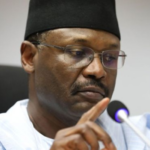
    INEC chairman, Mahmood Yakubu, said: “At the end of the exercise, 12,298,944 Nigerians successfully completed the registration as new voters. All along, we have repeatedly assured Nigerians that our process of cleaning up the register is robust.”

    But would you see this after a “robust” voter registration exercise?

    The commissioner for information and voter education of INEC, Festus Okoye, backed up his buddy Yakubu to emphasize that the point of releasing the register online. This was for citizens to make their “claims and objections.” 

    How can the errors impact the 2023 elections?

    Errors such as double-counting give the voter the opportunity to vote twice for a candidate, which is considered electoral fraud under the 2022 Electoral Act

    Underage voting is also a crime, as it could lead to one region having more representation for a candidate than others. The law states that a person must be 18 and above before he/she is considered eligible for voting. Section 117 of the 2022 Electoral Act also gives a punishment of 12 months imprisonment or a minimum of N1 million for unqualified citizens who apply for registrations.

    What to do if you spot errors in the register

    When the name of a registered voter has been omitted or needs corrections, pick up the complaint forms at registration areas and Local Government Area (LGA)

    Wards

    To know your preferred LGA according to location, click the link here

  • The Nigerian Voter is a series that seeks to understand the motivations that drive the voting decisions of Nigerians — why they vote, how they pick their candidates, why some have never voted, and their wildest stories around elections.

    The subject of today’s The Nigerian Voter is Abayomi, a 26-year-old TV presenter in Lagos, Nigeria. He tells us about his reasons for voting for Buhari in both 2015 and 2019, his thoughts on youth participation in politics, and his desire to see Tinubu as president of Nigeria in 2023.

    When was the last time you voted, and who did you vote for? 

    I voted in 2015, and also in 2019. Both times, I voted for Buhari.

    Why did you vote for him twice?

    In 2015, I voted for Buhari because at that point, things were actually going bad in Nigeria with Boko Haram and it looked like Jonathan had basically lost the wheels, like he wasn’t in control.

    In 2019, I voted for Buhari again because he was obviously going to win. Atiku was the only other opponent from the People’s Democratic Party (PDP), but he was running for president and failing so many times that I didn’t see the point.

    But other candidates were present beside Atiku. Why Buhari still?

    I pride myself as a realist. Even if there are sentiments or optimism, I pride myself as one who is a realist and I knew the elections were between APC and PDP. A lot of things were going on at the time and it looked like things were falling to pieces, but at that point, it was a Buhari over an Atiku for me. 

    The main reason why is that Atiku looks too desperate. He jumps from one party to another. He doesn’t have an ideology to serve. He doesn’t have anything to campaign on.

    Do you feel the same way about Atiku now in 2022?

    It’s the same for me now. 

    And out of the three candidates, Atiku is the least prepared.

    Why do you say is Atiku not prepared?

    He is not prepared in the sense that PDP is falling to pieces. Over the years, Rivers state has produced one of the highest number of votes for PDP every election year, and now he doesn’t have Rivers. And it’s not only Rivers but also, the chief five governors. The issue has been going on for months now and he is not saying anything about it. He’s running a campaign on the theme  “unifier” but his party is currently the most disorganized, and most unprepared.  

    Regardless of how rich he is, or how much money he has, he cannot win the election on money alone. He had the opportunity to be the governor of Adamawa State in 1999, but he opted to be the vice president of Olusegun Obasanjo. It was a two-term tenure that was ridden with open issues between him and the president all through. I don’t think that kind of person is ready to be the president of Nigeria. I don’t think he has anything to offer Nigeria.

    Where did you vote in 2015 and 2019, and what were your experiences? 

    I voted in Bariga in both 2015 and 2019. During those two years, I can say that the voting experience was quite easy. The process especially was very very peaceful here in Bariga.

    Who would you vote for in 2023, and why?

    Asiwaju Bola Ahmed Tinubu of the All Progressive Congress (APC) has my vote, come 2023. I have been a staunch supporter of him as far back as I can remember. I am a student of politics, even as far back as when I was in school, and I can say that Tinubu is the only politician in Nigeria who understands politics.

    What makes you say so?

    Even if a “Jesus Christ” comes down to Nigeria today and says he wants to govern Nigeria, he would first need to belong to a political party, win the ticket, and then play politics before he can become the president of Nigeria. 

    With Tinubu, he has been doing the things everyone else said they’ll do for only God knows how long. Since he entered the political space in Nigeria, he has redefined politics. If you look at his politics objectively, he has built people, structures, made reforms, and built policies. 

    He has a political model that works, whether we like it or not. Yes, Lagos State is far from where it needs to be as a state with the kind of income it generates. It should be competing with the likes of Dubai and other top cities in the world.

    He also has a political ideology that works. They talk of Ambode, Fashola, and Sanwo-Olu, but these are the guys that went on to become governors of Lagos State. They were all previous members of his cabinet in 1999. Fashola was the Attorney-General of the Federation, Sanwo-Olu was a Commissioner, and Ambode was an accountant. 

    He understands that power in governance is a continuum. In the US midterm elections, there were 80-year-olds winning these elections. We don’t make a fuss if this happens in the US, but we make a fuss if a 70-year-old man is running. Why? There are people that have been in the US House of Representatives for their 6th and 7th terms because they understand that governance is a continuum. If a new person should come in, before he figures out a way to adjust the system, his first term has gone.

    So from what you’re saying, you don’t believe in youth participation in politics?

    Before the Not Too Young to Run bill was introduced, we had some young people in politics. Dimeji Bankole was the youngest speaker in Nigeria’s House of Representatives, and that was at the age of 36, 37. Fashola, Ambode, and Tinubu, were commissioners under Tinubu’s government in their early forties.

    Yes, youth make up the largest percentage of the population in Nigeria. So they deserve a voice. They deserve to be heard. They deserve to run, and they have been running. There is a popular Fuji musician, Taye Currency, whose son is in his early thirties and is a member of the House of Representatives. This narrative people push of the youth not participating is false. Ibrahim Obanikoro representing Eti Osa 3 LGA under the APC is in his early thirties. He is also in the National House of Assembly. So young people have been running.

    But if a young person deserves the position, do you think there is any need for a continuum?

    In politics, before you can term yourself to be deserving, you must have worked for it. If you believe you deserve it, you work for it. You have to be a part of the process, you have to join parties, and you have to campaign. There are people running for State House of Representative, but if you look at the streets, they’ve not done anything. You do not know them. They only come out when it’s politics. These are people that even when they run for councilors of their various zones, they cannot win.

    On the other hand, someone that is older, can’t speak good English, and is not as smart as you are would be elected over you, simply because he understands that he needs to be able to provide the needs of the electorate.

    What do you think of the controversies that have been surrounding Tinubu as of late?

    People have been saying that Tinubu does not attend debates or important functions. If I were Tinubu, I too would not go for those functions, because they seem to be biased and with a hidden agenda as well. They want to try to humiliate and dehumanize Tinubu publicly. If I sense such, I will not attend as well. A lot of things have been put on social media and that’s why some candidates might win on social media and in real life, they would be a distant third. Social media is a lie and it is really deceptive. I rather not play to what social media guys want and win than please them online and lose elections.

    Regarding the controversies surrounding his certificate and drug trafficking, all of these things have been in the open since 1999. As a matter of fact, people have sued him since his tenure as governor ended in 2007. If he was still in office, I can understand because he’d still have immunity as governor. But he hasn’t been in governance for the past 15 years now.

    There are people in charge of these narratives on social media and they take charge of social media. So leave the social media space for them.

    Do you also think that Tinubu is too sick to rule?

    When Buhari was first inaugurated in 2015, there were talks that he may not be able to last a single term because of his frequent medical travels abroad. But he has done eight years now. . All through the primaries when Tinubu’s hand was shaking as he held the flag, I found it funny that people were surprised because the man is 70 years old. 

    He would feel some sort of fatigue if he had to do that for hours. But guess who has been able to visit all arms of APC in the span of three years? Tinubu. Guess who has been moving across the country since he got back from London? Tinubu. If he can keep moving about this way and people say he is too ill to run, then I don’t know what ill health is.

    What are the changes you wish to see from Tinubu if elected as president?

    First, if Tinubu is elected as president, I want him to cut down on the cost of governance. It’s a major challenge. Our economy is drastically bad yet the cost of governance hasn’t been reduced. He needs to cut down on the cost of governance.
    Secondly, the fact that we are a producer of oil that imports oil kills me every time. It makes no sense that we have about four refineries and none is working. We’ve even incurred debts on an annual basis on maintaining refineries that are not functional. If he can privatise all refineries and ensure that they begin to work, it will make sense. Once we can start refining our oil and manufacturing natural gas, our economy will be better.

    We also need to have more professionals in their respective positions. He has shown that he isn’t one to play party politics over competence.

    On the issue of security, of the three candidates in Nigeria, he is the only one without a known bias toward any of the insurgencies in Nigeria – be it ISWAP, IPOB, Boko Haram, etc. Nobody has a direct solution for insecurity in Nigeria but I expect him to bring local and international experts to see how they can bring a total end to the insecurity crisis we have in Nigeria.

    If elected, how do you think Tinubu’s presidency will impact you?

    It will definitely make a positive impact. If he improves the economy, my cost of living will reduce drastically. If there are no insecurity issues in Nigeria, I’d be able to travel by road. If the refineries are fixed, the price of fuel will reduce. These are some of the things that will impact me in a Tinubu presidency.

  • Nigerian politics is hard to navigate as a young person and not knowing how to ask politicians the burning questions you have makes it more complicated. 

    This is why Citizen has partnered with Daria Media to present this year’s version of The Candidates. If you are wondering what this means, we’ve got you.

    Daria Media is run by Kadaria Ahmed, a seasoned journalist with decades of experience covering important issues, even  in Nigeria’s political space. She has been moderating Presidential Debates and town halls since the 2011 elections. 

    Kadaria Ahmed [Image source: DNB]

    Ahead of the 2019 presidential election, she created The Candidates, an election special town hall meeting for presidential candidates and their running mates to elevate election conversations to issue-based conversations.

    With the 2023 elections around the corner, The Candidates is here again but the best part is that we are working with them to ensure that young people are part of the process — asking the right questions and engaging with the presidential candidates. 

    When will The Candidates begin?

    The Candidates will start on Thursday, November 17 and will run till Wednesday, November 23, 2022. 

    Citizen will bring live updates of the conversations to you through our social media pages and you can ask questions directly that six presidential candidates and their running mates would answer. 

    There’d be six presidential town halls and seven other remote shows, with leading national commentators hosting these conversations before each town hall. 

    Fact checkers will also be on ground so no one gets away with telling us lies.

    So, who are the candidates?

    The Candidates 2019. [Image source: Premium Times]

    The top six presidential candidates are expected to take part. Here is the schedule:

    Prince Adewole Adebayo and running mate, Alh. Yusuf Buhari, of the Social Democratic Party – November 17, 2022.

    Mr. Omoyele Stephen Sowore and running mate, Barrister Haruna Garba Magashi, of the African Action Congress Party (AAC) – November 18, 2022.

    Sen. Rabiu Musa Nwankwaso and running mate, Bishop Isaac Idahosa, of the New Nigeria Peoples Party (NNPP) – November 19, 2022.

    Mr. Peter Obi (CON) and running mate, Dr. Yusuf Datti Baba-Ahmed, of the Labour Party (LP) – November 21, 2022.

    Alh. Atiku Abubakar and running mate, Dr. Ifeanyi Okowa of the People’s Democratic Party (PDP) – November 22, 2022.

    Asiwaju Bola Ahmed Tinubu and running mate, Sen. Shettima Kashim of the All Progressives Congress Party (APC) – November 23, 2022.

    How can you participate? 

    The town hall debates will be happening across six remote locations in Nigerian universities. There’ll be live interactive audiences in Maiduguri, Enugu, Port Harcourt, Kano and Abuja who will also take part in the live town hall series. 

    An audience of 100 people for each town hall is expected. This is an opportunity for you to hear directly from the candidates and ask them important questions about their plans for you. If you’d like to be a part of the audience, fill the form here.

    What else should you know?

    If you’d like to learn more about The Candidates, Citizen will be providing exclusive coverage for the duration of the town halls. 

    Follow us on Twitter, Instagram, and Tiktok for more information. You can also follow @TheDariaMedia on Twitter and Facebook and @dariamediang on Instagram.

    ALSO READ: Why Nigerian Youths Should Ask Politicians Questions

  • “The new Nigeria is one in which citizens can criticize and hold leaders accountable.” If the statement made by Peter Obi suggests anything, it’s that the “current Nigeria” shows a high lack of accountability of political figures. 

    In other words, as we prepare for another election year, we should ask politicians more questions directly.

    With the current state of Nigeria — high insecurity rate, increasing rate of inflation, destruction of lives and properties by floods, corruption, and so on — it is only fair that we not only start asking our politicians questions but engage with them in quality conversation.   

    If you need more motivation to do this, here’s some: 

    Youths are excluded from political conversations that affect their lives

    For a country that has the bulk of its population as youths, they seem to be grossly excluded from political conversations. Despite the emergence of the “Not Too Young to Run” bill passed into law in 2018, 17 out of 44 of Nigeria’s current ministers are within the age range of 60 to 69. And our “youth minister” is 59 years old. 

    There’s hardly any evidence of our leaders working, and we need to ask WHY

    Being classified as the “Giant of Africa” is no longer the “flex” it once used to be. This is because our statistics in key areas of the economy depict anything BUT gigantic stature. Nigeria’s inflation rate is currently at double digits at 21.32 percent. It is currently ranked the third worst country in the world in terms of insecurity. 

    And until recently, the naira crashed to an all-time low of N1,005 to a pound with the country facing an unemployment rate of 33 percent.

    Recall that many of the issues happening were against the promises our current president made in his 2015 manifesto.

    Where can you ask these questions? 

    We have partnered with Daria Media on its upcoming programme ‘The Candidates’, a series of town halls. It will be hosted by renowned journalist, Kadaria Ahmed. 

    This year, the town halls will feature six presidential candidates and their running mates. This will include Bola Tinubu, Rabiu Kwankwaso, and Peter Obi. 

    This is not your regular town hall where you only get details after it has happened. You can be a full part of this process from beginning to end. The best part is — you can ask questions and get answers from leading presidential candidates. 

    Start by clicking this link and filling out the form. It’ll take just two minutes.