• [countdown date=”Feb 25, 2023 7:00:00″]

    Ladies and gentlemen, in five days, Nigerians will be charting a new way for the country at the Presidential polls on February 25. 

    Who shall be considered worthy of seating on Nigeria’s iron throne as president?

    As we prepare to use our Permanent Voter’s Card (PVC) to answer this question on February 25, it’s not enough to know the steps needed as a first-time voter. You also need to know how your votes are compiled and how a winner emerges. 

    For this purpose, we have decided to curate a list of how election results are processed and transmitted. 

    But before we get into that, Zikoko Citizen will be publishing 2023 election results live as they are being collated and verified on the INEC server. You can follow here as we will give you field updates too.

    Now, the breakdown:

    What are the processes?

    Transmission of results is simply the process of transferring or conveying election results from one point to another.


    According to the 2022 Electoral Act, there are two processes involved in the collation of results — the manual and electronic process.

    The Manual Process 

    Counting of ballot papers

    The manual process of collation consists of four steps:

    • Counting of ballot papers (which citizens use in selecting a candidate at the polls)
    • Recording of results in specific election result sheets (also known as EC8A)
    • Approval of election result sheets by polling agents 
    • Physical delivery of results to collation centres.

    The Electronic Process 

    The Bi-Modal Voter Accreditation System (BVAS)

    This process includes the use of new technologies from the Independent National Electoral Commission (INEC). These include the Bi-Modal Voter Accreditation System (BVAS) and the INEC Result Viewing Portal (IReV). The use of the electronic process also applies from the polling unit to all the levels of collation.

    With the electronic process, only two steps are involved:

    • Recording of accreditation data: The BVAS is used to cross-check for genuine voters in a system known as voter accreditation. The data collected after is recorded on the BVAS.
    • Direct transmission of election results.

    Results from the electronic process also have the ‘final say’, as it is used to resolve problems that may arise from the manual process in case it disappoints.

    Now that we know about the collation process, how are the results processed and transmitted to you?

    The transmission of results 

    After a voter casts his or her ballot on Election Day, it is not unusual for them to go to their respective homes. 

    But, unknown to these voters, this is where the real ‘work’ begins for election officials.

    After votes have been recorded on the EC8A form, the presiding officer does two things:

    • Use the BVAS to take a clear image of the result sheet and transmit the image for collation to the IReV.
    • Takes both the BVAS machine and result sheet physically to the ward collation centre and submits the result to the collation officers.

    Now, the collation officer at this stage has an important job to do — make sure that the result figures on the IReV, the manual election sheet, and the BVAS machine all tally. It is also done this way so that collation officers can have access to the IReV.

    After this, the figures are then sent to the Local Government Area unit, then the state, and then the National Collation Center in Abuja.

    If a particular candidate gets the highest number of votes from accredited voters at the national level, then he or she receives ‘Odogwu’ status as the winner of that election.

    Now that you know how you will get the results, are you ready to vote?

    Don’t forget to march to the polls on February 25 for the presidential and national assembly elections. There will also be voting on March 11 for the state assembly and gubernatorial (governorship) candidates. 

    See you there!

  • In Nigeria, seeing a female participate in politics at the top level is like getting new naira notes — it is a very rare occurrence. 

    In November 2022, the United Nations announced that Nigeria was part of the countries with the lowest level of female representation in the national parliament at 4.1%. Compared to Senegal’s 57% and Rwanda’s 67% rates, this is an insanely low rate for women.

    But as rare as it sounds, Nigeria’s political history is sprinkled with the tales of many great women and their exploits. From Funmilayo Ransome-Kuti to Chief Alimotu Pelewura, women have been involved in Nigeria’s struggles towards democratic freedom. 

    One of these women is Margaret Ekpo, Nigeria’s first female politician who was known to mobilise women around the country for social justice causes. Let’s tell her story here

    Ekpo as Nigeria’s First Female Politician

    As a wife and teacher, Ekpo’s political interests grew due to her husband’s displeasure with the poor treatment of Nigerian doctors by colonial masters. She, later on, started her political journey in 1945. This was by joining the National Council of Nigeria and the Cameroons (NCNC) at a political meeting in Aba. 

    She was responsible for the formation of the NCNC women’s wing. This was along with the wife of the leader of the party, Flora Nnamdi Azikiwe. Azikiwe became its first president with Ekpo as vice-president. 

    In 1953, she was nominated by the NCNC for a seat in the regional House of Chiefs. In 1954, she established the Aba Township Women’s Association which she used to fight for the economic rights and protections of women as well as the expansion of their political rights.

    As the ‘boss lady’ of the ‘new market’ group, she was able to gain the trust of a large amount of women in the township. She channeled their energies into exerting political pressure on the government. By 1955, women in Aba outnumbered male voters in a city-wide election because of her work. 

    In 1960, Ekpo became the president of NCNC women’s wing after Flora Azikiwe became the first lady. As president, she continued to lead women in canvassing for party candidates across the country, forming a formidable campaign team.

    Ekpo won a seat in the Eastern Regional House of Assembly in 1961. This made her become the first Aba woman to attain this achievement. Her position enabled her to fight for the progress of women in economic and political matters. This includes the availability of transportation on major roads leading to markets. After a military coup ended the First Republic, she took a less prominent approach to politics.

    Ekpo the Activist

    Ekpo started her activism in 1949. This was during a protest in Enugu at Iva Valley mining site. Coal miners requested a wage increase and their ring-leaders were shot by colonial officers. 

    Ekpo got in touch with other women leaders around the country (most notably Funmilayo Ransome-Kuti) and they declared a day of national mourning for the victims. This helped draw attention to the incident not only in Nigeria, but also across the world.

    During the demonstrations on the day of mourning, she made a controversial speech that stepped on the toes of the British.


    She was later arrested because of this. Alongside her were her contemporaries Jaja Nwachukwu (the first Speaker of the country’s House of Representatives), Samuel Mazi and Nwachukwu Abengowe. They were harassed and threatened with deportation. In retaliation, the women of Aba threatened to set the town ablaze. Eventually, Ekpo and the others were set free.

    In the early 1950s, a fellow police officer murdered Mrs Onyia. This was because she rejected his advances. The authorities covered up the murder to avoid controversy. However, Ekpo and the Aba women stormed the Enugu Prisons Department. They demanded to see her burial site.

    When the white superintendent rebuffed them, they threatened to break the prison gates and enter forcibly. The guards allowed them in. They exhumed the body and carried out an autopsy. They found out the truth and executed the guilty warden.

    Honours and Awards

    In 2001, the government named Calabar airport after her. Her name graces the Ekpo Refectory at the University of Nigeria, Nsukka and various other buildings and structures across the nation. Until her death in 2006, she was the Life Patron of the National Council of Women Societies (NCWS).

  • Ever since Rivers State governor, Nyesom Wike lost the People’s Democratic Party (PDP) presidential ticket to Atiku Abubakar, the man has seemingly had only one mission — make Atiku’s campaign a living hell.

    What has Wike not done to achieve this goal? From catchy Atiku diss tracks with his merry live band, to publicly flirting with other presidential candidates such as Bola Tinubu of the All Progressives Congress (APC) and Peter Obi of the Labour Party, Wike has gone to all lengths to disgrace Atiku.

    But his most effective weapon seems to be the G5. What is the G5, how successful has it been, and where is the G5 now?

    Meet the G5

    The G5 Governors [The Cable]

    ‘The G5’ are a group of five high-profile governors in the PDP that have gone rogue and no longer support their party’s presidential candidate, Atiku Abubakar.

    This is due to their belief that the PDP’s regional composition is biased against the South, with a Northern presidential candidate and a Northern party chairman, Iyorchia Ayu. Thus, they’ve only had one condition for supporting Atiku — Ayu should step down as party chairman and let a Southerner have his place.

    Atiku Abubakar and Iyorchia Ayu


    But Ayu has refused to budge from his PDP throne, and Atiku has begged the G5 to reconsider, as he does not have the authority to sack him outright.

    But the G5 are refusing to let the sleeping dogs lie, and left the Atiku support train. Even three of these governors have been reported to fully endorse Peter Obi. 

    The G5 governors are Nyesom Wike of Rivers State (the ringleader), Samuel Ortom (Benue State), Seyi Makinde (Oyo State), Okezie Ikpeazu (Abia State) and Ifeanyi Ugwuanyi (Enugu State).

    Get More Zikoko Goodness in Your Mail

    Subscribe to our newsletters and never miss any of the action


    It would be worth noting that Wike has already served his full tenure as Rivers State governor while other governors are running for second terms or senate seats in their respective states.

    How successful has the G5 been?

    The answer is not quite.

    Since the emergence of the group in September 2022, they have only been seen making fashion statements with their uniforms at public events and fleeting between war and reconciliation talks with PDP leadership. And even those have not been happening recently.

    Their chances of swaying the polls ahead of the 2023 elections have drastically reduced. This is due to Obi’s growing influence amongst citizens of their states, with opinion polls such as Bloomberg giving the candidate’s chances of winning as high as 60%. 

    Worst of all, the G5 governors seem to be losing their resolve on hating Atiku. 

    Ugwuanyi, for instance, recently welcomed Atiku to Enugu state, where he had a rally. Today, Seyi Makinde’s wingman, Hosea Agboola, just became chairman of Atiku’s presidential council in Oyo State. And even Benue governor, Samuel Ortom, attended Atiku’s Benue rally on February 7. This was with his full entourage consisting of the deputy governor, aides and even local government chairmen.

    This has caused many to speculate that their agenda is ‘dead’, according to a member of the PDP Presidential Campaign.

    What’s Next for the G5?

    However, Wike has come out to assure the public that their reign of terror is not yet over. According to him, the group is yet to release their February 25 election strategy

    Will the G5 cause havoc on Election Day? Or will the will of the people be affirmed? We will know on February 25.

    Join the Citizen Situation Room and Helpline on WhatsApp today to get real-time gist and drama on the 2023 elections.

  • Political rivalries in Nigeria, especially during elections, are as common as interrupted power supply. Is it Wike and the G5 governors? Or Atiku and Obasanjo? If there is a list of activities politicians love, beefing with each other will be Top 10. 

    The political beef we’ll focus on for today is decades old and was between legendary Nigerian political heavyweights Obafemi Awolowo and Samuel Akintola. It got so bad that it laid the foundations for one of Nigeria’s most violent protests — Operation Wet-e. 

    To understand what Wet-e is all about, we need to understand the timeline of events, from when things fell apart between Akintola and Awolowo, to the rise of the 1966 military coup. 

    A Timeline of Events 

    1959 – Awolowo becomes the leader of the Action Group party (AG) while Samuel Akintola becomes deputy leader and Premier of the Western Region.

    Jan 1962 – There is a fallout between Awolowo and Akintola concerning a suggestion for an alliance with the Northern People’s Congress (NCP). This results in factions for both men within AG. 

    Get More Zikoko Goodness in Your Mail

    Subscribe to our newsletters and never miss any of the action

    Feb 1962 – Akintola and faction walk out of AG Jos Convention. Akintola loses his position as Western Premier.

    Akintola’s violence

    May 24, 1962 – A new premier, Dauda Adegbenro seeks a vote of no confidence in Akintola from Western House of Assembly. Akintola’s faction smashes windows and beats up members of parliament during meeting. 

    May 29, 1962 – Nigeria’s Prime Minister, Tafawa Balewa, declared an emergency parliament. Awolowo and his faction were sent to jail for 10 years imprisonment for storage of ammunition. Akintola went home free.

    Dec 1962 – State of emergency parliament is lifted.

    Obafemi Awolowo going to jail [The News Nigeria]

    The start of Operation Wet-E

    Jan 1963 – Akintola is reinstalled as Western Premier. He then forms the United People’s Party (UPP) consisting of his allies from Action Group. Enters into a coalition government with the NCNC party

    1964 – UPP evolves to become the Nigerian National Democratic Party (NNDP).

    1965 – Massive rigging occurs by the NNDP during Western regional elections. This is in a bid to remain in power. Defeated politicians retaliate by pouring gasoline on opponents. This is Operation Wet-E.

    15 January 1966 – Military personnel take over the country with Nigeria’s first-ever military coup.

    March 1966 – Major Emmanuel Ifeajuna, one of the coup’s leaders, admits that coup plotters were tired of corruption and incompetence. They also reveal Operation Wet-E was the breaking point that finally motivated them to take action.

    Join the Citizen Situation Room and Helpline on WhatsApp today to get real-time gist and drama on the 2023 elections.

  • The Nigerian Voter is a series that seeks to understand the motivations that drive the voting decisions of Nigerians — why they vote, how they choose their candidates, why some have never voted, and their wildest stories around elections.

    In this week’s edition of ‘The Nigerian Voter’, we’ll discuss voters’ fears of election violence ahead of the 2023 elections and how these fears are entrenched in 6 election cycles of violence since the start of democratic rule in 1999. 

    Nigerians are experiencing worry, fear, and anxiety, with less than 12 days to the 2023 elections on February 25, 2023.

    This has resulted in harassment and beating for supporting some candidates.

    One such event was during the Labour Party’s presidential candidate, Peter Obi’s Lagos Rally, on February 11, 2023. Some Peter Obi supporters were attacked by thugs with machetes and other weapons,  on their way to the Tafawa Balewa Square (TBS).

    When this happened, there was a lot of public opinion on voters’ fears of election violence. Most of the accounts were terrified of harassment from thugs by the ruling All-Progressive Congress (APC).

    https://twitter.com/peacejibson2/status/1624400752750870533?s=20&t=zwseZeoTN6sh0r3X6Oztcg

    Well, who can blame them? Since Nigeria’s independence in 1960, there has been no moment’s rest concerning election violence, with more than 1,800 deaths. And entering democratic rule in 1999 didn’t help either.

    Let’s look into the statistics here:

    History of voter election violence since 1999

    There was widespread violence following allegations of fraud regarding the 1999 election that ushered in the presidency of Olusegun Obasanjo. It is estimated that about 80 people died. In 2003, at least 100 people were killed during incidents of violence triggered by federal and state elections. 

    In 2007, over 300 people lost their lives due to electoral violence four years later, with pre-election violence claiming more than 70 lives.

    Again, in 2011, post-election violence led to the death of at least 800 people over three days of rioting in 12 states across northern Nigeria — the worst case so far in the country’s political history.

    “The violence began with widespread protests by supporters of the main opposition candidate, Muhammadu Buhari, a northern Muslim from the Congress for Progressive Change, following the re-election of incumbent Goodluck Jonathan, a Christian from the Niger Delta in the south, who was the candidate for the ruling People’s Democratic Party,” noted Human Rights Watch.

    During and after the general elections in 2015, more than 100 people lost their lives, according to the International Crisis Group. And finally, the European Union Election Observation Mission said about 150 people were killed due to violence linked to the last national elections of 2019.

    Sadly, citizens are not the only ones that suffer from election violence. A closer look at the figures shows that election officials from the Independent National Electoral Commission (INEC)

    A Trend of Election Violence Against Election Officials (2019-2022)

    In November 2022, the electoral commission said it had recorded 50 attacks in 15 of the country’s 36 states and the capital since 2019. It may probably have been more, as data from the Armed Conflict Location and Event Data Project (ACLED), suggests that might be an estimate.

    According to data from ACLED represented by Al Jazeera in December 2022, there have been more than 100 attacks associated with elections since the last elections in 2019. At least 67 of them were recorded on non-election days between January 2019 and December 2022.

    But why is there election violence?

    There are many reasons why election violence has risen to an all-time high since the start of Nigeria’s democracy. Some of them are:

    To gain wealth and profit

    Firstly, politics is the most profitable sector in Nigeria. And the stakes are extremely high. Holding a position in government holds the key to power, which in turn provides access to the country’s wealth. Winners gain all, and losers are sometimes left with nothing, including their followers, investment and integrity.

    The result is that political actors often prepare strategies to achieve their objectives that can include violence.

    Lack of strong state institutions

    Those involved in electoral governance are vulnerable to coercion or manipulation. On numerous occasions in past elections, there have been allegations of infractions committed by officials of the electoral body or security agencies in favour of one party or another. This, in turn, has led to some political actors enlisting the support of armed non-state groups. These groups sometimes operate in conflict with state institutions and sometimes compete with them. In some instances, there is cooperation.

    The frustration of Nigerian citizens

    Many Nigerians are frustrated by the economic, social and political situation in the country. People are frustrated by poverty, inequality, perceived injustice, illiteracy, youth unemployment, hunger, corruption, human rights abuse and insecurity.

    Added to this is the lack of sensitivity and inadequate responses of the government.

    This is a major reason behind the increase in civil and militant protests and criminal violence in Nigeria.

    What is the solution to electoral violence?

    Here are some solutions that we feel are necessary to curb electoral violence:

    More effort is also needed to build the capacity of relevant institutions. Two key ones stand out: the electoral and security agencies.

    Nigeria’s electoral body (INEC) plays an important role in reducing electoral violence. The regulation of party activities and the conduct of elections should be consistent with the country’s laws and directives. And its actions should be transparent. This will strengthen stakeholders’ confidence in the institution and process of the elections.

    Election security should be demilitarised. While policing can feature the armed forces in supporting roles, it is important to balance their role during elections with rule of law and respect for human rights. Suspects should be arrested, prosecuted and served justice (devoid of political influence) after a fair hearing.

    Nigeria has relevant laws to curb electoral violence. The implementation and enforcement of these laws should be a priority.

    INEC should also promote public education using both traditional and new media-based advocacy.

    Political parties, civil society groups and media also play important roles in influencing public opinion and mobilising people. Political parties should check, and when necessary condemn and sanction their members and followers engaged in electoral violence. Civil society groups should demand greater accountability and transparency of the election process as well as educate and mobilise the public.

  • On February 13, 2023, the Independent National Electoral Commission (INEC) announced that 240 polling units (PU) nationwide would be excluded from voting. However, don’t worry. It’s not for the usual reasons.

    The commission explained that there’d be no elections in these 240 PUs because between June 2021 and July 2022, when the Continuous Voter Registration (CVR) was on, no single voter chose those polling units as their preferred voting point. There was also no transfer to these affected PUs.

    Which polling units are affected?

    The polling units cut across 28 states of the federation. INEC shared the complete list via its Twitter page. Here are a few screenshots of some of the excluded PUs.

    What else should I know?

    The INEC chairman Mahmood Yakubu explained that polling units increased in 2021 from 119,973 to 176,846, adding over 56,000 PUs to the existing number. This process is called delimitation

    In simple terms, this refers to the drawing of electoral boundaries by dividing them into wards and polling units. The last time such a thing happened was in 1996.

    The chairman also spoke on the mock accreditation exercise on February 4. He said the feedback INEC got from it was that many Nigerians weren’t aware of the location of their PUs. He promised that a phone number would be available soon for people to send texts to confirm the location of their PUs.

    INEC also said voters whose PUs have been changed would receive text messages from them.

    How can I locate my PU?

    If you’re a registered voter unsure where to vote, visit this link here. All you’ll be required to provide is your name, date of birth, and state and local government of registration. Oh, there’s a captcha test too, but that’s easy. Alternatively, you can locate your PU using your voter identification number (VIN). 

    A comprehensive list of PUS by name, code number and their locations by state, local government and registration area will be made available by INEC soon.

    Join the Citizen Situation Room and Helpline on WhatsApp today to get real-time gist and drama on the 2023 elections.

    You should also sign up for our Game of Votes newsletter. We help you make sense of news jargon and keep you up-to-date, especially with election news. Make the subscription of a lifetime here.

  • For the 2023 elections, the Independent National Electoral Commission (INEC) has announced that there are 94 million eligible voters, an 11.3% increase from the elections held in 2019. This means that Nigerians are getting more voter educated and now understand better the need to exercise their rights to vote. 

    However, there’s still a need to emphasise that beyond getting registered, it’s even more important to turn up on election day to cast your vote for your candidate.

    Over the years, we’ve experienced a decrease in voter turnout. In the 2011 elections, out of 73.5 million registered voters, only 53.7%, i.e. 39.4 million people, came out to vote.

    In the next election year, 2015, 67.4 million registered to vote, but only 43.7%, 31.7 million people voted. 

    2019 recorded the lowest voter turnout in Nigeria’s history since democracy at 34.5%. Out of 82.3 million registered voters, only 26.5 million people voted. 

    So, what were the reasons behind the declining voter turnout through the years?

    Voter Apathy

    Voter apathy is a problem Nigeria has been battling for years now. This is partly due to citizens’ mistrust of the electoral system and elected officials’ failure to meet expectations. This discourages people from voting as they believe that their votes would count for little, and in the end, nothing ever really changes. 

    Insecurity

    For months now, INEC offices have faced attacks around the country. Also, many politicians sadly and wrongly believe that elections are a do-or-die affair. Thus, sometimes, thugs are employed to disrupt the voting process. This only increases the tensions among voters and consequently leads to low voter turnout. 

    Unfortunately, our persistent problem of low voter turnout has adverse effects on the country. Let’s break this down:

    It results in wasted resources

    The federal government has spent a total of  ₦444.5 billion for the past three elections. However, due to the low turnout during elections, over ₦255 billion was wasted. Every four years, INEC submits a budget for elections that covers the cost of logistics and provision of electoral materials, but it ends up being for nothing if nobody shows up to vote.

    It directly influences the outcome of elections

    In an election, a winner is declared based on the majority vote. But in a scenario where only 35% of citizens come out to vote, the election itself might be flawed. We should understand that these elections determine the quality of our lives for the next four years. So everyone would use the power in their hands to ensure the best possible candidate comes out victorious. 

  • The day we’ve all been waiting for is almost upon us: we’re 15 days away from Nigeria’s 2023 presidential elections. Some people are anxious about the chaos that might follow after the elections, and others have decided to start fasting and praying to ensure their candidate is victorious at the polls. 

    But, whatever the case might be, here are some things you must do to at least get through election day and get home in one piece:

    Dress properly for the occasion

    Make sure you wear light clothes since you might be standing for some time while awaiting accreditation and voting. Also, make sure your shoes or footwear are especially comfortable, just in case you need to run. 

    Election day 2023 survival

    You should also take extra care to note the following:

    • You can’t wear clothes with colours that represent any party
    • You are not allowed to carry campaign materials to polling units 

    If you are found guilty of this, according to the electoral act, you’d be required to pay a fine of ₦100k or face imprisonment for six months.

    Vote properly

    After accreditation, you’ll be given a ballot paper to thumbprint within the box of your preferred party. Make sure your mark appears only within the box and doesn’t cross any lines.

    Also read: The Four Steps You Need to Know As a First-Time Voter

    If it does, your vote will be considered invalid. After months of campaigning online, don’t let your village people get you when it’s finally time to cast your vote. 

    Election day 2023 survival

    We made a video on how to vote here.

    Don’t carry weapons

    Elections are an opportunity to fight for our lives, but the only weapon you’ll need is your Permanent Voter’s Card (PVC). If you’re caught in possession of any harmful weapon, you’ll be fined the sum of ₦100k or face six months imprisonment. 

    Don’t take or give money 

    This probably looks like bad advice under the administration of President Bubu and Meffy, especially if the now rare naira notes are being shared.

    But taking money from people on election day counts as “undue influence”, and this attracts a fine of ₦100k and up to 12 months imprisonment. So, run away from the temptation; you wouldn’t want to go from your polling unit to prison. 

    Don’t campaign

    Every election season, many people become political analysts, shouting and swearing with almost everything that their candidate is better. Which is fair, except everything should end when you get to your polling unit. Don’t try to convince anyone to vote for your candidate.

    If you’re caught doing so within 300 meters of a polling unit, you’d pay a fine of ₦100k or face 6 months imprisonment.   

    Hopefully, you take some of the advice we’ve given, and if you refuse to, may the odds be ever in your favour. 

    The Citizen Situation Room and Helpline are your ultimate plugs for real-time gist and drama on the 2023 elections. Join the conversation today!

    Are you signed up to our Game of Votes newsletter yet? We help you make sense of news jargon and keep you up-to-date especially with election news. Make the subscription of a lifetime here

  • The Nigerian Voter is a series that seeks to understand the motivations that drive the voting decisions of Nigerians — why they vote, how they choose their candidates, why some have never voted, and their wildest stories around elections.

    This week’s subject of The Nigerian Voter is Yusuf, a 26-year-old postgraduate student at the University of Ibadan. He tells us about his past voter experiences, why he is a big fan of Atiku Abubakar and his reasons for believing that the plans made against Atiku by the G5 don’t hold water. 

    Have you ever been voted in any election before? 

    I voted in 2015 and 2019. I also participated in the “Deliver Oyo” campaign group in 2018.

    What was the campaign all about?

    The campaign was all about the 2019 candidates and what they had to bring to the table. We were at the frontlines, granting interviews and developing goals and strategies that the candidates could possibly use to win the elections. It was around that time that the #NotTooYoungtoRun movement became very popular and soon became an Act. We had very young candidates here in Oyo state. Some of them didn’t win their elections, and others were later made appointees of the government of the day. 

    That’s dope! Who did you vote for in 2015 and 2019, and why?

    In 2015, unfortunately, I voted for Buhari. In 2019, I voted for Atiku. The funny thing with Buhari in 2015 was that I didn’t exactly support him.

    What do you mean?

    Well, I know his history well enough. People think his political career began when he planned that coup between 1984 and 1985. However, this is not true. Buhari was at the forefront of various coups. Even after he became the Head of State and Petroleum Minister, with the way we handled the government, I knew that he wasn’t the one for us.

    However, I decided to vote for him because of one person — Fashola. Most of us who were from the South-West but were not in Lagos admired how he ran Lagos and believed he would be the template for all All Progressive Congress ( APC) governors. We felt that if he is supporting Buhari, and we supported Buhari because of Fashola, then he would make Minister. Also, there would be more chances of his work being replicated in other states too, including the South-West.

    Therefore, I voted for Buhari not because of his person, but mostly because of the intelligent people he has had to work with. I felt that even if he couldn’t do his job right, his people would be there to pick up the slack. I guess I was wrong.

    Why did you vote for Atiku in 2019?

    I believed he was the better candidate. I was part of the election cycle, so I knew a lot about politicking and how these elections are run. With Buhari and Atiku as forerunners, it was a matter of settling for one of the lesser devils. This is because I strongly believed that no party asides from the two major parties can win at the level of the presidency. 

    Atiku had the qualifications. I feel his allegations of corruption are being over-exaggerated by the media. It’s not as deep as we see it. 

    Do you still have plans of voting for Atiku in 2023? If yes, why?

    I think Atiku is our only chance of booting the APC out of the presidency. People think that there can be no president worse than Buhari, but I disagree. I believe that things can be even worse with an APC candidate taking over from Buhari. Our democracy is very fragile and we cannot allow someone who doesn’t respect the tenets of democracy to get to that office in Aso Rock.

    Our presidential system of government is structured in such a way that it gives the president so much power. I think the closest system to ours is the American system, and even then, theirs has a lot of devolution or distribution of power.

    Why that statement? What makes you so?

    Because it’s in the constitution. Let’s start from 1999 till date. When Obasanjo was president, he was able to control even things that happened in the National Assembly. This is for both the House of Representatives and the Senate. 

    The only person that didn’t mix both arms of government was Yar’Adua, and that was because he passed on shortly after he became president. Even Goodluck Jonathan at one point interfered with the affairs of legislation. The constitution was even written by military personnel, so it has this ‘Decree 36’ sort of vibe with the centralisation of power that Aguiyi Ironsi did in 1966.

    That’s why Atiku is campaigning for state autonomy because states in Nigeria do not control their resources. The Federal government controls their resources and gives them derivation at the end of the month.

    The point is, we can not allow someone that doesn’t respect the tenets of democracy to be given that level of power. This is also a major reason why I am with Atiku.

    But with the decline of Atiku’s popularity over the last months, do you think he still has a chance of winning?

    The decline of his popularity is on social media oh, not physically. Let’s do a breakdown. There are 36 states in Nigeria, with 17 in the South and 19 in the North. Atiku’s running mate is someone who has been in government since 1999. He was James Ibori’s commissioner for 8 years. After Ibori left, he was also involved in 2 more tenures. The reason why I am bringing this up is to prove that Okowa is a political heavyweight.

    Even when Rivers State governor, Nyesom Wike first entered the political sphere, Okowa was already a commissioner of several tenures.

    Atiku also has the support of so many people in the South-South. There’s Delta, Okowa’s state. There is Bayelsa, which is a traditional PDP state and currently has a PDP governor. Rivers State is a traditional PDP state too but may be difficult to win because of Wike’s beef with Atiku. There is Akwa Ibom State, where Udom Emmanuel is a PDP governor. There is also Akpabio whom APC did not give his return ticket, but he still has that PDP structure.

    This means that there is solid hope of Atiku winning in the South as well as the North. It also means that Southerners, especially the South-South, have a great chance of making it to the presidency in the next couple of years. Obi is gaining ground in the South-East sure, but that doesn’t change the fact that the region is traditionally PDP too. What the PDP needs to get is at least 25% in all the southern states.

    Another point is, in all the states in Nigeria, with the way the election is, the state Obi wins, Atiku will come second. The state Tinubu wins, Atiku will come second. And yet, we say he doesn’t have a chance? Here in Oyo state, people would say that Atiku can’t win because Seyi Makinde is a G5 governor. But did they see the massive mobilisation that happened, even before Atiku announced that he was running for the presidency? Atiku has been in the PDP and has held Oyo state down before his campaign started.

    Yes, things have boiled down concerning his online campaign, but that doesn’t change the fact that this election is still between the APC and PDP.

    You mentioned the G5. Who are they, and what do they represent?

    The G5 is a group of five governors on the platform of the PDP. They are saying that they cannot support a transition of an APC Fulani man to a PDP Fulani man. In other words, they do not support a Fulani-Fulani transition for the presidency and feel a Southern president should emerge instead.

    Governor Nyesom Wike of Rivers State leads the G5. Other members include Seyi Makinde of Oyo State, Samuel Ortom of Benue State, Ifeanyi Uguwanyi of Enugu State and Okezie Ikpeazu of Abia State.

    Can you say that the G5 still has an impact on the elections and the PDP?

    They don’t. As it stands now if they proclaim the candidacy of Atiku, some of them will lose their elections. If you look at the G5 governors, only Nyesom Wike is not returning to power. Samuel Ortom is contesting for the Senate in Benue. Same with Ifeanyi Ugwuanyi of Enugu and Ikpeazu of Abia state. Seyi Makinde is seeking re-election for governor of Oyo state. So it’s only Wike in this group that has nothing to lose.

    At this stage of the election, if my governor in Oyo State starts to campaign against Atiku, he will campaign against aspirants for the Senate and House of Representatives. 

    In fact, during the Atiku campaign, the three Senate aspirants for Oyo South, Oyo North and Oyo Central and the 14 aspirants for the House of Representatives were all there to welcome Atiku. My point is that their election is tied to Atiku’s victory at the polls. The G5 can work for any candidate they like, but it has to be lowkey. I even feel like the nature of their group is unfounded.

    How so?

    I’ll keep referencing Oyo State because I am from here. So in Oyo State, we have four-axis — Ibadan (state capital), Oke-Ogun, Ibarapa and Ogbomosho. Since 1999, Ibadan has been the one producing the governors. Ibarapa has never made a governor, but they are not complaining or saying that ‘it’s their turn’. For Makinde’s campaign in 2019, he even came out to say that he is not running as an Ibadan man but rather as someone competent.

    If he has said that, why can’t he give Atiku the benefit of the doubt?

    This dispute’s genesis was that one couldn’t have a Fulani-Fulani transition. Look at Wike now. He succeeded Rotimi Amaechi, both of whom are from Ikwerre local government. Why didn’t he say he would wait for a candidate from another zone to aspire for governorship before he stepped up?

    My point is that if one wants to polarise the election along regional lines, Atiku will still win. If he doesn’t win states in the South, he will come second in those states. At this stage of our democracy, it’s not about the region.

    If it was the ‘turn of the South’ like they claim, why was Wike lobbying to be Atiku’s running mate at the primaries? These are questions that one should ask. You can’t be the beneficiary of a same-zone transition and still complain. However, the decisions of these governors can affect who citizens would vote for in their various states. For instance, Ortom’s leaning toward Peter Obi of the Labour Party could affect voter decisions on Atiku.

    What would you say of Obi, Tinubu and Kwankwaso as candidates?

    As I said earlier, the candidate of the APC (Tinubu) does not respect the tenets of democracy. He has had a hand in the affairs of Lagos State from 1999 till date. I also have a personal grudge against anyone (including APC members) that had a hand in October 2020 #EndSARS massacre. They have House of Representative aspirants that I can vote for, but I can’t vote for anyone APC at the central level. I just can’t.

    As for Peter Obi, I’m not voting for him right now because I feel his party is not a major party yet. You can’t build structures, campaigns, and everything else you’d need to survive a presidency in five months. If he keeps going this way, though, who knows? He could be our next president in 2027.

    For Kwankwaso, his New Nigeria People’s Party (NNPP) doesn’t have a fanbase outside of Kano state. I believe he is depending on Kano state being a swing state to have an edge, but that’s too much of a stretch.

    How are you mobilising people to vote in this election?

    To be honest, I don’t see why you are a Nigerian living in Nigeria with the current state of the economy and not vote.

    If people no longer believe in the Nigerian project to vote, then honestly they shouldn’t bother.

  • There are 31 days left to the governorship elections, and as we promised, Zikoko Citizen will keep you updated on important election information. In this article, we’ll look at the Centre of Commerce, Kano state and the aspirants vying for its governorship seat. 

    Meet the candidates

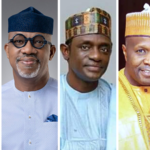
    Sixteen political parties will take part in the governorship election for Kano state. The leading candidates are Yusuf Abba Kabir of the New Nigeria Peoples Party (NNPP), Gawuna Nasir Yusuf of the All Progressives Congress (APC) and Wali Mohammed Sadiq of the People’s Democratic Congress (PDP).

    Yusuf Abba Kabir

    Yusuf Kabir was born January 5, 1963. He has served as Kano’s state Commissioner of Works, Housing and Transport. In 2019, he contested in the Kano state gubernatorial elections under the PDP but lost to the current governor, Abdullahi Ganduje. He appealed the election result, but the case was dismissed in court. He’s once again running for governorship but this time under the NNPP. 

    Kano state elections aspirants governorship

    According to an opinion poll conducted by NOIPolls in October, Yusuf Kabi will likely emerge victorious at the polls.

    Gawuna Nasir Yusuf

    Nasir Gawuna, born on August 6, 1967, is the current deputy governor of Kano state. He’s also the preferred candidate of the incumbent governor. 

    In 2014, he was Kano’s state Commissioner of Agriculture before he became deputy governor of Kano state in 2018 after the resignation of his predecessor, Hafiz Abubakar.

    Wali Mohammed Sadiq

    Sadiq Wali is the son of the former minister of Foreign affairs, Aminu Wali. On March 31, 2022, Sadiq Wali resigned from his role as Kano state Commissioner of Water Resources to pursue his governorship ambition. 

    Kano state elections aspirants governorship

    He was declared the winner of the PDP gubernatorial primary election for Kano state. But in December 2022, a federal high court in Kano disqualified him and appointed Mohammed Sani Abacha as the authentic candidate for the PDP. 

    However, things took an interesting turn when the Independent National Electoral Commission (INEC) released its list of gubernatorial candidates for the 2023 election. Wali Sadiq, not the court-approved candidate, Mohammed Sani Abacha, was listed as the PDP’s gubernatorial candidate for Kano state.

    When you look at the candidates going for Kano’s gubernatorial seat, it’s clear that we should pay more attention to the state elections, not just the presidential election. Because the people we trust with the leadership of our states play a more direct role in ensuring our lives as Nigerians get better. You 

    Did you know these facts about Kano?

    • Kano is the most irrigated state in Nigeria, with about 20 dams producing about 2 million cubic metres of water to support its agricultural and industrial activities.
    • It has the highest number of out-of-school children in the north.
    • It is a major producer of non-staple crops like sweet potatoes and tomatoes.

    Are you signed up to our Game of Votes newsletter yet? We help you make sense of news jargon and keep you up-to-date especially with election news. Make the subscription of a lifetime here