Election season in Nigeria is always bound to be entertaining with everyone on the edge of their seats.
Candidates are the stars of the show and are always under pressure to pull everything out of their arsenals to get people to vote for them.
They can be hairdressers:
Groundnut hawkers:
Agbado tasters:
Or whatever the heck is going on here:
It’s all a part of the game. But there are a few things these candidates aren’t allowed to do to win, according to the Electoral Act.
No insults
This one is funny because one-third of what election candidates in Nigeria do is insult their opponents. One 2023 presidential candidate has already said an opponent is suffering from memory loss, which sounds like an insult to us.
But the Electoral Act frowns against candidates using abusive and slanderous language against one another.
No religious or tribal provocations
The law also prohibits political campaigns from using provocation of religious, ethnic, tribal or sectional feelings as a strategy to win.
Can’t campaign in religious places
This one may sound surprising because candidates already do it all the time, but it’s illegal to run political campaigns in religious centres like churches, mosques or shrines.
Can’t use police stations for campaigns
The same law applies to using police stations for political campaigns. But who wants to campaign at a police station anyway?
Can’t use masquerades
The government must not want masquerades to eat good from the election buffet because candidates aren’t allowed to hire them for campaigns.
Can’t train and use thugs
This one would seem kind of obvious but we understand why it had to be written down in plain terms because we’re talking about Nigerian politicians here.
Candidates aren’t allowed to use thugs to help them rig elections convince voters.
Threaten others into submission
The goal of an election campaign is to convince voters you’re the best choice. The law says you can’t directly or indirectly threaten voters to get their support.
The Electoral Act recommends a maximum fine of ₦1 million or one-year imprisonment for any candidate that violates these guidelines. And we can’t wait to see how many Nigerian politicians will end up behind bars if they’re implemented.
It’s simply impossible not to have noticed the presidential campaign of Bola Ahmed Tinubu. He’s not just the candidate of the ruling All Progressives’ Congress (APC), he’s one of those faces that have lasted in Nigerian politics as long as that stubborn piece of corn stuck in your teeth.
Tinubu’s long game
Tinubu first won an election in Nigeria in 1992, a year that millions of people voting next year had not yet been born. His tenure as a senator didn’t last long due to General Sani Abacha‘s military takeover in 1993. But like yeast, Tinubu didn’t stay down.
He contested and won the election to become the governor of Lagos in 1999 and was a thorn in the side of the Olusegun Obasanjo-led Federal Government for much of his eight-year reign.
When Tinubu finished his tenure in 2007, he might have felt he was ripe for the presidency, but he had a problem: Olusegun Obasanjo, a fellow Yoruba man, had just finished a two-term tenure at the Aso Rock Villa.
The political climate was calling for a northerner to replace him in fulfilment of an unwritten gentleman’s agreement to rotate the president’s seat between the north and the south.
Tinubu realistically couldn’t make an immediate run for the presidency, and so his plotting began.
Operation Emi Lokan
Tinubu’s 2023 campaign has been standing firm on an entitled slogan that it’s his turn to sit on Nigeria’s Iron Throne. “Emi lokan” was the soundbite of his infamous rant in June 2022 when the APC was considering choosing a consensus candidate that would likely not be him. Nigerians mocked him for his rant and the soundbite in particular, but Tinubu has turned around to make it the tagline for his presidential bid.
Where exactly did the sense of entitlement come from? Let’s go back to 2007.
2007
In 2007, Tinubu was in control of the Action Congress (AC), a party with enough clout to contest a national election. But since he couldn’t compete because of his limited chances of victory, he needed a northern ally to use his formidable platform.
For the 2007 election, he found Atiku Abubakar, a vice president and outcast who left the ruling party to fulfil his own presidential ambition.
It was a plot convenience that worked for everyone
It would appear that Tinubu’s plan in 2007 was to ride a northerner into Aso Rock Villa. The payoff for him would be the northerner’s support for his own shot at the presidency after eight years. He even tried to be appointed Atiku’s running mate, but they’re both Muslims and would have upset the typical religious balance of a presidential ticket. So Atiku said:
Even though Atiku finished in the third position at the polls, Tinubu had hacked a formula to plot his way to Aso Rock Villa through delayed gratification. It was the perfect plan.
2011
By 2011, Umaru Musa Yar’Adua, the northerner who won the 2007 election, had died and Goodluck Jonathan, his vice president, stepped up as president. Jonathan, a southerner, contested for his first term in office in 2011, spitting in the face of the PDP’s rotational arrangement because he already had a taste of presidential power and wasn’t willing to let go.
But Tinubu failed to run yet again, offering up the platform of the AC, already renamed Action Congress of Nigeria (ACN) at the time, to another outcast northerner, Nuhu Ribadu. In fact, all the four aspirants who contested for the ACN’s presidential ticket were northerners even though southerners dominated the party.
Again, the gambit failed and Ribadu finished third. But even before that election concluded, Tinubu’s ACN was already plotting with a more established northerner for a merger.
In the search for a solution to his presidency problems, Tinubu found one Muhammadu Buhari.
2015 and 2019
By 2015, Tinubu’s ACN had merged with other established opposition parties including Buhari’s Congress for Progressive Change (CPC). This merger gave birth to the APC we know today.
Buhari had been running for the president’s seat since 2003 with little success. But with Tinubu’s political “structure”, he made new inroads to southern votes and the APC rose to power on the promise of change.
Even then, Tinubu was desperate to become Buhari’s vice president. The only problem, again, was they’re both Muslims and that made the ticket politically-radioactive.
And even though Tinubu didn’t get what he wanted then, the only thing that sustained him was the thought of biding his time for what the future held for him. In 2015, he did his part and put a northerner in Aso Rock Villa. All he had to do was wait eight years for his turn.
2023: Emi lokan
According to the permutations of the unwritten rotation policy which has now been thrown inside the dustbin, 2023 is the time for another southern president after eight years of a northern one at the helm of power.
When Tinubu had his infamous “emi lokan” rant in June 2022, he didn’t just weaponise it for himself, but also for his ethnic Yoruba group. This is despite the fact Nigeria already had a Yoruba president for eight years, unlike the southeast region which has produced none.
Irrespective of his attempt to make it about the south, it’s clear that Tinubu’s ambition is solely about him and the long game he’s been playing down the length and breadth of Nigeria for years, just so he can retire in Aso Rock Villa.
Tinubu now has what he wants: his name on the presidential election ballot, his very own Muslim-Muslim ticket and a shot at Nigeria’s Iron Throne. But will he ever sit on it?
Wouldn’t you like to read a newsletter that helps you dig into all the good, bad and extremely bizarre things happening in Nigeria and why they’re important to you? Then you should sign up for Game of Votes.
Governor Nyesom Wike of Rivers State is undoubtedly the hottest political bride in Nigeria right now.
Since his presidential ambition crashed after losing the ticket of the People’s Democratic Party (PDP) to Atiku Abubakar in May 2022, Wike hasn’t allowed anyone a moment’s rest. He’s been sleeping and waking like this:
No one doubts Wike’s political weight and the kind of influence he can have on the direction of votes for the 2023 presidential elections. The man himself knows this and has been lording it over everyone.
On August 25th, 2022, Wike kicked the drama up a notch with an eventful trip to London from which we learnt quite a few lessons.
Wike is a hot kek
On his London trip, Wike met Atiku in what many PDP operators would hope is the end of his theatrics. But he also met with the candidates of the All Progressives’ Congress (APC), Bola Tinubu, and Labour Party (LP), Peter Obi. That’s the kind of reverence top presidential candidates usually reserve for OG former Nigerian leaders like Olusegun Obasanjo, Ibrahim Babangida, Yakubu Gowon and Abdulsalami Abubakar.
It’s a testament to how much everyone understands Wike’s outsized influence and wants him to pitch his tent with them.
Obi is (most likely) Obasanjo’s candidate
Obasanjo has been shy about publicly endorsing any of the candidates for the 2023 presidential election, but it’s almost impossible that he won’t do it at some point.
And the former president appeared to show his hand on Wike’s tour by participating in the governor’s meeting with Peter Obi. Since his dramatic exit from the PDP, Obasanjo has taken a liking to popular anti-incumbent candidates — Buhari in 2015, Atiku in 2019, and now Obi in 2023.
Time will tell where he throws his hat but it seems he’s leaning towards Obidience.
Governance is on autopilot, sorry to Nigerians
There were at least five current state governors in London with Wike and Tinubu attending to political business that has nothing to do with the people who elected them into power.
Governors Seyi Makinde (Oyo), Samuel Ortom (Benue) and Okezie Ikpeazu (Abia) all followed Wike on his London tour. Crowd Controller Governor Babajide Sanwo-Olu (Lagos) and Governor Kayode Fayemi (Ekiti) were also part of Tinubu’s team for the meeting with Wike.
These governors have less than a year to the end of their current terms and aren’t too invested in governance anymore, but the politics that prolong their stay in power.
The only people that suffer are the ones who gave them a taste of power to begin with.
Wike is Captain Nigeria
On their return from London, of course, the actors tried to spin the trip as some holy trip they took in the interest of Nigerians. Ikpeazu called the trip a “rescue” mission for Nigeria and Ortom said they’re “looking at the larger picture”.
Wike also said all the trouble isn’t about him or his group but in the service of Nigerians. And if you believe all of that, we have a profitable Nigerian oil refinery to sell you.
There’ll be more meetings
If you think meetings in London would be enough to calm Wike’s blood and get him to fall in bed with one candidate, then think again. The London tour is only one phase of his consultation and he’s not done. There are more meetings to follow for the most in-demand political bride in the country. Everyone will have to wait to see who Wike walks down the aisle with for the 2023 elections.
Wouldn’t you like to read a newsletter that helps you dig into all the good, bad and extremely bizarre things happening in Nigeria and why they’re important to you? Then you should sign up for Game of Votes.
Even though Nigerian women are just as involved in elections as men, they have very little representation in government. Some women have over the years made it into elected legislative seats, but Nigerians have never elected a female governor.
These are the women that want to change that in 2023.
Aishatu Ahmed — Adamawa State
Senator Aishatu Ahmed beat a very crowded field of challengers to win the governorship ticket of the All Progressives Congress (APC) in Adamawa State. She defeated a former governor, a former EFCC chairman and a serving member of the House of Representatives to land on the ballot.
She was a member of the House of Representatives between 2011 and 2015 and has been a senator since 2019.
Senator Ahmed is a favourite to win the election and become the first ever elected female governor in Nigeria.
Nnenna Lancaster-Okoro — Abia State
Nnenna Lancaster-Okoro is the governorship candidate of the People’s Redemption Party (PRP) in Abia State.
She’s had unsuccessful runs in senatorial elections in 2015, 2016 and 2019 with APC and the Young Progressives Party (YPP).
She isn’t the only woman on the ballot in Abia.
Ngozi Ogbuleke — Abia State
Ngozi Ogbuleke is the governorship candidate of the Social Democratic Party (SDP) in Abia State.
Obiang Marikane Stanley — Cross River State
Obiang Marikane Stanley is the governorship candidate of the Action Democratic Party (ADP) in Cross River State.
Beatrice Itubo — Rivers State
Beatrice Itubo is the governorship candidate of the Labour Party (LP) in Rivers State. She beat a former member of the House of Representatives to win the party’s ticket.
Itubo is also the chairperson of the Rivers State council of the Nigerian Labour Congress (NLC).
Sophia Cookey — Rivers State
Sophia Cookey is the governorship candidate of the Zenith Labour Party (ZLP) in Rivers State.
Tina Barde — Niger State
Tina Barde is the governorship candidate of the Labour Party (LP) in Niger State.
Khadijat Abdullahi-Iya — Niger State
Khadijah Abdullahi-Iya is the governorship candidate of the All Progressives Grand Alliance (APGA) in Niger State. She was a vice presidential candidate in the 2019 presidential election on Fela Durotoye’s ticket for the Alliance for New Nigeria (ANN).
Sufiat Adekemi Iskil-Ogunyomi — Ogun State
Sufiat Adekemi Iskil-Ogunyomi is the governorship candidate of the Action Alliance (AA) in Ogun State.
Kassim Jackie-Adunni — Ogun State
Kassim Jackie-Adunni is the governorship candidate of the New Nigeria People’s Party (NNPP) in Ogun State.
She was also on the ballot for the 2019 governorship election as the candidate of the defunct United Democratic Party (UDP) but finished with 861 votes.
The 2023 general elections are expected to usher in a new direction for Nigeria, and these women could break the glass ceiling for that future. May the best woman win.
So many things don’t change about a typical Nigerian election: candidates, colourful election rallies, laughable campaign promises and of course, fake news.
Fake news is typically weaponised to manipulate perceptions about candidates or situations and we’re already seeing, in real time, how that’s affecting Nigeria’s 2023 presidential election.
It’s raining fake news
Campaigns for the 2023 elections don’t officially start until September 2022, but the pre-season campaign has been littered with an abundance of misinformation. On August 9th, 2022, Ghanaian president, Nana Akufo-Addo, raised alarm on Twitter that his name was being used for dirty business in Nigeria.
He was responding to a story that was trending on social media, where he allegedly wrote a letter to the presidential candidate of the All Progressives Congress (APC), Bola Tinubu. In this letter, he supposedly advised Tinubu to consider his supposedly frail health and step down for Peter Obi, the presidential candidate of the Labour Party (LP). The long and short of Akufo-Addo’s reaction was that the story was fake and the reply was:
Obi has also been the subject of endorsements from Hollywood stars — endorsements that have turned out to be fake.
There have also been fake social media accounts of prominent people like the former president, Olusegun Obasanjo, being used for misinformation.
This account is fake
But who cares about fake news?
Every fake story allowed to spread unchallenged pollutes the public consciousness heading into the elections. Fake news can be harmless mischief, sure, but it can also be malicious and dangerous.
And the tension of this current fake news season is already getting to the presidential candidates themselves.
Tinubu has called out Obi’s supporters to stop spreading lies against him. In an indirect response, Obi accused faceless “opposition” of creating misinformation materials for his benefit so that his campaign can be blamed.
How to deal with fake news
Unfortunately, it’s impossible to completely eliminate fake news online, whether it’s created unintentionally or intentionally to manipulate. But it doesn’t matter what the intention of creators of fake news is, they need unsuspecting people to carry this message.
It’s important for internet users to step into the gap and ensure they don’t help the spread of fake stories. Because, more than the creators, it’s the people who share fake news that really give such news life. This is why it’s important that everyone is cautious about the kind of stories they share online.
So how can I help to stop the spread of fake news?
There are a few obvious things to look out for to help curb the spread of misinformation:
Question the source
The source of a message can be as important as the message. Before you share a story of any weight, ask yourself if you trust the source to be telling the truth.
Corroborate
If there’s an opportunity to double-check the information from other sources, do that for sure. Trust is fine, but verify first.
Check your bias
Emotionally-charged topics like elections can make us more likely to fall for fake news, especially when it’s something that fits neatly into our biases. Always check to see that your judgement isn’t clouded by your bias.
Think twice before sharing
Before you share that juicy story about a candidate or party, are you sure that you need to? You need to answer this question especially if you can’t find corroborating sources, or feel your bias is in the way of good judgement.
Don’t think you’re too smart to be fooled
It can be ridiculously easy to fall for fake news, no matter how refined you think you are. This is why it’s important that you tick all the boxes on this list. Scrutinise everything carefully. Be curious and don’t stay stuck inside your bubble.
Burst it
You may not create fake news, but you’re needed as fuel to make it spread to more people.
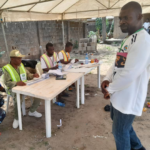
The Independent National Electoral Commission (INEC) has finally suspended the Continuous Voter Registration (CVR) for Permanent Voter’s Card (PVC) after 13 months.
The CVR resumed in June 2021 to give millions of Nigerians the opportunity to register as new voters ahead of the 2023 general elections and millions turned up.
The registration exercise finally closed on July 31st, 2022 after a dramatic final few weeks, involving a court case to extend it — which was dismissed in favour of INEC. Here are the most important things we learnt.
Nigerian youths are serious
By the time the CVR was suspended, INEC had registered a total of 12.3 million new voters in 13 months.
— 8.8 million of the new voters are young people aged between 18 and 34 years old.
— 4.5 million of total new registrants are students, many of whom are currently affected by the closure of universities due to the strike by the Academic Staff Union of Universities (ASUU).
Nigerian youths are often accused of going missing in the electoral process but the number of young, newly-registered voters may suggest a change in the tide. All that’s left is to receive their PVCs and show up for the elections.
Digital technology makes things easier. Who knew?
For the CVR exercise, INEC allowed new voters to apply online. This enabled applicants to pre-register and book appointments for a later date to complete registration at INEC centres. The online portal remained open for a year and gave many Nigerians a chance to start their registration process from the comfort of their homes.
Like this
The ease of registration was pivotal to getting many people to register early for the process. This speaks volumes about how much more INEC needs to involve the use of technology in the electoral process to make it more seamless. Nigerians want things to be more accessible and we can’t blame them.
Online registrants dozed off
Despite the use of the online portal, a great percentage of Nigerians who started their registration online didn’t complete it. INEC received a total of 10.5 million online applications from new voters, but only 3.4 million completed the process for their PVCs.
It means Nigeria could have seven million more new voters right now if people who began the process online, left the comfort of their homes to complete the biometrics capture at INEC stations. Or could it just be because of the manpower issues INEC failed to address at physical locations?
INEC needs to be protected
Generally, Nigeria has a worrying security crisis on its hands, so it’s no surprise that it also touched INEC and the PVC registration process. Gunmen killed an INEC official during an attack on a centre in Imo State in April 2022. They also warned people to stop registering for PVCs, threatening that there’ll be no election.
The attack resulted in the suspension of PVC registration in the affected area and was one of the black marks on the CVR exercise in a long line of aggression against the electoral process. INEC has suffered 41 attacks spread across 14 states, since 2019, and remains a target for non-state actors.
The government needs to provide more security cover for Nigerians going into the general elections to instill confidence in the process.
The number of new voters still short of expectations
The demand for PVCs ahead of the 2023 elections has been described as unprecedented, but the numbers simply fail to back up the claim.
In 2021, INEC set a target to register 20 million new voters, but the final tally of 12.3 million (61.5%) new voters falls way off that target. It’s also less than the 14.2 million new voters who registered ahead of the 2019 general elections, although that CVR exercise lasted for a longer period — 15 months, as opposed to this period’s 13 months.
The PVC registration process needs to be more effective
Despite INEC’s best efforts, many problems plagued the CVR exercise during its 13-month run. There were periods when centres were overrun by enthusiastic applicants without adequate manpower and resources to deal with them. Many critics have also expressed disdain towards the 13-month timeline of the exercise.
With PVC registration now suspended seven months before the election, tens of thousands of Nigerian youths who turn 18 before the next general elections will be disenfranchised.
INEC’s excuse is that it needs a lot of time to process applications and deliver PVCs to applicants before the elections, but that’s simply not good enough in 2022. The process has to become more efficient to cater to as many eligible Nigerians as possible.
The EFCC identified them as self-acclaimed spiritualists who defrauded a politician whose name was kept anonymous. We imagine they’re hiding the politician’s name because he’s not proud of how poorly this reflects on him.
The politician was chasing his party’s ticket to contest in the 2023 House of Representatives election. And to give himself a leg up over his opponents, he reached out to the suspects to help him intercede with the gods.
It’s practically spiritual vote-buying but let’s roll with it. The politician paid the spiritualists ₦24 million for their troubles. And Adifala told the EFCC he used the money to buy black, brown and white cows, rams, lavender perfume and rings, to carry out multiple sacrifices for his unnamed client.
We imagine it was this dramatic
The only problem was the politician didn’t win the ticket. And because he got salty like his mates who paid delegates and still lost elections, he wrote a petition to the EFCC.
The suspects protested their innocence, arguing that this was just a case of the gods not picking their calls. Ibrahim said, “Our own is just to pray, do the necessary sacrifices — which we did — and leave the rest to God.”
We’d hate to speak for the gods, but they probably hate vote-buying, or they think they deserve more than ₦24 million to rig an election. The really important question is: Was this fraud? Or are the gods just really expensive?
If there’s one thing that’s become common with elections in Nigeria, it’s the announcement that one or two of our fave celebrities will be running for office. In 2022 alone, we’ve gotten announcements from Funke Akindele, Tonto Dikeh, Yul Edochie and Carolyna Hutchings — we’re sure there’s going to be more.
With politics also working as a popularity contest, I’ve taken it upon myself to investigate this transition from red carpet and TV screens to the corridors of political power.
Not the first time
The celebrity to politician narrative is not new to Nigerians or elsewhere in the world. And in Nigeria, specifically, there’s a history of celebrities running for office — and winning — long before those running for office next year.
Desmond Elliot won a seat in the Lagos State House of Assembly in 2015, and way before him in 2003, NTA TV presenter Abike Dabiri contested and won a seat in the National House of Representatives.
These wins aren’t shocking. After all, elections are in fact popularity contests, and who better to excel at something like this than the actors, athletes and singers whose lives — fictional and otherwise — play out on our screens daily.
While the recognition may place celebrities one step ahead of some of their competitors, their political dreams don’t always come to pass, with top Nollywood stars like Kate Henshaw, Banky W and Kanayo O. Kanayo having lost elections over the years.
Once upon a time, celebrities were only involved in politics whenever they were “inspired” to throw their weight behind a candidate in one of those cringe worthy videos that always felt forced. Another entry point into politics in the mid-2000s that also became popular was state governors handing out “Special Adviser” roles on random issues to Nollywood celebrities like party rice.
“Celebrities aren’t much better or worse than any of the other types of people running for office,” says Zikoko Citizen Editor, Samson Toromade. “The reaction to celebs doing the same just stems from the fact they’re usually more well-known already and there’s a see-finish angle to it.”
But do celebrities taking up political roles work out well for the Nigerians they’re supposed to serve?
Looking at the cases of Desmond Elliot and Abike Dabiri — two veterans with infamous transitions — I have my doubts. Desmond Elliot is known more for his insensitive statements during the #EndSARS protests and that infamous wooden bridge than he is for achieving anything positive for his constituent.
This is not to say celebrities going into politics is bad, but when I look at the material before me, it’s not saying it’s a great idea either. But is it the celebrities or the trope that power corrupts?
Social media publicity stunts
Social media’s chokehold on us as a people and, inadvertently, our political process cannot be taken for granted. Funke Akindele announced her bid on Instagram even before making an official statement to the press. Carolyna Hutchings, Banky W and Yul Edochie have all done the same.
But with social media and politics becoming new ways to get audience attention, Samson also thinks some of these announcements are nothing more than daylight clout-chasing. “I guess everyone wants a bite of the national cake? It’s hard to tell,” he admits. “Some of them also come off as publicity stunts because they’re mostly on platforms that don’t have any real chance of actually winning the election.”
Do voters even care?
Going by the number of celebrities that have won elections, I’m forced to consider that Nigerian voters back then weren’t swayed by celebrity ginger when it came to leadership.
But in an era of increased social media penetration and more Nigerians having to choose the least of evils when it comes to the major political parties, there’s a high chance things might change.
While I stand by my choice, Samson doesn’t see it that way, explaining that a celebrity on a ticket doesn’t significantly swing the contest in any party’s favour. According to him, “A meaningful portion of the electorate won’t be compelled to vote based on “I’ve seen this person on my TV before” energy — a fair point to make. But whether they win or not, every election cycle seems to bring more celebrities with little or no political experience.
While I’m not the biggest fan of this movement, I doubt it will stop anytime soon.
An election campaign rally isn’t any different from, say, a cocktail party where one person is trying to woo another person they’re trying to end up in bed with.
The seeker (politician) hopes to get lucky with quippy icebreakers and cheesy one-liners that’ll convince the target (voters) that they’re the best thing that’s happened to Nigeria since Abacha’s death.
Since the goal of the game is to get in bed with the other party, promises are bound to be overabundant in this conversation. Some of these promises are reasonable, of course, but some promises make you cringe so hard and laugh out loud at the same time.
Here’s a compilation of some of the 2023 presidential election campaign promises that already look sus to us:
Al-Mustapha wants to live in Sambisa Forest
A man capable of staring Boko Haram into submission
General Sani Abacha’s former hitman security aide, Hamza Al-Mustapha, is one of the candidates trying to move into Aso Rock in 2023. But he doesn’t plan to stay in the building much.
To defeat terrorists, Al-Mustapha has promised to live inside Sambisa Forest where Boko Haram fighters have waged a war against Nigerian citizens for over 13 years. He sha won’t live there 24/7, just on weekends and holidays.
The most laughable thing about Al-Mustapha’s promise is that the year is no longer 2014. The dynamic of insecurity in Nigeria has evolved past Sambisa Forest as a nerve centre. Someone needs to catch up with the times.
Sowore wants to convert Aso Rock into a hospital
At this point, Aso Rock has to observe 40 days of fasting and prayer because two candidates don’t have much love for it. Like Al-Mustapha, Omoyele Sowore of the African Action Congress (AAC) is also not too keen on staying at the presidential residence if he wins the 2023 election.
Sowore said at a campaign event the Aso Rock Villa is too big for any one person to live in and plans to convert it into a hospital for ordinary Nigerians.
While we wouldn’t scoff at campaign promises that promote healthcare, Sowore’s plan just comes off as a frivolous one primarily designed to make people cheer and nothing more. So, ha ha ha.
Dumebi Kachikwu wants to become president so he can make every political office holder in Nigeria face the same limitations as the average Nigerian. His plan as president is to launch a National Patriot Act that levels the playing field for everyone.
In his own words, “It’s a bill that would ensure that public servants cannot use the privileges they cannot provide for the common man.”
A President Kachikwu administration would block politicians from using private or foreign medical services or even generators or boreholes in their homes. He also plans to block them from sponsoring private or foreign education for their children.
It’s the kind of campaign promise that’s bound to prompt cheers at rallies but is useless in practice as we already found out with the failure of the bill to block politicians’ children from schooling abroad.
Adebayo wants to create 30 million jobs
The provision of jobs is one of the most common campaign promises politicians make anywhere in the world. Jobs are kind of important and promising to provide them for people is an easy way to get the crowd going at rallies.
However, there’s moderation to everything, but moderation isn’t a word in the vocabulary of Adewale Adebayo, the candidate of the Social Democratic Party (SDP).
If elected president, he’s promised to provide 30 million jobs for Nigerians, but he’s been vague on the how he’s going to do it.
Tinubu wants millions of youths in the Armed Forces
Speaking of unemployment, Bola Tinubu’s master plan to solve that is to simply recruit millions of youths into the Armed Forces. He believes he’s killing two birds with one stone as this also supposedly takes care of insecurity. And because he’s a multitasker, he can extend the bag to agriculture by feeding these young recruits cassava, corn and yam every day. Where’s the balanced diet?
Like much of anything in life, political office in Nigeria is turn by turn. In 2018, Gboyega Oyetola narrowly beat Ademola Adeleke to become the governor of Osun State. But he’ll have to pack his bags and leave the Government House in November [2022] after losing the 2022 Osun State governorship election to none other than Adeleke.
This guy
There was a lot riding on the July 16th election, and now that it’s over, we’ve learnt a few things.
Sometimes, all you need is dance moves
When Adeleke entered the political scene in 2017, he was known for nothing more than his dance moves. He coasted to victory and won a senatorial election to fill a vacancy left by his late brother, Isiaka Adeleke. That’s how the “Dancing Senator” was born.
It doesn’t matter if it’s a Celine Dion song or a Zlatan Ibile banger, the “Dancing Senator” has all the moves
When Adeleke contested in the Osun governorship election a year later, his dance moves were once again his selling point for an election he lost in a controversial fashion. His second run for the governorship seat he’s now won wasn’t propped by any innovative ideas or grand campaign promises. It was, once again, “That’s the guy with the dance moves!” It’s all anyone remembers of his candidacy.
No one can say for sure that Adeleke will be a good or bad governor, but we know end-of-the-year parties won’t be the same at the Government House for the next four years.
Vote-buying is still a problem
There’s hunger in the land, and Nigerian politicians definitely know how to exploit a problem they’ve created. This is why vote-buying has become as much of a dominant feature of Nigerian politics as a PVC.
Vote-buying reared its ugly head in Osun with many incidents flagged across the state. The Justice, Development and Peace Makers Centre (JDPMC), an election observer group, reported that vote-buying happened in 75 out of the 76 polling units it covered.
Political parties are clearly willing to win by hook or crook. So, it’s up to electoral and security agencies to design strategies to neutralise the culture of bribing voters as much as possible. Security operatives arrested some of the vote-buyers in Osun, which is good, but follow-up prosecution is usually rare.
Osun Election: EFCC Arrests Four for Vote Buying at Oshogbo
The Economic and Financial Crimes Commission, EFCC, arrested four persons for offences bordering on vote buying during the governorship election which held on Saturday, July 16, 2022 in Osun State. pic.twitter.com/kyuA4S0TQs
Low voter turnout in Nigerian elections has become one of the most burning issues over the past two decades. The turnout rate for the presidential elections has been dropping since 2003 and gets even worse for governorship and legislative elections. Voters are simply not turning up at the polls to elect anyone.
The trend continued in the Osun governorship election as only 42.37% of registered voters showed up to exercise their civic rights. The turnout is lower than the 45.74% recorded in the state’s governorship election in 2018 and 53.14% in 2014.
Even lower turnout rates were recorded in the past four Nigerian governorship elections in Ondo State (32.84%), Edo State (24.53%), Anambra State (10.27%) and Ekiti State (36.74%).
It’s not often that the Independent National Electoral Commission (INEC) gets covered in glory after an election. But the agency’s work on the Osun election has been praised as a decent outing.
There weren’t as many voting machine failures and the collation process wasn’t as controversial as Nigerians are used to. Even the announcement of the winner happened as swiftly as possible when compared to other elections.
Some of the credit for INEC’s smooth conduct of the election went the way of the new Electoral Act signed in February 2022. The legislation has brought some refreshing efficiency and transparency to the process, making many Nigerians excited for 2023. Even Buhari couldn’t resist the urge to take credit for the smooth process once the election was over.
I remain fully committed to leaving behind a legacy of credible elections in Nigeria.
With a share of 39.7% of the total number of registered voters in Osun, young people aged 18 to 34 years formed the biggest voting bloc of the election. It’s proof that young people can decide the future of the country. They just need to go out to vote.
Stomach infrastructure is here to stay
Is it a Nigerian election if “stomach infrastructure” doesn’t make a sad appearance? We’ve come to expect candidates to bait voters with food items packaged with their proud faces. The Osun election was no exception.
It’s basically pre-vote-buying.
There’s still a lot of work for the Third Force
The Osun election inevitably carried the burden of being considered a test-run for how the 2023 general elections may turn out. And one of the biggest components of this burden is an examination of how an outside force can challenge the dominance of APC and PDP.
Of the 804,450 valid votes cast, the APC and PDP candidates scored 778,398 (96.8%) votes while 13 other candidates combined ended up with 26,052 (3.2%) votes.
If the Osun election is supposed to mean anything, it’s that parties outside of the more established APC and PDP need to do a lot of hard work if they hope to pull off an upset in 2023.
This is unrelated, but let’s also remember to honour our heroes past and not do things like this: