Trigger warning: Violence
Friendship is easy when nothing is at stake. For Enoch (29), it took a kidnapping to discover just how far his best friend, Mohamed (32), was willing to go.
He shares how Mohamed volunteered to deliver the ransom that would set him free from a kidnapper’s den, and how that ordeal bound them together as brothers for life.
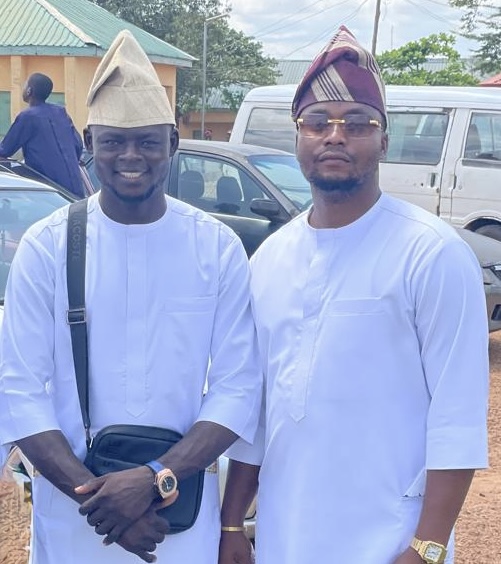
This is Enoch’s story, as told to Mofiyin
If I’d gone clubbing with my friends that Saturday in May, I probably wouldn’t have been kidnapped.
Instead, I stayed home because I wanted an early night.
Around 10. p.m, my mum shook me awake, a trembling in her voice as she whispered that armed men had surrounded the house. I was still half asleep and thought I was dreaming until I heard gunshots.
We started screaming for help, hoping the vigilantes nearby would hear us, but nobody did. As the men smashed the walls to force their way in, we hurried my younger brother and nephew into the ceiling.
Seconds later, they broke in. One of them asked if I was the maigida (man of the house). When I said yes, they tied my hands and dragged me away while my mum begged.
I kept asking what I’d done and where they were taking me, but nobody answered. They marched me out of my community in Byazhin on the outskirts of Kubwa through thick bushes for hours. At some point, they blindfolded me, and I completely lost my sense of direction. Eventually, we climbed a mountain and reached a camp hidden among rocks, where they pushed me into a small enclosure.
Another captive was already there. He’d dislocated his shoulder trying to fight them off. He screamed in pain until a young man they called Jboy* arrived with someone to treat him.
The moment Jboy noticed I was watching him, he ordered the others to cover my eyes. Then he started describing my mum. He knew she sold foodstuffs in the Market. I couldn’t place his voice, but he clearly knew my family. Then, almost immediately, he said, “Don’t worry, you’ll return home safely if your family pay.”
***
That first night in captivity was scary. The injured man begged for water, and the kidnappers listened. They scooped rainwater into a rusted tin and handed it to him. When he refused to drink it, they beat him until he did.
After watching that, I couldn’t bring myself to touch the food or water they offered. They warned that if I refused to eat, they wouldn’t contact my family.
By the third day, I gave in to the hunger pangs. Only then did they ask how much my family could pay for my release.
I told them we didn’t have money and could only afford ₦200,000. I even lied that I was still a student, hoping they’d see me as someone who wasn’t worth much.
Jboy didn’t believe me. He said he knew I owned a car. Then they beat me before dragging me outside to call my mum.
They demanded ₦50 million. My mum screamed and said she’d never even seen ₦20 million before. But they barely understood English, so they thought she’d admitted to having the money. Once she dropped off the call, they descended on me, thinking I’d deceived them. I blacked out afterwards.
When I woke the next morning, the right side of my forehead was badly swollen. The other captive told me he thought I was dead. He’d even urinated on himself because he was too scared to move.
He urged me to ask my family to find someone who spoke fluent Hausa to negotiate with the kidnappers. “Another misunderstanding like that could get you killed,” he added.
The days that followed were long. By then, I’d lost every sense of time. We were hurled up inside a cave, depending only on the sounds that drifted up the mountain for proof of life. School children singing the national anthem, farmers calling to one another as they went about their day, and our captors going and coming.
***
The next time the kidnappers called, my family handed the phone to my closest friend, Mohamed.
Mohamed wasn’t just any friend. We’d known each other for over a decade after my family moved to Byazhin. As a child, I was quiet and kept to myself, but Mohamed, who lived around the corner, wouldn’t let me stay that way. He’d knock on our door, drag me outside to meet the other children and make sure I never felt left out. If anyone tried to bully me, he was always the first to step in.
Even after many of our friends moved away over the years, we remained inseparable. We spent most of our free time at each other’s houses and if my family couldn’t find me, they knew to check Mohamed’s place first. So while I was held in captivity, it comforted me to know he was with my family. Without hesitation, Mohamed took over the negotiations.
For days, he pleaded and negotiated with them until they reduced the ransom from ₦50 million to ₦10 million. Even then, it was still a lot of money to raise on short notice.
My car and other valuable items were sold, but they only managed ₦4 million. The kidnappers accepted it on the condition that I’d pay the balance later.
On the sixth day, they told me I’d be released once someone delivered the ransom to a village in Zaria, Kaduna State.
I didn’t know it then, but nobody wanted to make the trip, except Mohamed. After days of negotiating with the kidnappers, he’d convinced himself they could be trusted. So he volunteered to deliver the ransom.
That night was the first time we had moved since I was kidnapped. I was blindfolded, yet I could tell they’d placed me on a motorcycle. We rode for what felt like hours before they dumped me on a lonely road.
With the blindfold yanked off my eyes, I wandered until I reached what looked like a Fulani settlement. For a second, I wondered if I’d walked into another trap.
Then, almost immediately, I heard Davido’s music. It was the only recognisable proof of life in that moment, and I followed it. In the hut where the music was playing, I met a young Fulani man, who listened to my story, took me in and lent me his phone.
When it finally occurred to me to ask where I was, he said I was still within Abuja, around Suleja.
It felt good to have a hint of clarity about my immediate surroundings. Then, without further hesitation, I dialled my mum’s number on the phone. Her voice carried a sliver of relief, but she also sounded worried.
“Mohamed isn’t home yet,” she said.
That wasn’t what I wanted to hear, but still, I wasn’t too worried. I assumed he was still making the long journey back.
The next day, I finally got home. Everyone celebrated my return, but Mohamed was still missing. As the hours passed, our relief slowly turned into panic, and we immediately swung into action.
We retraced his journey until we found the driver who’d taken him to the rendezvous point in Zaria. He had the answers to all our questions. Mohamed had handed over the ransom and followed them to where he thought I was. The driver said he warned him not to follow them too far, but Mohamed did anyway. He’d assumed he was coming to rescue me. That was the last we heard of him.
On hearing the driver’s account, I assumed Mohamed was taken to demand more money from us. Then, four days after my release, another group called. They said Mohamed had been sold to them and demanded ₦50 million. They hung up before we could ask more questions.
***
I was back home and safe with my family, but my friend had now become a victim of his kindness. As days passed, we could no longer hide Mohamed’s disappearance from his parents.
His mother already suspected something was wrong. She’d visited and asked about his whereabouts, while we held back what we knew of the situation.
When his family finally found out, they were devastated. They reported the case to the police, but they were advised that negotiating gave Mohamed the best chance of coming home alive.
Days later, the kidnappers reached out again. They claimed they’d bought him from my captors for ₦2 million and wanted that money back before they’d even discuss a ransom.
His parents offered a ₦3 million ransom and promised my family would raise it. The kidnappers felt insulted and ended the call.
Before long, the whole community heard that Mohamed had been kidnapped while trying to rescue me. People began gathering outside our house every day. Many believed we could easily raise the money because my brother had recently moved abroad; no explanation convinced them otherwise. The market women even organised themselves into shifts so someone was always outside our house watching us. I didn’t even dare step outside.
About a week later, the kidnappers called again.
I recognised Jboy’s voice immediately. He accused us of deceiving him and repeated the rumour spreading through our community that I had a wealthy brother abroad. He insisted they wouldn’t accept anything less than ₦50 million for Mohamed.
Jboy terrified me. He casually mentioned details about our house that felt intimate. From that point on, every unfamiliar sound made me jump. I was convinced an insider was watching us.
By then, we’d sold land, borrowed from anyone willing to help and scraped together ₦5 million. The kidnappers rejected it. Instead, they started sending videos of Mohamed being beaten, alongside gruesome clips of murdered victims, warning he would be next if we didn’t pay.
I could never watch those videos without thinking he was suffering because of me.
About a month into Mohamed’s captivity, they sent the same videos to his father. After watching footage of Mohamed being flogged, he promised them ₦10 million. Before long, word spread quickly and people began blaming my family for delaying Mohamed’s release. By then, the negotiations had become even more complicated, and I feared Mohamed would pay the price. My family took loans, accepted donations and exhausted every option until, two months after Mohamed was kidnapped, we’d raised the ₦10 million promised.
This time around, my mother insisted on delivering the money. She feared that if we sent another intermediary, we’d be putting them at risk.
***
On the agreed-upon day, the same network of trusted drivers drove my mother to a location in Zaria. We were hopeful about Mohamed’s release while nursing worry about my mum’s fate. Still, she was determined to deliver the ransom herself.
When they arrived at the location, the kidnappers pulled the same trick that had landed Mohammed in their net. They insisted she’d have to follow them if she wanted to see him. With no other choice, she climbed onto the back of a motorcycle and rode to the unknown.
It took hours, but they finally arrived at their hideout. And true to their words, Mohammed was there.
But it was an emotional reunion, laced with even more problems. When it was time to leave, they said they’d decided to keep Mohamed because they needed someone to interpret during ransom negotiations.
My mum couldn’t believe what she heard. Still, she begged them. She told Mohamed that he wasn’t made for that life. But all her pleading fell on deaf ears. Their leader had already chosen him, and it was final.
When they changed their mind at the last minute, they had yet another offer: raise another ₦3 million to buy three motorcycles, and they’d let Mohamed go.
Because we’d already given them everything, there was no money left. So, out of desperation, she begged them to keep her instead. She knew Mohamed’s family would never forgive her if she returned without him. So the kidnappers kept them both.
Later that night, they allowed her to call me. I was afraid they’d mistreat her, but she assured me they wouldn’t. She said some of the men believed she was too old to be held captive. Three days later, they got their way.
My mum was released, but Mohamed wasn’t.
The kidnappers left her with a villager, who sheltered her overnight before taking her to the nearest police station. There, she met a respected local community leader who agreed to help negotiate Mohamed’s release.
***
With the community leader’s help, the kidnappers eventually relented. After another week, they agreed to release Mohamed for an additional ₦1.5 million.
We were still trying to raise the money when everything fell apart.
A frightened Jboy called that Wednesday, demanding to know if we’d involved the police. He accused my mum of setting them up, and said several of his brothers had been killed because of her. Then he hung up.
That call haunted my mum. She’d been strong throughout the entire ordeal, but that call was her breaking point. She cried for days and began speaking in whispers.
After that day, every line went dead. For nearly two weeks, we couldn’t reach the kidnappers or even the community leader.
When we finally reached the police officer who had introduced us to him, he explained how the gang had carried out a foiled abduction. It got so intense that security officers launched an airstrike on parts of the forest. Some gang members were killed, but so were innocent villagers, including the community leader’s son.
All I could think about was Mohamed. I barely ate or slept. I kept imagining he’d either died in the airstrikes or been executed in retaliation. I don’t think I could’ve lived with myself if that happened.
Days later, the kidnappers called from a different number. Their tone had completely changed. The threats were gone, and all they wanted was whatever money we had left. They told us to come take Mohamed home, and even let us speak with him.
We delivered the ransom to the kidnappers. When Mohammed returned, it didn’t feel real.
After nearly three months, Mohamed was finally home. We both broke down in tears.
The first thing he said was, “ Thank you for not giving up on me.”
Those words touched me, even though I was the one who owed him everything. He admitted he’d stopped believing he’d ever leave alive. Around him were men who’d been held for six months. Others had spent more than a year in captivity. The reality of his freedom didn’t sink in until we entered Abuja. The moment he saw the city gate, his body gave way, and he started convulsing. We rushed him straight to the hospital, where he spent the next few days recovering.
Mohamed told me he’d eventually accepted that he would be forced to join the gang.
After the military raid, the kidnappers blamed the hostages for exposing their camps and executed several of them. He would’ve been next. The only thing that saved him was someone reminding them they’d already collected ₦10 million for his release.
After that, they moved him between settlements and kept trying to recruit him. They promised him he’d never struggle again. He’d have unbridled access to food, drugs and weapons, anything he wanted.
Mohamed refused. He kept telling them his faith wouldn’t allow him to become a killer. Eventually, just to stay alive, he agreed to serve as an interpreter during negotiations.
After Mohamed was discharged from the hospital, I didn’t know what our friendship would look like after everything that happened.
Unlike the rest of his family, he never blamed me. If anything, we’ve grown even closer. He’s no longer just my friend. He’s my brother in every way that matters.
Some people are bound by blood. Mohamed and I are bound by everything we survived together.
Read Next: Married Nigerians on Facing Crisis Together and Choosing to Stay