As a 32-year-old woman living with a visible disability, Efe* has long grown used to the questions and stares from strangers. But what’s been harder to process is how romantic interests have handled it. She opens up about situationships, tough heartbreaks, and the long journey to realising that her body isn’t something to apologise for.
What’s your current relationship status?
I’m single and focused on falling more and more in love with myself. If romance happens along the way, that’s fine. But it’s no longer the priority it once was.
Let’s rewind. How did you arrive at this juncture?
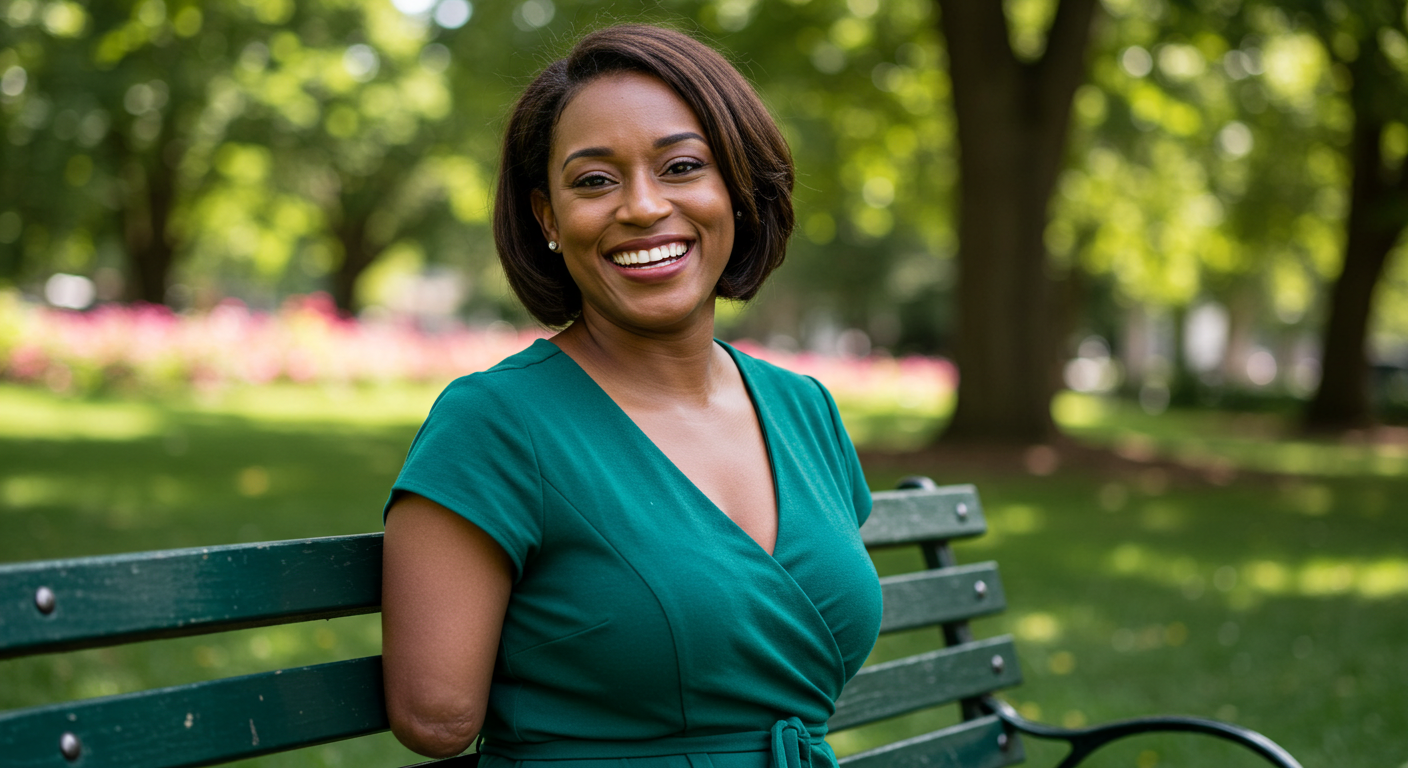
I was born without my right arm from the elbow down due to a condition called amniotic band syndrome. In the womb, fibrous bands wrapped around my limb and cut off circulation. I’ve never known life with two full arms, and for a long time, I didn’t think much of it. My parents sheltered me heavily while I was growing up, so I wasn’t exposed to how cruel the world could be about disability.
They rarely took me out or allowed friends over. Now, I understand they wanted to protect me, but it also stopped me from learning how to adjust socially or emotionally. I still remember when I was about six. We were at Mr. Biggs, and I made friends with a boy in the kids’ play section. My mum returned from placing our order, saw me playing with him and screamed my name so loudly, the boy ran off in fear. At the time, I thought she was just angry, but she had the same reaction whenever we were in public together. Over time, I realised she was always trying to shield me. It planted the idea that there was something about me people shouldn’t see.
I didn’t start interacting with the world on my own until university, and I hated how much I stood out. People either stared or pitied me. So, I pulled back, made a few friends, and mostly kept to myself. Add to that my deeply religious background, where dating was discouraged, I simply didn’t develop the skills or confidence to navigate romance.
After I graduated at 24, my family and friends encouraged me to try dating. I wasn’t desperate, but I was open to the idea. I was also tired of being the friend everyone leaned on but never saw romantically. I mean, I have feelings too.
What was dating like when you started putting yourself out there?
It was extremely bad, and I never expected what I experienced. People approached my friends and acted like I didn’t exist. That frustration eventually led me to join Bumble in 2018, and things got even worse.
I hid my arm in most photos. Anytime I opened up to matches about being an amputee, they either ghosted or led me on until they got bored. I eventually started blaming myself. I thought something was wrong with me, and started throwing myself at men. I sent nudes just to appear desirable. My first sexual experience was with a guy I met on the app, and he unmatched me immediately after. It crushed me because I thought he’d accepted me.
The final straw was matching with a man who fetishised amputees. During our chats, I realised he saw me as an object to tick off his list. When I pointed this out to him, he acted like he was doing me a favour. I blocked him and deleted Bumble after that. My Bumble phase lasted over two years, and it left me bitter.
I’m sorry. How was your love life after that?
I pulled back and focused on other important areas of my life. In 2021, I started my master’s, became a virtual assistant and started earning good money. I leaned into the cliché that if you stop looking, someone will find you. And someone did a year later — or so I thought.
Tell me about it.
In February 2022, I met a man called Mike* at the mall. He walked up to me, noticed my arm and still said he liked me and wanted to get to know me. That had never happened before, so I was genuinely stunned. It seemed like a dream come true, and I almost felt grateful.
That sense of gratitude made me overlook everything else. We talked for over two months, but he only agreed to meet once. Our conversations felt more like interviews. He kept asking about my job and how much I earned. One time, he asked how far along I was in my master’s, and said he’d prefer I stop if I hadn’t gone too far. He said he disliked his woman being “too educated.”
Mike never finished his OND and had dropped out to run his business. When I pushed back, we had a big fight. He told me leaving him would be my loss since I couldn’t take care of him as a cripple. To make matters worse, I found out he’d been talking to other women the whole time. I cut him off after that fight.
That experience made me realise he never saw me as his equal. I was someone beneath him who challenged his ego. That’s when I stop blaming myself. Why should I shrink or settle just to be accepted?
Did you try again?
I did. About eight months after Mike*, I met Ebuka* through a church friend. He was different— kind, intentional and funny. I was sceptical at first, but I slowly loosened up.
Unlike Mike, he didn’t make me feel small. But I often couldn’t tell if he liked or pitied me. Some of his comments made me wonder, like when he praised my beauty “despite everything”. Even after a year of talking, he refused to define our relationship. He avoided the conversation every time.
I eventually found out why when I asked our mutual friend to talk to him. What she revealed broke me. He’d told his mum about us, and she said it could only happen over her dead body; she didn’t raise her son to be with an incomplete woman. The worst part? He agreed with her. He told our friend his only issue was figuring out how to end things without hurting me.
I called him, cursed him and his mother out, and then I blocked him.
If you want to share your own story, I’d love to hear it here.
That must’ve been hard.
I thought he would be my happy ending. But in that moment, I realised I had been so fixated on love; I hadn’t paused to enjoy the life I’d built.
I’d finished my Masters and even bought my first apartment, but I kept mourning failed situationships. I was doing well, but I let the idea of finding a partner consume me.
It’s been almost two years since then, and now, I’m focused on living. — even if it’s not the life I once imagined, with a partner and kids by this age. I won’t waste time waiting for someone to choose me. It took time to get to this point, but I’ve finally realised I’m more than enough for myself.
Fair enough. Considering all that’s happened, what’s been the hardest part about dating for you?
People judge me before they even get to know me, just because of how I look. I’ve had strangers assume I was mentally unstable simply because of my physical disability. It’s happened more times than I can count in public spaces, and even while I was in school. I’ve learned to laugh it off, but it happens more frequently than you might think.
It says a lot about how much perception matters. People don’t realise how independent I am; my disability doesn’t really stop me from doing anything. But in this part of the world, people love to assume. They look at me and see a burden.
What gives you hope about love, though?
Well, I simply believe good people exist, and they’ll find me someday. I love being single, but sometimes I get jealous when I see my friends all loved up with their partners. Having someone of my own would be nice.
Still, I know now that making love the focus of my life would only hurt me. I’ve told myself that if I turn 40 and I’m still single, I’ll adopt a child. I’ll create my own joy, however that looks.
How has being on the streets changed what you want from love?
It’s changed me completely. I used to struggle with self-esteem, but not anymore. I’ve learnt that a relationship doesn’t validate me. There’s nothing wrong with me, and nothing to fix.
I follow stories of women like Maryann and Folashade Oluwafemiayo. They inspire me and remind me that disability shouldn’t stop me from getting what I want. I want whoever I love to see all of me and still choose me.
So, how would you say the streets are treating you? Rate it on a scale of 1-10
I’d give it a 7. I’ve learnt a lot about myself, but I’ve also seen how cruel people can be when you don’t fit their idea of perfect. I won’t say the streets were kind, but I’ve grown stronger.
Read what people are saying about this story on Instagram
Read Next: The Help I Raised Like a Daughter Turned on Me After I Caught Her With My Nephew