In a household where being noticed was a battle and relevance was never guaranteed, Greo, a Nigerian artist, turned the quiet observations of his youth into a blueprint for a lasting legacy. Growing up as the last child in a vast and complex family tree, he learned that survival requires more than just presence; it requires a mastery of human nature and an understanding of the politics of home.
This is the story of how he moved from the sidelines to become the architect of his own fate, to show that the lessons learned in the shadows of a large family can be the light that ensures a name never fades.
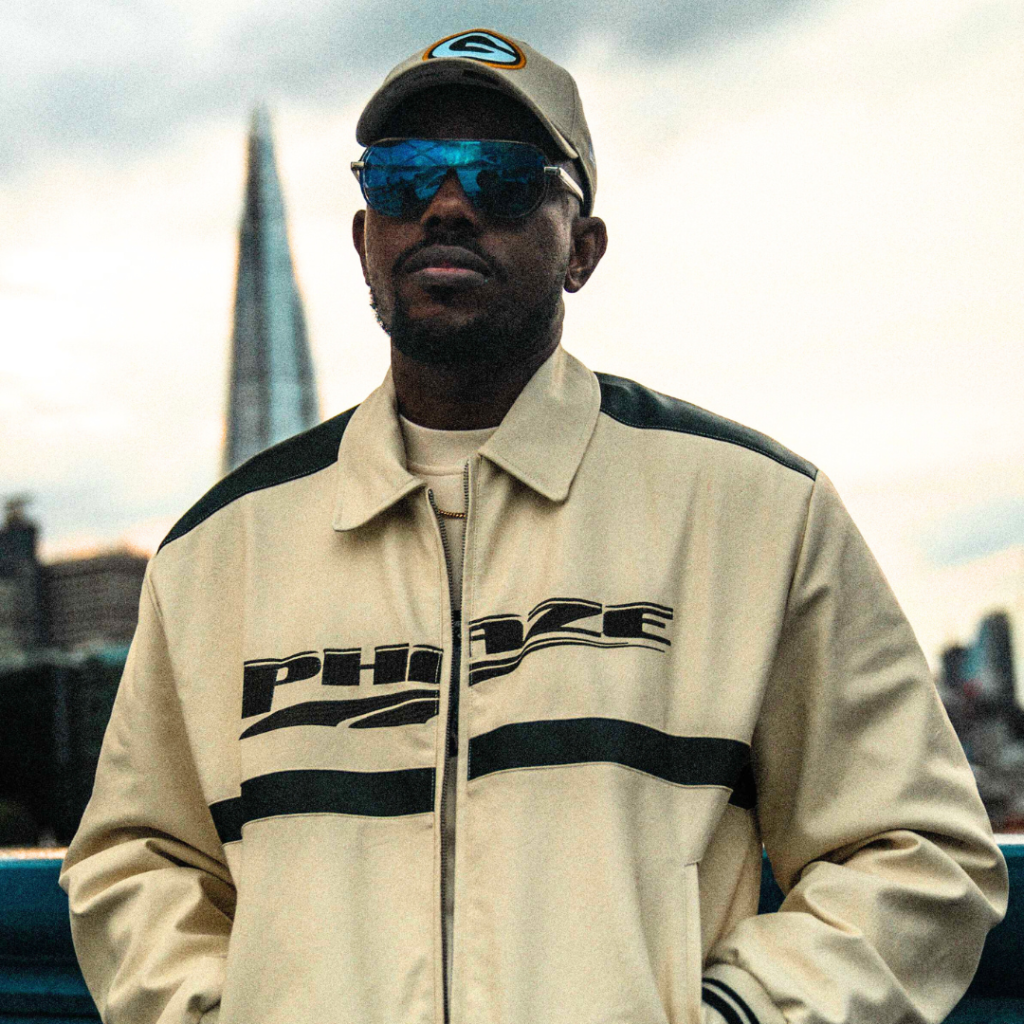
This is Greo’s story as told to Marv.
I’m the youngest of thirteen children. My father passed away this year at the age of 90, and growing up in his polygamous household meant I was a student of human nature long before I was an artist.
In that environment, one recognises favouritism early. You see that some people have privileges others do not. One side of the family had a colour television, while the other had a black-and-white one. There were moments when I’d go to the main house and be asked why I was even there, even though it was my father’s house. I felt like I was constantly fighting to be relevant, something I now consider unnecessary.
I describe myself as very open-minded, treating people on a “last-encounter” basis. I don’t carry grudges. And when I feel disrespected, I simply disconnect and walk away. This character was formed early. Growing up as the youngest of three women’s children — my own mother having three, with me as the only boy — meant I was always around adults. I wasn’t a “problem child.” My mother said I never scattered things; I could just be on my own. I spent my time observing the mistakes of those ahead of me, paying attention to how people behaved.
With twelve people before me, I had more reference points and more information than anyone else. I felt wiser because I had so many examples of what to do and what to avoid.
Subscribe to Zikoko Pop newsletter, The Feed, for the most important pop culture news
That upbringing taught me how to navigate life and politics as well as how to anticipate reactions. I learned that I had no excuse; I had to make it in life. People respect you more when you succeed without handouts, which is why I rarely seek help. I don’t beg because I know how people, family or outsiders can use that against you.
One incident from my childhood has stayed with me: my mother sent me to the main house, and my half-brother asked me what I wanted to do. I couldn’t even answer. I went back to my mother, and she had to bring me in herself. That moment taught me one truth: you have to keep knocking until they let you in.
Most of the things I witnessed and learned contributed to my interest in storytelling, which I mostly love to explore in my music. Additionally, I aspire to be a historian of Edo and Benin culture and tradition, and doing so through music always feels the most comfortable for me. Luckily, my mom’s uncle was Jacob Egharevba, one of the most celebrated and controversial Benin historians, because he was one of the first to start documenting Benin history. Growing up, my dad also dumped history books on me. Political associates and friends gave him books, which were then given to me to read. As a result, I often find myself in spaces where knowledge about the past is discussed, and my opinions are respected. Even before my dad passed, he’d often ask for my thoughts on things and what the way forward was. The seed was planted there.
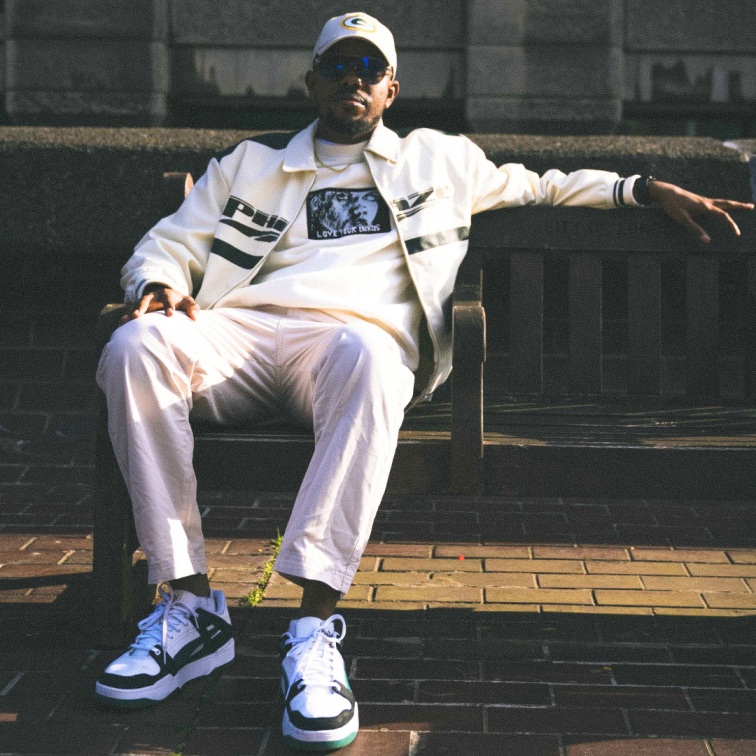
In fact, it’s my love for storytelling that informed my stage name: Greo. I picked the name as a stylised version of “Griot”, to make pronunciation easier for people. A griot is a storyteller and a carrier of history. I felt that way about my persona. At the time, I felt the Nigerian rap scene lacked storytellers; it focused on punchlines and random bars rather than concepts or subject matter. I wanted to fill that void, tell relatable stories, and talk about what I had heard.
But beyond telling stories, I have found a greater purpose in my art. It’s legacy. I want to be great, impactful and live forever, even after I join my ancestors. After some incidents in my life, this became my primary mission.
On January 5th, 2022, I survived a ghastly motor accident in Nigeria. The car flipped four times, but I emerged unscathed. It happened a few months before I relocated to the U.K. to study for my Master’s and fully begin my career as a data scientist. That experience made me feel untouchable, as if God had a purpose for me. Many people would not have survived that accident. The car was completely wrecked. Witnesses were surprised that I walked away uninjured. I wrote about the experience in a song, rapping: “I am who I think I am, no words of Elohim, / But I am him for I was made in the image of Him.”
Surviving that accident reinforced my belief that I have a purpose I have not fulfilled. That’s why I have become more intentional in documenting my life, so there’ll be something to remember me by. Legacy matters. Around this time, my relationship with my father had gotten stronger as my older siblings moved out.
READ NEXT: My Ex Dumped Me for My Commitment Issues
Being the last child meant I was his caregiver in his old age. I drove him around, knew his medications inside out, and followed him to functions. He trusted me. Even when I moved abroad for my master’s degree, my dad at 88 years old, two years before his demise, called me frequently to monitor my progress. My successes were driven by the desire to make him proud. I owed him that satisfaction and that important job of ensuring that I build and maintain my legacy. His legacy too.
On a track titled “Fade” on my latest EP, Benin 2 London, I included my late father’s voice note, praying for me. He prayed that I would never fade and that I would always be remembered with his name. To me, that is the most cherished inheritance I could receive. It makes me emotional because I wanted to immortalise him.
“Fade” by Greo.
When it came to handling conflicts between siblings, especially step-siblings, my father did not navigate it well. I do not recall any decisive intervention. That may be why the family is fractured. My father often pacified the less problematic person and let things slide. That taught me that the world is imperfect. People are biased. I do not expect perfection from anyone. I accept that my father did the best he could with the life he had. Parenting, I say, is learning on the job. Failure is part of it. My father had shortcomings, and so do I.
I also know the sacrifices my mother and sisters made for me, especially the one in London, who helped me move. I feel indebted to them. Whatever they want to do, I support. I factor them into my plans.
I don’t speak or twist the truth to favour anyone, family or not. My upbringing provided me with subject matters and the family dynamics I now utilise to build alliances in the workplace and in my music. I tell my own story of never fading away, while my father’s voice echoes alongside me, ensuring our legacy stays alive.
Being a data scientist now also makes me understand why I always want to tell my stories. The human brain mirrors a neural network; we’re trained to generalise based on reference data. What I am today is the result of the environmental data I collected while watching those family politics. Polygamy activates a specific kind of competitiveness and constant comparison. Some respond destructively, but I found a different path. That invisibility of being the lastborn gave me the room to be creative, and I have my family to thank for it.