If you’ve been on X (FKA Twitter) long enough, then you’ve probably witnessed or been a victim of cyberbullying, aka being dragged or ‘called out’. Some of you reading this might be on the extreme end of this and are probably perpetrators. If you are, then you probably need to stick around for this more than you think.
Last week, we resumed our HER conversations on X spaces with a discussion on Free Speech and Cyberbullying. The session was moderated by Elohozino Okpowo, a content creator with Zikoko magazine. This conversation included insights from a legal perspective through Beverly Agbakoba-Onyejianya, a specialised intellectual property lawyer. Funmto Ogunbanwo, therapist and founder of Ibi Ayo Wellness.
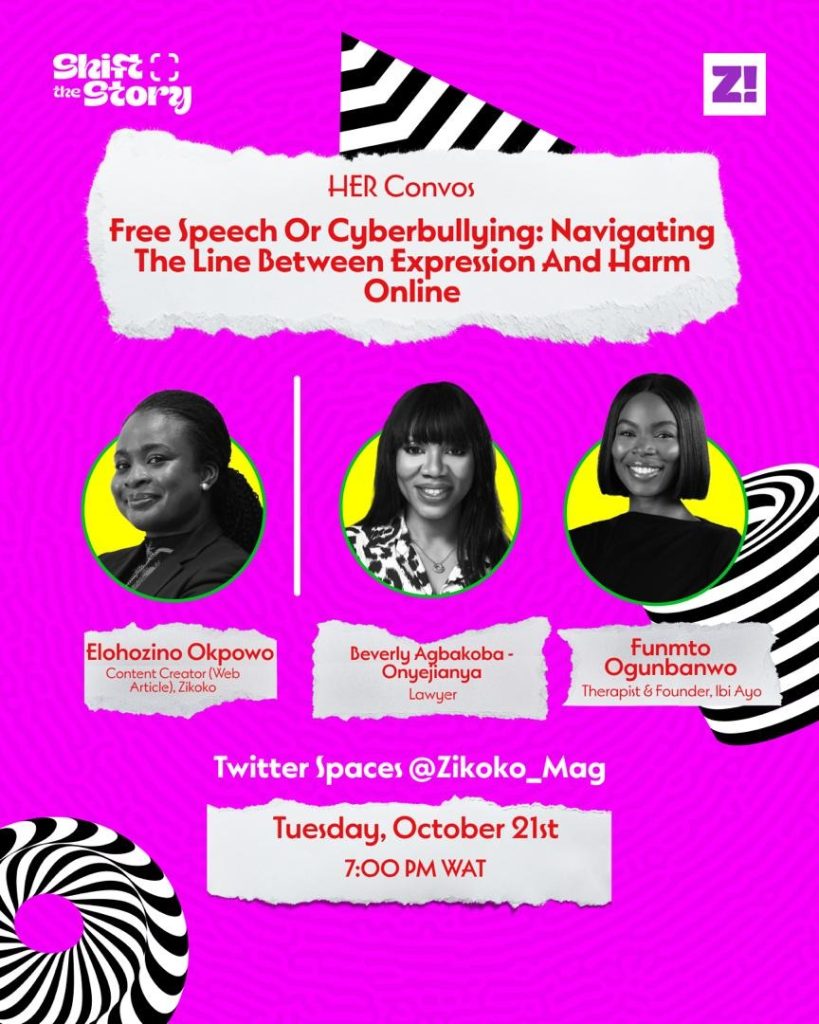
Here are our key takeaways from the conversation.
1. People Are Behind Keyboards And Screens
Before deciding to be judge and jury over someone’s tweet or media post, it’s important to remember that your comments are targeted at a human being. Beverly emphasises that we all have the right to express ourselves. At the same time, we also have the right not to be trolled and abused. Even though we might not have the intention to hurt the recipient, it’s important for us to understand that our words have an impact. On and off screens.
It’s easy to believe that there are no consequences for our actions online. Especially because it might be difficult to track people down. Also, the process of ensuring legal accountability for cyberbullying and promoting misinformation might seem cumbersome. But it is achievable. Who knows, you might be one tweet or comment away from being sued or putting yourself at the risk of paying damages. Before indulging in unruly behaviour online, remember that there are enforceable laws that protect people.
2. Know The Difference Between Calling Out Or Criticism And Humiliation
Being users of social media, we have all subjected ourselves to public scrutiny. More so, celebrities and public figures whose lives some of us feel entitled to. Because of this, criticism is nearly inevitable and is sometimes welcome. It would be unreasonable and unrealistic to have people keep their opinions to themselves. Especially when platforms are being developed every day for our consumption. It’s important to remember our humanity when delivering criticism. Again, there are human beings behind screens. We’re not always engaging with bots or ChatGPT.
If you’re not sure about when you’re crossing the line, vet your responses and try to identify whether you’ve taken a step further from correction. When we move too far, we’re usually moving towards humiliating the recipient, which then turns into cyberbullying. Funmto advises identifying your aim and seeing how best to achieve it.
Read Next: I Built a Reputation Trolling People on Twitter. Now, I Can’t Get a Job
3. It’s Better to Report Than to Amplify
This lesson is layered. The first being that while you might want to be the first person informing your friends and mutuals on gist, ensuring the accuracy of your information should trump virality. It’s great to be the one leading the discourse on an important subject matter or public figure. But before you think of becoming a banger boy or girl, think of the consequences of promoting false information.. Defamation and libel are real crimes punishable by law.
The second layer to this is in carrying out our social roles as internet users. There’s no need for us to join the bandwagon in quoting and retweeting news that appears to be false or harmful. Life isn’t hard. When you see someone being the subject of ridicule or humiliation, report the tweet. If false information is being spread, and the account promoting it is notorious for doing that, report the account.
4. Use The Block Button Often
Some of us are more educated than others, while some of us have more social capital than others. Whatever your position of privilege is, use it for good and not for evil. We’ve already acknowledged that certain accounts are notorious for bullying and spreading misinformation. Our advice is to minimise engagement and interaction with these accounts by blocking them ahead of time. We don’t have to be victims of a thing before restricting or acting against it.
If necessary, make it your social responsibility to help your friends and family block the viral bullies and banger boys. People need protection from the ills of the internet. Children, especially, should be our top priority for this. It’s easy for them to see these things and engage without understanding how it can impact a person’s life or what the consequences might be for them.
We’re all learning to be better to each other, in person and online.
Just so you’re not found wanting, click here to hear directly from our speakers and stay informed. It’s important to us that you’re part of the few people keeping the internet safe and friendly!
Read Next: Leah Katung-Babatunde Is Redefining What It Means to Be a Woman in Media