The Headies made a grand return to Nigeria last night, hosting its 17th edition at the Landmark Event Centre after a two-year stint in the U.S. Back on home soil, the awards continued their nearly two-decade tradition of celebrating the best in Nigerian music, handing out the golden-headed plaques to artists and other entertainers who have shaped the industry.
Whether the event felt like a triumphant homecoming or an underwhelming comeback depends on who you ask — but one thing is clear: glowing reviews from last night’s ceremony are hard to find.
However, I was present at the hall watching the event live. Here’s what I thought.
The Major Highlights
A gathering of industry veterans: In many ways, the night felt more like a reunion of industry veterans than a high-stakes awards show. Gathering music and media legends clearly wasn’t a challenge — from Zaaki Azzay and Faze to Waje and M.I Abaga, the OGs came out in full force, smiling brightly under the flash of cameras and basking in the red carpet glitz. Watching the icons we grew up with move through the evening with such energy and charisma was a thrill. It’s always a joy to see the OGs thriving.
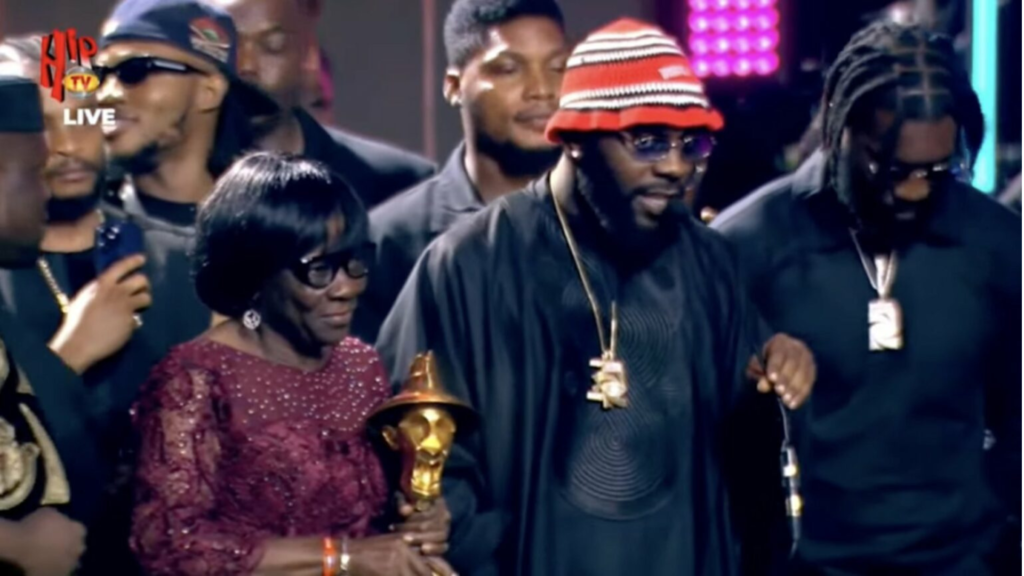
Tems’ mother collecting her award: One of the warmest moments of the night was seeing Seyi Sodimu gently holding Tems’ mother’s hand as they walked up to announce the winner of the ‘Best Recording of the Year’ category. Music hasn’t just built careers for artists like Tems and Ayra Starr — it’s brought pride and recognition to their families, turning their mothers into proud advocates of their children’s work.
OdumoduBlvck’s ‘Next Rated’ award speech: Another standout moment came when OdumoduBlvck paid tribute to his own mother, handing her his Next Rated award after receiving it from Davido — who, fittingly, won the same award twelve years ago.
Truthfully, you could count all the night’s memorable highlights on one hand. And while they were meaningful, they also felt few and far between — a reminder that The Headies may need to rethink how it delivers truly unforgettable moments.
The Letdowns
Bad time management: The red carpet was originally scheduled to open at 6 p.m., but just as the venue was filling up, word came that it had been pushed to 8 p.m., with the main event now postponed to 10 p.m. It’s one thing to joke about “Nigerian time,” but it was inconsiderate for The Headies to announce major time changes on the day of the event, leaving guests to wait for hours.
Also, can someone explain why press access was restricted to just the red carpet? The Headies rolled out the glamour for the cameras but kept the media at arm’s length from the actual event — perhaps to shield them from the chaos behind the scenes. Instead, journalists were left milling around, waiting for scoops, gossip, and a few more celebrity sightings.
Kunle Afolayan had to scold The Headies at The Headies: Before presenting the ‘Best Music Video’ award to Director Pink for Chike’s “Egwu,” filmmaker Kunle Afolayan, who served as a guest presenter, remarked in Nigerian Pidgin: “Pikin good, pikin no good, na still pesin pikin.”
It was a subtle shade to The Headies’ long-standing inconsistencies, especially last night when the event went on well into Monday morning. He appealed to loyalty, suggesting that flaws aside, the awards still belong to us. But sincerity can only go so far. By ignoring core issues, The Headies risks what happens to every art form before its downfall: the slow erosion of its audience’s trust.
Some winners didn’t receive their plaques: How are artists supposed to feel seen and respected when they’re called up for awards, but there’s nothing to hand them? It was distasteful hearing a voice from backstage casually announce that “the plaques are still on the way.” Winners had to give acceptance speeches with nothing to hold or show for it. Shallipopi, for example, won ‘Best Rap Song’ but left the stage empty-handed. Even major categories like ‘Lyricist on the Roll’ and ‘Best R&B Single’ weren’t announced at all. How is that a proper reward for the work you claim to recognise and celebrate?
Visible disdain from musicians: Some of the artists who showed up couldn’t hide their ridicule toward The Headies, just as much as the event dished it out to them. Some nominees didn’t even bother to attend, choosing instead to spend “quality time” engaging fans elsewhere. Others were present but let friends — or more accurately, their hype men — collect awards on their behalf. Several artists felt disrespected by the constant name mispronunciations, and some responded by throwing jabs and insults at the event. It’s a messy musical game of “give me shit, I give you shit.”
A way forward
Indeed, it’s Afrobeats to the world — a fulfilment of Ayo Animashaun’s early vision for HipHopWorld Magazine and Awards. But it’s also time to rethink the scope of The Headies. If it’s truly the biggest music event in Nigeria, it should reflect the country’s full musical diversity. Genres like Highlife, Juju, and Fuji, which are experiencing a resurgence, deserve inclusion. Afrobeats should be a part of the celebration, not the whole story.
One common defence for the event’s flaws has been, “Don’t criticise what you can’t create.” But what happened to honest feedback?
For an event of this stature, it’s troubling that it’s still led by people resistant to new methods and unwilling to accept criticism. Whether The Headies has been incredible or disappointing, whether it’s fueled music growth or served as a stepping stone for others, its shortcomings have become too glaring to ignore. Its once-flying colours are fading into relics of the past. We’re not asking for nostalgia — we’re asking for evolution.
Maybe people should have just stayed home, glued to their TVs or refreshing updates online. But that’s almost laughable when you realise that, despite everything, being there in person made you see the problems glaringly than watching it virtually. That said, the pacing and overall organisation of the event were painfully sluggish.
History is a mirror with long memories.