Many Nigerians remember where they were on October 5, 2012, when they first saw the video of a mob lynching four young men in Aluu, a village in Rivers, in southern Nigeria, that has become a metonym for senseless violence. I was in my aunt-in-law’s shop in a shopping complex in Lagos, surrounded by wigs and Darling Yaki hair attachments.
When someone brought news of the lynching, everyone in the shop—there must have been about ten of us—gathered to watch it on a woman’s Blackberry. The images that emerged were like nothing any of us had ever seen.
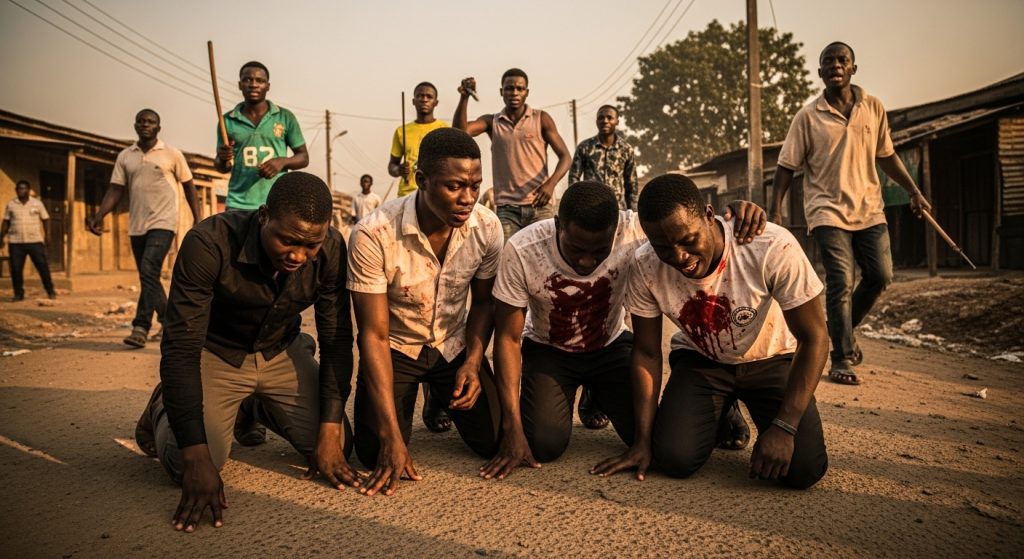
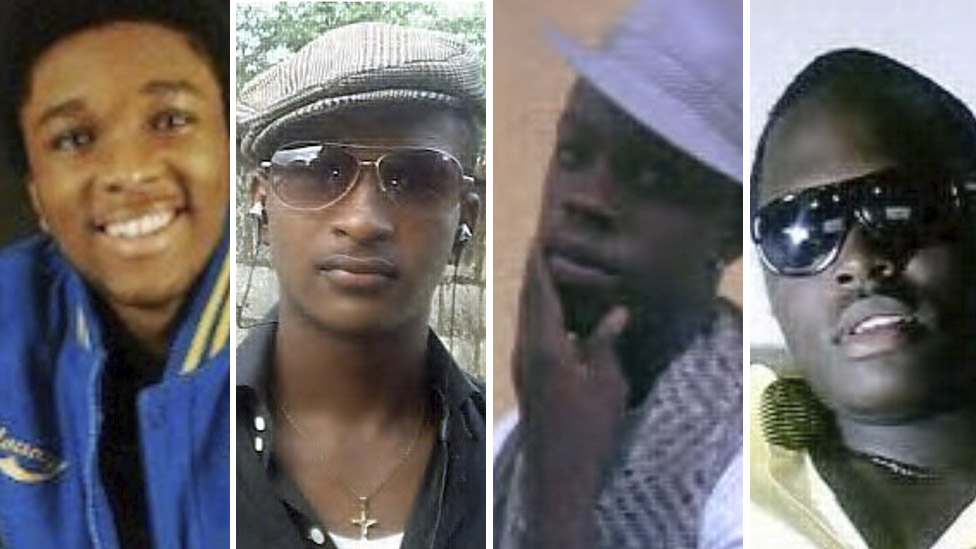
Four men — Chiadika Biringa, Ugonna Obuzor, Lloyd Toku and Tekena Elkanah — stripped naked, with blood-spattered bodies, pleaded for mercy as they were beaten by a group of people. Eventually, they were set ablaze.
Earlier that day, they had gone to collect a debt from a man named Coxson Lucky, seizing some of his belongings while at it. After Lucky raised an alarm, a crowd gathered, and all four men soon found themselves accused of theft. They were all students of the University of Port Harcourt. None of them was older than twenty.
“The boys were so handsome,” someone said as we watched in the shop.
There were variations of that remark online, suggesting what some people found painful about the killings was the destruction of beauty happening alongside it, the bright faces and delicate skin burnt to a crisp.
The Aluu 4 lynching drew outrage across the country, expressed largely on social media. The outcry seemingly would cause the then-inspector general of police, Mohammed Abubakar, to vow to bring the culprits to book.
It was striking that the lynching got as much attention as it did. Nigerians, after all, were no strangers to such extreme acts of violence: lynchings were commonplace and had been so since the 1980s; reports of armed robbery and kidnapping were rampant; and news of the mounting death toll from Boko Haram attacks were plastered daily on newspaper pages.
But this was 2012, and the nascent social media boom meant the Aluu 4 case was one of the first times that many Nigerians would experience, even if vicariously, a particular form of violence which typically exists on the margins of Nigerian society.
Subscribe to Zikoko Pop newsletter, The Feed, for the most important pop culture news
ALSO READ: He Told Me Not to Become an Actress. After I Won an AMVCA, He Apologised
In his essay “Perplexed… Perplexed,” Teju Cole explains why Aluu 4 became a canonical event in the Nigerian collective experience. According to the writer, the widespread response to the video largely arose out of class solidarity. The victims were similar—in ways victims of Boko Haram terrorism were not—to the Nigerians who both mourned them and called for justice on social media. “They were in the same class as many of the young Nigerian people on Twitter, somewhere along the imprecise continuum that constitutes the Nigerian middle class,” Cole writes.
What in the thirteen years since Aluu 4 has changed? Has the country seen fewer lynchings? Has the Nigerian justice system gained more trust of Nigerians? Have we gotten better at punishing culprits?
Going by a report published last year by Amnesty International, not much has changed. The report reveals that, between January 2012 and August 2023, at least 555 people were victims of mob violence in Nigeria. In southern Nigeria, victims are usually accused of theft or kidnapping or one form of supernatural malevolence or the other, such as ritual killing or penis theft. And in the predominantly Muslim north, where sharia law is practised, mob violence is mostly targeted at people accused of blasphemy against Islam.
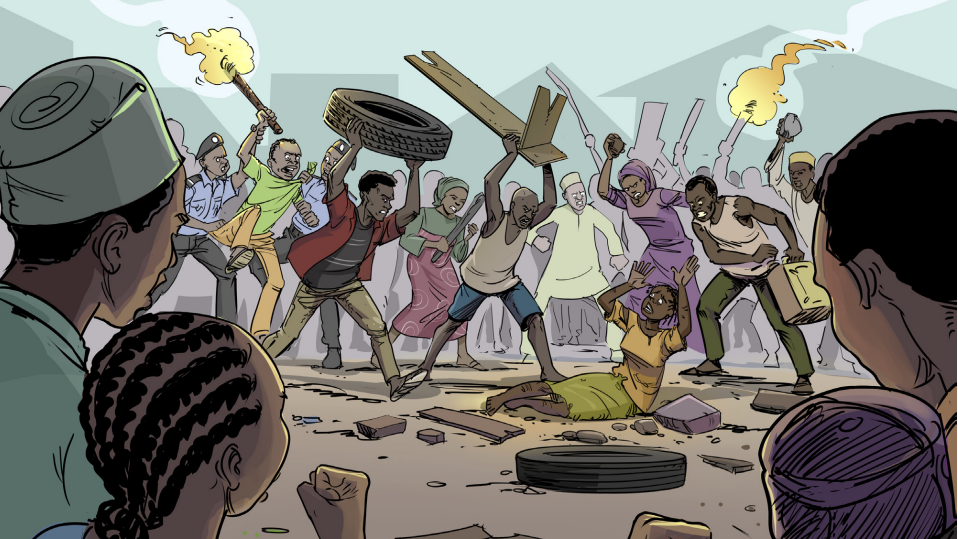
Among the 555 victims was a young woman named Deborah Samuel Yakubu, whose murder on May 12, 2022, provoked perhaps as much outrage as the Aluu 4 killings. Yakubu was fished out of Shehu Shagari College of Education, Sokoto, where she was a sophomore student. Like the Aluu 4, she was beaten and set ablaze. Her crime, according to the mob, was that she blasphemed against Prophet Muhammad in her class’s WhatsApp group.
Unlike the Aluu 4 incident, Yakubu’s murder was not uniformly condemned, perhaps because of its religious dimension. For instance, a former vice-president of Nigeria and a presidential hopeful in the 2023 elections, Atiku Abubakar, would delete a tweet where he condemned the crime after receiving a wave of negative reactions.
It is impossible to separate lynchings from the spate of violence and insecurity plaguing the country. The National Bureau of Statistics estimate there were 2,235,954 kidnapping cases last year alone, with about 2.4 trillion naira paid in ransom fees. The Bureau likewise said there were about 2.8 million cases of armed robbery in the same year.
Many Nigerians in northern states continue to be killed and displaced by Islamist terrorists; just last month, about 55 residents of Darul Jama in Borno were killed by men believed to be Boko Haram members. And since Aluu 4, there has also been a high occurrence of state-backed violence and extrajudicial killings, most notably by the police, an abuse of power leading to the End SARS protests in October 2020, which were suppressed violently. One of the participants of the Aluu 4 killings, in fact, was a police sergeant.
A defining quality of a mob is its swiftness. It beats a person to a pulp and asks questions later. This urgency is a part of its appeal; it gives participants the impression that justice is being served without any delay. The mob finds it a welcome contrast to the slow grind of the wheels of justice. In the case of Aluu 4, the wheels turned for five years before some perpetrators received punishment: it was not until 2017 that a high court in Rivers sentenced three men to death, including the errant sergeant, for the Aluu killings.
Elias Canetti’s Crowds and Power argues that mobs provide an opportunity for people to experience a shared feeling of equality, a chance for a crowd to “get rid of their differences.” It is easy to see how this feeling of oneness can lead to a diffusion of personal responsibility. One gets the impression that participants of mob violence will likely not torture or murder people in their respective individual lives. But as a part of a group, where they can enjoy some level of anonymity, their worst impulses are given free rein.
Mob violence is by no means a uniquely Nigerian malady. Other countries have experienced their own share of it, and in some places, usually countries with weak institutions, it continues to occur. From the post-Reconstruction era to the 1960s, lynchings were commonly used as a tool of racial terror in the American South. The Emmett Till Antilynching Act, named after a 14-year-old black American boy who, in 1955, was savagely lynched for supposedly whistling at a white woman, would only be passed in 2022. In places like India, Uganda, Kenya, Haiti and South Africa, mob justice occurs with varying degrees of frequency.
There are many reasons for the high rate of lynchings in Nigeria, as well as the other forms of violence and insecurity afflicting the country. They range from worsening economic hardship to a general distrust of the justice system (a common rationale cited for mob justice is that suspected criminals, if handed over to the police, tend to pay their way out and resume their reign of terror).
But the high rate of insecurity is primarily due to the government’s inefficient response to it. The Nigerian government has not done enough to protect the lives of ordinary Nigerians, nor has it shown a commitment to punishing perpetrators of violence.
It is instructive to note that though some suspected killers of Deborah Yakubu were arrested days after the murder, they were only charged with criminal conspiracy and public disturbance, bailable offences carrying only a two-year maximum prison sentence.
Eventually, the suspects were acquitted because the prosecution team allegedly failed to show up in court. To date, even though the faces of some of Yakubu’s murderers are visible on several video clips, not a single person has been punished.
It is terrifying that an atrocity like the Aluu 4 killings can happen at all. What is worse is that such orgies of violence continue to happen. Adding the fact that culprits continue to escape justice, the situation leaves one perplexed… perplexed.
Michael Aromolaran is a writer and journalist writing about religion and health. He works for the Ethics and Journalism Initiative at New York University. A former sub-editor at The Culture Custodian, his works are in the National Catholic Reporter, OkayAfrica, and OpenCountry Mag.