Every week, Zikoko seeks to understand how people move the Naira in and out of their lives. Some stories will be struggle-ish, others will be bougie. All the time, it’ll be revealing.
What’s your earliest memory of money?
At the end of my second term in JSS 1, every other student received their report card except me. I didn’t get it because I hadn’t completed my school fees payment. That was the first time I experienced that, and it made me realise the importance of money.
Do you know what led to the school fees delay?
My dad used to supervise construction sites, but the client jobs suddenly stopped coming in. So, my parents started relying heavily on the income from my mum’s sewing business. My dad began helping out in her shop, but customers often owed money, so we struggled.
Half-payment of school fees became a regular thing. I often couldn’t collect my report card or participate in prize-giving days because we always owed something.
How did the financial situation impact your daily life at home?
Before things got bad, my siblings and I usually had snacks at home to eat between meals, but that gradually stopped. My parents started buying provisions in bits and pieces, instead of in bulk. We couldn’t go on school excursions because there was no extra money.
We still had food and necessities, but those little extra things had to stop. The saving grace was rent. We lived in my aunt’s house, so we didn’t pay rent, and my mum didn’t pay rent on her shop either. But the fees just kept piling up. Even after I graduated secondary school, my dad was still paying off school fees debt.
When was the first time you did something to earn money?
That was in primary school. We were given a practical project to make shoes using cartons. I made mine really well, so two or three classmates asked me to make theirs too. They paid me ₦50 each. It was tiny money, but it felt huge back then.
Later, in JSS 3, my dad used to give us small pocket money; sometimes ₦20 or ₦100. A few classmates and I started pooling our money together to save. If you didn’t withdraw early, you’d get a little extra change at the end of the term. I also started helping classmates buy textbooks from a bookshop in my neighbourhood, charging ₦200 or ₦300 as bike fare. I mostly spent the money on snacks.
In SS 1 and SS 2, I read and summarised literature books for classmates who didn’t want to do it themselves. They’d pay ₦200 or ₦500 per book. It wasn’t regular income, just free money once in a while.
What happened after secondary school?
I graduated in 2017 and was admitted to the university in 2018 to study Microbiology.
I couldn’t really make money at uni because my parents wanted me to focus on my studies. I tried ushering at some point, but my parents found out and stopped me. Besides, I couldn’t really do side gigs because I stayed in the hostel from Monday to Friday, and was mandated to come home every weekend.
I was getting pocket money, though, about ₦5,000 per month throughout my entire four years in school.
Was ₦5k enough to survive on?
In the 100 and 200 levels, it was manageable. I’d pack foodstuffs and soup from home to school. The only things I paid for in school were pure water and transportation. My parents paid for handouts and course materials separately.
By the 300 level, ₦5k was no longer working. Bank charges alone would take it down to ₦4k-something, and trying to stretch ₦1,000 a week became impossible. By the time the final year rolled around and I had no money for sign-out clothes, it really hit me that I had wasted time by not finding a way to make extra money in school.
How did you handle the final year expenses then?
When we were doing our final year project, my project group sent me to buy lab materials from a specific market. When I got back, other students wanted the same materials, so they sent me with transport money and extra for my trouble.
I also helped group members type up and print their reports after IT and seminars. Altogether, I made just under ₦20k. It was enough to cover my final-year outfit and shoes.
We surveyed 5,000 workers across Nigeria’s formal and informal sectors to examine what Nigerians earn, where the money goes, and whether hard work actually translates to financial security. This is what we found. Download the Zikoko State of Income Report.
What came next after uni?
I signed out in 2021, but didn’t go for NYSC until early 2023. First, there was an ASUU strike. Then, after the strike, my HOD — who was supposed to approve our results — went abroad on sabbatical. Nothing could be processed until she returned.
That forced break between 2021 and 2023 made me start thinking seriously about how to make money.
Did you find a way?
Yes. A friend from university linked me up with a guy who needed people to upload WAEC and NECO past questions and answers from 2006 to 2021 on a website. My brother and I took up the gig. For major subjects like Maths and English, he paid ₦15,000. Other subjects were ₦5,000 to ₦10,000.
Working together on phones and laptops, my brother and I could finish a major subject in two to three days. Over three to four months, we made over ₦100k from that gig before the project ended.
Where did that money go?
We split the earnings equally after deducting data costs. But I lost a chunk of my share to a scam.
Someone messaged me claiming my final-year results were out and that I had failed two tough courses, demanding ₦15k each to edit them in the system. Panicking about having an extra year, I negotiated down to ₦18k for both and sent the money. The guy immediately blocked me. I cried so much because I was saving up to replace my prescription glasses.
Later, when my HOD returned, I also used about ₦30,000 from the gig earnings to print and bind five copies of my final year project hardcovers.
Around late 2022, tired of waiting at home, I began applying for receptionist jobs. One application landed me in one of those fake network marketing presentations. They kept the other applicants and me there for like four hours. I even lost part of my transport money that day.
I eventually got a job teaching at my former primary school in my neighbourhood. I taught the Primary 4 class on every single subject. When I asked how much my salary would be, they just told me to hold on. At the end of the month, the headmistress handed me ₦6,500.
For the whole month?
Yes! I was so angry, but because of the familiar relationship with the school owner, I couldn’t confront them. The next month, they paid a bit more. I can’t remember exactly how much, but it wasn’t up to ₦15,000. I quit before the term ended, using my NYSC clearance process as an excuse to escape.
I finally started my service year in February 2023. The school I served at didn’t pay a salary, so I lived on the ₦33,000 federal government allawee and an extra ₦4,800 from the state government.
Thankfully, I served in the North, and life was quite manageable. I rented a single room for ₦25,000 a year, and my PPA was walking distance, so zero transport cost.
Food was cheap, too. I’d buy ₦16,000 worth of food, gas, and provisions that would last the whole month. Out of my ₦37,800 monthly stipend, I saved ₦10,000. By the time service ended in March 2024, I had saved enough to replace my faulty phone.
What was the plan after NYSC?
I returned to my parents’ home. Before leaving the North, I had joined a women-only community on WhatsApp that essentially made me comfortable with the fact that I could dream and want things.
Through the community, I got introduced to another creative writing group. There, someone posted a gig looking for beta readers for an essay competition. I applied and got paid ₦120,000 to review 60 essays. I used part of it to buy a secondhand laptop for ₦100,000 to start writing professionally.
What kind of writing were you doing?
I tried technical writing, but it didn’t stick, so I moved to ghostwriting. I was doing ₦1-per-word jobs, earning between ₦5,000 and ₦50,000 a month, depending on the work. At some point, I raised my rate to ₦2 per word, but the cash flow wasn’t consistent.
In June 2024, my dad sent me a link for a bank’s graduate trainee programme. I initially didn’t apply because I thought, “What’s a microbiology graduate going to do at a bank?” But on the day the application was to close, I decided to apply anyway.
In August, I got the invitation to write the assessments. I wrote and passed all three stages of the assessments, then did the executive interview and medicals. At the end of September, I got an email saying I’d been selected for training school, and in November, we resumed.
What was the pay like?
We were paid ₦100,000 monthly as trainees from November 2024 to March 2025. Making ₦100k felt amazing. It was the most money I had ever earned at the time, but the excitement wore off quickly.
By December, I already felt like I was in the wrong place and in the wrong industry. I was unhappy, but I couldn’t leave because every new trainee was required to spend at least one year in the bank or pay ₦1 million.
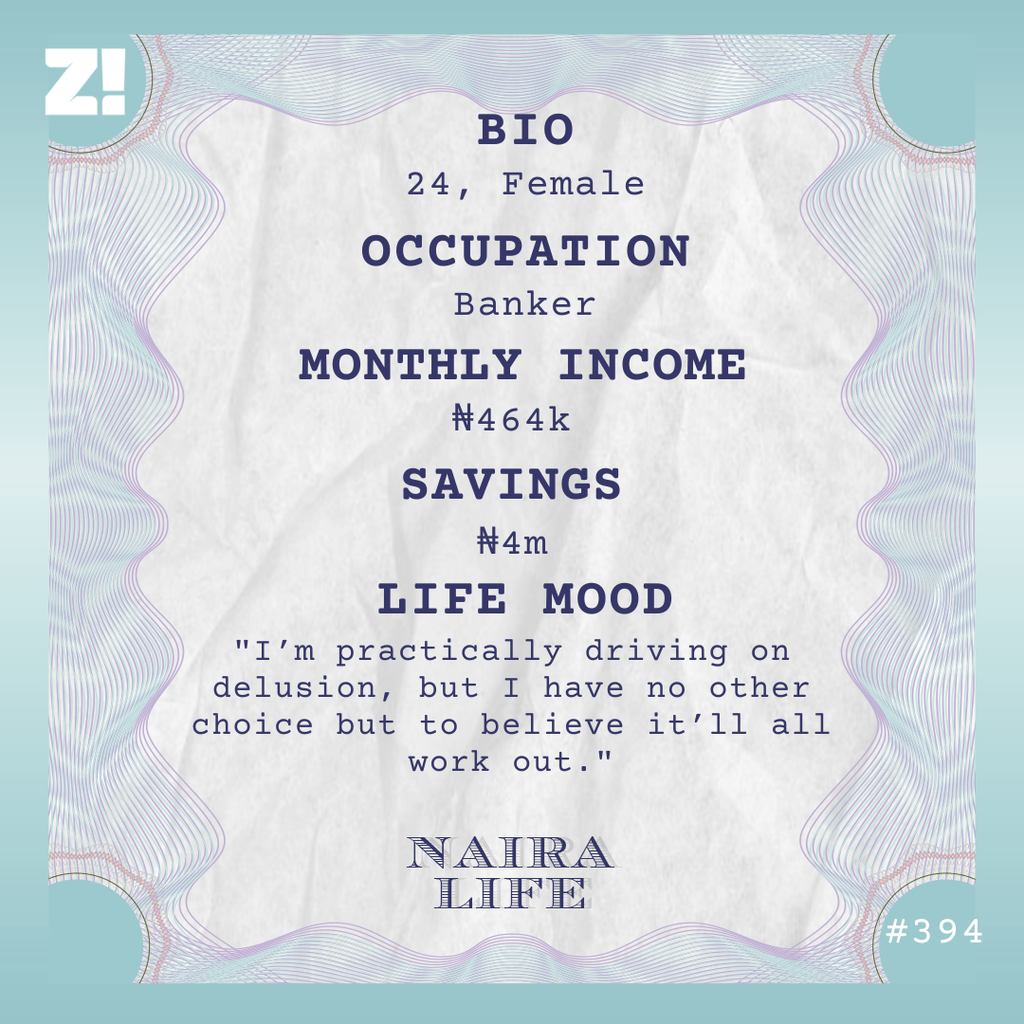
In March 2025, we were fully absorbed as staff, and my salary jumped to ₦464,000 monthly. However, I was assigned to marketing, which is the shortest end of the stick in Nigerian banking.
You don’t get to choose?
Nope. They placed us at random, and because I didn’t have any internal connections, I ended up in branch marketing. Bank marketing means dealing with crazy, impossible targets, from deposit and loan targets to account-opening targets.
For the first few months, I was crying in the office restroom every single day. The pressure is insane, and the goalposts constantly move. It doesn’t help that my manager is always shouting. Last month, they held us by the neck for loans. This month, management gave our branch a target to source ₦19 billion in customer deposits by the end of the year. Like how?
Phew. How have you been coping?
I’m actually planning my escape. Since training school, I knew that banking was not my path. So the moment my salary increased to ₦464,000, I started saving like crazy.
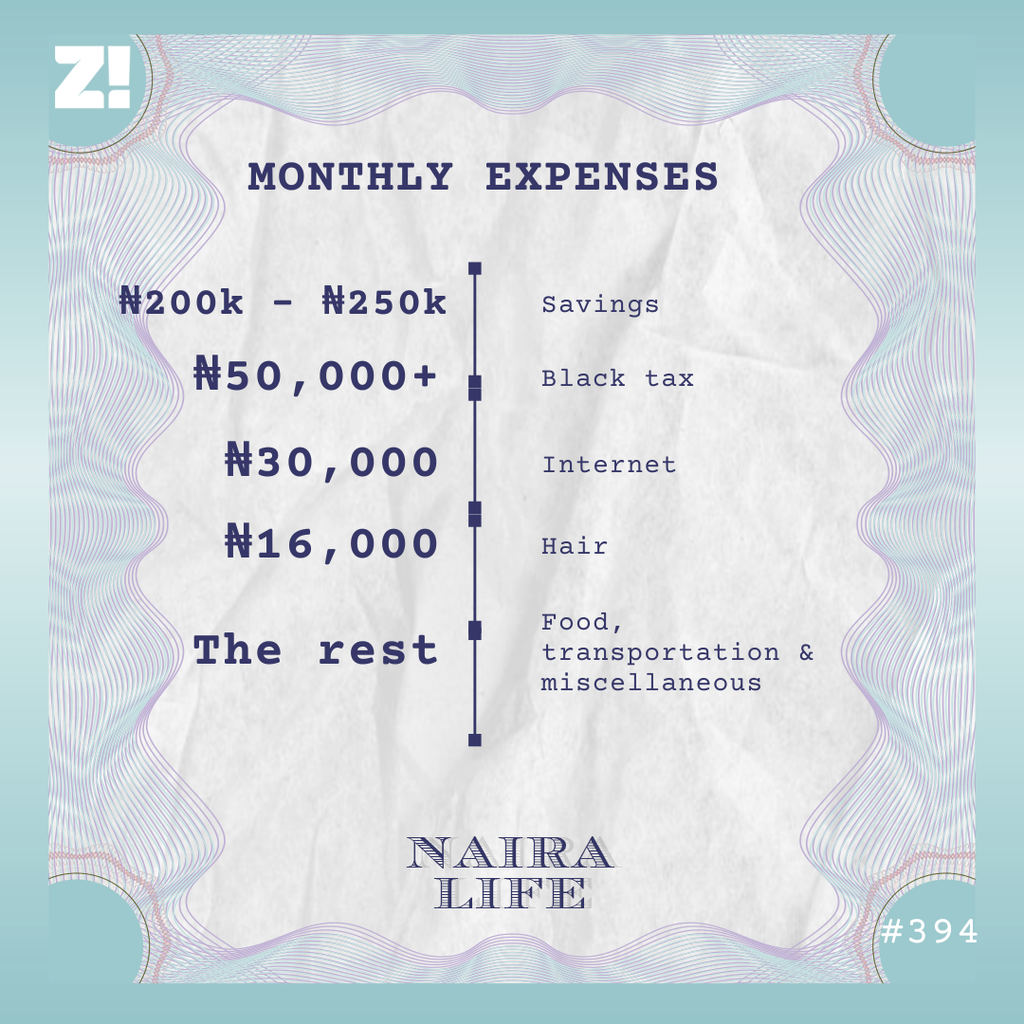
Living with my parents saves me from paying rent, so I consistently save ₦200,000 to ₦250,000 every month. My goal is to build an escape fund so I can resign by, at most, March 2027.
How much do you have so far, and how much are you targeting?
Right now, I have about ₦4 million saved up. Of that amount, I’ve already set aside about ₦400,000 to cover all four semesters of my online Master’s in Public Health. I enrolled in the master’s programme a few months ago, and I’m still in my first semester.
I paid almost ₦200,000 this semester, but the cost will reduce over the remaining semesters as my course load decreases. So, the ₦400,000 fund will sort that. The rest of the money is strictly my escape cushion. My target is to hit ₦5 million by March.
Is the master’s programme pivotal to your plan to leave the bank?
Yes. I want to transition into development and non-profit roles and work with organisations such as the WHO or ECOWAS. All the vacancies I’ve seen require a master’s degree, so that’s why I’m doing this.
You’ll be resigning without another source of income. How long do you think this ₦5 million will last you?
I don’t spend wildly, and I live with my parents, so that ₦5 million should comfortably give me six months to figure things out. But the goal is not to touch that money at all during that time.
I plan to aggressively apply for jobs in development or writing before I resign. I already started job hunting, but I paused when nothing was coming, and focused on my exams. Even if nothing clicks before I resign, I’ll still leave the bank. I don’t have a future here, and I don’t want to waste my time further.
I also still do some freelance writing and pitch to foreign magazines whenever I have the time. Even with my hectic bank schedule, I’ve managed to make $100 from pitches over the last three months. Once I leave the bank, my brain will actually function again, and I’ll have the mental bandwidth to pitch regularly, hunt for technical writing gigs, and set up Upwork properly with a mentor who offered to guide me.
The goal is to keep pitching and find a role in public health, development, or international writing within that six-month window. If nothing clicks after that window, I might then have no choice but to dip into the savings. But something must work out. I’m practically driving on delusion, but I have no other choice but to believe it’ll all work out.
Does your family support your decision to quit?
Yes. My parents never even liked the job in the first place because of the negative stereotypes around female bank marketers supposedly selling their bodies. My siblings agree that my peace of mind matters more. Interestingly, my dad is retiring next year, so I need to find something stable soon.
Have you considered the possibility of not finding another job that pays as much as you earn now?
Oh yes. I know it’s hard to earn this much as an entry-level professional outside the bank. I know colleagues who have switched banks and now earn close to ₦1 million. But at the end of the day, peace of mind is the priority. I can’t deal with the targets. I’ve always had anxiety and can lose my shit if I stay here.
Rooting for you. Let’s break down your typical monthly expenses
How would you describe your relationship with money?
It’s toxic, to be honest. My sister says I save money like something terrible is going to happen tomorrow. I overthink every single purchase and constantly feel the need to justify spending money rather than putting it into my savings.
The only exception now is food. I got severely sick around March/April this year because I wasn’t eating well. After recovering, I stopped playing with my stomach. If I’m at work, I order proper meals without feeling guilty.
Is there anything you want right now that you can’t afford?
A car and a new house for my family. Navigating my city without a car from Monday to Friday is exhausting. But a decent small car costs around ₦10 million now. The bank can only offer me a ₦4 million loan spread over three years, but I refuse to take it. I have a genuine fear of debt. I wouldn’t be able to sleep knowing I owe a bank.
How would you rate your financial happiness on a scale of 1 to 10?
4. On paper, it looks like I’m earning a lot of money, but with inflation, it doesn’t stretch that far. More importantly, the idea that I’m saving heavily just to escape my job gives me a constant headache.
I want to earn ₦500k to ₦600k+ in an industry I actually love, where I can work with peace of mind, comfortably support my family, buy a car, and take a vacation outside Nigeria without anxiety.
If you’re interested in talking about your Naira Life story, this is a good place to start.
Find all the past Naira Life stories here.