How are young Nigerians building wealth, one investment at a time? In this limited series, we follow three Nigerians as they share their investment journeys, from their first moves and costly mistakes to how they built the portfolios they have today.
This episode is brought to you by Hisa.

Hisa lets you buy and sell Nigerian and US stocks straight from your phone, all in one app. And with Hisa’s zero-commission campaign, new users who sign up before the end of 2026 can trade in both markets without paying trading commissions during the promotion. Ready to own a piece of the companies you know?
Download Hisa, create an account and start investing. Terms apply.
This is Tunde’s story, as told to Azara.
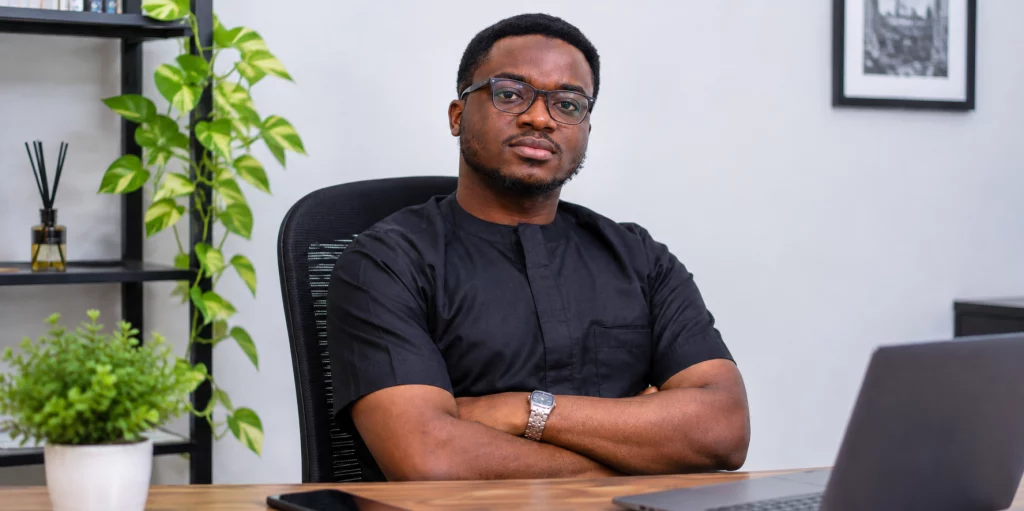
I started investing early because I saw firsthand the consequences of not doing so.
My father was a civil servant, and my mother ran a small trading business. While they were able to care for me, I saw the toll unexpected financial pressures took on them. Once, my father’s car broke down, and my parents panicked so much about how they were going to fix it that I genuinely believed repairing it would make us poor.
It didn’t, but situations like that taught me that I couldn’t simply rely on a salary; I needed multiple sources of income. This need to make money prompted me to study economics at university in 2009. After I graduated, my only goal was to get into banking or a related field. My dream came true in 2014 when I scored my first job as an investment analyst and earned ₦110k/month.
Earning ₦110k in 2014 as a beginner was a big deal, but it wasn’t enough to let me rest. Anything could happen to a salary, I reasoned, and no matter how well-off I was, I still wanted a backup.
Thankfully, I had positioned myself in the perfect place to learn about a backup: investment.
I got to watch people’s investments play out in real time. I learnt about company valuations, financial statements, and which opportunities worked and which tanked. Before I’d stayed one year at my company, I already knew more about investing than I’d learnt during my four years in university.
So, at 22, I decided that I needed to invest as well.
How I Started
Initially, my approach was all-or-nothing.
Having a well-paying job and still living with my parents was a massive help. I was able to save about 35% of my earnings, and rather than leave it in a savings account, I invested it all.
I started with a Money Market Fund (MMF). It was low-risk, and a year in, I’d earned about ₦25k in profit. My savings grew to nearly ₦500k.
Emboldened, I became a little more daring in my approach. I began investing in corporate bonds, meaning I technically loaned businesses my money for a higher payout at a later date. This was risky because my success depended on the businesses’ upward trajectory, but I had seen it work well for several people at my job, and I could tell a good business from a bad one, so I took the risk.
I also started allocating 10% of my investment budget to dollar-denominated funds to avoid naira depreciation.
In 2016, I moved out of my parents’ house and rented a 1-bedroom apartment for ₦120k a year, but my lifestyle didn’t change beyond that. My company offered regular salary increases, and each time they did, I simply increased my investments and saved a little for my rent.
I eventually diversified into equities, government bonds and sometimes saved in Certificates of Deposit accounts, taking the money out the moment I could. Most of my profits were driven by my corporate bonds strategy, and I rarely lost money.
By the time I was 27, I’d grown my portfolio to ₦5m. Two years later, using the same strategy, I doubled it to about ₦10m.
There was something about having that kind of money at 29 that shot up my ego. I wasn’t even 30 yet, and somehow I had out-saved most people my age. This, plus the fact that I now earned around ₦260k/month from my job, made me think I’d outrun the thing I feared most: not being able to fund myself through an emergency.
I got proud and, as a result, made one of the worst mistakes of my life.
How I Lost ₦10 Million
At this point, I think I should have slowed down or diversified further.
But with barely any losses, I decided to try my hand at a bigger investment. All-or-nothing, right?
At the time, many people in my circle were getting into agricultural investments, and it made sense; agriculture is a massive industry with steady demand, meaning guaranteed wins. One friend, David*, had made a small investment in a business involved in agricultural commodity aggregation and distribution. They made money by buying food products like maize from farmers and then selling them to food processing companies and distributors.
The business claimed it had a steady deal with its distributors and only needed investors to fund them ahead of the next trade. For this, they were offering a one-time 30% return after six months.
At this point, I’d never earned up to 30% on an investment at once, and the idea excited me. I could make about ₦3m in one go. I should have looked into this scheme more, but it all seemed pretty legitimate on the surface. Additionally, I trusted my friend and was too blinded by all my wins. Without much hesitation, I withdrew funds from the few stocks I’d diversified into and invested most of my empire. It was ₦10m.
The first five months went on without any problems. The business gave us regular updates, and I thought I was about to make ₦3m in profit the following month.
However, when the time came for the payouts, the excuses piled up.
First, the business blamed their buyers, claiming they were making unreasonable demands, but swore to us they’d sort it out. When that was “sorted”, the business claimed there were some logistical issues that they hadn’t accounted for. By this time, I realised I’d made a massive mistake.
David tried to reassure me, promising he had had luck with them before. Still, I had seen this exact scenario play out at the office time and again: either the business would collapse, or it would be discovered that it was operating fraudulently. I prayed for the second option because at least there was a chance we could battle it out in court.
Unfortunately, it was the first, and a month later their business fell apart, taking my ₦10m with them.
To date, that is the worst thing that has ever happened to me. Imagine what it’s like to have your first real loss be as large as that. What’s more, I work in investing, and I take pride in how good I am at my job. Showing my face at my office after that day felt wrong, and I struggled with imposter syndrome at work.
I didn’t struggle financially thanks to my salary, but the loss of my safety net brought up all my childhood paranoia. For about a year, I became extra frugal. There were months when I’d buy a box of noodles and a crate of eggs, eat them all month, and not buy anything else so I wouldn’t have to spend too much on food. I stopped buying new clothes, and even turned down outings with my friends, which were my favourite things to do.
I think I was depressed. I was able to function as if I wasn’t, but my parents noticed a change in my behaviour. Aside from the people who invested in the scheme and lost money like me, no one else knew I had lost that much. My parents noticed my sadness, but they didn’t understand what had happened to me. It broke my heart to see my elderly mother’s calls each morning, simply because she was worried about me.
I think that was what gave me the push to snap out of it. I’d seen very severe losses at work, and I’d also facilitated incredible comebacks. If I could do that for others, why not for myself?
At the time, I had about ₦100k left in my portfolio. It wasn’t much, but it was a start.
How I Made My Comeback
I was 30 when I got back into investing.
The first thing I did was review my previous strategy and understand that, while I maximised for profit, I’d never protected my investments. So, I established an emergency fund that I promised not to invest. It was not an easy decision. I’d taught myself that idle money was wasteful money, but memories of my loss made me stomach my choice.
I used six months to build those savings, allowing the interest on that to be my only form of investing.
Next, I stopped making concentrated investments. For every investment I made, I’d make a similar one in another stock or bond. Particularly, if my investment were risky, I’d make a similar investment in a low-risk opportunity. That way, I wasn’t relying mainly on one investment to hold up my portfolio. It helped me diversify my portfolio more easily, unlike when most of my holdings were in corporate bonds.
Additionally, rather than minimising my lifestyle, I took a consulting job that paid me an extra ₦100k/month, and with that money, I did most of my saving and investing. I still invested 35% of my main income, so I was investing more money than before. I also got into real estate investment trusts, putting 5% of my investment funds in there, and increased my dollar investments to 15%.
I knew it would take time to make my money back, but with my level of dedication, another job, and a newfound understanding, I believed my recovery wouldn’t be as difficult as it might have been for someone else.
Sure enough, by the time I was 32, I’d made back ₦5m, and today, I’ve crossed ₦10m again.
It doesn’t feel as good as it felt the first time. If anything, crossing ₦10m made me realise how foolish I was in the past, but I’ve been determined not to make the same mistake.
My Current Portfolio
Now, at 34, my portfolio has reached about ₦14.3m. Here’s a breakdown of what that money looks like:
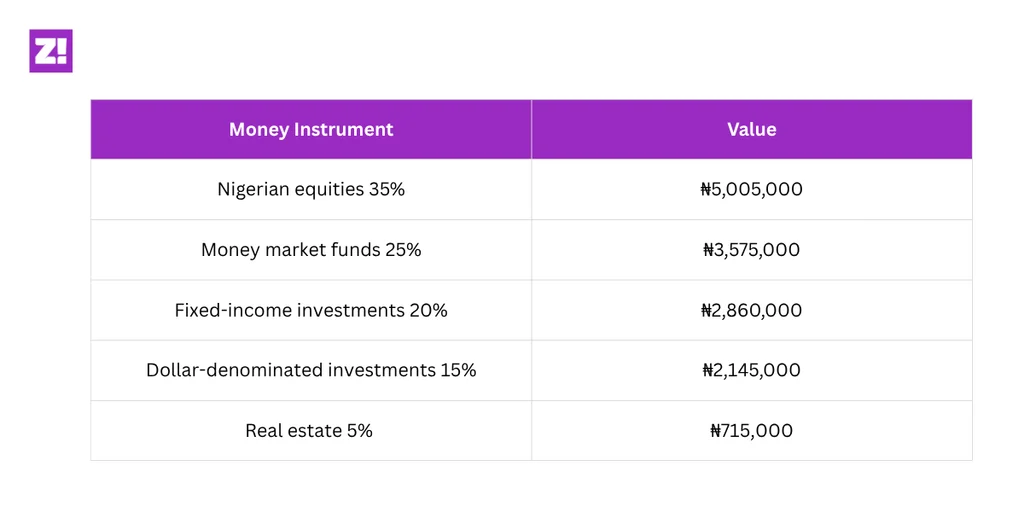
I’ve made about ₦5m in investment returns over the last four years. Oddly enough, I still think I can push myself and achieve more. The loss from my twenties still makes me hesitant to pursue riskier deals, but next year I have my heart set on a few.
To this day, my lifestyle hasn’t changed much. I moved into a slightly better apartment, but as an unmarried man, a one-bedroom still does the job for me. My salary has also increased to ₦900k/month from my day job, making investing much easier. I aim to double my earnings in 2027, or if possible, triple them.
Overall, I’m a little happy I made that mistake. Yes, I think about that money a lot, but I don’t think I’d have become the investor I am today without it.
NEXT READ: 6 Nigerians Share Their Most Expensive Investment Mistakes