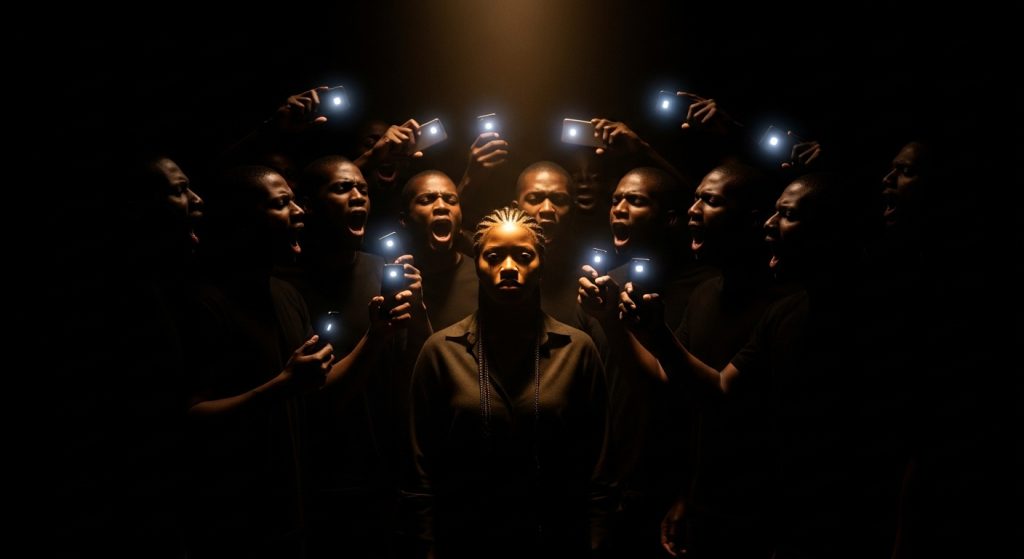
If you’ve spent any time on Nigerian Twitter, you know the men who treat women’s misfortune as entertainment. They don’t organise. They don’t have meetings. They don’t wear matching jerseys. But somehow, they always move like a team. Over the years, people started calling them “banger boys”, not because they’re clever or insightful, but because they’ve realised that tweeting incendiary things about women is the fastest way to go viral. They treat harassment like a hobby, misogyny like a personality trait, and violence like an engagement strategy.
Every few months, like clockwork, a woman’s name trends for the wrong reasons. Trace the threats, the sexualized rumours, the photoshopped screenshots, the dogpiling, and it almost always leads back to the same type of men.
Earlier this month was no different.
When decade-old tweets by Ezra Olubi resurfaced, we saw something predictable happen. The tweets, posted between 2009 and 2013, contained sexually explicit comments about colleagues, references to minors, and other disturbing content. Paystack immediately suspended him, barring an investigation, and this week, fully terminated his contract. The conversation should have been about accountability.
Instead, a familiar group of men immediately shifted their focus to the feminist women around him. Kiki Mordi. Ozzy Etomi. Uloma. Women who didn’t write those tweets. Women who condemned them. Women who, in some cases, had distanced themselves from him years ago. None of that mattered.
All these men needed was an opening, and they rushed in. Suddenly, these women became the villains in a story that wasn’t theirs. Screenshots, real or manufactured, resurfaced. Threads full of half-facts and full confidence circulated.
The goal wasn’t accountability. It was retaliation. A man was accused of harm, and their first instinct was to harm the women standing near him.
If anyone needs convincing that this is a pattern, the receipts are right there:
The Omoloto Harassment
Men fabricated a story about Omoloto being pregnant for a “banger boy,” added lies about abortions, and circulated it until it became “truth.” The goal? Humiliate her into silence. It worked. She disappeared from the timeline for months.
The Asherikine Date Girl Doxxing
A harmless date video went viral. Within hours, these men turned an ordinary interaction into a scandal, dug up the woman’s identity, attacked her body, her family, and her hometown.
The Faree Harassment Campaigns
During a disagreement between two male influencers, they somehow moved the conversation and laser-focused on Faree. Called her slurs. Circulated rumours. Used misogynistic tropes, “industry babe,” “runs girl,” “clout chaser”, until it escalated into doxxing and actual threats.
Ayra Starr’s Harassment
Even women who aren’t in the spotlight for activism or feminism aren’t safe. Take Ayra, for example. Banger boys repeatedly spread rumours about her, telling everyone her breath “stinks,” attacking her appearance, and turning personal traits into public ridicule. This harassment wasn’t random; it was organized, repetitive, and designed to humiliate.
This month, the abuse escalated. Trolls didn’t just insult her body; they digitally stripped it using AI, creating a fake nude image from one of her photos and circulating it widely. The image-based assault sparked another coordinated smear campaign, reviving claims about her “bad breath” and supposed hygiene issues. The account responsible was eventually suspended, but the damage was already done: the smear became content, the fake image travelled faster than any correction, and her dignity was publicly violated. What started as “banter” became a full-fledged digital attack.
Any Woman With a Voice Becomes a Target
The attacks aren’t reserved for card-carrying feminists. They’re for any woman, period, but more specifically for those who dare to be visible, successful, or opinionated. If you’re a woman online, your existence is up for debate, your choices are ammunition, and your achievements are suspicious.
Celebrities making personal choices: When Temi Otedola took her husband’s surname after marrying Mr Eazi in 2025, it should have been unremarkable. Instead, men turned it into a weapon. They didn’t just celebrate her choice; they weaponised it against other women. Suddenly, she became the “good wife” in their manufactured morality play, proof that feminists were “doing it wrong.” These Banger Boys used one woman’s personal decision to shame every woman who chose differently. It was never about Temi. It was about creating a standard they could beat other women with.
Women in entertainment: Female musicians, actresses, Nollywood stars, and content creators, the moment they achieve visibility, the questions start. Who is she dating? How did she afford that? She must have “helped” someone important. Body commentary. Outfit policing. Accusations of “sleeping their way to the top.” The more successful the woman, the more convinced these men are that she couldn’t have earned it.
Professional women: Female tech founders. Women in executive positions. Creative directors. Entrepreneurs. A woman builds something, and instead of acknowledging her work, they start asking questions: Whose idea was it really? Who funded her? Which man is behind her success? What did she really do to get there? They can’t fathom that competence might be the answer, so they invent stories that centre on men and sex.
Women with opinions: You don’t even need to be famous. A woman tweets something that goes viral, maybe it’s funny, insightful, controversial, and the banger boys descend. If they can’t attack the argument, they attack her appearance, her relationship status, her follower count, her past tweets. They’ll find a photo, a screenshot, an old post. They’ll make her regret being smart in public.
Feminist activists: And then there are the women who actually name the problem. The ones who call out misogyny directly, who organise, who refuse to be quiet. They get the full treatment: ashawo, hypocrite, fake activist, bad mother, bitter, “no husband energy,” “you just need good dick.” It’s a script so tired you can predict the insults before they type them. But they never get tired of performing it.
The underlying message: Stay small. Stay quiet. Don’t achieve too much. Don’t have opinions. Don’t make choices they don’t approve of. And definitely don’t call them out. Be a good “traditional” woman.
Even then, you’re not safe. Because the truth is, there’s no “right” way to be a woman online that protects you from their violence. Traditional or modern, married or single, successful or struggling, feminist or apolitical, they will find a reason. The target isn’t feminism. The target is women. Feminism is just the most convenient excuse.
Here’s the thing about the banger boy playbook: It hasn’t changed in a decade.
- Sexualize the woman.
- Question her morality.
- Manufacture evidence if you have to.
- Doxx her.
- Attack her family.
- Call it “bants.”
- Repeat.
Nothing about this moment is new. What is new is the speed and precision with which they rewrite the narrative every time. A woman becomes a trending topic, and within hours, a full ecosystem of men reorganises the internet around her humiliation. They don’t need a reason; they only need an opportunity. Whether it’s a resurfaced scandal, a viral tweet, a celebrity’s wedding, a feminist critique, or a woman simply existing too loudly, they activate the same machinery with the same intention: shut her up.

In Banger Boys’ hands, the internet becomes a weapon, and women become the battleground, our names dragged, bodies dissected, histories distorted, successes questioned, safety compromised. And they do it with the confidence of men who believe there are no consequences, because most times, there aren’t.
What gets framed as “banter” is actually gender-based digital violence. It is coordinated, strategic, and deeply misogynistic. It follows women across platforms, across years, even offline. It ruins reputations, threatens safety, actively harms mental health, and pushes countless women into silence.
The names change. The hashtags rotate. The victims shift. But the cruelty, the entitlement, the misogyny, the weaponisation of visibility stay exactly the same.
The real story is not the trending topic or the latest scandal. It is the ecosystem that allows coordinated harassment to thrive unchecked. Platforms, bystanders, and users cannot stay silent. Women deserve safety online. Misogyny should not be normalised as “banter.” And until those in power enforce consequences, these men will continue to find new victims, while the rest of us watch.
You’ll Also Love: Temi Otedola is Now Temi Ajibade — Why is Everyone Calling it Anti-Feminist?