Co-written by Astor George
The past few weeks have been heavy with stories of sexual assault dominating Nigerian timelines.
On February 15, 2026, TikToker Mirabel posted videos alleging she had been sexually assaulted in her home. Ogun State Police opened an investigation, and she received hospital care. (Channels Television, Vanguard News, Punch).
Then audio surfaced online, reportedly of Mirabel admitting she fabricated the claim during a depressive episode. Ogun Police have announced that they are moving to prosecute her.
In the wake of her claim, as is typical, many had already begun to hurl things at her, calling her and all women who come out with their abuse stories liars. When VDM shared her supposed confession, almost overnight, a referendum on whether women who speak up can be trusted at all flooded our timeline with phrases like, “It’s not all women, but it is always a woman.”

In the middle of this, singer Simi tweeted, “Stop raping women,” a direct call echoed by many. What followed wasn’t a debate on the issue; instead, much of the attention shifted from her statement to fake rape accusers and eventually, a deep dive into her past.
See, when women with platforms speak up about violence, the conversation often shifts from the issue to the speaker. It starts with a search: Who is she? What has she said? What has she done that we can use against her?
The search went back to 2012.
Multiple disturbing tweets from a pre-fame Simi resurfaced, referencing children at the daycare her mother ran (where she says she occasionally helped out).
A 23-year-old tweeting publicly about young boys at a daycare wanting to kiss her and touch her is indefensible from any reasonable standpoint. Most parents reading them would be uncomfortable, and they would have every right to be. Simi’s management deleted them and called them sensitive to her family.
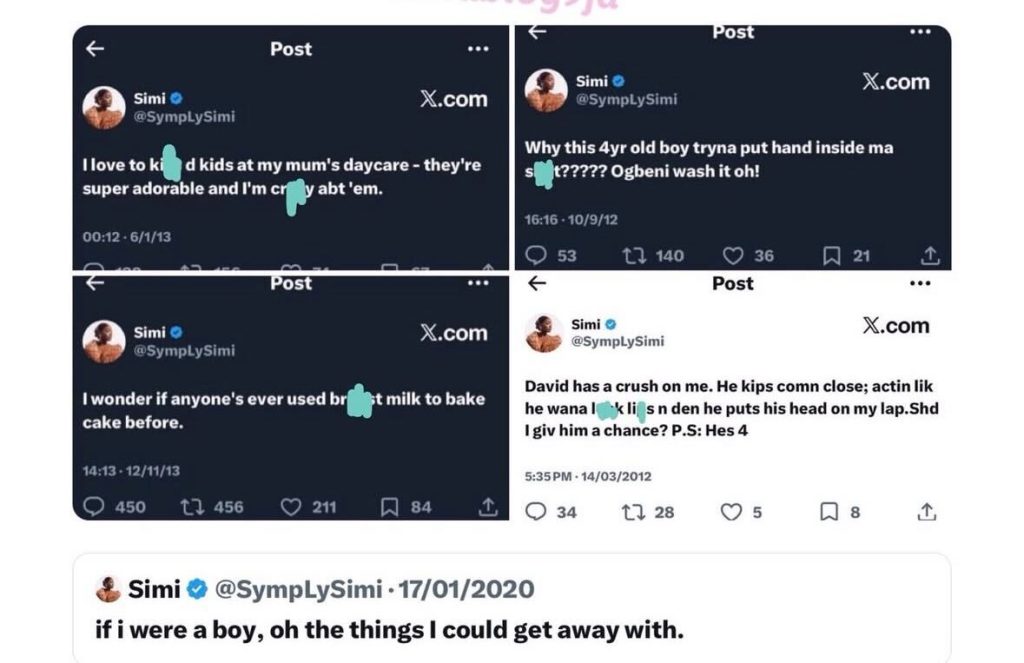
People were upset. And rightfully so.
Those tweets are genuinely troubling and deserve a real conversation. But that wasn’t what this was, not really. By the time the tweets resurfaced, Simi had already been under attack for hours for daring to demand an end to sexual violence.
For a vocal set, the tweets seemed more about gathering ammunition than demanding accountability.
This is a documented pattern
Research on online gender-based violence consistently shows that women who speak publicly, especially on sexual violence, politics, or power, face disproportionate harassment, defamation, and credibility attacks that shift attention away from what they said and onto who they are. UN and Amnesty-backed studies note that digital hostility often escalates when women are visible or outspoken, creating pile-ons, reputational smearing, and silencing attempts rather than genuine debate.
That context matters here. Simi’s old tweets are genuinely concerning and worth examining. But the scale of comparisons to a convicted sex trafficker, the circulation of fabricated screenshots, and the exaggerated framing suggest the discourse moved beyond safeguarding into character demolition.
This is not about denying accountability. It is about recognising a documented pattern of backlash where the woman becomes the subject, so her statement becomes secondary.
Two Things Can Be True
We can and should hold Simi accountable for her old tweets. They were disturbing, and the vague statement she dropped in response isn’t enough.
In the same breath, we can acknowledge that accountability was never really the goal. They used the language of accountability to do the work of silencing.
Simi’s Case isn’t an Isolated Incident
In response to violence against women in September 2024, Ayra Starr said plainly: “Stop killing us. Stop raping us. Women deserve better,” and a large chunk of the internet reacted the same way. They shifted the convo from what she said and went straight to defamation of her character.
This is the pattern. It’s the same MO just with a different target and ammunition. As a result of this, women are questioning whether speaking up about violence they’ve suffered or in defence of others is worth it.
The goal is not a single moment of humiliation. It is a long-term recalibration.
There is an Unwritten Rule for Women on the Nigerian Internet
You can speak, but not too directly; grow, but not too visibly; be successful, but not too confidently. The moment you exceed those invisible limits, by saying something true, by refusing to shrink, by simply continuing to show up, the conversation shifts from your work to your past, your point to your person and from the issue to your legitimacy. Your digital archive is searched, something older and messier is pulled forward, and suddenly the question is no longer what you said, but whether you deserve to say anything at all.
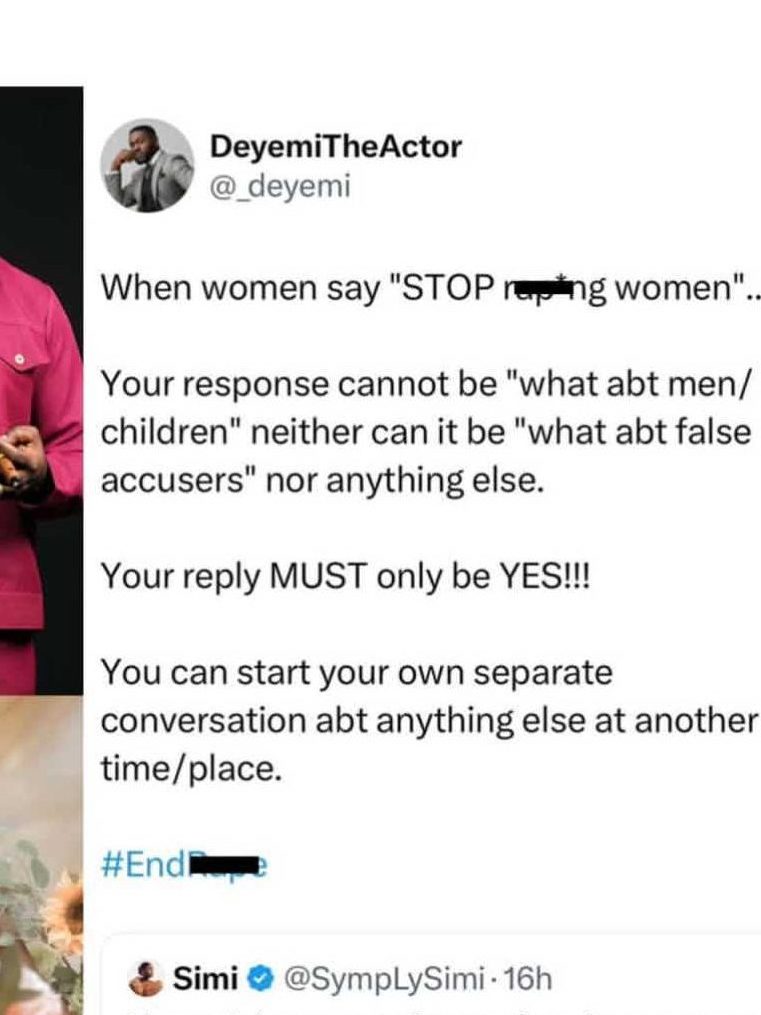
Meanwhile, the violence being discussed is afforded nuance, context, and distance. She is flattened into her worst moment. As Deyemi put it, when women say “stop raping women,” the response should not be caveats, deflections, or character audits; it should be yes. Because every “yes, but—” moves the focus exactly where the backlash needs it: away from the truth of the statement and onto the woman who said it.
Again, Both Truths Can Exist. And They Do
Simi’s 2012 tweets were messy, uncomfortable, and worth examining.
Her statement, “Stop raping women”, was correct, necessary, and urgent, and that does not change because of the past.
Yes, the archive exists. Yes, mistakes were made. But the message she was sending then, and the message the world still needs to hear, remain separate realities. One does not erase the other.
People will keep talking, dissecting, debating. Let them. The statement itself, the call to stop sexual violence, still stands.
Stop raping women. Say it. Mean it. Don’t caveat it. And don’t let the past silence the truth today.

HERtitude 2026 is happening this April, and the theme is Main Character Energy. Get your tickets here: hertitude.zikoko.com