Last weekend, a tearful video of Nollywood actress and producer Regina Daniels was posted across social platforms, from Instagram to X. She said she could no longer “stand the violence” in her husband Ned Nwoko’s house. Daniels married Nwoko, a 64-year-old businessman and politician, in 2019. Hours later, her brother claimed Nwoko had beaten her. Nwoko denied the allegations, blaming Regina’s outburst on drug and alcohol addiction.
His response followed a familiar DARVO script — Deny, Attack, and Reverse Victim and Offender — a manipulation tactic often used by abusers to deny wrongdoing, question the victim’s credibility, and recast themselves as the real victim of the situation.
“We see the same pattern again and again: denial, discredit, and deflection — responses that re-victimise survivors,” says Itoro Eze-Anaba, founder of Nigeria’s Mirabel Centre, the country’s first sexual assault referral centre.
The most predictable part wasn’t Nwoko’s denial; it was the internet’s reaction.
Within hours, Nigerian Twitter did what it does best: turned her into the accused. Across platforms, people debated whether Regina deserved or caused her alleged treatment. Her luxury lifestyle, the age gap in her marriage, her social media presence, everything except the violence itself became the topic. Sympathy was drowned out by scepticism and moral judgment.
This is how victim-blaming works: find the victim’s flaw and ignore the accused’s violence. What was she wearing? Why didn’t she leave? Society blames her because if violence only happens to women who make mistakes, the rest of us are safe. We scrutinise her choices, her tone, her past, and decide whether she’s innocent enough to protect.
We call it nuance, or social commentary, but it’s really just cruelty.
“Victim-blaming discourages reporting and traps survivors in silence”
FIDA Nigeria.

This is the ‘perfect victim’ myth in action. There’s a checklist most people don’t realise they’re using. Is she innocent? Relatable? Sympathetic? Did she make ‘good’ choices? Regina Daniels — actress, influencer, married to a billionaire senator at 19 — fails every single requirement. She’s not poor enough, not powerless enough, not ‘pure’ enough. She doesn’t look like what we think a victim should look like. So we don’t treat her like one.
“Norwegian sociologist Nils Christie first proposed the concept of the ideal victim in his 1986 article “Crime Control as Drama.” His theory posits that the ideal victim is the victim that generates the greatest amount of empathy in the court of public opinion, much the same way a sympathetic character facing injustice or hardship arouses a strong emotional response from an audience watching a movie.”- EBSCO: Research Database, Library for Clinical Decison Support & Patient Care
Here’s what the verdict looked like online.
She married for money, so she doesn’t deserve safety
A large chunk of the internet decided Regina Daniels had it coming, not because violence is ever justifiable, but because in their eyes, she “chose” it. The logic was simple and cruel: she married for money, so she doesn’t deserve safety.
“She married simply because of money, nothing else, as I’m sure with the other wives, but her own gragraa has come to roost,” one user wrote.
“Over the years, Regina Daniel has been flaunting wealth up and down, projecting young girls to go only for the money, give us a fake happy marriage lifestyle, now the truth is out,” another posted. “She has been enduring violence all this time just to protect her own image. Your Role Model? I pity you.”
Translation: She wanted money, so she doesn’t deserve safety. She made a choice we don’t approve of, so the consequences, even violence, are her fault.
“There is no justification for violence — socioeconomic status or public profile does not make violence permissible,”
Mirabel Centre / Mirabel counsellors.
Notice what’s absent from these takes: any acknowledgement that Regina was 19 years old when she married a man four decades her senior. At an age when most women are figuring out their first adult relationships, Regina was entering a marriage with a 59-year-old politician who already had multiple wives. But instead of questioning the power dynamics of that arrangement, we’ve decided she was calculating and mature enough to “know what she signed up for.”
She’s too visible, too unapologetic
Within hours, Nigerians were digging up old posts and videos of Regina showing off luxury cars and designer items. “She has a very terrible character,” one user declared. Another noted that “the other five wives understood that marriages should not be played out on social media, ” suggesting Regina’s visibility itself was evidence against her.
Translation: She’s too loud, too visible, too unapologetic. Perfect victims are quiet and modest. She flaunts wealth, so she’s disqualified.
“Publicity doesn’t erase harm — it often increases stigma and secondary victimisation”
Mirabel Centre counsellor.
“I need to hear his side”
Perhaps the most telling response was the chorus demanding Ned’s side of the story. As seen above, one viral post captured the sentiment:
“You see all these emotional sentiments on the Regina Daniels case, I don’t buy it. Ned married 5 wives before Regina. How come none of them have ever complained about Domestic Violence? I need to hear Ned’s side of the story. I don’t support abuse. At the same time, I know my Gender.”
This post received dozens of supportive responses. “Yes oooo. My gender enh,” one person replied. “Women Every body don sabi their scope this is 2025 for Christ sake,” another added. “I want to hear his side of the story as well.” “Make we hear both sides.” “You are blessed indeed.” “Yes, we still have smart people around.”
Translation: She’s not believable because she’s a woman (and women lie). The other wives didn’t complain, so she must be lying or exaggerating. “I don’t support abuse, BUT…” is just victim-blaming with a disclaimer.
UN agencies and Nigerian survivor groups warn that calls for “both sides” can minimise abuse and re-centre perpetrator narratives — we must centre survivor safety and evidence-based processes first.
She’s not powerless enough
Another common refrain blamed Regina’s visibility, the fact that she’s famous, outspoken, and has access to an audience, as proof that she couldn’t possibly be a victim. For many Nigerians, power and victimhood can’t coexist.
“His other wives are not popular actresses with fans & followers online,” one user explained. “They are just beautiful, regular women, unlike Regina. It messes with your head when you have fame outside, but inside your husband’s house, you are just another wife. Maybe she wants special treatment, which she is not getting.”
“Maybe she wants to be the head of the wives,” another suggested.
Translation: She has fame and a platform, so she’s not powerless enough to be a real victim. Perfect victims are isolated and voiceless. She’s just upset she’s not getting preferential treatment, not actually being abused.
Research shows that attitudes blaming victims are common and that women who don’t fit the “ideal victim” profile are more likely to be doubted.
She must be the problem
And then there’s the final twist in the victim-blaming playbook: if she’s the only one complaining, she must be the problem. Many users argued that because Ned Nwoko’s other wives had stayed quiet, Regina’s accusations couldn’t be true.
“Some say the other wives are not rich; they are all naive and mediocre. They can’t speak up. So their saviour came and salvaged the situation,” one user wrote sarcastically, implying Regina was being dramatic.
“Was anyone an Igbo woman?” another asked, suggesting ethnic dynamics were the “real” issue.
Translation: The other wives are fine and quiet, so Regina must be the troublemaker. If she’s the only one complaining, she’s the problem, not the marriage.
You’ll Also Enjoy: Step-by-step Guide to Seeking Justice Against Gender-based Violence
Every take, every quote, every “both sides” argument reveals how deeply society needs women to be perfect before it will believe them. The myth of the perfect victim doesn’t just shape our reactions; it shapes women’s silence.
Regina Daniels isn’t an exception. She’s a mirror. Every time we decide a woman isn’t innocent enough, quiet enough, or powerless enough to deserve safety, we prove just how much we’ve learned to protect everything but her.
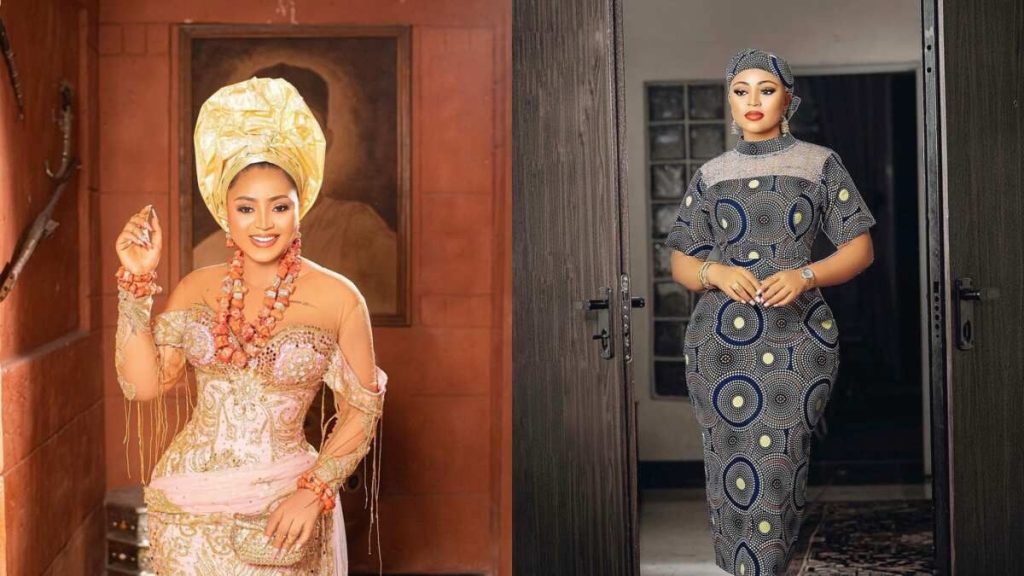
Still, not everyone joined the pile-on. A few users pushed back, reminding others that no woman “deserves” violence, regardless of who she married or why.
“Some people truly lack sense,” one user wrote. “Abuse is never justified, no matter someone’s social or financial choices. Regina Daniels may have married for comfort or status, but that doesn’t mean she deserves violence, mistreatment or disrespect. So, because she married for money, should she allow the man to kill or beat her? Make it make sense.”
Others echoed the sentiment: “Even if she wanted comfort, abuse should not be tolerated.” “Best to be mute on her matter, because posting online brings unreasonable criticism.” A few people called her what she was back then, a teenage girl navigating an unequal relationship with a powerful man. These voices were the minority, but they mattered; they tried to shift the conversation back to the real issue: violence, not virtue.
But empathy online is fragile. For every person defending her, ten others were laughing. On Instagram, people began using Regina’s tearful video as a meme sound, turning her visible distress into background noise for skits and jokes. On Twitter, others cracked that “crying in a Lamborghini still feels like crying, the only difference is the seat leather smells expensive.” The tone was clear: her pain was entertainment. Even the few who admitted that abuse was wrong still framed it as a “choice” she made, a cost she signed up for.
Studies show GBV and domestic violence remain widespread in Nigeria, with large numbers of survivors not reporting due to shame and fear. — A cross-sectional study on the prevalence and patterns of gender-based violence in Enugu, Nigeria.
“Believing survivors and providing accessible services are essential if we are to reverse this culture of silence”
UN Women
Also Read: 5 Conversations Nigerian Women Do Not Need A Time-Table To Discuss
The idea of a “perfect victim” is a harmful and unrealistic standard society places on survivors of abuse. It suggests that to be believed, a victim must be innocent, likeable, and completely blameless; someone fragile, doing something “respectable” when harmed, and attacked by a stranger who clearly fits the image of a perpetrator. Anyone who doesn’t fit that script is often doubted, judged, or dismissed altogether. Since almost no one truly fits this mould, most survivors end up being seen as less “credible” or undeserving of sympathy.
“After an assault … if it’s seen that the parameters set by society for women are ‘breached’ … then a victim is blamed to tell her that you breached the place we have set for you.”
Nayab Gohar Jan, Activist.
Here’s the hard truth: the perfect victim doesn’t exist, but our need for her does. Every time we demand perfection before offering empathy, we side with violence. Regina Daniels’ story may be unfolding online, but it’s the same script women have been forced to read from forever: be quiet, be humble, be perfect, or don’t expect to be believed.
Maybe it’s time we retired the checklist and started believing women when we say we’re in danger.
Also Read: What 5 Nigerian Women Under 25 Earn and How They Afford Their ‘Baby Girl’ Lifestyles