Every other day, women online are under public scrutiny. Whether you’re an influencer or social media civilian, being a woman in Nigeria’s online space means taking extra care to be yourself. Meaning there’s a high chance you’re shrinking yourself to avoid trouble and banger boys.
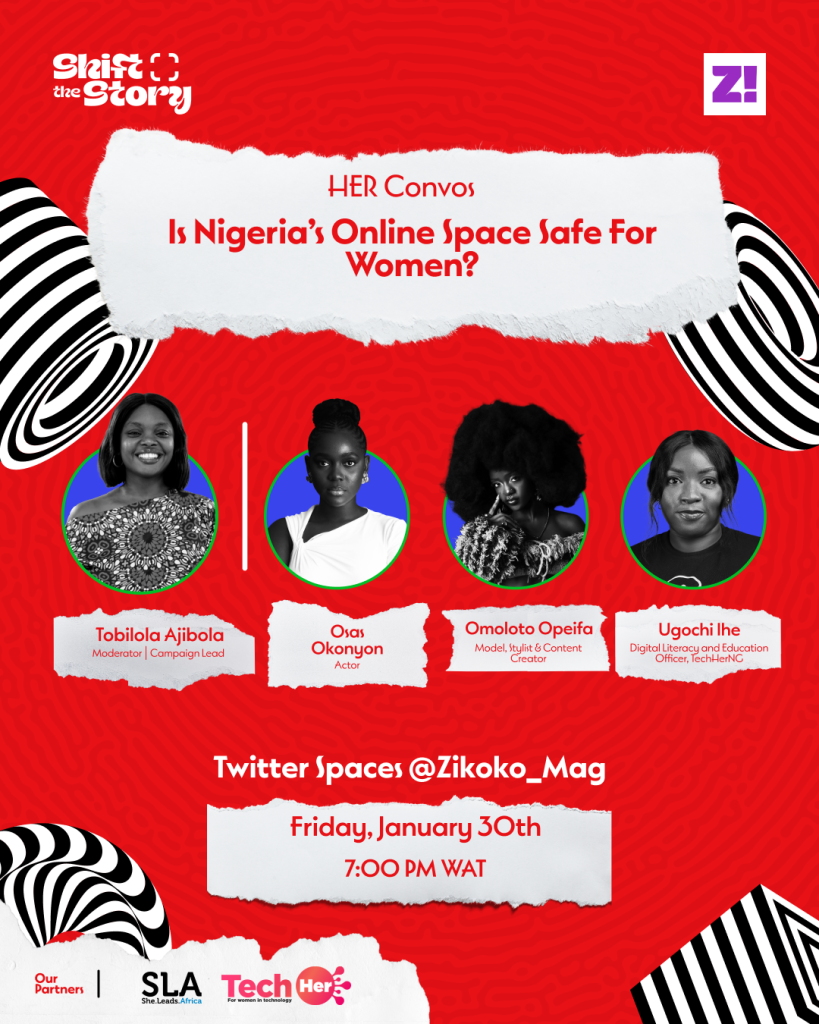
Our last X space featured women who feel strongly about how unsafe Nigeria’s online space is for women. The speakers in the space included actress Osas Okonyon, Omoloto Opeifa, a model, stylist and content creator and Ugonna Ihe, digital literacy and education officer at TechHerNG.
In this article, we give you reasons why our online space isn’t safe for women and 4 ways to make it better.
What is So Unsafe About The World Wide Web for Nigerian women?
Before getting into how Nigeria’s online space is unsafe for women, it’s important to understand what we mean. Our speakers note that the online space is eager to punish women for being true to themselves and simply existing online. It is the trivialisation of women’s passions and the disproportionate backlash women receive for expressing their opinions and building personas online.
Nigeria’s online space is unsafe for women because of misogyny. Women do not feel safe enough to make themselves visible online and source opportunities. With every post and interaction, there is the fear and likelihood that someone is waiting for the opportunity to harass, bully, or amplify posts that do just that.
“Safety is being able to exist without fear. It’s the ability to express opinions and build online without disproportionate backlash. For women, it is visibility and opportunity. Existing online without the fear of being harassed and bullied, without being picked on simply because it’s easy to pick on women.” – Osas Okonyon
“Safety for women online is true freedom. Being safe enough to express their passions.. It should not be seen as silly or trivialised. It is the ability of women to interact online without fear.” – Ugonna Ihe
Why are People Committed to Limiting Online Safety?
Our speakers agree that there are a number of things fuelling the continuous harassment and bullying of women online. One of them is the algorithm and the added effect of remuneration for multiple impressions and engagement. For some reason, the tweets and posts that are most insulting and dehumanising often trend. And this results in financial compensation. Engagement is the new currency, and people are doing what they can to secure it.
There is also the social capital people get from tending and adequately “dragging” women online. Misogyny is rewarded on both financial and social ends. Men are awarded “street cred” for being and saying inhumane things to women. And men continue to relish the feelings they get from being mean to women.
“The online space today feels like secondary school, where boys used to get high over being mean to girls. Misogyny is rewarded. People don’t care about the things they accuse women of doing; what they care about is the high they get from punishing women. The core of it is misogyny. Men have always bonded over their humiliation and harassment of women.”- Osas Okonyon
“One of the things we’ve seen between last year and this year is that attention is the new oil. We are seeing people who have never seen $500 or $1000 before. People now believe that benefiting from women’s harms is worth the money. If they can get impressions on their posts punishing a woman, they’re good.”- Ugonna Ihe
What Have We Tried Doing About It?
It’s not like women haven’t tried to shift this online narrative. The problem is the continued dismissal of conversations that try to #ShifttheStory. Whenever a woman tries to speak against an injustice that’s been done, everyone suddenly has an issue with her tone or delivery. Sometimes, the issue is even with the person attempting to speak, not necessarily what’s being said.
“If we are really critiquing something, why are people more concerned with how the thing was said rather than the real issue? Being treated as sub-human and harassed is not enjoyable. Why do I have to make my responses and defences palatable? The most rational response to injustice is anger. Why are women punished for expressing that anger?”- Osas Okonyon
These situations have real-life consequences for women. It’s difficult to quantify what they are, but our speakers note that the worst-case scenario is death by suicide. Most times, it’s difficult for women to redeem themselves, especially when the torchbearers of said harassment are men.
“People reduce it to dragging, but it’s not; it’s called bullying. The second is complete erasure. This bullying chases and erases women from these platforms. Another thing is reputational damage. The internet never forgets.”- Ugonna Ihe
“False accusations are worse for women because people believe men more than they do women.”- Omoloto Opeifa
So, what can we do to make our online space safe for women?
1. Personalise Your Account and Feed
It’s important to curate our feed to include only posts and interactions that recognise women’s full autonomy. This might mean going private and controlling who follows you, blocking known troublemakers before they get to you or being cautious of the kinds of platforms and people you share your information with. This also includes media. It might be a bit jarring to take extra care just because you’re a woman. But until things get better, this is one way to protect yourself.
“Never get tired of blocking. By God’s grace, I will block you. Your account belongs to you. It is not a democracy. Leaving social media platforms will only allow the bully to continue being a nuisance to other people.”- Omoloto Opeifa
2. Be Your Sister’s Keeper
We’ve already established how men always have each other’s backs and support each other irrespective of the action in question. Defending a woman should be easier. Even if you’re too introverted to react to the post, report it before it gets to people who would do worse things with it. Don’t think twice about interacting. If you want, you can even go the extra mile and report the account.
“Maintain solidarity with women online. Men will always show solidarity and support each other, irrespective of how depraved something they’ve done is. Women should do the same, and we have more reason to. If you are not reactive, you can simply report the post.”- Osas Okonyon
3. Advocacy
While reporting tweets and posts sounds like a fantastic idea, there is only so much we can achieve if the guidelines and regulations of social media platforms aren’t solid. The guidelines are limited and don’t take into account the cultural nuances of their active countries. It’s important for us to advocate for stronger guidelines and regulations that ensure active protection and safe spaces for women. We need to push for higher standards that will be upheld despite the need for engagement.
“We can’t use AI to track the validity of abuse because it lacks cultural nuances. AI may not recognise some slurs.”- Ugonna Ihe
4. Share this Article with Your Male Friends
Men need to do better. It’s that simple. Having a friend who lives and breathes for the harassment and bullying of women online, especially when you say nothing about it, makes you complicit in the action. It’s okay to call your friend out on their bad behaviour. We shouldn’t be telling people how to behave or treat women better, but unfortunately, we have to. There is real damage in the things we do and say to people online.
“Call it out. Translate the herd culture to something positive. Call it out. Things don’t need to get that bad before we do something about it. There is also no need to amplify it. Stop bullying men who call out these behaviours. Understand the stakes involved.”- Ugonna Ihe.
“I don’t want to be teaching men what to do at this age.”- Omoloto Opeifa
The conversation was insightful and entertaining. If you’re too shy to share the article with your male friends, send them the space recording here. Better still, give it a listen yourself.
Read Next: 4 Things To Know To Avoid Engaging In Cyberbullying