Leah Katung-Babatunde, is the founder of Saban Media Services and a seasoned journalist with almost two decades worth of experience in the media industry, walks us through her life and career. Leah has faced many challenges over the course of her work. But through everything, she’s been motivated to keep pushing herself, and surpassing her own achievements.
We uncover the beginning of her journey, how she’s sustained herself through several trials, what’s kept her going and what she hopes to achieve for the media and industry space.
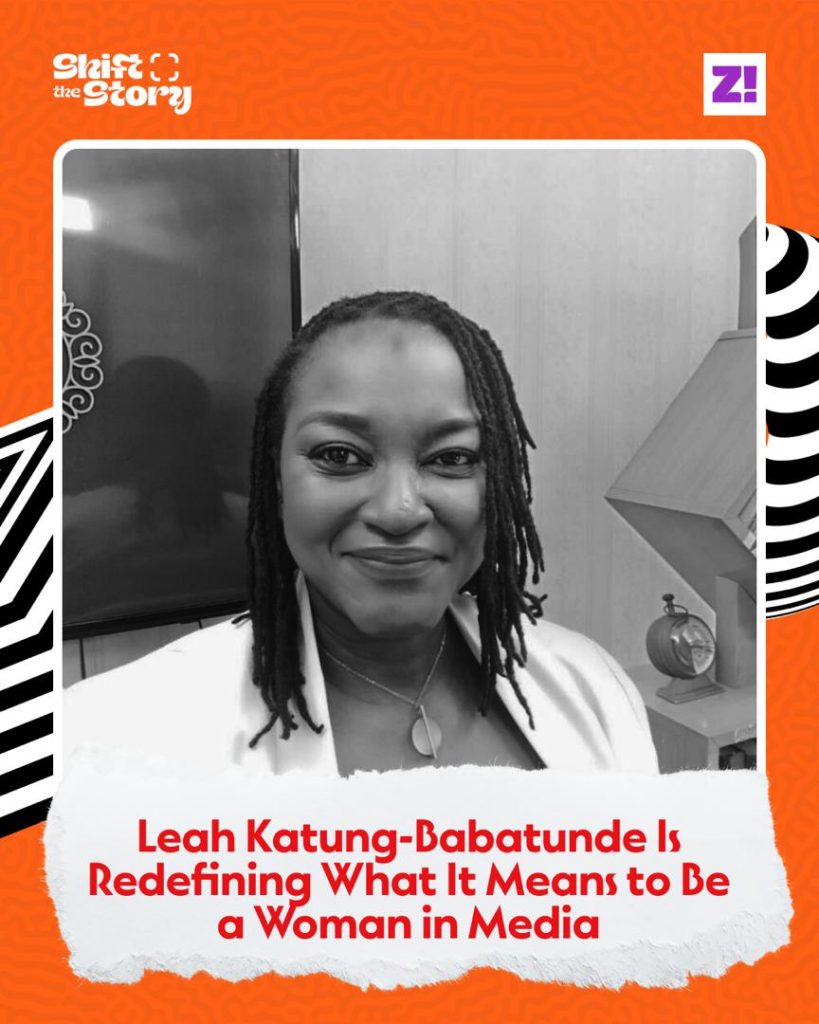
Can you tell us about yourself?
My name is Leah Katung-Babatunde. Professionally, I am a journalist, and I am married with one kid. I was raised by my mother who is a single parent. My first degree is in Mass Communications from Ahmadu Bello University. I also have a PDG and master’s degree in public administration. I’ve worked in the public sector as a media expert at the state and federal level for about two decades.
What would you say fuelled your passion to become a journalist, being a dream you had from a very young age?
The person who probably played the largest role in influencing my decision was my dad. Before he passed, we would have a lot of formative conversations. I engaged in a lot of vocal activity when I was younger, and my dad was a huge part of them. When I was in primary 4, he asked me what I wanted to be in the future. I had two options: a journalist or a lawyer.
He didn’t entertain the idea of me being a lawyer, because he felt like I wouldn’t be able to form my own opinions and that people would say I talked too much. He said, ‘I think you’re going to be a beautiful journalist because you speak and write well so let’s work on that’. That was the beginning for me.
Journalism isn’t the sort of traditional career path Nigerian parents would normally encourage
The other influence I would say came in secondary school, but more through support. I went to Federal Government Girls College, Zaria, and we had a very strong guidance and counselling unit. They focused on you from JSS1 to SS3 basically shaping your future. My teachers will look at my subjects, strengths and weaknesses and advise me in the right direction. The minute I joined the program; I told them I wanted to be a journalist. So, this influence also affected my social clubs as well. That means I was in the press and debating societies. Those clubs also gave me the sort of exposure I needed to speak publicly.
Guidance counselors were probably a lot better than they are now.
Yes, they were. They even encouraged us to teach the ones behind us. So, at some point, we acted as mentors for them. They were very intentional about the knowledge transfer.
Did you have any mentors?
I’ve always had mentors. When I was in university, I wanted to be a print journalist. But around 300 level, I had a broadcast lecturer who was really strict. If you came in late to her class, she would send you out. So, this Monday morning I came in late and as I was about to turn around so she wouldn’t embarrass me, she called me back. She gave me a script from the NTA Kaduna newsrooms and said if I delivered the script well, she would let me stay.
My major wasn’t in broadcasting but when I read it, she was so excited. She asked what my major was in, and I said newspaper production. But she insisted that I was a born broadcaster. Madame Ladi Adamu is her name. She followed up with me until NYSC sent me to NTA for my internship. She was my first mentor.
Then my boss when I interned at NTA also ended up being a mentor for me. Even though when he first met me, he stereotyped me because of my appearance. I had multiple piercings, and my hair was permanently gelled down. But I exceeded his expectations, and he remained in my life.
What other support have you gotten over the years that helped you grow in your field?
I have a lot of family support. My mum, son and husband. In university my mum encouraged me to take up an internship and that really helped. I have an issue with professionals who turn interns or corps members into errand boys and girls. Young people come as interns, and you have the opportunity to teach them and let them leave with something. Even the interns themselves, sometimes they don’t care about the knowledge gain. Sometimes all they want to do is mark attendance.
When I started my internship, I was prepared to give it my best and that was because I wanted to build my CV. My mum was very intentional in helping me find opportunities too. Anywhere she went, she would ask if there was a media related opportunity for me. She also told people about the work I was doing which helped with visibility. Because of what she was doing, I would sometimes get gigs in Katsina state, and I would travel from Zaria to do them. Sometimes Zamfara.
My husband has also been very supportive. He works in the industry as well, and till date we’re each other’s biggest critiques. I’ve always had support from my family and professionally.
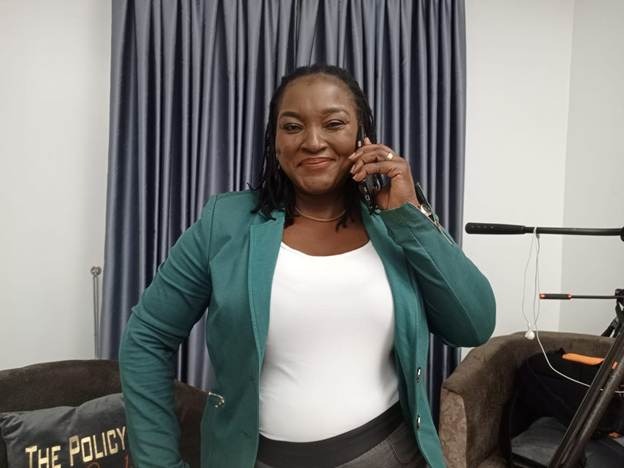
Shoutout to your mum and husband. Were you making money from these gigs?
Yes, I was. She made sure I charged them. I was selling stories for as high as ₦5,000. My mum opened my first bank account for me in 1994.
What was the experience like for you, working at such a young age?
I started working before I started selling stories. When my dad died, we realized we lost everything because everyone was relying on him. Everybody he had helped in the past disappeared, so we had just ourselves to rely on. My mum was a teacher, and I remember at the time her salary was ₦2,000. We started farming at the back of the house and then I also had to go to my father’s farm to do work because my mum had to keep her job.
We were rearing chicken, my mum started catering, my brother was helping her with the food business, we started other businesses as well. Our side hustles had side hustles. It helped that a lot of what I did was farming because in Nigeria, once you work in the civil service, you can’t do anything but agriculture. So, even when I grew up and started working, I continued farming. I remember when I started poultry, and I started with 50 birds. In three years, we went up to 3,000.
Starting media work at a young age is also informed by business knowledge. Everything I reported on came from an informed perspective. I think this is one thing schools of journalism don’t teach. They don’t teach us how to run businesses, so we spend most of our lives working for people.
Was it difficult doing all these things from such a young age?
First of all, I’ve always had to fight for my life. I’m left-handed so growing up in the eighties with that wasn’t the easiest thing. I was also sharp-tongued, and a lot of people found that offensive. Even on my first day in university, I had an issue with the registration officer. He refused to register me because I was too young and there were people who were older than me and waiting to get admitted. I wasn’t screened for over a month. That took a toll on me. But I wasn’t deterred. Things like that were what usually made me take action and look out for stories I consider extraordinary.
One of the stories I worked on was on the mismanagement of a government school. I was on a bike heading to Kaduna and I remember seeing that the school had no roofs. And I was confused because they had just fixed the area the month before. The bike man took me around and by the time I saw the damage, I came back with a camera man. The school decided to split the morning and afternoon sessions for students because of space, but they had room to house the office for a political party.
What happened after that?
After I published the story, people started running to my mum to tell her what I had done. Another story I worked on was on the mismanagement of funds for a scholarship board. They were taking so much money from the aviation and maritime academies. And my younger sister was in one of these schools. I was helping her with her bills, but I was confused because she was supposed to be getting funds. This one even became a group investigation, so all the media houses released it at the same time.
My mum called me after this one and asked, ‘What did you do again? Do you want to take food from us’. But her fears were valid. There were times when I had to run out of my house because people were looking for me. I stayed in a lot of unconventional places. There was one time I had to share accommodation with sex workers because I knew they wouldn’t look for me there. For three months, these ladies protected and cared for me.
Also Read: Anita Eboigbe Wants to Shift The Story With Zikoko’s Life Series Production
I don’t think journalists today are writing stories that are putting their lives at risk like this.
I wouldn’t say there’s more freedom then than there is now. But I know that some of the stories I did back then, if journalists tried to do them now, they would kill them. Back then, government professionals would tell me stories that I would work on, but they wouldn’t have my name on it because I needed protection. The ethics of the profession have been watered down. Journalists can’t even defend their peers. Most of what journalism is today is chasing trends and clout. Our duty really is to inform, enlighten and educate people.
A few days ago, someone tried to tell me to shift my focus from finance and the economy to politics, so people will follow my reports. But the reason why I focus on finance and economy is so that people know the essence of the decisions politicians make and how it affects them on a personal level. One of the things we need to build are strong institutions and the media has a critical role in ensuring that this works.
In 2004 I worked on a story on Coca-Cola. Back then we had to buy our drinks and return the bottles which they were using. So, people would buy minerals and while drinking it, lumps would enter their mouths. I was an intern when I worked on the story, so I didn’t get credit for it, but it was on their sanitation and how they packaged the drinks. The main questions I asked were, if something happened to me because of this, who would take responsibility? Who do I report to? And who knows, maybe it is because of stories like this that institutions like the FCCPC were formed.
The media does not publicise stories like that and even if they do, not as often.
There’s so much that they can write about in the food market. The price of things against the quantity. Even doing follow up pieces on these stories. Chasing stories to the end, we don’t do that anymore. If we keep moving on, we won’t get the desired results.
Still speaking on the media industry, you’ve spoken about how it has weaponised things like beauty. How have you navigated that?
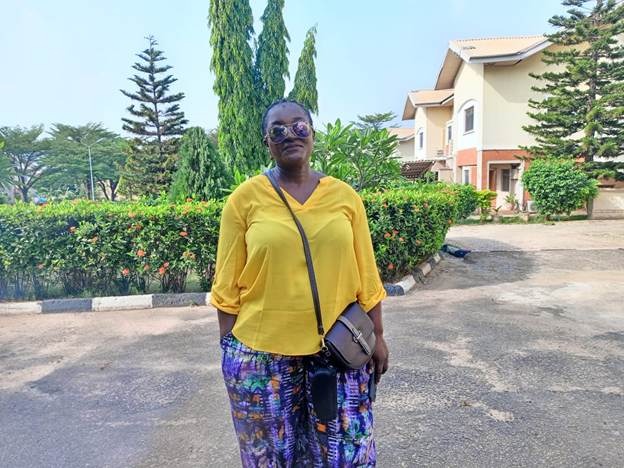
The media has always sold sex appeal. Whether in appearance or speech. I think that has made it difficult to prioritise inclusion. I had an accident when I was younger which affected my face. My mum and I had tried for facial reconstruction a few times. But I eventually opted out. There just seemed to be one obstacle or the other. My mum was very concerned about it, but I told her not to worry. I knew people would get used to seeing me, and I told her I would become so useful to them, nobody will bother about the scars on my face. I survived thirteen fractures from that accident, and I wasn’t going to hide anything about it.
Even beyond that, I remember people saying nobody could cast news on NTA with lowcut, and I did. Even dreads, at some point people made it seem like that would be an issue. But I have dreads, and I still make appearances. The world is now a global village. You can’t limit people based on their appearance.
How do you think we can institutionalise this progress and move on from the appearance-driven standards?
I think things have started changing. Just like water, these things will find their path. It’s also something that should be factored in when training people. Inform young professionals of the importance of their individuality. If someone tells me I can’t do something because I look a certain way, or because I’m a woman or because I’m too young. I will prove to them that I can do it.
Regarding womanhood, how can women in corporate spaces ensure that they’re creating room for more women, given the complexities that come with it?
I’ve always had the mentality to do that, but I think that’s because of the kind of family I grew up in. Whatever space I’m in, I try not to have people weaponise my womanhood and have that affect their perception of me. I always tell them to let me do my job. Proving competency in that way as a woman and not letting them see you as an item is one way to do that. Being a woman should not be a limiting factor or an excuse to stunt someone’s growth.
One of my executive directors during the course of my career, complained to our general manager about me. The man said I was giving him too many problems and suggested transferring me. I overheard the conversation, and the GM told the ED that he cannot transfer me because I was doing five people’s work for him. My salary did not reflect that, and I was working like a horse. He wouldn’t do that to a man. Even with all of that I was never voted staff of the month or got any perks.
Women keep trying to prove themselves in these systems and there’s a power abuse affecting their growth and efficiency. Sometimes it’s even the women who are limiting their peers. I remember there was one woman who kept insisting that I had an affair with the DG because of how he favoured my work. Meanwhile I had never set eyes on him. He even had to come to the office because he heard about the rumour. That was the first time I set my eyes on him.
Do you think the corporate world does a good job in tolerating women’s “excesses”?
Like I said earlier, as a woman the world has made it such that you have to do extra to be acknowledged. Because of this extra effort that we already put in, I find it disturbing that people wake up and still try to limit us or take things away from us. During one of my pregnancies, I was working so hard my cervix tore in the office. Before that happened, I was in a lot of pain, and I remember complaining about it. A woman asked me if I was the first person to get pregnant. Because of that comment I kept masking the pain till it tore. I’ve had eight miscarriages over the course of my career.
So many women have stories like this in the workplace. Then after going through things like this, you are forced to resign, take care of the family, take care of children. Nobody is going to tell me when to leave an organisation because of womanhood. I determine when to leave. You find so many ridiculous practices in some of these places. Organisations not promoting women because they decided to get pregnant. I think it’s very irresponsible. In Scandinavian countries, working women take their babies to parliament. My son grew up in newsrooms and there were no formal facilities for him on the premises.
In Nigeria, they ask questions like if you don’t come to work or do the work, who will do it. But if you die, somebody will do it. Everybody is replaceable. I’ve learnt a lot from my experience. I prioritise myself and my health now, but I also make sure I leave my mark.
Did these things affect your mental health?
A number of things contributed to deteriorating my mental health. But things got really bad in 2017. I received a letter from someone to help them follow up on a payment they were supposed to get, after a project I’d just completed. When I got the letter, I assume it was a normal professional letter. But a few things happened and I got to read it and found out that they were basically asking for a bribe of over ₦300 million. I went back to meet these people I worked with, and their justification was that they just put in any number there. And that they would take anything they gave them. I communicated that. Then a few months later someone called me and said I was owing his friend some money. That they gave me a letter to take to CBN, and I didn’t do it, but I should make sure I bring the money. For about 6 months, this man harassed me. I got queries for nothing, threats, accusations that I stole ₦50 million.
At some point I got frustrated and I went to meet him to reason things out. That only seemed to make things worse. He said he will make me vanish without a trace when he is done with me. He also told me he will take away my son, that I should remember everything I went through to have him and that he would make him disappear. That was the beginning of anxiety disorder for me. This man was telling my colleagues that I was a flight risk and advising that I not go on official trips. He was writing to junior colleagues and asking them to disrespect me.
Wow.
The disorder really affected me. I wasn’t able to drive myself and even when I did, I would pass my destinations by miles. Sometimes I would park my car abruptly because I would have panic attacks. My husband was driving me everywhere. Then a friend of mine suggested therapy and I didn’t start till 2023. But I’m a lot better now, and I tell people all the time to start therapy.
You can imagine how serious it must’ve been for me. I’ve experienced a lot in this profession. I’ve been kidnapped twice and at this point I’d had five miscarriages. But none of these things really affected me like that. Threatening my son’s life. The industry is very abusive in Nigeria, and I think we don’t talk about that often. How it affects your output and performance.
So, what’s kept you in the field, despite everything?
There was something a pastor said to me years ago that’s stuck. If you cannot be part of the solution, don’t be part of the problem. There’s a lot of things I don’t like about the industry. But rather than let it fester, I try to make myself useful enough to create change. I want someone to say if Leah could do it, then so can I.
When I started Sabah Media Services in 2023, I started it with one principle in mind, and that’s Nigeria first. It’s our operational watch word. I had looked at all the places I worked at and realised that a lot of these people were only thinking about themselves and not the country. As far as I’m concerned, giving up is not an option. Neither is dying, at least not now. I’ve been bedridden for a year from accident wounds.
The miscarriages I’ve had weren’t early stages as well. All the pregnancies were well past five months. My husband has had difficulties as well, even with the miscarriages but he still supports my career and supports me emotionally. My son saw me pregnant and didn’t see a baby come from it. We never spoke about it. The only thing he said was that he didn’t want to see me pregnant again. I’ve decided to do therapy with him before the end of the year. Just so we can talk about it.
People don’t really think of the impact of employees’ well-being on their families.
We never really understand how it tells on the family. When you’re sick, it’s not your office that takes care of you. When a person dies, work replaces them almost immediately. Nobody replaces you as a parent or a child. At the home level you are irreplaceable. You leave that vacuum. The family lives with it. I think if we pay more attention to giving families joy, it’s going to give us a healthier workplace because people will come happy.
People will want to give their best when they know that if I’m not there today, my office will take care of my family. Look at those places where they take care of the families and how they are dedicated to their jobs. People would take all matters of risk when they are certain that there’s something at the end of it.
Do you have any goals you’d like to achieve that you’re yet to?
I think the goals I have now are personal and I’d like to keep them private. But one good thing about having mentors was being able to set goals for myself based on their advice. Mentors have helped me plan my career trajectory. One of my mentors was the reason I set my retirement age for 45. Which was the point where I said to myself that I will leave the civil service. I’ll be turning 45 this year but I achieved that status about four years ago.
Also, I’m always trying to break barriers. If you tell me I can’t do it, I’ll do it. If you don’t give women opportunities, we will take it by any legal means possible.
What would you say the highlight of your career has been?
Honestly, the highlight for me would be the versatility that it brings. The requirement of always being informed and being known for something different. Whether it’s health or education. Another highlight would be when I reported about our recession in 2016. I was the first person to report on that, and people didn’t really understand the impact of it. Having to explain what a recession was and what it meant for us.
Working on the national business desk with NTA is something I don’t take for granted too. Putting people together and raising teams. Ensuring that each member of all my teams had a sense of individuality.
What advice do you have for women growing their careers?
I’m going to say the same thing I say to myself, which is to never ever settle for less and be the best version of yourself every day. Put in the work and make the work count. Make yourself heard and don’t hide what you have to offer.
Read Next: 4 Things We Love About Hassana Maina