This article is part of Had I Known, Zikoko’s theme for September 2025, where we explore Nigerian stories of regret and the lessons learnt. Read more Had I Known stories here.
Ebiere*, 40, thought IVF would be her way out of years of childlessness. Instead, it swallowed millions of naira, drained her emotionally, and began chipping away at her marriage. If she could go back, she says she would do so many things differently.
As told to Princess
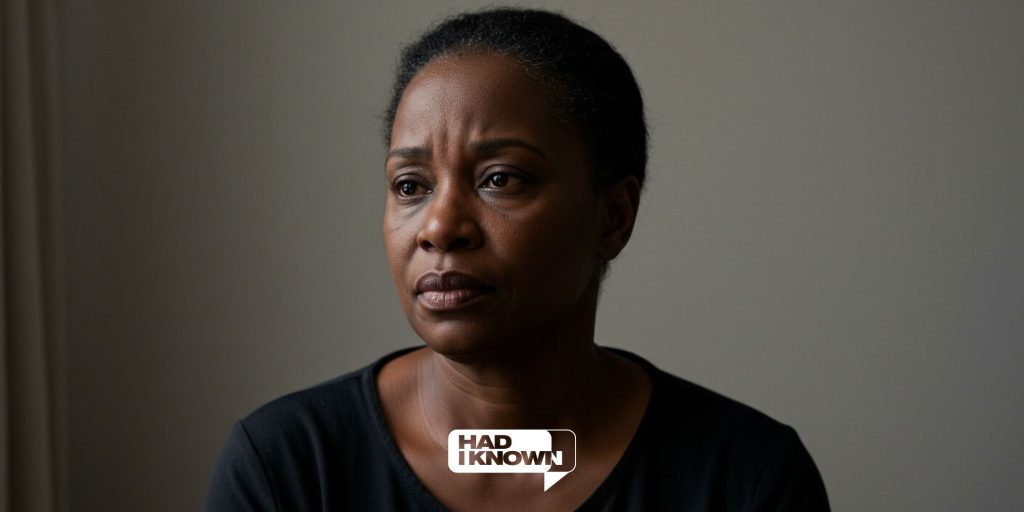
I’ve been married for over a decade, but I still don’t have a child. In Nigeria, that’s almost a curse: the endless questions from relatives, the pitying glances from neighbours, the unsolicited advice from church members. It wears you down.
My husband and I had several late-night conversations about what to do. Adoption was off the table for him. Prayer was constant, but I wanted something more concrete. So when IVF kept coming up in my searches and discussions, I thought maybe this was the answer.
We set a budget of ₦3.5 million for one cycle. At that point, I told myself it would be a one-time attempt. But anyone who has done IVF knows that once you step into it, it’s like a tunnel, one cycle leads to another, and the money just keeps going.
The First Cycle: Hope and Shock at the Price
I started my first IVF cycle at a top fertility clinic in Lagos. They broke down the cost into consultation, scans, ovarian stimulation, egg retrieval, embryo transfer, and medications. The package itself costs around ₦4 million, not including all the “hidden” extras.
Ovarian stimulation drugs alone cost me between ₦400k and ₦800k per round. These are daily injections that force your ovaries to produce multiple eggs. I had to keep them in a fridge, handle them carefully, and jab myself every night.
By the end of the cycle, the bill had crept past ₦4 million. At that point, I still had faith. I told myself, “This will work. It has to.
”It didn’t. The embryos failed to implant. I cried in the hospital bathroom that day, then came home and cried some more.
The Second Cycle: “Maybe It’ll Work This Time”
Anyone who has gone through IVF will tell you that failure doesn’t stop you; it almost pushes you into trying again. I was desperate. The doctor told me, “Most women need multiple cycles.” That gave me false hope.
So, against my better judgment, I started cycle two. Again, it was ₦4 million for the main package and close to ₦700k for the drugs. Add in routine blood tests, scans, and hospital visits, and the bill was climbing fast.
By the second round, I had already spent close to ₦8 million in total. My family stepped in to support me. My siblings contributed; my parents even dipped into their savings. I will never forget that support, but with it came pressure. Every transfer felt like I was carrying their money, their prayers, their expectations inside me.
This cycle also failed. The devastation was indescribable. I felt like my body had betrayed me twice.
The Third Cycle: Throwing Money at Desperation
At this point, my husband tried to console me. He told me, “We can stop, it’s okay.” But I couldn’t stop. I felt like stopping would mean accepting defeat, accepting barrenness. So I went in for cycle three.By then, most of the doctors knew me by name. The routine was the same: daily injections, blood tests every other morning, vaginal ultrasounds that felt never-ending. My body became a science project.
Another ₦4 million gone, another ₦700k on drugs, another few hundred thousand on transport, nutrition, and “boosting” supplements. By my rough calculation, I spent over ₦12 million in total across three failed cycles.
And the result? Nothing. No pregnancy. Just an empty womb and an emptier bank account.
You’ll Also Enjoy: I Got a Liposuction and BBL in Nigeria. Here’s What It Cost Me
The Full Cost Breakdown
IVF in Nigeria is not just the clinic’s “₦4 million per cycle” quote. It’s a stack of creeping costs that pile up month after month. Here’s how mine broke down:
Cycle Packages (₦12 million total for 3 cycles):
Each cycle came with its own ₦4 million fee, covering consultations, egg retrieval, embryo transfer, and hospital monitoring.
Ovarian Stimulation Drugs (₦1.8 million):
Each round of stimulation cost me between ₦400k and ₦800k. Over three cycles, I spent almost ₦2 million just on injections.
Blood Tests & Scans (₦600k):
Before each cycle, I did hormonal panels, infection screens, and multiple transvaginal ultrasounds. Each one was ₦15k–₦50k. They add up fast.
Supplements & “Boosters” (₦450k):
Doctors and pharmacists pushed vitamins, CoQ10, folic acid, and immune boosters. Every month, another ₦150k disappeared here.
Transport & Accommodation (₦500k+):
I don’t live in Lagos, so IVF meant endless trips. Flights, long drives, and occasional hotel stays.
Hidden & Unexpected Expenses (₦300k+):
Extra prescriptions, antibiotics, pain relief, and even specific diet recommendations. I was told to buy “fertility-friendly” foods and teas. Every trip to the pharmacy was another ₦10k–₦20k.
Grand Total: Over ₦16 million:
And that’s just what I can count. It was probably more. Emotionally, the cost was far greater.
When Support Turns Into Strain
In the beginning, my husband was my biggest cheerleader. He held my hand during injections, prayed over me before transfers, and told me we would get through it together.
But by the third cycle, I noticed a shift. The money was weighing on him. Every time I mentioned another prescription or another test, his face tightened. He never said “no,” but his silence said enough.
After the third failure, he stopped accompanying me to the clinic. He told me he needed a break. At home, he would change the subject whenever I brought up IVF. The encouragement turned into avoidance. The emotional distance between us grew.
We still love each other, but IVF has created cracks. He says, “God’s time is best,” but I can feel his frustration. Sometimes I fear he regrets marrying me. That fear keeps me up at night.
Regret and Reflection
After the third cycle failed, I broke. I told my husband I felt useless, like I had failed as a woman. I stopped picking up calls from family who had supported me. Their silence was even worse than their questions.
Looking back, nothing was worth it. Not the millions, not the injections, not the endless hospital visits. IVF didn’t give me a child; it gave me trauma.
If I could go back, I would do things differently. In my younger years, I had multiple abortions. I believe that’s part of why I’m struggling now, but I’ve never told my husband. He only sees the woman beside him now, trying and failing. He still encourages me and says, “God will do it.” But I carry my guilt silently.
Had I known, I would have saved myself the pain, the money, and the regret. I would have made different choices in my youth. I would have considered adoption earlier.
Instead, I let desperation and societal pressure push me into spending ₦12 million chasing a dream that never came true. Now, all I can do is hold on to hope and remind myself that my worth isn’t tied to my womb.
Click here to see what people are saying about this on Instagram.
Do you have a story of regret? Share it with us by filling out this form.
Had I Known: My BBL Gave Me Confidence But Left Me With Pain I Can’t Escape