There’s a version of the first daughter story that sounds like a badge of honour. Responsible and dependable, the one who holds things together, but when you sit a few first daughters down for an honest conversation, you hear a different story. One that’s lonelier, and a lot more complicated.
That’s exactly what happened when clinical psychologist Amanda Iheme and multidimensional artist Chigozie Obi got talking about what it actually means to grow up as the firstborn girl. From the jump, both women said the same thing without even planning to. It starts with responsibility.
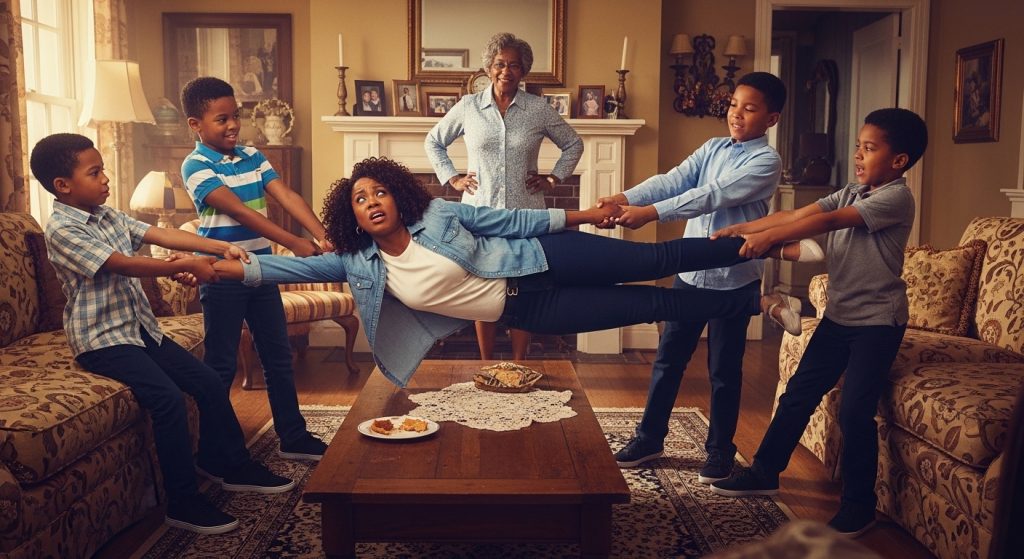
“Everything kind of lies on you,” Chigozie said. “You are the mother of the house when the mother is not around.” She described being placed on a pedestal she never asked to stand on. No older sibling to look up to, no one to show her how it’s done. Just the expectation that she’d figure it out and show everyone else the way while she was at it.
Amanda spoke about “unpaid emotional labour”, because beyond the running around and the problem-solving, there’s an invisible workload that first daughters carry that most people never even clock. “You’re the one everybody wants to talk to,” she said. Your dad, your mum, your siblings, everyone routes their feelings through you, and when you finally reach out for some of that same energy back, it rarely comes in the same form. “They don’t really hold you the way they enjoy being held by you.”
That gap, between how much you give and how little you receive, is where the loneliness lives. For Amanda, being the only girl among three brothers made it even sharper. Her mum could only see things from the perspective of her own generation. There was no one else in the house who could see Amanda at her own vantage point, as a young woman navigating a world her mother didn’t quite recognise.
So What Does The “Strong First Daughter” Label Actually Do To A Person?
Amanda’s answer was layered. There are moments, she said, when the title carries real weight. When you walk into a family space and the respect is there, when your position gives you authority to move things in your direction. Being her mother’s first daughter and her grandfather’s first granddaughter came with a cultural gravitas that she’s learned to work with.
There are other moments, though, where being strong just means exhausted. Where being the emotional pillar feels less like a gift and more like a sentence. “Right now, where I stand in my life, I don’t want to be strong for anybody but myself,” she said, and she’s clear on the fact that nobody is going to hand you that boundary. You have to build it yourself, because everyone around you will keep asking you to step up until you decide to stop.
Chigozie’s version of that came after she lost her mother in 2019. She had watched her mum, also a firstborn daughter, spend her life living for other people, and made a firm decision to not repeat that pattern. Her finances and relationship dynamics changed. Her family knows now that when she draws a line, it holds. The guilt trips and manipulation, none of it holds anymore. “Me before anything else,” she said and the way she said it didn’t sound selfish. She sounded like someone who fought hard for that sentence.
The healing, for Chigozie, came partly through friendships. Specifically, older women who gave her something she’d never quite had at home, which was the experience of being taken care of and being the one who got to receive. She called it healing, and it’s not hard to see why. When the entire architecture of your childhood is built around pouring out, finding a space where someone pours into you can genuinely rewire something.
Amanda took that thread in to the professional world. She runs a private mental health practice, and she’s noticed that the emotional attunement she developed as a firstborn daughter, reading moods, sensing when something’s off, managing the room, shows up directly in how she leads her team. She holds herself responsible for their wellbeing. She tracks their emotional states to help each person show up well.
She also mentioned, “I’m a therapist. I don’t know if there’s any more obvious manifestation of the first daughter who fixes everything.” A woman who built a career out of helping people hold themselves together.
Both women are clear, though, that awareness doesn’t automatically mean freedom. Knowing why you do something and actually stopping yourself from doing it are two very different things. The work, as they both describe it, is ongoing. Slow, sometimes non-linear. These two women are choosing to write a different ending to the first daughter story, where they finally get to come first.
HERtitude 2026 is happening this April, and the theme is Main Character Energy. Get your tickets here: hertitude.zikoko.com