This article is part of Had I Known, Zikoko’s theme for September 2025, where we explore Nigerian stories of regret and the lessons learnt. Read more Had I Known stories here.
Michael Adesanya (37) was the Labour Party candidate for the Remo Constituency House of Representatives seat in the August 2025 bye-elections. But after months of sacrifice and campaigning, his name was left off the ballot. He shares how his idealism collided with the harsh realities of Nigerian politics.

As told to Franklyn
Politics excites me. For as long as I can remember, it always has.
Growing up, when elders prayed for us, they would say, “You will be Governor one day,” or “You’ll grow up to be President.” So, for me, political office holders were always the symbols of success.
I think I’m a natural politician. It really excites me, and I woke up feeling very excited that morning. I was staying at my mother’s home in Shagamu in Ogun state for the campaign, and I’d begun to love the refreshing feeling of the Shagamu air in the morning.
But when my PA rushed into my room, I thought someone had died. His shoulders were slumped under the invisible weight of sadness and panic. He locked eyes with me and asked, “Oga, sotigbo?” Have you heard?
I was already imagining the worst when I replied, “Heard what?”
The news that Nigeria had happened to my political career took a moment to settle in, because first I was hit with the relief that nobody I cared about had passed on. But when the reality of the situation sank in, it hit me hard.
The rest of my campaign team had arrived at the house, and we all just sat in silence for at least half an hour. Nobody had died, but it was still a room full of mourners. We were mourning the months of our lives, the blood, sweat and tears we’d poured into the campaign.
It was August 2 and the Independent National Electoral Commission (INEC) had just announced that the Labour Party had been disqualified from the 2025 bye-elections taking place on August 16 due to the leadership tussle in the party. Just like that, all our efforts were flushed down the drain just days before the election. We wouldn’t even be allowed to compete.
I felt almost numb at first, but looking at the deflated faces of my friends, my supporters, the people who had given me all their time and dedication over those months, really crystallised the emotions for me. Their feelings became mine.
Months of nonstop work wasted for something we had no power to change. We had done everything right, but through no fault of ours, we were handed the worst kind of defeat.
There was disbelief, disappointment, sadness, even anger. But for me, there was also something creeping at the back of my mind: regret.
I found myself wondering how I’d ended up in this moment.
It was March 2025, and I was standing on the beach, feeling the coolness of the water between my toes, soaking up the Maldives sun. My wife was behind me, lounging with her latest read. It was our tenth wedding anniversary. It was perfect. But I was restless.
I kept asking myself, “What will I do next in my life?”
I had my phone in my hands and couldn’t stop researching the same thing: what were my chances of winning the House of Representatives seat?
I’d heard about the death of Honourable Adewunmi Adenuga back in January, which left our constituency’s seat open. I knew the bye-elections were coming. I had thought about it then, but talked myself out of it. I didn’t feel ready.
But the holiday in the Maldives gave me time to reflect. It was like an epiphany. I knew this was what I needed to do. I envisioned a thirty-year plan for a political career and decided my first step would be the House of Representatives.
I told my wife, and she supported me. We’ve been together since university, and she’d always known about my love for politics from back in our school days when I was involved in faculty politics.
Her only conditions were that we set a hard limit on the campaign budget and that she and our kids would remain in California. I agreed, and she gave her blessing. I immediately called my brother and my friends to tell them my plans, and everyone was so supportive.
Even before I arrived in Nigeria, they had started having conversations with political parties to find the right platform for me.
After sitting in silence with the team for what felt like forever, I packed my bags and went back to my house in Lagos. I spent the next few days in my room trying to process everything. I barely left the room. My sister would bring me food, which I barely ate. I barely even showered. It was a retreat from the world, a sort of hibernation.
When I decided to run, the most important thing to me was to at least compete. I needed to be on the ballot to really know where I stood with the people of my constituency. That was the main reason I chose the Labour Party. The internal politics of other parties meant I wasn’t guaranteed a spot on their ballots.
I was really inspired by Peter Obi’s candidacy in 2023. To me, it showed that you didn’t have to automatically choose either the APC or the PDP. It proved that if you’re truly convinced about the change you want to make, choosing a party like LP is a viable option. You just have to be ready to put in the work. And I was ready. I did put in the work.
I wanted a party that would allow me to really compete without any internal pressure to step down and endorse someone else because “it’s their turn” and I should wait for mine. So I chose the Labour Party.
But in the solitude of my room in the days that followed, I started second-guessing that choice.
My father was a PDP man, so it felt almost natural that I should join the party, too. When I told my mother about my ambition, she also suggested either the PDP or the APC, but I convinced her my choice of the Labour Party was the right one.
Looking back, I can’t believe I willingly walked into a party with two warring factions. Everything was much harder and more expensive than I thought it would be.
There was barely any structure in the party at the grassroots level, and what little existed was split between the two factions.
My constituency, Remo, consists of thirty-five wards across three local government areas. The party is supposed to have a ward secretariat in each ward and a local government secretariat in each local government. When I arrived, I saw there were no ward secretariats and only one local government secretariat.
But I rolled up my sleeves and got to work. The same mentality I had in my career with start-ups took over. To get things moving, I opened ten ward secretariats. I also organised reconciliation meetings between the representatives of the two factions in my constituency.
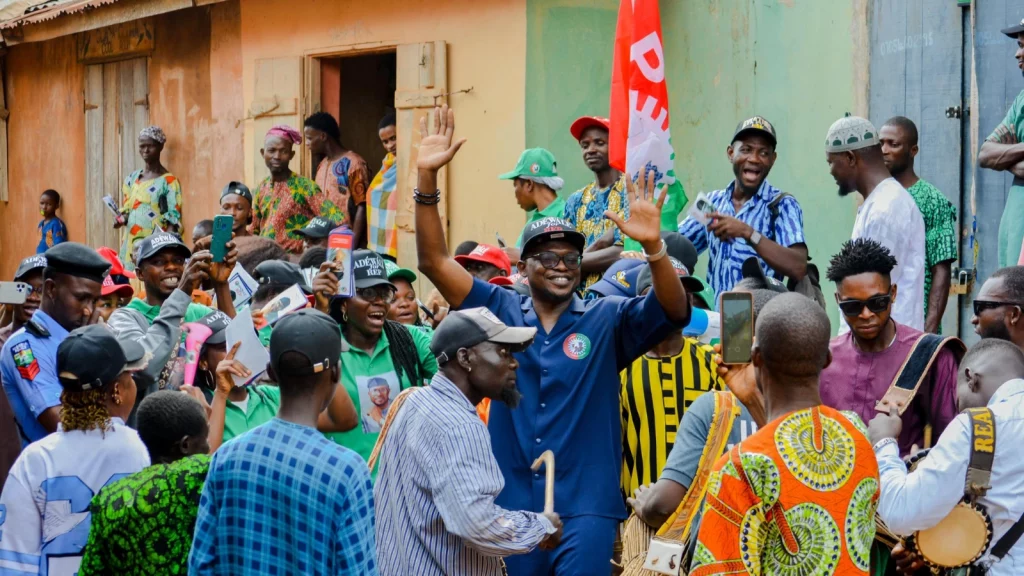
It was a very difficult situation to navigate. Obviously, the issues originated from the national level, and I was never going to make the factions see eye to eye. But I needed to make sure both supported my candidacy. And I did. It looked like I was actually going to pull it off—until it didn’t.
When the African Democratic Congress (ADC) coalition was announced in July 2025, I was advised to make the switch, both by members of my inner circle and even some members of the party. But I didn’t want to come off as disloyal. Was it not too early in my political career to start cross-carpeting like the typical desperate, power-hungry politician?
My choice was made. I had invested time and resources into the Labour Party. I was starting to build relationships, too. I couldn’t imagine having to start all over again with a different party.
How naïve I was.
There’s a way time starts to blend into itself the longer you stay in isolation. And in that moment of fluidity, it was like all my memories were merging, flowing into each other like mixing rivers.
I remembered how, after graduating from Stanford University, I got a 9-to-5 job as a strategy operations officer. The monotony, the lack of satisfaction, the constant feeling of unfulfillment—a voice in the back of my mind saying, “This cannot be all.”
I remembered when I had to step away from my first start-up. It all felt too familiar. I’d convinced people to invest based on their trust in me. And now, once again, I’d gotten so many people, my friends, my family, to invest their time, energy, even their money, and I’d failed again.
It felt like I was reliving patterns. What do I tell them now? Will they ever trust me again?
I was angry at everything. Angry at the whole political system, the party leaders, and at myself for being too idealistic in my approach to politics.
But the anger turned into fuel. It ended my hibernation. I couldn’t keep feeling sorry for myself. The next day, I made my way back to Shagamu.
My family and friends rallied around me. They had been worried by my silence. They understood just how passionate I was and feared the weight of the disappointment might drive me to do something crazy.
I told them I wanted to fight this. My brother encouraged me, and everyone picked their chins up and held out hope that the issue could be resolved and we’d still be allowed to contest. So we resolved to keep the same energy we’d had all along and keep campaigning.
I made calls to the party leadership to discuss our legal options to force INEC to recognise my candidacy. We fought until the last day. But the election went ahead with the name field for the Labour candidate left blank. An empty space where my name should have been. We fought, and we lost.
“Welcome back,” my wife said, hugging me when I rejoined her and the kids in our house in California.
Missing them for months while I campaigned in Nigeria was another sacrifice on a long list of sacrifices that now seemed to have been in vain. Another thing to regret.
She had been there for all of it—every win, every loss, from when I ran for faculty president at the University of Lagos (UNILAG) to running for student association president at Stanford. She had seen me consider going into politics in 2019 and again in 2023. Maybe it was finally being with someone who truly got me, who understood how much this meant, that helped me remember myself.
There’s something about regret that makes you a personal historian. You find yourself living in the past. Should I have chosen a different party? Should I have switched when I still had the chance? Should I not have run at all and waited until I was better prepared in 2027?
As I picked apart the decisions that led me to that moment, my mind ventured even further back. After graduating from UNILAG, I got a job at Procter & Gamble. But even then, I was thinking about politics. That was why I applied for the Stanford scholarship and went to America. I wanted to better myself so I could come back, get involved in politics, and use political power to do real good that would improve people’s lives. I still want to do that.
The wounds are still fresh. My regrets still haunt me in the quiet moments when the laughter of my children can’t distract me from my thoughts. But in those regrets, there are lessons. And I’ve learned.
I don’t know exactly what it will look like when I do, but even now, I know myself and I know I’ll try again.
Click here to see what people are saying about this on Instagram.
Do you have a story of regret? Share it with us by filling out this form.
See what people are saying about this article on Instagram