We’ve seen Tobi Bakre take on several roles. But not one as dramatic and familiar as Tola in Before We Fall Asleep. Tola is loving, hardworking, and deeply devoted to his family. But when he loses his corporate job, the identity he has built around being the provider begins to fall apart. Suddenly, he has to confront a question many men never get around to asking. Who are you when you can no longer be the ‘man of the house’?
In this conversation, Tobi Bakre talks about playing a character defined by traditional masculinity. How he learned to empathise with him, and why partnership as a man is about more than money.
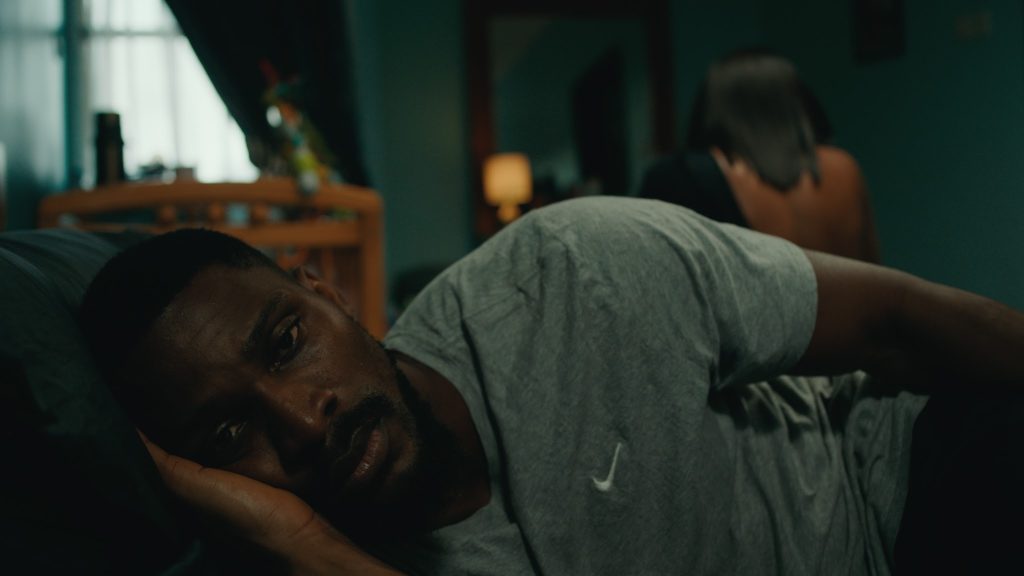
How would you describe Tola in Before We Fall Asleep?
Tola is your average Nigerian good guy. He’s a great guy trying to make ends meet while figuring life out.
You sound like he’s someone you would know.
Yeah. Partly because as a professional, you have to personalise and embody the character you’re playing. So, in seeing how the character played out through the story, I can relate to him. Tola is a family guy and a hard worker. At the same time, he’s a genuine lover boy. And like every Nigerian youth, he’s trying to figure life out. Dealing with its challenges, the economy, etc. I could tell that his problems were things that only time could help him learn how to handle.
A lot of the time, when you’re handed a situation you’ve never experienced, you try to handle it based on things you’ve learnt. It may be from a certain background, ideology, or general outlook on life. Sometimes, what you know may not work. This guy has to deal with these problems with a partner in the picture. This partner also happens to be someone with a different background, ideology, and mindset.
Why was it important that audiences see Tola as a good man first?
I feel like that’s a question for the writers. But if I’m going to talk about it, I’ll say it’s just to show that a lot of people are not villains. We often focus on the differences between men and women, and we rush to make one side the villain. Sometimes all that is needed is understanding and empathy. I’m not saying this applies in all cases because sometimes there are people who are villains. But in some cases, people are just being who they are. And they need to be understood or properly communicated with.
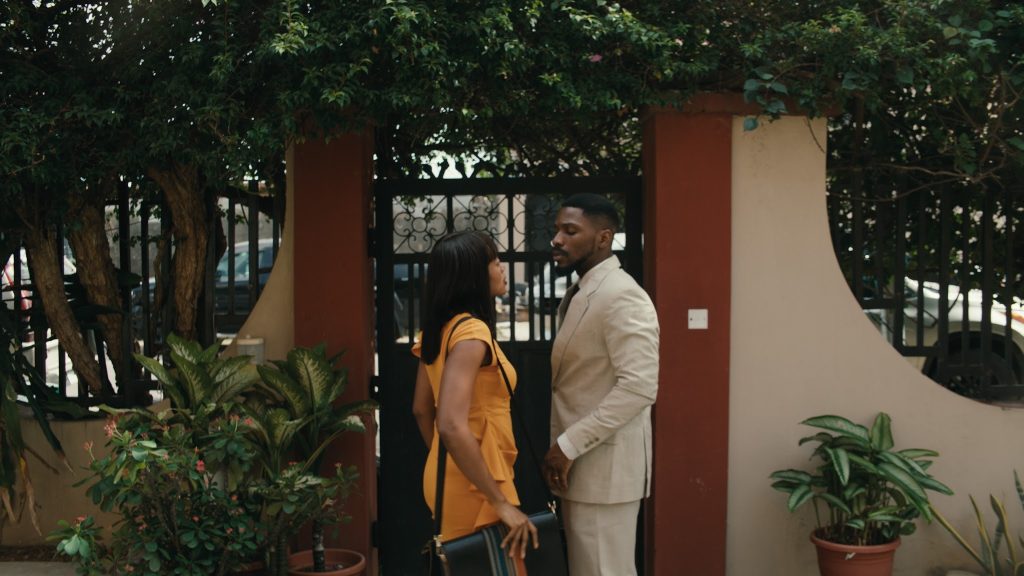
Is there anything about Tola that you initially disagreed with but later came to understand?
When I read the story, the first thing that came to my mind was ‘this guy shouldn’t see some of these things as a big deal now’. But while I was on set and living in his world, I could understand why this was a problem for him. He’s educated and fairly progressive. But all the things he has internalized from childhood about being a man won’t just leave. He needs experiences to reshape them.
There are definitely moments that come across as selfish. On the first read of the script, it’s easy to want to judge those choices. But as an actor, I can’t judge the character I’m playing. My job is literally to understand his point of view.
How do you get audiences to empathise with a character whose choices they may disagree with?
Drawing from my personal life, I don’t expect the world to understand everything I do. You can be the best person with the best intentions, but some people will still be against you. Regardless of your intentions or your actions, you’re going to have people who will never try to understand you. I’ve dealt with that in my personal life. So I’m not bothered by having to play a character that people might not like. That’s why we’re doing this kind of project. We need to have these tough conversations where open-minded people can learn, and others can communicate their views.
I’d also say it’s interesting to play such characters. Even though your personal ideology influences how you perceive the character, it’s always surprising to see someone else’s take. You might learn a thing or two.
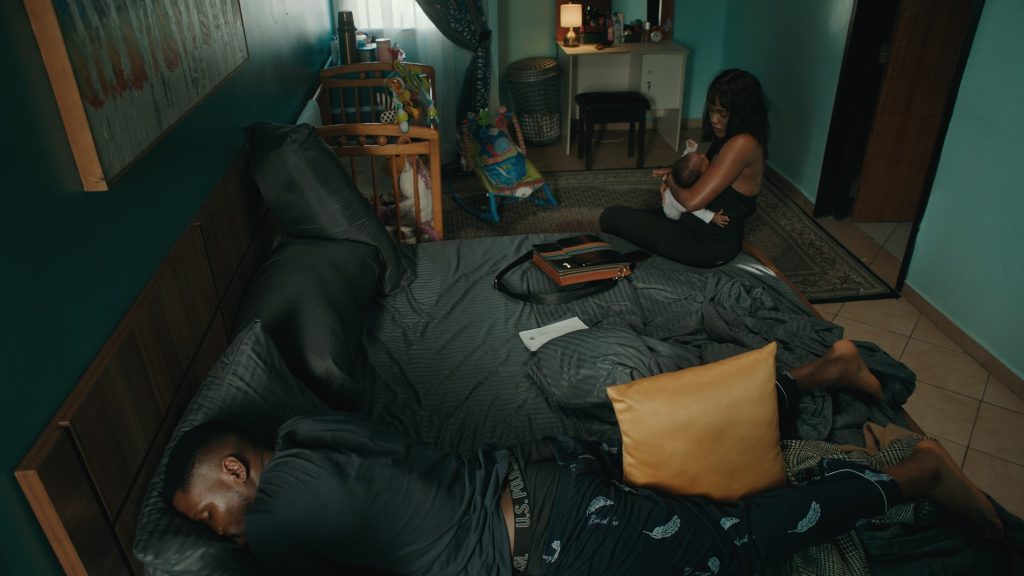
What did playing Tola make you reconsider about masculinity?
I’d say the traditional ‘man must provide’ culture. Back in the day, providing as a man meant giving your family financial security. But in this day and age, ‘provision’ has taken a different turn. In a case where you’re not able to provide financially, there are other ways you can give your family value or security. These days, you see fathers doing pickups and drop-offs from school. Traditionally, school runs used to be seen as the role of a mother. People are growing out of that mentality. We’re having partnerships between parents in terms of finance, taking care of the kids, and the household.
We need to help people understand that they’re not wrong to have felt or to feel a certain way about masculinity. It’s based on how you were brought up. But don’t think that being a man stops at providing financially. In our community, self-worth is built mainly around financial success. Regardless, the modern man should not centre his masculinity around his finances. Self-worth should come from the quality of your person. That’s what I preach, and that’s what I also learned from playing Tola.
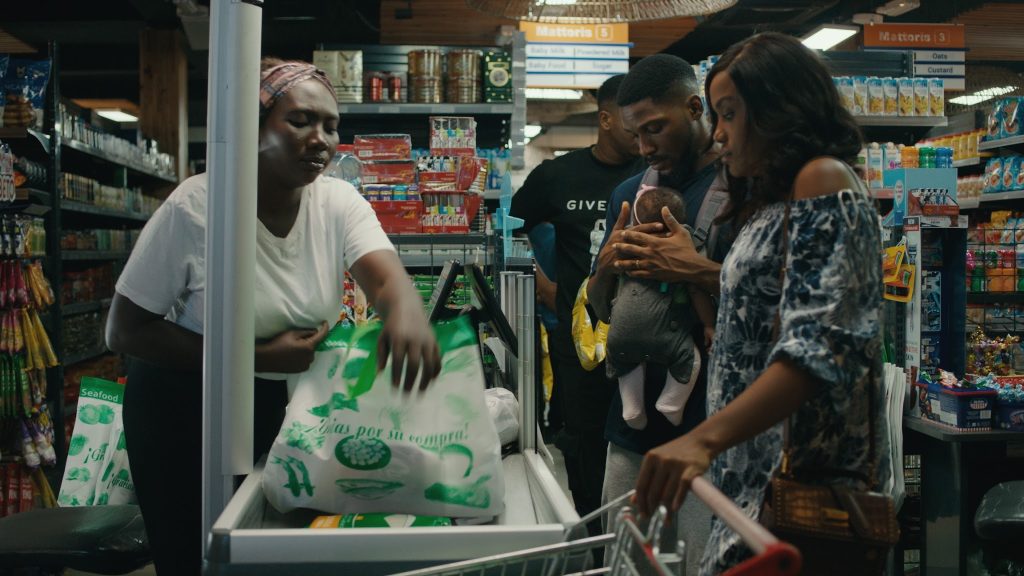
Are these things you struggled with in your personal life?
No, actually. Growing up, I’ve always been proactive when it comes to things that people perceive to be women’s duties. I don’t see gender when it comes to washing plates or changing diapers. What matters is whether it’s convenient for me to do it at the moment. If my wife is doing one thing, I can do this other thing. We’re not keeping score, and at every point, each person is putting in 100%. My hundred per cent might look different from hers on any given day. But the important thing is that we’re both giving what we can.
We’re all individuals going through our own journey, and that is definitely going to factor into any relationship. What is important is to constantly find ways to be better and more supportive. That’s what makes a good relationship.
What do you think this story adds to the conversation on gender norms?
It shows the mindset of men who are in that situation. Some men might beg to differ, or they might insist that they would act differently. But the conversation, I hope, would be at the centre: ‘What is ideal?’
In the end, these things are subjective. What works for couple A might not necessarily work for couple B. What some people call unpaid labour is what some people want. I try not to put people in boxes. It’s more about identifying what works for you, finding a partner that aligns with your ideology and then making it work. Some women want to be housewives, while others want to be career women. To each his own. But there’s a way to make things work in a household where you have a career-driven couple. If all the things people typically argue about, like cooking or cleaning, can be outsourced, why does it become one person’s responsibility?
What was the most difficult thing for you about playing Tola?
One thing the director did that I found interesting was that he told Onyinye and me to stand in front of each other and stare each other in the eyes for five minutes. We did this while the crew was in the background setting up for the day’s filming. It wasn’t particularly difficult, but it was new. It was also the first time I had been asked to do such a thing. As easy as it might sound, when you’re looking straight at a person like that, it feels very comical. You might laugh, but then you stop, and you’re still looking at this person’s face. What it translated to was that by the time we were on set, it was easy to look her in the eye.
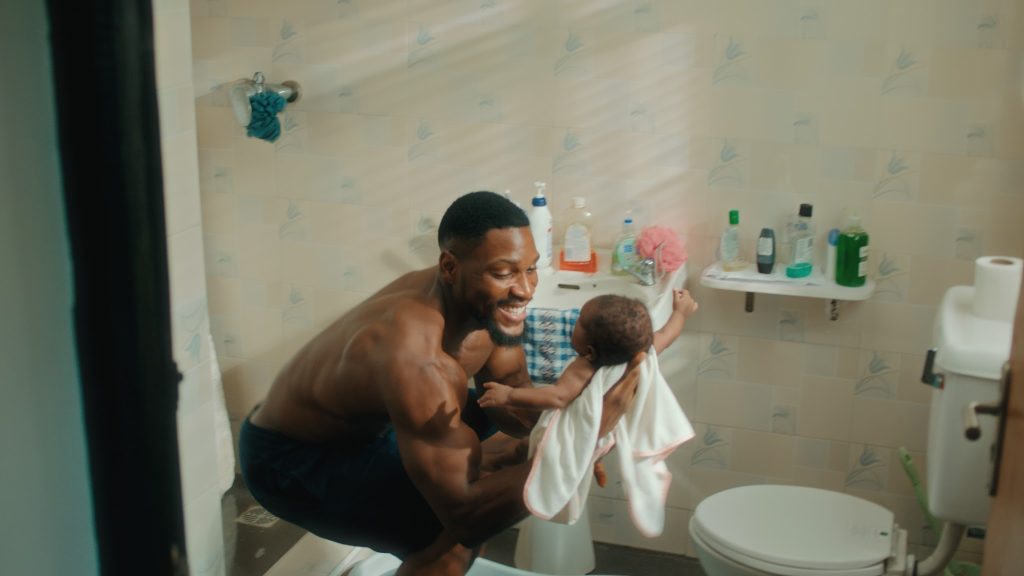
Oh, yeah. I also had to bathe a baby. I have two kids, so this wasn’t new for me. But it’s very different when it is someone else’s child. I know my way around a tiny human, but at the same time, I had to be extra extra careful. It also happened to be my first day on set, and it was the first thing we had to shoot. So it was like, ‘oh, wow, we’re really going to just get right into it’. I can’t wait to see what that scene looks like.
What do you hope men, in particular, take away from Tola’s journey?
When you have a partner you love and respect, it might require doing things you don’t find pleasing. Every successful business, partnership, and relationship takes actual work. Going to the office isn’t the only thing you do. As long as it moves things forward in the household, you should be willing to do it. Also, as a man, your financial capacity and physical strength don’t define you. There are ways to express masculinity in a way that’s not choking. I hope more men choose that.
Next Read: Kaelo Iyizoba Explains Why Before We Fall Asleep Refuses to Pick Sides