If you’ve been watching Nollywood lately, you’ve probably seen Andrew Bunting on your screen or fallen for one of his characters. From his breakout role as Menny in Princess on a Hill (2024), a man harbouring unrequited feelings for his close friend, to his most recent role in Love Lockdown (2025) as a conflicted fiancé stuck in a love triangle between an ex-lover and his to-be bride, Andrew finds himself playing one lover boy after another.
Even as a gang leader in Water and Garri (2024), he adds an element of tenderness to the character of the hardened man, rekindling a romance with his childhood sweetheart. In roles not originally intended to be overly romantic, he ends up making the audience swoon anyway.
So, when Uzoamaka, director of My Body, God’s Temple, approaches him at the AMVCAs and pitches him the role of Zion—yet another romantic lead—Andrew says yes.
In My Body, God’s Temple, Andrew plays the role of Zion, a husband who finds out that his wife, Omasilu, a devout Christian virgin, cannot have sex. In this interview, Andrew talks about the process behind playing Zion.
How did the decision to star as Zion in my body god temple come to be?
My initial thought when Uzo sent me the script was excitement to be working with her and sharing the screen with her. I think the go-to comment about every film is always ‘this one is different’, so I don’t want to say that. I don’t think it’s necessarily different, but this story felt true to who I am because this is a story about love, patience, and respect. I wanted to help bring that to life. When Uzo told me the idea behind this film, that was enough for me to say yes and get on a train to Ibadan to go shoot.
When you read the script, how did you find Omasilo’s relationship with God and how it was presented?
There is an understanding I have from meeting people who have had intense relationships with their faith earlier in life. I try to sympathise or empathise as much as I can with the conflict of growing up with the rules of a certain faith and being in a situation where perhaps not all of those rules apply. So, yeah, I relate to Omasilu from an observer’s point of view. Obviously, because I’m a guy, I haven’t had the kind of struggles that a woman or a lady would have in the faith.
How did that affect your delivery?
I saw from the script that Zion was very patient with Omasilu. I think seeing that in the film was the second most important thing after the way she handles not being able to have sex. Without a partner like that, My Body God’s Temple would have been a completely different story. The kind which we’ve seen a lot of in films. I’m sure a lot of people might not agree with his character, but enough people will understand that Zion is what Omasilu needs.
What was the most difficult thing for you about the role, and what was the easiest?
I didn’t know that Blessing, Uzo and Mo were attached to this project until I got to the set. I realised that I was working with people whom I respect a lot on this film, so I was very concerned with making a good impression and doing Zion’s character justice. I think that was the hardest part of this because Uzo is a fantastic writer. She was, I’d say, instrumental in helping me carve out who Zion was. Sometimes she’d ask me questions about what I think Zion would do in a particular instance, then we’d have a discussion. All whilst she’s directing, by the way. Honestly, in this context, I’d say the easiest part about playing Zion was remembering my lines.
Do you think the film My Body, God’s Temple presents a realistic relationship dynamic in today’s society?
I don’t think it’s a matter of today’s society; it transcends any generation. We hear a lot of cautionary tales about bad relationships, a lot more than we do success stories. But I do believe that regardless of the times, there are people who have relationships where partners are very understanding and not necessarily to the point of their own detriment.
So, do you think MBGT is trying to shift a negative stereotype?
Post-pandemic or even just a bit before the pandemic, there was just a lot of negativity in people’s love lives. When COVID happened, a lot of rot that was festering in a lot of people’s relationships came to light, and a lot of people are still living in that negative outlook on life. As storytellers and artists, we have to observe and understand what’s going on in this world and provide respite. My Body, God’s Temple is taking an initiative to shift the story from normalising partners only interested in satisfying their selfish needs to showing relationships with kinder and more considerate partners.
Because of this, do you think that this couple, I mean Zion and Omasilo, will be popular with the audience?
I think ‘popular’ is a bit hard to say. The reason for shifting existing narratives is negativity, and so it’s going to be met with people who are sceptical of anything positive. But it’s also going to be met with people who believe in that kind of relationship. Art is always going to be polarising. You will have people on both sides of the argument. I’d hope that it falls in the favour of a lot of people, but I wouldn’t be surprised if there are people who would sneer at Zion and Omasilu’s love story. So long as there are other people who believe that it’s possible, that’s enough.
Did anything happen on set that was different from how it was scripted?
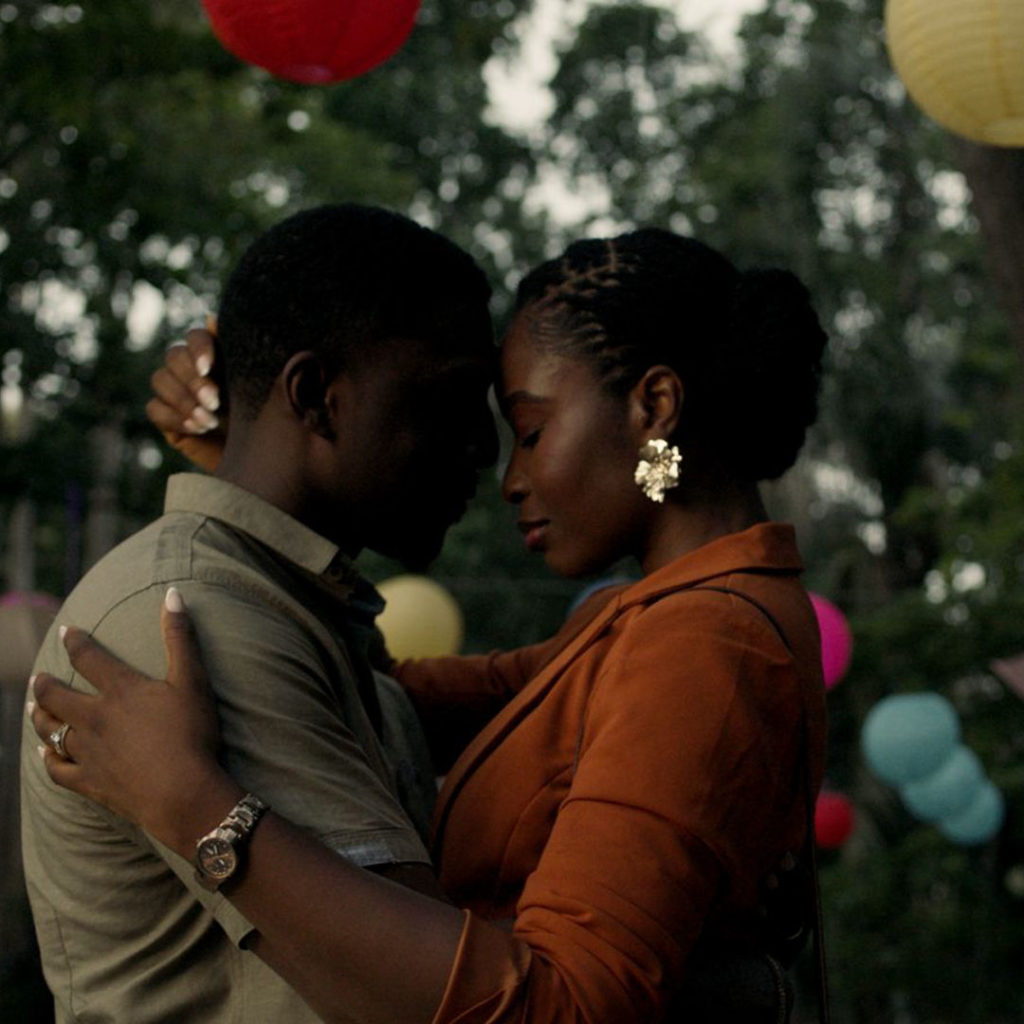
So, the scene after the picnic, where Zion and Omasilo are walking back under these multicoloured umbrellas above them, and he asks her to dance, was spontaneously shot. The first day that we shot, we were on location, and the location just inspired that scene. I think Uzo had been pitching it to Blessing, the producer, prior to the principal shoot, but they hadn’t necessarily settled on that particular scene. Eventually, we did shoot it, and it turned out really great. We were literally fighting against nature because the sun was setting.
What’s your favourite thing about this film?
My favourite thing about this film is that it’s not about suffering. It’s about genuine internal conflict and how that affects her relationship with Zion. There’s a tiny bit of friction at some point where you can tell that he’s frustrated, but this is not a story about bad things happening to somebody. This is just a story of things that happen to somebody and how they navigate those things with their partner, their friends and their faith.
Also Read: Uzoamaka Is Making Films About Women Who Thank God For Great Sex