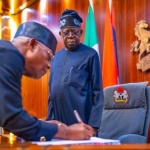
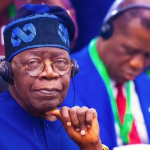
2025 was one hell of a year for Nigerians. Whatever shege that was left from 2024 was carried over and doubled in 2025. This year, Nigerians witnessed economic hardship, insecurity and other inconveniences. As usual, political officeholders were at the scenes of the crimes. However, there were some whose conduct was so notorious that it made them stand out from the rest.
As the 2025 curtain draws to a close, we have made a list of these politicians to hold them accountable.
Bola Ahmed Tinubu
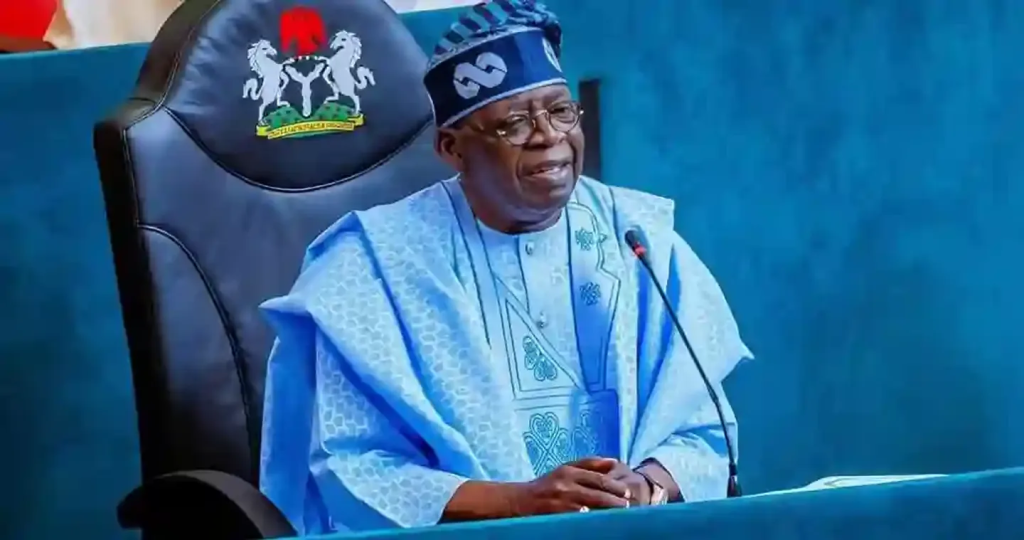
What would this list be without President Bola Tinubu? It’s far from exaggeration when we say that he crawled so that the others could walk. We didn’t know someone could be so progressively awful, but Tinubu’s ineptitude is the gift that keeps on giving.
In the 2024 version of this listicle, we mostly emphasised how Tinubu oversaw a hardship so terrible it was described as the the worst economic crisis on record witnessed by Nigeria; this year, his sins are so many, we hardly know where to begin so it’s probably best to start with one of his earliest sins this year— the state of emergency declaration.
In March 2025, Tinubu made a mockery of the Nigerian Constitution when he declared a six-month state of emergency in Rivers State, suspending the state’s governor, Sim Fubara, his deputy, and the entire state assembly. Tinubu claimed he had done this to quell the political unrest in the state, but that is highly debatable. It also didn’t matter that he was warned by many, including the Nigerian Bar Association (NBA), to call off the declaration; Tinubu sped ahead and ensured his declaration was carried out to the letter.
The laws weren’t the only thing the President disregarded; he also paid dust to Nigerians. When he first presented his tax reform bills in the last quarter of 2024, Nigerians kicked against them, thinking he’d reconsider, but Tinubu used their tears to hydrate himself, pushing even harder until he finally signed them into law in June 2025.
While he perfected his plans to squeeze Nigerians dry through taxation, experts and global financial authorities like the International Monetary Fund (IMF) advised Tinubu to pipe down and create safety nets for his previous policies, already giving Nigerians a hard time; there’s hardly any indication that he took that advice to heart. This was even as the IMF categorised Nigeria as the 12th poorest country in the world by Gross Domestic Product (GDP).
As Nigerians groaned under hardship, the President took trips that would make travel influencers green with envy. He began his travels on January 6, and by the first week of September, Tinubu had already taken 15 trips to 11 different countries. The trips, according to their respective announcements, were for bilateral agreements, inaugurations, international high-level summits, and holidays, though some Nigerians and the opposition argued that a bulk of them were medical trips.
As the year progressed, Tinubu continued to make himself as unlikeable as possible by racking up more controversies. From granting a presidential pardon to questionable characters to keeping mute when violent attacks occurred, only speaking after public backlash, Tinubu’s year was one for the books.
At this rate, Tinubu’s New Year’s resolution should be to be a better President and human, but he probably won’t do it, so our advice is to the Nigerian people— brace yourselves and be ready to continuously call him out if and when he defaults.
Godswill Akpabio
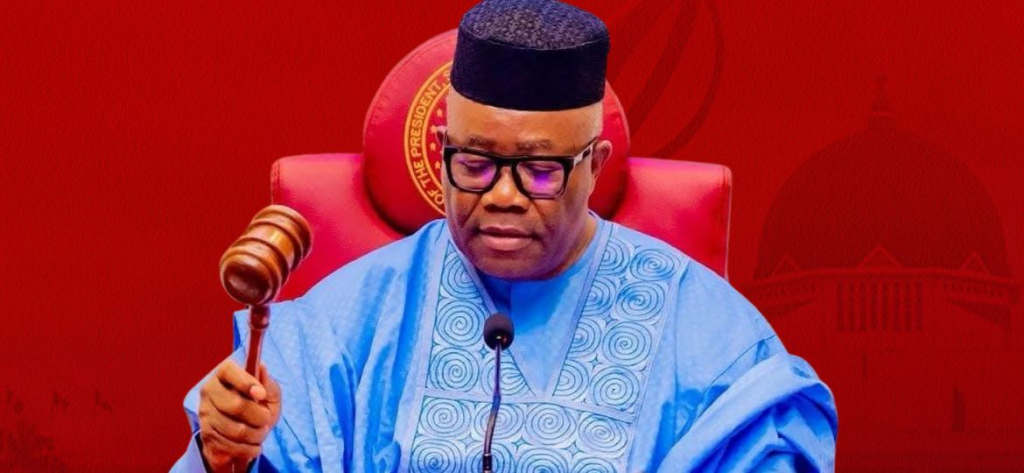
In 2024, Nigeria’s Senate President, Godswill Akpabio, was not in his best behaviour. As the year 2025 comes to an end, even Santa can attest that he hasn’t been a good boy this year either.
In 2025, Akpabio’s name was attached to more controversies than his actual job. The biggest of them is perhaps the one with the Kogi Central Senator, Natasha Akpoti-Uduaghan. Earlier this year, in March, Akpoti-Uduaghan accused Akpabio of sexual harassment following an altercation on the floor of the Senate.
While it may not have been proven that the Senate President is guilty of the allegation, he did not take the honourable route of stepping aside for an unbiased and transparent investigation of the matter. Instead, he vehemently denied it, conveniently keeping mute as some other lawmakers bullied Akpoti-Uduaghan for his sake
Under Akpabio’s watch, the Senate doled out an illegal six-month suspension to the Kogi Senator for a separate matter (alleged misconduct). Following in Tinubu’s footsteps, the Senate ignored the laws and ensured that Akpoti-Uduaghan served out her suspension, and even after she did, she was only allowed to resume following public backlash over her continued suspension.
In addition to these, Akpabio betrayed the essence of his job by allowing President Bola Tinubu to do as he pleased. Instead of keeping the executive in check like the legislature is supposed to do, Akpabio, who heads the legislature, did everything but that. Not only did he approve Tinubu’s numerous loans, but Akpabio’s Senate also watched as the President declared a state of emergency in Rivers State, a move which many Nigerians hoped they would intervene in.
If you needed more reasons as to why Akpabio belongs in this list, you might want to watch the members of the National Assembly singing a pro-Tinubu song, ‘On your mandate we shall stand,’ as Tinubu was about to present the 2026 budget. This was after Akpabio led them to sing it during Tinubu’s 2024 budget presentation.
Akpabio has to do better, and he needs to do it now.
Abbas Tajudeen
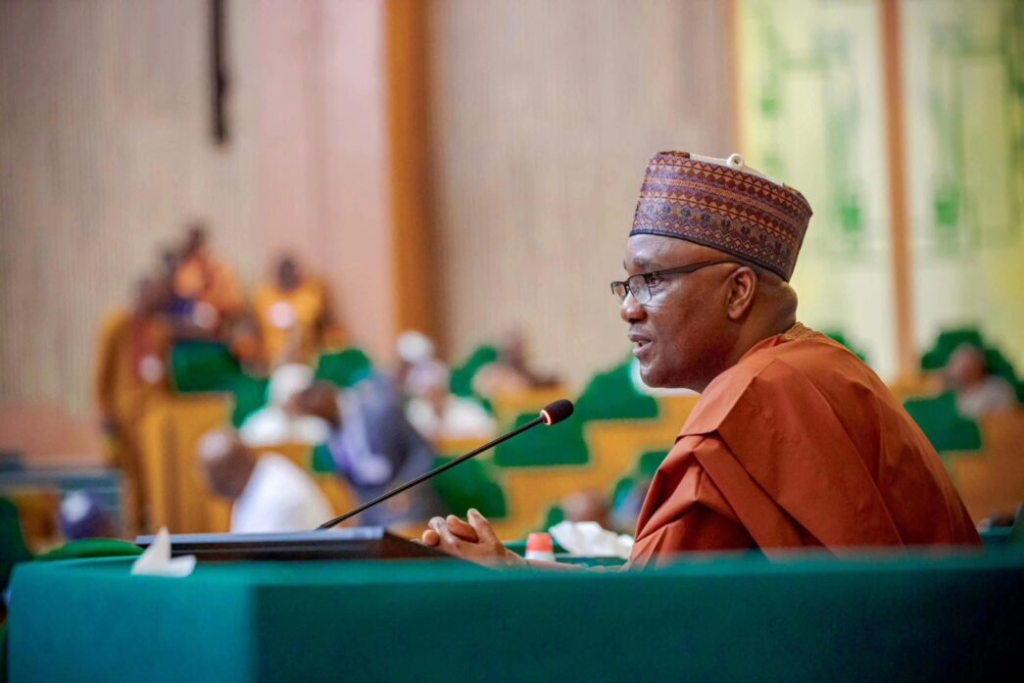
The Speaker of the House of Representatives, Abbas Tajudeen, is definitely not as controversial as his colleague, Akpabio, but he hasn’t necessarily done anything differently to distinguish himself or remedy the havoc being wrecked on Nigeria’s democracy. Just like the Senate President, he asks ‘How high?” when Tinubu asks him to jump.
Just as he did last year with the National Anthem change, he also did not object to the President’s State of Emergency request. In fact, in his haste to please the President, Tajudeen did not ensure that the constitutionally mandated two-thirds of the House voted in favour of it; rather, he carried out a voice vote, relying on the plenary attendance record. This means that there is no way to verify that two-thirds (240 lawmakers) of the House actually voted in favour of the request.
He may not be loud about it, but Abbas Tajudeen is a Tinubu fan-boy, and that’s not the way the Speaker of the House of Representatives should be identified.
[newsletter type=z-daily]
Nuhu Ribadu
Like the other politicians on our list, Nigeria’s National Security Advisor (NSA), Nuhu Ribadu, is here because he’s awful at his job.
If you lived in Nigeria this year, you would agree that this country was anything but safe. As early as March, Nigeria had already experienced its first high-profile violent attack. The victims were residents of the Bokkos Local Government Area (LGA) of Plateau State, and about 52 people had been killed. The bloodshed soon spread to other areas of the State, continuing into April. Around the same time, Boko Haram staged a comeback in the Northeast, destroying bridges with Improvised Explosive Devices (IEDs) and attacking communities.
In Benue, suspected herders attacked some communities, killing over 56 people; in retrospect, this attack foreshadowed the unforgettable Yelewata attack, which claimed nearly 200 lives.
Benue was not the only state to experience a foreshadowing of events. Earlier in the year, locals in the Baruten area of Kwara State raised the alarm on the attacks on their community, but the Police blatantly denied it, even though they backed up their claims with picture evidence.
We don’t know if the NSA took note of all that had happened in the first quarter of the year, and what advice he gave the President, because things pretty much became a slippery slope from then on; the Yelewata attack happened, Kwara was quickly overrun by terrorists, Boko Haram killed about 80 people in Borno, and about 40 were killed in Zamfara by gunmen.
The NSA is supposed to, among other things, analyse intelligence reports relating to national security, and advise the President concerning the intelligence of security agencies. If there was ever an indication that Mr Ribadu was not the best at his job this year, it is the terrifying week in November 2025, marked by violent attacks and abductions.
Something has to change next year, and it has to change quickly.
Adebayo Adelabu
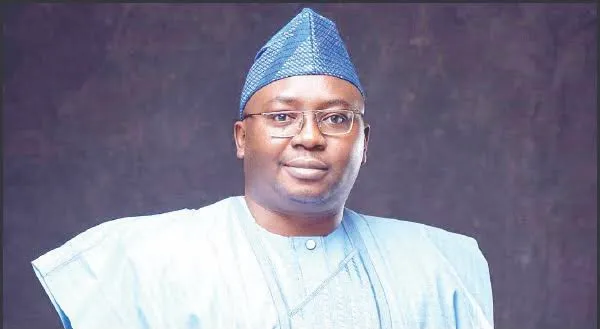
If you are currently reading this from Nigeria, you would perfectly understand why the Minister of Power, Adebayo Adelabu, made this list. After taking home the incompetence award last year, we had hoped the Minister would escape our list, but he just couldn’t help it. Under his watch, the National Grid collapsed again and again in 2025.
Between declaring and working towards his ambition to be Oyo State Governor by 2027, we don’t know if Mr Adelabu had enough time this year to do his job. If he did, Nigerians currently wouldn’t be celebrating Christmas without electricity.
It’s a shame that the Minister of Power has continued in his streak of incompetence this year.
Ali Pate
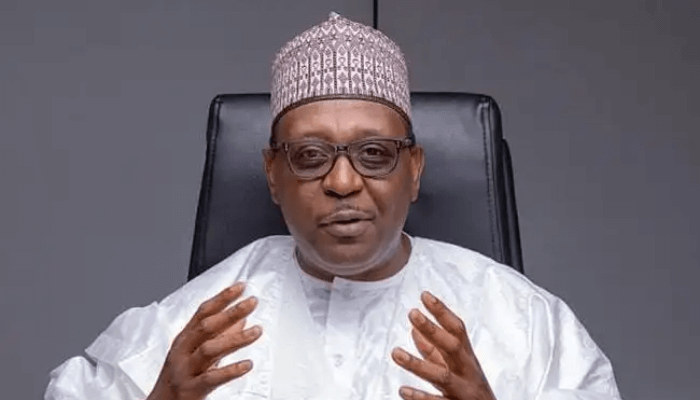
Nigeria’s health sector has been in the pits for a while now, but 2025 was a particularly bad year for it. Under the watch of the Health Minister, Ali Pate, the National Association of Nigeria Nurses and Midwives (NANNM) went on strike; the Joint Health Sector Unions (JOHESU) went on strike too, and so did the National Association of Resident Doctors (NARD) for 29 uninterrupted days.
While these medical bodies may have embarked on strike actions at separate times, their demands were quite similar and, quite frankly, the barest minimum.
It’s Minister Pate’s duty to ensure that the health sector is in great condition. In 2026, we hope we don’t have to remind him again through lists like this.
Onyekachi Nwebonyi
This year, the Senator representing Ebonyi North, Onyekachi Nwebonyi, was in the news more than usual, and it was not for good reasons.
In April, when Kogi Central Senator, Natasha Akpoti-Uduaghan, filed a sexual harassment petition against Senate President, Godswill Akpabio, Mr Nwebonyi took it upon himself to defend the accused in a manner that still has us baffled even in the month of December.
Nwebonyi cajoled and insulted Akpoti-Uduaghan severely during his media rounds at the time. On one such occasion, on March 6, Nwebonyi referred to the Kogi Senator as a “habitual liar,” a “habitual blackmailer,” and a “gold digger,” adding that she had six children with different men, and was married under duress.
Nwebonyi’s disturbing behaviour did not stop there; in fact, it would later seem that he had a problem not just with Akpoti-Uduaghan, but with women in general. On Tuesday, March 25, during a hearing on Akpoti-Uduaghan’s sexual harassment allegations conducted by the Senate Committee on Ethics, Privileges, and Public Petitions, Nwebonyi had an altercation with former Minister Oby Ezekwesili, during which he called her “a disgrace to womanhood.”
A month later, during an empowerment program in Ebonyi State, the Senator remarked that female politicians who are disrespectful to men should be removed from office.
We don’t know what to make of Onyekachi Nwebonyi’s conduct this year, but we know for certain that we do not want to see a repeat in 2026.
Nyesom Wike
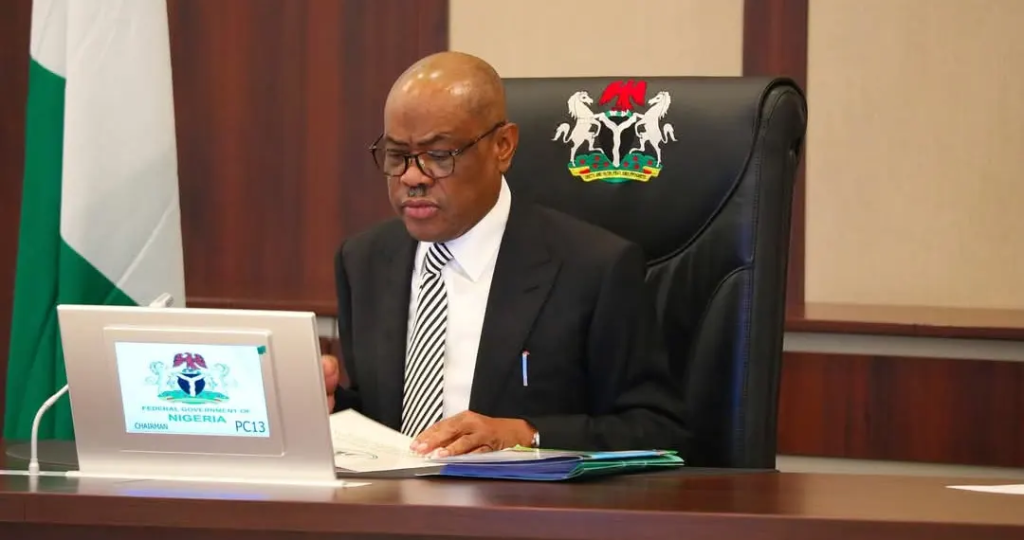
The former governor of Rivers State, and current Minister of the Federal Capital Territory (FCT), Nyesom Wike, has always been on the controversial spectrum, but for a non-election year, 2025 was quite eventful for him.
The minister’s alleged refusal to relinquish power to his successor, Sim Fubara of Rivers State, led to so much unnecessary drama, which eventually led to the infamous State of Emergency declaration.
Wike was so brazen about his involvement that he remarked once during a television appearance in August that the State of Emergency rule would have been extended if he and some others wanted it to. In his words: “If we didn’t want the state of emergency to be lifted, we would have done one or two things to make sure it continued. But we did it for the interest of the state.”
It’s one thing to do things that undermine the country’s democracy, and it’s another thing to brag about it. There just has to be a line.
Wike’s controversies did not end here; from a public brawl with a naval officer, to allegations of land allocation to his family members, brazen threats towards politicians, and political statements so uncouth that politicians have been banned from the pulpits by the Anglican Church, Minister Wike has had quite the year.
While Wike’s antics may have come to be viewed as normal by many, nothing about the minister’s conduct is normal, especially when some of them directly threaten Nigeria’s democracy. Going into 2026, Nigerians must demand better from Wike and the entire political class.
Nigerians deserve better
Year after year without fail, Nigerian politicians prove to be the most incompetent, lawless, and brazen variant of the profession around. When they’re not outrightly failing at their duties, they abuse their office, take advantage of Nigeria, or take actions that undermine the democracy of the nation.
Politicians exist to serve the people, but that has barely been the case with Nigerian politicians. Nigerians deserve better, and they must begin to demand better from the political class sooner rather than later. Nigerians all over must make it a part of their New Year’s resolution to collectively (and individually) demand accountability from public officeholders.
Before you go, help us understand how you and other young people feel about the 2027 general elections by taking this 10-minute survey.
Ever had a moment where Nigeria’s systems made life harder—or unexpectedly easier? We want to hear about your personal experiences that reflect how politics or public systems affect daily life in Nigeria. Share your story with us here—we’d love to hear from you!