If you lent your friend money and they aren’t responsive enough, you would start asking questions, right?
If it is ₦1.63 trillion of public money, the questions would be considerably louder, right?
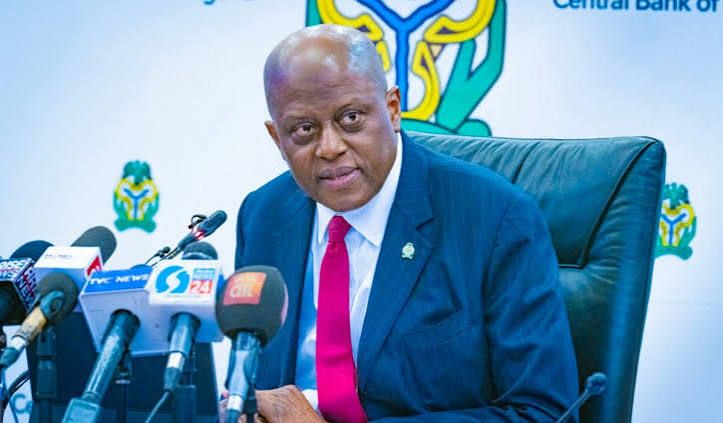
That is the amount of money now at the centre of an accountability dispute involving the Central Bank of Nigeria (CBN), after the Auditor-General of the Federation, Shaakaa Kanyitor Chira, flagged trillions of naira in unrecovered loans and questioned the management of funds under several CBN intervention programmes.
The findings are contained in Volume II of the Auditor-General’s 2023 Annual Report on Non-Compliance-Internal Control Weakness, published on August 7, 2026, and they cover transactions and activities from January to December 2023.
₦1.63 trillion is a lot of money to throw into one paragraph, so let’s break it down.
States owe ₦1.25 trillion
The Socio-Economic Rights and Accountability Project (SERAP), citing the Auditor-General’s findings, said the CBN had failed to recover ₦1.252 trillion in intervention loans granted to different state governments in 2023.
The total amount disbursed across the relevant interventions was reportedly about ₦1.814 trillion, of which roughly ₦562.3 billion had been recovered by December 31, 2023. That left more than ₦1.25 trillion outstanding.
These were loans, so the issue is not that the government handed states free money and the money simply disappeared. The issue flagged by the audit is that a huge amount remained unrecovered.
The Auditor-General reportedly expressed concern that the funds could have been diverted and recommended that the outstanding money be recovered and remitted to the treasury.
These odd findings open the door to more questions: Which states received the money? How much did each state receive? What were the loans for? What were the repayment terms? When will they be fully repaid?
₦116.18 billion for banks
The CBN also reportedly failed to recover ₦116.18 billion in loans granted to distressed and liquidated banks.
The Auditor-General had said the CBN did not provide its 2023 audited or draft financial statements, schedules of recoveries, and outstanding balances on these loans for the audit team to examine. The audit also raised concerns that these funds could have been diverted.
Again, this is public money.
And again, the question is not simply whether someone physically walked away with ₦116 billion. It is whether the CBN can show who received the money, how much was disbursed, how much has been recovered, and what remains outstanding.
₦262.86 billion for farmers
The third major figure is ₦262.86 billion spent under the Anchor Borrowers’ Programme, which was designed to support farmers and food production. The Auditor-General reportedly said the CBN failed to provide the list and number of beneficiaries and information on the programme’s impact for audit assessment. The audit also said some of the money remained with “Anchors” and warned that this could hamper the programme’s food-security objectives.
Think about what that means. A government programme can spend hundreds of billions of naira to support farmers, but when auditors ask who benefited and what impact the programme had, the information available to them is apparently insufficient.
That is the kind of gap that makes accountability difficult.
Where’s the ₦1.63 trillion?
The ₦1.63 trillion is the combined figure from ₦1.252 trillion in unrecovered state intervention loans, ₦116.18 billion in unrecovered loans to distressed and liquidated banks, and ₦262.86 billion under the Anchor Borrowers’ Programme. Together, they amount to roughly ₦1.631 trillion.
It does not mean the Auditor-General has established that ₦1.63 trillion was stolen. What the audit findings establish is that these funds were unrecovered, insufficiently accounted for, or lacked information needed for proper audit assessment.
The Big Daily is your weekday shortcut to the biggest news shaping Nigeria. We cut through the noise, connect the dots, and explain why the news actually matters, all in one quick read.
SERAP wants the CBN to open the books
SERAP’s September 26, 2026 letter asked the CBN to disclose the beneficiaries of the state intervention loans, the amounts they received, and the recovery measures taken.
For the Anchor Borrowers’ Programme, SERAP wants the names and number of beneficiaries and participating “Anchors”, the amounts disbursed, how the money was used, the monitoring arrangements, and recovery measures.
It has also called for an independent forensic reconciliation of the figures identified by the Auditor-General and wants any funds found to have been improperly lost or diverted recovered and returned to the treasury.
The CBN has seven days to respond to the demand before SERAP says it will consider legal action. As of September 30, the latest reports available do not show a substantive public response from the CBN to the seven-day demand.
Wait, there’s more
Then there is a separate and potentially more serious issue.
SERAP is also asking the CBN to account for $6.23 million reportedly spent following a purported request for election funding attributed to former President Muhammadu Buhari.
According to SERAP’s account of the Auditor-General’s findings, the CBN’s internal audit said the money was spent based on the request, but the bank did not provide its investigation report to auditors for scrutiny and confirmation.
The Auditor-General reportedly expressed concern that the funds may also have been lost and that the payments may have been fraudulent.
If there’s one thing that should make taxpayers sit up, it’s the idea of public money taking a detour into election funding. Elections are political business; taxpayers’ money is, well, taxpayers’ money.
So when $6.23 million allegedly leaves the CBN’s vaults in connection with an election-related request, Nigerians are allowed to ask why the public was the one picking up the tab. At the very least, there should be enough paperwork to answer this question without everyone suddenly playing hide-and-seek with the receipts.
The people should know how their money is spent
The CBN handles enormous sums of money, and its interventions can affect farmers, businesses, banks, and state governments.
That makes documentation more than bureaucratic paperwork. If billions are loaned to states, there should be records showing who received the money and whether it was repaid. If hundreds of billions are released for farmers, there should be a clear record of beneficiaries and measurable results.
And when auditors cannot get those records, Nigerians are left trying to reconstruct the journey of public money from audit reports, advocacy groups, and newspaper investigations.
The Auditor-General’s report does not answer every question about the ₦1.63 trillion. Neither does SERAP’s letter. Those questions now require answers from the institution responsible for the transactions.
Because ₦1.63 trillion and $6.23 million are too much money to disappear into the phrase “intervention programmes” and never be heard from again. It wouldn’t be proper.