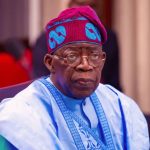
Bola Ahmed Tinubu is many things — a president, a father, a husband, and some might even say a political mastermind — but one thing the President has decided to never be is a loser. Politics in Nigeria is a dog-eat-dog game, and Tinubu’s dog will likely eat the fattest bone in the upcoming presidential elections.

Asiwaju – A Leader and Pioneer
If the 2027 elections unfold in the current president’s favour, it won’t necessarily be because he is the people’s choice; it would be because Tinubu has decided to take his Asiwaju alias literally by laying his cards on the table quicker than any opposition, even when the law says otherwise.
Entitlement has never been a strange concept to President Tinubu. During the 2023 elections, he quickly established his “by fire, by force” intentions of becoming president, drilling the abhorred “Emilokan” slogan in the minds of over 200 million citizens. Now in 2025, the president and his supporters have found new loopholes to establish his intention to ride on this wave of entitlement-driven presidential ambition, two years before the next elections. With Emilokan billboards and vehicles plastered across the country, it is becoming clearer that the law is a suggestion to the president.
How we got here
As far back as April 2025, Nigerians started spotting President Tinubu’s campaign billboards across the country.
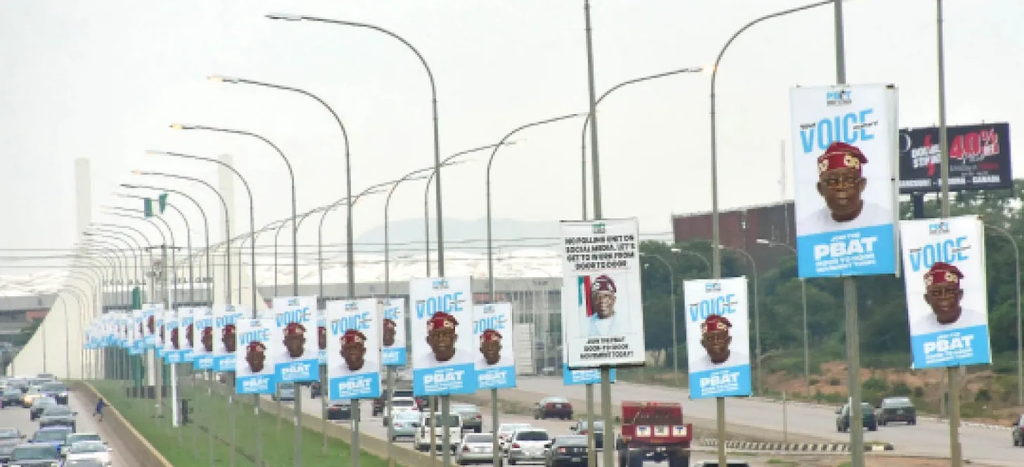
After questions regarding the legality of these early campaigns were raised, the president quickly cleared his name by claiming that he had nothing to do with them and urged the people responsible for the wide circulation of these campaign materials to stop.
We respected the President’s cute attempt at respecting the law, but we wish we could say the same for these “supporters.” Ten days after the announcement, these “supporters” decided to flood the streets of Abuja with more pictures of the president, urging other citizens to hop on the Emilokan 2027 train.
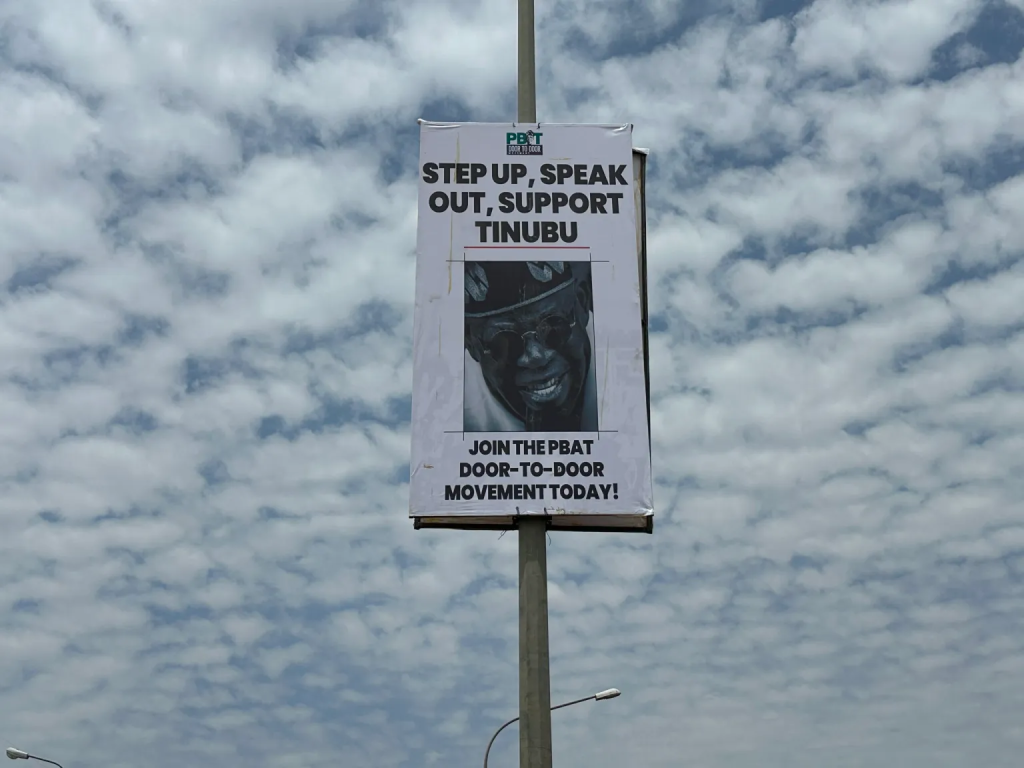
The campaign has only gotten more intense and has expanded across more Nigerian states since then.
What does the law say about this?
The Electoral Act 2022 clearly states that political campaigns are only allowed to start 150 days before the election and must stop 24 hours before election day. Anything outside that window is considered illegal. Before the 2022 Act, we had the Electoral Act 2010, which was much stricter and only allowed campaigns to kick off 60 days before the election.
Senior lawyers and political commentators have condemned these early campaigns, saying they undermine democracy and promote electoral indiscipline.
In August 2025, Femi Falana, a human rights lawyer and Senior Advocate of Nigeria (SAN), called out this bad behaviour, describing the early political campaigns as “totally illegal, diversionary, and a breach of the Electoral Act, 2022.”
He went even further by dragging the Independent National Electoral Commission (INEC) for letting it slide. “It’s not time yet to campaign,” he said. “I do hope INEC would draw the attention of politicians, including those in government, to relevant provisions of the Electoral Act.”
Are INEC’s hands tied, or are they just indulging lawlessness?
INEC itself has warned politicians to respect the law. In a statement by Rotimi Oyekanmi, Chief Press Secretary to the INEC Chairman, the commission clarified that campaigns will not be allowed until electoral timetables are released. But as history has proven, words without actions mean nothing in Nigeria. Unfortunately, the law doesn’t give INEC much freedom to impose sanctions on these offenders.
While there are minor penalties (like fines) for campaigning within 24 hours of voting, there are no consequences for politicians who start campaigning two or even three years early. So, the law is, in fact, more of a suggestion than anything else.
If he wanted to, he would…
Yes, the president has addressed his “supporters” and asked them to stop shoving his political ambition down our throats, but there’s so much more he could do if he wanted to.
Nigeria has had three electoral reform processes since 1999. While the responsibility has been mainly on the National Assembly, INEC has had the opportunity to participate in the process since 2002.
Even sitting presidents like the late Yar’Adua have participated in the process. There’s quite literally nothing that’s stopping President Tinubu from setting up an electoral reform committee to investigate and put a permanent stop to these early campaigns. And if he wants to take things a notch further, he can initiate another electoral reform.
Even INEC, with its little damsel in distress act, isn’t as helpless as it portrays itself to be in this situation. If it wanted to ban early campaigning, it could submit a legal review proposal to the National Assembly.
You snooze, you lose…
It’s President Tinubu’s world; the other 2027 presidential candidates are just living in it. You might think of these early campaigns as just another item on the “anyhowness” list we seem to have normalised in Nigeria, but it puts real, people-driven political ambitions at risk and defeats the purpose of democracy.
The 2022 Electoral Act defines how much money is too much to spend on campaigns. The spending limits, according to Section 88, for presidential candidates are ₦5 billion, ₦1 billion for governorship candidates, ₦100 million and ₦70 million for the Senate representatives, and ₦30 million for State Assembly seats.
But here’s the part that might make you lose some sleep tonight — the spending limit can only be tracked within the 150-day campaign timeframe set by INEC. Politicians are not legally obligated to report anything spent on campaigns before then
Section 88 (9) basically says that if a candidate knowingly breaks this rule, they’ve committed an offence. If convicted, they could be fined 1% of the maximum campaign spending limit allowed under the law, jailed for up to 12 months, or face both penalties. But this law can hardly be used to convict the politicians participating in these early campaigns since INEC itself has informed Nigerians that it can’t promise that it would be possible to track the expenses recorded before campaigns legally kick off.
What this means is that politicians whose campaigns have already kicked off get to enjoy the best of both worlds — more money on electoral campaigns without any form of accountability and more advantage over the presidential candidates who have chosen to be law-abiding citizens by following the law’s spending limit.
Democracy or Demo-crazy?
As of now, President Tinubu still hasn’t declared his political ambition for 2027, but that hasn’t stopped his mouthpieces from speaking for him. Take Yahaya Bello, ex-governor of Kogi state and the Economic and Financial Crimes Commission’s regular customer, for example.
On Saturday, October 18, he declared boldly that there was no need for President Tinubu to campaign in Kogi state because “There is no opposition in Kogi State. Those who are making noise somewhere have not seen the lion. When the lion roars, they will run with their tails.” We’ve also had other politicians like Nyesom Wike, Ayodele Fayose and Ondo State Governor, Lucky Aiyedatiwa, declare their support for the president’s reelection ambitions.
We can mention a million and one ways that statements like this threaten democracy, but we’ll focus on how political analysts have continually condemned what appears to be the promotion of a one-party system by the ruling All Progressives Congress (APC). The party has denied those claims in the past, but statements like “there’s no opposition” make one wonder just how reliable the denial is.
Presently, the opposition party, the Peoples Democratic Party (PDP), currently has only eight governors left in the country despite ending the 2023 elections with 11 governors. The Labour Party has only one governor, Alex Otti of Abia state, and there have been rumours of a possible defection attempt from him as well.
What does this mean for Nigerians?
As light-hearted as this may seem right now, actions have consequences. As Abdullahi Abdul Zuru, Chair of INEC’s Electoral Institute, put it, early campaigning increases the cost of politics, distracts officials from actual governance, and makes ordinary Nigerians more paranoid about the state of democracy.
Since politicians like Yahaya Bello have declared that there is “no opposition,” it is now up to you to stand with the other 200+ million Nigerians to oppose every threat to democracy. If President Tinubu and his crew are prepared for the 2027 elections, you should be prepared too. INEC has officially kicked off its online pre-registration, and you can find everything you need to know here.
What can you do about it?
Lawlessness thrives when we’re all ignorant about the facts and silent about injustice. If you’ve read this article up to this point, you’re no longer ignorant. To educate other Nigerians, we’ll need you to spread the word by sharing this article on your preferred platform.
After that’s done, here are the next steps we recommend:
- Call for accountability on social media and tag INEC, and the politicians behind these law-bending activities.
- Send emails to iccc@inec.gov.ng with pictures of any campaign activities you come across, add the specific location and demand that they take immediate action.
- Use your voice. Make videos educating other Nigerians on the dangers of early campaigns and get the good word out there.
- Consider setting up petitions addressed to the president and the National Assembly, urging them to review our current electoral laws and eliminate legal loopholes.
- Subscribe to newsletters like The Big Daily to get daily political updates and stay educated on topics like this.
You can also help Zikoko Citizen predict youth attitudes toward the 2027 elections by taking this 10-minute survey.